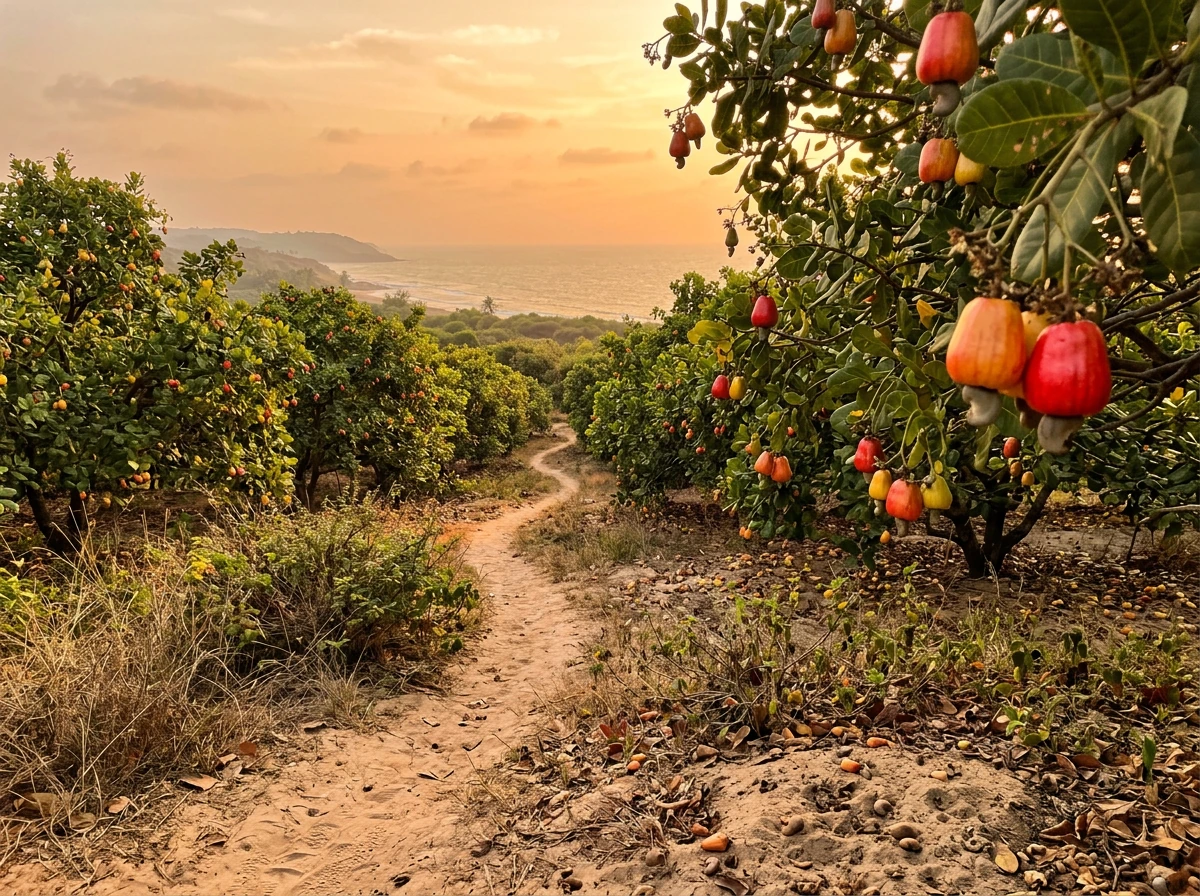
Cashew trees (Anacardium occidentale) can grow outdoors in the United States, but only in a narrow band of truly frost-free territory: the southernmost tip of Florida, Hawaii, and Puerto Rico. If you live anywhere else in the continental US, you are looking at container growing or a greenhouse setup, not a backyard tree that fruits reliably. That is the short answer. The rest of this guide explains why, and helps you figure out exactly where your location falls.
Where Do Cashew Trees Grow in the US Climate Guide
Marcus Hendricks
9 Apr 2026
The US cashew growing reality: not native, but not impossible
Cashew is native to northeastern Brazil, not North America. It was introduced to other tropical regions centuries ago and is now grown commercially across South Asia, East Africa, and Southeast Asia. In the US, it has no native range. What exists instead is a small population of planted trees in warm, humid, frost-free pockets, primarily in South Florida, where Fairchild Tropical Botanic Garden has grown and fruited cashew trees and documented their feasibility for home growers in the region.
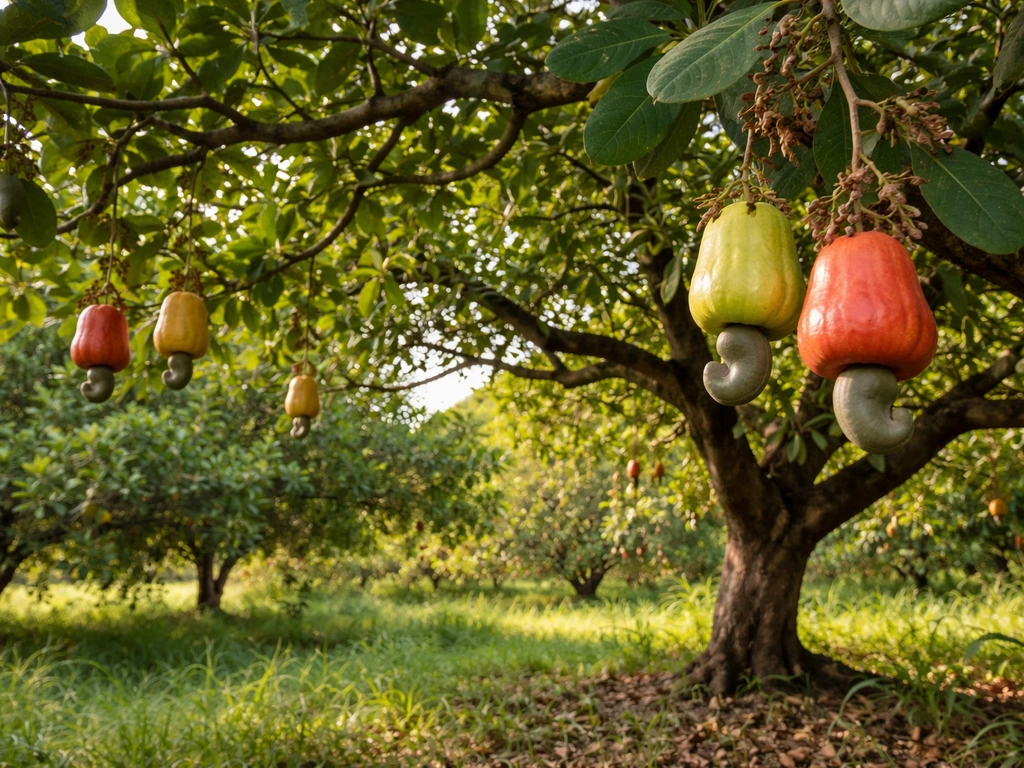
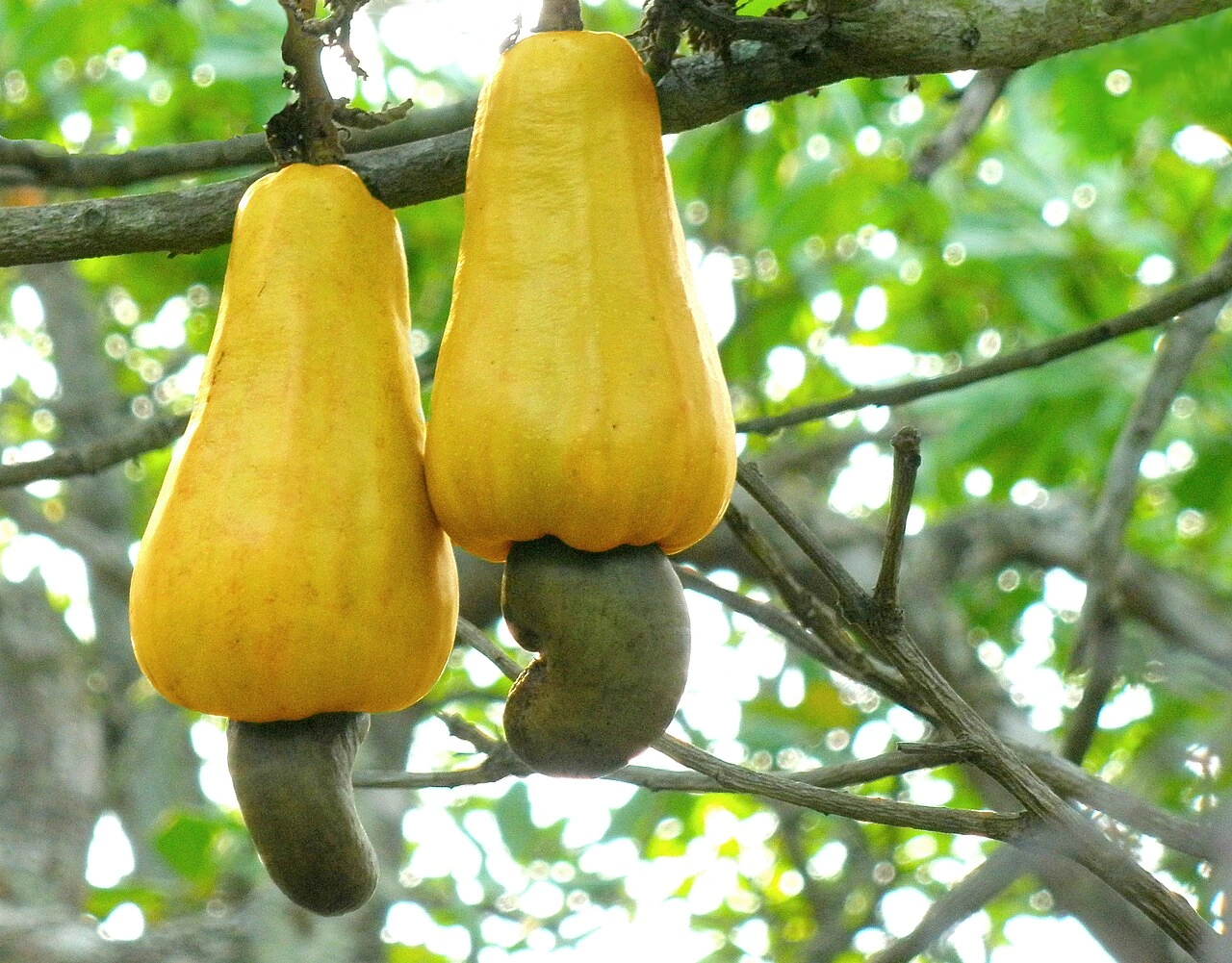
If you have ever wondered does cashew grow on trees or imagined something like an almond orchard, the biology works differently here. The cashew nut is actually the seed hanging outside a fleshy fruit called the cashew apple, and the whole structure is sensitive to temperature swings, wet weather at the wrong time, and any frost at all. Understanding that biology is key to understanding why the US growing range is so limited.
Best US regions and states for cashews
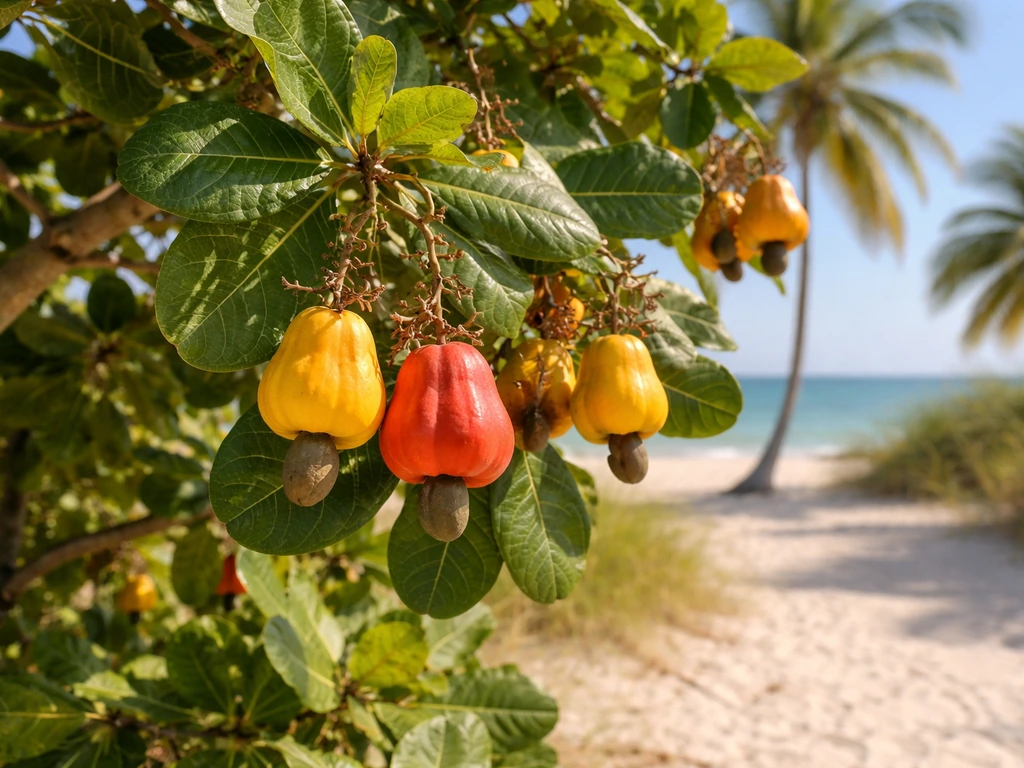
The short list of genuinely suitable US locations is: South Florida (roughly Miami-Dade County and southward, including the Florida Keys), Hawaii, and Puerto Rico. These are USDA hardiness zones 10b through 11, which means average minimum winter temperatures stay above 35°F to 40°F. Cashew trees will not tolerate even brief exposure to freezing temperatures. A single frosty night can cause significant damage, and repeated freezes will kill the tree outright.
Coastal South Texas is sometimes mentioned by nurseries as a borderline candidate, and it does occasionally reach zone 10a, but the risk of a hard freeze in any given winter makes it unreliable for fruiting trees without protection. The same goes for the southern tip of California's coastal zones, where temperatures are mild but rainfall patterns and humidity levels do not match what cashew needs. For a sense of how different climate contexts shape cashew range globally, it is worth understanding where cashew trees grow in India, where the combination of tropical heat, monsoonal rainfall, and near-zero frost risk creates the world's most productive cashew belt.
Can you grow cashews where you live? A quick location check
Here is a practical way to assess your location right now. First, look up your USDA hardiness zone. If you are in zone 10b or 11 and have no frost history, you are in the viable outdoor range. FAO describes its ECOCROP crop database as providing environmental parameters for thousands of plant species, which can help assess where crops may grow zone 10b or 11. If you are in zone 10a (average minimum 30°F to 35°F), you are on the edge and would need to plan for frost protection. Zones 9 and below are outdoor non-starters for fruiting trees.
Second, check your annual rainfall. Cashew thrives with 27 to 78 inches of rain per year, but timing matters as much as total volume. Wet weather during flowering and fruit development causes serious disease problems. South Florida's dry spring, which typically aligns with cashew flowering season, is actually one reason the region works reasonably well. A location with heavy spring rain, even if otherwise warm enough, will struggle.
Third, think about humidity. Cashew's optimal relative humidity range is 65 to 80 percent. Arid climates in the Southwest are too dry even if temperatures are warm enough. Desert conditions stress the tree and undermine fruit set.
What cashew trees actually need to succeed
Temperature
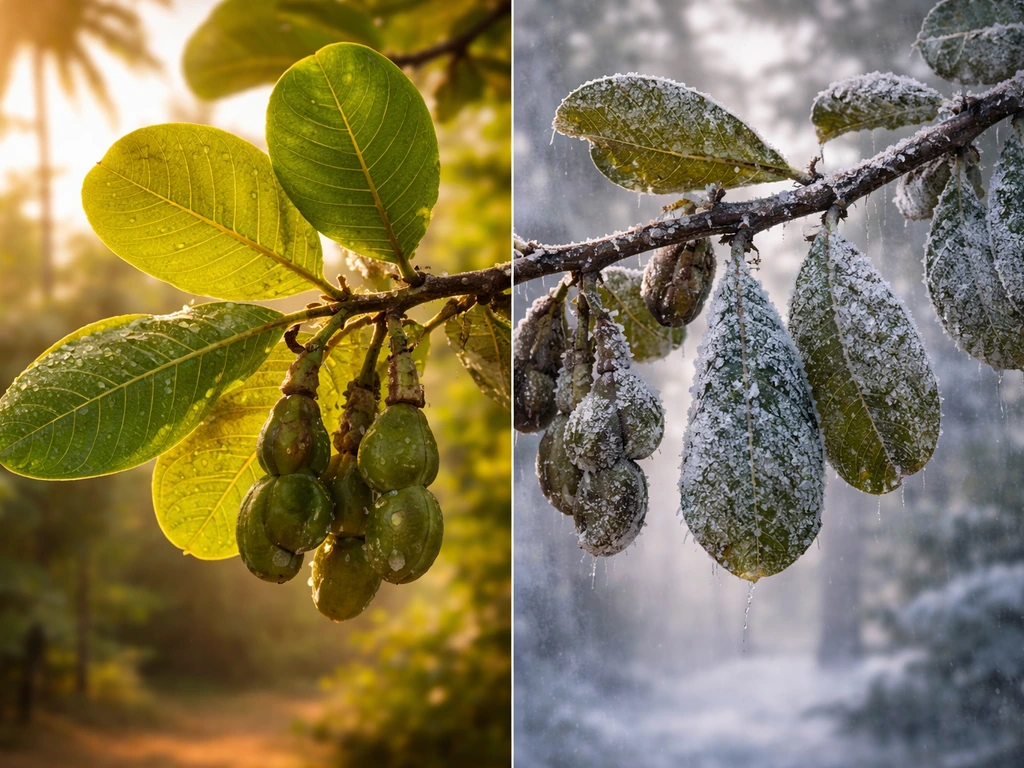
Optimum growth happens between 63°F and 100°F. The tree can survive temperatures near freezing, but any actual frost causes considerable damage and repeated cold snaps will kill it. There is no cold-hardiness breeding for cashew the way there is for, say, pecans. If your winters dip below 32°F even occasionally, an outdoor cashew is a gamble you will likely lose.
Soil
Cashew nuts grow best in specific soil conditions, and getting this right matters a lot in the US context. The tree does well on deep, well-drained sandy soils with a pH between 4.5 and 6.5. This is actually good news for parts of South Florida where sandy soils are common. The bad news is that Miami-Dade County sits on limestone-based soils with a pH of 7.4 to 8.5, which can trigger iron, zinc, and manganese deficiencies. If you are in that area, you will need to amend aggressively or grow in raised beds with imported soil.
Sun and site
Full sun is non-negotiable. Cashew trees need full canopy exposure for reliable flowering and fruit production. A shaded or partially shaded tree may grow and look healthy but will produce very little fruit. Choose the sunniest spot on your property, away from structures or larger trees that cast afternoon shade.
Water and drainage
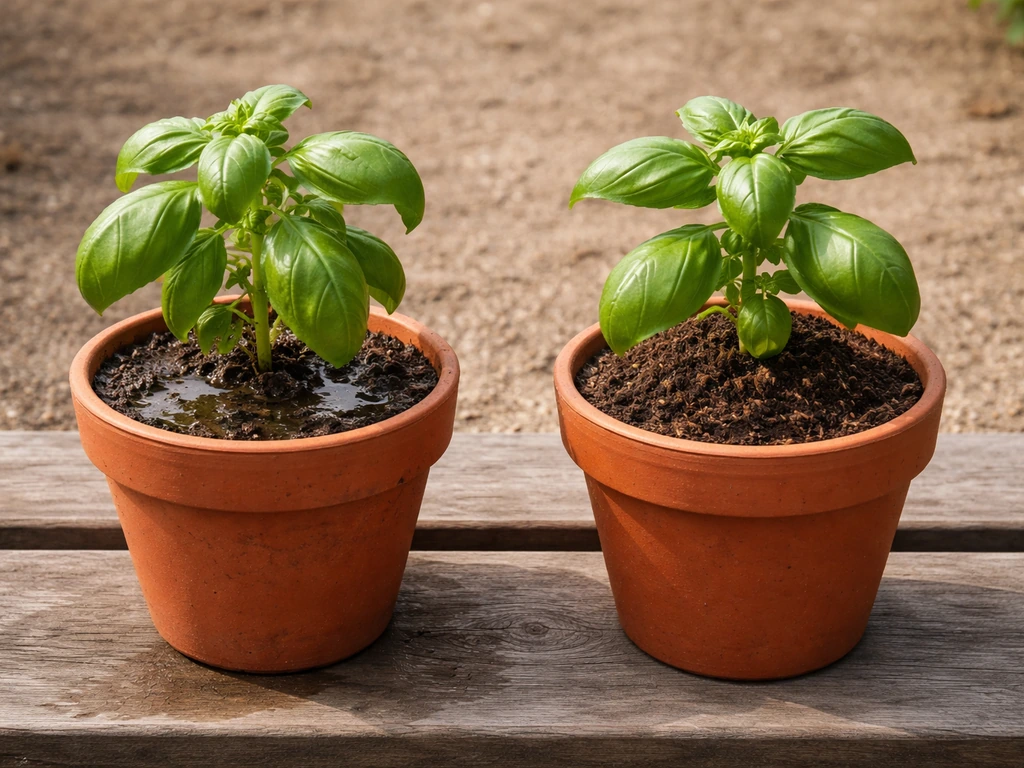
Cashew is moderately tolerant of brief flooding but will not thrive in poorly drained soils. Overwatering is a common mistake that leads to root problems and decline. For newly planted trees, water at planting and every other day for the first 7 to 10 days, then scale back to once or twice a week. Once the tree is established (generally after 4 years), supplemental irrigation is mainly useful during prolonged dry spells in spring and summer. Let the soil do most of the work.
Outdoor growing vs. containers and greenhouse strategies
If you are in South Florida, Hawaii, or Puerto Rico, outdoor growing is your straightforward path. Plant in the ground in full sun, manage the soil pH, and give the tree time. Seedlings have fragile, easily damaged roots, so handle transplanting carefully. Starting in a biodegradable peat pot and moving the whole thing into a 3-gallon container works well. When the seedling reaches about 3 to 4 feet tall, it is ready for the ground.
For growers outside the frost-free zones, container growing is the only realistic option for long-term tree health. A large container (25 to 30 gallons or bigger) kept in a greenhouse or moved indoors during cold months can keep a cashew alive, but fruiting in these conditions is much harder to achieve. The tree needs sustained warmth, strong light, and the right seasonal cues to flower and set fruit. A grow light setup in a northern basement will keep a tree alive but is unlikely to produce harvestable nuts. Compare this to how cashews grow in Australia, where the tropical north provides the outdoor conditions most US growers cannot replicate.
| Growing Strategy | Best For | Fruiting Likelihood | Key Challenges |
|---|---|---|---|
| Outdoor in-ground | South FL, Hawaii, Puerto Rico (zones 10b–11) | High with good management | Soil pH, wet-season disease, frost risk in zone 10a |
| Container outdoors, overwintered inside | Zone 9–10a (coastal TX, Southern CA) | Low to moderate | Root restriction, light requirements, cold spells |
| Greenhouse/sunroom | Zones 8–9 with heated space | Very low | Sustained heat, pollination, light intensity |
| Indoor grow lights | Anywhere | Extremely unlikely | Insufficient light, no seasonal cues, space limits |
The honest recommendation: if you are not in a frost-free zone, grow cashew as a novelty or botanical curiosity, not as a food-producing tree. The investment of time and infrastructure to fruit a cashew reliably outside its natural range is substantial and the results are unpredictable.
What to expect from a cashew tree in the US
Growth timeline
Cashew trees grown from seed in South Florida typically begin fruiting after 3 to 4 years. This is not a quick-turnaround crop. The tree grows at a moderate pace and needs those first few years to establish a solid root system before it puts energy into reproduction. Do not expect nuts in year one or two regardless of how well the tree looks.
Flowering and pollination
In South Florida, cashew trees typically flower in spring, often triggered by a preceding dry period. The flowers are bisexual and self-fertile, but cross-pollination improves fruit set. Both insects and wind move pollen, so planting more than one tree helps. Sudden weather changes, including heavy rain, intense heat, or strong winds during the flowering window, can disrupt pollination and sharply reduce fruit set. The cashew fruit's development is closely tied to these pollination events, so a bad flowering season directly cuts your nut yield.
Fruit set and yield
Here is where growers are often surprised. About 70 percent of the bisexual flowers fail to set fruit even under good conditions. Typical fruit set for seedling trees runs between 3 and 12 percent, producing 1 to 6 fruit per panicle. A mature, healthy tree can produce around 50 to 75 pounds of combined cashew apple and nut per season, which is a reasonable yield for a backyard tree but not close to commercial production levels. From flower to mature nut takes about 50 to 60 days, with the cashew apple developing over the following 20 to 30 days.
Wet weather during fruit development is the single biggest yield killer in South Florida conditions. If spring turns rainy, expect losses. This is the same challenge faced in other tropical growing regions globally, and it is why understanding where cashew nuts grow commercially matters: those regions have been selected over generations for the right seasonal dry window at flowering time.
A few final thoughts for US growers
If your location qualifies, South Florida in particular offers a genuinely workable path to homegrown cashews. The trees are interesting to grow, the cashew apple is an underappreciated fresh fruit almost nobody in the US has tasted, and a mature tree is a conversation piece. The key is going in with realistic expectations: fragile roots during establishment, a 3 to 4 year wait before fruiting, some years with poor yields due to weather, and real soil management work if you are on limestone. None of that is a dealbreaker, but it is not an easy crop either.
For growers curious about other tropical or subtropical nut species with overlapping growing ranges, it is worth exploring how different species compare in the same zones. For example, where shea nuts grow overlaps with some of the same broad tropical belt as cashew, though the two species have very different commercial histories and cultivation profiles. Similarly, if you are researching other tree crops that thrive outside conventional nut-growing regions, checking out where soap nuts grow gives useful context on how tropical and subtropical tree crops navigate different climate bands.
The bottom line: if you are in South Florida, Hawaii, or Puerto Rico, cashew is worth trying. If you are anywhere else, container growing can keep a tree alive but fruiting is unlikely without serious infrastructure. Know your zone, know your soil, and go in with honest expectations.
FAQ
Can cashew trees grow outdoors in most of Florida if it is not too cold?
Not reliably. Outside the frost-free southern tip of Florida, even occasional light freezes can damage flowers and young fruit, and cashew does not tolerate repeated cold snaps. For fruiting, the main requirement is a reliably frost-free winter, not just “mild” temperatures.
What USDA zones are truly practical for cashew fruit production in the US?
Outdoor fruiting is most dependable in USDA hardiness zones 10b through 11 where average minimum winter temperatures stay above roughly 35°F to 40°F. Zone 10a is an edge case because one hard freeze can set back or kill trees, even if temperatures usually look acceptable on paper.
If I protect the tree from cold with a sheet or greenhouse tent, will it fruit?
Cold protection can help keep the tree alive, but it often cannot fully control the key issue, consistent frost avoidance during multiple nights and temperature swings. Also, greenhouse or indoor setups usually struggle with the sustained warmth and seasonal cues needed for flowering and nut set, so survival does not guarantee fruit.
Do cashew trees survive in USDA zone 9 if the winter is sunny?
For fruiting, zone 9 is generally a non-starter. Cashew may survive brief exposure better than many tropicals, but the occasional dips below freezing, even once, can cause significant damage, and you would still face poor flowering reliability afterward.
How much rain matters, is it only about annual total?
Timing matters as much as volume. Wet weather during flowering and fruit development can cause serious losses, so a location with the right annual rainfall but rainy spring weather can underperform badly compared with places that have a drier window during flowering.
Is humidity absolutely required, or will a dry climate work if temperatures are right?
Humidity affects stress and flowering performance. Very dry conditions can reduce fruit set even when temperatures are in range, so a dry Southwest microclimate is not just “a bit harder,” it commonly results in weak or inconsistent production.
Can I grow cashew in a container in the north if I use a grow light?
A grow light can keep the tree alive indoors, but it rarely produces harvestable nuts because cashew still needs correct seasonal cues, sustained outdoor-like warmth, and conditions that support consistent flowering. Container culture north of the frost-free zones is usually best treated as a novelty, not a dependable food crop.
How many cashew trees do I need for better fruit set?
One tree can be self-fertile, but cross-pollination improves outcomes. If you can, plant more than one tree (when possible for your space) and place them close enough for wind and insect activity to carry pollen effectively during the flowering window.
Does soil pH in South Florida mean cashews will not grow there at all?
No, but it can change your fertilization and soil strategy. Limestone-based soils with high pH can trigger micronutrient deficiencies, so expect to amend aggressively and monitor nutrients, or use raised beds and imported soil to create a more suitable pH range.
Will cashews fruit sooner if I buy a larger nursery plant instead of starting from seed?
Possibly, but the article’s seedling timeline still highlights the core reality: young trees need time to establish roots before investing in reproduction. Larger starts may shorten the wait, yet they still usually need multiple years before consistent fruiting.
What is the most common mistake that ruins cashew growing success in warm areas?
Overwatering and poor drainage are frequent problems. Cashew dislikes waterlogged, poorly drained soil, and root decline can happen even in warm climates. Let the soil dry between waterings, especially outside the first weeks after planting.
Why do cashew apples and nuts fail to develop even when the tree flowers?
A large fraction of flowers do not set fruit even under good conditions, and wet weather during the fruit development window can sharply reduce yield. If spring turns rainy or you have frequent storms during the flowering period, expect fewer nuts even when the tree looks healthy.