Walnuts grow best in temperate climates with cold winters, warm summers, and a frost-free growing season of at least 140 to 170 days. Most species thrive in USDA Zones 4 through 8, but which end of that range suits your tree depends heavily on the species you choose. English walnut (Juglans regia) and black walnut (Juglans nigra) have meaningfully different climate tolerances, and picking the wrong one for your region is the most common reason walnut plantings fail. If you're specifically wondering where English walnuts grow, the climate details and cultivar choice in your area make all the difference.
What Climate Do Walnuts Grow In Best? Zone, Temp, Rain Guide
Marcus Hendricks
18 May 2026
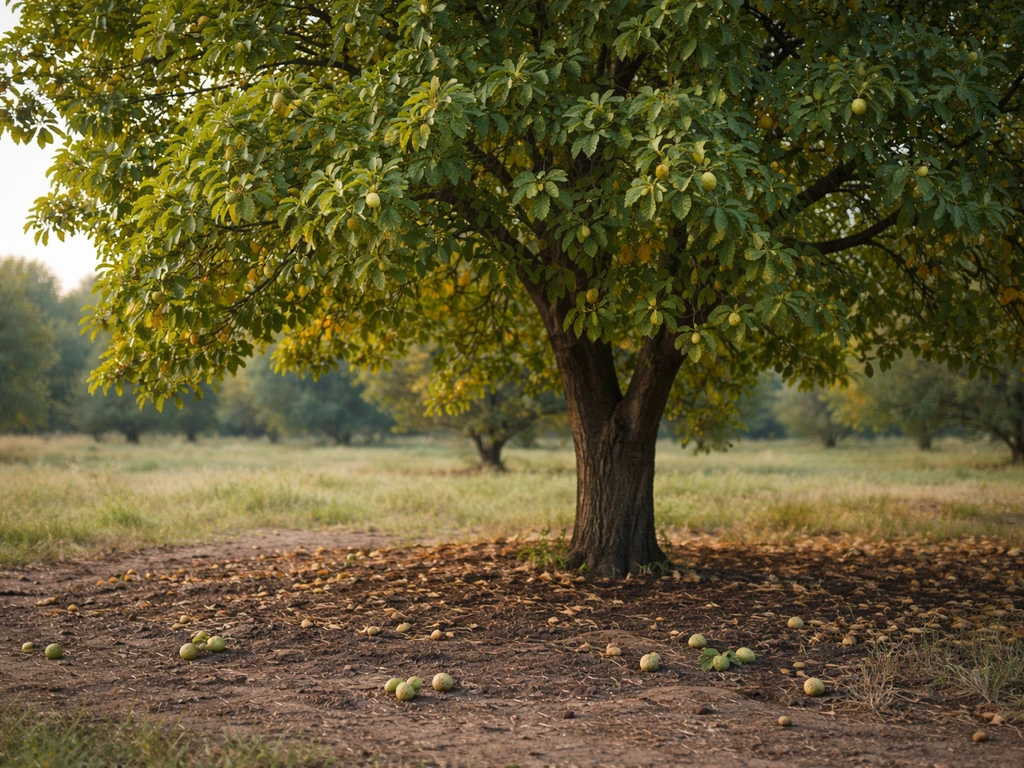
Species make a bigger difference than you'd think
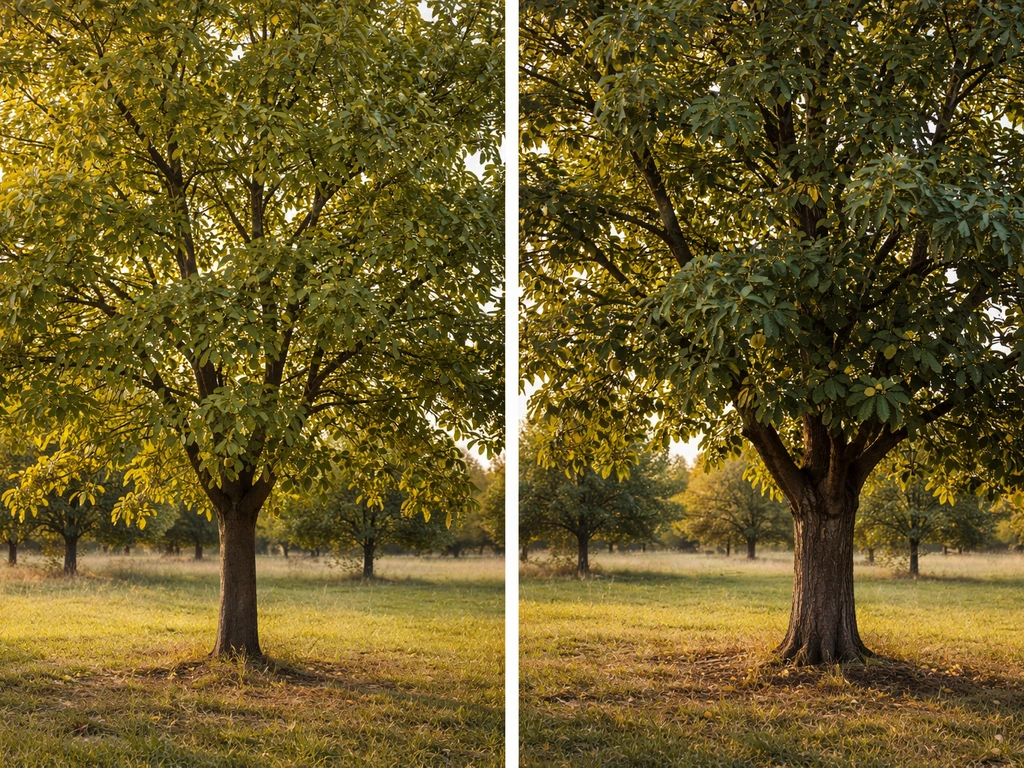
Before you can answer whether your climate suits walnuts, you need to know which walnut you're talking about. The two species most commonly grown in North America are English walnut (Juglans regia, also called Persian walnut) and black walnut (Juglans nigra). They share a genus but behave quite differently in the field.
Black walnut is a North American native and a tough, wide-ranging tree. It's rated hardy to USDA Zone 4, meaning it handles winters down to around -30°F (-34°C) without much drama. It's the walnut to consider if you're in a colder inland region. English walnut is the species behind most commercial nut production (think California orchards and the nuts you buy at the grocery store). It's generally considered reliable from about Zone 5 or 6 through Zone 8, with Zone 4 possible for the hardiest cultivars but not something to count on without careful variety selection. A few other species worth knowing: butternut (Juglans cinerea) is even hardier than black walnut and suited to the northern US and Canada, while heartnut (Juglans ailantifolia) occupies a similar cold-hardy niche. If you're curious about geographic range in more detail, regional breakdowns of where walnuts grow across the US and in Canada are worth exploring alongside this guide. If you want a broader view of walnut growing geography, see more on walnut where do they grow before you decide on a species geographic range. For a practical answer to where walnuts grow in Canada, focus on the colder-hardy species and then verify local frost-free and chilling-hour conditions where walnuts grow across the US and in Canada. Regional breakdowns can also help you pinpoint where walnuts grow in the US for your specific location where walnuts grow across the US and in Canada.
The practical upshot: if you're in zones 4 to 5 with cold winters, black walnut is your safer bet for reliable production. If you're in zones 6 to 8 with milder winters and a longer season, English walnut has more cultivar options and produces the more commercially valuable nut. Overlap exists, and in that middle range (Zone 5 to 6), both can work if you choose the right cultivar.
The climate requirements that actually matter
Winter cold and chilling hours
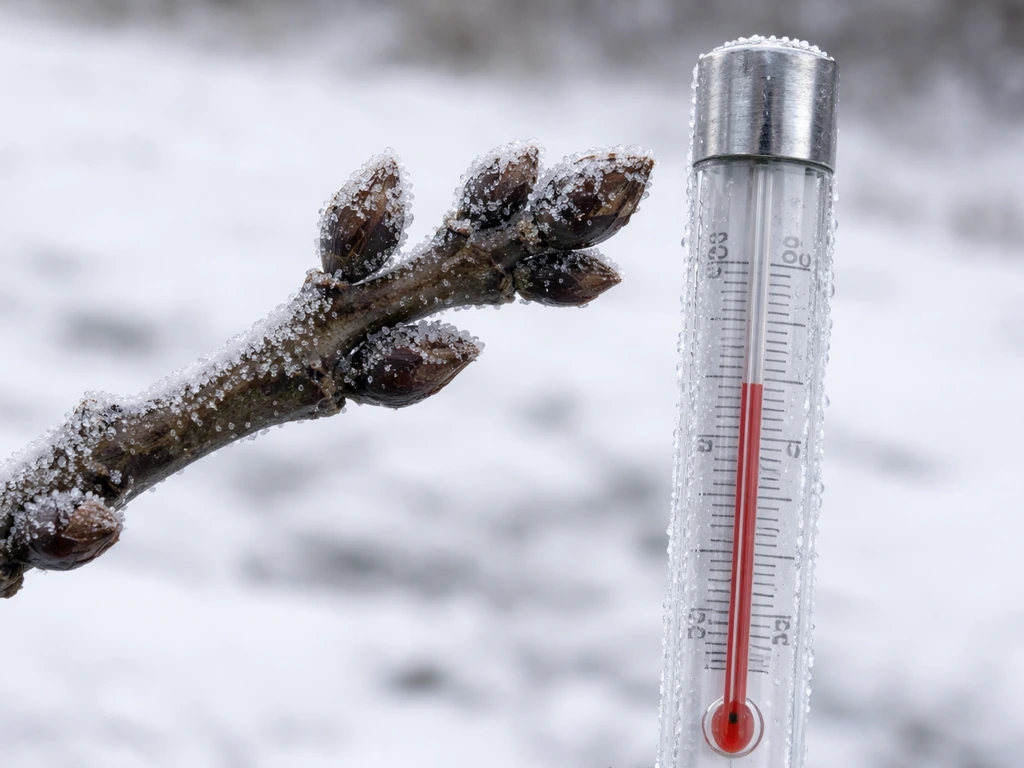
Walnuts need real winters. Like most deciduous nut trees, they require a period of chilling (temperatures between roughly 32°F and 45°F) to break dormancy properly in spring. Without enough chilling hours, buds open unevenly, flowering is disrupted, and nut set suffers. This is why English walnut struggles in the Deep South and most of Florida, even though frosts are rare there: the winters simply aren't cold enough to satisfy the tree's dormancy requirements. Most English walnut cultivars need somewhere in the range of 400 to 1,500 chilling hours depending on variety, so check the specific cultivar requirements against your local averages.
Growing season length
Black walnut needs a frost-free season of at least 170 days to develop and ripen nuts reliably. English walnut's requirements vary by cultivar, but early-ripening varieties need roughly 140 to 150 days with temperatures consistently above about 27 to 29°F. If your last spring frost comes late and your first fall frost arrives early, you may be working with a marginal season, especially in higher elevations or northern latitudes. This is where cultivar selection becomes critical: a late-leafing variety like 'Franquette' buys you some insurance against spring frost damage compared to earlier-leafing types.
Spring frost risk and bud break
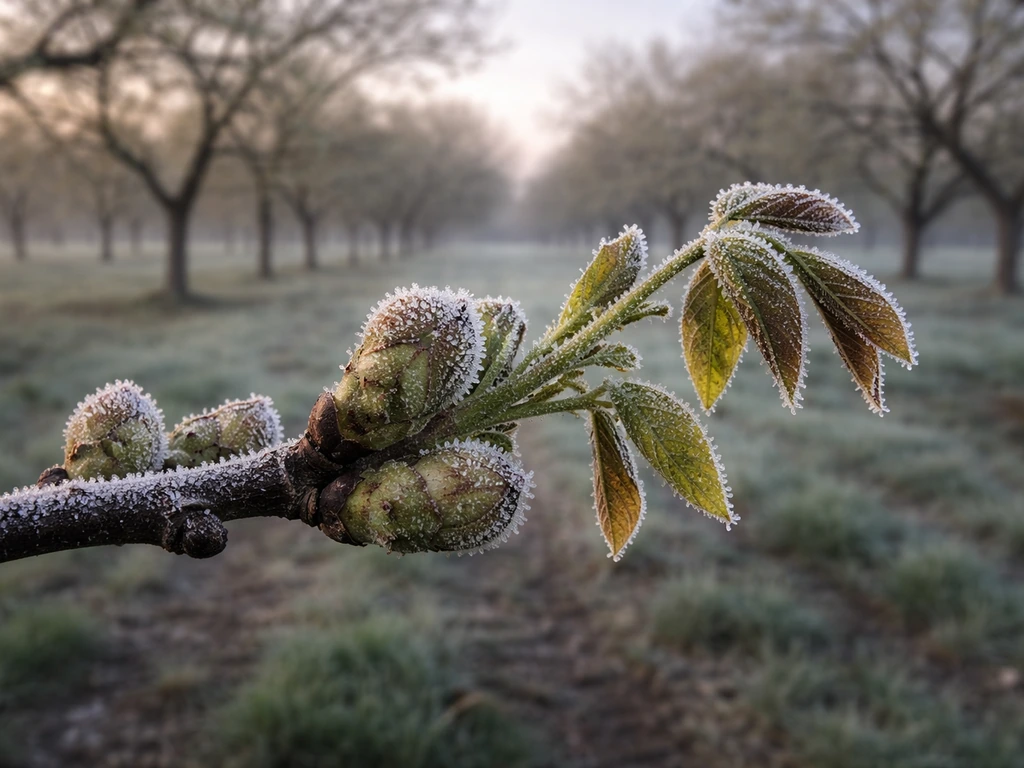
Late-spring frosts are one of the most underappreciated threats to walnut production. The risk isn't just to the tree itself (which may be fully cold-hardy) but to the year's crop. Bud break timing varies by cultivar, and opened buds are far more frost-sensitive than half-open buds, which are in turn more vulnerable than still-dormant buds. Even late-leafing English walnut varieties can lose their crop to a late frost if the tree is planted in a frost pocket, a low-lying area where cold air drains and pools on calm, clear nights. The RHS notes that fruit set can be significantly reduced by spring frost even on otherwise hardy trees, so this isn't a minor concern.
Cold vs. heat tolerance: matching species to your zone
| Species | USDA Zone Range | Frost-Free Season Needed | Key Limitation |
|---|---|---|---|
| Black Walnut (J. nigra) | 4–9 | 170+ days | Late-winter warm spells can trigger premature dormancy break |
| English Walnut (J. regia) | 5(6)–8 | 140–150+ days (cultivar dependent) | Insufficient chilling in warm zones; late frost in cold zones |
| Butternut (J. cinerea) | 3–7 | Shorter season tolerant | Disease susceptibility (butternut canker) |
| Heartnut (J. ailantifolia) | 4–8 | Moderate | Less common; fewer cultivar options |
For black walnut, cold hardiness is rarely the limiting factor across most of the eastern US and Midwest. The more subtle danger is what happens during late-winter warm spells: a stretch of mild weather in February can push the tree out of dormancy early, and then a return to hard freezing temps injures exposed tissue. This pattern is increasingly common in continental climates with variable winters, and it's worth factoring into site selection, not just zone lookup.
For English walnut, the upper zone limit is real. In Zone 9 and warmer, chilling requirements often go unmet, and production drops off. California's Central Valley threads this needle well because elevations and cool winter nights provide enough chilling even in a relatively mild climate, which is why that region dominates commercial US walnut production. For more specifics, see the typical California walnut growing regions and conditions that determine where these trees thrive California's Central Valley. If you're in the Southeast or Gulf Coast, English walnut is generally not the right fit unless you're at a higher elevation.
In marginal zones (4 for English walnut, or 8 to 9 for black walnut in the South), look for cultivars specifically bred or selected for those conditions. University extension services in your state will have regionally tested variety lists, and those recommendations are worth taking seriously over generic catalog descriptions.
Rainfall, humidity, and irrigation
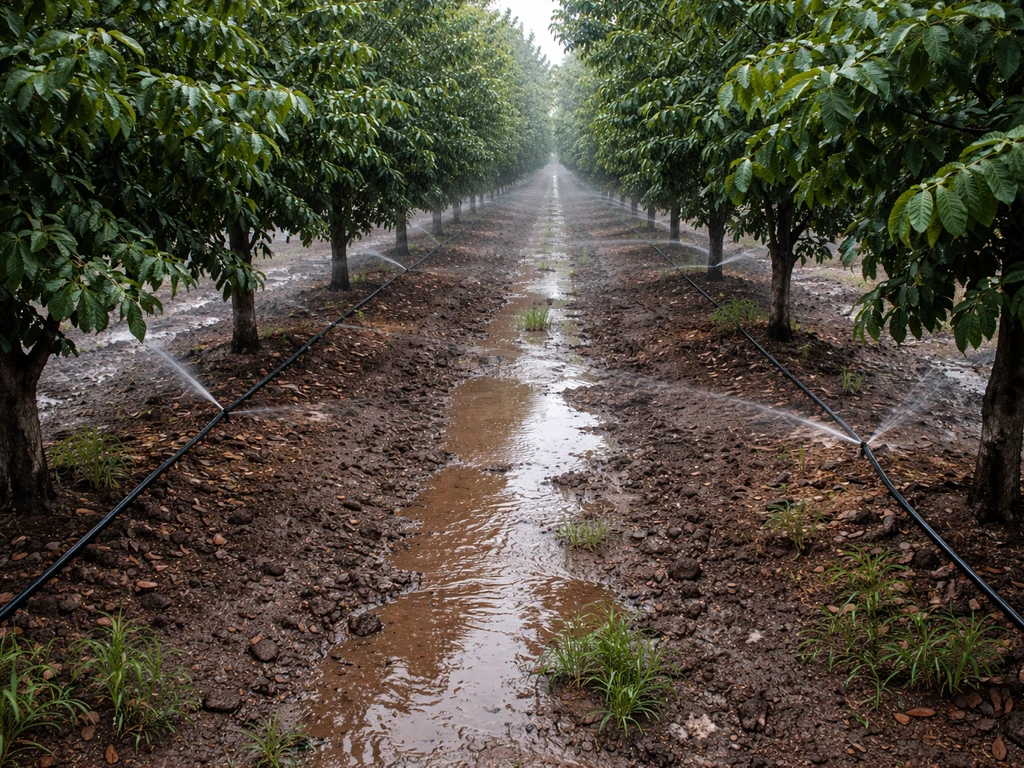
Black walnut generally needs at least 35 inches (890 mm) of average annual precipitation to thrive without irrigation. English walnut grown commercially often receives supplemental irrigation, particularly in drier western climates, but the tree isn't naturally drought-tolerant: consistent, deep soil moisture matters throughout the growing season. UC ANR's irrigation guidance for walnut emphasizes starting the season with fully charged, deep soil moisture (ideally from winter rainfall) and cautions that trying to replenish deep moisture mid-season leads to uneven water availability and stress-related problems. In practical terms, this means that in dry-summer climates, your irrigation strategy needs to begin in winter or early spring, not in response to wilting in July.
On the wet side, humidity brings its own problems. Walnut blight is a bacterial disease that thrives in prolonged wet springs, and in high-rainfall areas or years with sustained moisture during flowering, blight can decimate nut set before it even begins. UC IPM guidance calls for protective treatments at 7 to 10-day intervals during prolonged wet springs in orchards with a history of the disease. Walnut leaf blotch (a fungal issue) is similarly favored by wet weather. Overhead irrigation that wets the canopy also raises disease risk: rainfall above about a quarter inch combined with temperatures above 50°F creates conditions favorable for Botryosphaeriaceae-related blights. If you're in a high-humidity region, factor in fungal disease pressure as part of your climate suitability calculation, not just temperature and frost.
Soil and site: where climate meets the ground
Climate fit doesn't exist in isolation from soil and site, and nowhere is this more true than with walnuts. Both black walnut and English walnut perform best on deep, well-drained, nearly neutral soils (roughly pH 6.0 to 7.0). Poor drainage is one of the most reliable ways to kill a walnut tree even in an otherwise suitable climate. The USDA Forest Service is specific about this: black walnut sites should avoid areas that remain flooded for three days or longer. Compacted soils with restricted rooting depth or high clay content that holds water after rain are problematic for the same reason.
Aspect and wind exposure also interact with your climate. A south-facing slope in a Zone 5 garden can function more like Zone 6 in terms of warmth and season length, which may be enough to tip an English walnut from marginal to viable. Conversely, a north-facing site or a low spot where cold air pools will shorten your effective growing season and increase frost risk. Wind exposure matters for a different reason: strong prevailing winds during flowering disrupt pollination and mechanically stress young trees, which can set back establishment in an already-marginal climate.
One more site factor worth mentioning: walnuts produce juglone, a compound that inhibits many other plants. Black walnut produces it most intensely; English walnut generally produces it to a lesser degree. This doesn't affect the walnut's own climate tolerance, but it does influence how you design the planting site around it.
How to confirm suitability before you plant
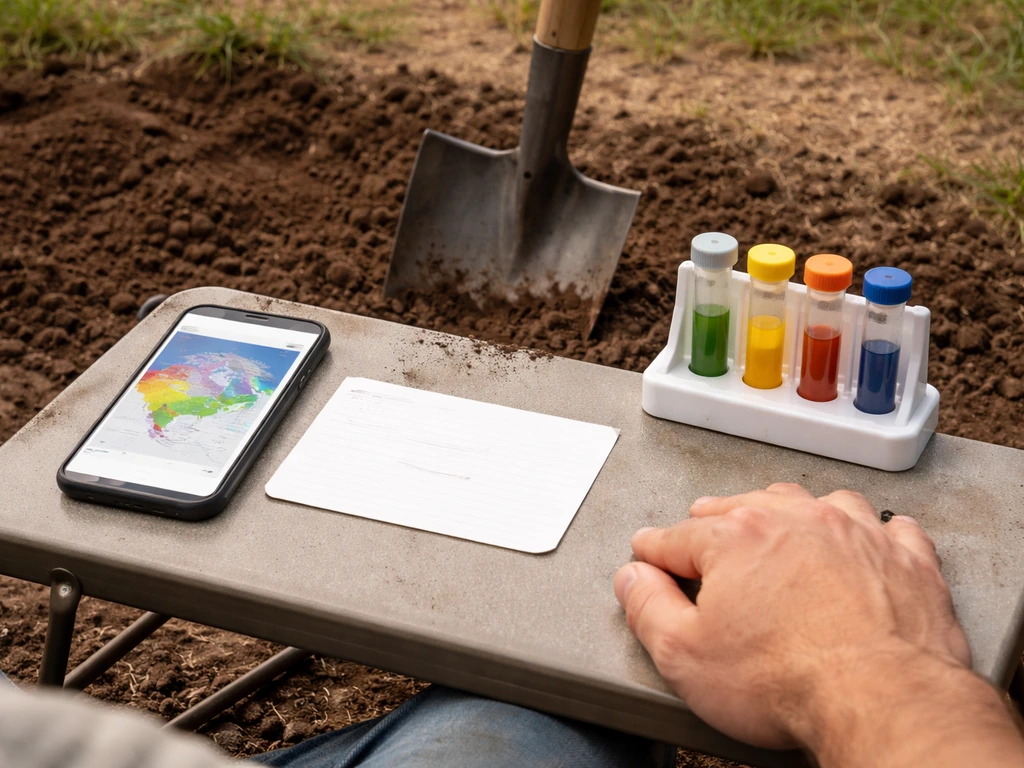
Looking up your USDA hardiness zone is the right starting point, but it's not the finish line. Here's a practical sequence for confirming whether walnuts will work in your specific location.
- Check your USDA hardiness zone via the official USDA zone map (updated in 2023), and also look at your average last spring frost date and first fall frost date to calculate your frost-free season length.
- Contact your state or provincial extension service for regionally tested walnut cultivar recommendations. OSU, UC ANR, Penn State, and others publish specific guidance for their regions, and these reflect actual trial data, not just catalog claims.
- Assess your specific site for drainage: dig a 12-inch hole, fill it with water, and check how quickly it drains. If water is still sitting after 24 hours, drainage is inadequate without significant amendment or raised planting.
- Identify microclimates on your property. Low spots, valley floors, and areas near buildings that block wind (or funnel cold air) all shift your effective climate relative to the regional average. Walk your site after a clear, calm night and note where frost damage appears first.
- If you're on the edge of a suitable zone, consider a small trial planting of one or two trees before committing to a larger orchard. Three to five years of observation on your specific site is worth more than any general guideline.
- Check local chilling hour data if you're in a milder climate and considering English walnut. Your nearest NOAA weather station or state climatologist office can provide historical winter chilling hour estimates for your area.
A practical recommendation framework by zone
If you want a quick decision framework based on where you are, here's how to think about it without overcomplicating the analysis.
- Zone 3 and colder: Standard walnuts are not a good fit. Butternut is worth exploring if you want a native Juglans species, but disease resistance is a real challenge.
- Zone 4: Black walnut is the primary option. Some hardy English walnut cultivars may work but are a gamble without local trial data. Expect variable production in harsh winters.
- Zone 5: Both species become viable with the right cultivars. Black walnut is lower-risk. English walnut with late-leafing cultivars like 'Franquette' is realistic if your site avoids frost pockets.
- Zone 6 to 7: The sweet spot for English walnut in the eastern and central US. Black walnut also performs well. Cultivar selection for disease resistance and season length matters here.
- Zone 8: English walnut can work if winter chilling hours are sufficient (check your local averages). Much of Zone 8 in the Pacific Northwest is fine; Zone 8 in the Deep South is more problematic.
- Zone 9 and warmer: English walnut generally struggles with insufficient chilling. Black walnut is also at its warm-climate limit. Lower-chill English walnut varieties exist but are not widely proven outside of specific California and Mediterranean climates.
The most common mistake I see is choosing a species or cultivar based on what grows nearby rather than what specifically suits the site's microclimate, drainage, and chilling hour profile. If you're wondering how does walnuts grow in your yard, focus on your local climate, frost timing, and season length before choosing a species. Two properties a mile apart can have meaningfully different frost pocket risks or drainage characteristics. Zone maps give you a starting hypothesis, not a guarantee. Use them alongside local extension data and your own site assessment, and you'll be in a much stronger position before that first tree goes in the ground.
FAQ
Can I use my USDA hardiness zone by itself to decide what climate walnuts grow in?
Not reliably. Zones reflect average winter cold, but walnuts are also limited by winter chilling hours, last spring frost timing, and the length of the frost-free season. Two locations in the same zone can differ enough in frost-pocket risk or chilling totals that one works and the other fails.
What chilling hours should I look for if I’m trying to grow English walnuts?
Use the specific cultivar requirement, not a generic range. Many English walnut cultivars need roughly 400 to 1,500 chilling hours (around 32°F to 45°F), and if your local winter falls short you can get uneven bud break, weak flowering, and poor nut set even when winters are cold enough to avoid tree damage.
How do I check whether my spring frost timing makes walnuts a bad idea?
Check your last spring frost date and then think in terms of bud stage, not just the tree’s cold hardiness. Opened buds are much more frost-sensitive than still-dormant buds, and cultivar timing plus frost pockets (low spots that collect cold air) can be the difference between a normal crop and a near-zero nut set.
What’s the difference between frost hardiness and frost damage to the crop?
A walnut tree can survive freezes and still lose the year’s harvest if frost hits during flowering or right after bud break. That’s why growers focus on timing and site selection, not just winter minimum temperatures.
Do walnuts need winter cold even in places with mild winters but occasional freezes?
Yes, they still need true chilling. In mild-winter regions, frosts might not be a problem, but inadequate chilling can disrupt dormancy breaking and flowering. This is a common reason English walnuts struggle in warmer climates even if trees survive winter.
What minimum frost-free days matter most, and does it differ by walnut type?
Black walnut generally needs at least about 170 frost-free days to ripen nuts consistently. English walnut varies by cultivar, with early-ripening types often needing around 140 to 150 days when temperatures stay sufficiently warm, so selecting an early or late cultivar can make or break the fit.
Can winter warm spells hurt walnut trees even if the hardiness zone looks fine?
They can. A stretch of mild weather during late winter can push trees out of dormancy early, and then a return to hard freezing temperatures injures exposed tissue. This “freeze after thaw” risk is more relevant in continental climates with variable winter weather than simple zone temperature averages.
How much rain do walnuts need, and is precipitation alone enough?
Black walnut typically performs best with at least about 35 inches of average annual precipitation if you are not irrigating. Walnuts are not naturally drought-tolerant, especially during the growing season, so in drier climates you often need deep, consistent soil moisture, with irrigation planned ahead of summer rather than started after wilting appears.
If I’m in a wet, humid area, will walnuts still grow, or is humidity disqualifying?
Humidity is not automatically disqualifying, but it increases disease pressure. Prolonged wet springs can favor walnut blight and leaf blotch, and overhead watering that keeps the canopy wet can raise risk. If your area has frequent long rain events during flowering, you may need a management plan rather than assuming the tree alone will handle it.
Does soil drainage matter more than climate for walnut success?
For many plantings, drainage is at least as important as climate. Walnuts can fail even in a good zone if the site stays wet, flooded, or compacted long enough to restrict roots. For black walnut, avoid areas that remain flooded for multiple days, because root stress can be lethal.
How should aspect and slope change my “what climate do walnuts grow in” decision?
Microclimate can shift your effective warmth. A south-facing slope may lengthen the season and reduce frost severity compared with a north-facing or shaded site, while low spots that collect cold air can increase late frost risk. This can let you grow a species that looks marginal on paper.
What’s a practical way to choose between English walnut and black walnut for a borderline location?
If you are colder with a short, riskier season, lean toward black walnut and, if needed, cold-hardy options of other species. If you are in a warmer zone but chilling might be marginal, verify chilling hours for the exact English cultivar before committing. In the overlap range, cultivar selection is usually the deciding factor.
Are there pollination or variety-matching issues I should consider when thinking about climate suitability?
Sometimes. Even when climate and chilling are adequate, flowering that occurs at the wrong time relative to a companion cultivar can reduce nut set. If you plan multiple trees, choose cultivars that align in bloom timing for your site conditions.
Citations
NDSU lists black walnut hardiness as USDA Zone 4.
https://www.ndsu.edu/agriculture/extension/publications/black-walnut
USDA Forest Service notes that good black walnut sites should avoid areas that remain flooded for 3 days or longer, and that soil/site drainage characteristics are key.
https://www.nrs.fs.usda.gov/pubs/misc/walnut/p38_43.pdf
US Forest Service describes black walnut’s optimum climate range as having a frost-free season of at least 170 days and average annual precipitation of at least 890 mm (35 in).
https://www.srs.fs.usda.gov/pubs/misc/ag_654/volume_2/juglans/nigra.htm
USU TreeBrowser lists English walnut (Juglans regia) as hardy to USDA Zone 4–8 and describes its climatic tolerance as higher for cool/winter survival compared with what many warm-region cultivars can handle.
https://extension.usu.edu/treebrowser/catalog/walnut-english-persian
OSU Extension states a practical requirement for early-ripening walnut cultivars: a growing season of about 140–150 days with temperatures above ~27–29°F is needed for earliest ripening.
https://extension.oregonstate.edu/catalog/em-8907-growing-walnuts-oregon
OSU Landscape Plants lists Juglans regia as hardy to USDA Zone (5)6 (i.e., generally usable around Zone 6 in that reference).
https://landscapeplants.oregonstate.edu/plants/juglans-regia
A key frost-risk point: bud-break timing matters because opened buds are more sensitive to late-spring frost than half-opened buds, which are more sensitive than dormant buds (genetic/phenological differences among cultivars).
https://bmcplantbiol.biomedcentral.com/articles/10.1186/s12870-023-04386-6
OSU Extension warns that even late-leafing English walnut varieties (e.g., ‘Franquette’) can be injured by late-spring frosts when trees are located in frost pockets.
https://extension.oregonstate.edu/sites/default/files/catalog/auto/EM8907.pdf
UC IPM provides cultural guidance stressing uniform/consistent soil moisture for fruit and nut trees (reducing stress that can predispose to issues).
https://ipm.ucanr.edu/home-and-landscape/cultural-tips-for-growing-walnut/
UC IPM notes that in orchards with histories of walnut blight damage, protective treatments at 7- to 10-day intervals during prolonged wet springs are necessary for adequate control.
https://ipm.ucanr.edu/PMG/r881100111.html
UC IPM lists walnut blight among key walnut diseases with specific timing guidance as part of an orchard disease-management schedule (used to decide when sprays are most effective).
https://ipm.ucanr.edu/agriculture/walnut/Treatment-Timing-for-Key-Diseases/
UC ANR emphasizes starting the season with deep soil moisture and cautions that attempting to replenish deep moisture during the growing season can lead to stress-related problems; it discusses the role of winter rainfall/water storage in walnut water availability.
https://ucanr.edu/sites/default/files/2010-06/19006.pdf
UC ANR’s irrigation-scheduling publication states that (in many systems) the seasonal water balance depends on winter rainfall and that irrigation needs can be related to the proportion of total winter rainfall that contributes to stored soil moisture.
https://ucanr.edu/sites/default/files/2010-06/19004.pdf
US Forest Service describes black walnut as sensitive to soil conditions, developing best on deep, well-drained, nearly neutral soils that are generally moist and fertile (and highlights drainage/depth factors).
https://www.srs.fs.usda.gov/pubs/misc/ag_654/volume_2/juglans/nigra.htm
US Forest Service symposium proceedings summarize significant soil/site characteristics for black walnut growth, including emphasis on good drainage and other site constraints affecting growth.
https://www.nrs.fs.usda.gov/pubs/gtr/gtr_nc243/gtr_nc243_071.pdf
Vermont Urban & Community Forestry provides a black walnut selection reference that includes hardiness guidance and practical suitability considerations for planting.
https://vtcommunityforestry.org/tree-care/tree-selection-planting/tree-selection-tool/juglans-nigra
Penn State Extension notes that black walnut (J. nigra) and butternut are recognized landscape plants that produce juglone problems; English/Persian walnut can also produce juglone but generally to a lesser degree.
https://extension.psu.edu/landscaping-and-gardening-around-walnuts-and-other-juglone-producing-plants/
California Walnuts reports that irrigation practices that wet the tree canopy can predispose walnuts to Botryosphaeriaceae-related blights, and it cites environmental triggers such as rainfall above ~1/4 inch combined with temperatures above 50°F.
https://walnuts.org/news/managing-bot-disease-in-walnuts/
RHS states walnut leaf blotch is favored by wet weather (fungal disease pressure increases under sustained moisture).
https://www.rhs.org.uk/disease/walnut-leaf-blotch/
RHS notes that fruit set may be reduced by spring frost (relevant to deciding suitability by frost-prone microclimates), even though walnut trees are fully hardy.
https://www.rhs.org.uk/nuts/walnuts/
US Forest Service highlights that late-winter warming periods can cause premature dormancy break and increase freezing injury risk for black walnut tissue.
https://www.srs.fs.usda.gov/pubs/misc/ag_654/volume_2/juglans/nigra.htm