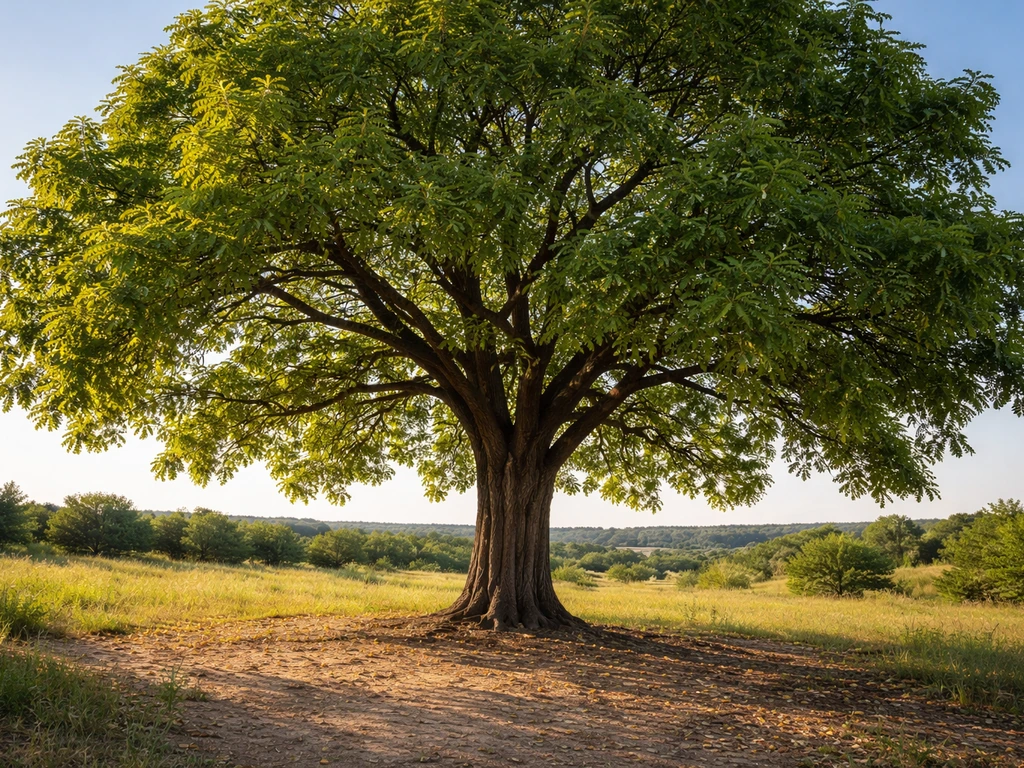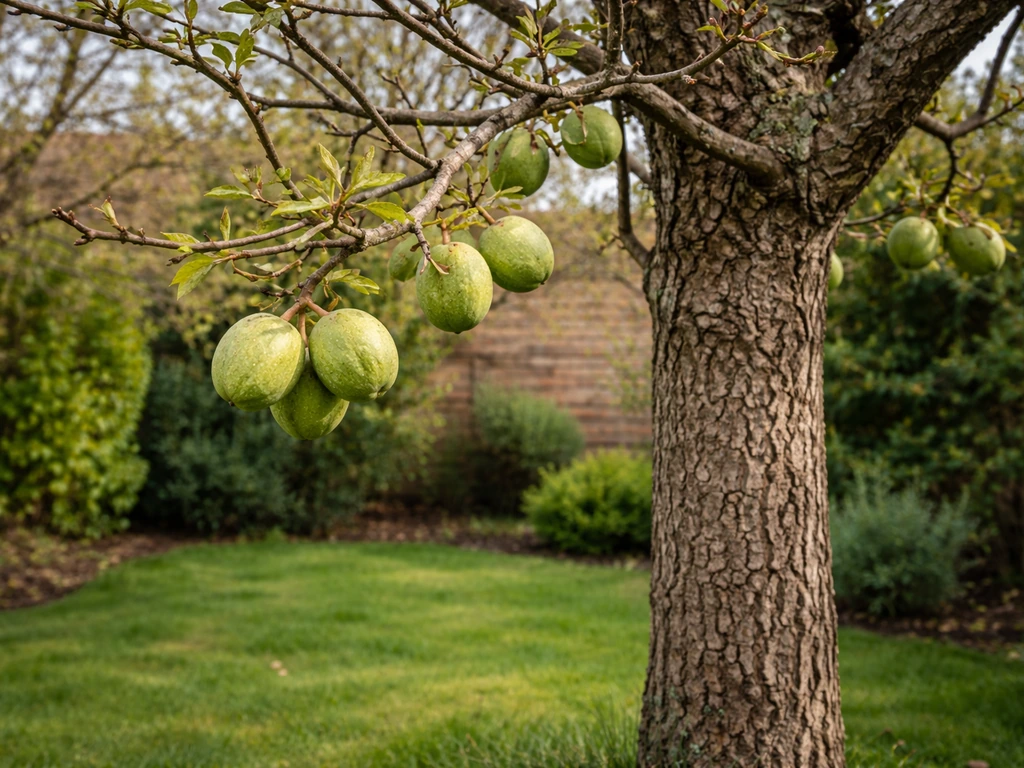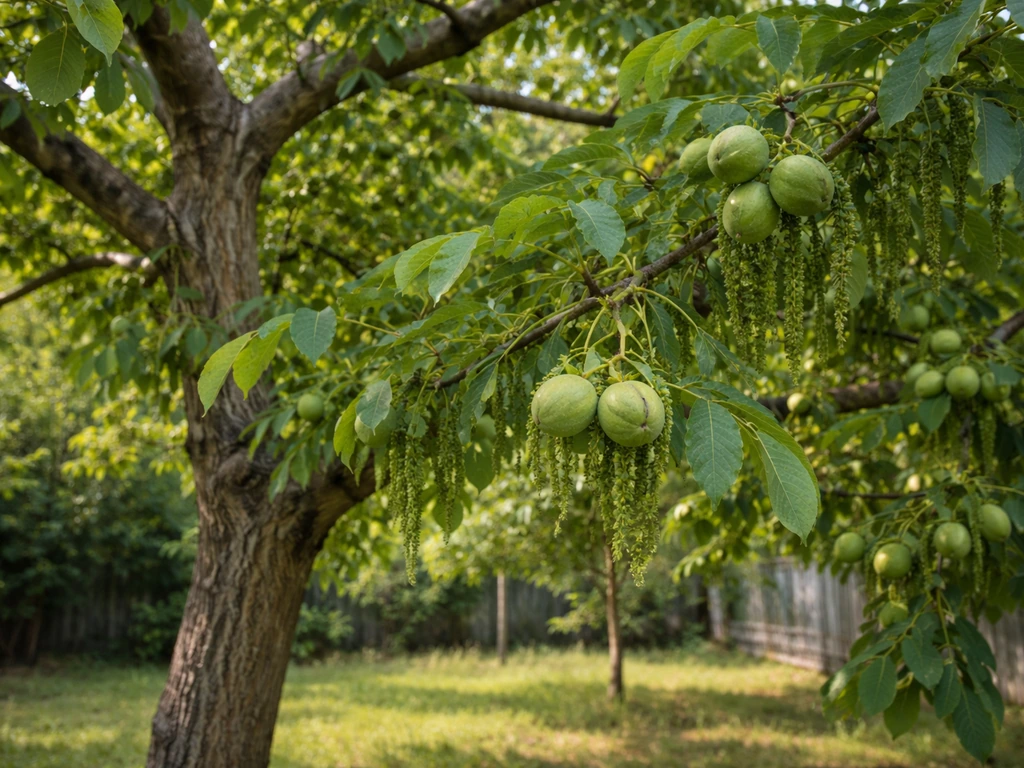
Plenty of plants grow under and near black walnut trees, but you have to choose the right ones. The walnut produces a natural toxin called juglone that kills or severely stunts many common garden plants, and the dense shade and dry, competitive root zone make things even harder. The good news: there's a solid list of shade-tolerant, juglone-tolerant species that actually thrive in this environment once you understand what you're working with.
What Plants Grow Under Black Walnut Trees
Marcus Hendricks
10 Apr 2026
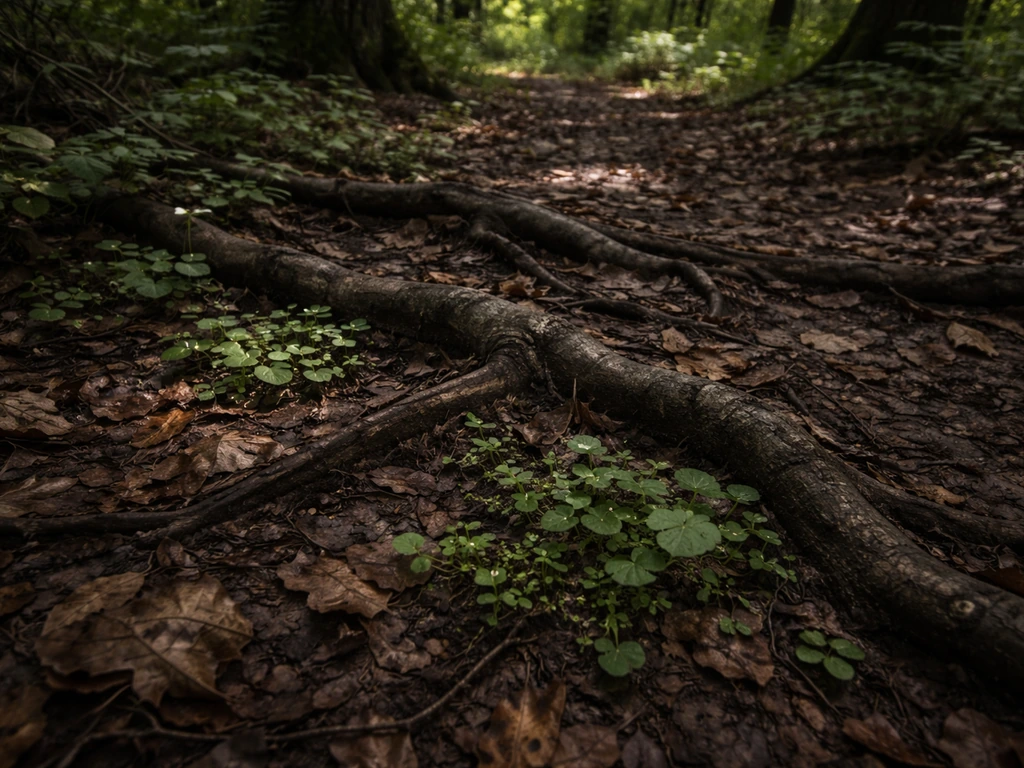
Why black walnut makes most plants struggle
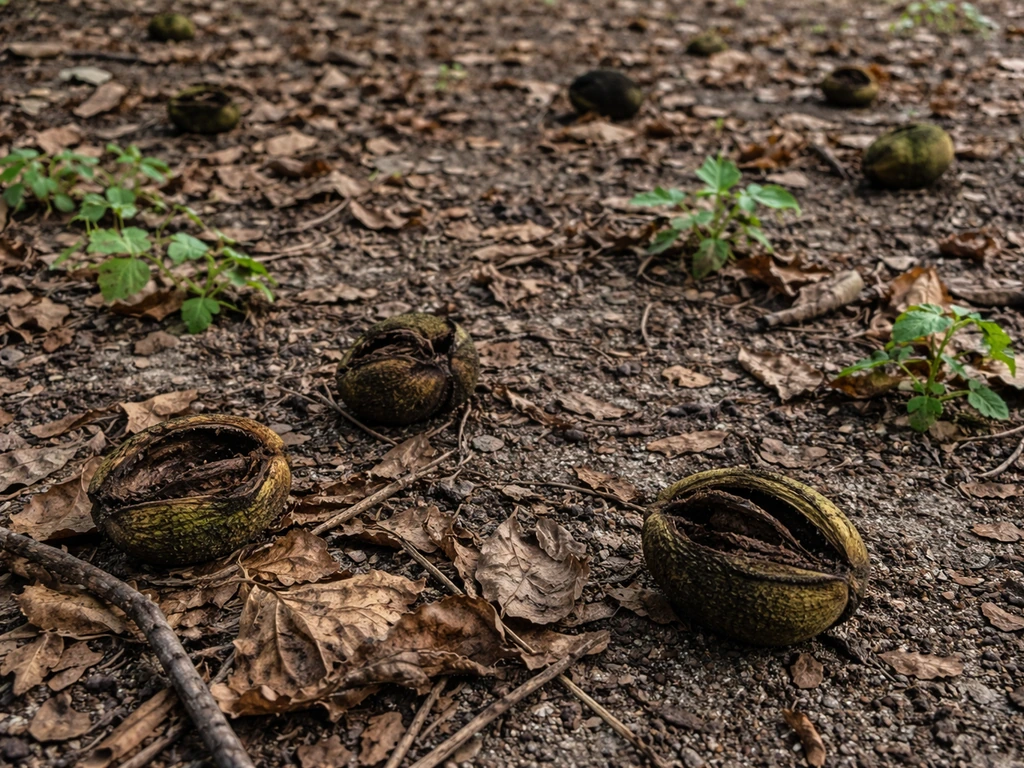
The core issue is allelopathy, specifically a chemical called juglone (5-hydroxy-1,4-naphthoquinone). It's present in every part of the tree: roots, buds, leaves, bark, and nut hulls. The roots release small amounts continuously, and the leaves and hulls that drop each fall add more to the soil as they break down. This means the toxic zone doesn't stop at the trunk or even the dripline.
Juglone is poorly soluble in water, which means it doesn't travel far through the soil in runoff, but it still accumulates where root density is highest. For a mature tree, that toxic zone commonly extends 50 to 80 feet from the trunk, with the worst concentration right at and inside the dripline where roots are densest and leaf litter piles up. Research shows that juglone's primary damage is to shoot elongation and biomass accumulation rather than seed germination itself, so plants often sprout, then stall or collapse as they try to grow.
Soil type and drainage matter a lot here. In poorly drained, heavy clay soils, juglone hangs around longer because the bacteria and oxygen that break it down are limited. In well-drained, loose soils with good microbial activity, the toxin breaks down faster and the effective impact is reduced. This is why the same plant species might survive under one walnut and die under another, and why you can't just copy someone else's plant list without understanding your own conditions.
One more thing worth knowing: tree age changes everything. A young walnut with a small root system causes much less damage than a mature tree spreading roots 60-plus feet in every direction. Plants that did fine when the tree was young may fail 10 years later as the root zone expands. If you're planning a long-term garden near a walnut, keep that trajectory in mind. You can read more about where black walnut trees grow to better understand the native range and why their root chemistry evolved in the first place.
The best shade- and walnut-tolerant plants overall
The plants that succeed under black walnut share a few traits: they tolerate or prefer shade, they can handle dry or competitive root zones, and they're biochemically indifferent to juglone. Most of the reliable performers are woodland natives or plants adapted to forest-edge conditions. The lists from Wisconsin Extension, Purdue, Penn State, and the Morton Arboretum largely agree on the core species, though they all note that the lists are based on observation rather than exhaustive controlled trials, and that individual results can vary by soil, drainage, and position relative to the tree.
A key distinction worth making: plants directly under the canopy face both juglone and deep shade plus root competition for water. Plants just outside the dripline face less shade but potentially the same juglone concentration, since walnut roots extend beyond the canopy. If you want to understand what can grow near black walnut trees in the broader sense, including shrubs, vegetables, and other trees, the same tolerant/sensitive framework applies, just with fewer light constraints as you move farther out.
Flowers worth planting under black walnut
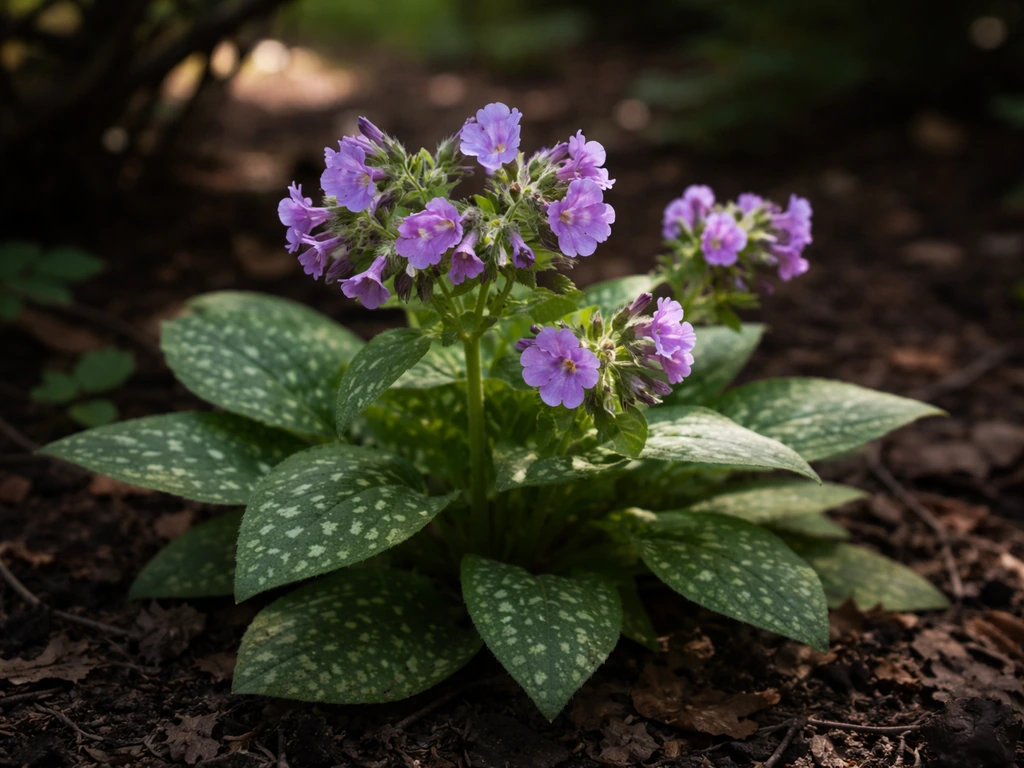
These are the flowering perennials most consistently listed as juglone-tolerant across multiple extension sources. Wisconsin Extension also provides specific examples of flowering plants they categorize as tolerant of juglone, including lungwort (Pulmonaria) and daylily (Hemerocallis) flowering perennials most consistently listed as juglone-tolerant across multiple extension sources. They also handle partial to full shade, which makes them genuinely useful under a walnut canopy rather than just technically surviving.
- Lungwort (Pulmonaria spp.): One of the most reliably recommended options. It prefers evenly moist, humus-rich soil and tops out around 8 to 18 inches tall. Flowers range from pink and blue to white, and it handles deep shade well. This is a first-choice plant for directly under the canopy.
- Cranesbill geranium (Geranium spp.): A tough, spreading perennial that multiple sources, including Penn State and the Morton Arboretum, consistently list as tolerant. Adapts to a range of light levels and produces attractive flowers through the season.
- Bellflower (Campanula latifolia): Penn State includes this specifically as a tolerant species. Upright and showy with purple-blue flowers. Prefers some moisture but handles the dappled light under a walnut well.
- Daylily (Hemerocallis spp.): A workhorse perennial that appears on Wisconsin Extension's tolerant list. Tough, drought-tolerant once established, and happy in part shade. A practical choice near the dripline where light is better.
- Sweet woodruff (Galium odoratum): A low, spreading woodland plant that Wisconsin Extension notes as tolerant. It thrives in exactly the kind of shaded, humus-rich conditions you find under a mature walnut.
- Trillium: Native woodland species listed as tolerant by Wisconsin Extension. Slow to establish but perfectly adapted to the forest floor conditions a walnut creates.
- Ajuga (Ajuga reptans): A low-growing, spreading ornamental that handles shade and appears on multiple tolerant lists. Useful as a groundcover with flowering interest in spring.
One caveat: none of these are guaranteed. Wisconsin Extension is honest that their tolerant lists are observation-based, and that some species listed as tolerant will still fail in specific conditions, especially in heavy, wet soils or in the densest root zones right at the trunk.
Shrubs and woody plants that can handle walnut roots
Shrubs are generally more variable than herbaceous perennials when it comes to juglone tolerance. Some do fine, others are surprisingly sensitive. The following are considered tolerant by at least one major extension source, but spacing and drainage still matter a lot.
- Forsythia: Frequently listed as tolerant and widely used near walnuts in the landscape. Does best outside the dense canopy where it gets more light.
- Elderberry (Sambucus spp.): A native shrub that handles the conditions under and near black walnut reasonably well. Bonus: it attracts pollinators and wildlife.
- Viburnum spp.: Several viburnum species are listed as tolerant. They prefer some shade and do well in the transition zone between the canopy edge and full sun.
- Arrowwood viburnum (Viburnum dentatum): Specifically considered a reliable performer near walnuts and adapts to the part-shade conditions under the canopy edge.
- Wild ginger (Asarum canadense): Technically a low woody groundcover perennial, but behaves like a shrubby layer. Native, shade-loving, and widely regarded as tolerant of juglone conditions.
When it comes to larger woody neighbors, conifers deserve a separate mention. Some spruce species, for example, are commonly planted in yards with walnuts nearby, but results are mixed. If you're wondering whether spruce trees can grow near black walnut, the short answer is that some species do better than others and placement relative to the root zone matters significantly.
Groundcovers and grasses that handle walnut allelopathy
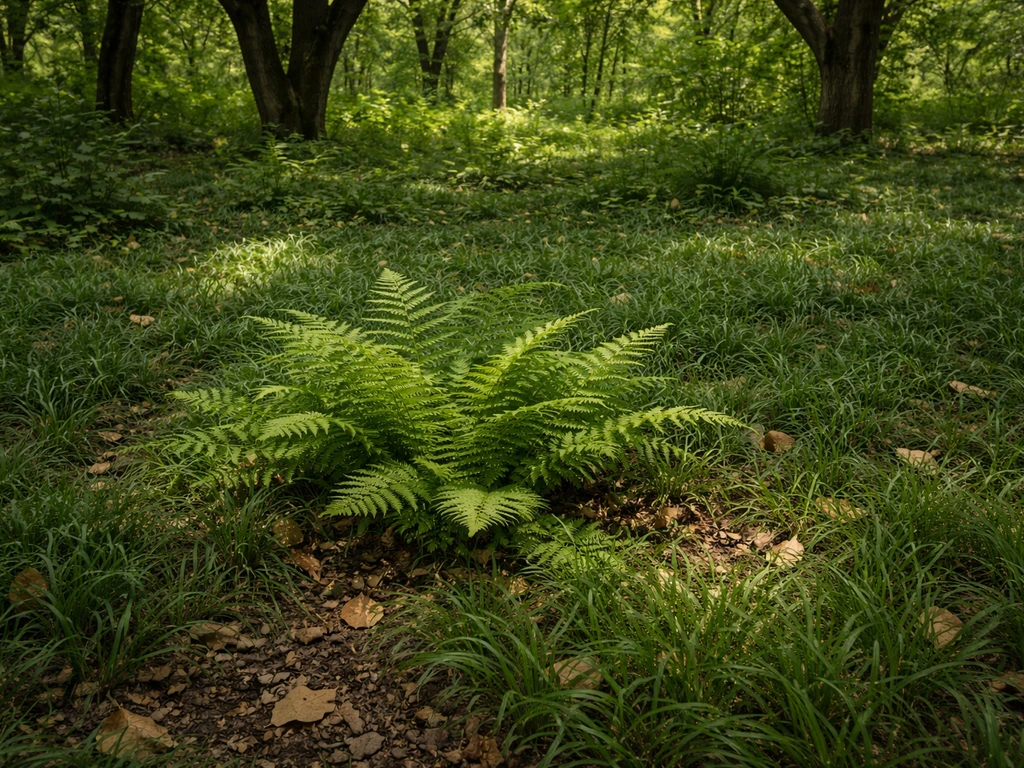
Groundcovers are often the most practical solution directly under a walnut canopy. They're low-maintenance once established, spread to suppress weeds, and many woodland natives are naturally adapted to the shade and chemical environment a walnut creates.
- Ferns: Several fern species are listed as tolerant by Wisconsin Extension and make excellent groundcovers under walnut. They love the humus-rich, shaded conditions. If you want a more detailed breakdown, there's a good discussion of whether ferns grow under black walnut trees and which species perform best.
- Hostas: A popular choice and generally listed as tolerant by Wisconsin Extension and the Morton Arboretum, though results vary by variety. Some hostas do beautifully, others struggle. It's worth looking at the specific question of whether hostas grow under black walnut trees if you're planning on relying on them heavily, because not all cultivars are equal.
- Sweet woodruff (Galium odoratum): Doubles as a groundcover in this context. Spreads readily in shade and handles the floor conditions under a walnut well.
- Pachysandra: Often listed as tolerant and a reliable, dense groundcover for shade. Stays low, spreads steadily, and doesn't need much maintenance once established.
- Creeping phlox (Phlox subulata): Tolerant of juglone and useful at the sunnier edges of the canopy. Not ideal directly under dense shade but performs well near the dripline.
- Native sedges (Carex spp.): Grass-like plants that naturally grow in woodland settings. Several species handle both the shade and the chemical conditions near walnut. Better adapted than most true grasses.
True lawn grasses are a mixed bag. Many turfgrasses are sensitive to juglone, which is why you often see dead patches under walnut canopies. If you're trying to maintain a lawn in that zone, improving drainage and over-seeding with more tolerant grass mixes can help, but it's an ongoing battle. Native groundcovers are generally a smarter long-term choice.
A quick comparison: reliable performers vs. common mistakes
| Plant | Type | Light tolerance | Juglone tolerance | Best position |
|---|---|---|---|---|
| Lungwort (Pulmonaria) | Herbaceous perennial | Full to part shade | Well documented tolerant | Directly under canopy |
| Cranesbill geranium | Herbaceous perennial | Part shade to sun | Well documented tolerant | Under canopy to dripline |
| Hostas | Herbaceous perennial | Full to part shade | Generally tolerant, varies by cultivar | Under canopy, check variety |
| Ferns | Herbaceous perennial | Full to part shade | Generally tolerant | Under canopy to dripline |
| Forsythia | Shrub | Part shade to sun | Generally tolerant | Dripline and beyond |
| Elderberry | Shrub | Part shade | Generally tolerant | Dripline zone |
| Native sedges (Carex) | Grass-like groundcover | Full to part shade | Generally tolerant | Under canopy |
| Tomatoes | Vegetable | Full sun | Highly sensitive | Keep 60+ feet away |
| Rhododendron/Azalea | Shrub | Part shade | Highly sensitive | Keep well outside root zone |
| Apple/crabapple | Tree/fruit | Full sun | Highly sensitive | Keep 60+ feet away |
How to set yourself up for success
Choosing the right plants is only half the equation. How and where you plant matters just as much. Here's what actually improves your odds:
Assess your light and moisture first
Spend a day watching how much light the area under your walnut gets in summer when the canopy is full. Under a large mature tree, you may have deep shade for most of the day. Near the dripline you'll get dappled light. This matters because many tolerant plants still need at least 2 to 3 hours of direct or bright indirect light to flower and grow well. Also check soil moisture: walnut root zones tend to be dry because the tree pulls heavily from the soil, especially in summer. Match your plant choices to actual conditions, not ideal conditions.
Manage leaf litter and nut hulls religiously
Every fall, the walnut drops leaves and nut hulls that are loaded with juglone. As they decompose, they add to the soil toxin load in your planting beds. Remove them promptly and do not compost them for use back in those beds. Also don't use walnut bark or wood chips as mulch near sensitive or even tolerant plants, since juglone can still be released from fresh or partially decomposed material. Use a different mulch source, like aged hardwood chips from a non-walnut species.
Improve drainage and soil quality
Good drainage is the single biggest factor in reducing juglone impact after species selection. Juglone breaks down faster in well-aerated, biologically active soil. Adding organic matter to improve soil structure helps, but go easy on heavy clay amendment directly under an established canopy to avoid damaging surface roots. If drainage is a serious problem, a raised bed with a physical root barrier can work, but it needs to be constructed to actively limit walnut root infiltration from below. Even then, maintain it by keeping walnut debris out and monitoring for root intrusion over time.
Respect the distance zones
Think in three zones. Zone one is directly under the canopy: deep shade, dry, high root density, highest juglone. Stick to the most tolerant woodland plants here. Zone two is the dripline edge and just beyond: still high juglone but improving light and potentially better drainage. More options work here. Zone three is beyond 50 to 60 feet from a mature trunk: most juglone concern drops significantly and your planting options open up considerably, though some root extension is still possible. For practical purposes, treating 50 to 60 feet as a buffer for sensitive plants is standard guidance from Penn State and Wisconsin Extension alike.
Planting timing and plant vigor
Start with healthy, vigorous plants rather than weak transplants. Juglone toxicity symptoms can appear quickly after transplanting, especially in summer when root systems are active and moisture is limited. Spring planting gives new plants the best chance to establish before summer stress kicks in. Water consistently during the first season, and don't be discouraged if a plant struggles in year one but stabilizes in year two. Some tolerant species need a season to establish their own root system before they perform well.
- Map your light: observe sun exposure in midsummer under the full canopy before buying any plants.
- Rake and remove walnut leaves and nut hulls every fall, and don't use them as mulch or compost in garden beds.
- Improve drainage by working organic matter into planting areas, or consider a raised bed with root barrier for high-value plantings.
- Choose plants from the confirmed tolerant lists and match them to your actual light and moisture conditions, not just juglone tolerance alone.
- Plant in spring with healthy transplants, water consistently through the first season, and give plants two full growing seasons before giving up on them.
- Remove any walnut seedlings that sprout in your beds, since even young walnut roots contribute juglone to the immediate soil.
The area under a black walnut doesn't have to be a dead zone. It's genuinely challenging, and some of what you plant won't make it, but with tolerant species, good soil management, and realistic expectations about light and competition, you can build a productive and attractive understory garden. The walnut isn't going to cooperate, so you have to work with it rather than against it.
FAQ
How far from the trunk should I plant if I want to avoid black walnut juglone issues as much as possible?
Use a distance buffer, especially for sensitive plants. A practical rule is to treat around 50 to 60 feet from a mature walnut as the point where juglone pressure drops a lot, but root extension and leaf litter can still affect closer beds, so observe your own site and avoid placing new seedlings right at the dripline if you have a choice.
Why do some plants sprout under a black walnut but then fail in midsummer?
Juglone often causes stalling after initial growth, so germination can look normal while shoots struggle later. This is worse when plants are also dealing with the walnut’s dry root zone, so the combination of chemical stress and drought stress usually explains “it started, then collapsed.”
Does good drainage completely solve juglone problems?
Improved drainage helps because juglone breaks down faster in aerated, microbe-active soil, but it does not eliminate it. In well-drained soil you may still see setbacks in the densest root zone, especially right under the canopy where roots and leaf litter accumulate.
Can I plant edibles under a black walnut if I use raised beds or weed fabric?
You can sometimes grow juglone-tolerant crops, but most vegetables are not reliable in zone one. Raised beds can improve drainage, but you still must manage walnut root intrusion, and you should avoid using walnut debris or fresh wood products in or under the bed because juglone can leach from organic material.
Is it safe to mulch with walnut leaves, walnut hulls, or walnut wood chips near plants I want to keep?
It’s risky. Fresh or partially decomposed walnut leaves, nut hulls, and bark products can keep adding juglone to the soil. For understory beds, remove the leaf litter promptly in fall, and use aged mulch from non-walnut sources so you are not continually reloading the toxin.
Why do trees and shrubs sometimes fail more unpredictably than perennials under walnut?
Woody plants often experience a longer-term root competition and moisture imbalance, and some are more sensitive to juglone than they appear. Even if a shrub survives, growth may be stunted for years, then decline when the walnut root system expands or when summer drought increases.
Can I “reset” juglone by adding compost or fertilizer?
Amending can improve soil biology and structure, which can speed breakdown, but it won’t reliably detoxify a walnut root zone. Also, heavy compost additions directly under established canopy roots can change moisture and temperature in ways that stress plants, so focus on light, drainage, and appropriate species rather than expecting amendments alone to solve the chemistry.
Will installing a root barrier or physical barrier stop black walnut problems?
A well-constructed barrier can reduce root entry, but it has to be installed correctly and maintained. The goal is to actively limit walnut roots from below and prevent new root intrusion over time, then keep walnut debris away from the planting area, because leaf litter can still contribute juglone.
What should I do if I lose plants near the dripline but things farther out grow well?
Treat it as a zoning confirmation. Shift your most sensitive plants farther out toward zone three, and reserve zone one for the most tolerant woodland groundcovers and perennials. You can also re-site more demanding plants to the dripline edge where light may be better, while keeping moisture and drainage consistent.
Are lawn grasses a total no under black walnut?
Many turfgrasses struggle and often die back in patches because they are juglone-sensitive and the area is dry. If you must attempt turf, you’ll usually need better drainage and a more tolerant seeding approach, but for long-term success under the canopy, native groundcovers tend to require less ongoing rescue.
When is the best time to plant under a black walnut?
Spring planting generally gives plants the best chance to establish before peak summer drought and root competition hit. Water consistently during the first season, and expect that year-one stress can happen, with stabilization often starting in year two as the plant’s own roots establish.
How can I tell whether my specific spot is too dry or too shaded for the “tolerant” plants?
Measure real light and moisture, not ideal conditions. Watch for at least a few hours of direct or bright indirect light if you expect flowering, and check soil dryness during summer, because walnut areas often stay dry even when surrounding areas look moist. If it’s both deep shade and dry, even tolerant plants may underperform.