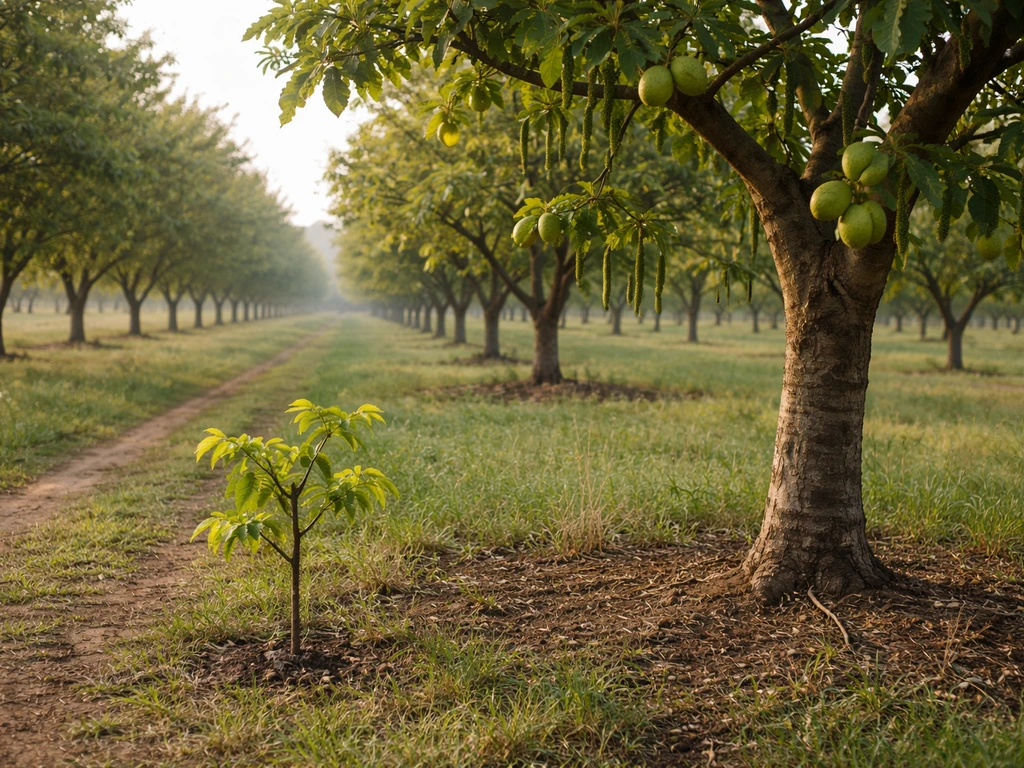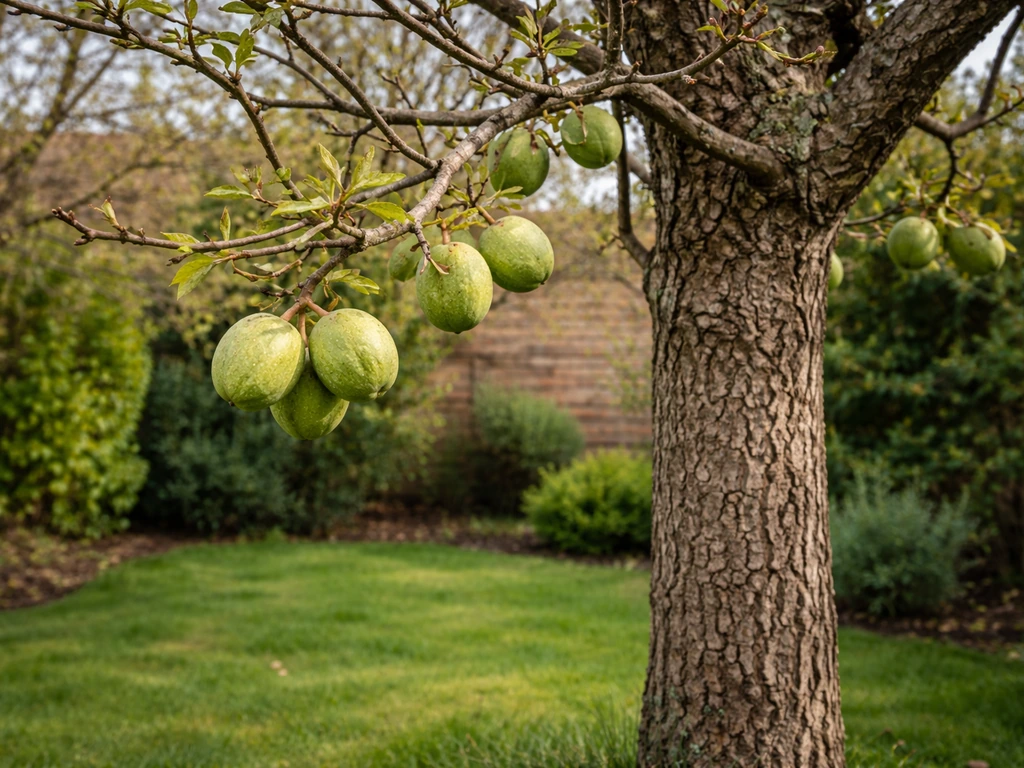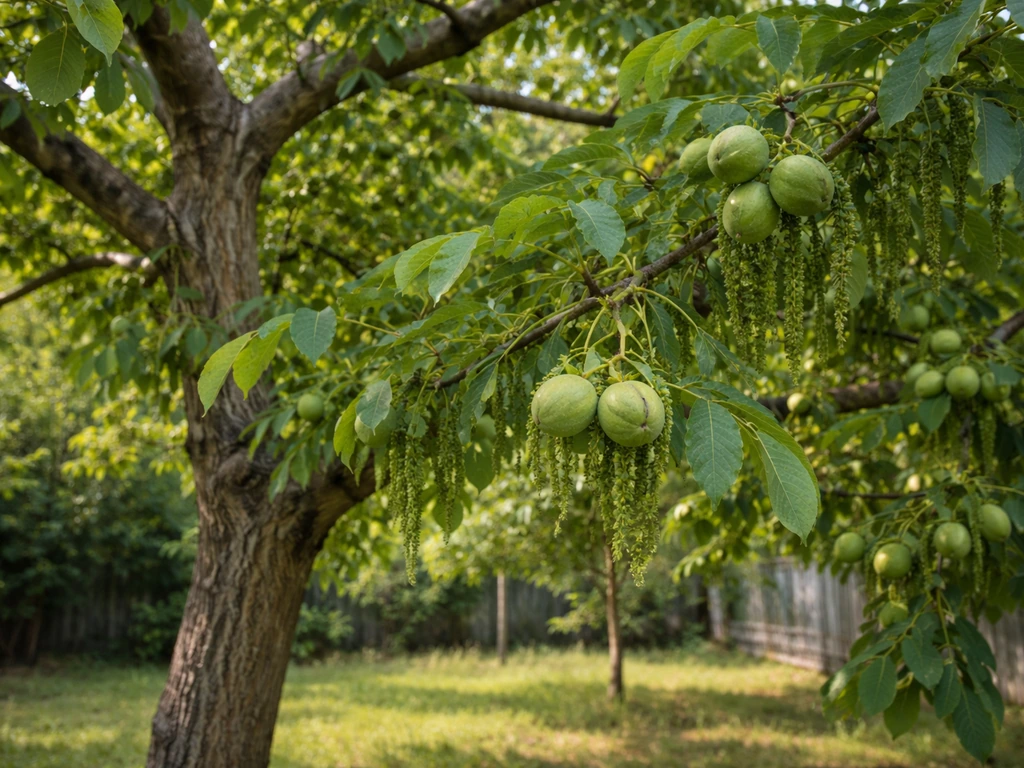
Yes, you can absolutely grow a walnut tree from a walnut. The process takes patience and a few specific steps, but it is entirely doable for a home gardener. You collect or buy nuts, keep them moist, give them a cold treatment to break dormancy, plant them at the right depth, and wait. That is the short version. The longer version involves a few details that can mean the difference between a seedling in spring and a bucket of moldy nuts that never sprouted.
Can You Grow a Walnut Tree From a Walnut? How To
Marcus Hendricks
9 Apr 2026
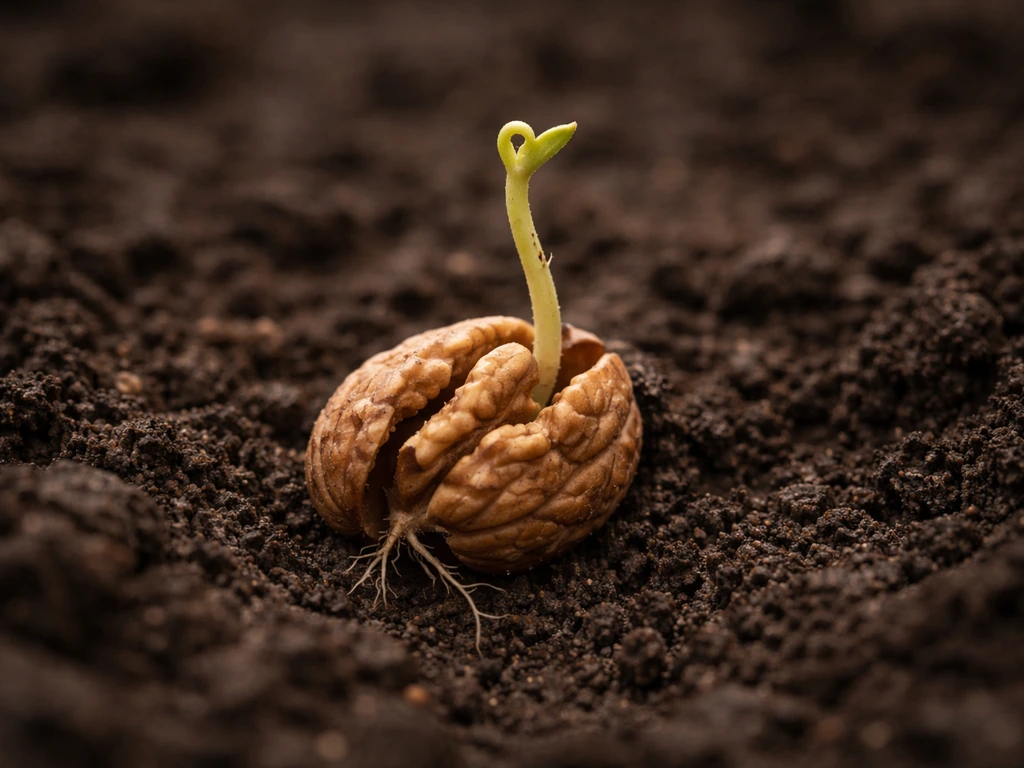
Yes, you can grow a walnut tree from a walnut (but here is what to expect)
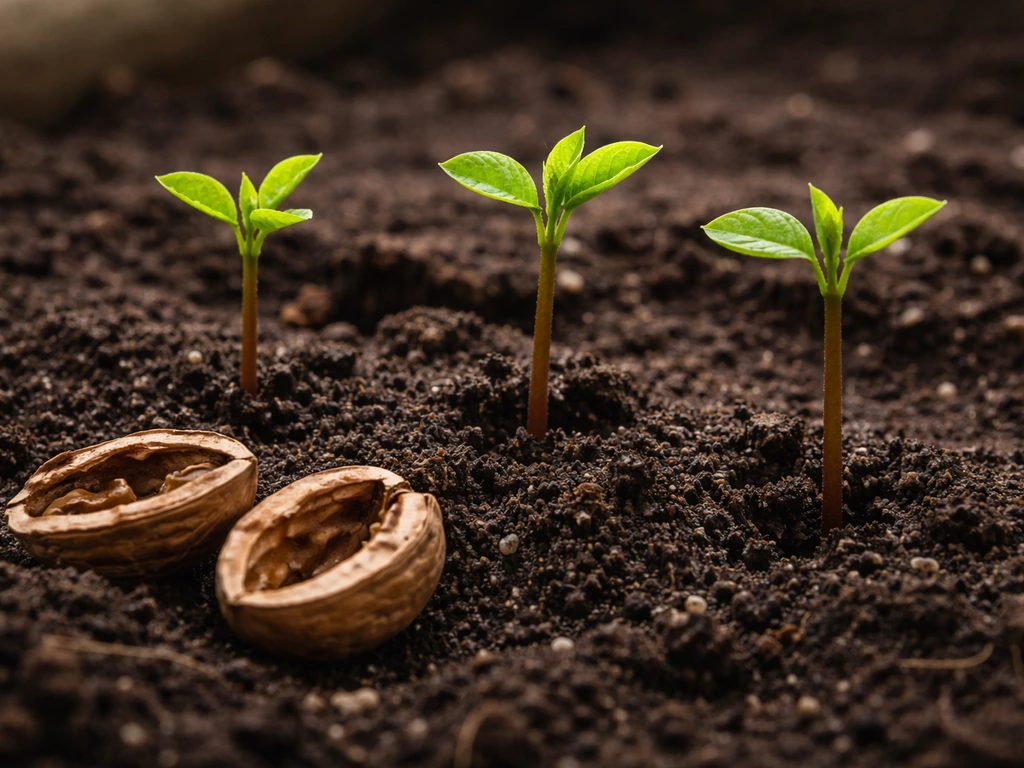
The first thing to be honest about is what kind of tree you will get. Walnuts grown from seed do not come out true to the parent tree. If you plant a nut from a prized English walnut variety, the seedling may produce nuts of a completely different quality or size. This is normal with most nut trees.
Commercially, walnut growers propagate named varieties by grafting them onto seedling rootstock, which is why many nursery trees are grafted rather than grown straight from seed. California black walnut (Juglans hindsii) seedlings, for example, are widely used as rootstock onto which English and black walnut varieties are grafted precisely because seed-grown trees are genetically variable. So if nut quality matters to you, a grafted tree from a nursery is the more reliable path.
But if you want to grow a walnut tree for shade, timber, wildlife habitat, or just the experience of doing it, starting from a nut is a completely legitimate approach. Understanding how walnut trees grow from seed to maturity will help you set realistic expectations from day one.
The two species most people deal with are black walnut (Juglans nigra) and English walnut (Juglans regia). Black walnut is native to North America and produces the intensely flavored nuts found in the wild. English walnut is what you find in grocery stores, with the thin-shelled, milder-tasting nuts. Both can be grown from seed, but they have slightly different stratification requirements, which we will get into below.
Collecting, storing, and preparing walnut seeds (including store-bought)
Fresh nuts give you the best chance of success. If you are collecting from a wild or yard tree, gather nuts as soon as they fall in autumn and remove the green outer hull before anything else. The hull contains juglone and can cause mold if left on during storage. Rinse the shells, then do a float test: drop the nuts in a bucket of water and discard any that float. Floaters are typically hollow, dried out, or have been damaged by insects, and they will not germinate. Sinkers are your viable candidates.
Store-bought walnuts are a trickier situation. In-shell walnuts from the grocery store can sometimes germinate, but many have been heat-treated, fumigated, or stored long enough that the seed embryo is no longer viable. Your best bet with store-bought nuts is to look for raw, untreated, in-shell walnuts, often found at natural food stores or farmers markets in autumn. Shelled walnut meat (the kernel only) will not germinate. You need the whole nut with the hard shell intact. Even then, germination rates with store-bought nuts tend to be low, so plant more than you think you need.
One critical point that trips a lot of people up: walnuts are what is called a recalcitrant seed. Drying them out significantly reduces viability. Once you have viable, hull-free nuts, do not let them sit in a warm dry place. Either stratify them immediately or store them in a sealed bag with slightly damp material in the refrigerator until you are ready.
Stratification and germination: the steps that actually matter
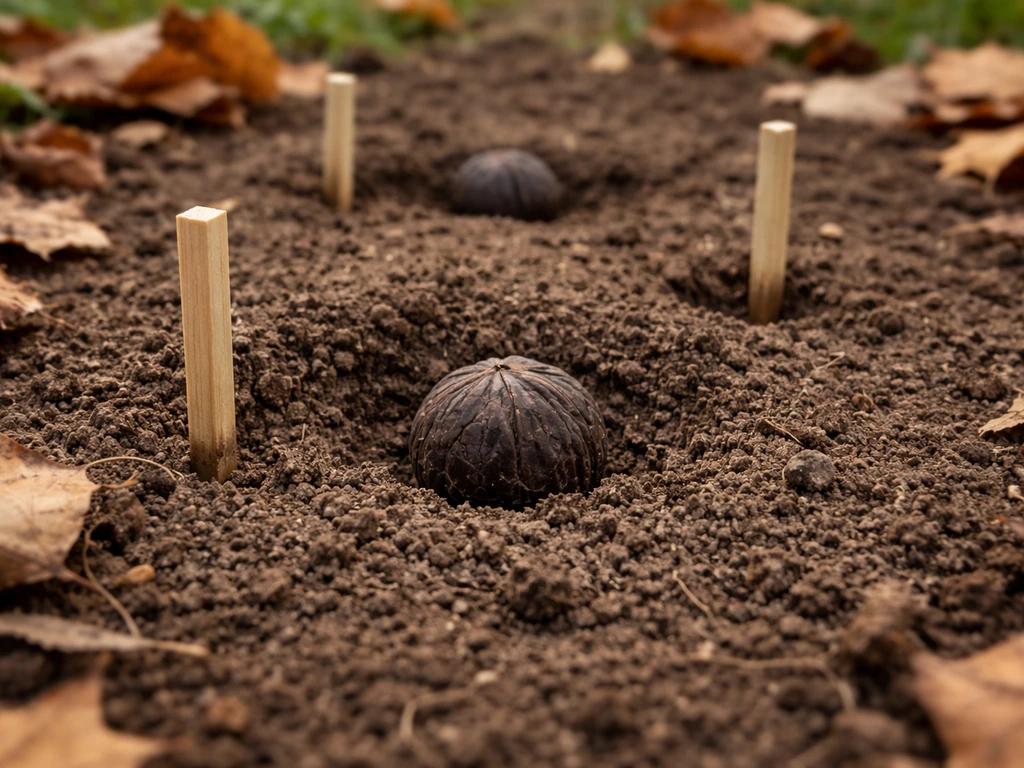
Stratification is the cold, moist treatment that mimics winter and tells the seed it is safe to germinate. Without it, most walnut seeds will simply sit in the ground dormant, possibly for a year or more, or never sprout at all. This is not optional, it is a biological requirement.
Temperature and duration
For black walnut, the target stratification temperature is between 33°F and 50°F, and the required duration is roughly 90 to 120 days for optimum germination. For English walnut, the recommended temperature is around 40°F and the duration is a bit longer, closer to 4 to 5 months. A standard household refrigerator set between 34°F and 40°F works well for both. Start stratification in late November or December if you want to plant outdoors in spring.
How to stratify step by step
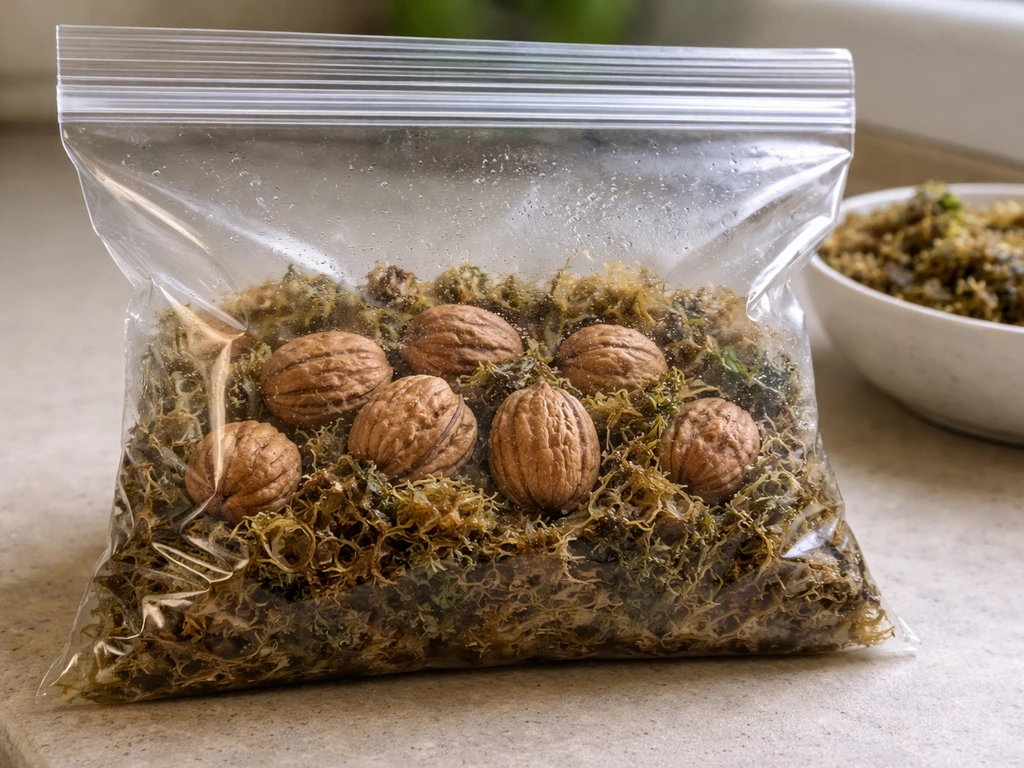
- Place your float-tested, hull-free nuts in a zip-lock bag or sealed container with slightly damp sphagnum moss, peat, or sawdust. The medium should feel like a wrung-out sponge, moist but not dripping.
- Seal the bag and put it in the refrigerator. Label it with the date so you know when the cold period ends.
- Check the bag every two to three weeks. The medium must stay continuously moist throughout the entire stratification period. If it dries out, germination will be uneven or fail entirely. Add a small amount of water if needed.
- Watch for premature sprouting. If roots start showing before you are ready to plant, plant them immediately rather than letting roots grow long inside the bag.
- After 90 to 120 days for black walnut (or 4 to 5 months for English walnut), the nuts are ready to plant. Germination after planting typically takes 4 to 6 weeks under warm conditions (70 to 85°F).
An alternative to refrigerator stratification is fall planting outdoors. You plant the nuts directly in the ground in autumn and let winter do the work naturally. This works reasonably well for black walnut in climates with cold winters, but you have less control over moisture and temperature, and you risk losing seeds to rodents, which actively seek out buried walnuts. If you go this route, plant deeper and consider wire mesh over the bed.
Common failures during stratification
- Mold on the nuts: usually caused by the medium being too wet or nuts that had hull residue left on them. Remove moldy nuts immediately so they do not spread. A light rinse and a drier medium can help.
- No sprout after stratification: could be non-viable seed (especially with store-bought), stratification that was too short, or temperature that was too warm. Some seed sources require close to two years of stratification in challenging conditions.
- Roots sprouting too early: this is actually a success sign. Plant right away at the correct depth.
- Shriveled or hollow nuts after the cold period: these were not viable to begin with. The float test should catch most of these before stratification starts.
Planting outdoors vs. in containers
Once your nuts have completed stratification, you have two main options: plant directly in the ground outdoors, or start them in containers. Both can work, but they involve different trade-offs.
Planting in the ground
This is the more natural option and generally produces stronger root systems. Plant stratified black walnut seeds about 2 inches deep with roughly 2 feet of spacing if you are doing a row, and at least 4 feet between rows. For a single specimen tree, pick your permanent or semi-permanent location carefully because walnuts develop a deep taproot quickly and dislike being moved. Soil should be deep, fertile, and well-drained. Black walnut in particular does best in loamy, moist soils and requires full sunlight to thrive. Avoid compacted or shallow soils, which can restrict root growth and create stress that makes young trees vulnerable to canker diseases later on.
Spring planting after stratification is the most reliable approach for consistent, uniform germination. Water regularly after planting to keep the soil consistently moist but not waterlogged. Do not let the seedbed dry out in the first few weeks.
Growing in containers
Container growing lets you control conditions more precisely in the early stages, which is useful if your outdoor conditions are not ideal or if you want to start seeds indoors. However, walnuts have long taproots and they will become root-bound quickly in a small pot. Use a deep container, at least 12 inches, with excellent drainage. The potting mix needs to allow free movement of water through the pot to prevent the root rot issues that walnut seedlings are prone to. Container type and potting medium genuinely affect seedling growth outcomes, so avoid dense, water-retaining mixes. If roots hit the bottom of the pot, air-pruning can redirect growth but this is not a long-term substitute for ground planting.
If you are wondering whether a walnut could stay in a pot longer term, the short answer is that it is challenging but possible for a while. For a more thorough look at the trade-offs involved, the article on growing a walnut tree in a pot covers the specifics of container management in more depth.
| Factor | In-Ground Planting | Container Planting |
|---|---|---|
| Root development | Natural taproot growth, better long-term | Restricted, risk of circling roots |
| Planting depth | 2 inches deep | 2 inches below soil surface in container |
| Soil control | Limited to site preparation | Full control over mix and drainage |
| Watering | Less frequent once established | More frequent, dries out faster |
| Sunlight | Full sun required | Full sun required; move pot as needed |
| Long-term viability | Best option for permanent placement | Short-term only; transplant in year 1 or 2 |
| Rodent/pest risk | Higher (buried nut) | Lower indoors; higher outdoors |
| Best for | Anyone with a suitable site | Urban growers, cold climates needing indoor start |
Variety, viability, and troubleshooting
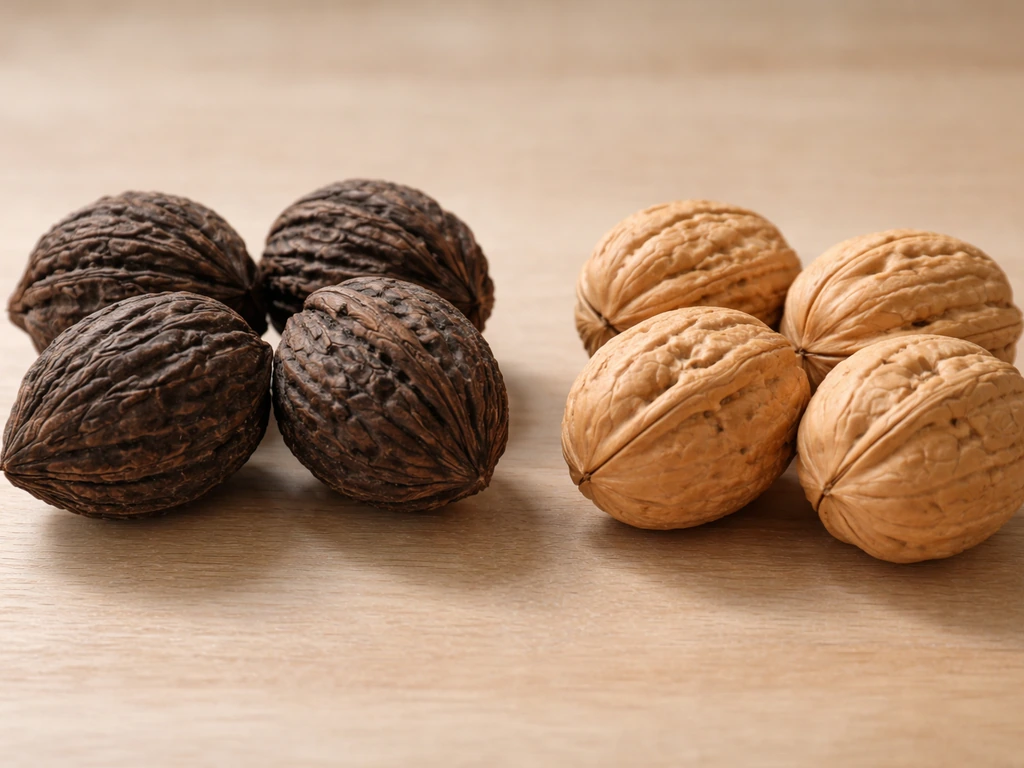
Getting germination right comes down to seed quality first and everything else second. Here are the most common problems and what is actually causing them.
Seed dormancy and viability
Walnut seeds are dormant when shed. This is not a defect, it is biology. The embryo needs a cold, moist period to complete after-ripening before it will germinate. If you skip or shorten stratification, you are working against the seed's own internal clock.
Germination in some seed lots can take up to two years under natural conditions depending on the seed source and the winter it experiences. Commercially, stratification in the refrigerator compresses this into a predictable window.
There are no officially standardized germination testing prescriptions for all walnut species, but you can test a stratified batch by placing a few nuts in a flat of moistened sand or peat at room temperature to see how many sprout before committing to a full planting.
Mold, no sprout, and poor germination
Mold during stratification almost always traces back to hull residue left on the nut, a medium that is too wet, or nuts that were already starting to break down when you collected them. Poor germination after stratification typically means the seeds were not truly viable (old, dried out, heat-treated store-bought nuts are the usual culprits) or the stratification period was too short or too warm. If germination rates are very low from a fresh batch, consider extending the cold treatment by a few more weeks before assuming the seeds are bad.
Pests and diseases to watch for
Young walnut seedlings are highly susceptible to Phytophthora root rot, and losses in nursery beds can be significant. The pathogens [Phytophthora citricola and Cylindrocladium spp. ](https://www. apsnet.
org/edcenter/resources/commonnames/Pages/BlackWalnut. aspx) are among the most serious early threats. The solution is consistent: plant in well-drained soil, never overwater, and do not plant in low spots where water pools. Walnut blight, a bacterial disease that affects catkins and developing nuts, is most active during wet spring weather, though it is more of an issue for established trees than brand-new seedlings.
Root-lesion nematodes can also affect walnut and rootstock types, and insect pests like butternut curculio can damage nuts and new shoots. For a broader picture of what shares space with a walnut, including which plants can tolerate its juglone output, the guide on what will grow under a walnut tree is worth reading alongside your planting plan.
Transplanting and what happens in year one
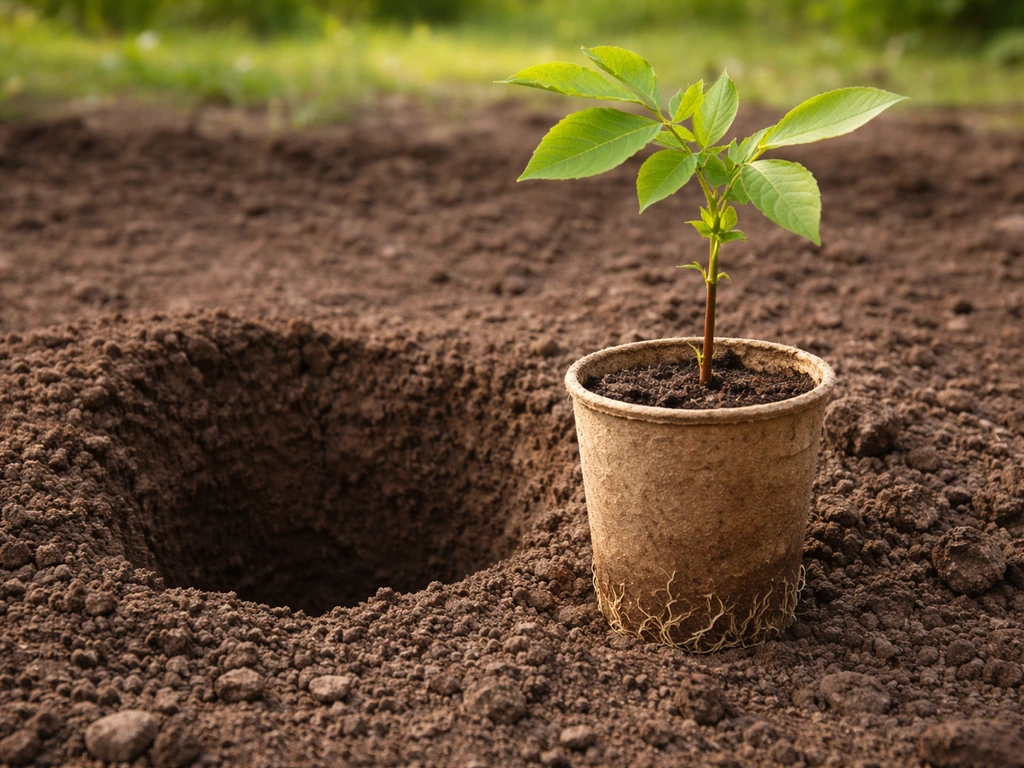
After germination, the seedling's first priority is root establishment, not visible top growth. Do not be alarmed if your walnut seedling puts on very little height in its first growing season after transplanting. Research on black walnut confirms that transplanted 1-year-old seedlings show little or no net height growth in the first year. This is normal. The tree is building its root system underground. In the second growing season, and especially on good deep soil, you will see things pick up significantly. On deep, fertile, moist soils, black walnut seedlings can grow around 36 inches in a single growing season once they are established.
When transplanting container-grown seedlings to the ground, plant them at the same depth they were growing in the container. Burying the root collar (the flare where the trunk meets the roots) deeper than it was originally growing is a common mistake that can cause dieback or kill the tree outright. Dig a hole wide enough to accommodate the roots without bending or circling them, backfill with the original soil, and water thoroughly. Avoid applying heavy mulch directly against the trunk.
If you started multiple seedlings, use the first year to identify the strongest ones. Seedlings that look weak, have poor leaf color, or show root problems early are worth removing rather than nursing along indefinitely. Thinning to your best performers saves time and space.
Where walnuts grow best: climate zones, chilling needs, and regional fit
Starting a walnut from a nut is only half the equation. The other half is whether your climate can actually support the tree for the long term. Both major walnut species have meaningful climate requirements that you should check before investing years of effort.
Black walnut (Juglans nigra)
Black walnut is native to eastern North America and is broadly adapted across a wide range of climates. It generally performs well in USDA zones 4 through 9, with the core of its range centered in the Midwest and Mid-Atlantic regions. It needs a genuine winter with cold temperatures to complete dormancy, and it thrives where summers are warm and growing seasons are reasonably long. It is more cold-tolerant than English walnut and is often the better choice for northern growers.
English walnut (Juglans regia)
English walnut is somewhat less cold-hardy than black walnut. It is generally rated for USDA zones 5 or 6 through 9, with hardiness references pointing to zone 6 as a reliable baseline for most cultivated types, though some sources suggest certain varieties can push into zone 4 or 5 under favorable conditions. It is most productive in California's Central Valley, the Pacific Northwest, and similar temperate climates with mild winters and warm but not excessively hot summers. It is more sensitive to late spring frosts than black walnut, and a hard freeze after leaf-out can set the tree back significantly.
Chilling requirements
Both species need sufficient winter chilling hours to break bud dormancy and flower properly the following spring. English walnut in particular can struggle in climates with very mild winters, such as the Deep South or low-elevation desert areas, where chilling hours accumulate slowly or inconsistently. Black walnut is more forgiving on this front. If you are in a borderline climate, look up the average chilling hours for your area and compare them to the requirements for the specific species or variety you are trying to grow.
Juglone toxicity is worth mentioning here as a site-planning consideration. Walnut roots and decomposing leaves release juglone, which is toxic to many common garden plants. This affects what you can grow nearby and matters a great deal if you are planting near an existing vegetable garden. A practical breakdown of what vegetables will grow near walnut trees can help you avoid setting up a conflict between your walnut seedling and the rest of your planting beds.
The bottom line on regional suitability: if you are in zones 4 to 9 in North America, there is almost certainly a walnut species that can work on your site. Black walnut is the more broadly adapted choice. English walnut rewards growers in milder, temperate climates. Starting from a nut you collect locally is actually a small advantage here because that nut came from a tree already adapted to your region's conditions, and the seedling may carry some of that local hardiness forward.
FAQ
I have a walnut from the grocery store, can it still sprout? What should I look for?
It depends on storage and handling. Walnuts are recalcitrant, so if the kernel dries out or the nut gets heat-treated, viability can drop fast. If you are using store-bought nuts, aim for raw, in-shell walnuts from an autumn supply, and plant more than you think you need because germination rates are often low.
If I want to plant in spring, when should I start the cold treatment?
Most walnut seedlings need a full cold, moist stratification period before they will reliably break dormancy, and even then germination can be uneven. If you want an outdoor spring start, begin stratification late fall (around late November or December), so the nuts finish chilling before spring conditions warm up.
Should I do a float test and how much does it matter?
Skip the float test at your own risk. Floating nuts are often hollow, dried, or damaged, and they are less likely to sprout. Removing hull residue and discarding floaters improves your germination odds and also reduces mold during the cold period.
Can I plant walnuts directly outdoors in fall instead of refrigerating them?
Yes, but the risk profile is higher. Fall planting relies on natural winter temperatures and moisture, so you have less control over conditions. Rodents also commonly dig up walnuts in winter, so using wire mesh over the seedbed and planting deeper helps protect seeds.
How long can a walnut tree stay in a pot before it needs to be moved?
Do not plant them in a typical small container and expect good results long-term. Walnuts develop a deep taproot quickly and can become root-bound in a short time, which reduces growth. If you start indoors, use a deep container with excellent drainage, plan on transplanting once roots are established but before they circle or hit the bottom hard.
My walnut seedling barely grew this year, is something wrong?
Yes, walnut seedlings can look stalled at first, especially their first season. It is normal for the seedling to invest in root development rather than top growth after sprouting or transplanting. The more important indicator is steady root growth and leaf health, not rapid height gain.
What is the most common transplanting mistake with walnut seedlings?
Generally avoid heavy mulch piled against the trunk or root collar. When you transplant, keep the root collar at the same depth it grew previously, then apply mulch with a gap around the trunk so you do not trap excess moisture against the plant.
Why do some walnut seeds sprout but then die soon after?
Even if you see germination, you can still lose seedlings to root rot if the site stays soggy. Use well-drained ground, water consistently but avoid water pooling, and do not overwater in low spots. If you had multiple failures, reassess both drainage and how often the seedbed dries between waterings.
If I grow from a walnut, will I get the same quality nuts as the parent tree?
Walnut trees vary in their nut traits because seedlings are genetically variable. If you want nuts that match a named variety in size or flavor, seed-grown trees usually will not. For predictable nut quality, nurseries commonly use grafting rather than straight seed propagation.
How should I plan around juglone when putting a new walnut near my garden?
Walnuts affect nearby plants through juglone from roots and leaf drop. If you are planning to start a new vegetable bed or interplant, decide where the walnut will permanently sit first, and keep in mind that the toxicity impact can matter more as the roots expand and leaf litter accumulates.