Walnut trees grow slowly, demand patience, and reward you with decades of harvests once they get going. If you want the short version: plant a walnut tree in deep, well-drained loamy soil with full sun, give it 7–8 years before expecting serious nut production, and match the species to your local winter chill hours or you'll be disappointed. Everything else in this guide is about making those fundamentals work in your specific situation.
How Walnut Grow: Step-by-Step Guide to Growing Walnuts
Marcus Hendricks
3 Apr 2026
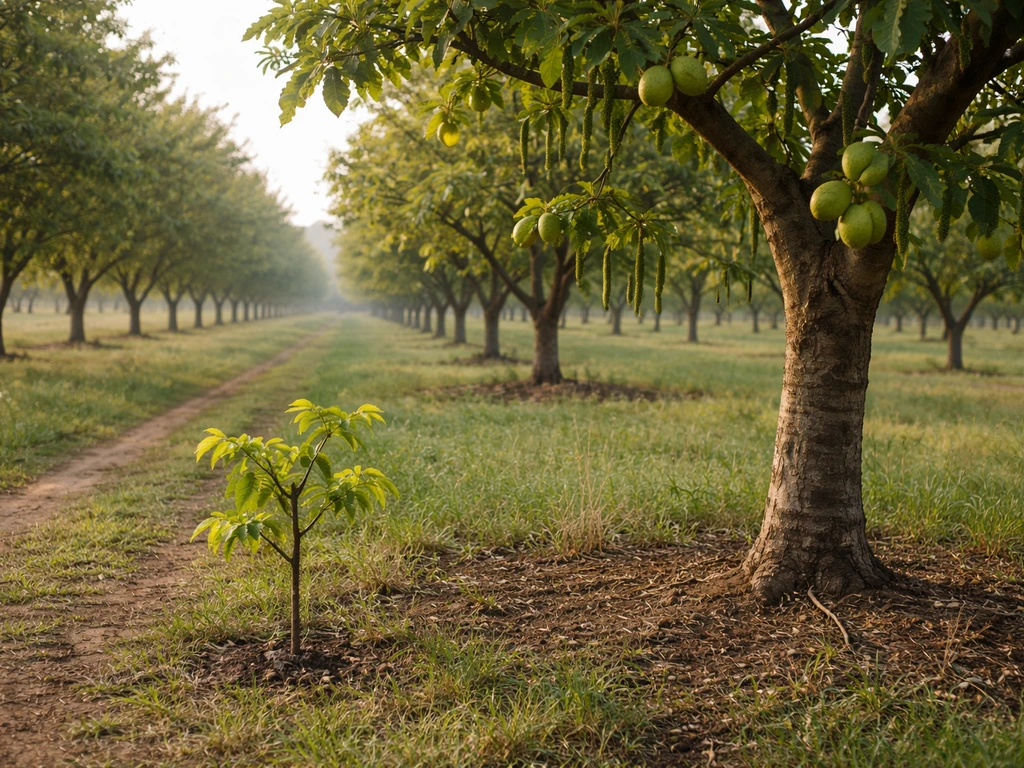
How walnut trees actually grow: the basic timeline
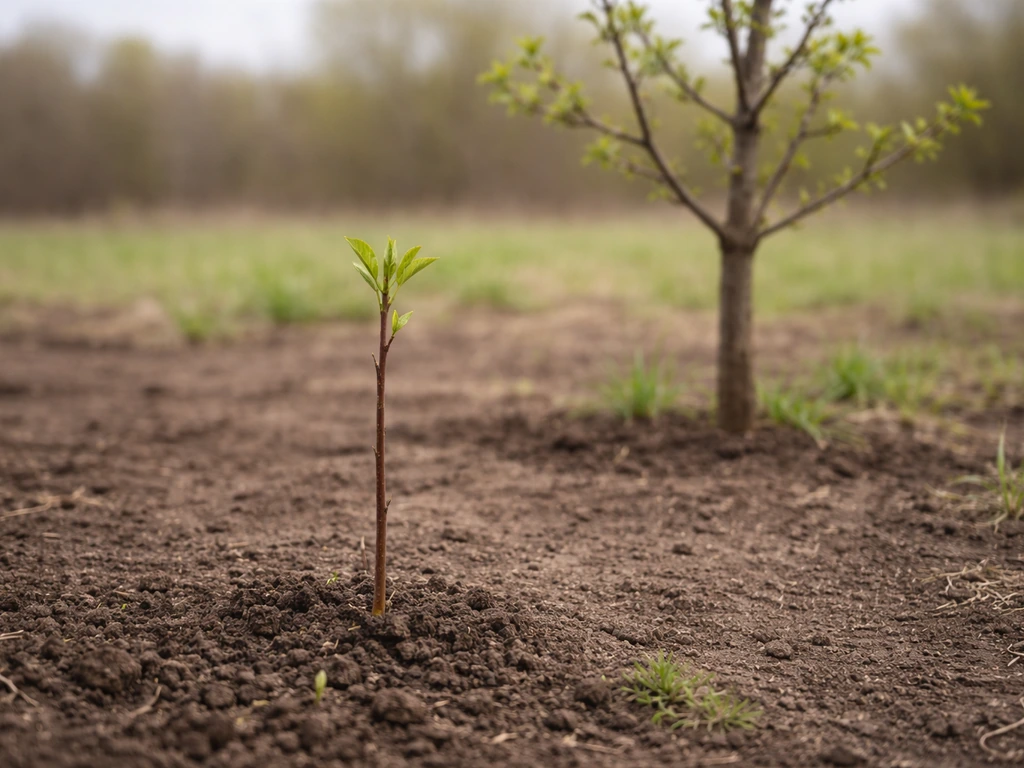
Walnut trees are large, long-lived hardwoods. In their first 1–3 years, almost all of their energy goes underground, building a deep taproot and root system before the top grows much. Don't be fooled by slow above-ground progress in year one. By years 3–6, canopy growth accelerates noticeably, and the tree starts developing the scaffold structure it'll carry for the rest of its life. Most walnut species begin producing nuts at about 7–8 years old, but full production doesn't arrive until around 15 years. That's the honest timeline, and it's worth knowing before you plant.
What you'll visually see along the way: a thin whip-like sapling in year one, low branching and increasing trunk diameter through years 2–5, and the first modest nut clusters somewhere around years 7–10 depending on species, rootstock, and growing conditions. Grafted nursery trees tend to start producing a year or two earlier than trees grown from seed, because they're already on a mature genetic base.
How walnuts actually form on the tree
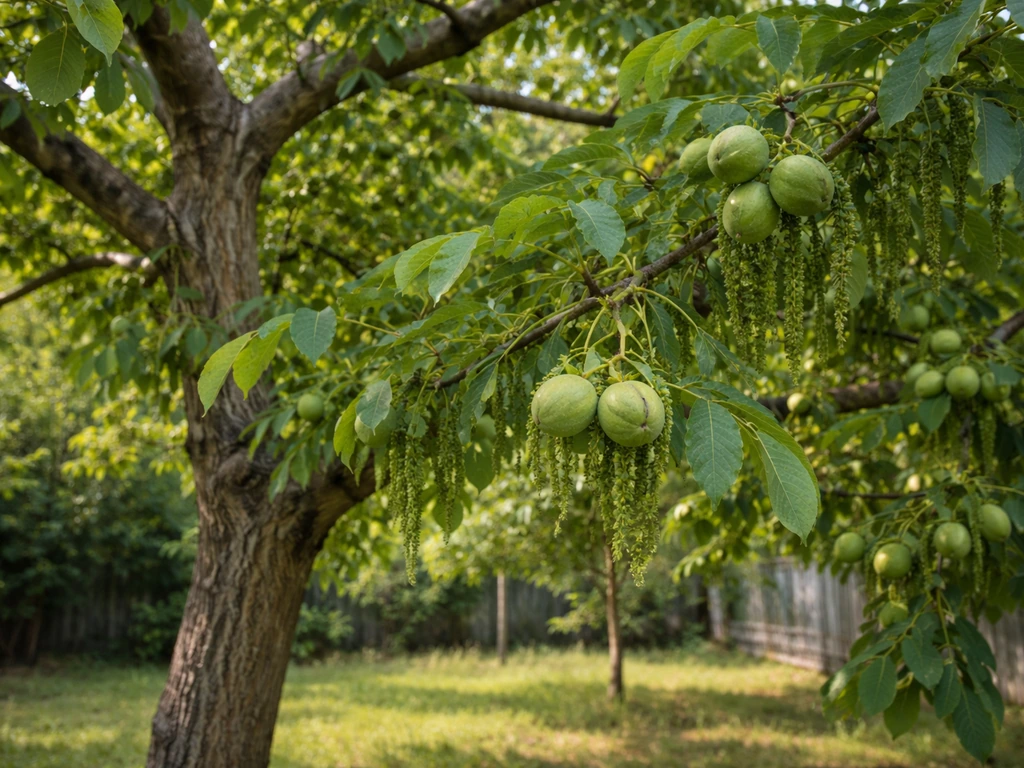
Walnuts are wind-pollinated, and the process starts in spring when the tree produces two separate flower types on the same tree. The male flowers appear as long, drooping catkins. The female flowers are small and bud-like, sitting at the tips of new growth. Pollen from catkins on the same or nearby trees drifts to the sticky female flowers, fertilizing them.
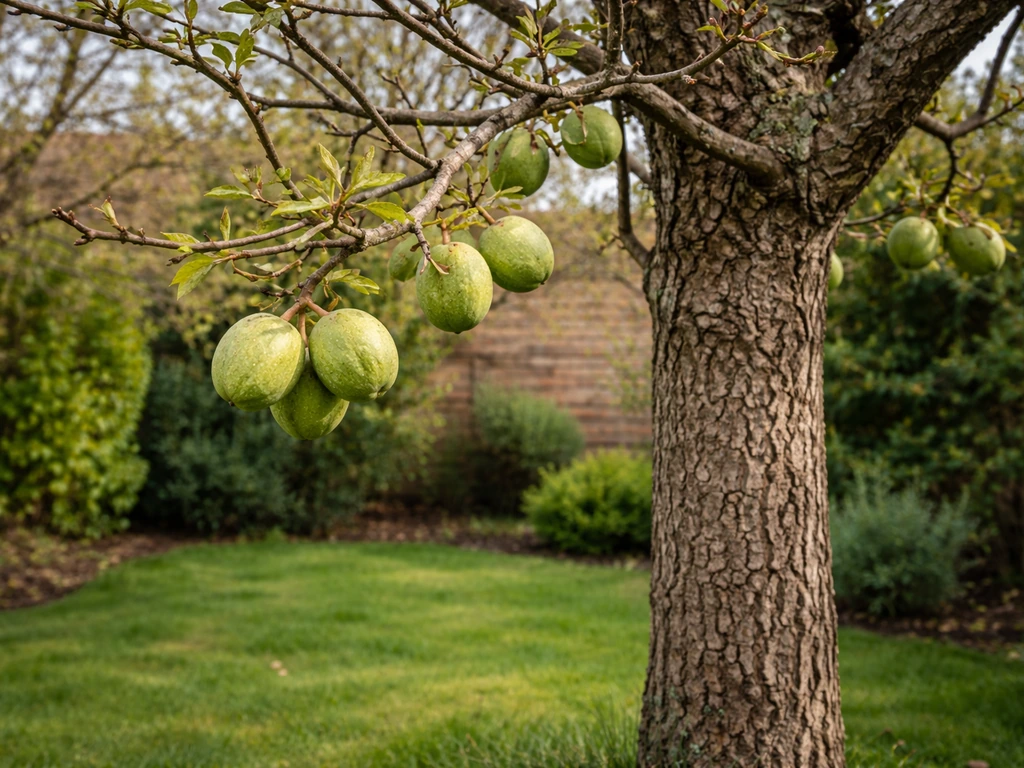
After fertilization, a green, fleshy outer husk develops around the developing nut. This husk is the part most people don't expect the first time they harvest. Through summer, the nut inside hardens and the kernel fills out. By late summer to early fall, the husk starts to split and loosen, which is your signal that harvest is approaching. The inner shell (what you buy at a grocery store) has already formed; the husk splitting just means the nut is ready to drop or be picked. Timing varies by species and climate, but the husk-split is the universal cue.
Choosing the right walnut species for your region
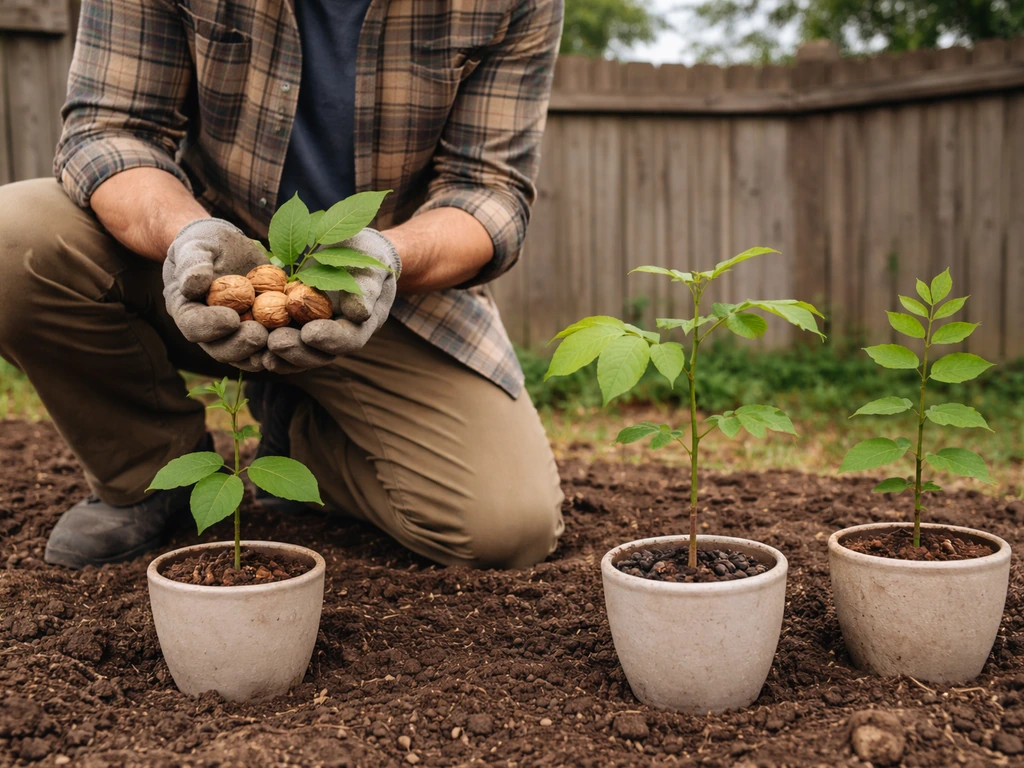
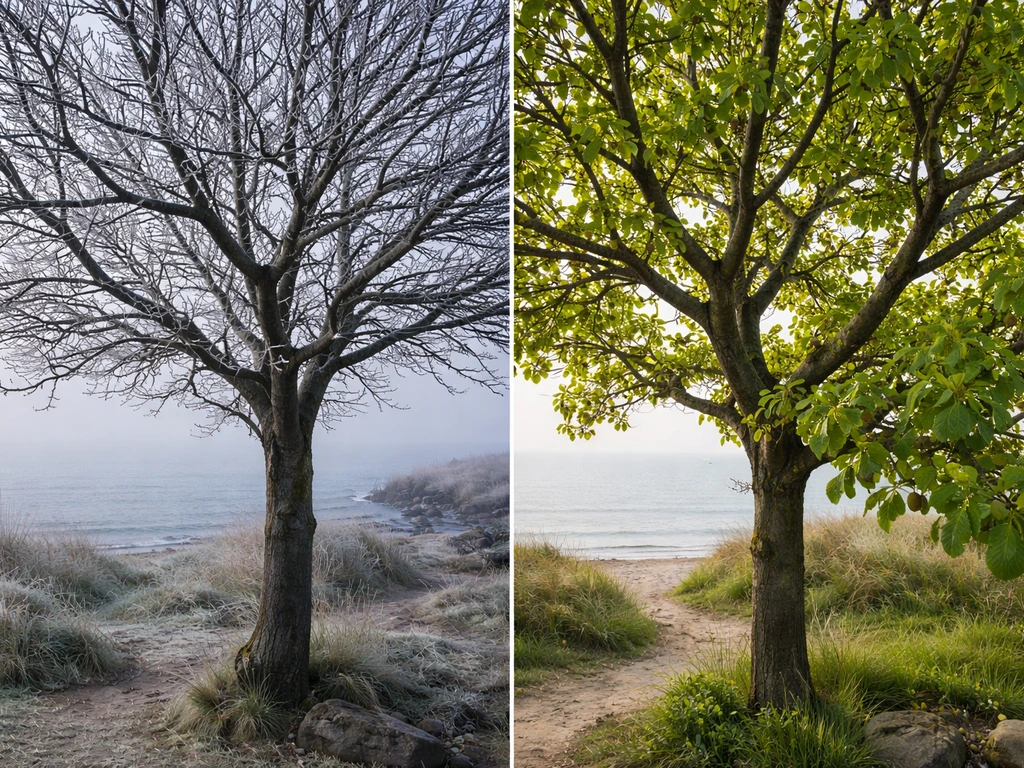
This is the step most home growers skip, and it's the most common reason a walnut tree fails to produce. Different walnut species and cultivars have very different chilling requirements, meaning the number of hours below 45°F (7°C) your location needs to accumulate over winter to break dormancy properly. Across all walnuts, chill requirements span roughly 400 to 1600 hours depending on species and cultivar. Plant a high-chill variety in a mild-winter climate, and the tree will leaf out unevenly, produce poorly, or fail. Plant a low-chill variety somewhere with hard winters, and it breaks dormancy too early, exposing flowers to frost.
The three species you'll encounter most often are English walnut (Juglans regia), black walnut (Juglans nigra), and the hybrid Paradox rootstock used in commercial orchards. English walnut is the primary commercial species and what most people want for eating. Black walnut is hardier, tolerates a wider range of climates, and has a more intense flavor, but cracking the shells is genuinely difficult. For growers in warmer-winter climates (parts of California's Central Valley, the South, or similar zones), low-chill English walnut cultivars like 'Chandler' or 'Howard' are worth investigating. For cold-climate growers in the Midwest or Northeast, black walnut is the more reliable producer.
| Species / Type | Chill Requirement | Best Climate Fit | Key Notes |
|---|---|---|---|
| English walnut (Juglans regia) | 400–1,200+ hrs depending on cultivar | Mild to moderate winters; CA, PNW, parts of Southeast | Most common for eating; many cultivar options; frost-sensitive flowers |
| Black walnut (Juglans nigra) | Around 1,000–1,200 hrs | Cold-winter climates; Midwest, Northeast, Appalachia | Very hardy; allelopathic to many plants; tough shells |
| Low-chill English cultivars | 400–700 hrs | Warm-winter regions; mild Southern zones | Suited to areas where high-chill types fail |
| Carpathian / Heartnut walnuts | 600–1,000 hrs | Mid-range cold climates | Good options for northern growers wanting Juglans regia types |
If you're uncertain whether you can even grow a walnut tree from a nut you already have, the answer is yes with caveats. The piece on growing a walnut tree from a walnut walks through what to realistically expect from seed-started trees versus buying a grafted sapling.
Site, soil, and sunlight: where walnut trees thrive
Walnuts are not forgiving about soil drainage. This is the single biggest site factor. Poorly drained soil stunts growth measurably, and research tracking height and trunk diameter in plantation trials confirms that drainage is a direct growth driver, not just an advisory preference. You want deep, well-drained, loamy soil, and when I say deep, I mean ideally 4–6 feet of workable soil before you hit hardpan or restrictive layers. If you have a hardpan layer, break through it before planting, or the taproot will be deflected and the tree will underperform throughout its life.
Soil pH should sit in the range of about 6.5 to 7.2. Outside that range, nutrient availability drops and growth slows. Do a soil test before planting; it's a 20-minute task that can save years of poor performance. Walnuts prefer well-drained, moist, loamy soil but will tolerate other soil types as long as drainage is genuinely adequate.
For sunlight, full sun is non-negotiable. Walnut trees need maximum sun exposure to grow vigorously and to help nuts dry on the tree before harvest. A south-facing location with warm reflected heat is ideal if you're in a cooler climate. Shade from buildings, other trees, or terrain features will reduce both growth rate and nut quality significantly. Don't plant walnuts where they'll be shaded for even part of the day if you can avoid it.
Planting: seed versus sapling, and how to do it right
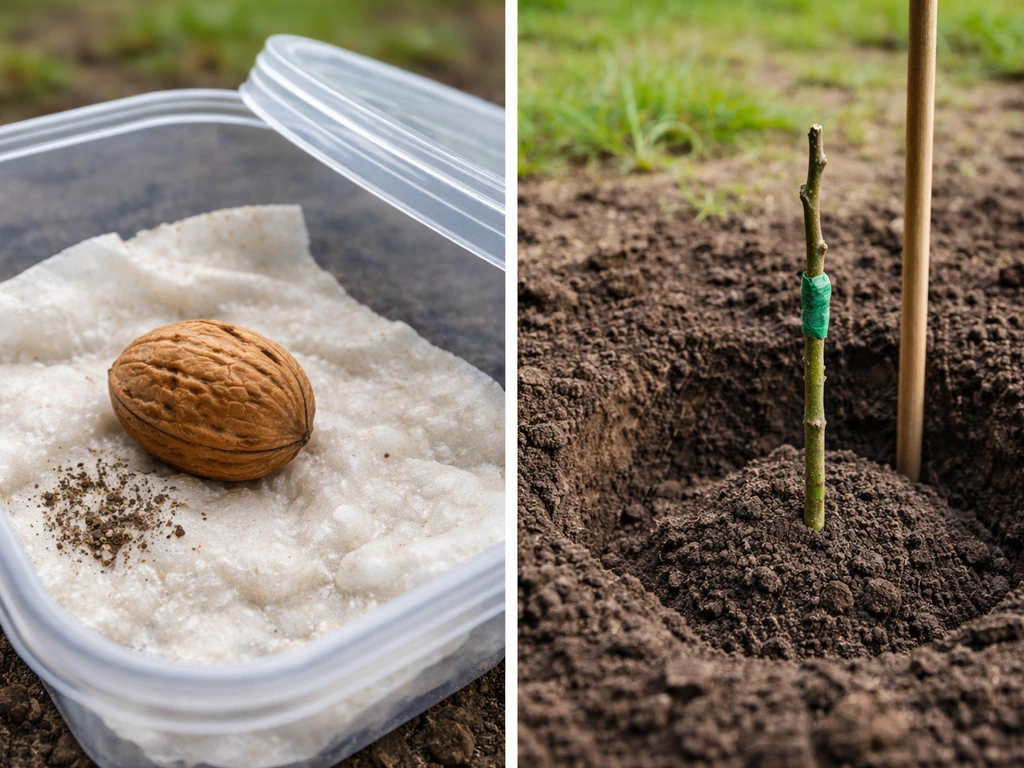
You have two routes: start from seed or buy a nursery tree. Each has real trade-offs. A grafted nursery sapling starts producing 1–2 years sooner and has known genetics, meaning you know the cultivar, chill requirement, and expected nut quality. A seed-started tree is cheaper, more variable, and takes longer, but it can also be deeply satisfying and is sometimes the only way to get certain local or heirloom types.
If you start from seed, cold stratification is mandatory. Freshly gathered walnut seeds need 3–4 months of cold stratification at around 34–40°F before they'll germinate reliably. You can do this naturally by fall-planting seeds directly in the ground (letting winter do the work), or by storing seeds in moist peat or vermiculite in the refrigerator through winter and planting in spring. Plant seeds about 2–3 inches deep. Skipping stratification is the most common reason seed-started walnuts fail to germinate.
For nursery saplings, spring planting after frost risk has passed is ideal in cold climates. In mild climates, fall planting works well and lets roots establish before summer heat. Dig a hole wide enough to spread the roots without bending them and deep enough that the graft union (if present) sits just above soil level. Don't amend the planting hole heavily with compost; it creates a soil interface that can trap water. Backfill with native soil, water thoroughly, and mulch the root zone.
Spacing matters more than most people think. Mature walnut trees need roughly 35 feet between them, and that goes for both grafted and seedling trees. Plant too close and you'll either be removing trees in 15 years or watching them crowd each other into poor production. If you're working with limited space and curious whether container growing is even an option, the reality is complicated. The article on growing a walnut tree in a pot covers what's actually achievable there.
Caring for your walnut tree through the years
Watering
Young trees (years 1–2) need consistent moisture to establish their root systems. Don't let them dry out completely, but also don't waterlog them. Once a walnut tree is established, around 2–3 years in, you shift to deeper, less frequent watering. The target is getting moisture down to about 2 feet into the soil, applied one to three times per month during the hottest part of the year. How often you need to water within that range depends on your soil type: sandy soils drain faster and need more frequent watering; clay retains moisture longer. Deep, infrequent watering encourages deep rooting, which makes the tree more drought-resilient over time.
Fertilizing
For young trees, a balanced fertilizer in early spring supports establishment. Once the tree is in production, soil tests should guide your fertilizer decisions rather than a generic schedule. Nitrogen is usually the main limiting nutrient in walnut production, but over-applying it encourages excessive leafy growth at the expense of nut development. Apply fertilizer in early spring before leaf-out and follow soil test recommendations rather than guessing.
Pruning
Walnut trees are pruned to develop a strong central leader and well-spaced scaffold branches. Do structural pruning in the first 3–5 years when the tree is young, because healing is much faster on young wood. Mature walnuts tolerate pruning poorly compared to fruit trees, so heavy cuts on old wood invite disease entry and slow recovery. Remove dead, crossing, or inward-growing branches in late winter before the buds break. Avoid heavy pruning in summer, when the tree is actively growing and more vulnerable.
Weed control
Weed management in the early years is critical. Weeds compete with young trees for water and nutrients and can slow establishment significantly. Mulching the root zone helps suppress weeds and retains moisture. Once trees reach bearing age, weed control also affects your ability to actually collect nuts off the orchard floor at harvest time, so it pays to stay on top of it well before the first crop arrives.
Problems that block growth and production
Pollination gaps
Walnuts are technically self-fertile, but a pollination partner tree meaningfully increases harvest size and quality. This matters because many walnut cultivars are protandrous (pollen shed happens before the female flowers on the same tree are receptive) or protogynous (the opposite), meaning a single tree can't pollinate itself efficiently. Pollen availability and non-self pollination vary across orchard positions too, so in a small home planting with just one tree, you may see lighter crops than you'd expect. If your tree is flowering but nut set is poor, adding a second tree of a different cultivar nearby is the fix. On Reddit, home growers also share real-world experiences with walnut pollination in small orchards and emphasize that choosing the right cultivar matters.
Walnut blight
Walnut blight (Xanthomonas arboricola pv. juglandis) is a bacterial disease that damages shoots, catkins, and developing nuts during wet spring weather. If your area has a history of blight and you get prolonged wet springs, protective copper-based treatments applied at 7–10 day intervals during that window are the standard management approach. Timing matters enormously: treatments need to start at bud swell before infection pressure builds, and the interval needs to be maintained while wet conditions persist. Missing that early window and then trying to catch up rarely works well.
Walnut husk fly
The walnut husk fly (Rhagoletis completa) lays eggs in the green husk during summer. The larvae feed inside, causing black, soft, mushy lesions on the husk, and in heavy infestations, kernel staining and quality loss. Managing husk fly is timing-dependent: use sticky traps to monitor first adult emergence in summer, then time any treatments to that first emergence rather than following a fixed calendar date. This approach is more effective than blanket spray schedules because fly emergence varies year to year.
Winter damage and frost timing
Late spring frosts are a serious risk for English walnut in particular, because the flowers emerge early and are frost-sensitive. A single frost event during bloom can eliminate the whole crop for that year. In frost-prone areas, site selection matters: cold air drains to low spots, so planting on a slope or elevated site reduces frost pocket risk. Black walnut blooms later and is more cold-hardy overall, which is one reason it thrives across the Midwest where late frosts are common.
What won't grow near your walnut tree
Black walnut in particular produces a chemical called juglone from its roots, hulls, and leaves that is toxic to many plants. If you're planning a garden near your walnut tree, you need to know what can and can't grow there. The guide on what vegetables will grow near walnut trees covers the specifics of juglone sensitivity by crop. And if you're working with the ground directly beneath an existing walnut, the companion article on what will grow under a walnut tree gives you a realistic picture of what actually survives in that zone.
Harvesting and storing your walnuts
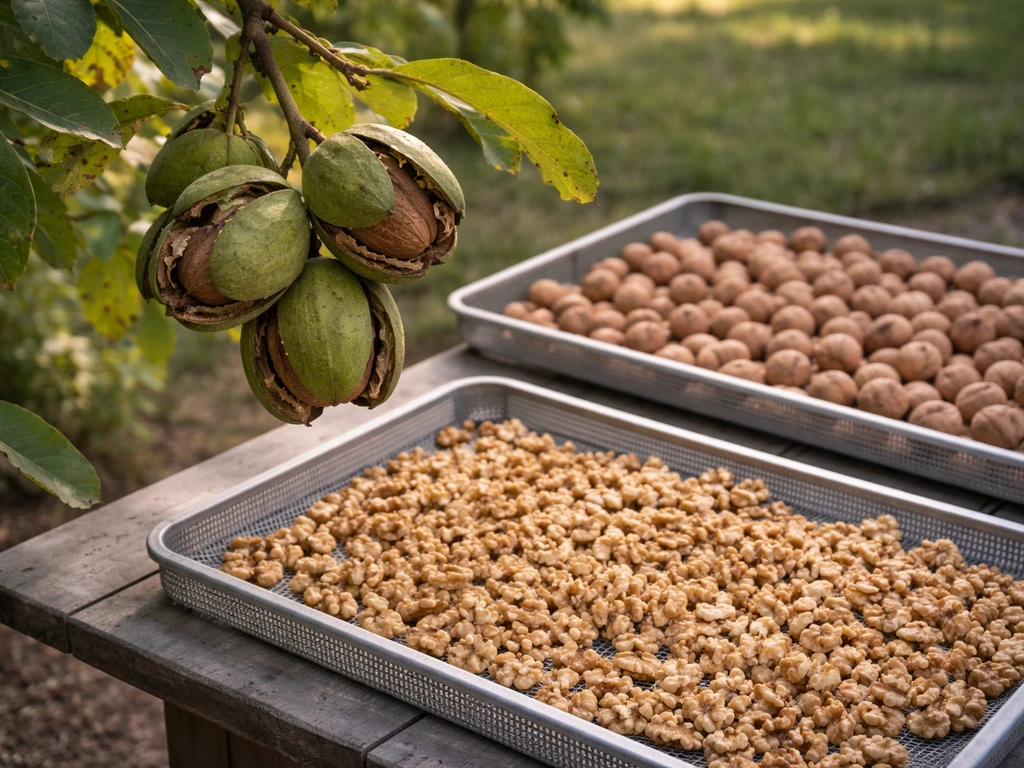
Harvest begins when the outer husk starts to split and loosen from the shell, typically late August through October depending on species and location. English walnuts are usually ready earlier; black walnuts later. You can shake branches or simply collect nuts that have fallen. Remove the husks promptly, ideally within a day or two of harvest, because husks that stay on too long will stain the shell dark and can affect kernel quality. Be warned: walnut husks stain skin and clothing permanently, so wear gloves.
After husking, wash the nuts and spread them in a single layer on screen trays in a dry, well-ventilated area out of direct sun. Good airflow is key to even drying. Walnuts are properly dry when the papery divider between the nut halves snaps cleanly rather than bending. This is the reliable test; trying to judge by weight or calendar time alone is less accurate.
For storage, dried walnuts kept at room temperature should be used within 3–6 months before the oils in the kernel go rancid. Refrigeration extends that window to about a year, and freezing keeps them in good condition for up to two years. If you're storing significant quantities, airtight containers and cold storage are worth the effort.
Your next practical steps by season
If you're reading this in spring (planting season in most climates), the most useful thing you can do right now is identify your local chill-hour accumulation, check it against the cultivar you're considering, and either buy a grafted sapling suited to your zone or start stratifying seed for fall planting. If it's summer, focus on site preparation: test your soil pH, assess drainage, and plan your planting location. Fall is ideal for direct seed planting in cold climates and for planting container-grown nursery trees in mild ones.
- Find your average winter chill hours (your local extension service has this data) and match it to a suitable walnut species or cultivar.
- Test soil pH and drainage before selecting a planting site. Target pH 6.5–7.2 and at least 4–6 feet of workable, draining soil.
- Choose seed-started or grafted nursery tree based on your timeline and budget, keeping in mind that grafted trees produce 1–2 years sooner.
- If starting from seed, begin 3–4 months of cold stratification before your intended spring planting date, or plant seeds directly in fall.
- Plan for 35-foot spacing between mature trees and position your site for maximum full-sun exposure.
- Set realistic expectations: first nuts around year 7–8, full production by year 15. Establish a basic care routine for watering, annual fertilization guided by soil tests, and early structural pruning.
FAQ
How can I tell if my walnut variety will actually grow in my winter climate (chill hours)?
Start by looking up the cultivar’s specific chill requirement, then compare it to your location’s accumulated chill hours below 45°F (7°C) for a typical winter. If you are between categories, favor the higher-chill option only if your winters are consistently cold, because “sometimes cold” zones often cause uneven leaf-out and weak nut set.
Is it possible to grow walnuts in partial shade if I only get 4 to 6 hours of sun?
It’s possible to keep the tree alive, but for nut production you generally want full sun. With reduced light, walnuts typically develop weaker canopy structure and smaller nuts, and husks dry more slowly, which can worsen harvest quality. If you must compromise, choose the warmest side of your yard and prune nearby trees to maximize direct midday sun.
Do walnuts need cross-pollination, even though they’re self-fertile?
They’re technically capable of selfing, but many cultivars are not equally efficient at doing it. If you see lots of catkins and female buds but few nuts, add a second cultivar within the same yard (or at least within a short driving distance) to improve pollen timing. The “second tree” is especially helpful when bloom timing differs between trees.
What should I do if my seedling walnuts don’t produce for many years?
Seedling trees can take longer than grafted trees, and they also vary genetically. If it’s been 8 to 10 years and you’re still only seeing vegetative growth, re-check sun, soil drainage, and spacing, because stress delays reproduction. Also consider that nut production may be light until the tree reaches a mature, branching scaffold structure.
If my planting hole is big, can I just mix in plenty of compost to help the tree grow faster?
Avoid heavily amending the planting hole with compost or other organics that create a different soil layer. Walnuts prefer consistent drainage, and a “soil interface” can trap water and reduce oxygen around the young roots. Backfill with native soil, then mulch the surface lightly to retain moisture without changing the subsoil.
How do I know if my soil drainage is bad before planting?
Do a simple percolation test by digging a hole, filling it with water, and timing how long it takes to drain completely. If water sits for an extended period (often more than a day), you likely have drainage issues that will stunt growth. In that case, consider improving drainage or planting on a mound rather than relying on irrigation to “fix” the problem.
Can I plant walnuts closer than 35 feet if I prune them heavily?
Pruning won’t fully compensate for root and canopy requirements. Overcrowding increases shading and airflow problems, and it often forces you to remove trees later. A practical approach is to plan spacing for the mature canopy, and if you’re constrained by space, consider a different system (such as grafted smaller orchard designs) instead of assuming aggressive pruning will solve it.
What’s the correct depth and temperature approach for stratifying walnut seeds?
Use a 3 to 4 month cold stratification period at about 34 to 40°F (1 to 4°C), keep seeds consistently moist (not wet), and ensure they are cold the whole time. Seeds that dry out during storage may fail even if they received some cold. If you stratify in the fridge, label the date so you don’t accidentally end cold treatment early.
How often should I water a young walnut tree, and what’s the biggest mistake?
For years 1 to 2, keep moisture consistent but never allow standing water. The most common mistake is either letting the root zone dry out completely or over-watering poorly drained soil. Once established (around 2 to 3 years), switch to deeper, less frequent watering aimed at wetting down roughly 2 feet into the soil.
How do I manage walnut blight if my springs are rainy, but I’m not sure about the right spray timing window?
Base your timing on bud stage, not on calendar dates. Start protective treatments around bud swell before infection pressure peaks, then repeat at short intervals only while wet conditions continue. If your schedule misses the early window, later catch-up sprays are usually far less effective than getting the first coverage right.
What’s the best way to handle walnut husk fly without over-spraying?
Use sticky traps to detect first adult emergence, then time any interventions to that first emergence period rather than following a fixed schedule. Because emergence varies year to year, relying only on “typical dates” often leads to late applications that miss the egg-laying window.
How should I protect English walnut flowers from late spring frost?
Choose a planting site that reduces cold-air pooling, such as a slight slope or an elevated area, and avoid low spots even if the soil is otherwise perfect. English walnuts bloom early and are more frost-sensitive, so site selection often matters more than trying to cover the tree during every bloom event.
Why does nothing grow under my black walnut tree, and how long does juglone last?
Black walnut releases juglone from roots, hulls, and leaves, which can inhibit many plants. The effect tends to persist where the root zone remains active and where leaf drop decomposes slowly. If you want something nearby, start by avoiding sensitive crops and test small areas, because tolerance varies widely by plant species.
When harvesting, how can I avoid staining the shells and reducing kernel quality?
Husk split is the cue to harvest, but remove husks promptly, ideally within a day or two. Leaving husks on longer increases shell staining and can affect kernel quality, and walnuts husks permanently stain skin and clothing. Plan ahead with gloves, because staining is immediate and difficult to remove.
How can I tell walnuts are dry enough for storage besides using a strict calendar?
Use the physical crack test: the papery divider between halves should snap cleanly instead of bending. This indicates the kernel moisture has dropped to a safer level for storage. If your walnuts feel leathery or the divider bends, keep drying with good airflow before bagging or refrigerating.
How long can I keep walnuts in the shell or out of the shell without them going rancid?
For best quality, plan short room-temperature storage (several months) for dried kernels, with longer holding times under refrigeration and the longest under freezing. If you keep them shelled, oxidation is faster, so airtight containers matter. If you’re not sure, prioritize freezing earlier rather than waiting until they start tasting “off.”