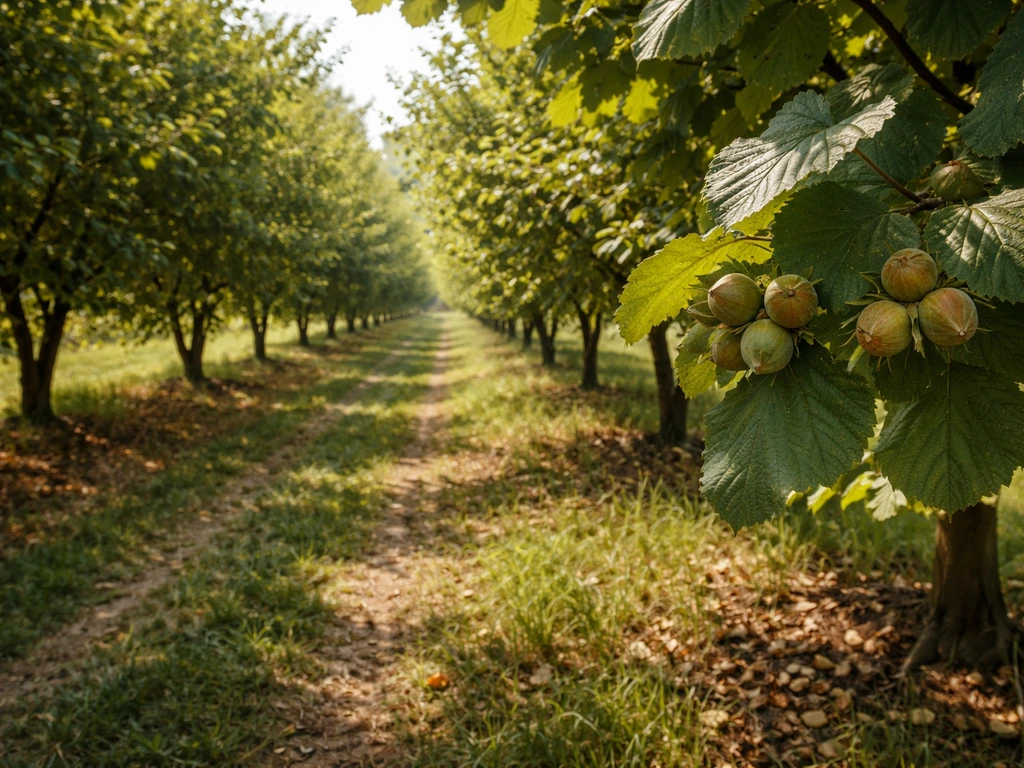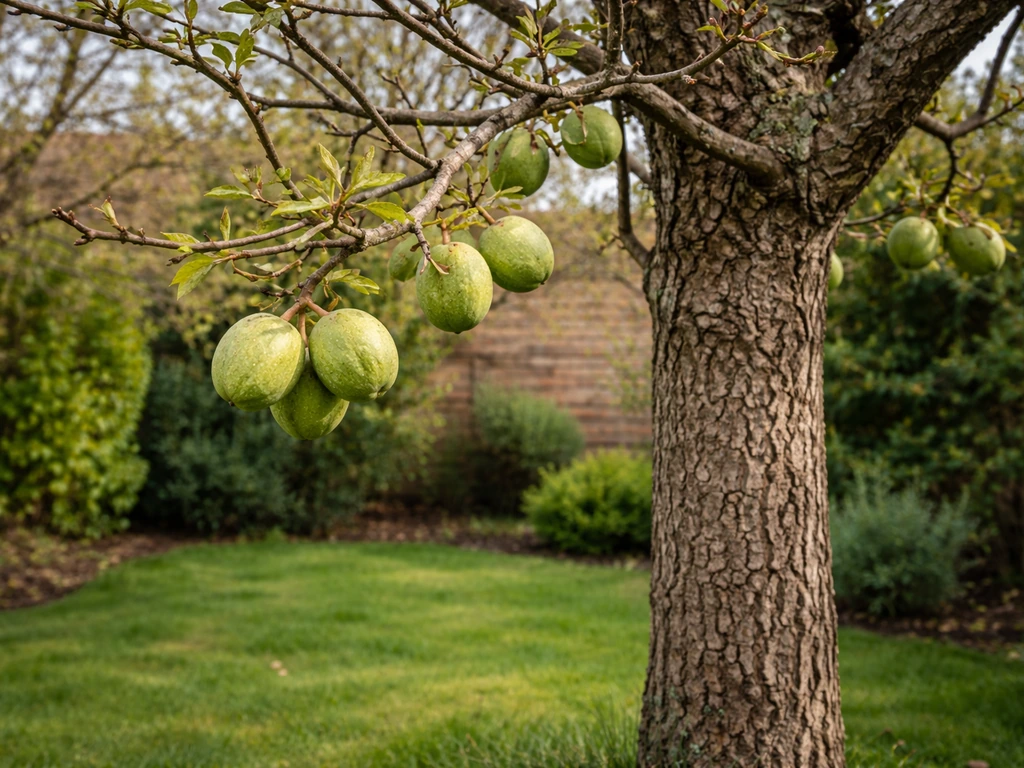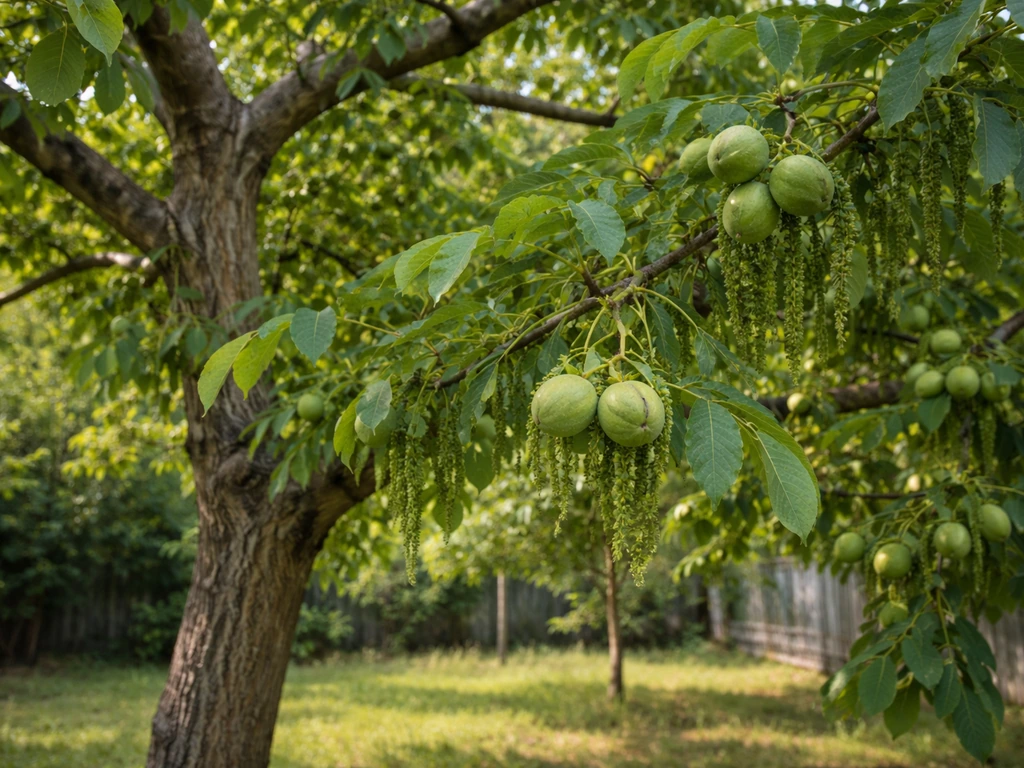
Hazelnuts grow in the United States in two distinct ways: as native shrubs that have always been part of the American landscape, and as cultivated trees deliberately planted for nut production. If you want the short answer, the overwhelming majority of commercial hazelnuts in the US come from Oregon's Willamette Valley, which accounts for roughly 99% of the national crop. But if you're a home grower asking whether your backyard qualifies, the picture is broader and more interesting than that single statistic suggests.
Where Do Hazelnuts Grow in the United States? Regions
Marcus Hendricks
10 Apr 2026
Native vs. cultivated hazelnut species in the US
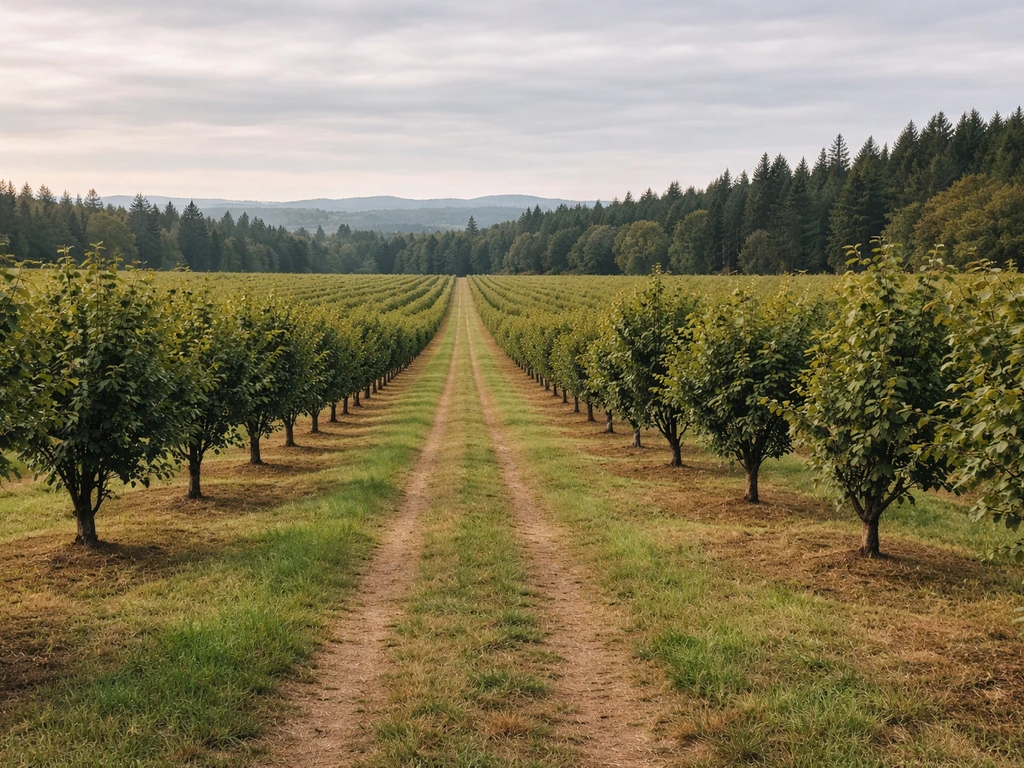
Two hazelnut species are native to North America, and both grow across large swaths of the United States without any human help. The American hazelnut (Corylus americana) is a multi-stemmed shrub that pops up in moist to dry open woodlands, thickets, hillsides, roadsides, and fencerows across most of the eastern half of the country. It flowers between March and May, it's tough, and it doesn't demand much. The beaked hazelnut (Corylus cornuta) has a more irregular distribution and leans toward specific soil textures and moisture conditions. It shows up in northern Idaho, Washington, and Oregon, and extends south into Sierra Nevada and coastal central California regions.
Neither of these natives is what commercial growers rely on. The species driving nearly all cultivated hazelnut production worldwide is the European hazelnut (Corylus avellana), which produces the large, familiar nuts you find in stores. That species is the foundation of Oregon's industry, and it's also the focus of emerging hazelnut programs in the Mid-Atlantic, Upper Midwest, and elsewhere. If you want to grow hazelnuts specifically for nut yield rather than wildlife value, Corylus avellana (or hybrids bred from it) is what you're working with.
US regions where hazelnuts grow
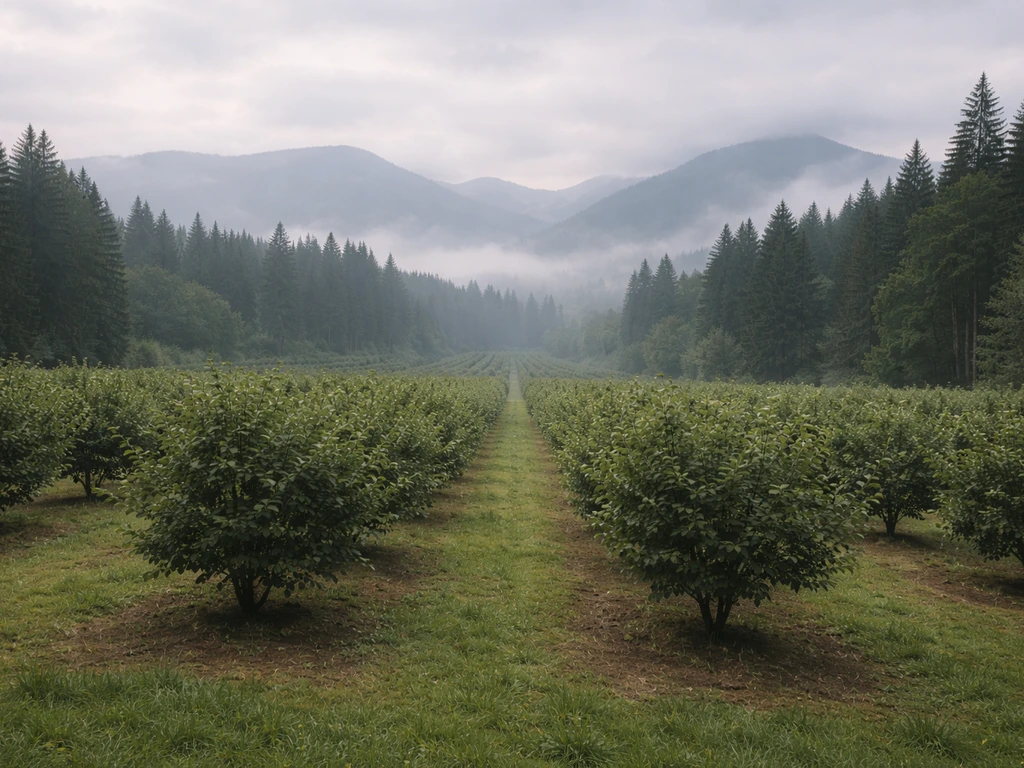
Hazelnuts don't grow everywhere in the US with equal success, and climate is the main filter. The climate hazelnuts grow best in is one with mild, humid winters and cool summers. That description fits a fairly specific slice of the country, but it also describes several distinct regions, not just the Pacific Northwest.
Pacific Northwest
This is the undisputed center of US hazelnut growing. The Willamette Valley in Oregon has the textbook combination: mild winters, cool summers, adequate rainfall, and well-drained valley soils. Washington's climate in similar lowland zones works well too. If you're in this region and have reasonable soil, hazelnut trees are one of the more reliable nut crops you can plant.
Northeast and Mid-Atlantic
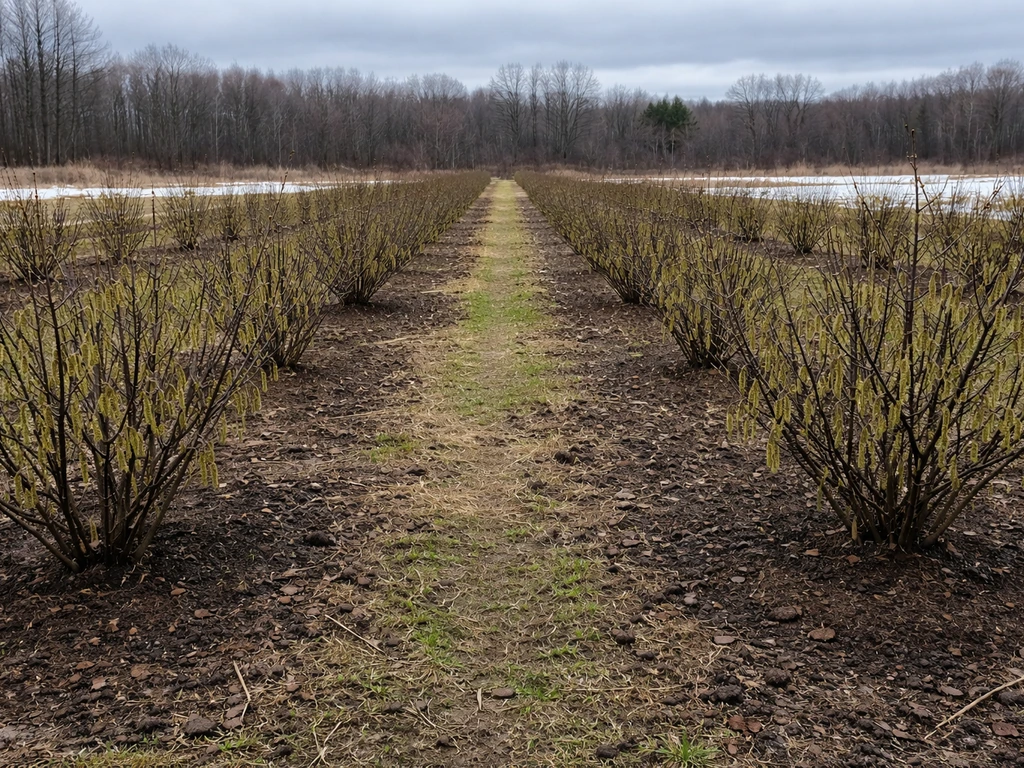
New Jersey, New York, Pennsylvania, and neighboring states are seeing real interest in hazelnut cultivation, largely because European hazelnut and its hybrids can handle the winters there. The hurdle in this region isn't cold hardiness so much as Eastern Filbert Blight (EFB), a fungal disease that devastates non-resistant varieties. OSU Extension’s Managing Eastern Filbert Blight summarizes integrated management needs for EFB, including scouting and coordinated orchard tools blank" rel="noopener noreferrer">Eastern Filbert Blight (EFB). Rutgers Cooperative Extension notes that blank" rel="noopener noreferrer">Eastern Filbert Blight (EFB) is a major obstacle for commercial hazelnut production in the Northeast. Rutgers and other land-grant universities have been developing orchard guidance specifically for this region, including cultivar selection and pollinizer compatibility planning. Growers here need disease-resistant varieties and a bit more site-specific thinking, but it's genuinely doable.
Upper Midwest
Wisconsin, Minnesota, and Michigan represent the cold frontier for hazelnuts. The University of Wisconsin Extension has published establishment guidance specifically aimed at this region, recognizing that hybrid hazelnuts (crosses between Corylus avellana and cold-hardy native species) can survive Upper Midwest winters where straight European hazelnut would struggle. Yields here are generally lower than in Oregon, and you'll need to pick varieties carefully, but native and hybrid plants do grow and produce.
Southeast and Southwest
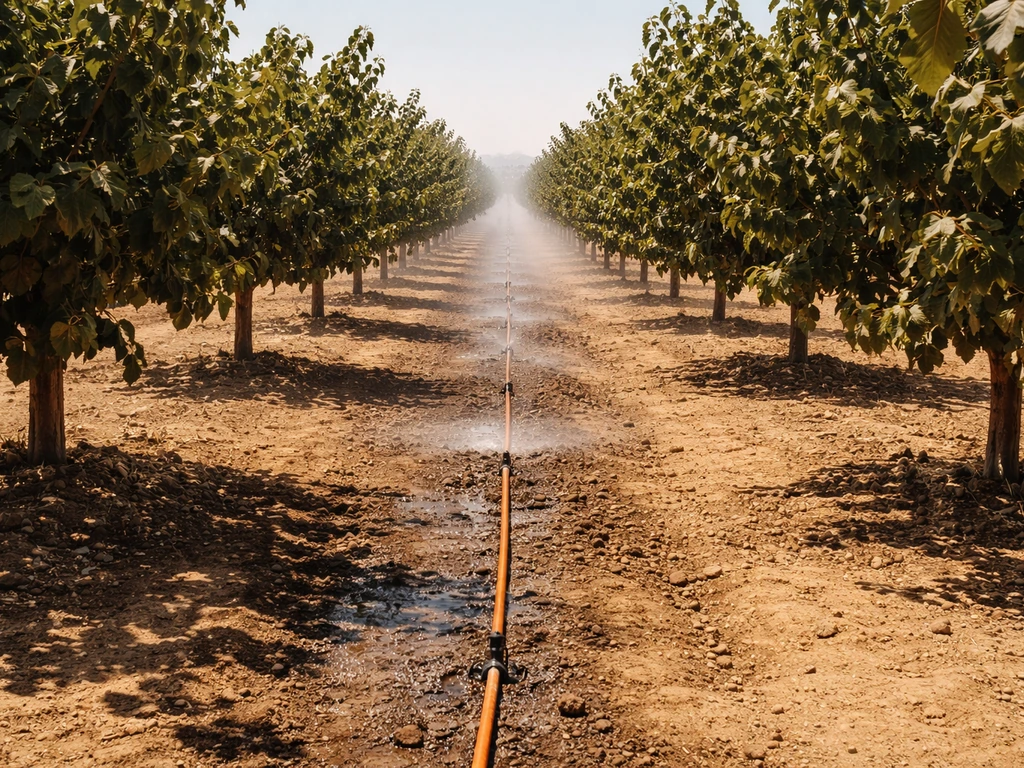
These are the tough zones. The Southeast has hot, humid summers and mild winters that don't always deliver enough chilling hours for reliable nut set. The Southwest has the opposite problem: dry air, extreme summer heat, and in many areas, insufficient moisture. Hazelnuts are not tropical plants, and growing hazelnuts in tropical or near-tropical conditions pushes past their biological limits pretty fast. That said, higher-elevation areas in both regions (the Appalachians in the Southeast, mountain zones in the Southwest) can sometimes support native or hybrid hazelnuts.
Where hazelnut trees are grown commercially in the US
The commercial story is extremely concentrated. Oregon's Willamette Valley produces roughly 99% of the US hazelnut crop, a figure consistently cited across USDA data and industry sources. Washington contributes small amounts in climatically similar areas. Beyond those two states, commercial-scale production is essentially nonexistent right now. That doesn't mean it couldn't develop elsewhere, and there are real efforts underway in Oregon State University's breeding program and in Midwest and Northeast research programs to expand viable growing regions. OSU's 'Jefferson' variety, released in 2009, is one of the better-known results of that breeding work, offering improved disease resistance and production characteristics.
If you're curious about where different nuts grow commercially across the US, it's worth noting that hazelnuts are unusual in how geographically concentrated they are compared to walnuts, pecans, or almonds, each of which spans multiple states and climate types.
Growing conditions: chill hours, soil, sun, and moisture
Understanding what hazelnuts need physically helps you evaluate any specific site, regardless of what state you're in.
Chilling requirements
Hazelnut trees need a certain number of cold hours (typically below 45°F) during dormancy to flower and set nuts reliably. Not all catkins elongate on the same schedule, and brief cold snaps during the flowering window don't usually cause catastrophic crop loss. But areas that don't provide consistent winter chilling, particularly the Gulf Coast and Florida, will struggle to produce well. If your winters are mild enough that you rarely see sustained cold spells, hazelnut nut production is going to be unreliable regardless of how well the tree survives.
Soil requirements
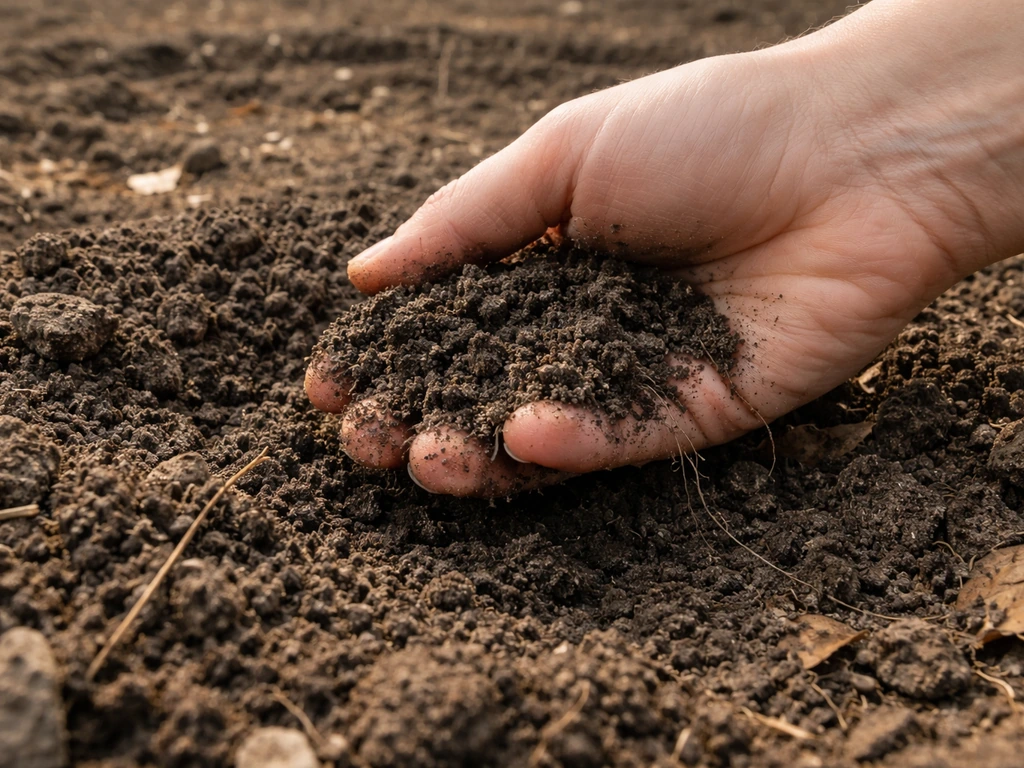
Hazelnuts prefer well-drained, moist, loamy soil. Most of the root activity happens in the first two feet of soil, but in good conditions roots can penetrate six to ten feet deep, which matters for drought tolerance and nutrient access. The single biggest soil deal-breaker is poor drainage: hazelnuts do not tolerate extremely wet soils, and waterlogged roots will cause serious problems quickly. If your site has drainage issues, tiling or raised beds can help, but it's better to start with a site that drains naturally. Soil pH matters too, and a basic soil test before planting is one of the most practical steps any grower can take. It's inexpensive, tells you exactly what you're working with, and gives you a roadmap for any amendments needed before you put trees in the ground.
Sun and moisture
Hazelnuts want full sun for best production. They'll tolerate partial shade, especially native species in woodland settings, but nut yield drops considerably without adequate light. Moisture needs are moderate: they want consistent access to soil moisture, especially during nut development, but the roots can't sit in standing water. In drier climates or during dry summers, irrigation is not optional if you want meaningful yields.
Pollination
This one trips up a lot of home growers. Hazelnuts are wind-pollinated and self-incompatible, meaning you need at least two compatible varieties for any nuts to form. It's not enough to have two hazelnut plants; they need to be genetically compatible pollinizers. In an orchard setting, the spacing and arrangement of pollinizers matters because pollen has to physically travel on the wind to reach receptive flowers. Home growers planting just one tree will get very few or no nuts, period. Plan for at least two compatible varieties from the start, spaced roughly 15 to 20 feet apart.
Hardiness zones and state-by-state guidance
European hazelnut (Corylus avellana) is generally hardy from USDA Zone 4 through Zone 8. That's a wide band covering much of the continental US, but zone hardiness alone doesn't tell you whether your site will produce nuts. A Zone 6 location in Georgia and a Zone 6 location in Oregon are very different growing environments.
| Region / State(s) | Native Species Present | Cultivated Potential | Key Challenges |
|---|---|---|---|
| Oregon, Washington (Pacific NW lowlands) | Corylus cornuta | Excellent | Minimal for commercial growers; EFB resistance recommended |
| Northeast (NY, NJ, PA, New England) | Corylus americana | Good with right varieties | Eastern Filbert Blight; pollinizer planning critical |
| Upper Midwest (WI, MN, MI) | Corylus americana, C. cornuta | Moderate with hybrids | Harsh winters; use cold-hardy hybrids, lower yield expected |
| Mid-South / Appalachians | Corylus americana | Limited to moderate | Summer heat, humidity; choose EFB-resistant varieties |
| Southeast lowlands (GA, FL, AL) | Corylus americana (marginal) | Poor | Insufficient chill hours, summer heat and humidity |
| Mountain West (CO, UT higher elevations) | Corylus cornuta in some areas | Limited | Dry conditions, irrigation required, short growing season |
| Southwest (AZ, NM, CA deserts) | Absent or very marginal | Poor | Extreme heat, low humidity, insufficient moisture |
For home growers in Zones 4 through 6 outside the Pacific Northwest, native Corylus americana or cold-hardy hybrids are often more realistic than straight European hazelnut. They produce smaller nuts than commercial varieties, but they're genuinely adapted to the climate rather than merely tolerating it. USU Extension's home orchard guidance recommends reviewing cold hardiness zone tables alongside species and hybrid options before committing to a variety, exactly because zone number alone doesn't capture the full picture.
It's also worth putting US hazelnut geography into a global context. Hazelnut growing regions in Europe span from Turkey (the world's largest producer) through southern and central Europe, often in coastal or mountainous climates with similar characteristics to the Pacific Northwest. The US is relatively minor in global terms, which is part of why the Willamette Valley's dominance within the country is so striking.
How to check whether your specific site works
Knowing your USDA zone is a starting point, not a final answer. Here's a practical sequence for figuring out whether hazelnuts will actually produce nuts where you live.
- Look up your USDA hardiness zone and confirm you're in Zone 4 through Zone 8. If you're in Zone 9 or warmer, you're looking at a very limited set of possibilities unless you're at high elevation.
- Count your approximate chill hours. If your area regularly gets fewer than 800 hours below 45°F in winter, standard European hazelnut varieties will underperform. Your local cooperative extension office can tell you typical chill hour accumulations for your county.
- Get a soil test. Your county extension office can process one cheaply, often for under $20. You're looking for loamy texture, good drainage, and a pH in the 6.0 to 6.5 range as a general target. Amendments before planting are far easier than trying to correct soil problems after trees are established.
- Assess your drainage honestly. Walk the site after heavy rain. If water sits for more than a few hours, you have a drainage problem that needs addressing before hazelnut trees go in.
- Choose varieties matched to your region, not the Willamette Valley catalog. Oregon State University varieties like Jefferson were bred for Pacific Northwest conditions and EFB pressure. Growers in New Jersey, Wisconsin, or Kentucky need varieties developed or evaluated for those environments.
- Plan for two compatible pollinizer varieties from day one. Contact your local extension service or a regional nursery that specializes in your climate zone to get pollinizer pairing recommendations specific to the varieties you're considering.
- Talk to your local extension office or land-grant university. Most states with any history of hazelnut growing have extension publications specific to their region. OSU covers the Pacific Northwest in depth, Rutgers covers the Mid-Atlantic, and the University of Wisconsin covers the Upper Midwest.
If you want a broader foundation on hazelnut geography before diving into US-specific details, the global picture of where hazelnut trees grow puts the US regions in helpful perspective alongside the species' native range and major worldwide production zones.
For growers outside the Northern Hemisphere's typical hazelnut belt, it's also useful to see how the same logic plays out in other climates. Hazelnut cultivation in Australia faces a similar challenge of finding the right micro-climates within a mostly warm continent, which parallels what US growers in the Southeast or Southwest deal with. And for context on just how climate-sensitive the species is at the extremes, attempts to grow hazelnuts in India run into the same fundamental obstacle as growing them in Florida: not enough winter chill and too much heat.
Realistic expectations depending on where you are
If you're in western Oregon or a comparable Pacific Northwest location, hazelnuts are one of the most straightforward nut trees you can grow. The climate does most of the work for you, commercial-scale production is proven, and variety selection is well-documented. Expect trees to begin producing in three to five years after planting, with full production closer to years six to eight.
If you're in the Northeast, Mid-Atlantic, or Upper Midwest, you're in territory where hazelnuts can work but require more careful planning. Disease resistance and cold hardiness need to drive your variety selection, not nut size or flavor profiles from Pacific Northwest catalogs. Yields will likely be lower and less consistent than Oregon averages, but home-scale production is realistic if you choose correctly.
If you're in the Southeast below the Appalachians, the Gulf Coast, or the desert Southwest, growing hazelnuts for meaningful nut production is genuinely difficult. You can try native species like Corylus americana for wildlife or restoration value, but expecting reliable, heavy nut crops in those conditions means working against the plant's biology rather than with it. Better to know that upfront than to invest years into a site that won't deliver.
FAQ
If Oregon produces about 99% of US hazelnuts, does that mean hazelnuts won’t grow anywhere else in the US?
Hazelnuts can grow outside Oregon, but commercial-scale orchards are rare. In other regions, the limiting factor is usually consistent nut yield, not survival, so you may need disease-resistant cultivars, compatible pollinizers, and better site matching to cold hours and drainage.
What counts as “enough” winter chill for hazelnuts to actually set nuts?
A typical benchmark is around the need for cold hours below about 45°F during dormancy. The key detail is consistency, not just average winter temperatures, so look for locations that get sustained chilling rather than frequent thaws or mild winters that lack reliable dormancy fulfillment.
Can I grow hazelnuts in Florida or the Gulf Coast if I choose a hardy variety?
Hardiness to survive winter is only part of the problem. Even if the tree lives, mild winters often mean insufficient chilling for flowering and nut set, so yields can be inconsistent or near zero, even with good soil and irrigation.
How do I choose compatible pollinizers, since hazelnuts are self-incompatible?
Pick at least two varieties that bloom at overlapping times and are known to be compatible pollinizers. Simply planting two European hazelnuts is not automatically enough, because compatibility depends on genetic traits and pollen timing, so confirm the bloom window for your specific cultivars.
Do hazelnuts need a lot of space because pollen must travel by wind?
They do not require huge acreage, but spacing affects pollen delivery. For home plantings, plan for pollinizers placed relatively close and arranged so wind can carry pollen across flowers, not blocked by buildings or dense hedges.
Will raised beds or drainage tiling fix hazelnut problems in poorly drained soil?
They can help, because hazelnuts strongly dislike waterlogged roots. Raised beds and improved surface drainage can reduce standing water around the root zone, but you should still verify drainage with a soil percolation check if you suspect persistent saturation.
What soil pH range should I aim for before planting hazelnuts?
Hazelnuts benefit from a pH that supports nutrient availability rather than extreme acidity or alkalinity. Since pH requirements vary by cultivar and local geology, the practical step is a soil test before planting so you can adjust with targeted amendments instead of guessing.
If my yard has full sun sometimes but shade for part of the day, will hazelnuts still produce nuts?
Partial shade reduces yield significantly. If you can, choose a site with uninterrupted full sun, especially during the period when catkins and developing nuts rely on steady energy capture; native species may tolerate more shade but typically won’t match nut production.
How quickly can I expect hazelnuts to produce after planting in the US?
Home growers commonly see first meaningful production around three to five years after planting, with full production often closer to years six to eight. If you see flowering but no nuts, the cause is frequently pollination compatibility or insufficient chilling rather than slow maturity.
Are native hazelnuts (like Corylus americana) a good alternative if European hazelnuts struggle in my region?
Native and hybrid options are often more realistic where winters are more extreme. They may produce smaller nuts than commercial European types, but they better match local cold tolerance and can be more reliable for wildlife and at-home harvesting.
What are the most common “why didn’t I get nuts?” mistakes for home hazelnut plantings?
The most frequent causes are missing or incompatible pollinizers, poor winter chilling leading to weak flowering, and drainage problems that stress the root zone. Irrigation during nut development is also a common gap, especially in drier summers.
In the Mid-Atlantic or Northeast, is cold hardiness the only issue for hazelnuts?
No. Eastern Filbert Blight is a major risk for susceptible European varieties, so cultivar disease resistance matters as much as surviving winter. You also need pollinizer planning, because even a resistant tree can fail to yield without proper compatibility.
Can high-elevation areas in the Southeast or Southwest make hazelnuts viable?
Sometimes. Cooler nights and higher-elevation conditions can improve chilling and reduce heat stress, which may shift a site from “unlikely” to “possible” for native or hybrid hazelnuts, but you still need to match drainage and provide irrigation.