Maine can support several nut-producing species, but your realistic shortlist depends heavily on where in the state you are. American hazelnut is the most reliably productive nut shrub across nearly all of Maine. Black walnut can work in southern Maine but is borderline, and butternut is technically statewide but hammered by a lethal canker disease. Chinese chestnut and some hybrid chestnuts are a genuine option in warmer southern zones. If you want nuts in your lifetime with minimal heartbreak, start with hazelnut, then layer in chestnuts or walnuts based on your zone and site.
What Nut Trees Grow in Maine: Best Species and Tips
Marcus Hendricks
5 May 2026
Maine's growing zones and what they mean for nut trees
Maine spans USDA hardiness zones 3 through 6, which is a wider range than most people realize. The 2023 USDA map (based on 1991–2020 weather data) shows the state is slightly warmer on average than older maps suggested, partly due to finer-resolution mapping. Coastal York and Cumberland counties can reach Zone 6a or 6b. Central Maine, including the Augusta and Bangor areas, sits mostly in Zones 5a to 5b. Head north toward Aroostook County and you're looking at Zones 4a and 3b, where winter lows can push -30°F or colder. You can look up your exact ZIP code on the USDA's interactive zone finder to pin down your half-zone.
For nut trees specifically, the hardiness zone is only part of the story. Frost-free days matter enormously: nut crops need enough frost-free growing season to complete pollination, develop the nut, and ripen before hard fall freezes hit. Low spots and valley floors collect cold air and get hammered by late-spring frosts even in relatively mild zones, which can wipe out an entire nut crop by killing flower buds. Soil drainage is the other big variable. Most nut trees are deep-rooted and will rot or stunt on heavy clay or wet ground. Full sun (at least 6 to 8 hours daily) is non-negotiable for meaningful nut production.
Hardy nut trees for Maine: the practical shortlist
Before going deep on each species, here's the honest overview of what grows in Maine, where it fits, and how reliable it actually is. This gives you a framework before you commit time and money to planting.
| Species | Hardiness Zone | Best Maine Region | Main Challenge | Nut Reliability |
|---|---|---|---|---|
| American hazelnut | Zones 3–9 | Statewide | Eastern Filbert Blight in some cultivars | High with native or resistant stock |
| Chinese chestnut | Zones 4–8 | Southern Maine (Zone 5+) | Needs long frost-free season | Moderate to high on good sites |
| Black walnut | Zone 4 (borderline) | Coastal/southern Zone 5–6 only | Late-spring frost kills flowers; marginal cold hardiness | Low to moderate; unreliable north of Zone 5b |
| Butternut | Zones 3–6 | Statewide (natural range) | Butternut canker is devastating and near-universal | Currently very low due to disease |
| Heartnut (Japanese walnut hybrid) | Zones 4–6 | Southern/central Maine | Less tested in Maine; limited sources | Moderate on sheltered sites |
| Shagbark/shellbark hickory | Zones 4–8 | Southern Maine only | Very slow to produce; 10–20+ years | Low until mature; patience required |
Walnuts, hickory, and chestnut: orchard-scale options and honest expectations
Black walnut
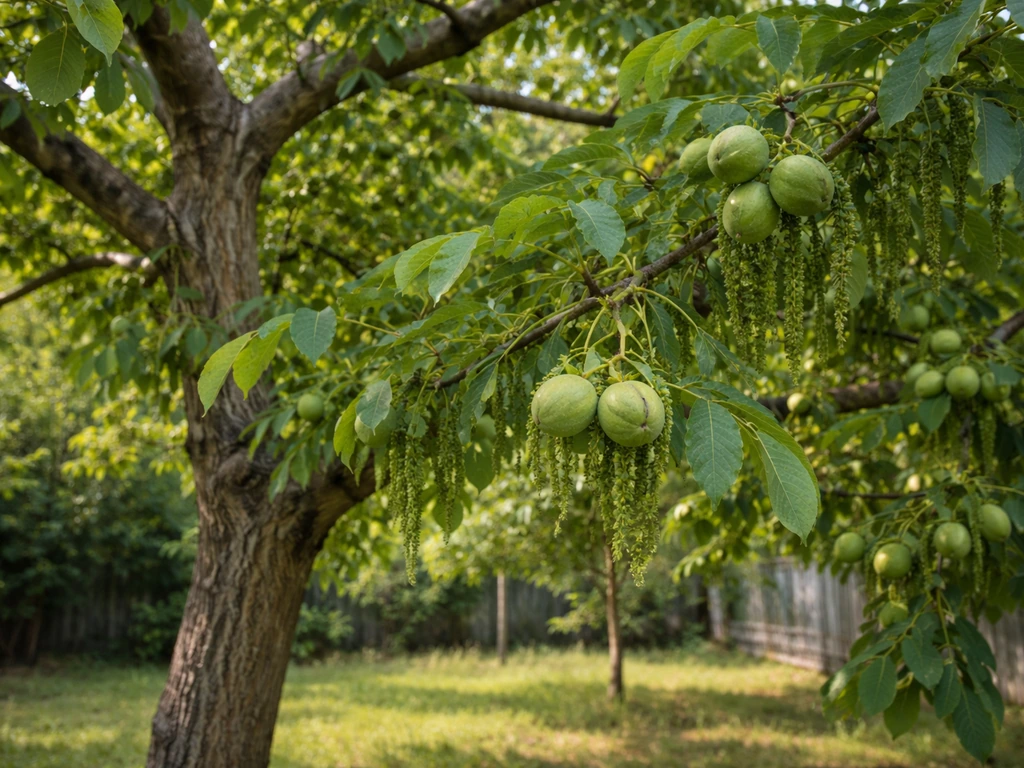
Black walnut is rated Zone 4 in hardiness, which sounds promising for Maine, but the word 'borderline' comes up in nearly every serious planting guide for a reason. The tree itself may survive cold winters in Zone 4b and 5a Maine, but nut production is a different question. Black walnut flowers in late spring, and those flowers are extremely sensitive to frost. In low-lying areas, a single late-May frost can blacken new growth overnight and eliminate the entire year's nut crop. Purdue Extension and the USDA Forest Service both flag this frost vulnerability as a core risk. For Maine growers, this means black walnut is only a realistic nut producer in the warmest, most frost-protected spots in the southern part of the state. Think elevated ridges in York County, not valley floors anywhere in Maine. Even there, you should expect to lose some nut crops to late frosts. Black walnut also insists on deep, well-drained, fertile soil and full sun. It produces a chemical called juglone that inhibits many nearby plants, so plan your garden layout accordingly. Buy stock from northern seed sources whenever possible to get trees with as much cold adaptation as available.
Butternut
Butternut (white walnut, Juglans cinerea) is the native Maine walnut, naturally more winter-hardy than black walnut and historically found statewide from southern Maine north to Houlton. It produces a rich, buttery nut and was once a genuine option for Maine growers. The hard truth in 2026 is that butternut canker, caused by a non-native fungus (Ophiognomonia clavigignentijuglandacearum), is killing butternuts throughout most of Maine and the broader northeastern U.S. The Maine Forest Service describes it as eliminating butternuts because the species has almost no natural resistance. The fungus spreads through rain splash and wind during wet weather. If you plant a butternut today, you're betting against long odds. Some breeding programs are working on canker-resistant selections, but none are widely available yet. For now, butternut is more of a conservation story than a practical orchard recommendation.
Chestnut
American chestnut (Castanea dentata) was once abundant in Maine's forests before chestnut blight arrived in the early 1900s and decimated the population. Today, root systems can still sprout from old stumps, but the sprouts are typically killed back by blight before they can produce nuts. The American Chestnut Foundation's Maine chapter has been running backcross breeding work using Maine wild trees as mother trees, aiming to move blight resistance genes from Chinese chestnut into American chestnut. UNE researchers describe these hybrids (around 1/16 Chinese chestnut genome, called B3F3 generations) as having intermediate blight resistance. Some recent planting efforts have been made at conservation sites in Burnham, Maine. This is genuinely exciting long-term work, but it's 15 or more years from producing trees ready for widespread planting. For today's grower, Chinese chestnut (Castanea mollissima) is the practical chestnut. It's blight-resistant, hardy to Zone 4b or 5a, and a prolific nut producer on good sites in southern Maine. Give it full sun, well-drained loamy soil, and a sheltered spot away from late frost pockets. It needs a companion for pollination (more on that below), but it starts producing nuts much sooner than most nut trees. If you're in central or northern Maine, expect reduced nut crops or failed harvests in cold years.
Hickory
Shagbark and shellbark hickory are rated to Zones 4 and 5 respectively and can technically grow in parts of Maine. The problem is patience: hickory trees are notoriously slow to bear nuts, sometimes taking 10 to 20 years from planting. Arbor Day Foundation notes that shellbark hickory often needs patience, with nut-bearing typically taking about 10 to 12 years sometimes taking 10 to 20 years. They also need a long, warm growing season to ripen the nuts before fall, which works in southern Maine but becomes unreliable further north. Hickory is best thought of as a long-term investment or a landscape tree in Maine, not a practical nut crop for most growers.
Hazelnut and other smaller nut producers
American hazelnut: the most reliable Maine nut
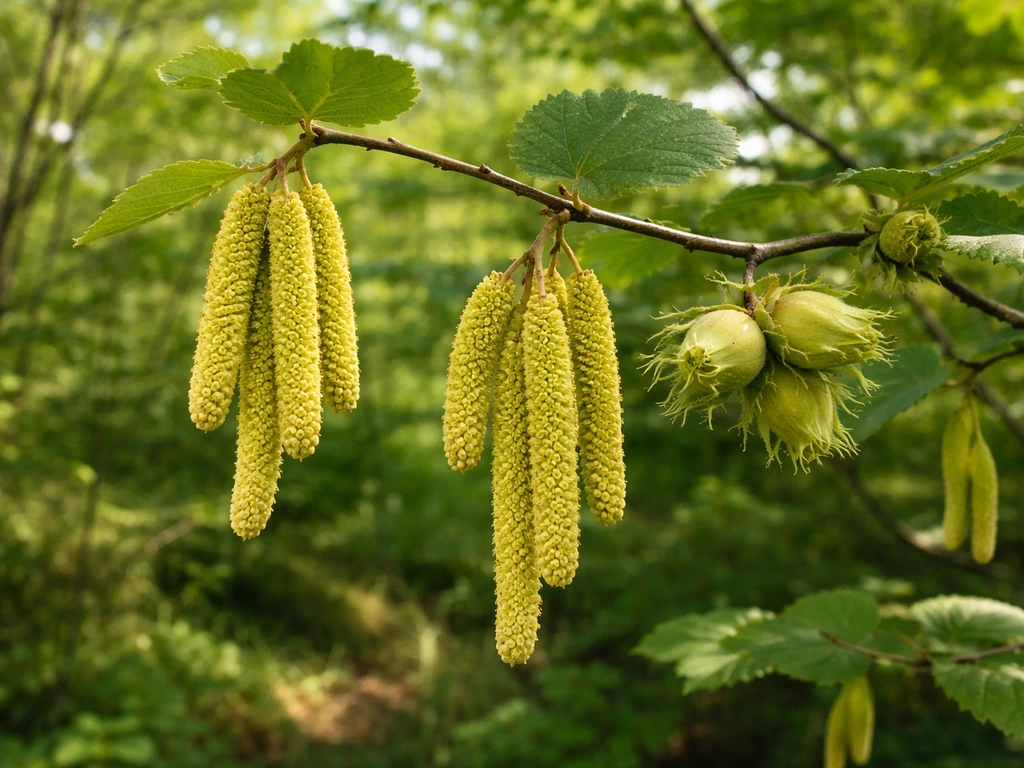
American hazelnut (Corylus americana) is the single most dependable nut-producing plant you can grow across Maine. It's native to the eastern U.S., hardy to at least Zone 4 (some sources list Zone 3), and functions as a multi-stemmed shrub reaching 8 to 12 feet tall. It tolerates a wider range of soils than tree walnuts, handles partial shade better than most nut-producers, and starts producing nuts within a few years of planting. You do need at least two plants for cross-pollination since hazelnut is wind-pollinated and not reliably self-fertile. The nuts are smaller than European hazelnuts but perfectly usable and genuinely delicious.
The disease to know about is Eastern Filbert Blight (EFB), a fungal disease caused by Anisogramma anomala. American hazelnut is relatively tolerant of EFB compared to European hazelnut, which EFB kills outright. However, UMaine Cooperative Extension notes that even American hazelnuts introduced to eastern U.S. growing conditions can develop blight-related symptoms. Stick with locally sourced or regionally selected American hazelnut stock where possible, scout for EFB cankers (look for small black pustule-like structures on stems), and prune out affected wood promptly. If you specifically want larger nuts closer to European hazelnut size, look for hybrid selections bred for EFB resistance, though availability in Maine is limited.
Heartnut (Japanese walnut hybrid)
Heartnut (Juglans ailantifolia var. cordiformis) is a Japanese walnut variety that produces heart-shaped nuts with shells easier to crack than black walnut. It's rated hardy to around Zone 4 to 5 and has been grown experimentally in parts of New England and Ontario, Canada. It can be a viable option in southern and central Maine on sheltered, well-drained sites. Availability from nurseries is limited, but it's worth investigating if you want a walnut-family tree with somewhat better cold tolerance than black walnut and easier nut extraction. Treat it like black walnut for site requirements: full sun, fertile well-drained soil, and protection from late-frost pockets.
Planting right: spacing, soil, pollination, and getting established
Site prep and soil
Almost every nut tree on this list shares the same core site requirements: full sun and well-drained soil. Test your soil pH before planting. Most nut trees prefer a pH of 6.0 to 6.5. If you're on heavy clay, either amend aggressively or pick a different part of your property. Avoid low spots, drainage depressions, and north-facing slopes that stay cold and damp. Elevated ground with air drainage (where cold air flows away rather than pools) dramatically reduces your late-frost risk and disease pressure from moisture.
Pollination requirements
Most nut trees need cross-pollination from a genetically different tree of the same species to produce a reliable crop. Hazelnut absolutely requires two or more plants. Chinese chestnut is technically capable of some self-pollination but produces far better with a second tree nearby. Black walnut can produce some nuts from a single tree, but more trees generally improve yields. Heartnuts also benefit from a second tree. Plant pollinators within 50 to 100 feet of each other for best results. For wind-pollinated species like hazelnut, positioning upwind of the prevailing wind direction matters less than just having both plants close enough for pollen to travel.
Spacing and planting
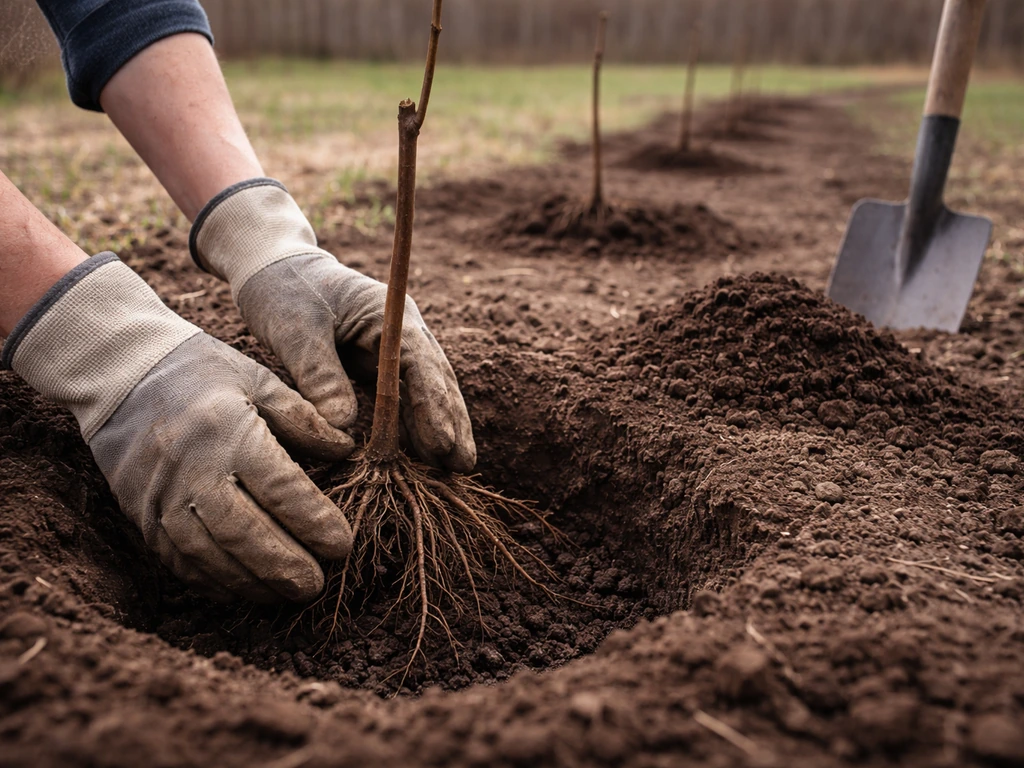
- American hazelnut: space plants 8 to 15 feet apart; they sucker and spread over time, so allow room for a multi-stemmed grove
- Chinese chestnut: space trees 30 to 40 feet apart for mature canopies; plant at least two different cultivars for reliable pollination
- Black walnut: space 30 to 40 feet apart minimum; remember juglone toxicity affects surrounding planting areas
- Heartnut: space 25 to 35 feet apart; stake young trees and protect from deer in the first few years
- Hickory: space 30 to 40 feet apart; these are large, long-lived trees that need permanent space
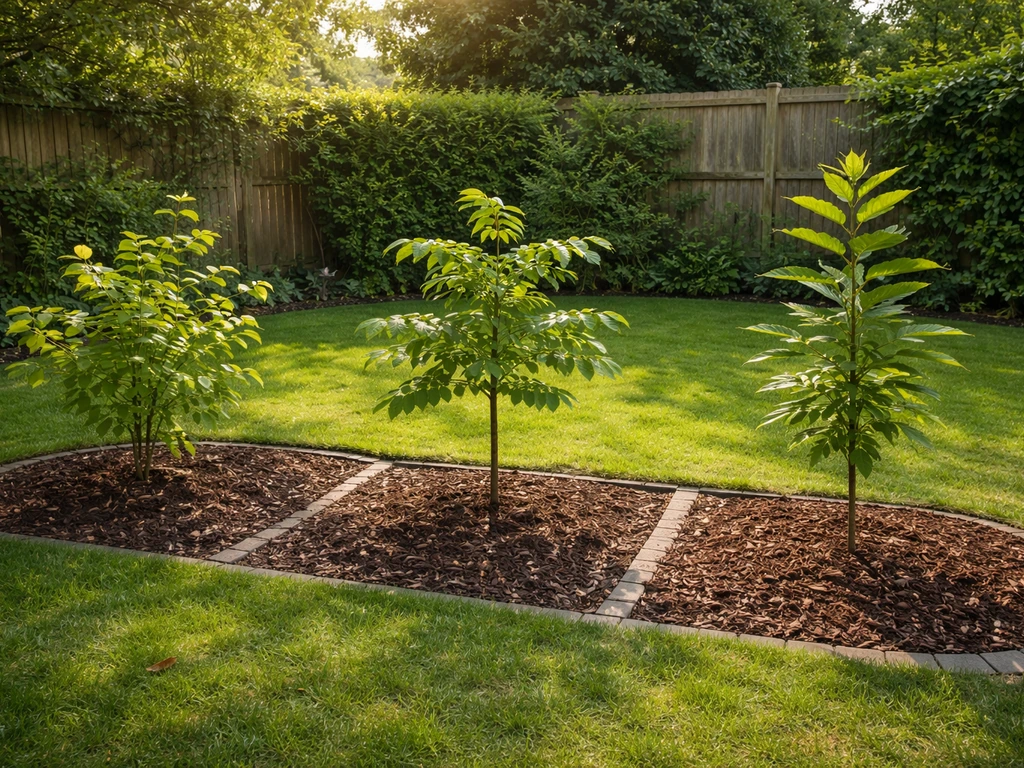
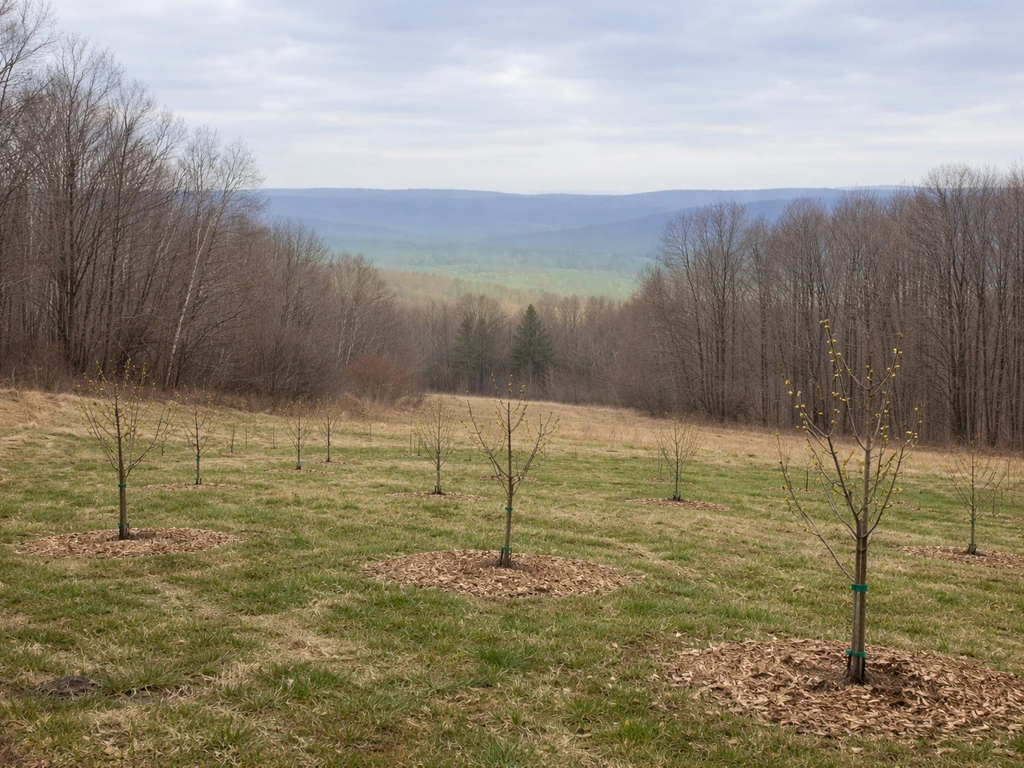
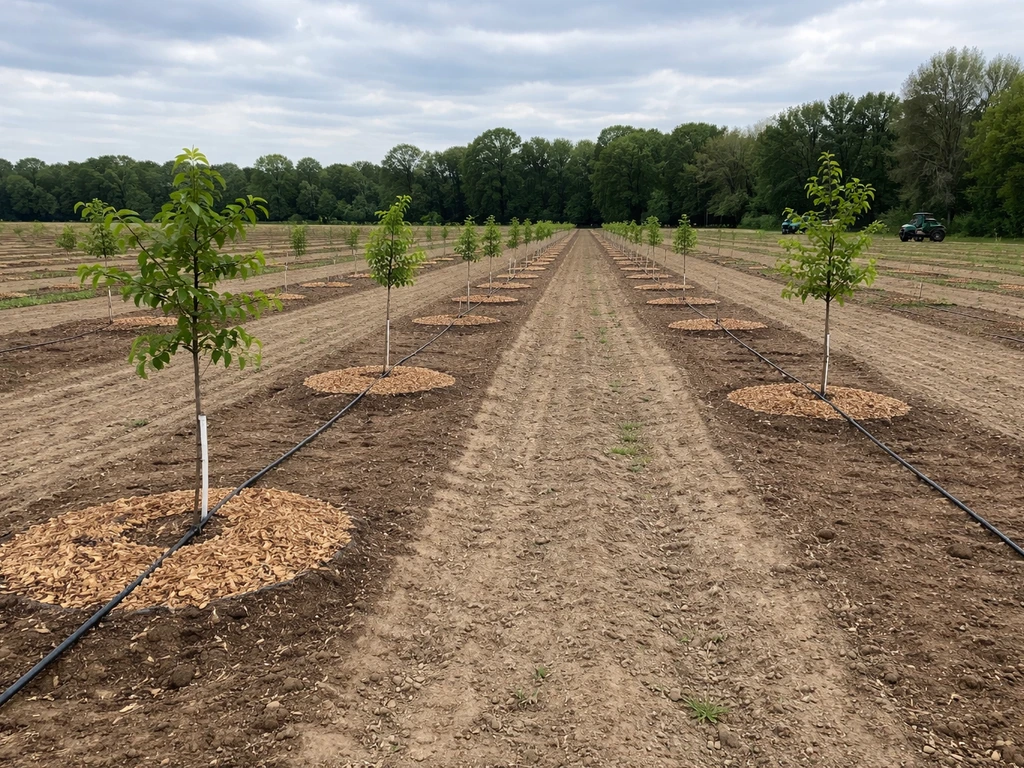
For bare-root plantings, get trees in the ground in early spring as soon as soil is workable. Containerized trees can go in spring or early fall, but spring establishment gives roots the full growing season to anchor before their first Maine winter. Mulch 3 to 4 inches deep out to the drip line, keeping mulch away from the trunk, to retain moisture and suppress competition. Water weekly during the first growing season if rainfall is below an inch per week.
When nuts ripen: harvest timing and ripeness cues
Knowing when to harvest is more nuanced than most guides admit. Each species sends different signals, and picking too early or waiting too long both hurt quality.
| Species | Typical Maine Harvest Window | Ripeness Cues | Post-Harvest Handling |
|---|---|---|---|
| American hazelnut | Late August to September | Husks loosen; nuts fall or shake free easily; kernel is cream-colored and firm | Dry in a single layer for 1 to 2 weeks; store in cool dry location |
| Chinese chestnut | September to October | Burrs split open naturally and drop; chestnut skin is glossy and tight | Cure at room temp for a few days; refrigerate for longer storage (chestnuts mold quickly at room temp) |
| Black walnut | September to October | Outer green husk begins to soften and yellow-brown; nut falls from tree | Remove husks immediately (they stain everything); cure in shell for 2 to 3 weeks; store in mesh bags in cool dry place |
| Heartnut | September to early October | Husks crack; nuts drop; similar to black walnut timing | Shell and dehydrate kernels before long-term cold storage |
| Hickory | September to October | Husks split into four sections; nuts drop; kernels are cream-white | Dry well before storage; hickory nuts keep well in shell in cool dry conditions |
A reliable rule across all species: let the tree tell you. Don't pick from the branch. Wait for nuts to drop naturally or loosen so they fall with a light shake. Nuts harvested before full maturity have poor kernel fill and won't store well. In Maine's shorter growing seasons, cold snaps in late September can catch chestnuts before the burrs fully split, so keep a close eye once you're in the ripening window.
Troubleshooting: pests, disease, winter damage, and poor yields
Winter injury
Winter damage on young nut trees in Maine most often shows as dieback of branch tips, splitting bark on young trunks, or complete death of branches planted in the wrong site. If you see tip dieback in spring, wait before pruning: assess what's actually dead (scratch the bark to check for green tissue) once leaves begin emerging. Protect young tree trunks from sunscald and frost cracks with white tree wrap through their first two or three winters. Black walnut and borderline-hardy species should be planted in sheltered spots with good snow cover as insulation when possible.
Eastern Filbert Blight on hazelnut
EFB is the main disease risk for hazelnut in Maine. Scout in spring and early summer for elongated cankers on stems with small black pustule structures (stromata) embedded in the bark. Prune infected wood at least 6 to 8 inches below visible canker margin and disinfect tools between cuts. American hazelnut tolerates EFB better than European hazelnut, but repeated heavy infections can still reduce productivity. UMaine Extension provides diagnostic imagery to help confirm EFB versus other bark issues, which is worth checking before you start cutting.
Chestnut blight and butternut canker
For Chinese chestnut, blight resistance is built in, so major blight issues are unlikely. Watch for any cankers on trunks and remove affected wood promptly. Butternut canker is a different matter: if you plant butternut, inspect annually for orange to brown elongating cankers that girdle branches. There is currently no effective treatment; once a tree is significantly infected, it's essentially a countdown.
Pests
Squirrels are the number one nut pest in Maine and there's no good way around it for small plantings. Netting individual trees before harvest, or collecting fallen nuts daily during the harvest window, helps. For walnut trees, walnut aphids and dusky-veined aphids can infest foliage; in many orchards, an introduced parasitic wasp provides natural biological control of the common walnut aphid, though dusky-veined aphids can still flare up in some years. Inspect undersides of leaves and wash off light infestations with water. Deer are a serious threat to young trees and shrubs during establishment, so protect new plantings with fencing or individual tree guards until they're established.
Poor nut yields
If a tree is growing well but producing few or no nuts, the most common causes are: lack of a pollination partner, late-spring frost damage to flowers, not enough sun, or simply youth (most nut trees don't produce meaningfully for 5 to 10 years after planting). Check each one systematically before concluding a species is wrong for your site.
Choosing the right species for your part of Maine
The same logic that applies to choosing nut trees in Zone 4 and Zone 5 broadly applies here with Maine's added complexity of a very long north-to-south stretch. Growers in northern Maine face essentially the same constraints as someone gardening in Zone 4 climates in the upper Midwest. Southern Maine coastal growers are operating closer to the conditions of warmer New England states. Use the checklist below to match species to your specific situation. If you're instead gardening in western Washington, the best nut choices shift with a milder, wetter climate and different hardiness conditions what nut trees grow in western Washington.
Decision checklist by Maine region
- Find your exact hardiness zone using the USDA ZIP-code finder, not just a general regional label. A Zone 4b site and a Zone 5b site have very different options.
- Count your frost-free days. If you're averaging fewer than 120 frost-free days, eliminate black walnut and marginal chestnut sites from your list.
- Assess your site for frost pockets. If your intended planting spot is a low area where cold air settles, move upslope. For every nut species, frost-pocket planting is a recipe for repeated crop failures.
- Test soil drainage. Dig a hole 12 inches deep, fill with water, and time how long it takes to drain. Faster than 1 inch per hour is good. Slower than that, either amend or find a better spot.
- Decide how much space you have. Hazelnut works in tight spaces. Black walnut, chestnut, and hickory need room and need it permanently.
- If you're in Zone 3b or 4a (most of Aroostook County, far northern Maine): plant American hazelnut from hardy local stock. That's essentially your only reliably productive nut option. Don't invest in black walnut or chestnut at this latitude.
- If you're in Zone 4b to 5a (central Maine, Bangor area, western interior): American hazelnut is your anchor. Chinese chestnut on well-drained elevated sites is worth trying with realistic expectations. Black walnut is a gamble; plant it only if you have an unusually warm microclimate.
- If you're in Zone 5b to 6 (southern coastal Maine, York and Cumberland counties): you have the most options. Chinese chestnut and black walnut are both viable on good sites. Hazelnut is still the easiest. Consider heartnut walnut as a less common but interesting option.
- For any species, buy from a northern nursery or Maine-local source when possible. Cold-adapted seed sources make a real difference for marginal species.
- Plan for at least two trees for any cross-pollinated species (hazelnut, chestnut) before you buy the first one.
If you're just starting out and want one clear recommendation: plant two American hazelnuts from locally adapted stock. If you want the easiest nut tree to grow, start with American hazelnut for Maine’s most dependable results American hazelnuts. They're native, cold-tough, early-bearing, and productive enough to be genuinely satisfying. Once those are established and thriving, layer in a Chinese chestnut pair if you're in southern or central Maine, or explore heartnut walnut if you want something in the walnut family. Treat black walnut as a bonus planting for your best, most frost-protected site, not your first choice. And hold off on butternut until disease-resistant selections are more reliably available. Maine is a challenging but genuinely rewarding place to grow nuts, and matching the species to your exact zone and microsite is what separates a productive planting from a frustrating one.
FAQ
If I only want to plant one nut species in Maine, what should it be?
For most of Maine, the most dependable choice is American hazelnut (Corylus americana) because it is reliably hardy and starts producing in a few years. If you specifically want a nut-tree form, consider Chinese chestnut in the southern half (it performs best with warm, well-drained sites), but in central and northern Maine expect reduced harvests in cold years.
Can I rely only on USDA hardiness zone to choose a nut tree in Maine?
Avoid planting a “hardiness zone match” in a low spot. Even if the ZIP code shows the right USDA zone, late-spring frost can still kill hazelnut flowers and chestnut blossoms, and wet clay can stunt walnuts and hickories. Use your property’s microclimates, pick the warmest well-drained area you have, and treat frost pockets as no-go zones.
Do I need more than one American hazelnut plant to get nuts in Maine?
American hazelnut needs a genetically different pollinator nearby, plan on at least two plants (or more for better overall yield). For the most consistent results, buy locally adapted or regionally selected stock, and aim to place the shrubs within roughly 50 to 100 feet.
When do I need to start worrying about late-season cold with chestnuts in Maine?
Yes, timing matters. Many chestnut issues in Maine come from cold snaps during the burr-splitting and ripening window. Keep a close watch as the nuts approach full maturity, and plan to harvest when nuts loosen naturally or drop, rather than picking early.
Is Chinese chestnut dependable across all of Maine?
Chinese chestnut is usually the best chestnut bet for southern and central Maine, but it is not a guarantee. In colder years, you can get thin production or failed harvests even on good sites because nut development and ripening rely on enough warm, frost-free days.
My black walnut grew fine, why did I get no nuts?
Late frost is the most common reason a walnut-family planting produces little. With black walnut especially, even if the tree survives winter, late spring frosts can ruin flowers and wipe out that year’s crop. This is why elevated, frost-protected locations matter more than most people expect.
What’s the best season to plant nut trees in Maine (bare-root vs container)?
If bare-root, the usual best window is early spring as soon as the soil is workable, so roots anchor before winter. Containerized trees can be set in spring or early fall, but spring planting often reduces first-winter establishment risk in Maine.
How should I mulch nut trees or shrubs in Maine to avoid problems?
For young nut plantings, mulch should extend to the drip line and stay about 3 to 4 inches deep, but do not pile mulch against the trunk. You want moisture retention and weed suppression without creating a rot-prone, constantly wet collar.
What’s the most common reason nut trees leaf out but don’t produce in Maine?
The article highlights several risks, but a common “silent failure” is insufficient sun. If you get less than 6 to 8 hours of direct sun, you may see healthy growth with very low or no nut set. Check daily sun hours in midsummer, not just in early spring.
What can I do about squirrels if I only have a few nut trees?
Squirrels are often the decisive pest for small plantings. Netting individual trees during the harvest window is one of the most practical options, and for very small areas, daily collection of fallen nuts during peak ripening can prevent the squirrels from “owning” your entire crop.
If I suspect Eastern Filbert Blight on my hazelnuts, what’s the first step I should take?
For EFB in hazelnut, early action makes a difference. If you see cankers, prune infected wood back several inches below the visible canker margin, and disinfect tools between cuts. Also scout early in the season so you are not chasing late-stage damage.