Drop an acorn in a cup of water and watch what happens. If it sinks, you have a reasonable shot at a viable seed. If it floats, the odds drop sharply. blank" rel="noopener noreferrer">Viable acorns tend to sink in water, while those that float are likely not to germinate, a rule noted by the USDA Forest Service. Floaters often have damaged, desiccated, or hollow interiors, so you may not want to rely on them for planting. That one quick test won't tell you everything, but combined with a close visual inspection and a few planting fundamentals, it gets you most of the way toward knowing whether an acorn is worth your time and soil.
How to Tell If an Acorn Will Grow: Quick Tests and Next Steps
Marcus Hendricks
2 May 2026
What makes an acorn viable vs dead
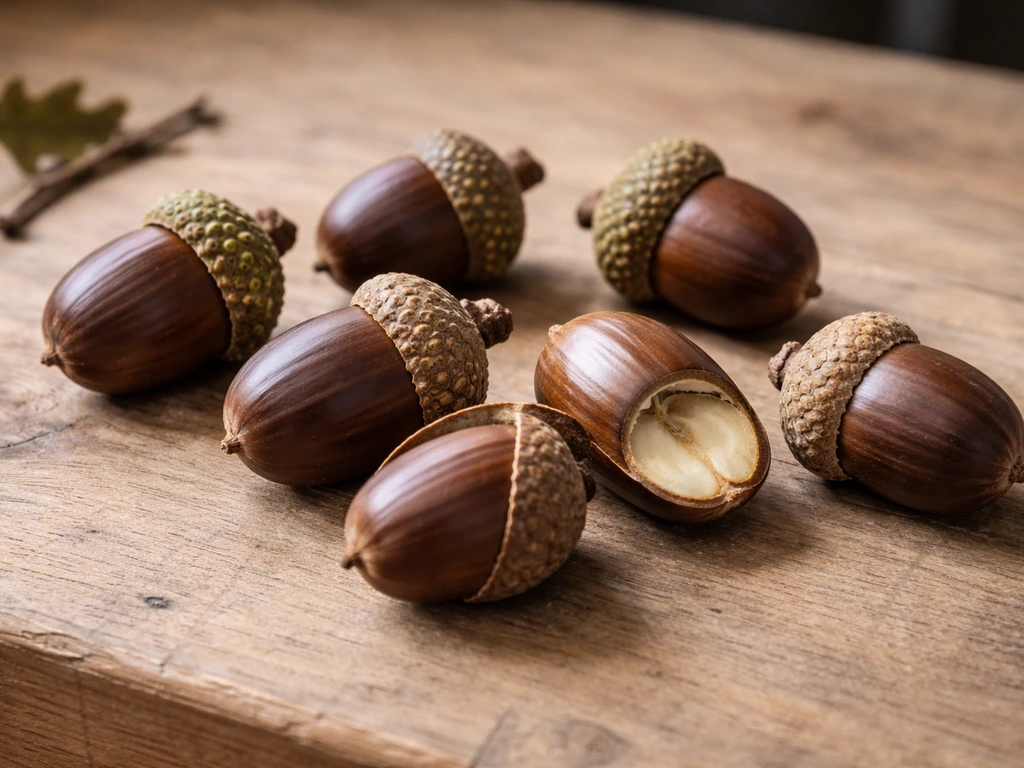
An acorn is essentially a seed packaged with a small embryo and a starchy food reserve called the cotyledon, all wrapped in a hard shell. For it to sprout, three things need to be intact: the embryo (the tiny growing tip inside), the cotyledon tissue (the fuel source for early germination), and enough moisture in the seed itself. If any of these fail, the acorn won't grow regardless of what you do after planting.
Desiccation is one of the most common killers. US Forest Service research confirms that moisture content strongly affects viability in species like white oak and cherrybark oak, and once an acorn dries out past a certain threshold, the embryo is gone for good. You can't rehydrate a dead embryo back to life. This is why acorns left in a dry garage over winter are almost always useless by spring.
Physical damage is the other major culprit. Acorn weevils (Curculio species) bore into the shell and lay eggs; the larvae eat the cotyledon from the inside and can hollow out an acorn that looks perfectly fine on the outside. Research on Nuttall oak found that weevil injury directly reduced germination percentages, sometimes dramatically. Mold, soft spots from fungal infection, and cracks that allowed moisture loss are other common death sentences.
A viable acorn feels heavy and solid for its size, has an intact shell with no visible holes, and retains enough internal moisture that it hasn't shrunk or rattled when shaken. Collect acorns as soon as they fall naturally from the tree, rather than raking up old ones that have been on the ground for weeks. Freshly fallen acorns that still have their caps attached (or caps that came off cleanly) are your best starting point.
Quick at-home tests before planting
The float test
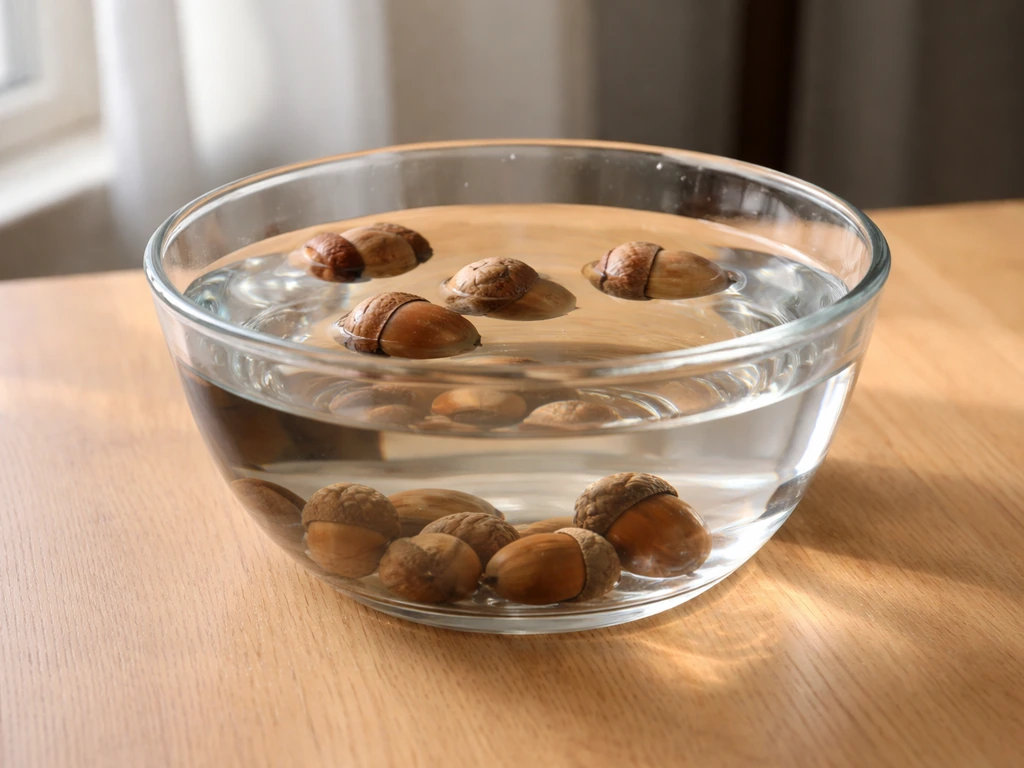
Fill a bowl or bucket with water and drop your acorns in. Viable acorns of most oak species sink to the bottom because they are dense with healthy tissue. Floaters are typically hollow, desiccated, or full of insect damage. The USDA Forest Service recommends this test as a quick sorting method, and a 2025 study on Garry oak (Quercus garryana) confirmed that viable acorns should sink fully to the vessel bottom. Let them sit for a few minutes rather than making snap judgments, and discard anything that bobs at the surface or stays suspended mid-water.
Physical inspection
After the float test, look at your sinkers carefully. Hold each acorn and check for tiny round holes (weevil entry points), soft or sunken areas that suggest internal rot, visible mold (green, white, or black fuzz), and cracks in the shell. Shake the acorn next to your ear: a rattling sound means the interior has dried and shrunk away from the shell, which is a bad sign. The cap area where the acorn attaches to the tree is another spot to check, since decay often starts there.
The cut test
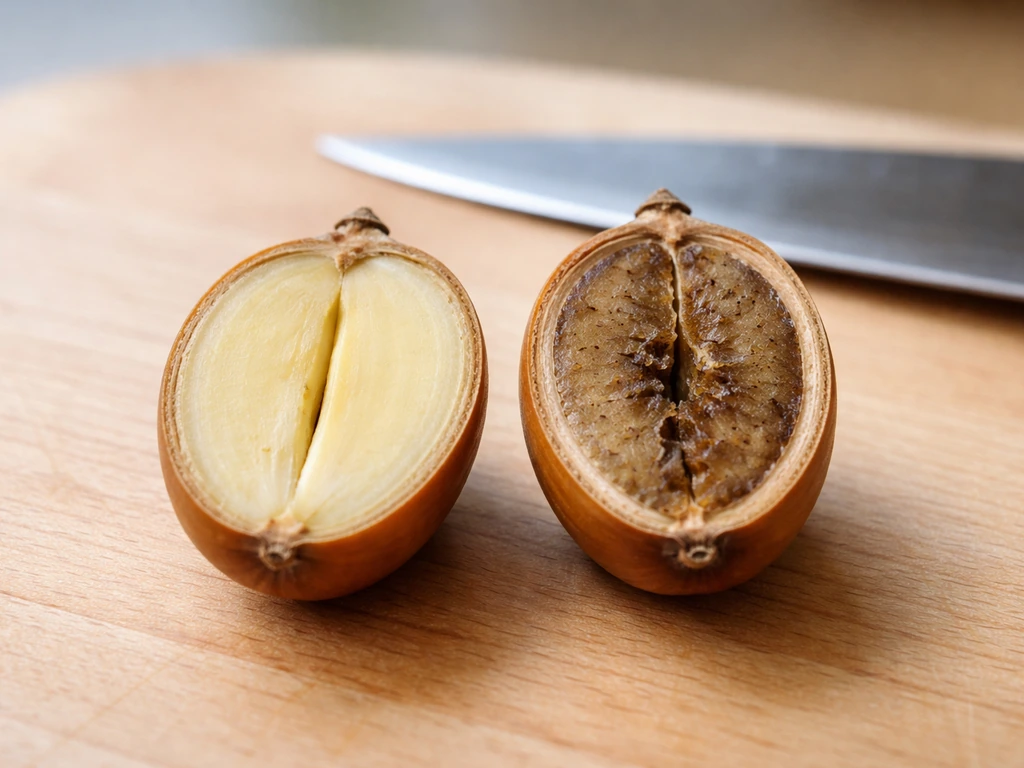
If you want a definitive answer on a specific acorn, cut it in half lengthwise with a sharp knife. A healthy cotyledon is cream to pale yellow, firm, and moist. If the interior is brown, hollow, shrunken, mushy, or shows obvious larval tunnels, the acorn is dead. This is a destructive test, so use it on acorns you're unsure about rather than on your whole batch. It's also useful for building a mental picture of what healthy versus dead tissue looks like before you plant the rest.
Interpreting results and avoiding false negatives
Here's where people get tripped up: the float test is a screening tool, not a guarantee. blank" rel="noopener noreferrer">Research published in Forest Ecology and Management noted that moisture content itself affects whether an acorn sinks or floats. A healthy acorn that has dried slightly might float even though its embryo is still alive, while a damaged acorn that retained water might temporarily sink. A 2019 peer-reviewed study on the float test concluded that while sound acorns of appropriate moisture content will sink, the test has real shortfalls when moisture conditions vary.
The practical solution is to stack your tests. If an acorn sinks, passes visual inspection, and has a healthy interior on the cut test, you can be confident. If it floats but shows no external damage and feels heavy, it might still be worth stratifying and planting, especially if you collected it fresh. After you've stacked the float, visual, and cut tests, the next step is to follow the right stratification timeline, and if you're wondering can you grow acorns from ones that looked borderline, stratification is the best adjacent move. Don't throw away every floater automatically if you have a small batch and can afford to test them through stratification.
Also watch for false positives in the cut test. A radicle (the tiny root tip) that has already started to emerge may show slight browning at the tip. UC ANR research points out that slight browning on newly sprouted radicles is normal and should not be treated as failure. What you're looking for is severe discoloration or soft, mushy tissue running deep into the cotyledon, not just surface-level tip color.
Stratification and timing by oak type and climate
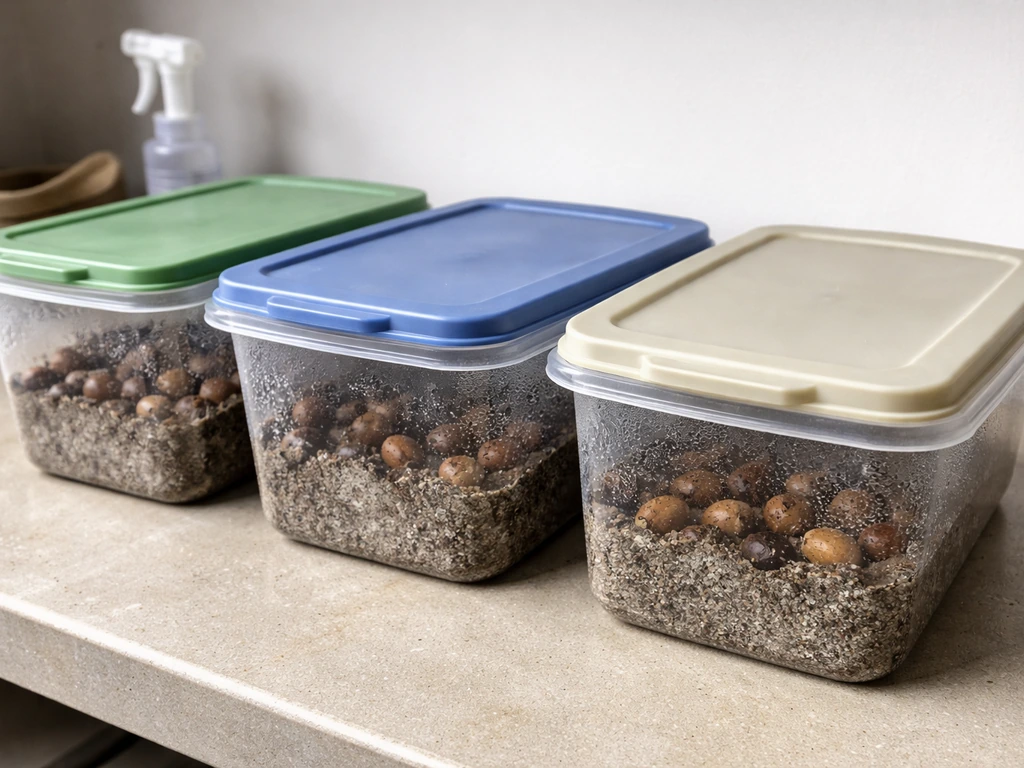
One of the biggest reasons healthy acorns fail to sprout is that the grower skipped or botched stratification. Whether you need it, and how much, depends entirely on which oak group you're dealing with.
White oak group acorns (white oak, bur oak, swamp white oak, chinkapin oak, overcup oak) germinate in the fall shortly after seed drop. White oak has essentially no dormancy, so if you collect acorns in October and keep them moist, they'll often start putting out a radicle within weeks without any cold treatment. USDA FEIS confirms this: white oak acorns lack the dormancy mechanism that requires a cold period to break.
Red oak group acorns (northern red oak, pin oak, Nuttall oak, cherrybark oak, Shumard oak) are different. They require cold moist stratification before they'll germinate. Iowa State Extension specifies that bur oak needs roughly 30 to 60 days of cold stratification, while red and pin oaks need 30 to 45 days. Nuttall oak research from the US Forest Service puts the window at 60 to 90 days. The US Forest Service also notes that northern red oak has variable dormancy, meaning individual seeds within the same batch can have different stratification needs, which explains why some red oaks germinate early and others lag.
| Oak group / species | Stratification needed | Timing |
|---|---|---|
| White oak (Quercus alba) | None | Plant in fall; germinates naturally |
| Bur oak (Q. macrocarpa) | 30–60 days cold moist | Fall planting or refrigerate for spring |
| Northern red oak (Q. rubra) | 30–45 days cold moist | Refrigerate after fall collection; plant in spring |
| Pin oak (Q. palustris) | 30–45 days cold moist | Refrigerate after fall collection; plant in spring |
| Nuttall oak (Q. texana) | 60–90 days cold moist | Refrigerate after fall collection; plant in spring |
To stratify acorns at home, place them in a sealed plastic bag with slightly damp (not soaking wet) peat moss, vermiculite, or paper towels. Store the bag in a refrigerator at 32 to 41 degrees Fahrenheit. Check every two weeks for mold or signs of premature germination. UNH Extension cites 32 to 41 degrees Fahrenheit as the correct temperature range for cold stratification of species like northern red oak.
Planting steps that help the right acorns sprout
Once you have your viable acorns sorted and stratified appropriately, the planting step itself is straightforward but the details matter. Depth is the most common mistake. Mississippi State Extension gives a useful rule of thumb: plant at a depth roughly three times the width of the seed. For a typical acorn that's about half an inch wide, that puts you at roughly 1.5 inches deep. Ask Extension guidance for bur oak specifically suggests about 1.5 times the diameter of the acorn. Planting too shallow exposes the seed to drying and temperature swings; too deep and the emerging shoot runs out of food reserves before it breaks the surface.
Use well-draining soil or potting mix. Soggy, compacted, or waterlogged soil promotes Pythium and Phytophthora, fungal-like pathogens that cause damping-off and root rot. UC IPM research confirms that poorly drained media dramatically increases the risk of these diseases in young seedlings, and they can kill what appeared to be perfectly healthy acorns after planting. If you're using containers, make sure drainage holes are unobstructed and you're not overwatering. If you’re trying to grow an acorn indoors, the same drainage rules matter even more because container moisture can swing fast can i grow an acorn indoors.
Point the acorn so the pointed tip faces sideways or slightly down (the radicle will find its way down regardless, but you're giving it a head start). Cover with soil, press gently to eliminate air pockets, and water lightly. If you're direct-seeding outdoors, mark the spot clearly, because a sprouting oak looks like a lot of other things and you don't want to weed it out by accident.
How to check after planting
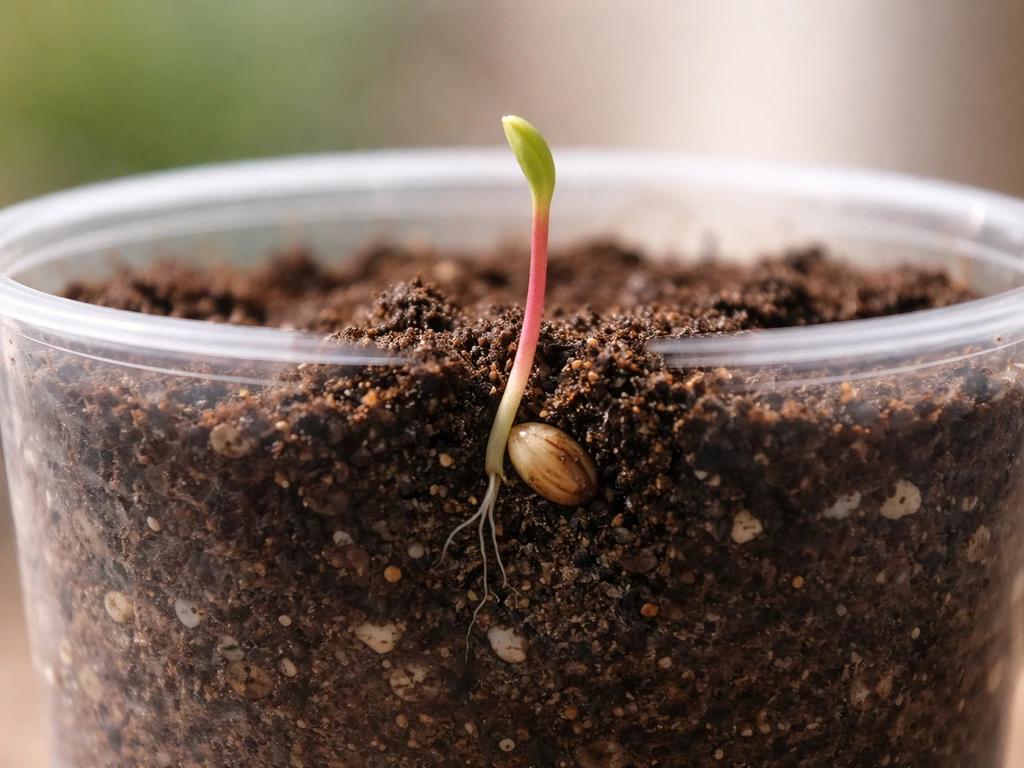
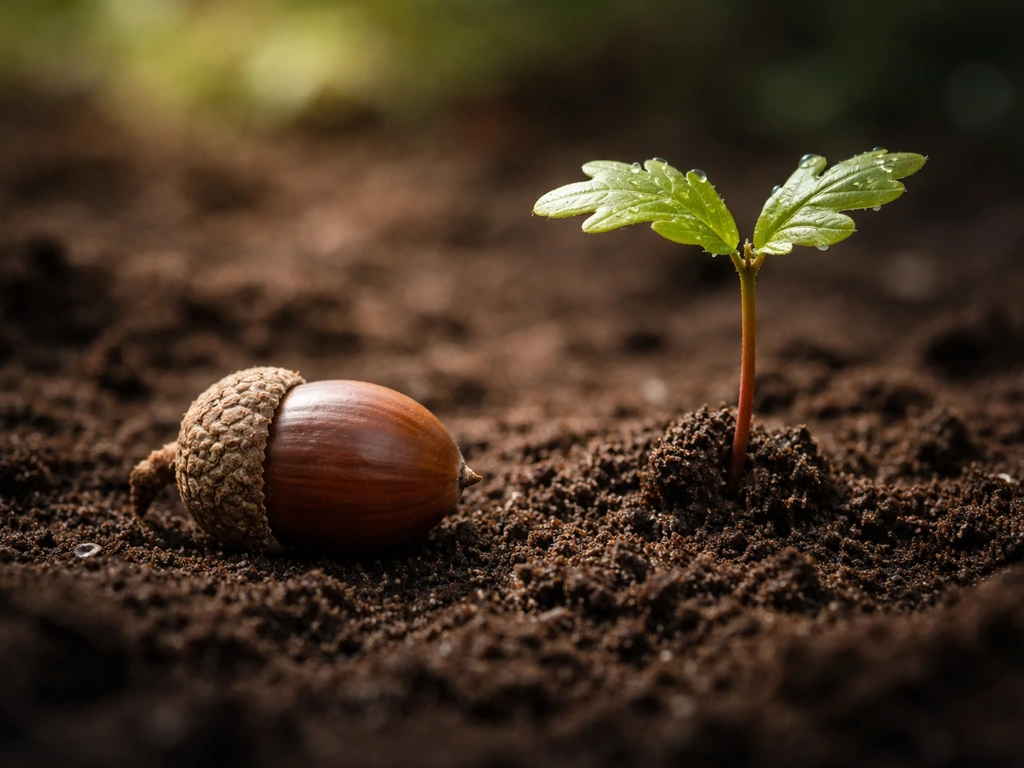
The first sign of success is radicle emergence, which you can observe if you're using a transparent container or if you gently brush soil away from the side of the pot. The radicle is the root, not the shoot, so the first thing an acorn does is push a root downward before anything shows above the soil. US Forest Service research on white oak documents that shoot emergence can happen as rapidly as 4 to 6 weeks after radicle development, though timing varies across individual acorns even in the same batch.
Above ground, look for a reddish-pink to pale green shoot pushing through the soil surface. This is the epicotyl, and it's the signal that germination is progressing normally. If you see nothing after 8 to 10 weeks for white oak group species, or after the full stratification period plus 6 to 8 weeks for red oak group species, it's time to investigate.
To check on a planted acorn that hasn't sprouted, carefully dig it up and examine it. A viable but slow acorn will have a visible white or cream-colored radicle already extending from the base. A failed acorn will be soft, dark brown or black, and may smell of rot. As noted above, slight browning at the radicle tip is normal. UC ANR guidance distinguishes between normal whitish radicles and radicles with severe infection at the tips, noting that you can cut back a radicle to 1 to 1.5 centimeters of healthy tissue and still have a viable seedling. If the cotyledon itself has gone dark and mushy, the acorn is done.
If it won't grow: troubleshooting and next attempts
There are a handful of predictable reasons acorns fail even after you've done everything right. Working through them systematically saves time on the next attempt.
- Desiccation before planting: Acorns that dried out during storage lose viability fast. If you stored them in a warm, dry place for more than a few weeks, suspect this first. Next time, store in a sealed bag in the fridge with slightly damp media immediately after collection.
- Insect damage: Acorn weevil larvae are invisible from the outside but destroy the interior. Cut a few of your failed acorns open. If you see tunnels or larvae, your collection site has heavy weevil pressure. Collect earlier in the season or sort more aggressively with the float and cut tests.
- Incorrect stratification: Red oak group acorns planted without stratification almost never germinate on schedule. If you skipped this step, refrigerate the remaining acorns immediately and give them the minimum days required for the species before trying again.
- Too much moisture after planting: Overwatering promotes Pythium and Phytophthora rot, which can kill acorns within days of planting. Let the soil dry slightly between waterings and make sure drainage is working.
- Too little moisture: The opposite problem. If the soil dries out completely during germination, the emerging radicle dies. Keep the medium consistently damp, not wet.
- Planting too late in spring: Acorns that begin germinating in warm soil without an established root system before summer heat hits often fail. Aim to plant so germination happens in cooler conditions.
- Poor-quality source material: Acorns from stressed, diseased, or older trees or acorns collected after a drought year may have inherently lower viability. Try collecting from a different tree or in a better year.
If you're working with a species that requires cold stratification, a research study on Quercus pagoda (cherrybark oak) showed that cumulative germination can reach 97% or above even in acorns that were slow to start, as long as the conditions were right. Patience and correct conditions matter more than speed. Don't give up on a slow batch too quickly, especially with red oak group species that have variable dormancy.
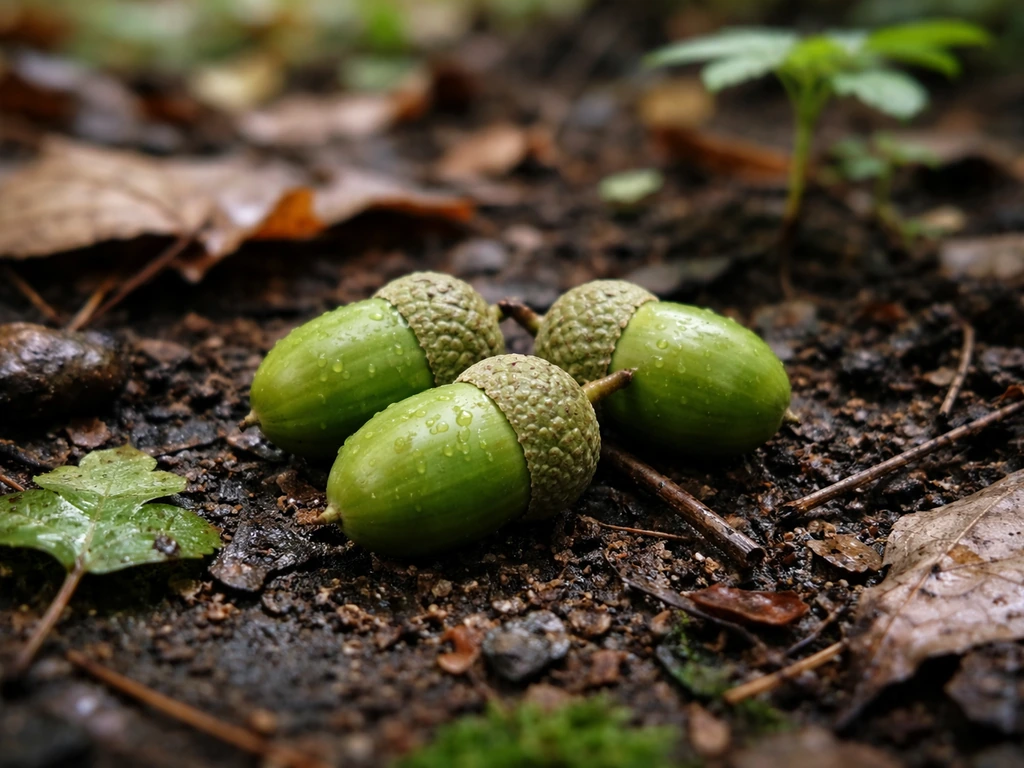
On the topic of green acorns specifically: immature acorns that fall before full ripeness rarely have a developed embryo, which is why they almost always fail regardless of how you treat them. Similarly, the question of whether acorns that float can ever grow is worth examining closely, since some floaters in fresh collections do retain viable embryos, though the success rate drops considerably compared to sinkers. And if you're wondering about growing acorns indoors or in water to get them started before transplanting, stratification bags and container planting can work well, but the biology of root establishment still determines whether the seedling survives the transition.
A practical step-by-step workflow
- Collect acorns as soon as they drop naturally from the tree in fall. Skip any with visible caps that look diseased or that have been on the ground more than a week.
- Drop all acorns into a bucket of water. Remove and discard clear floaters. Set aside the sinkers.
- Inspect sinkers visually for holes, mold, cracks, and soft spots. Shake each one near your ear and discard any that rattle.
- If uncertain, cut one or two suspect acorns open to check for healthy cream-colored interior tissue vs brown, hollow, or tunneled interiors.
- Identify your oak species. White oak group: plant immediately in fall or refrigerate lightly damp for short-term storage. Red oak group: refrigerate in damp peat or vermiculite at 32 to 41 degrees Fahrenheit for the required stratification period (30 to 90 days depending on species).
- Plant at a depth of roughly 1 to 1.5 times the acorn's diameter in well-draining soil. Keep the medium consistently moist but not waterlogged.
- For container-grown acorns, check for radicle emergence after 3 to 4 weeks. For outdoor direct-seeding, mark the spot and wait for shoot emergence above the soil.
- If nothing appears after the expected window, carefully excavate one acorn to check its condition. Use the radicle color and firmness to decide whether to wait longer or start fresh.
FAQ
If an acorn floats, can it ever grow?
Yes, but you need to change your expectations and your next step. Fresh floaters can still be viable if the shell is intact and the cut interior looks healthy, so run the visual checks and, if you are unsure, do the destructive cut test on a small sample. Then stratify them like red oak group seeds (cold, moist) because moisture loss is often the reason they floated in the first place.
How accurate is the float test if my acorns aren’t brand-new (for example, they’ve been stored a few days)?
Don’t rely on the water test for deciding whether to keep or discard acorns after they have been sitting around. Water absorption and moisture loss can shift buoyancy, so use the float test mainly on freshly collected acorns, then confirm with weight, visual inspection for holes or mold, and the cut test if they are “borderline.”
What’s the best way to keep acorns from molding during cold stratification?
You can, but you should reduce the chances of mold and rot. Keep the medium just barely damp (it should not drip when squeezed), use a sealed bag with a little airflow if your bag design allows it, and spread acorns out so they are not packed tightly against each other. Also check every two weeks, remove any moldy seeds, and re-moisten only if the towels or paper are clearly drying.
What should I do if my acorns sprout while they are still in the refrigerator?
If you find an acorn has already started a radicle in the fridge, treat it as “time-critical.” Move it to planting immediately (soil or a small container with good drainage) rather than waiting for the full stratification period. If the radicle is very tiny, you can plant and expect a short pause, but don’t let roots keep growing in the bag where they can deform or dry out.
Why are some acorns sprouting later than others in the same stratification bag?
Yes, especially with red oak group species. Since individual seeds can have variable dormancy, it’s normal to see uneven germination within the same batch. Instead of removing everything that looks “failed,” check for radicles periodically and re-dig only a subset after the expected window, then continue monitoring the rest for several more weeks.
My cut test shows slight browning at the radicle tip, is the acorn dead?
Start with the radicle, not the shoot. Slight discoloration at the radicle tip can be normal on newly sprouted seeds, but if you see extensive darkening, mushiness, or a bad rot smell, it is usually dead. If you are willing to do a small corrective step, you can cut back only to healthy tissue (about 1 to 1.5 cm) for salvage attempts, but only after the radicle has clearly formed.
Can I avoid cutting acorns open, and still make a reliable decision about viability?
Yes. If you want to avoid destructive testing, you can keep a “test subset” and only sacrifice those few. A practical approach is to cut 5 to 10% of the batch to calibrate what you are seeing, then plant the rest based on the float and visual results. If the cut subset reveals a high failure rate, then tighten your sorting rather than committing your entire batch to a long stratification and planting cycle.
How long should I wait after planting before I decide an acorn failed to sprout?
Timing depends on the oak group, but you can use the planting medium to buy time. If white oak group acorns are kept moist, they can start quickly, while red oak group acorns need cold stratification and then still require additional weeks for shoots. If you miss your germination window, verify first by gently checking for radicles rather than assuming dormancy has ended or the seed is dead.
What’s the most common planting error that makes viable acorns fail?
Yes, because “planting depth” interacts with moisture and oxygen. Too shallow can dry out or overheat, too deep can exhaust food reserves before the shoot reaches the surface. A useful tactic is to pre-measure seed size and aim for about three times the seed width for most acorns, then keep the planting spot consistently moist but not waterlogged.
How do I know if my soil or potting mix is too wet for acorns?
Use drainage as your first line of defense. If soil stays soggy, disease risk rises, and the seed can rot even when it was viable at planting. In containers, confirm that drainage holes are open, use a well-draining potting mix, and water only enough to keep the mix evenly moist, not constantly wet.