Yes, green acorns can grow into oak trees, but the word "green" is doing a lot of work in that sentence. Whether your green acorn actually sprouts depends almost entirely on what "green" means in this case: immature and still developing on the tree, or fully ripe and simply green in color at the time of harvest. That distinction makes all the difference, and getting it wrong is the reason most people end up with a pile of rotted acorns and nothing to show for it.
Will Green Acorns Grow? Germination and Planting Guide
Marcus Hendricks
18 Apr 2026
What "green acorn" actually means and why it matters
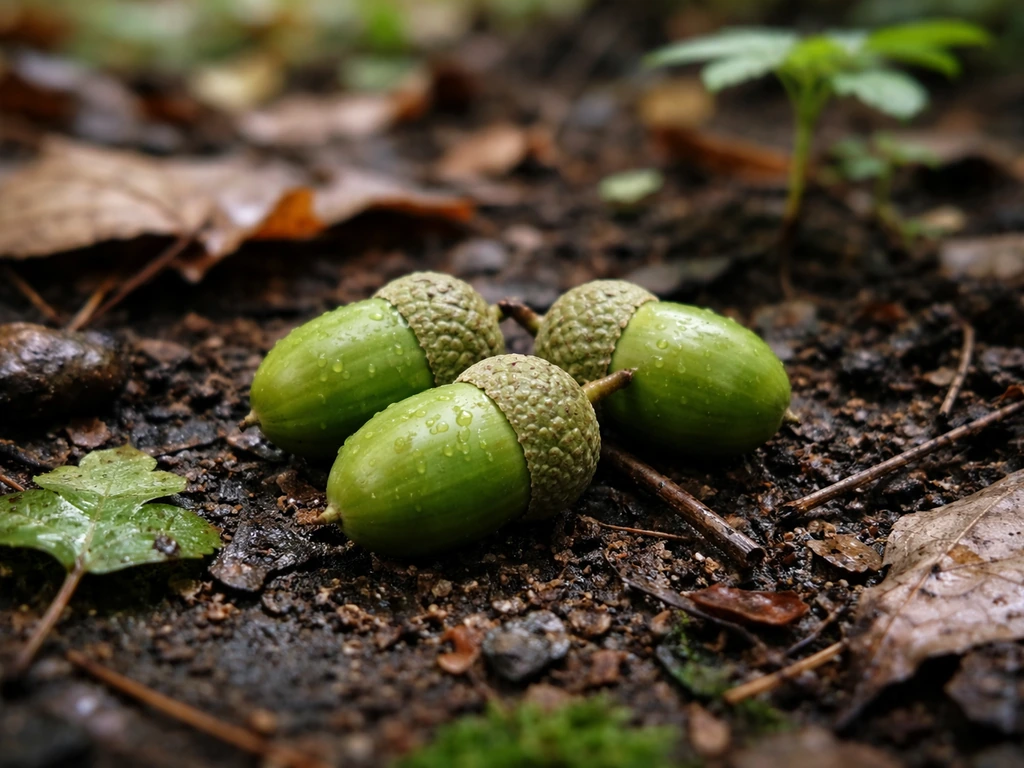
When most people say they found a "green acorn," they usually mean one of two things. First, it could be an acorn that fell early, still firmly attached to its cap, with a green or greenish hull that hasn't fully browned or ripened. Second, it could be an acorn that was just harvested from the tree while still slightly green or soft, but has actually completed most of its development. These are very different situations biologically.
Maturity matters because the embryo inside the acorn is what has to germinate. In species like northern red oak, acorns that drop with the cap still attached are often considered pre-mature, meaning the embryo inside hasn't finished developing. White oak (Quercus alba) takes roughly 120 days after pollination to reach full acorn maturity. An acorn pulled from the tree weeks before that point isn't just "young looking", it's genuinely unfinished at the cellular level. Those will almost never germinate successfully, no matter how carefully you plant them.
On the other hand, a freshly harvested acorn that looks greenish because it was just knocked from the tree in early fall and hasn't had time to cure or dry is a different story. If the timing is right for your species and region, that acorn may be fully mature inside. Those green-looking acorns can absolutely germinate. The color of the shell is far less important than the internal development of the seed.
How to check if your green acorns are actually viable today
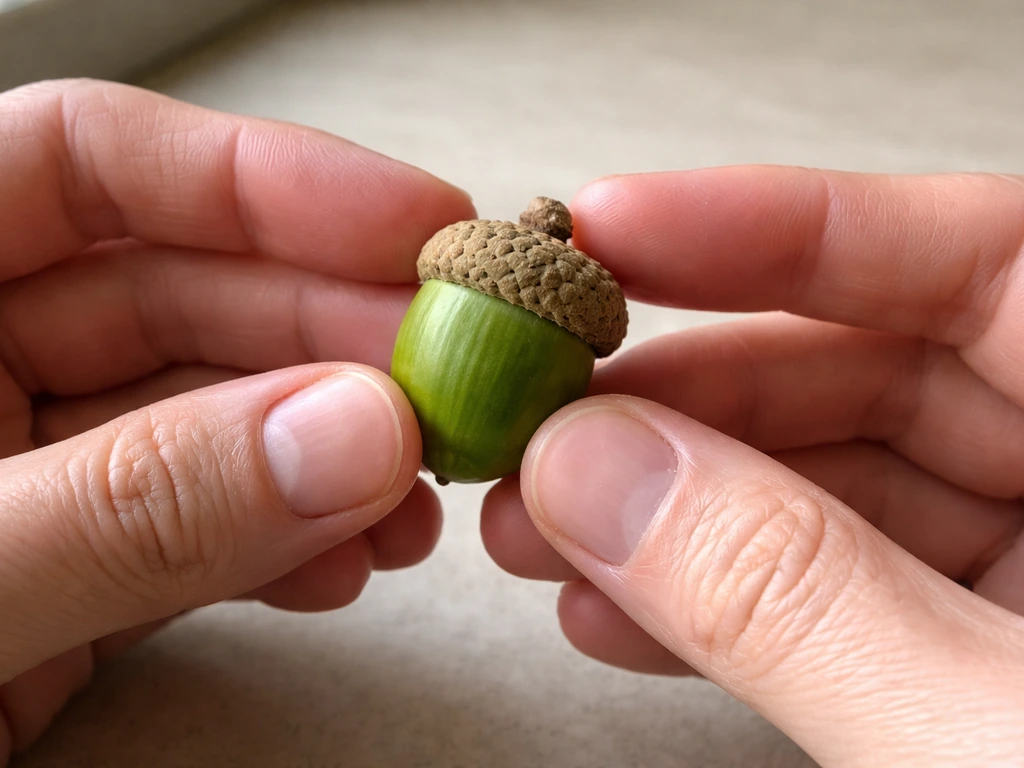
Before you do anything else, run a quick viability check. This takes about five minutes and saves you weeks of wasted effort planting seeds that were never going to sprout.
- Look test: Hold the acorn up and examine the shell. A viable acorn should feel firm and dense when you roll it between your fingers. The shell should have no visible cracks, holes, or dark sunken spots, which signal internal rot or weevil damage. Soft, wrinkled, or shriveled shells almost always mean the seed inside has dried beyond recovery.
- Weight test: Pick up several acorns from your batch and compare them. Viable acorns feel noticeably heavier for their size. A hollow-feeling or suspiciously light acorn has almost certainly lost too much moisture from the kernel inside.
- Float test (use with caution): Place acorns in a bucket of water. Acorns that sink tend to be denser and more likely viable; floaters are often hollow, damaged, or immature. That said, this test is imperfect because freshly harvested acorns sometimes float briefly due to trapped air, not internal problems. Use it as a rough filter, not a final verdict.
- Cap check: Gently remove the cap and look at the base of the acorn. Healthy, mature acorns have a smooth, slightly glossy base where the cap sat. Dark discoloration or soft mushy tissue at the base is a red flag for rot.
- Cut test (sacrifice one): If you have enough acorns, slice one in half. A viable acorn has a firm, cream-colored interior with a visible embryo. Brown, dry, or hollow interiors mean the seed is dead.
If your acorns are failing multiple checks, especially if they feel light, look shriveled, or show dark spots, they are likely immature drops or already dead. In that case, the honest answer is that planting them probably won't work. Wait until true fall drop for your species and try again with a fresh batch.
Planting vs. storing: what you should do right now
What you do with a viable green acorn today depends heavily on when in the season you're reading this. The two main oak groups, white oaks and red oaks, behave differently after they ripen, and that shapes your next move.
White oaks (which include species like Quercus alba, bur oak, and swamp white oak) germinate almost immediately after dropping in fall. Their acorns have little to no dormancy. If you have viable white oak acorns right now and it's late summer or fall, plant them directly. Waiting and storing them improperly will kill them. White oak acorns are also notably sensitive to drying out, which is a real concern with freshly harvested green ones. Keep them moist and get them into the ground or into cold, moist storage quickly.
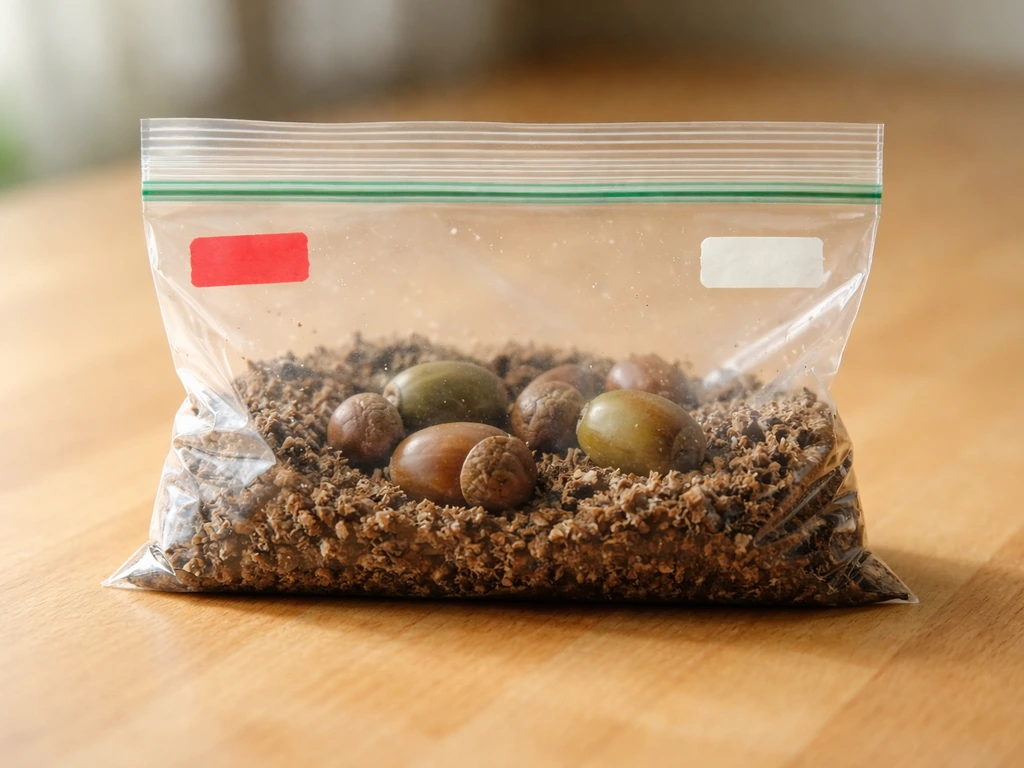
Red oaks (northern red oak, pin oak, scarlet oak, and related species) need a cold stratification period before they'll germinate. Their acorns can tolerate short-term storage better than white oaks, but they still need to stay moist. If you have viable red oak acorns, you can store them in a sealed plastic bag with a handful of barely damp peat moss or vermiculite in the refrigerator (not the freezer) until you're ready to plant. This also counts as the beginning of their required cold stratification period.
| Feature | White Oak Group | Red Oak Group |
|---|---|---|
| Germination timing | Germinates in fall, same season as drop | Germinates the following spring after cold stratification |
| Cold stratification needed | No (or minimal, about 4 weeks) | Yes, 4 to 8 weeks minimum |
| Dormancy type | Low dormancy | True physiological dormancy |
| Desiccation sensitivity | Very high, must stay moist | High, but slightly more tolerant |
| Storage approach | Plant immediately or refrigerate moist for very short term | Refrigerate moist in sealed bag for up to several months |
| Examples | Quercus alba, bur oak, swamp white oak | Northern red oak, pin oak, scarlet oak, black oak |
If you're not sure which group your acorn belongs to, look at the leaf shape if the tree is nearby. White oak group leaves have rounded lobes with no pointed tips. Red oak group leaves have pointed, bristle-tipped lobes. When in doubt, treat the acorn as if it needs cold stratification. You won't hurt a white oak acorn with four weeks of cold moist storage, but you'll almost certainly fail to germinate a red oak if you skip stratification entirely.
Step-by-step germination: stratification, timing, depth, and soil
Cold stratification
For red oak group acorns, cold stratification is not optional. Place your viable acorns in a zip-lock bag with a handful of lightly moistened (not wet) peat moss, vermiculite, or even paper towels. The goal is to keep the acorns from drying out while chilling them in the refrigerator at 34 to 40 degrees Fahrenheit (1 to 4 degrees Celsius). Red oaks typically need 4 to 8 weeks of this treatment. Check the bag every two weeks for mold. If you spot any fuzzy growth, remove affected acorns immediately and wipe the rest with a dry cloth before returning them to fresh media.
Timing your planting
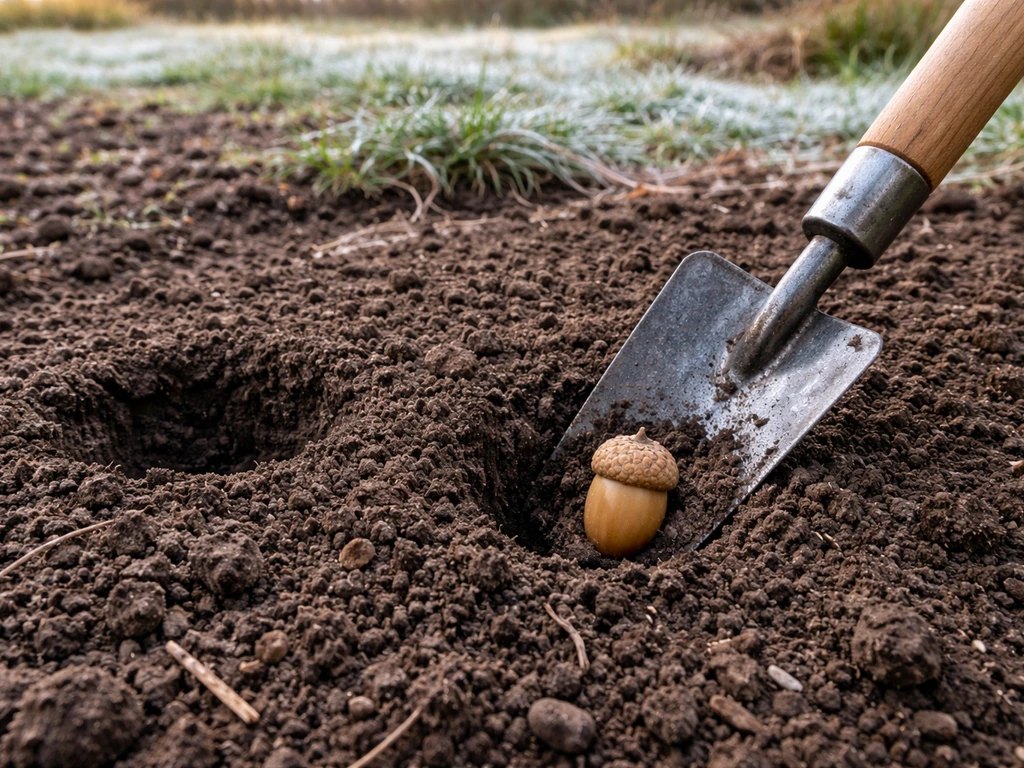
If you're planting outdoors, time things so acorns go in the ground in fall for white oaks, or in late winter to early spring for red oaks after their cold period. If you're starting indoors, begin stratification in November or December so that by late February or March the acorns are ready to pot up and place in a sunny window before moving outside after the last frost. If you’re wondering can I grow an acorn indoors, start by beginning the cold stratification on schedule and then potting up once the timing is right.
Planting depth and soil
Plant acorns about 1 to 1.5 inches deep, roughly twice the depth of the acorn's diameter. Too shallow and they dry out or get dug up by squirrels; too deep and the radicle (the first root) has to fight too hard to reach the surface. Place the acorn on its side or with the pointed end slightly down if you can tell which end is which. Use a loose, well-draining mix if potting indoors. A 50/50 blend of regular potting soil and perlite or coarse sand works well. Avoid heavy or water-retaining mixes that stay soggy, which promotes rot. Outdoors, oaks generally do fine in native soil as long as it drains reasonably well. Firm the soil gently around the acorn but don't pack it hard.
Containers vs. direct sowing
If you're starting in containers, use a tall pot, at least 12 inches deep. Oaks send down a taproot fast and will become rootbound in a standard 4-inch pot within weeks. Deep nursery tubes or even cut-down cardboard tubes work well because they let you transplant without disturbing the taproot. Direct sowing into the ground where you want the tree to eventually live is honestly easier when practical, since it avoids transplant shock entirely.
How long germination takes and what success looks like
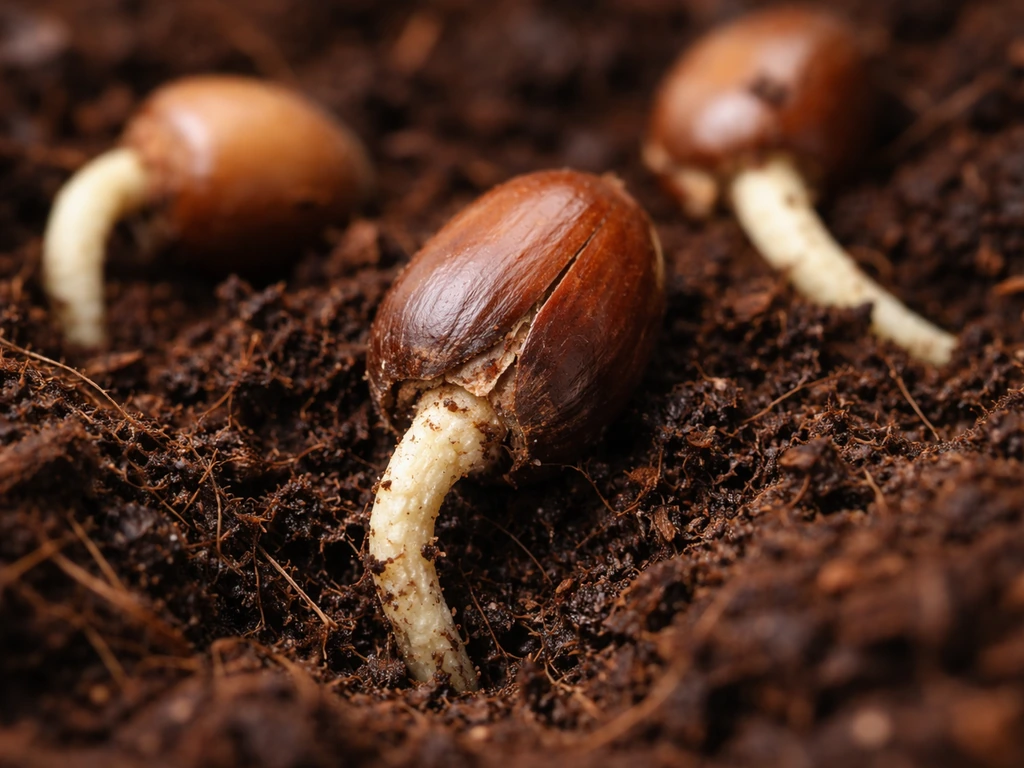
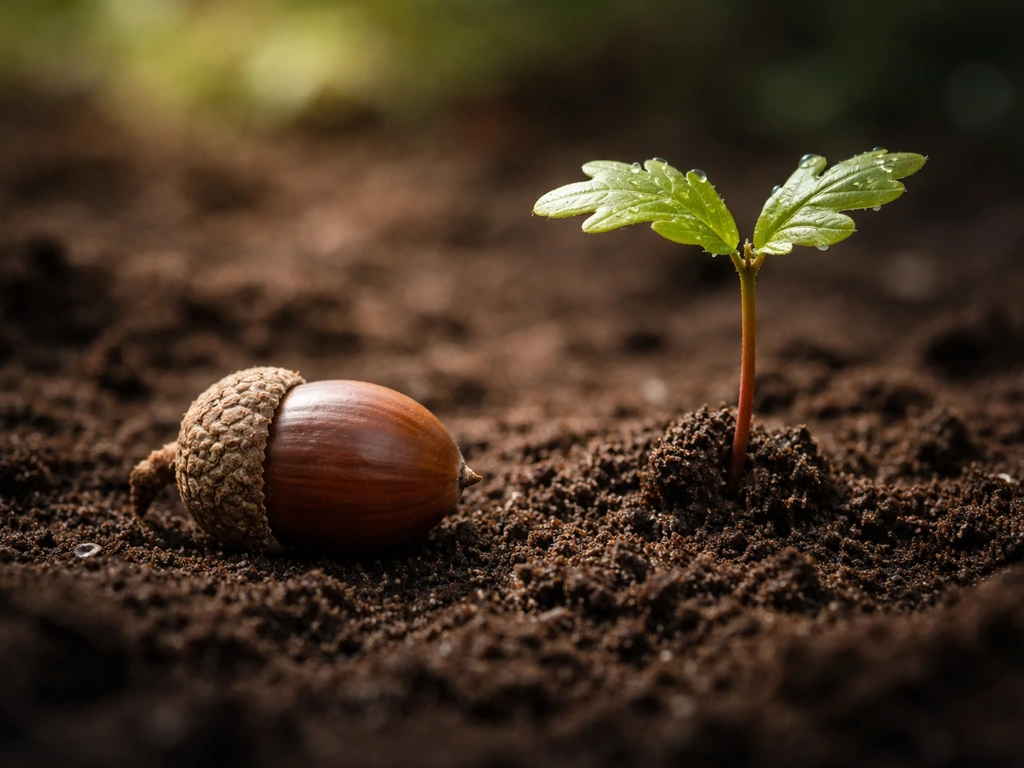
Once an acorn is in the right conditions, germination starts with the radicle pushing out from the base of the acorn. For white oaks planted in fall, you may see this root emerging within two to four weeks, even before winter sets in. The shoot emerges in spring. For red oaks planted after stratification, expect the radicle within two to six weeks of planting at room temperature, and the first shoot to break the surface two to four weeks after that.
A healthy germinating acorn will push out a thick, white or cream-colored taproot first. This is a good sign. The shoot that follows will be reddish at first in many species before greening up as it gets light. By the end of the first growing season, a healthy oak seedling should be anywhere from 6 to 18 inches tall depending on species, soil quality, water, and light. Don't panic if above-ground growth looks slow; during the first year, the tree is investing most of its energy underground in that taproot.
Troubleshooting: rot, mold, no sprout, and weak seedlings
Acorns rotting before they sprout
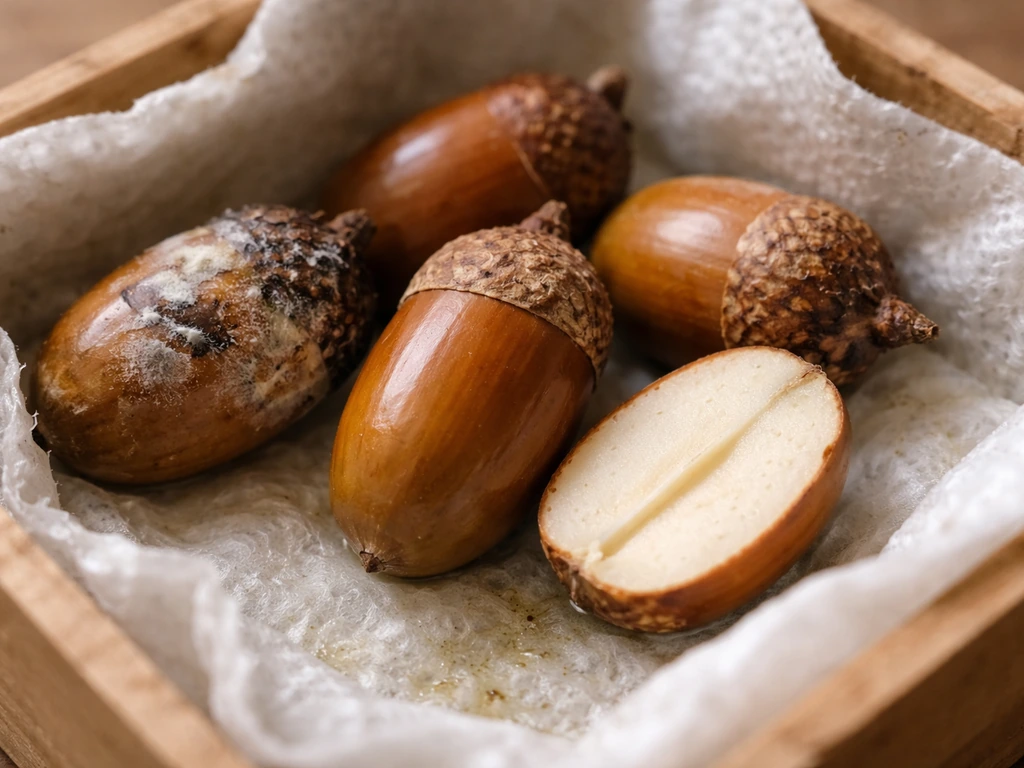
Rot during stratification or after planting is almost always a moisture problem, specifically too much of it. The storage medium should be moist enough to keep the acorn from drying out, but not wet enough to squeeze water out. In a USDA Forest Service study on Oregon white oak, acorn viability remained high (84%) after 2 years of refrigerated storage. If your stored acorns are rotting, your peat or medium is too wet. Rinse the surviving acorns, pat them dry, and restart in a drier medium. If planted acorns rot, your soil is staying too wet, either from overwatering or poor drainage. Let the pot dry slightly between waterings once germination has started.
Mold on stored acorns
Surface mold on stored acorns is common and doesn't automatically mean the acorn is dead. Wipe the affected acorn gently with a dry cloth and inspect the shell. If the shell is still firm and the interior looks healthy when you scratch the surface, the acorn may be fine. Move it to fresh, slightly drier medium and keep monitoring. If the shell is soft or the mold has penetrated, discard it.
No sprout after weeks of waiting
If a red oak acorn hasn't germinated after 8 to 10 weeks post-stratification, it's likely not viable. Dig it up carefully and do the cut test. If the interior is healthy-looking, give it another two weeks and ensure temperatures are consistently above 60 degrees Fahrenheit. If not, move on. If you skipped or shortened stratification on a red oak, that's almost certainly the problem. There's no shortcut that replaces the cold period.
Weak or damping-off seedlings
Damping off, where the seedling emerges but then collapses at the soil line, is a fungal problem almost always linked to overly wet soil and poor air circulation. It's especially common indoors. If you see this happening, improve drainage immediately, water less frequently, and if possible, move the seedling to a spot with better air movement. Avoid misting seedlings from above. Bottom watering, where you set the pot in a tray of water briefly and let the soil absorb from below, keeps the surface drier and dramatically reduces damping-off risk.
Seedling grows then stalls
If your seedling pops up strong and then stalls after a few inches of growth, check the root system. Oak taproots outgrow most small containers within weeks. If the roots are circling the pot or coming out the drainage hole, pot up immediately into a deeper container. A stalled seedling in a small pot is almost always a rootbound taproot problem, not a light or fertilizer issue.
Picking the right oak species for your region and setting realistic expectations
Not all oaks are appropriate for all climates, and planting an acorn from the wrong species for your region is a setup for long-term disappointment even if germination goes perfectly. If you collected acorns locally, you're already ahead, since local trees are adapted to your specific conditions. If you're sourcing acorns from elsewhere, here's a practical regional overview.
| Species | Best USDA Zones | Region | Notes |
|---|---|---|---|
| Northern Red Oak (Q. rubra) | 4 to 8 | Northeast, Midwest, mid-Atlantic | Extremely common, reliable germinator with stratification, fast grower |
| White Oak (Q. alba) | 3 to 9 | Eastern US, Midwest | Germinates in fall without cold stratification, excellent longevity |
| Bur Oak (Q. macrocarpa) | 3 to 8 | Great Plains, Midwest | Drought and cold tolerant, great for harsh continental climates |
| Valley Oak (Q. lobata) | 7 to 10 | California, Pacific Coast | Adapted to dry summers, not suited to humid eastern climates |
| Shumard Oak (Q. shumardii) | 5 to 9 | Southeast, South-Central US | Tolerates clay and periodic flooding, good urban tree |
| Chinkapin Oak (Q. muehlenbergii) | 4 to 7 | Eastern US, limestone regions | Does well on rocky, alkaline soils where others struggle |
| Live Oak (Q. virginiana) | 7 to 10 | Gulf Coast, Southeast | Evergreen, salt tolerant, not frost hardy above Zone 7 |
The single most important thing to understand about growing oaks from acorns is the timeline. You're not growing a shrub. A northern red oak will reach about 10 feet in five to seven years under good conditions. White oaks are slower. You're making a multi-decade investment, and that's not a criticism, it's just the reality of growing long-lived hardwood trees. Set your expectations accordingly, and treat every successful germination as the beginning of something genuinely lasting.
If you're exploring related questions, like whether acorns that float are worth planting, or how to grow an acorn indoors through winter, or how to tell from the outside whether any given acorn is worth your time, those questions all connect back to the same core biology covered here. A big part of those core biology questions is learning how to tell if an acorn will grow before you invest time in planting. Acorns that float can still be viable in some cases, but you’ll need to check them carefully before counting on them to grow whether acorns that float are worth planting. The answers vary a bit by situation, but the fundamentals of acorn viability, moisture sensitivity, and species-specific dormancy behavior apply across all of them.
The bottom line: a green acorn from a mature, healthy tree collected at the right time of year is a perfectly good seed. If you mean “can you grow a green acorn” in the practical, seed-starting sense, the key is matching the acorn’s maturity and species needs to the right timing and conditions. You can also check whether you can grow acorns in water with the same viability and moisture principles you’ll use for soil and storage can you grow a green acorn. Test it, keep it moist, give red oaks their cold period, plant it at the right depth in well-draining soil, and protect the seedling from drying out in its first season. Do those things right and your odds of growing a genuine oak tree from that little green acorn are quite good.
FAQ
My green acorns are firm but they fell with the cap still on, will they grow?
If the acorn is firm, the shell is not soft, and the interior is healthy on a cut test, it can still be viable even if it looks green. The main reason “green” fails is maturity, not color, so focus on timing and viability checks rather than shell shade.
Can I refrigerate green acorns until I’m ready to plant later?
Yes, you can store green acorns briefly, but the clock depends on oak group. For white oaks, aim to plant or stratify in cold moist conditions immediately, and avoid letting them sit warm for long because they lose viability as they dry.
What if my green acorns get white or fuzzy mold in the fridge, are they dead?
Mold alone does not always mean failure during stratification. Wipe affected acorns with a dry cloth, remove visibly fuzzy ones, then switch to slightly drier media and keep the bag from getting waterlogged.
How long should I wait after red oak stratification before giving up?
If a red oak acorn has already completed its cold period and it still has not germinated, it can be viable but may need time under consistent warmth. After 8 to 10 weeks post-stratification, do the cut test, then if interior looks healthy, keep temperatures above about 60°F for another couple of weeks before discarding.
Do green acorns that float actually have a chance to grow?
Float tests are unreliable on their own. Some viable acorns can float due to air space, while some nonviable ones sink, so you should follow up with a cut test or other viability check rather than trusting buoyancy.
What happens if I don’t cold-stratify my green red oak acorns long enough?
For red oaks, “shortening” stratification is one of the most common causes of failure. If you skip the cold period or only chill them a few days, germination often will not happen even if the acorn looks fine.
How wet should the peat or vermiculite be during stratification for green acorns?
Yes, very soggy storage media can kill viable acorns and also trigger rot after planting. Your medium should feel moist, not wet, and you should be able to squeeze it without it dripping, with airflow and gentle handling to reduce fungal spread.
Should I water differently after a green acorn starts sprouting?
Once you see the radicle, keep moisture steady but reduce excess wetness. After germination starts, let the top inch dry slightly between waterings indoors to prevent rot and reduce damping-off risk, especially in containers.
My oak seedling came up from a green acorn, then stalled, what should I check first?
A stalled seedling is often a root issue, especially in small pots. Oaks develop a fast taproot, so if roots circle or appear through drainage holes, pot up immediately into a deeper container to prevent ongoing stunting.
Is it better to plant green acorns immediately in fall, or wait until spring?
Yes, you can germinate in spring-ready timing, but you still need to match the species dormancy. White oaks generally want to go in fall with minimal delay, while red oaks typically need cold stratification first, then planting after the cold period.