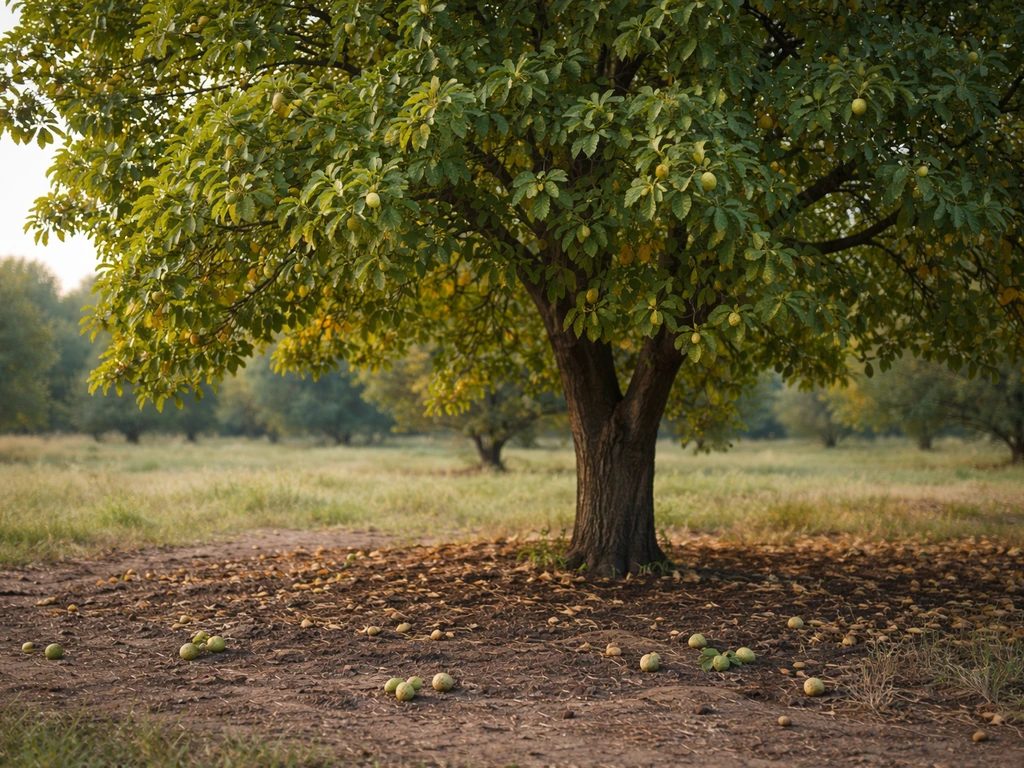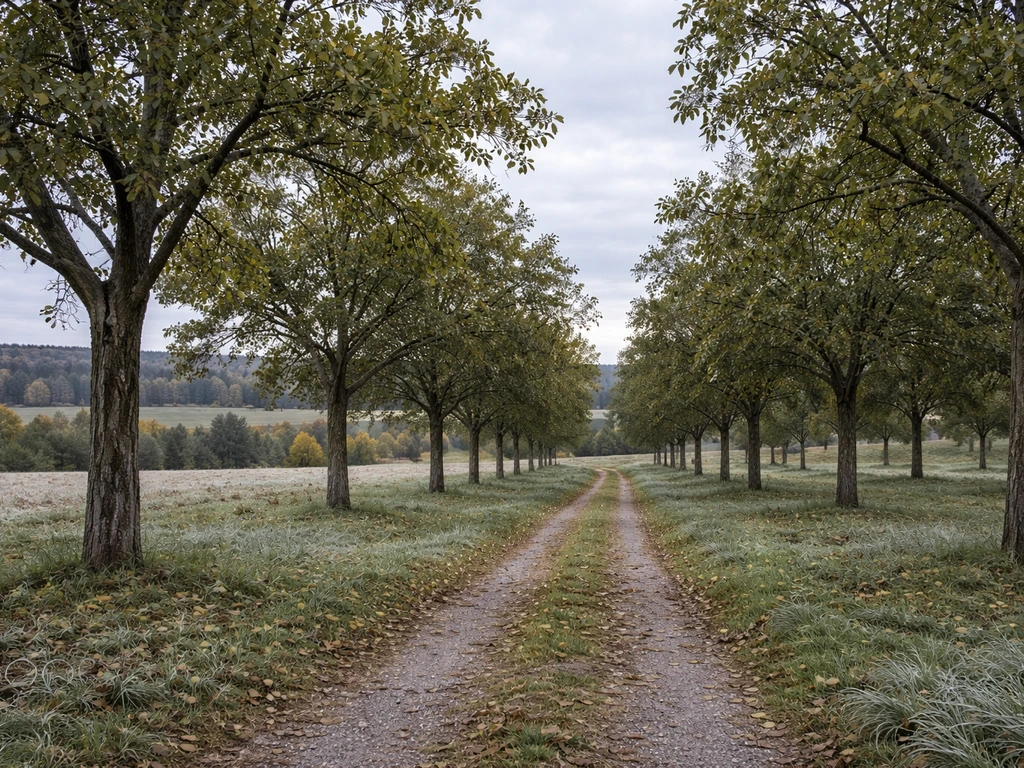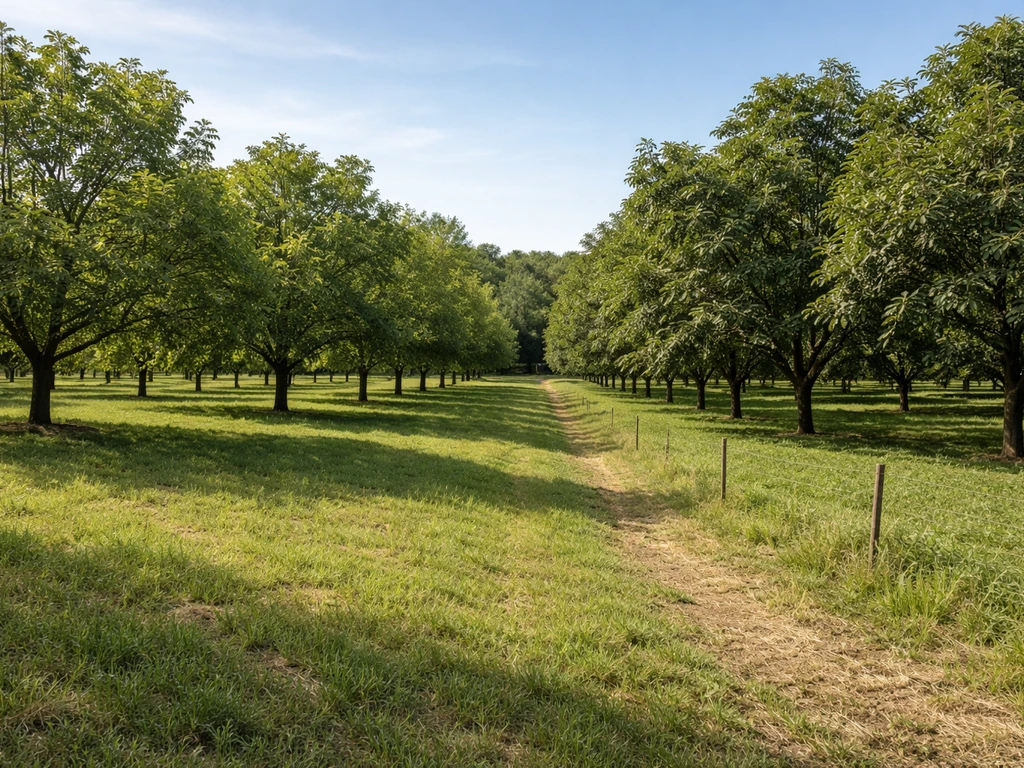
Almost all of California's commercial walnut production is concentrated in the Central Valley, with the Sacramento Valley counties (Tehama, Sacramento) and San Joaquin Valley counties (San Joaquin, Stanislaus, Merced, Fresno, Kings, Tulare, Kern) doing the heavy lifting. That long corridor of flat, irrigated farmland with hot summers, mild winters, and reliable chill hours is essentially the walnut heartland of the United States. If you're trying to figure out whether your own spot in California can support a walnut tree, you're really asking how closely your site mirrors those conditions. If you also want to know where English walnuts grow outside of California, the best answer depends on the climate, winter chill, and growing season length where do english walnuts grow.
Where Do Walnuts Grow in California Map and Site Tips

California's Main Walnut-Growing Regions
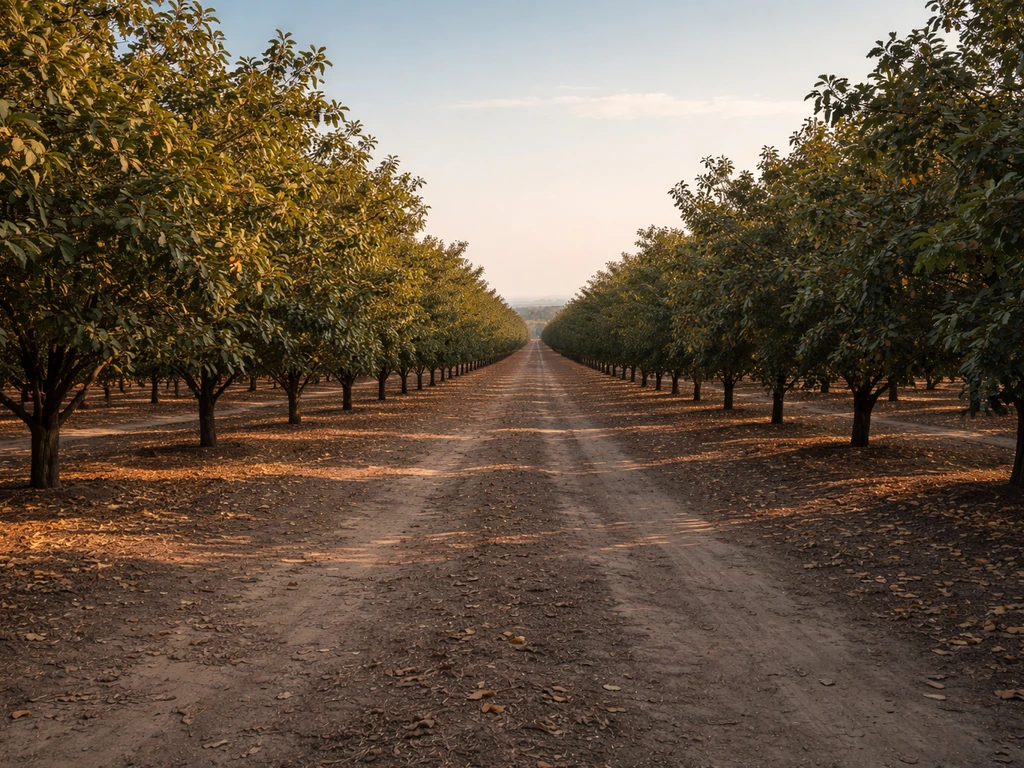
Walk through any farm stand in Stanislaus or San Joaquin County in September and you'll understand immediately why the Central Valley dominates California walnut production. The leading commercial counties span basically the entire length of the valley: Tehama and Sacramento in the north, then San Joaquin, Stanislaus, and Merced in the heart of the valley, and Fresno, Kings, Tulare, and Kern further south. These aren't just random concentrations of farms, they reflect a very specific set of climate and soil conditions that walnuts need to produce consistently.
The Sacramento Valley counties tend to run slightly cooler and accumulate more winter chill hours, which suits varieties like Franquette that need heavier chilling. Moving south through the San Joaquin Valley, the climate gets progressively warmer and drier, which opens the door to mid-season varieties like Chandler and Howard. The northern counties typically start harvest in early October, while orchards in the central and southern valley often kick off in early September, a useful timing signal that tells you how different the microclimates really are, even within the same state.
Why Those Regions Work: Chill, Heat, Frost, and Water
Walnuts need winter chill to break dormancy and set a good crop. They also need long, warm summers to fill out the kernel, and they need the frost calendar to cooperate at both ends of the season. The Central Valley delivers all three, which is rare. Most of California's coastal regions are too mild in winter, and the high-elevation foothills can be too frost-prone or too short-season. The valley hits the sweet spot.
Winter Chill
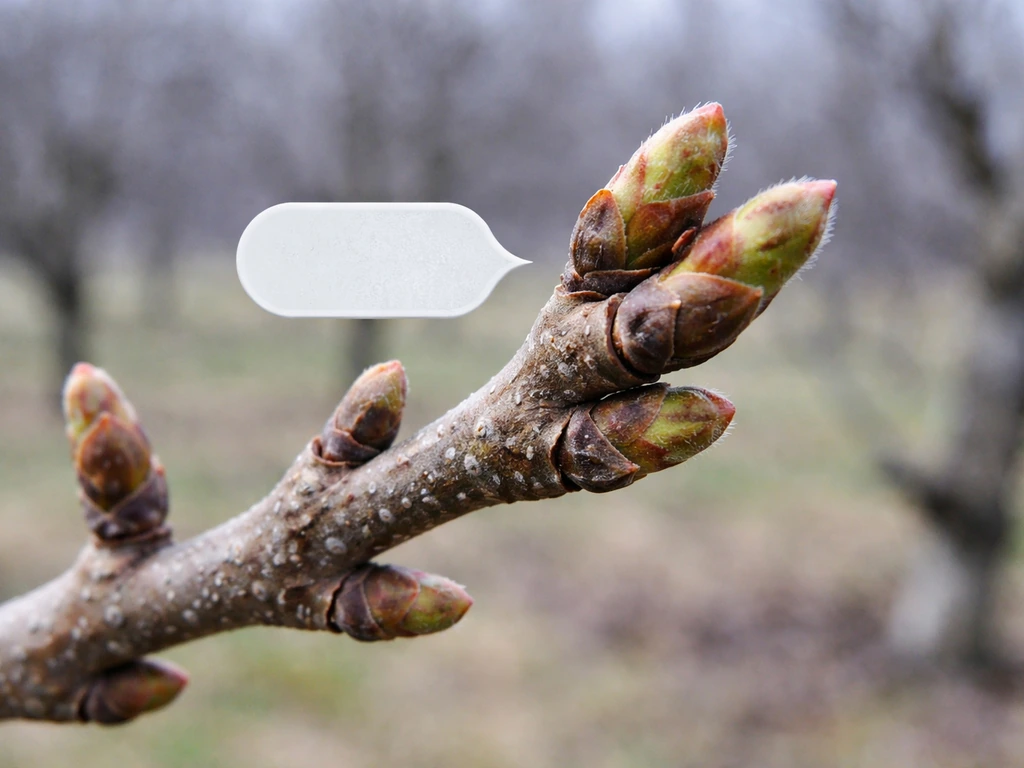
English walnut (Juglans regia), which is what every commercial California orchard grows, needs adequate chill hours to come out of dormancy uniformly and flower well. The Sacramento Valley consistently delivers higher chill accumulation than the southern San Joaquin, which is part of why variety selection shifts as you move from north to south. UC Davis provides a chill calculator tool that lets you estimate chill hours for a specific location using historical weather data, that's worth using before you plant anything.
Frost Timing Is the Tricky Part
Walnuts flower in late spring, typically from late April into early May. A late-spring frost during or after bloom can blacken flowers, leaves, and shoots and wipe out much of a season's crop in hours. Early fall frosts are an equal problem from the other direction, they can damage kernels and shoots before harvest is complete. English walnut is not particularly cold-hardy, and UC Davis is clear that severe winter freezing can kill branches outright. If your site sits in a frost pocket, a low-lying area where cold air drains and pools on still nights, you're working against yourself from the start. This is one of the most common and most underestimated mistakes home growers make.
Heat, Sun, and Sunburn Risk
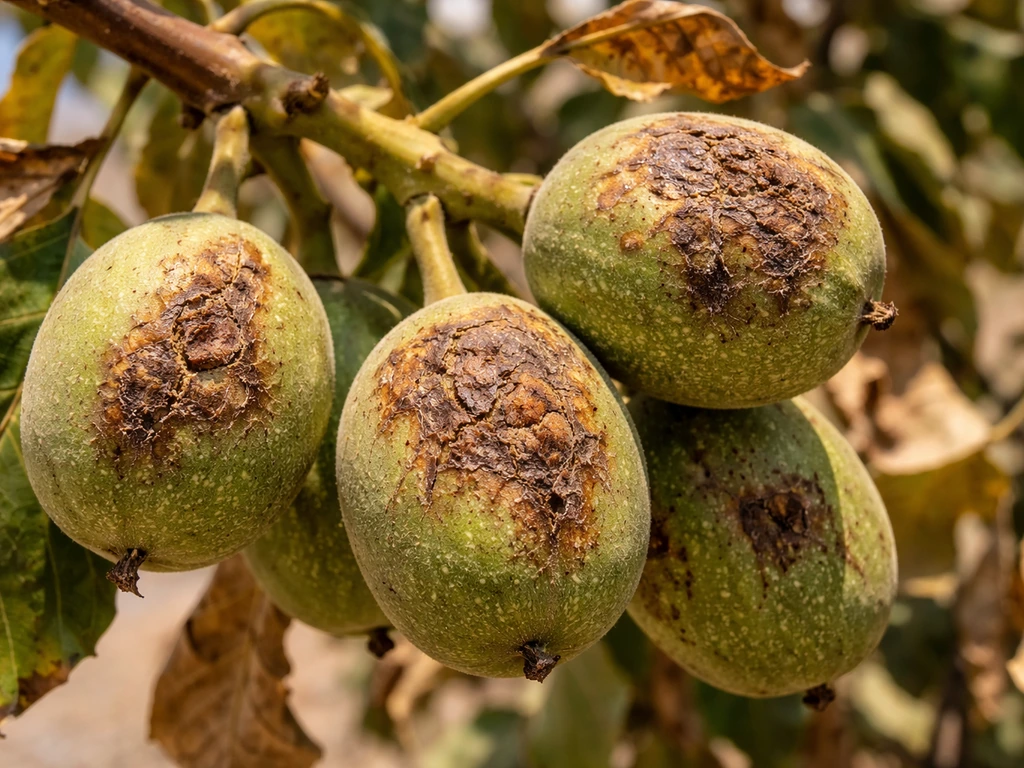
Long, hot summers are essential for kernel development, but extreme heat combined with water stress causes walnut sunburn, lesions on the nut surface that show up mid- to late summer. Commercial growers manage this by keeping trees at a mild water stress level (roughly -5 to -8 bar) rather than letting them swing into severe stress. Healthy foliage and consistent irrigation are the practical tools. A tree with good canopy coverage naturally shades its own nuts, so cultural management and water management are closely linked.
Irrigation: You Can't Dryland-Farm Walnuts in California
California's walnut country doesn't receive enough in-season rainfall to support a walnut crop without irrigation. Commercial orchards draw from a combination of surface water delivered via canals and aqueducts, and groundwater pumped from valley aquifers. For home growers, this simply means you need reliable water access during the growing season. UC ANR's guidance is explicit: water stress during early growth or during fruit development reduces yield and quality, and also makes trees more vulnerable to insects and disease. Tools like CIMIS (California Irrigation Management Information System) can help you schedule irrigation more precisely using weather-station-based evapotranspiration data, something professional growers already rely on.
Soil and Site Requirements That Determine Success
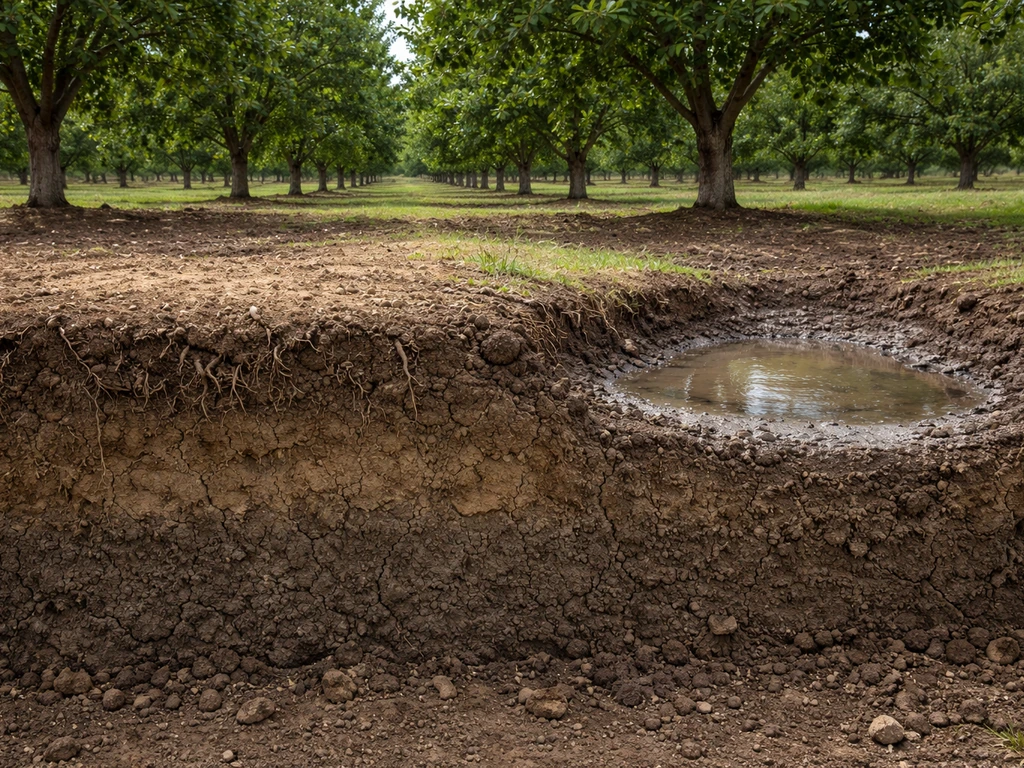
Walnuts want deep, well-drained soil. The taproot on an established walnut tree is substantial, and if that root hits a hardpan layer, a high water table, or compacted subsoil, you're going to have a stunted, stressed tree. The UC ANR walnut production manual is emphatic on this point: deep, well-drained soil profiles are a core requirement, not a nice-to-have.
Drainage at the surface matters too. Low spots in an orchard promote standing water, which invites Phytophthora root and crown rot, one of the most destructive walnut diseases in California. UC IPM recommends grading orchard sites so water drains evenly rather than pools. For home growers, this means if your yard has a low corner that stays soggy after rain or irrigation, that's not where you plant your walnut. Likewise, avoid putting a walnut in a frequently watered lawn, the tree needs uniform moisture, not the on-off-on-off wet-and-dry cycle of a lawn irrigation schedule.
Salinity is a serious concern in parts of the San Joaquin Valley. The UC ANR production manual addresses salinity management with a leaching fraction approach, applying extra water to push salts below the root zone. If you're on a well with high mineral content or in a region with known salinity issues in the soil, get a soil and water test before you commit to planting.
Nematodes are another soil factor worth knowing about. The lesion nematode (Pratylenchus vulnus) is the most common nematode problem in California walnut orchards. Standard English walnut rootstock is susceptible, but Paradox hybrid rootstock (a cross between Juglans hindsii and Juglans regia) is more tolerant. This is one reason why rootstock choice matters even for home growers, it's not just about vigor, it's about what's already living in your soil.
Cultivated Orchards vs. Native and Wild Walnuts in California
If you're wondering whether walnuts 'grow naturally' in California, the answer depends on which species you're talking about. Every commercial walnut orchard in California grows English walnut (Juglans regia), which is native to Central Asia and Persia, not California. It's here because it was planted, irrigated, and cultivated, it does not naturalize or spread on its own in California's landscapes.
California does have native walnut species, though. Juglans hindsii, the Northern California black walnut, is native to the state and grows in riparian woodlands, stream corridors, and foothill valleys in northern and central California. You'll find it in valley bottoms and along watercourses, typically in wetter, more sheltered sites than commercial walnut orchards occupy. It's documented in Calflora in wetland-riparian and foothill woodland habitats. Juglans californica, the Southern California black walnut, grows further south in similar chaparral-adjacent habitats. Neither of these native species produces nuts with commercial value, but Juglans hindsii is extremely important as the rootstock historically used for grafting English walnut cultivars, and it's the parent of the Paradox hybrid rootstock that dominates California commercial orchards today.
So the direct answer: wild-growing walnuts in California are native black walnuts in riparian zones, not the nuts you'd harvest and eat. The edible, productive walnuts are all cultivated English walnut orchards in the Central Valley.
Variety Fit and Orchard Choices
California's commercial orchards grow six main cultivars: Chandler, Howard, Hartley, Tulare, Serr, Vina, and Franquette. Chandler is the most widely planted, followed by Howard, Hartley, and Tulare. The reason Chandler dominates is a combination of lateral bearing (it bears nuts on lateral shoots rather than just shoot tips, giving higher yields per tree), excellent kernel quality, and good adaptability across the valley's climate range.
| Cultivar | Bearing Habit | Chill Requirement | Bloom Timing | Best Region Fit | Notes |
|---|---|---|---|---|---|
| Chandler | Lateral | Moderate | Mid-season | Central and southern San Joaquin Valley | Most widely grown in CA; light-colored kernel |
| Howard | Lateral | Moderate | Mid-season | Central Valley | High yield; good kernel quality |
| Hartley | Terminal | Moderate-high | Mid-season | Sacramento Valley and northern SJV | Classic CA variety; large nut |
| Franquette | Terminal | High | Late | Sacramento Valley and cooler northern areas | Pollenizer for Chandler and Hartley; late bloom reduces frost risk |
| Serr | Lateral | Low | Early | Warmer southern areas | Early leafing; higher walnut blight risk in wet springs |
| Vina | Lateral | Low-moderate | Early-mid | Warmer valley areas | Early harvest; productive but early leafing increases disease exposure |
Franquette is worth a specific mention because of its late bloom timing. Its flowers open later in spring, which reduces exposure to late-spring frost events that can wipe out early-blooming varieties like Serr and Vina. That's not just a trivia note, in cooler northern California locations or sites with frost risk, Franquette's late bloom is a genuine risk-management tool. It also functions as a pollenizer for Chandler and Hartley, so mixed-variety blocks in the Sacramento Valley often include Franquette rows for that reason.
Early-leafing varieties like Serr are most severely affected by walnut blight (caused by Xanthomonas arboricola pv. UC IPM also highlights blank" rel="noopener noreferrer">walnut blight as a key disease affecting English walnuts in California commercial production. juglandis), because their young tissue is exposed earlier in the season when spring rains are still occurring. The UC IPM walnut blight page explains that blank" rel="noopener noreferrer">protective treatments during prolonged wet springs are important in orchards with a history of blight damage. If you're in a region with wet springs, variety selection isn't just about yield, it's about disease pressure too.
How to Judge Your California Site Today
Before you order a tree or call a nursery, work through this site checklist. It won't replace a soil test or a conversation with your local UC Cooperative Extension farm advisor, but it will tell you quickly whether you're working with or against the fundamental requirements.
- Check your chill hours. Use the UC Davis chill calculator or ask your local UCCE office for historical chill hour data for your area. Most English walnut cultivars need 700 to 1,200+ chill hours (below 45°F) depending on variety. Coastal areas often fall short; inland valley and foothill locations typically meet the threshold.
- Map your frost dates. Look up your last spring frost date and first fall frost date. Walnuts flower in late April to early May — if you regularly get frost after April 15, you're in a risky zone for most standard cultivars. Consider Franquette if you're marginal. If fall frosts hit before mid-October in your area, earlier-maturing cultivars are a better fit.
- Assess your drainage. Dig a hole 24 inches deep, fill it with water, and check whether it drains within a few hours. If water is still sitting there the next morning, you have a drainage problem that needs to be corrected before planting. Walnut roots do not tolerate waterlogged soil.
- Estimate your soil depth. Walnuts are deep-rooted trees. If you hit hardpan, rock, or a permanent high water table within 4 feet of the surface, expect problems. Deep loam or sandy loam profiles are ideal.
- Confirm your water supply. Can you deliver consistent irrigation from bloom through harvest (roughly April through September or October)? Drip or microsprinkler irrigation is common in commercial orchards. Inconsistent water means inconsistent yield and increased sunburn risk.
- Check for frost pocket risk. Low spots, bowl-shaped areas, or sites at the base of slopes where cold air drains and collects are higher frost risk than open, gently sloping ground. Avoid these for walnut planting if you can.
- Consider your proximity to the Central Valley baseline. If you're within or adjacent to the Sacramento or San Joaquin Valley floor, you're in the right climate envelope. Coastal, high-elevation, or desert locations require much more scrutiny.
Planning a Planting and What to Expect
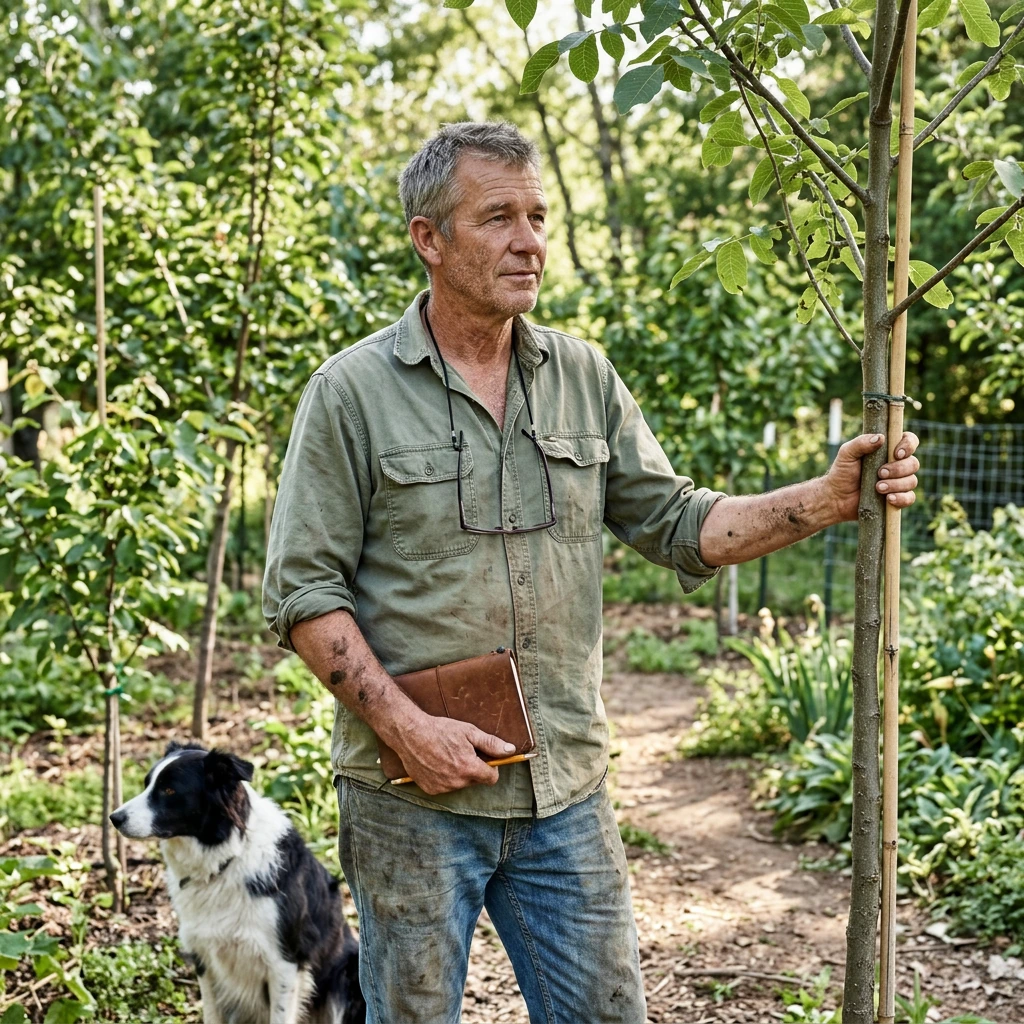
Planting a walnut tree in California is a long-term commitment, not in a discouraging way, but in the sense that you need to plan for it honestly. After planting a nursery sapling, expect five to seven years before the tree is producing a meaningful harvest. Some trees begin bearing small amounts in years three to four, but full production takes time to develop. This is consistent with general nut tree orchard guidance, which puts the productive establishment window at three to seven years depending on cultivar, rootstock, site conditions, and management.
In the first two years, your main job is establishment: consistent irrigation, good weed control, and protecting the young tree from physical damage. Young walnuts are sensitive, and water stress during establishment sets back the timeline. UC IPM guidance emphasizes proper planting depth (don't bury the graft union) and keeping the tree away from lawn irrigation patterns that create uneven soil moisture.
For practical next steps, here's how to move forward:
- Contact your local UC Cooperative Extension (UCCE) farm advisor. California is divided into UCCE offices by county, and the advisors who cover your county will know exactly which varieties perform well locally, what disease pressures are common, and what rootstocks make sense for your soil.
- Get a soil test before you plant. A basic soil test for pH, organic matter, and salinity, plus a nematode assay if your site has had previous orchard or vegetable crops, will tell you whether Paradox rootstock is a necessity rather than an option.
- Use CIMIS for irrigation planning. Once your tree is established, CIMIS weather station data gives you ET-based irrigation targets calibrated to your region — much more reliable than guessing based on appearance.
- Plan for a pollenizer if you're planting Chandler or Hartley. Both benefit from a Franquette tree nearby. For a home grower with space for one or two trees, this is worth thinking about in advance.
- Think about harvest timing and logistics. Commercial orchards use mechanical shakers and sweepers. Home growers harvest by hand or with long poles to knock nuts from branches. Plan for processing: fresh walnuts need to be hulled and dried promptly after harvest to prevent mold. In northern California, harvest typically starts in early October; in the central and southern valley, it can begin as early as early September.
If your site checks out on the climate and soil requirements described here, a walnut tree in California's Central Valley or adjacent inland areas is a genuinely viable and rewarding long-term planting. If you're wondering what climate do walnuts grow in, focus on winter chill, long warm summers, and a frost pattern that doesn’t regularly hit during bloom and early kernel development.
If you want to expand beyond California, you can also look at where do walnuts grow in Canada and which regions match their chill and water needs. The climate conditions that make other nut crops difficult, the hot, dry summers, the need for irrigation discipline, the specific winter chill pattern, are exactly what walnuts are built for in this state.
The biology and the geography line up in a way they don't in most other parts of the country, which is precisely why California produces the overwhelming majority of U. If you're wondering where walnuts grow in the US beyond California, the short answer is that commercial production is limited where growing-season heat, chill, and irrigation line up where do walnuts grow in the US. S. walnuts.
Understanding the 'why' behind the geography makes it much easier to evaluate whether your specific piece of California can join that picture.
FAQ
If I see walnut trees growing wild in California, does that mean walnuts will grow well in my yard?
If you mean edible walnuts, you should not expect a consistent crop from random wild trees. In California, “wild” walnuts are usually native black walnut species that grow in riparian or foothill habitats, and their nuts are not comparable to commercial English walnut orchards.
Can I grow English (commercial) walnuts outside the Central Valley in California?
Nursery trees can thrive outside the Central Valley only if the specific winter chill and frost pattern match, not just because the summers are warm. Many inland foothill locations have frost pockets or too-short warm seasons, which can prevent uniform flowering or kernel fill even when the tree survives.
Which walnut variety is best for a home site with late spring frosts?
Yes, but only if you choose a variety that matches your chill and uses the frost calendar as a constraint. For example, Franquette’s late bloom can reduce late-spring frost exposure, while early-leafing varieties may carry more disease pressure in wet springs.
What’s the most common reason walnuts fail even when the county is known for walnut production?
Avoid low spots where cold air pools on still nights. Even a property that looks “in the right region” can fail if the planting location traps cold during bloom, leading to flower and shoot kill within hours.
Can I plant a walnut near a lawn if I keep the watering reasonable?
Lawn irrigation can be a hidden problem, because it creates a wet-and-dry soil cycle and often keeps the upper root zone too saturated. Walnuts prefer uniform moisture and good drainage, so place the tree away from sprinklers and focus on consistent irrigation that you control.
What should I do differently if I suspect salinity issues in my soil or well water?
In salinity-affected areas, extra irrigation to leach salts must be balanced with drainage and soil depth. Without proper leaching fraction and runoff control, salts can accumulate back into the root zone and reduce kernel quality over time.
If my soil has nematodes, will walnuts still grow, and does rootstock matter?
The most practical edge case is nematode pressure combined with standard rootstock susceptibility. If you have known lesion nematodes, rootstock choice matters, Paradox hybrid rootstock is generally more tolerant than standard English rootstock.
How can I avoid yield loss from irrigation mistakes in a home walnut planting?
Yes. Even if the tree is planted correctly, water stress during early growth and fruit development can lower yield and quality and increase pest and disease vulnerability. Consider using weather-station-based scheduling (like CIMIS) and adjusting for your canopy size and soil water-holding capacity.
Why do some walnut trees leaf out unevenly, even when winters seem “cold enough”?
A tree can survive mild winter lows but still fail to produce if chill is insufficient for the cultivar. Using a chill-hour estimator helps you avoid buying the wrong cultivar for your exact location, especially in warmer inland edges where dormancy break may be uneven.
When should I expect my walnut tree to produce meaningful nuts in California?
Start planning for delayed payoff. Expect a meaningful harvest in about five to seven years for many plantings, with small production sometimes beginning around years three to four, but the timeline varies with cultivar, rootstock, and how well establishment water stress is prevented.