Chestnut oak (Quercus montana) is a native of the eastern United States, concentrated in the Appalachian region from southern Maine and Ontario south to northern Alabama and South Carolina, and west to Michigan and Illinois. In the wild, it gravitates toward dry, rocky ridges and upland forests with shallow, acidic soils, the kind of terrain other oaks often struggle on. If you want to find one, head uphill, look for exposed ridgelines, and check the rocky, well-drained ground where the soil is thin and infertile. That's where chestnut oak is most at home.
Where Do Chestnut Oak Trees Grow? Habitat and Range Guide
Marcus Hendricks
4 May 2026
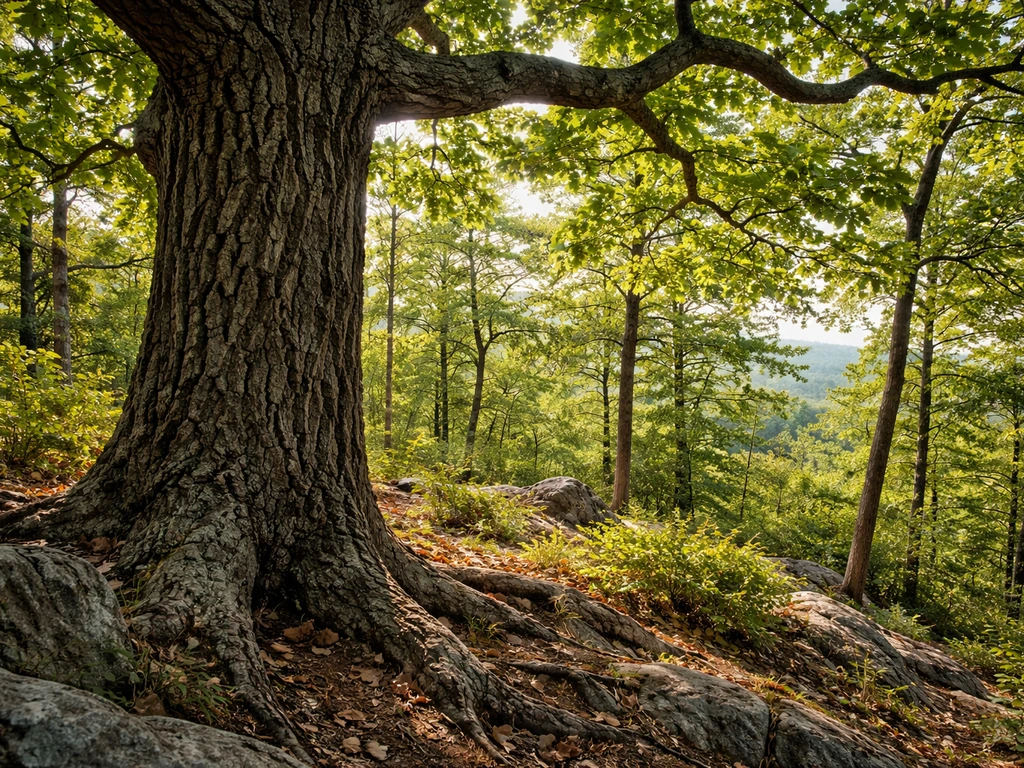
Native range and geography
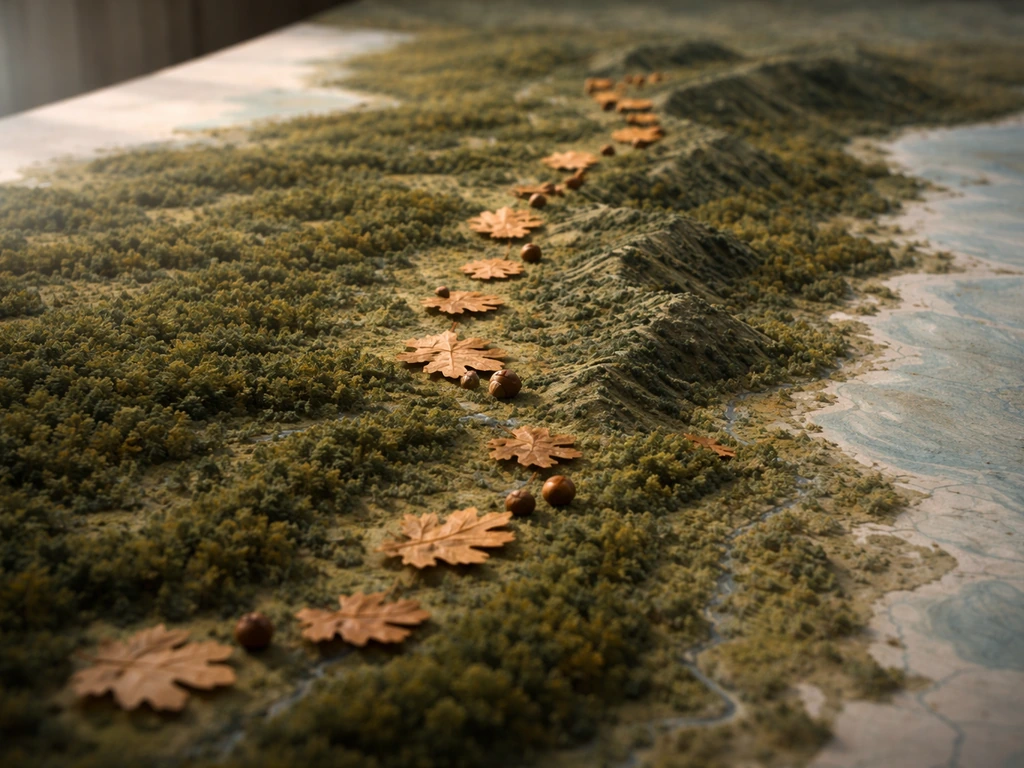
The chestnut oak's native footprint runs from Ontario and southern Maine in the north, sweeps south through the full length of the Appalachian Mountains, and flattens out toward northern Alabama, Georgia, and South Carolina. The western edge of the native range reaches into Michigan and Illinois, though populations thin out considerably as you move away from the Appalachian core. Think of it as fundamentally an Appalachian tree, the mountains shaped it, and the mountains are where it's most abundant and most dominant.
Within that range, chestnut oak is one of the defining species of upland oak-hickory forests. It appears as a major component in at least two distinct forest cover types and shows up as an associated species in ten more, so while it has clear habitat preferences, it's not a narrow specialist that disappears the moment conditions shift. Still, it's most predictably dominant on the ridge and upper-slope positions that other oaks cede to it.
The specific habitats chestnut oak favors
If there's one consistent theme in chestnut oak's habitat, it's that the tree tolerates poor conditions that eliminate competition. It thrives in rocky upland forests, on dry ridges, and on shallow soils where nutrient content is low and water drains fast. The Flora of North America description, "rocky upland forest, dry ridges, mixed deciduous forests on shallow soils", is about as clean a summary as you'll find.
That said, the tree is capable of better. The USDA Silvics data notes that chestnut oak "reaches best growth on rich, well-drained soils along streams," meaning the ridge association is more about competitive advantage than absolute preference. On those richer, moister sites, faster-growing mesic species tend to crowd it out. The rocky ridges are where chestnut oak wins by default. Soil pH tolerance runs from moderately acidic to neutral (roughly 5.0 to 7.4), though it's most commonly associated with the acidic end of that range.
Disturbance plays a bigger role in chestnut oak's persistence than most people realize. The species has thick bark and strong sprouting ability after top-kill, both traits that help it survive fire and other canopy disturbances. In forests where fire has been suppressed for decades, a process called mesophication shifts stand composition toward shade-tolerant mesic species and can actually push chestnut oak out of sites it historically dominated.
Long-term research on the Cumberland Plateau has documented exactly this dynamic, showing that chestnut oak populations persist through a combination of sprouting and periodic sexual reproduction, and that regeneration failure in many stands ties directly to fire suppression history. Stands with periodic low-intensity disturbance, including prescribed fire, tend to have better chestnut oak regeneration.
Climate requirements and hardiness
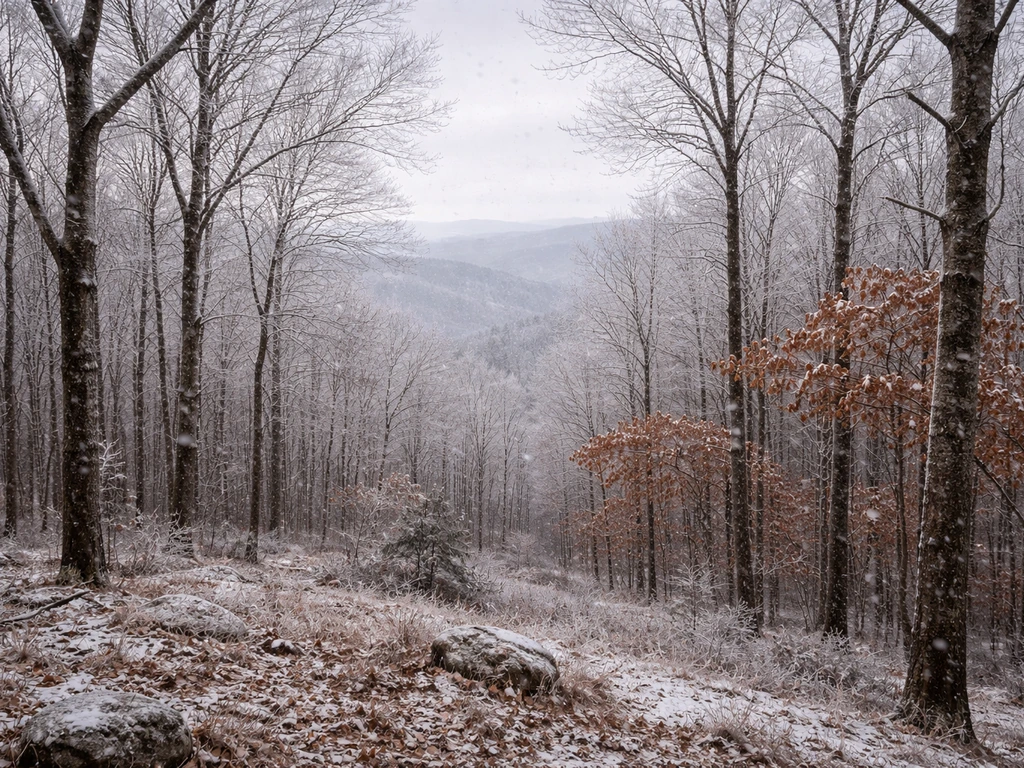
Chestnut oak is a cold-hardy tree. Most sources place it at USDA Hardiness Zone 4 at the low end, with productive cultivation extending through Zones 5, 6, 7, and 8. The NRCS pegs the hardiness range at Zones 4 through 8, which aligns with what you see in practice across its native and cultivated range. Cornell's Woody Plants Database is slightly more conservative at Zone 5a, but Zone 4 cold tolerance is well supported by the Ontario and Michigan populations.
Precipitation across the native range varies substantially, from around 32 inches annually in western New York and southern Ontario, up to over 80 inches in the southern Appalachians. The majority of the range sits between 40 and 48 inches of annual precipitation. This tells you the tree can handle a pretty wide moisture range, as long as drainage is adequate. It is not a tree for wet feet or poorly drained clay. Summer heat is generally not a limiting factor within the native range, though the hottest and most humid parts of the Southeast (the Gulf Coast, peninsular Florida) fall outside where it naturally occurs.
Where chestnut oak grows across U.S. states and regions
The Appalachian corridor is the heart of the range. Pennsylvania, West Virginia, Virginia, Kentucky, Tennessee, North Carolina, and northern Georgia all have robust chestnut oak populations on upland sites. Moving north, it's present through New York, Connecticut, New Jersey, Massachusetts, and into southern Maine. The mid-Atlantic states, Maryland, Delaware, have solid populations too, often on the rolling ridgelines of the Piedmont and the Blue Ridge foothills.
In the Midwest, Ohio and Indiana have native chestnut oak populations, thinning westward into Illinois and Michigan. These tend to be on sandstone ridges and upland oak-hickory sites rather than the dramatic rocky outcrops you see in the central Appalachians. Moving south, populations extend into northern Alabama and northern Georgia, where the Appalachian tail ends. These southern range populations tend to be at higher elevations. For states like Florida, Texas, and Wisconsin, chestnut oak is at or beyond the edge of its native range, those questions come up often enough that they're worth noting as separate considerations, since the answers depend heavily on local microclimate and site conditions rather than simple state-level range maps.
How to spot good chestnut oak sites in the field
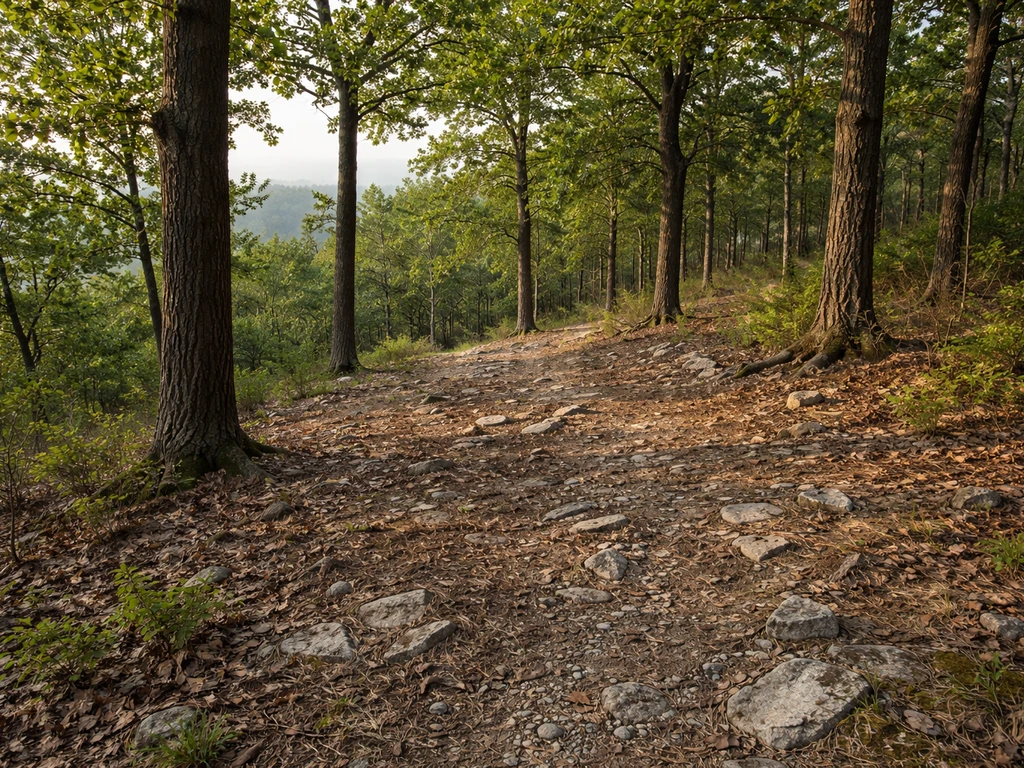
You can learn to read the landscape for chestnut oak before you ever see the tree. The strongest field cue is topography: you're looking at ridgetops and upper slopes, especially on south- and west-facing aspects that dry out faster. Rocky ground is a strong indicator, exposed sandstone or quartzite outcrops, thin stony soils, areas where the bedrock practically breaks the surface. If the terrain looks like it would be hard to farm and hard to keep moist through August, that's promising chestnut oak country.
Once you're looking at trees, the identification is fairly reliable. Chestnut oak has some of the most distinctive bark of any eastern oak: very dark, thick, deeply furrowed ridges running vertically, almost black in older trees and notably tannin-rich. It's a bark you don't forget once you've seen it up close.
The leaves are large and oblong with coarsely rounded teeth along the margins, 10 to 15 pairs of parallel veins each ending at a tooth, they're reminiscent of chestnut leaves, which is where the name comes from. Acorns are large for an oak, roughly 1 to 1. 3 inches, egg-shaped to nearly round, with a thick warty cap that covers roughly half the nut. They tend to be chestnut-brown and shiny when ripe.
One thing worth knowing: acorn crops are erratic. Heavy mast years happen only about once every four or five years, so if you visit a site and don't see acorns, don't assume you've got the wrong tree. Look at bark and leaf shape to confirm ID regardless of fruit presence.
In terms of associated species, finding chestnut oak with white oak, northern red oak, pignut or mockernut hickory, and Virginia or pitch pine is a good confirmation you're in the right community type. The specific mix shifts by region and elevation, but upland oak-hickory is the general neighborhood.
Quick site checklist for finding chestnut oak
- Ridgetops and upper slopes, especially south- or west-facing
- Rocky, thin, or skeletal soils — sandstone, quartzite, or other acidic parent material
- Dry to moderately dry moisture regime; good drainage is essential
- Elevation typically 500 to 4,000+ feet in the Appalachians (lower in northern range)
- Upland oak-hickory forest community with pines as associates
- Mature trees with very dark, deeply ridged, thick bark
- Large oblong leaves with rounded teeth and 10 to 15 vein pairs per side
- Large ovoid acorns with thick, warty cups (when in fruit year)
Planting chestnut oak outside its native range
The native range and the cultivation range are not the same thing, and that distinction matters if you're thinking about planting. Chestnut oak can grow well outside its native footprint as long as the site mimics what it needs: adequate cold hardiness (Zone 4 minimum), well-drained acidic to neutral soil, and reasonable precipitation.
Texas conditions do not match the native range and typical hardiness expectations for chestnut oak, so growth is unlikely without very specific microclimates and careful planning grow well outside its native footprint. It's been successfully cultivated across much of the broader eastern US and into parts of the Midwest where the soils and drainage work. The Morton Arboretum grows it successfully, and it performs reasonably well in managed landscape settings in Zones 5 through 8.
Where it gets tricky is provenance. Chestnut oak from a Pennsylvania ridgeline is genetically adapted to those specific conditions. If you're sourcing trees or acorns for planting in a region outside the native range, using local or regionally appropriate seed sources improves establishment success. USDA Forest Service seed transfer guidelines emphasize matching provenance to planting site ecology, and that principle applies here. A tree from a high-elevation southern Appalachian population might struggle in a low-elevation Midwest planting, even if the hardiness zone looks compatible on paper.
There are also disease considerations. [Oak wilt is a lethal fungal disease that can kill any oak species](https://hort. extension. wisc.
edu/articles/oak-wilt/), and it's a real planning factor if you're establishing trees in areas with active oak wilt pressure. New York State has formal quarantine protocols around oak wilt, and Wisconsin Extension classifies it as lethal across oak species. In Wisconsin, you’ll generally be looking at the right USDA hardiness zone and well-drained acidic to neutral soils if you want chestnut oak to establish successfully Wisconsin Extension.
This doesn't mean you shouldn't plant chestnut oak outside its native range, but it does mean you should check local oak wilt status before you source and plant material, and avoid wounding trees during the high-risk season (typically spring through early summer in most infected regions).
| Factor | Native Range Performance | Outside Native Range (Cultivation) |
|---|---|---|
| Hardiness zones | Zones 4–8 (native) | Zones 4–8 (manageable with right site) |
| Soil requirements | Rocky, shallow, acidic; tolerates poor sites | Needs well-drained, acidic to neutral soil; won't tolerate wet clay |
| Moisture | 40–80+ inches annual precip; drought-tolerant on ridges | Needs adequate drainage more than high rainfall |
| Provenance matching | Locally adapted populations present | Use regionally appropriate seed sources for best establishment |
| Disease risk | Oak wilt present in parts of range | Check local oak wilt status before planting |
| Regeneration | Sprouts after disturbance; fire-adapted | Establish from transplants or acorns; no natural disturbance advantage |
| Competitive position | Dominates on poor ridge sites | May face more competition on richer managed soils |
Bottom line on cultivation outside the native range: chestnut oak is a resilient, adaptable tree, but it's not effortless. Give it the right soil drainage and pH, match your hardiness zone, source material responsibly, and stay aware of oak wilt risk in your area. Do those things and there's no reason a well-chosen site in, say, southern Ohio or western North Carolina outside the core Appalachian belt can't support a healthy chestnut oak. Push too far into incompatible climates or soils, heavy clay, waterlogged ground, or the Deep South lowlands, and you'll be fighting the tree's biology rather than working with it.
FAQ
If I want to find where chestnut oak grows in my area, can I use the state map alone?
Yes, but it will be limited to the right “site,” not just the right state. Use drainage and slope first, then check climate, for example look for rocky uplands or sandstone ridges and avoid low, wet hollows and clayey flats even if the hardiness zone seems acceptable.
What should I do if I see a likely chestnut oak but there are no acorns?
Chestnut oak can be present even when you do not see acorns, because mast years are irregular (often every four to five years). Confirm identity by bark and leaf traits, not by fruiting.
How can I confidently identify chestnut oak when several upland oaks grow nearby?
Look closely at the bark pattern: older chestnut oak typically has very dark, thick bark with deep vertical ridges. That tends to be more distinctive than overall leaf size, especially if you are comparing it to other upland oaks in the same forest.
Why does chestnut oak seem scarce on some uplands that look rocky at first glance?
Aspen, sweet gum, and many mesic maples can take over once conditions become moister and more shaded. Chestnut oak is more likely on drier, thinner-soil ridges where competition is suppressed, so if the site stays consistently wet or shaded, expect weaker persistence.
Can chestnut oak be planted in a correct hardiness zone but still not thrive?
Zone alone is not enough. A site in the same hardiness zone can still fail if it is poorly drained, too high in fertility (leading to faster-growing competitors), or too acidic for your soil condition not to match the tree’s tolerance. Prioritize well-drained soil and avoid waterlogged clay.
Does fire suppression make chestnut oak less likely to regenerate even if adult trees are present?
Yes, and it is often a missed opportunity for regeneration. Because chestnut oak can sprout after canopy top-kill, periodic low-intensity disturbance such as prescribed fire can improve seedling and sprout establishment compared with long-term suppression of fire.
How important is where my chestnut oak seed or saplings come from?
If you are planting outside the native range, provenance matters. Seed or seedlings sourced from a nearby or ecologically similar region tend to establish better than material from farther away, even when hardiness zone numbers match.
What oak wilt precautions should I take before establishing chestnut oak?
Oak wilt risk changes the equation. Check local oak wilt status before sourcing or planting, and avoid wounding oaks during high-risk seasons (commonly spring through early summer in many infected regions).
If a property has chestnut oak adults, will it naturally maintain itself without management?
Mature trees can persist without frequent fire, but recruitment can stall if disturbance is absent and moisture and shade increase. If you want more future trees, plan for conditions that allow both sprouting and occasional sexual reproduction.
How do I handle “range edge” situations, like when chestnut oak is at the edge of native distribution?
Yes, microclimate can push outcomes either direction near the edge of the range. South- and west-facing slopes that dry faster, rocky substrates, and cold-air drainage patterns can make a site suitable even when the nearest weather station suggests otherwise.