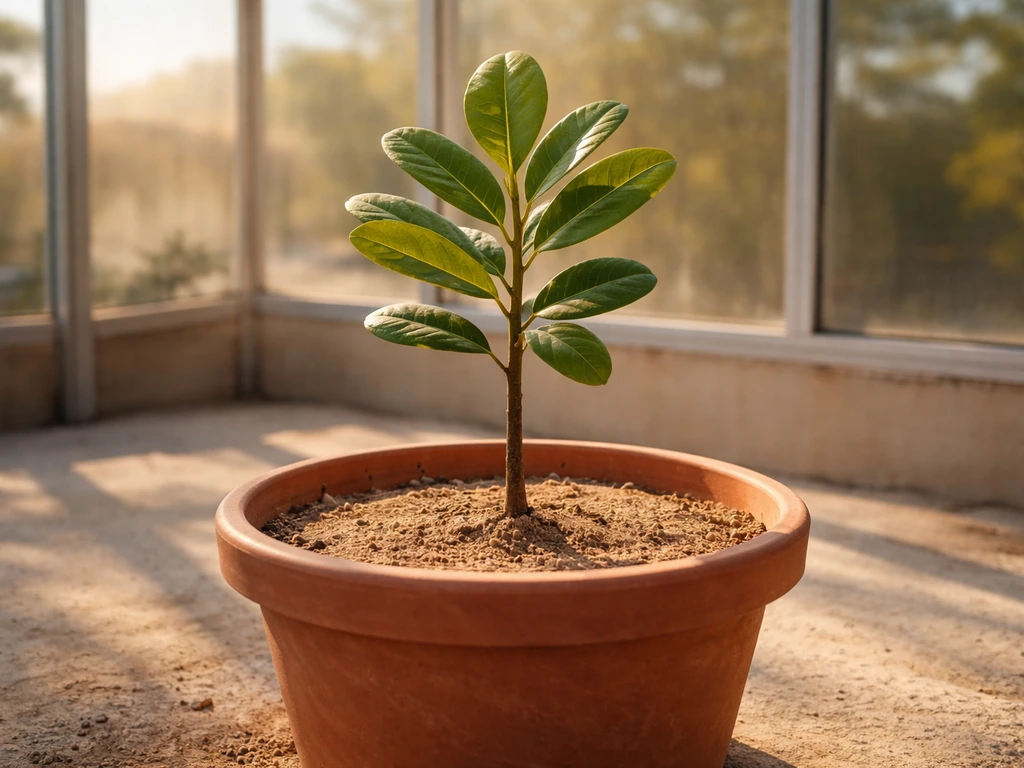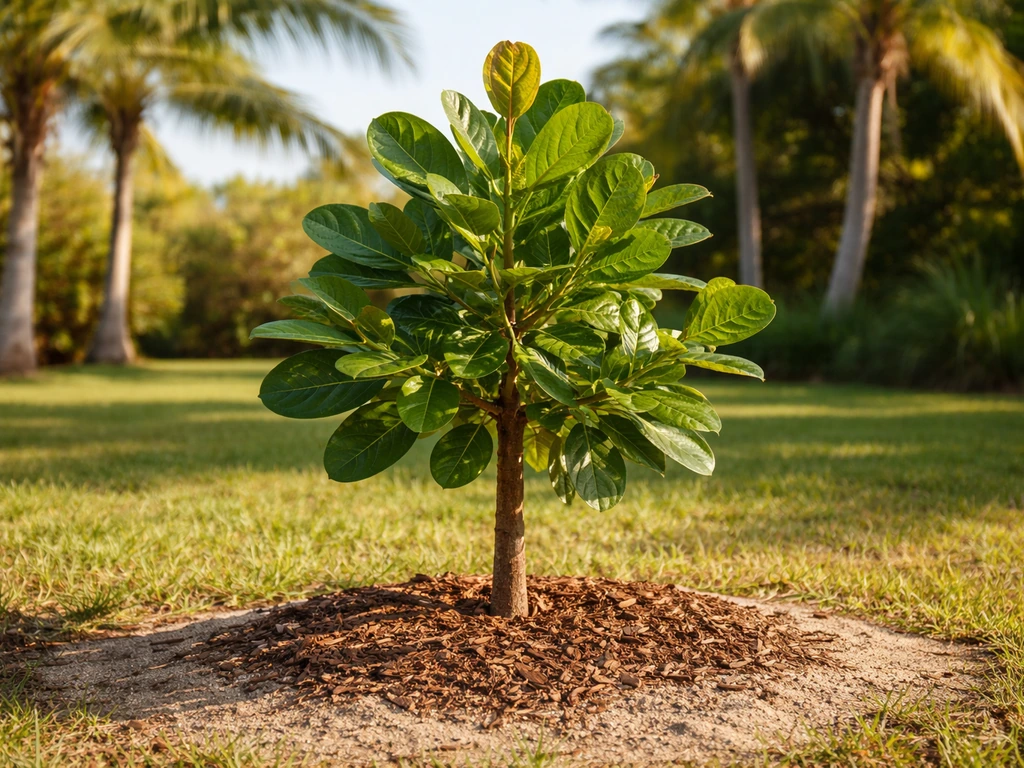
You can grow a <a data-article-id="5E5E6CF8-A6F5-4E01-9EF5-932A65E19890">cashew tree in the UK</a>, but you almost certainly cannot grow one outdoors and get edible nuts from it without a heated greenhouse or very well-insulated conservatory. Cashew (Anacardium occidentale) is a tropical tree that needs temperatures between roughly 25°C and 30°C during its growing season and cannot tolerate frost at any stage of its life.
Can You Grow Cashew Nuts in the UK? Realistic Guide
Marcus Hendricks
27 Apr 2026
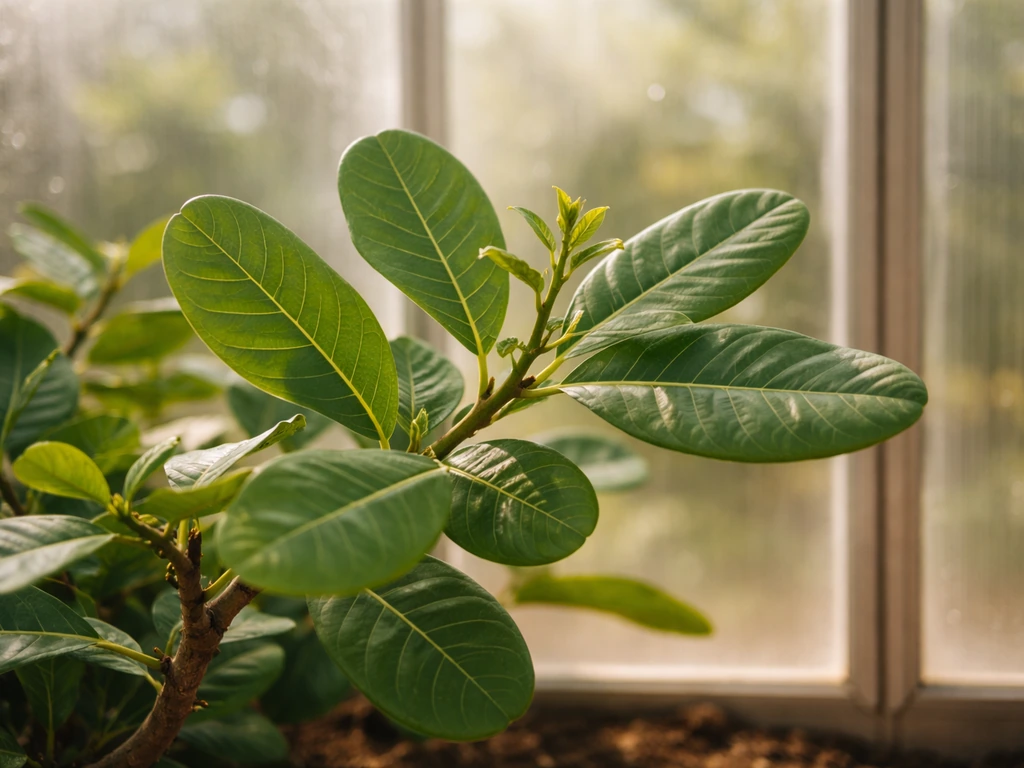
The UK's winters rule out outdoor cultivation in every region, and even mild southwestern microclimates cannot keep a cashew alive through a typical January. That said, growing one in a protected structure is genuinely possible, and a small number of UK enthusiasts do it. If you are wondering can you grow cashews indoors, the short answer is yes, but you still need warmth, light, and careful management to get viable fruit set.
Getting the tree to actually produce harvestable, processable nuts is a much harder target, and you need to go in with clear expectations about what that involves.
Why the UK climate is so problematic for cashew
Cashew is rated as hardy only to UK hardiness zone 10, which corresponds roughly to USDA zone 11. That means it needs a frost-free environment year-round, with a minimum temperature no lower than 18°C according to PFAF's plant database. In practice, the tree's preferred active-growth range is 25°C to 30°C, and it visibly sulks below that, slowing growth and becoming susceptible to root issues caused by cold, wet compost.
Average UK winter lows are 2°C to 6°C across most of England, Wales, and Scotland, and even Cornwall rarely stays above 10°C at night in December and January. That gap between what cashew needs and what the UK delivers is enormous. It is not a question of selecting a sheltered spot or using a cold frame; you need active heating.
UK summers are also borderline: London averages around 23°C in July, which is at the bottom of cashew's comfort zone, and cloud cover limits the intense sunlight the tree needs for flowering and fruit set. The relatively high UK humidity (often 70–80%) is also above the 35–75% optimal range reported in FAO EcoCrop data, which can encourage fungal issues unless airflow is managed.
Compare this to where cashew actually thrives: Brazil, India, Vietnam, and Mozambique, all sitting between roughly 10° and 25° latitude, with warm dry seasons that trigger flowering and hot wet seasons that drive fruit development. The UK sits at 50°–58° north. The biology just does not align, which is why the RHS treats this species purely as a greenhouse or conservatory plant in UK practice, not as a garden tree.
How a cashew tree actually grows, flowers, and fruits
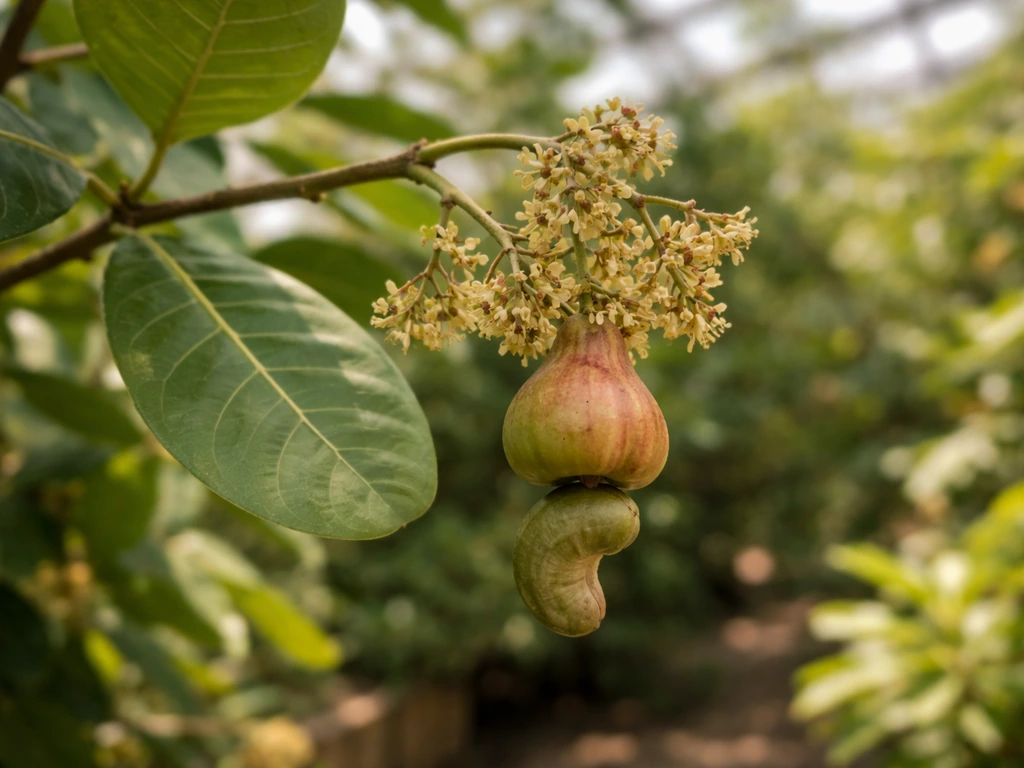
Cashew is an evergreen tree that in its native range reaches 10–12 metres, though dwarf varieties stay around 4–6 metres. In a UK container in a greenhouse it will stay considerably smaller, which is actually useful. The tree produces large panicles of small flowers that include both male flowers (which produce pollen but no fruit) and hermaphrodite (perfect) flowers that can set fruit. The ratio of male to hermaphrodite flowers varies significantly between genotypes and even between flowering cycles on the same tree, which is one reason fruit set can be inconsistent.
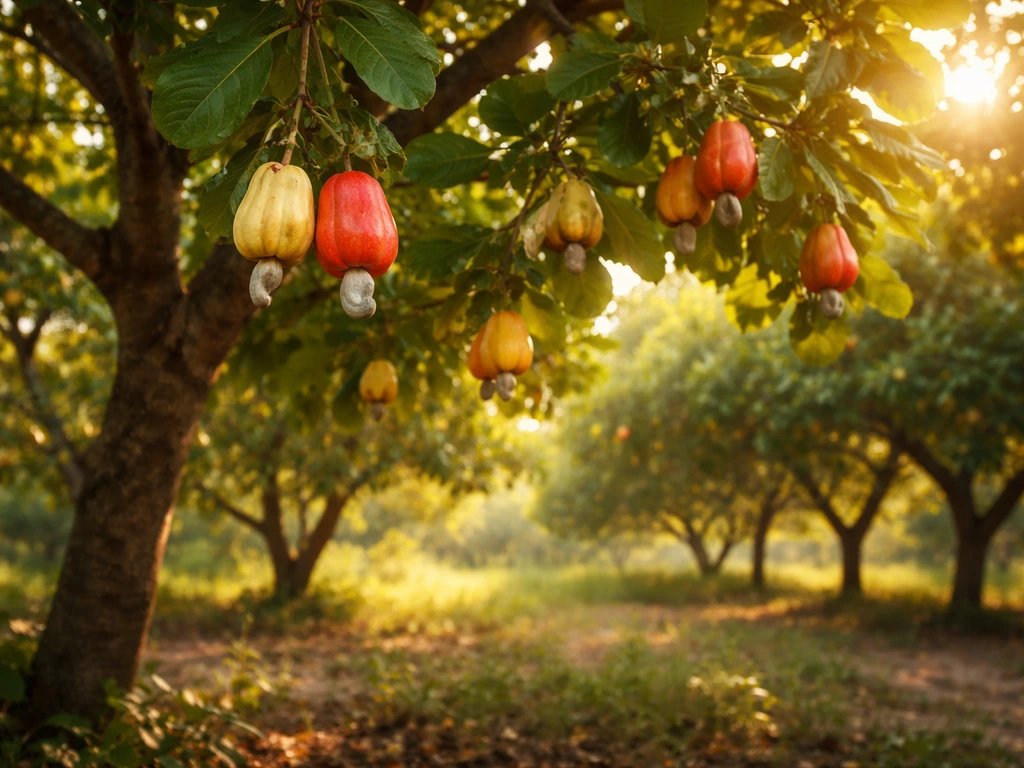
After successful pollination, the true botanical fruit (the cashew 'nut') develops from the fertilised ovary over roughly 12 weeks. If you are asking can you grow a cashew tree from a cashew, the seed step is covered in the section on starting your tree from seed versus grafted plants. The fleshy structure most people picture as the cashew fruit, the swollen, pear-shaped cashew apple, is actually an enlarged receptacle (the stalk), not the true fruit at all.
The real fruit is the kidney-shaped structure that hangs from the bottom tip of the cashew apple. Inside that fruit is the seed we eat as a cashew nut, encased in a thick shell. That shell contains cashew nut shell liquid (CNSL), a corrosive cocktail of anacardic acid and related phenolic compounds that causes urushiol-type contact dermatitis. This chemistry matters a great deal for the UK home grower handling harvest, which is covered below.
In the Northern Hemisphere, cashew typically flowers between December and April, which in a UK greenhouse means the plant is trying to flower during your coldest, darkest months. Keeping temperatures and light levels adequate during that window is one of the main challenges. In warmer climates, trees reach first flowering at three to five years from planting for standard types, and dwarf varieties can begin blooming in their second or third year. In UK conditions, with suboptimal winter temperatures and light, expect that timeline to stretch rather than shorten.
Setting up for cashew in the UK: greenhouse, containers, and heating
A heated greenhouse or large conservatory is the minimum requirement. The RHS similarly provides guidance for warm, heated conservatory or greenhouse plants, which is the context needed for growing tropical species like cashew in the UK heated greenhouse or conservatory. A cold greenhouse will not work; cashew needs winter night temperatures held above 15°C at the very least, and ideally above 18°C. That means investing in a reliable heating system, insulating the structure well, and accepting that running costs will be meaningful across a UK winter. A conservatory on a south-facing wall of a house gives you free background heat from the building and solar gain on sunny days, which reduces running costs.
Container growing is strongly advisable over planting in a greenhouse border, for two reasons. First, it keeps the root zone manageable and lets you move the plant if you need to. Second, cashew in a container is easier to keep on the dry side in winter, which the tree prefers. Use a large pot (at least 60–80 litres for a maturing tree) with excellent drainage; a free-draining loam-based compost mixed with around 30% horticultural grit works well. Cashew does not like sitting in wet compost, and cold wet roots are a fast way to kill one in a UK winter.
For light, cashew needs full sun. In a UK greenhouse from October to March, natural daylight is often inadequate for active growth, so supplemental LED grow lighting can help maintain the plant and support flowering. Position the plant where it gets maximum south-facing light and is not shaded by other plants. During the UK summer, the tree can go outside in a sheltered, sunny spot once night temperatures are reliably above 15°C (typically late May to early September in southern England), which gives it a meaningful period of natural warmth and light.
Watering and feeding
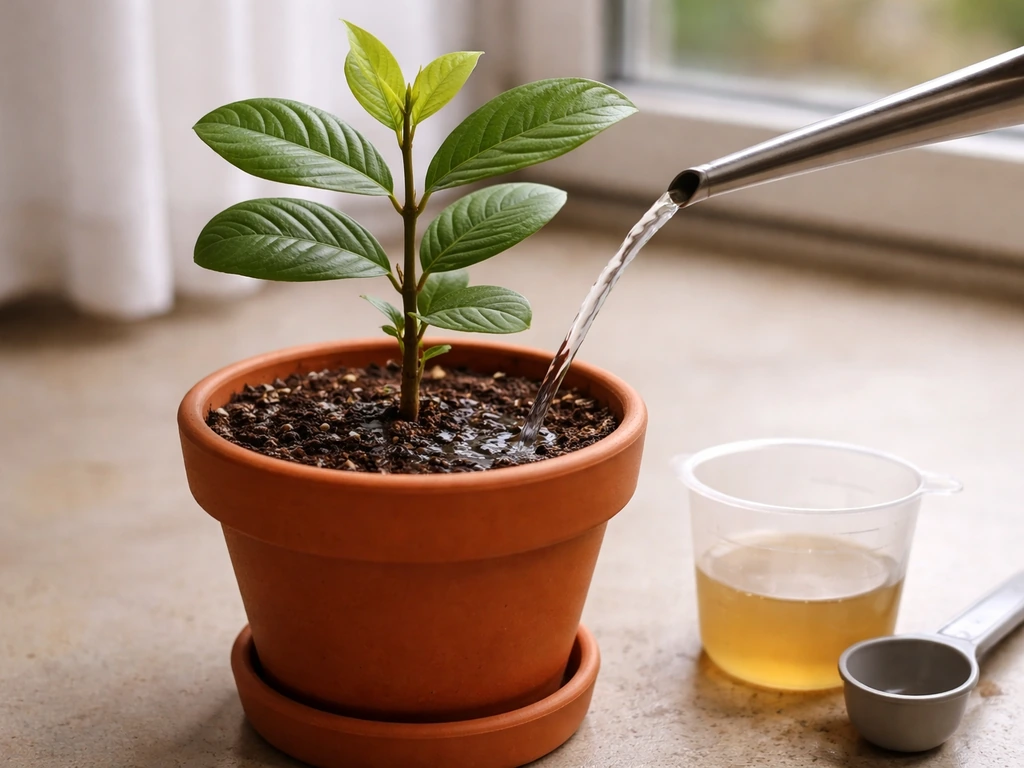
Young cashew trees in containers need consistent moisture during active growth, roughly weekly watering during warm periods. In winter, reduce watering significantly and allow the top half of the compost to dry out between waterings. Overwatering in cool conditions is one of the most common causes of failure. Feed with a balanced liquid fertiliser during the growing season (May to September), switching to a low-nitrogen, higher-potassium feed as autumn approaches to encourage hardening rather than soft leafy growth. Avoid feeding entirely from November through to February.
Starting your tree: seed vs grafted plants
You have two main routes: grow from seed (using a raw, unroasted cashew nut still in its shell) or source a grafted plant from a specialist tropical plant nursery.
Growing from seed is cheap but slow and unpredictable. Viable seed cashews are hard to source in the UK because commercially sold cashews have been heat-processed and are no longer viable. You need raw, in-shell cashews from a specialist supplier. Germination takes two to four weeks in warm (25–30°C), moist conditions. A heated propagator is useful here. The juvenile period before first flowering for a seed-grown tree is typically three to five years under good conditions in warm climates, and realistically five to six years or more in UK protected culture with its suboptimal winter light and temperature. That is a long wait with no guarantee of fruiting.
Grafted dwarf cashew plants, if you can source one from a specialist tropical nursery, cut the wait time and also give you a known genotype with reliable flowering characteristics. Dwarf varieties bred for early bearing (like 'Anao' types) can flower in their second or third year even under managed conditions. Sourcing grafted cashew in the UK is not straightforward, and you will likely need to contact specialist importers or European tropical plant nurseries. Expect to pay significantly more than for a seedling, but the time saving and predictability are worth it if your goal is actually producing nuts.
| Approach | Starting cost | Time to first flowering | Fruit set reliability | Practical notes |
|---|---|---|---|---|
| Seed-grown from raw cashew | Low (£5–£15 for seed) | 5–7 years in UK conditions | Variable (unknown genotype) | Need heated propagator; hard to source viable seed in UK |
| Grafted dwarf plant (specialist nursery) | Higher (£40–£150+) | 2–4 years in UK conditions | Better (known early-bearing type) | Limited UK availability; worth the investment for serious growers |
Getting the tree to actually set fruit: pollination and fruit set
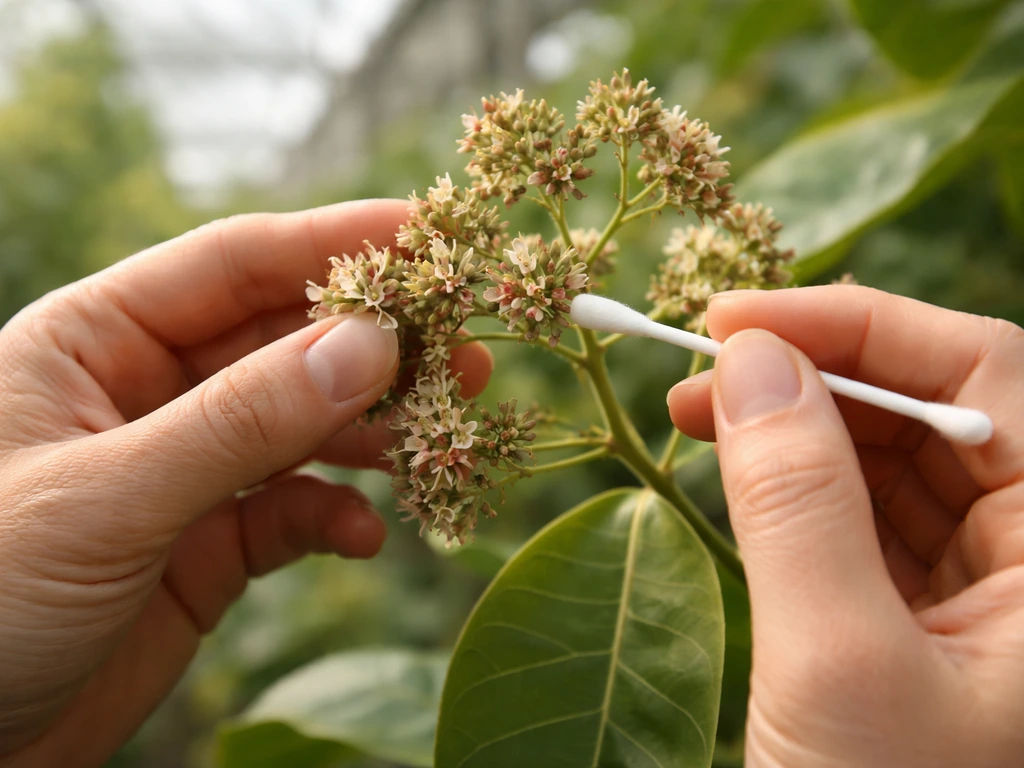
This is where UK cashew growing gets genuinely difficult. Cashew's hermaphrodite flowers are self-fertile but not self-pollinating, meaning the pollen needs to be physically transferred to the stigma for fruit to set. In the tree's native range, insects (including bees, flies, and ants) handle this efficiently. In a UK greenhouse in January or February, when cashew is trying to flower, you have virtually no insect pollinators present.
The practical solution is hand pollination. When the panicles are open and you can see pollen on the anthers of the male flowers, use a small soft paintbrush or cotton bud to collect pollen and transfer it to the stigmas of the hermaphrodite (perfect) flowers on the same or nearby panicles. Do this in the middle of a warm, sunny day when the greenhouse temperature is at its highest and the flowers are most receptive. Even with hand pollination, only a small percentage of hermaphrodite flowers will set fruit; this is normal for cashew even in commercial growing conditions.
Fruit set is also influenced by the ratio of male to hermaphrodite flowers in a given panicle, which varies by genotype and growing conditions. Stress, including temperature swings or inadequate light, tends to push the ratio toward more male flowers and fewer hermaphrodite ones. Keeping conditions as stable and warm as possible during flowering gives you the best chance. A successfully fertilised flower will show a visibly swelling ovary within a few days of pollination.
Harvesting, handling the shell safely, and getting to an edible nut
Cashew nuts are ready to harvest when the cashew apple (the swollen receptacle) has turned yellow, orange, or red depending on variety, and the nut hanging from its tip has turned grey-brown. The apple drops easily from the tree when ripe; the nut at this stage is still raw and encased in a thick, toxic shell.
This is the part most guides skip over, and it is critical for safety. The shell contains CNSL, a mixture of anacardic acid and related phenolic compounds that are chemically related to urushiol, the same irritant found in poison ivy. Direct contact with raw cashew shells can cause severe allergic or irritant contact dermatitis, blistering, and eye damage if you touch your face after handling. Wear thick nitrile or rubber gloves when handling raw nuts, and do not do this near your face or over a kitchen surface.
Processing the nut to get to the edible kernel involves roasting the shell to neutralise the CNSL and make the shell brittle enough to crack without the liquid spraying out. This is done commercially by drum roasting or steam treatment. At home, the practical method is to roast the raw nuts (shells on) in a well-ventilated space outdoors on a metal tray at around 180–200°C for 15–20 minutes, using heavy gloves throughout. The smoke produced is irritating, so do this outside. Once cool, crack the shell carefully and extract the kernel. The kernel itself still has a thin skin (testa) that needs to be removed by gentle roasting or peeling before it is fully edible.
Unprocessed raw kernels can also cause reactions in sensitive individuals before the final roasting step, which is why commercially sold cashews are always fully heat-processed. For a UK home grower harvesting a handful of nuts, the small quantities involved make careful manual processing feasible, but do not skip the safety steps.
Realistic costs, risks, and honest expectations
Between the heated greenhouse or conservatory, the supplemental lighting, the specialist plant sourcing, and the multi-year wait before you see any nuts, growing cashew in the UK is an expensive, long-horizon project. For a serious enthusiast with an existing heated tropical greenhouse, adding a cashew is a reasonable experiment. For someone starting from scratch with the goal of home-grown cashew nuts, the cost-to-reward ratio is difficult to justify.
- Heated greenhouse running costs over a UK winter can be £300–£1,000+ depending on size and fuel type
- A grafted dwarf plant from a specialist source typically costs £50–£150 or more
- First usable nut harvest is realistically 4–7 years away from planting
- Each tree may set only a handful to a few dozen nuts per year in a UK greenhouse environment
- Hand pollination is required, and success rates per flower are inherently low
- Shell processing requires outdoor roasting and proper protective equipment every single harvest
- The risk of losing the plant to a heating failure in a cold snap is real and sets you back years
Better nut crops to consider if reliable harvest is the goal
If you want to grow nut trees in the UK and actually harvest meaningful quantities of edible nuts, there are far more practical options. If you are wondering whether can you grow cashews in Ohio for edible nuts, the climate and growing setup matter just as much as they do in the UK grow nut trees in the UK.
Hazel (Corylus avellana) is fully hardy throughout the UK, starts bearing in three to four years, and produces prolifically with no heated structure needed. Walnut (Juglans regia) thrives across most of England and Wales in sheltered positions, and the improved varieties like 'Broadview' and 'Buccaneer' bear reliably from five to seven years. Sweet chestnut (Castanea sativa) is another strong performer in southern England in well-drained soils. None of these require any protection, heating, or hand pollination.
Cashew is geographically in a completely different category from these. Its viable range globally sits in tropical and subtropical zones: readers curious about the broader picture of where cashew succeeds will find that it overlaps with climates like Florida and parts of Texas in the US, or northern Australia, all of which still represent significant differences from UK growing conditions.
In fact, if you are wondering can you grow cashews in Texas outdoors, the answer depends heavily on frost risk and winter minimum temperatures parts of Texas in the US. Canada faces many of the same challenges as the UK, and even warm US states like Ohio and Michigan are too cold for outdoor cashew growing.
If you're wondering can you grow cashews in Michigan, the key issue is frost and winter minimum temperatures, which are typically too low for outdoor production. Canada faces many of the same challenges as the UK, including the need for frost-free conditions and enough heat and light for flowering and fruit set.
If you are drawn to tropical nut growing as a hobby and have a heated greenhouse, cashew is a fascinating project and the botany alone, particularly the unusual relationship between the cashew apple and the true nut, is worth experiencing first-hand. Just go in knowing it is a long, involved, moderately expensive project rather than a productive crop. For anyone whose primary goal is nut yields, put your energy into hazel or walnut first, and consider cashew a bonus experiment if you already have the heated space.
FAQ
Can I grow cashew in a cold greenhouse or a conservatory that is only lightly warmed?
If you only have a standard cool greenhouse or unheated conservatory, plan on not getting viable fruit. Cashew needs winter night temperatures that stay consistently warm (roughly above 15°C, ideally above 18°C), plus reliable sun or supplemental light during flowering season (often December to April). Without that, the tree may grow slowly but is unlikely to set and mature nuts.
Why does my cashew flower but never form nuts in a UK greenhouse?
In most UK setups, the biggest reason people get no nuts is lack of pollination, not the tree being “wrong.” Cashew can produce hermaphrodite flowers that are self-fertile but require pollen transfer, so you usually must hand pollinate when you see receptive blossoms, ideally on a warm, sunny day when the greenhouse temperature peaks.
What kind of cashew nuts do I need to start growing from seed in the UK?
Use raw, unroasted cashews that still have the shell and have come from a supplier intended for planting, not normal supermarket cashews (they are typically heat processed and won’t germinate). Even with the right seed, germination is usually only reliable when kept at warm temperatures around 25°C to 30°C with steady moisture, and it can still be inconsistent.
How do I hand pollinate cashew successfully in winter months?
For hand pollination, focus on the exact panicles you can reach, and collect pollen from male flowers that show visible pollen on the anthers. Transfer pollen to the stigmas of nearby hermaphrodite flowers within the same flowering window, then keep conditions stable and warm for the following days so the fertilized ovary can swell.
Can I move my cashew plant outside during summer to improve results?
Yes, but it is usually not practical as your main strategy in the UK. Moving a container outside can help with summer light and warmth, but you should only do it once night temperatures are reliably above about 15°C, and bring it back well before autumn nights cool. Sudden cool snaps can reduce flowering quality and make the tree susceptible to stress.
What’s the biggest mistake that kills cashew plants in UK containers?
Most failures come from wet, cold roots in winter. Reduce watering sharply when temperatures drop, allow the top portion of compost to dry between waterings, and use a large pot with excellent drainage. A smaller pot dries out faster, which can help, but too-small containers can also limit growth, so aim for a mature-tree pot size.
Is it safe to handle cashews right after harvest in the UK?
Cashew nuts at harvest time are raw and still encased in the thick shell that contains CNSL, which can trigger severe skin irritation in some people. Wear thick nitrile or rubber gloves, avoid touching your face, and do all handling away from kitchens. If you are highly sensitive to irritants, consider avoiding shell handling altogether or seek safer methods.
How do I process raw cashews safely at home if I grow them?
Don’t rely on “store-bought roasting” shortcuts. At home, you typically roast the shells on first in a well-ventilated outdoor area until the shell becomes brittle, then crack and remove the kernel, and finally roast or peel the thin inner skin. Under-roasting increases the chance of irritation from residual compounds.
Does buying a grafted dwarf cashew guarantee earlier nuts in the UK?
If you are trying to get earlier fruit, dwarf grafted plants usually outperform seed-grown trees, because they reach flowering sooner and have more predictable flowering traits. However, even grafted plants may still require hand pollination in UK winter, so “grafted” does not eliminate the pollination challenge.
Is cashew worth it in the UK compared with growing other nut trees?
A useful decision aid is this: if you do not already have dependable, thermostatic heating in a greenhouse (and supplemental light you can run during winter), cashew is mostly a botany project rather than a nut-producing crop. If your goal is edible yields with minimal ongoing cost and risk, UK-hardy nut trees like hazel or walnut usually make more sense.