No, cashews do not grow on apple trees. Not even close. The confusion usually comes from one specific fact that sounds wild when you first hear it: the cashew plant produces something called a "cashew apple." That name trips people up, and understandably so. But that fleshy, pear-shaped structure is not a true apple, has nothing to do with Malus domestica (the apple tree in your backyard or orchard), and the two plants are not even remotely related. Cashews come from a tropical tree called Anacardium occidentale, and the nut grows in a very specific and unusual way that is completely unlike anything an apple tree does.
Do Cashews Grow on Apples? Why They Never Will
Marcus Hendricks
24 Mar 2026
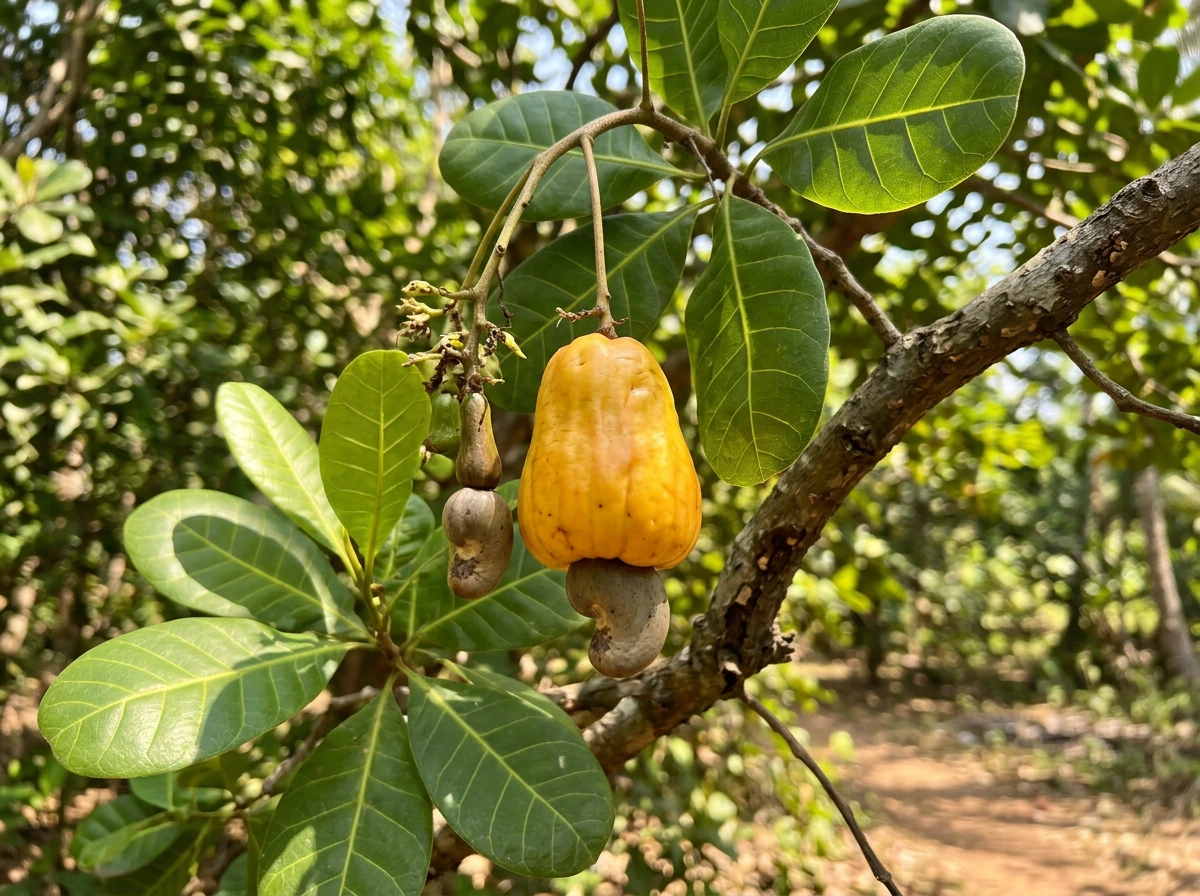
Why people think cashews and apples are connected
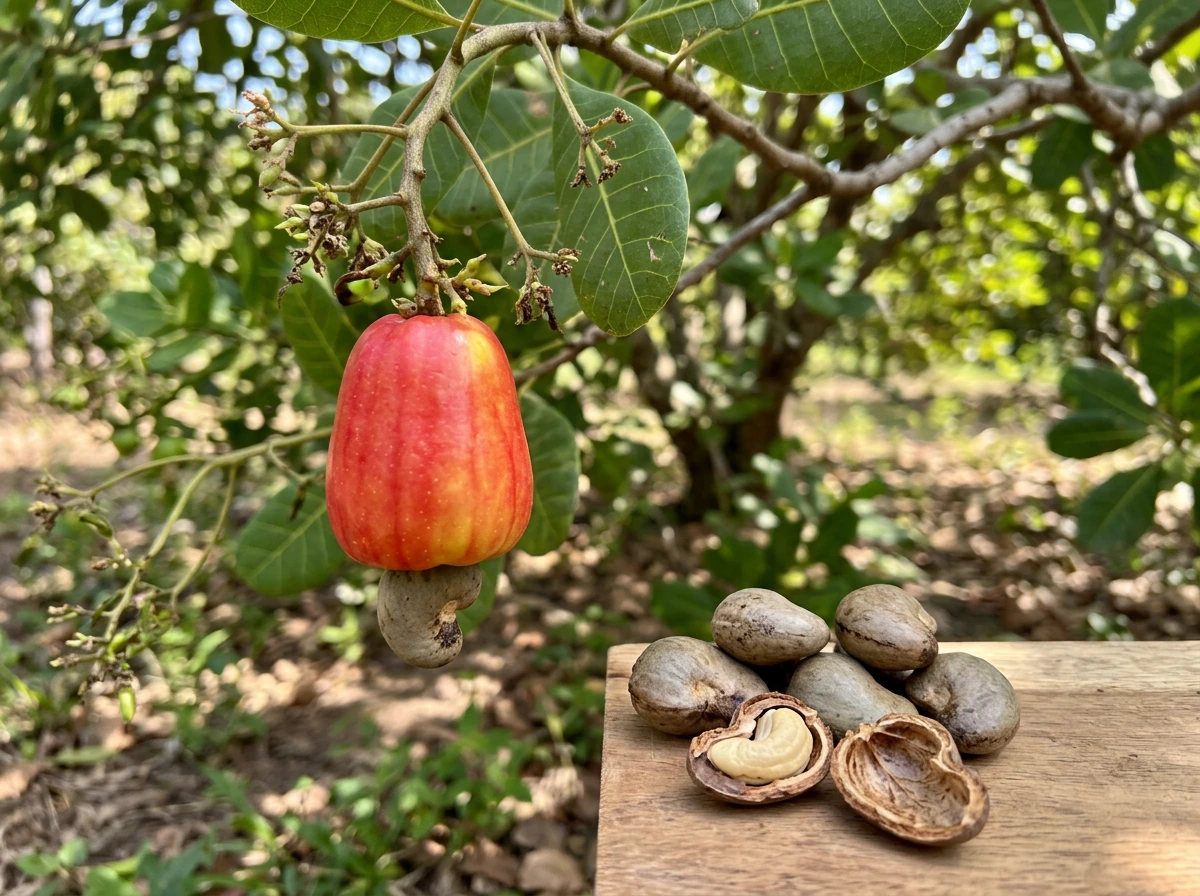
The short answer is: the name. The cashew plant produces a swollen, fleshy structure called the cashew apple, and when people hear that term they assume it has something to do with an actual apple tree. It does not. The "cashew apple" is an accessory fruit, technically called a hypocarpium, that forms from the expansion of the flower stalk and receptacle tissues after fertilization. It is not the true fruit at all. The real cashew nut (the part you eat) is a kidney-shaped drupe that hangs off the bottom end of that fleshy structure. So the cashew apple is essentially the packaging, and the cashew nut is the actual seed-containing fruit riding along beneath it.
This is one of those cases where a common name causes a genuine misconception. If the cashew apple had been called a cashew pear or cashew berry, nobody would be asking whether cashews grow on apple trees. The biology here is clear and the two plants are entirely separate.
How cashews actually grow
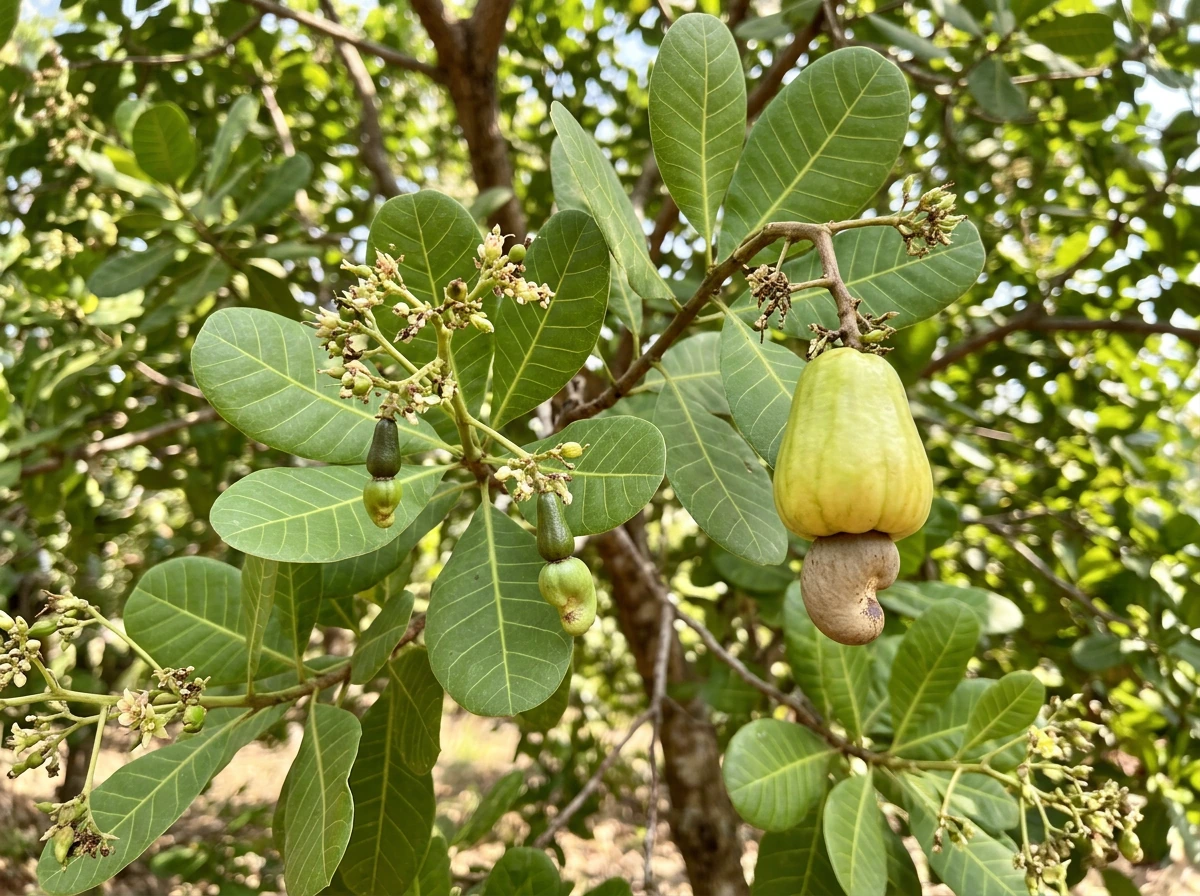
Anacardium occidentale is a tropical evergreen tree, and its reproductive process is unlike most fruiting trees you have probably grown or seen. During the dry season, the tree produces clusters of small flowers over a two to three month period. After fertilization, the ovary develops into the true cashew fruit, which is that characteristic kidney-shaped drupe with a thick double-walled shell. The outer shell (exocarp) and inner shell (endocarp) sandwich a layer of caustic phenolic resin called anacardic acid, which is why raw cashews cannot simply be cracked open and eaten like walnuts. A PMC review on Anacardium plants explains that cashew nut shell liquid contains blank" rel="noopener noreferrer">anacardic acid and related phenolics such as cardol and cardanol, which helps explain the caustic and irritating nature of raw shell material. do cashews take a lot of water to grow
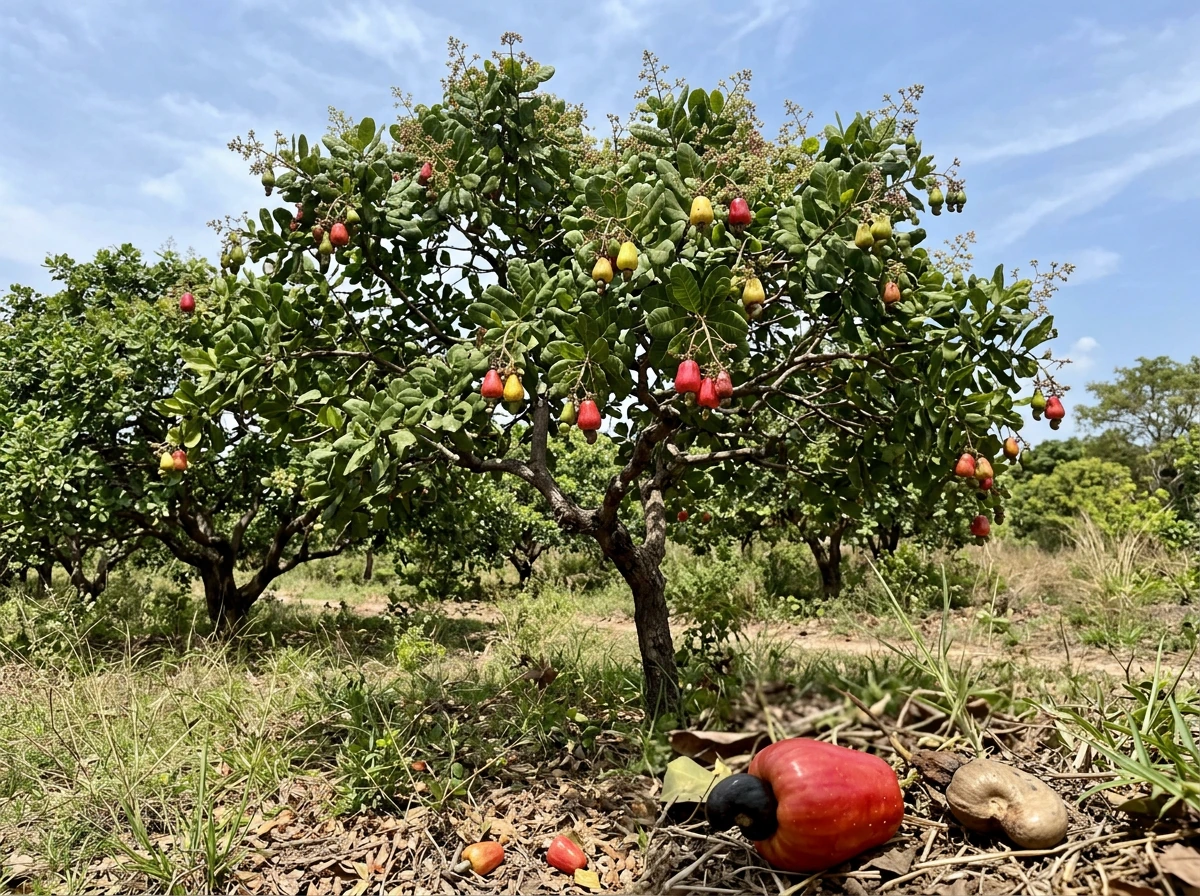
Here is where it gets interesting: while the true fruit (the nut) develops first, the flower stalk tissue below it swells up and expands into the soft, juicy cashew apple. So what you end up with is a fleshy, pear-shaped pseudofruit sitting on top with the actual nut dangling off the bottom like a small boxing glove. From flowering to cashew nut maturity takes roughly 50 to 60 days, with the cashew apple needing another 20 to 30 days to fully ripen depending on ambient temperatures, and the right watering schedule.
If you want to go deeper on the step-by-step biology of the cashew tree's fruiting process, that is covered in detail in our guide on how does cashew nut grow. And if you are curious about whether the nut has a shell at all (given that we never see one in stores), that is worth reading separately too.
What apple trees actually produce (and why they can't make cashews)
Apple trees (Malus domestica) produce pomes. A pome is a specific type of fleshy fruit where an enlarged hypanthium, the tissue that surrounds the flower's inferior ovary, becomes the bulk of what we think of as the fruit's flesh. The seeds sit inside a core that represents the true ovary tissue. So when you bite into an apple, almost all of what you taste is accessory tissue, not the ovary wall. The seeds inside are the product of fertilized ovules within the carpels.
None of that anatomy has anything to do with cashew production. Apple trees are in the family Rosaceae. Cashews are in the family Anacardiaceae, which puts them closer to mangoes and pistachios than to anything in your temperate fruit garden. The two plants have different flower structures, different fruit development mechanisms, different temperature requirements, and entirely different evolutionary histories. An apple tree cannot produce a cashew any more than it can produce a mango. The genetic and botanical distance is simply too great.
A side-by-side look at the two plants
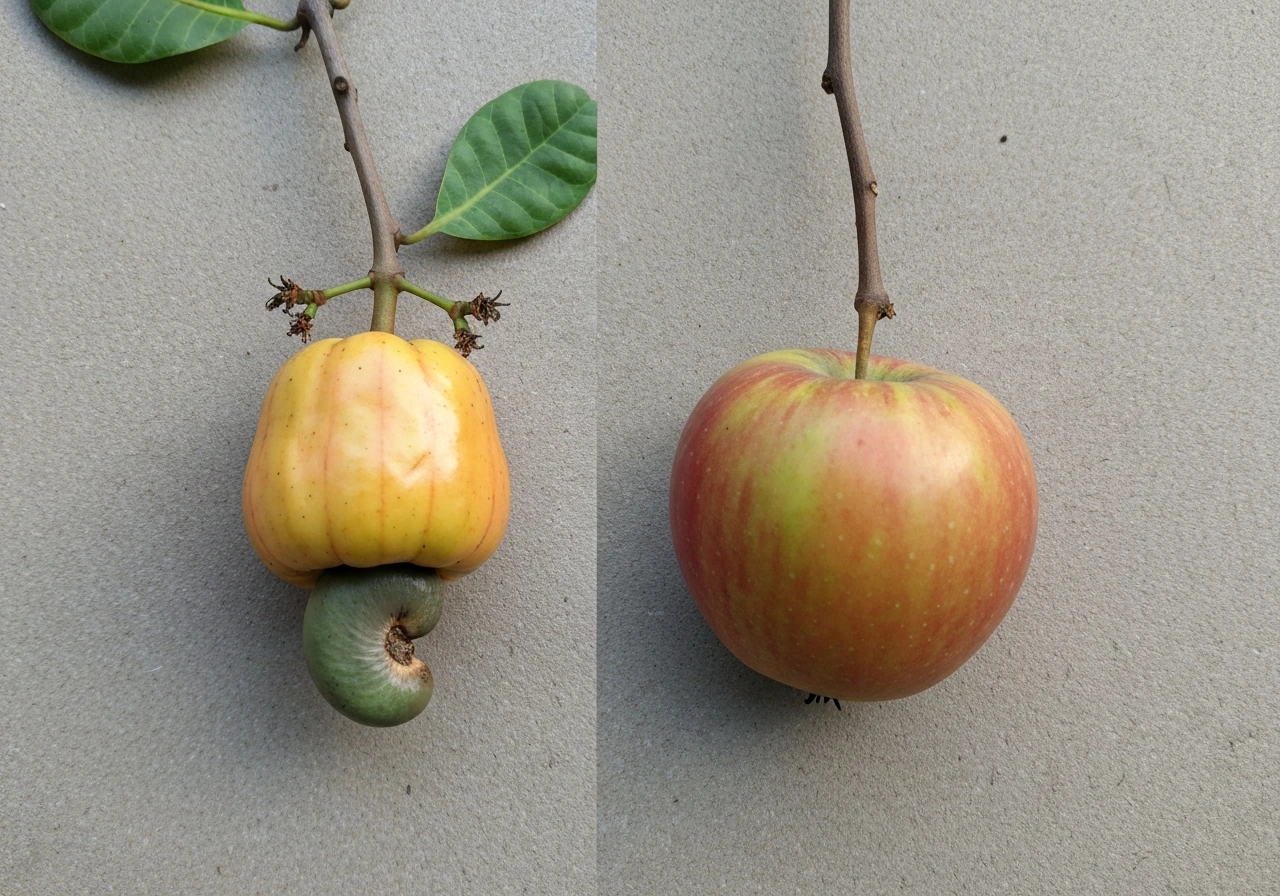
| Feature | Cashew (Anacardium occidentale) | Apple (Malus domestica) |
|---|---|---|
| Plant family | Anacardiaceae | Rosaceae |
| Fruit type | Drupe (true fruit) + accessory hypocarpium | Pome (accessory fleshy hypanthium + core) |
| Where the seed sits | Inside the drupe hanging below the cashew apple | Inside the core surrounded by flesh |
| Climate requirement | Tropical, frost-sensitive (below 7°C/45°F causes damage) | Temperate, requires winter chilling hours |
| Fruiting timeline | 3 years to first production, ~8 years for economic harvest | Varies by variety, typically 2–5 years for grafted trees |
| Nut/seed edibility | Seed kernel edible after shell processing; raw shell is caustic | Seeds technically edible but not typically consumed |
| Related edible nut crops | Mango, pistachio (same family) | Pear, quince, hawthorn (same family) |
Where cashew trees actually thrive
Cashews are genuinely tropical trees, and that is not a soft qualifier. Economically significant cashew production is concentrated between roughly 15 degrees south and 15 degrees north latitude. The tree does best at temperatures between 68 and 86°F (20 to 30°C). Young trees and flowers take frost damage at anything below 7°C (45°F), and while a mature tree might survive a brief dip close to 0°C, any meaningful frost event is likely to kill the flowers or damage the tree severely. On the upper end, temperatures above 45°C (115°F) also cause problems.
In the United States, southern Florida is the most cited region where cashew trees can realistically grow and produce. South Florida selections have been developed to flower earlier and take advantage of the warm conditions there. Hawaii is another viable option, with the right microclimates supporting cashew production. Anywhere that experiences hard winters, consistent frost, or even prolonged temperatures below 45°F is not going to work for cashews in the ground.
One thing that often surprises growers: cashews need a distinct dry season to flower reliably. The flowering behavior is tied to that seasonal pattern. If you are in a region with consistent year-round rainfall and no dry period, you may struggle to trigger proper flowering even if temperatures are technically warm enough. Drought tolerance improves with tree maturity, but production quality benefits from adequate soil moisture during fruit set and development.
Can you graft a cashew onto an apple tree? No, and here is why
This question comes up more than you might expect, and the answer is no. Grafting works when the scion (the plant you want to grow) and the rootstock (the plant you graft onto) are sufficiently related, usually within the same genus or at least the same plant family. Graft compatibility depends heavily on taxonomic and genetic proximity. Cashews (Anacardiaceae) and apples (Rosaceae) are not in the same family, and there is no practical pathway to grafting one onto the other. Even grafting research within the cashew's own species focuses on matching compatible Anacardium genotypes, not crossing family lines.
You may also see claims online about companion planting cashews near apples or some kind of cross-pollination story. None of that holds up. These are completely separate botanical families with no meaningful interaction in terms of fruit production. Growing a cashew tree near an apple tree is fine as a garden design choice, but they do nothing for each other reproductively.
So you actually want to grow cashews. Here is where to start
If you are reading this because you genuinely want to grow your own cashews, here is what you need to assess before doing anything else.
- Check your climate zone first. If you are in USDA hardiness zone 10b or warmer (southern Florida, coastal Hawaii, some parts of southern California with the right microclimate), you have a real shot at growing cashews in the ground. Zones 9 and below are very risky without frost protection infrastructure.
- Consider container growing if you are in a marginal zone. Cashew trees can be grown in large containers and moved indoors or into a greenhouse during cold months. This is a legitimate approach for zone 9 growers who want to experiment, but it does require commitment to moving a sizable plant.
- Set realistic timeline expectations. Traditional cashew trees take about three years before they start producing at all, and around eight years before you see economically meaningful harvests. Modern dwarf or early-bearing selections can speed this up somewhat, but this is not a quick-payoff crop.
- Account for the dry season trigger. If your region does not have a natural dry period, you may need to reduce irrigation seasonally to encourage flowering. Talk to growers in your region or through extension resources about local management strategies.
- Understand nut processing before you harvest. The raw cashew shell contains anacardic acid, a caustic compound that causes skin irritation. You cannot just crack and eat a fresh cashew off the tree. Roasting or steaming is required to neutralize the shell before accessing the kernel safely.
- Look into pollination. Cashew flowers appear to rely on both insect and wind pollination, and even researchers are not entirely sure which matters more under home-growing conditions. If you are growing a single tree in a controlled environment, hand pollination during flowering may improve your nut set.
For those wanting to go further, our articles on how long it takes to grow cashews and how many cashews grow on a tree give you a much more detailed picture of what realistic production looks like once your tree is established. Knowing what to expect from a single tree, both in timeline and yield, will help you decide whether this is worth the setup in your specific situation.
The bottom line: cashews grow on cashew trees, which are tropical plants with nothing in common with the apple tree in your yard. If you live somewhere warm enough, growing your own cashews is genuinely possible with the right preparation and patience. If you are in a temperate climate, the honest answer is that a container strategy with winter protection is your only realistic path, and it is a significant commitment.
FAQ
What people call the “cashew apple” is it related to apples at all?
Not in any meaningful botanical way. The “cashew apple” is an accessory pseudofruit, meaning the fleshy part comes from flower stalk and surrounding tissues, not from the same fruit type as apple flesh (a pome). The edible nut is the true fruit that develops separately beneath it.
If cashews need a dry season, can you still grow them in a humid area by irrigating correctly?
You can’t fully replace a true seasonal dry period with watering alone. Even with irrigation, the tree’s flowering is strongly tied to seasonal cues, so in places with constant rainfall you may get strong vegetative growth but weak or inconsistent flowering. The practical approach is to choose microclimates or containers where you can manage reduced rainfall during the flowering trigger period.
Can cashew trees survive short cold snaps if they are protected?
Brief cold can be survivable, but flowering is much more frost-sensitive than the mature tree. Protection matters most around the flowering and early fruit-set window, not just when leaves are already on the tree. If temperatures drop below the key thresholds during bloom, you should expect poor fruiting even if the tree survives.
Do cashew trees self-pollinate, or do you need more than one tree?
Many orchards rely on mixed genotypes to improve set, but “one tree” can sometimes still produce. The reliable planning step is to source compatible cultivars and confirm pollination notes from the specific nursery stock, since performance varies by region and genotype rather than by species alone.
Why do store-bought cashews look like they have no shell?
Because raw cashews contain caustic resin in the shell, they are processed and the inedible shell is removed or treated before packaging. What you buy is typically roasted or otherwise prepared, so you never see the double-walled shell structure that’s present on the tree’s true fruit.
What’s the difference between “cashew nut” and “cashew seed,” are they the same thing?
The part marketed as a nut is the seed-containing fruit’s kernel (a drupe with a hard shell). Botanically, it’s not a true nut like an acorn, and the “nut” you eat is the seed that develops inside the cashew’s fruit structure.
Is it possible to grow cashews from a cashew you buy in the store?
Usually not successfully. Most cashews sold for eating are roasted or processed, and processing can prevent germination. If you want to try, you generally need viable, untreated planting material, and you should expect slow establishment and long time to first meaningful production.
How big is the commitment if I try a container strategy in a temperate climate?
You’re managing more than just winter protection. You need to keep the tree warm enough year-round, maintain adequate humidity and soil moisture during fruit development, and still recreate the seasonal flowering cue. Many container attempts fail because people can keep the tree alive but cannot reliably trigger flowering and fruit set.
Do cashews grow on any tree that’s “similar” to apple trees, like other orchard trees?
No, cashews come from Anacardium occidentale, and the fruit development depends on that specific tropical reproductive biology. Proximity in a backyard, or similarity in fruit shape, does not create biological compatibility, since apples and cashews are from different plant families.