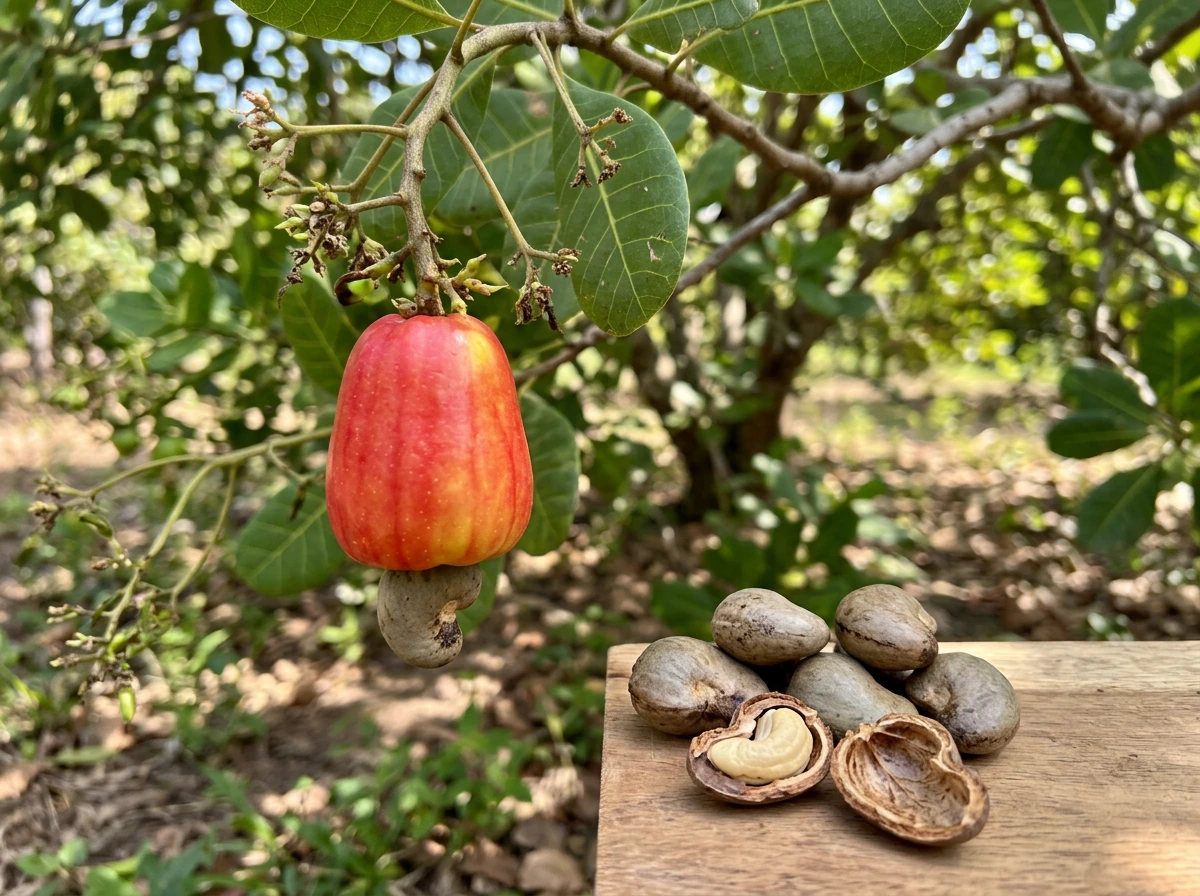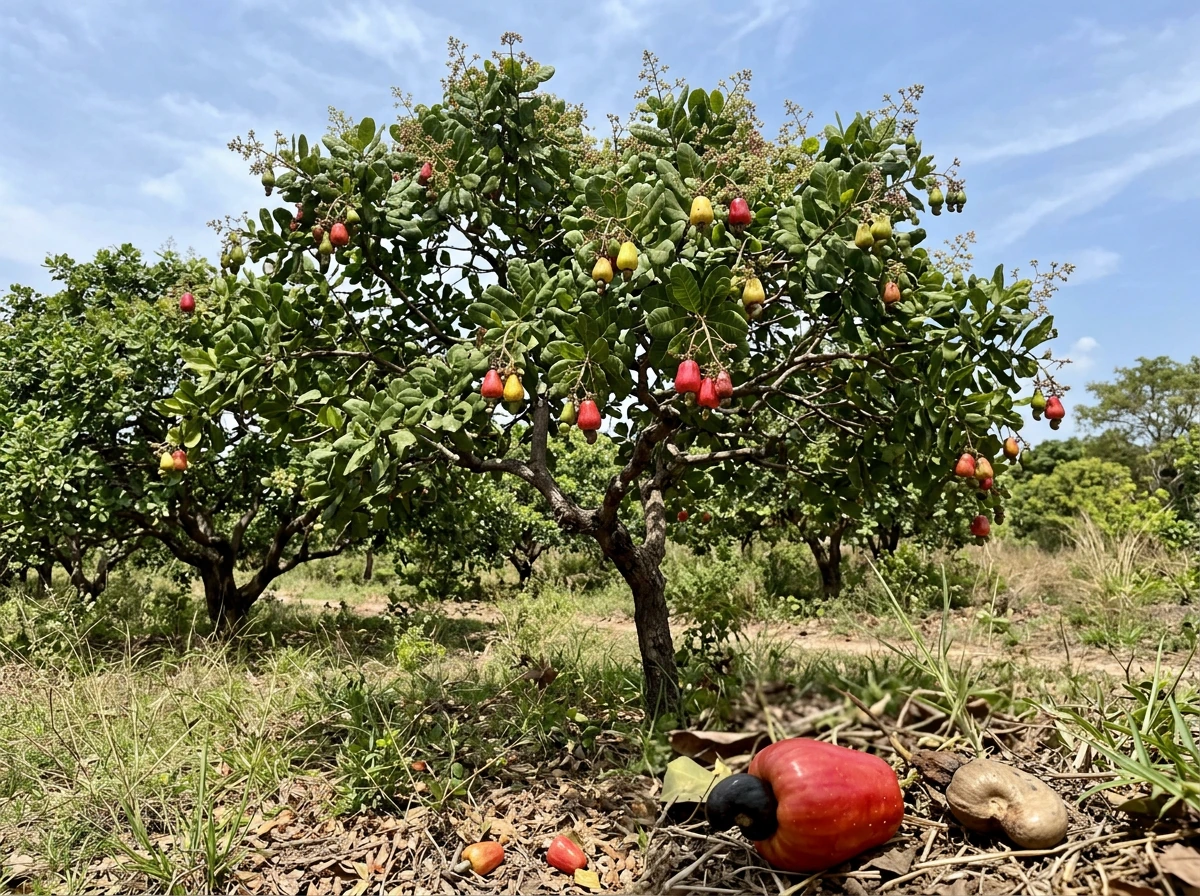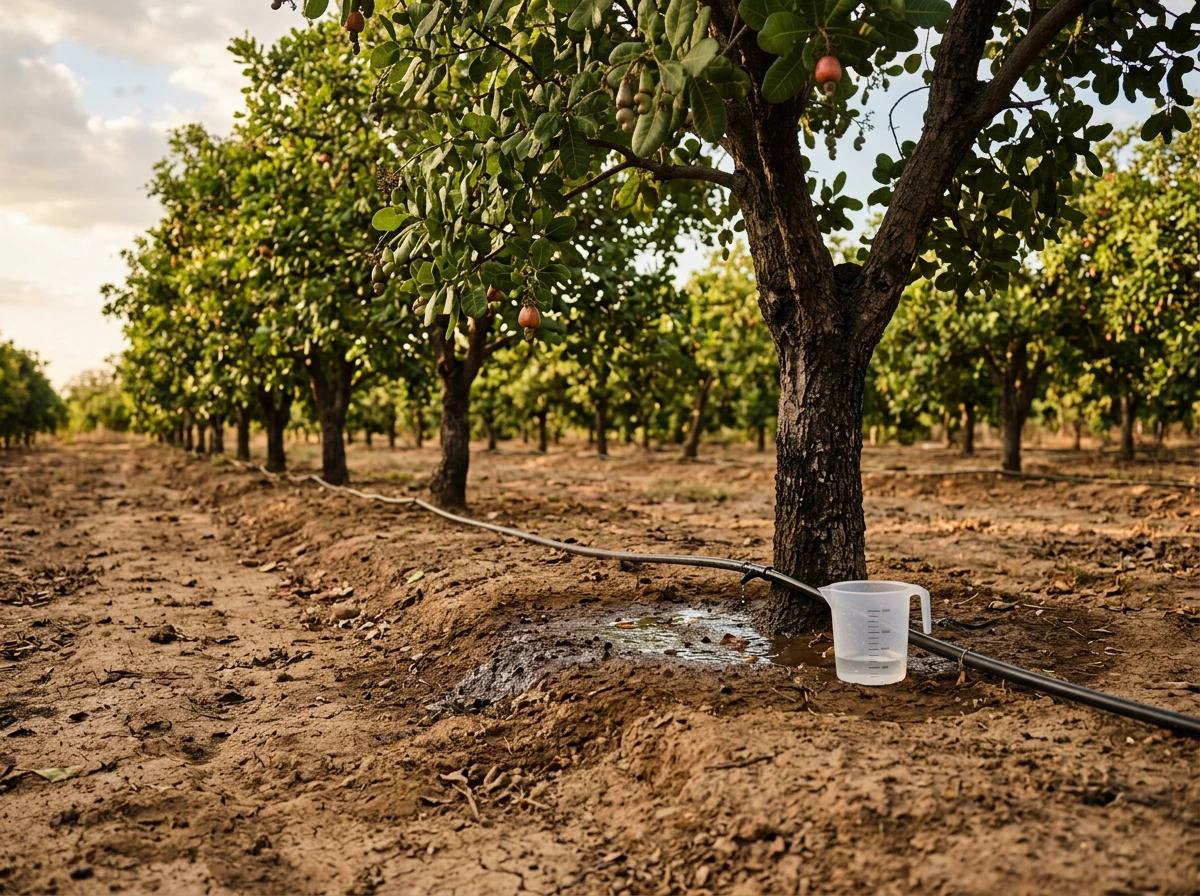
Cashews do not take a lot of water to grow compared to many other tree crops. They are naturally adapted to tropical and subtropical climates with a pronounced dry season, and mature trees can get through extended dry spells without any supplemental irrigation at all. That said, the amount of water a cashew tree actually needs varies quite a bit depending on the growth stage, soil type, drainage, and where you are growing it. If you are wondering how does cashew nut grow, it helps to know the tree’s water needs because moisture affects growth and fruiting. The short answer: established cashew trees are relatively drought-tolerant, but young trees in their first three years need consistent moisture to get established, and even mature trees benefit from irrigation during critical flowering and fruit-set periods if rainfall is insufficient, so understanding what nut takes the most water to grow and their growth needs helps you water at the right times. what nut takes the most water to grow do cashews grow on apples And if you’re curious about the structure of the fruit, see do cashews grow in a shell. how much water does it take to grow a cashew. how many cashews grow on a tree
Do Cashews Take a Lot of Water to Grow?
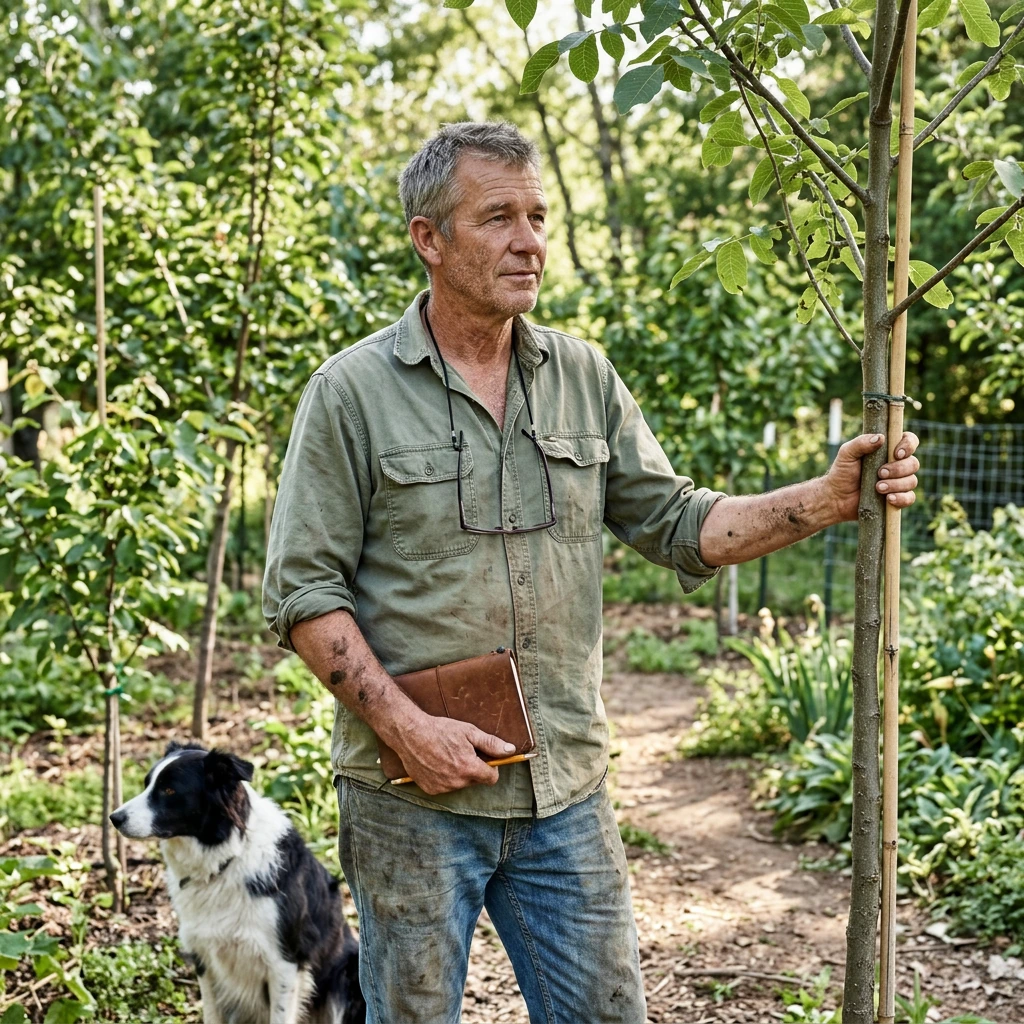
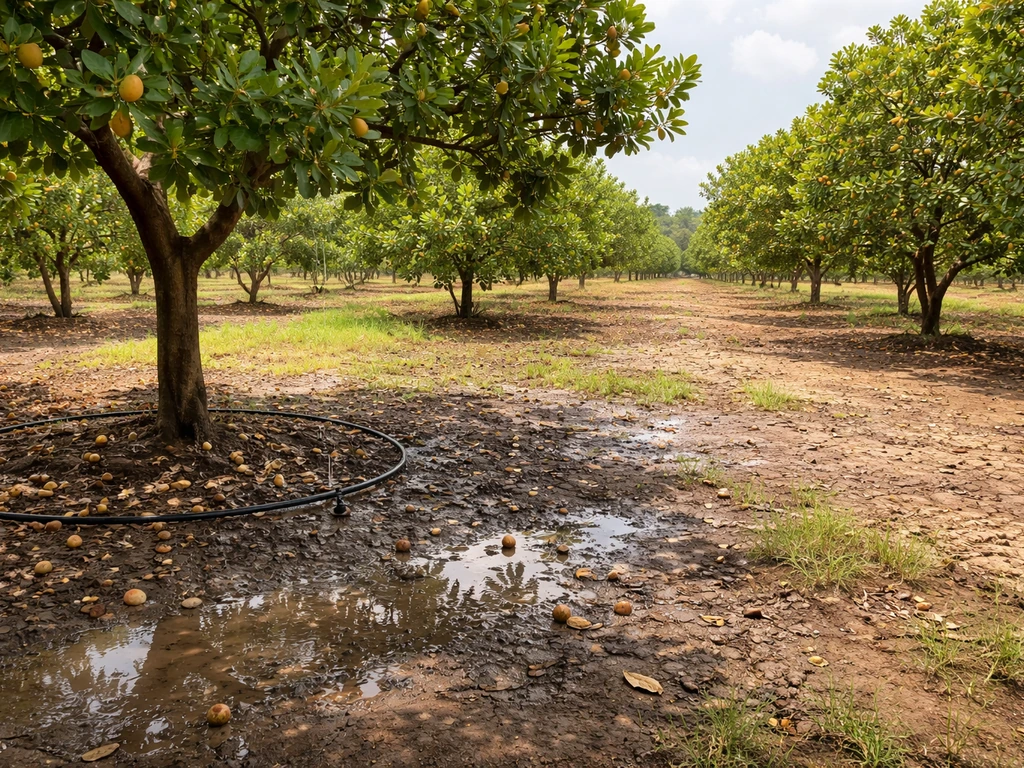
Cashew tree water needs in plain terms
To put cashew water use in perspective, the tree's annual rainfall range sits between roughly 750 mm and 1,600 mm (about 30 to 63 inches), which is moderate by tropical standards. For comparison, that puts cashews closer to the drier end of what tropical tree crops require. Some classification systems allow for rainfall up to 4,000 mm in areas where drainage is excellent, but that is the outer edge, not the sweet spot.
What makes cashew interesting is that more water is not always better. The tree actually needs a dry season to flower and produce well. Continuously wet conditions with no pronounced dry period tend to suppress flowering and create conditions that favor root disease. So when someone asks whether cashews take a lot of water, the honest answer is: they need enough moisture to establish and to support fruit set, but they are built for seasonality, not constant irrigation.
Rainfall vs irrigation: how much water cashews actually require
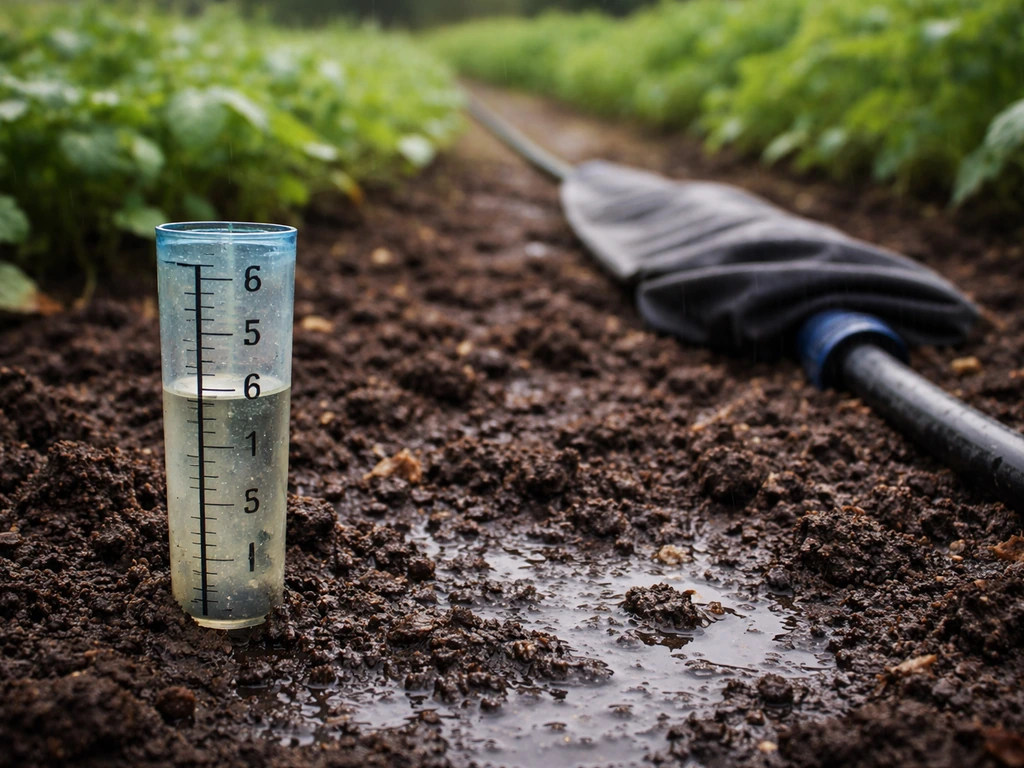
In their native tropical wet-dry climate, cashews are almost always grown rainfed. The wet season supplies the bulk of their annual water needs, and the dry season triggers flowering. That system works well in places like India, Brazil, Vietnam, and parts of East Africa where rainfall patterns naturally align with what cashew trees want.
Supplemental irrigation becomes necessary when that natural pattern breaks down, either because rainfall is lower than usual during a critical growth window, or because you are growing cashews somewhere outside their ideal range. Here are the concrete irrigation benchmarks that field advisories use:
- Young trees in their first dry season: approximately 20 litres per tree, twice a week (Queensland guidelines for newly established trees).
- Supplemental irrigation during moisture-stress periods (e.g., January through May in India): around 200 litres per plant once every 15 days when rainfall is deficient.
- Mature orchard trees under drip irrigation during fruit development: approximately 30 litres per tree per day as a managed supplemental rate.
- Home growers with young trees (under 4 years): water once a week during any prolonged hot, dry period of 5 or more days with little to no rainfall.
Those numbers vary widely because conditions vary widely. A young tree in sandy soil in a hot, dry climate will need more frequent watering than the same-aged tree in loamy soil in a humid subtropical climate. The figures above are useful starting points, not fixed prescriptions.
Soil, drainage, and drought tolerance (why "water use" depends on conditions)
Cashew trees have a genuinely useful drought adaptation: their root systems are capable of drawing water from deeper soil layers as surface moisture drops. This means a tree growing in deep, well-drained soil with good water-holding capacity at depth can handle dry spells far better than the same tree in shallow or compacted soil. The amount of water a cashew needs is not just about rainfall or irrigation volume, it is about how much usable water the soil can store and supply to the roots between rain events.
Drainage is where most home growers get into trouble. Cashews are extremely sensitive to waterlogging. Poor drainage does not just slow growth; it actively damages the root system and can kill trees. This is counterintuitive when people think about "water needs," but giving a cashew tree too much water, or trapping water around its roots, is at least as harmful as underwatering. If your soil has any tendency to hold standing water, drainage becomes the most important water-related factor to manage, not irrigation volume.
As a practical rule: water moves through the soil profile faster in sandy or gravelly soils, which means those soils require more frequent irrigation but also drain freely. Heavy clay soils hold more water but drain slowly, creating waterlogging risk. Cashews prefer well-drained sandy loam or loamy soils. If you are on heavier soil, you will need to manage drainage actively before worrying about irrigation scheduling.
Growth stage differences: seedlings vs established trees
Water requirements are not constant across the life of a cashew tree. This is one of the most important things to understand before you plant, because the mistakes people make at establishment often trace back to not knowing how different young and mature trees are in terms of water management.
Seedlings and young trees (years 1 to 3)
Young cashew trees have shallow, undeveloped root systems. They cannot access deeper soil moisture the way established trees can, so <span>They are much more vulnerable to dry spells</span>. During the first dry season after planting, consistent supplemental watering is essential. The Queensland guideline of 20 litres twice a week is a sensible benchmark for this stage, though you should adjust based on how hot and dry conditions are. In Florida-type subtropical conditions, once-weekly watering during hot, dry stretches of 5 or more days is the standard recommendation from extension advisories. The goal at this stage is to keep the root zone consistently moist without allowing the soil to dry out completely between waterings.
Established trees (year 4 and beyond)
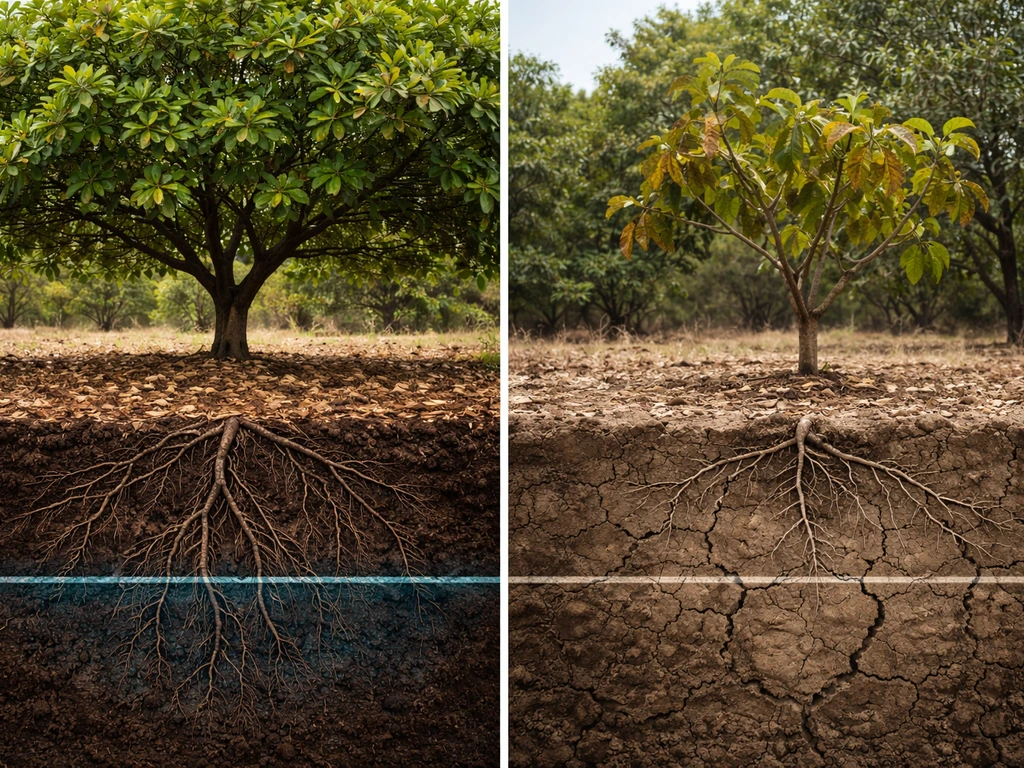
Once a cashew tree passes the four-year mark, its water needs drop significantly. Established trees in suitable climates often need no supplemental irrigation at all outside of very prolonged droughts. In regions with reliable wet seasons, rainfall alone is usually enough to carry the tree through the year. Irrigation becomes beneficial mainly during two windows: the flowering and fruit-set period (typically the transition from dry to wet season) and any sustained hot, dry stretch during spring and summer. Even then, the intervention is measured and targeted, not ongoing.
One detail that matters for yield: moisture stress during flowering and early fruit development (roughly January through May in Indian production zones) directly reduces fruit set and ultimately how many cashews the tree produces. If you are growing for production rather than just curiosity, providing supplemental irrigation during this window, even at moderate rates, pays dividends in crop size. If you want to learn more about how the fruiting structure develops, it connects closely to understanding how the cashew apple and nut form together during this period.
Climate and regional suitability (where cashews thrive without heavy watering)
Cashews are fundamentally a tropical wet-dry tree. They thrive in climates where a warm, wet growing season is followed by a distinct dry season, roughly 4 to 6 months of reduced rainfall. This pattern matches large parts of South and Southeast Asia, coastal Brazil, East Africa, and the northern portions of Australia. In these regions, rainfall-supported cultivation works well and irrigation is only a backup tool during unusually dry years.
Outside these natural zones, cashew cultivation becomes increasingly irrigation-dependent. In subtropical locations like South Florida or similar climates, cashews can grow and produce, but growers need to be more active about managing water during dry stretches, especially for young trees. The trade-off is that these areas often have predictable dry seasons too, just with less total rainfall to draw on.
Cashews are classified as tolerant of tropical wet-dry, steppe and semi-arid, and subtropical dry summer and winter conditions. What they do not tolerate well is continuously wet, humid conditions without a dry break. This is why growing cashews in humid tropical zones with year-round rainfall often produces poor flowering and disease pressure even when water is abundant.
| Climate Type | Rainfall Pattern | Irrigation Need | Suitability |
|---|---|---|---|
| Tropical wet-dry (e.g., India, Brazil, East Africa) | 750–1,600 mm with clear dry season | Low to none for established trees | Ideal |
| Semi-arid subtropical (e.g., northern Australia) | 500–900 mm, variable dry season | Moderate during establishment and dry spells | Good with management |
| Subtropical humid (e.g., South Florida) | Year-round rain, mild dry season | Regular in early years, occasional for mature trees | Workable but requires attention |
| Humid tropical (year-round rain, no dry season) | High and consistent | Not about quantity, tree needs dry period to flower | Poor, limited productivity |
| Temperate or semi-arid without warm summers | Variable | High supplemental irrigation needed, marginal climate | Not recommended |
Practical watering schedule and best practices for home growers
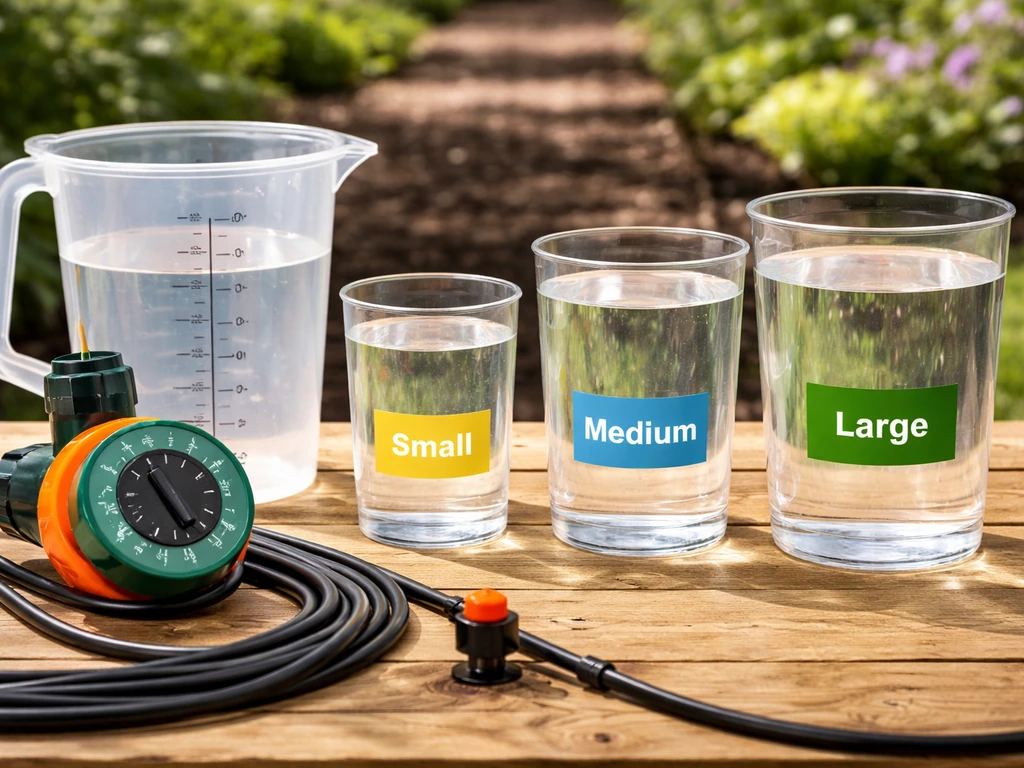
If you are growing cashews at home, here is how to approach watering practically across the life of the tree.
At planting
Before you even think about a watering schedule, sort out drainage. If your soil drains slowly or you are in a low-lying area, plant your cashew on a raised mound, at least 60 to 90 cm high and 120 to 180 cm across. This single step does more to prevent root problems than any irrigation adjustment you can make later. After planting, water thoroughly to settle the soil around the roots, then begin your regular schedule.
Years 1 to 3 (establishment phase)
- Water young trees twice a week during their first dry season, applying roughly 20 litres per tree per session.
- During hot, dry periods with no significant rainfall for 5 or more consecutive days, water once a week even outside the dry season.
- Check soil moisture before each watering. The top 5 to 10 cm of soil should be allowed to partially dry out between waterings, but should not reach the point where the soil pulls away from the sides of the planting hole.
- Reduce watering frequency as the rainy season returns. Do not maintain an irrigation schedule through the wet season unless rainfall is genuinely inadequate.
- Stop or heavily reduce irrigation as you approach harvest to avoid fruit quality problems from excess soil moisture.
Year 4 and beyond (established trees)
- For most growers in suitable climates, established cashew trees need supplemental irrigation only during prolonged dry spells in spring and summer.
- If you want to support flowering and fruit set, provide supplemental water during the dry-to-wet transition period, especially if January through April has been particularly dry.
- A drip rate of around 30 litres per tree per day is a practical benchmark for supplemental irrigation during active fruit development in mature trees.
- For rain-deficit periods, 200 litres per tree once every 15 days is a reasonable schedule when rainfall has been significantly below average.
- Use a tensiometer at root depth if you want to be precise. A reading of 30 centibars or higher indicates the tree is starting to experience water stress and irrigation is warranted. Below that threshold, hold off.
What to monitor beyond a fixed schedule
A calendar-based watering schedule is a starting point, not a substitute for observation. The three things worth tracking consistently are: rainfall over the past 7 to 14 days (if you have received more than 25 mm in that window, you almost certainly do not need to irrigate), soil moisture at root depth (either by feel or with an inexpensive tensiometer), and heat load (sustained temperatures above 35°C with low humidity accelerate moisture loss significantly and may trigger earlier intervention). UC ANR and UC IPM note that young fruit and nut trees may need about 3 to 5 gallons per week and recommend deep, infrequent watering that wets several feet into the soil. These three checks together will tell you more than any fixed schedule can.
One last thing worth emphasizing: the most common watering mistake with cashews is not underwatering, it is overwatering young trees out of anxiety during establishment. Cashews are not ferns. They evolved in environments that regularly go dry, and their root systems expect periods of reduced moisture. Consistent but not excessive watering during the first three years, combined with good drainage from day one, is the formula that actually works.
FAQ
How often should I water cashews if I live in a hot, dry area? (Is daily watering needed?)
Not necessarily. Established cashews are usually rainfed in their native wet-dry climates, and too much irrigation during the wettest weeks can actually reduce flowering. If rainfall is already keeping the root zone moist, you should focus any supplemental water on the transition into the dry season (flowering and early fruit set), rather than watering on a routine calendar.
What signs mean I’m watering too much, not too little, with cashew trees?
For young trees (first 3 years), aim for “consistent root-zone moisture” instead of a fixed frequency. If the top few inches dry out quickly in sandy soil, you may need more frequent watering than a guideline suggests, but you should still avoid letting water pool at the base. A simple check is to water, then wait until the soil at root depth starts to dry, using a tensiometer if you want a more precise trigger.
My cashew is planted in heavy clay. Should I water more to make up for slow drainage?
Overwatering is commonly mistaken for drought stress. Watch for yellowing leaves plus consistently wet soil or a sour smell, slow growth, and dieback of fine roots when you inspect the drainage area. Because cashews are sensitive to waterlogging, the most effective “fix” is improving drainage (raised mound, better soil mix, avoiding low spots), not increasing irrigation.
What’s the best way to tell when irrigation is actually needed, beyond a watering schedule?
No. Heavy clay often holds water longer, so the goal is to prevent standing or saturated conditions. If you are on clay, prioritize raised beds or mounded planting and a soil structure that drains well (for example, amending to improve porosity). Then water based on soil dryness, not on how dry the air feels, since the root zone may stay moist for longer than you expect.
Do cashews need extra water during flowering even if it rains some days?
In addition to rainfall totals, monitor soil moisture at the depth where most active roots sit. If you want a low-tech method, use a soil probe or dig a small test hole and check for moisture continuity, not just surface dampness. If you are using a tensiometer, follow the same logic: irrigate when it indicates the root zone is approaching the dryness threshold you see during successful growth, and stop well before saturation.
Can I overcompensate by irrigating during the dry season to boost yield?
Yes, but only when rainfall is insufficient to maintain moisture during that window. Intermittent showers can keep the surface wet while the root zone actually dries between rain events, especially with heat and wind. If you notice flowering starts and soil moisture drops faster than usual during dry stretches, a targeted irrigation helps stabilize fruit set without keeping conditions continuously wet.
How does mulching change cashew water needs?
You can, because cashews generally perform best with a real dry break that supports flowering. The “right amount” is enough to prevent severe moisture stress, not enough to mimic constant wet-season conditions. If irrigation eliminates the dry season entirely, you may reduce flowering or increase root-disease risk, especially in poorly drained soils.
If I’m growing cashews in containers, how do water needs differ from in-ground trees?
Mulch reduces evaporation and can extend the time between irrigations, particularly in sandy soils. However, thick mulch piled against the trunk can keep the collar area humid and worsen waterlogging risk. Use mulch to cover the root zone, keep it pulled back from the trunk, and still rely on soil-root-zone checks to prevent the “looks dry, but soil is still wet” trap.
Should I fertilize differently depending on whether I’m irrigating cashews?
Container cashews dry out faster and cannot access deep stored moisture, so they behave more like “young tree” conditions for longer. Use a well-draining mix, ensure the pot has ample drainage holes, and water based on root-zone moisture rather than plant age alone. Because waterlogging is still a risk (especially with heavy mixes or saucers that hold water), empty any runoff and avoid letting the container sit in trays with standing water.
What’s the most common watering mistake people make with cashews at home?
Yes, but indirectly. High nitrogen and heavy growth can increase water demand, so if you irrigate more than normal, you may encourage vegetative growth at the expense of fruit set. During the flowering and early fruit development window, avoid “growth pushing” excesses and keep moisture management consistent enough to prevent stress, since moisture dips during this period reduce fruit set.