Yes, you can grow a walnut tree in a pot, but you need to go in with realistic expectations. A container walnut can live for several years, stay manageable with regular pruning, and even produce a small crop eventually, but it will never be a long-term substitute for a tree planted in the ground. The root system, the eventual size, and the sheer water and nutrient demands of a walnut mean that container culture is best thought of as a medium-term project or a way to grow a walnut on a patio, balcony, or in a climate where ground planting isn't an option. If you're fine with that, this guide covers everything you need to make it work.
Can You Grow a Walnut Tree in a Pot? How to Do It
Marcus Hendricks
25 Apr 2026
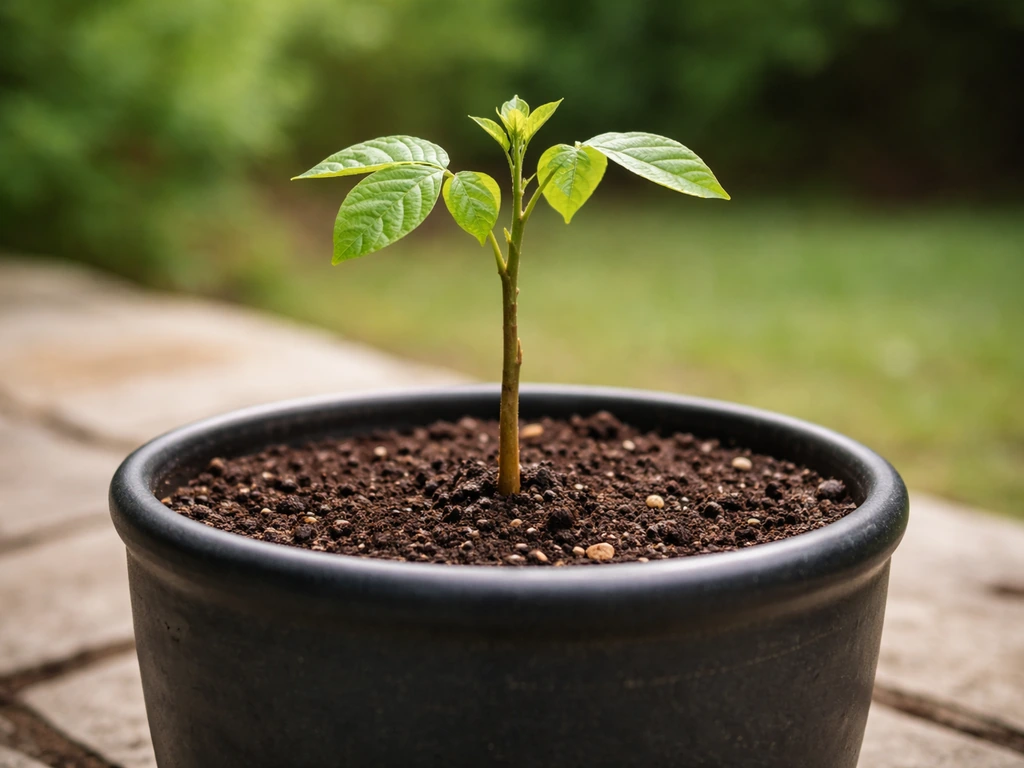
Which walnut species actually works in a container
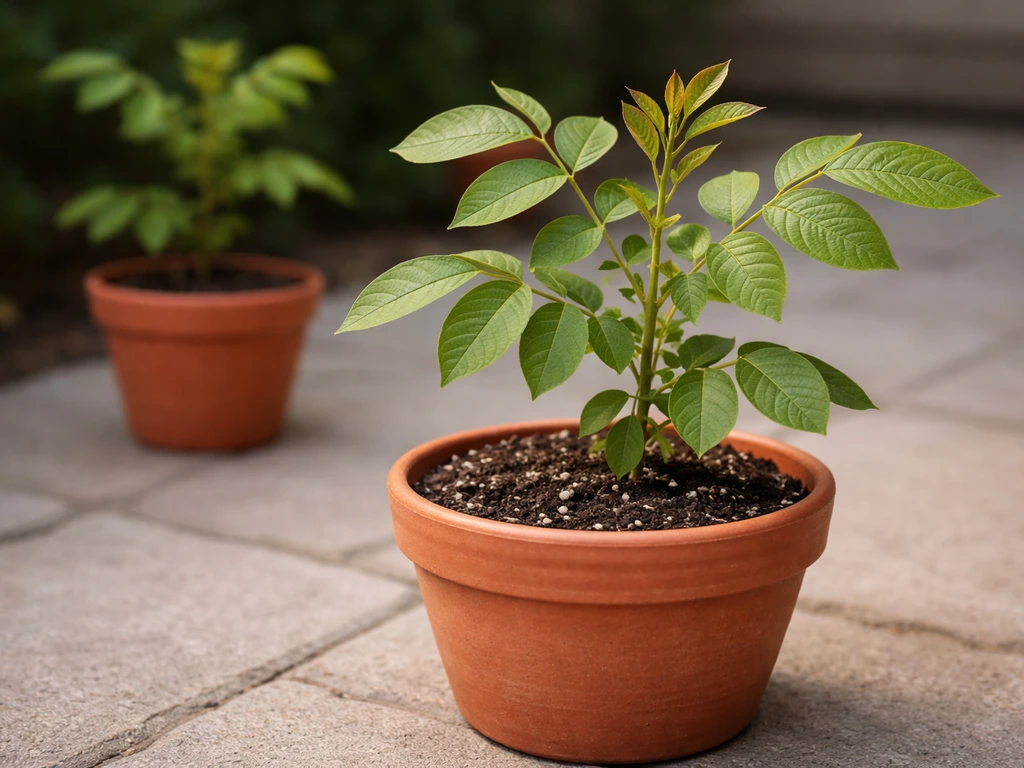
Not all walnuts behave the same way in a pot. Species and cultivar selection is probably the single biggest decision you'll make before you even buy a container.
English (Persian) walnut (Juglans regia)
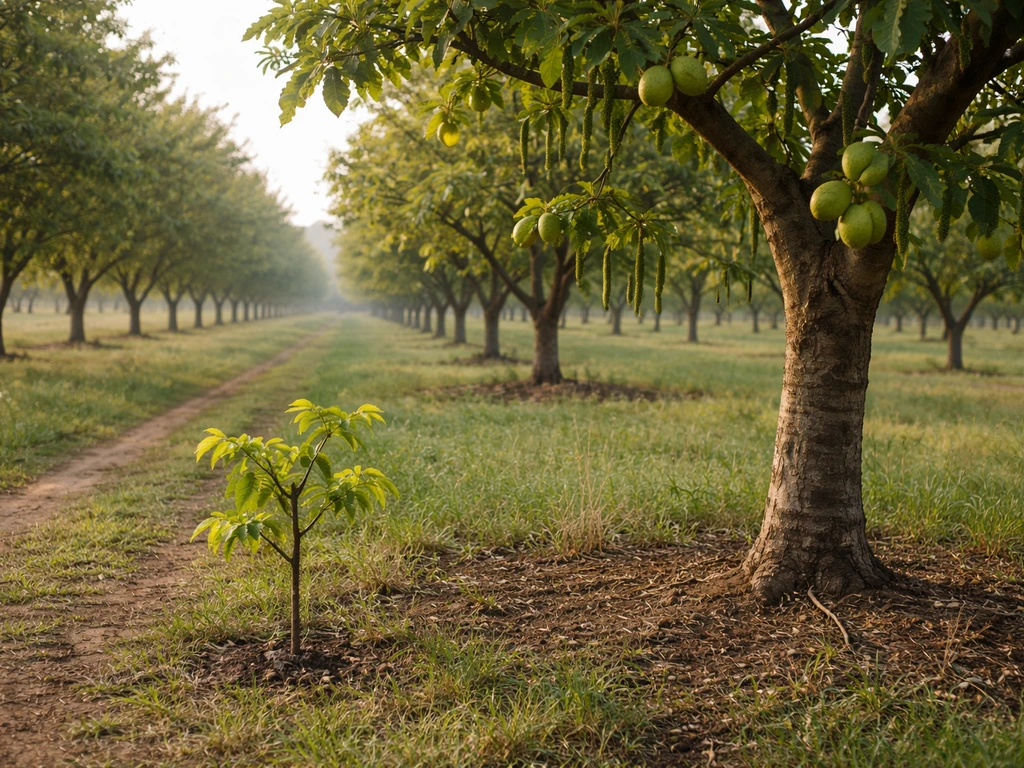
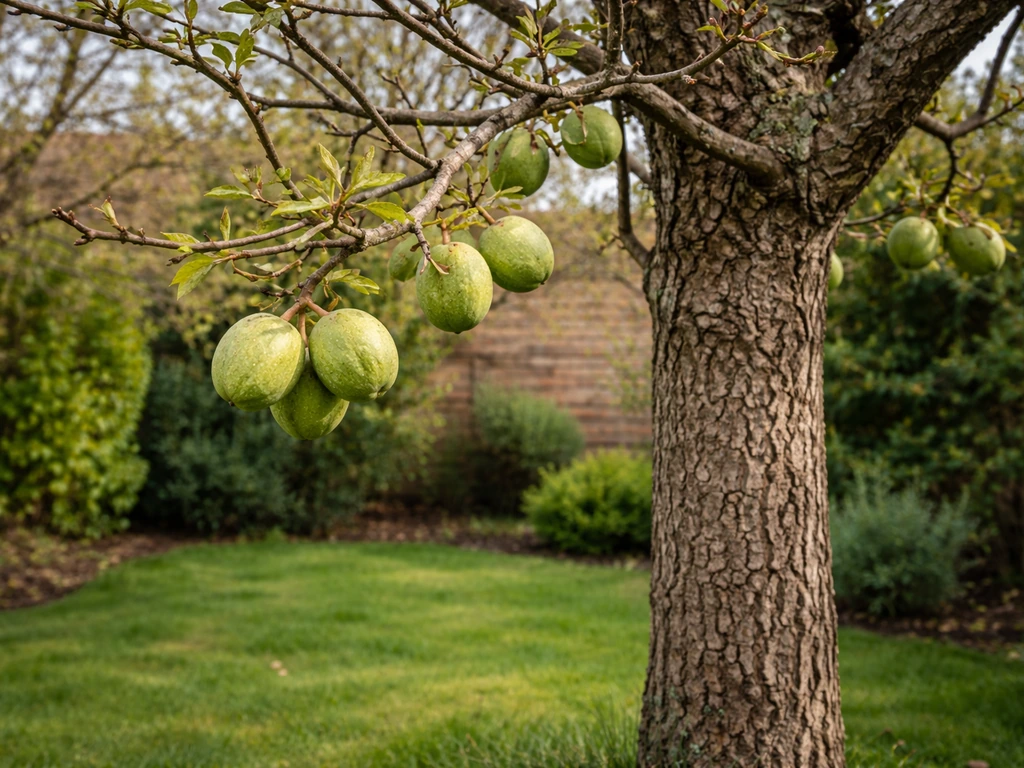
This is the best starting point for container growing. Juglans regia is hardy in roughly USDA Zones 4 to 8 (some sources list Zone 3 to 7 depending on the cultivar), and dwarf or semi-dwarf grafted cultivars like 'Franquette', 'Carpathian', or 'Broadview' grow more slowly than seedlings and can be kept to a workable size with annual pruning. Grafted trees also have a practical advantage: they can begin producing nuts in as few as 4 to 6 years, whereas seedling-grown trees may take 10 to 20 years to produce a meaningful crop. If fruiting is part of your goal, always source a grafted named cultivar rather than growing from seed.
Black walnut (Juglans nigra)
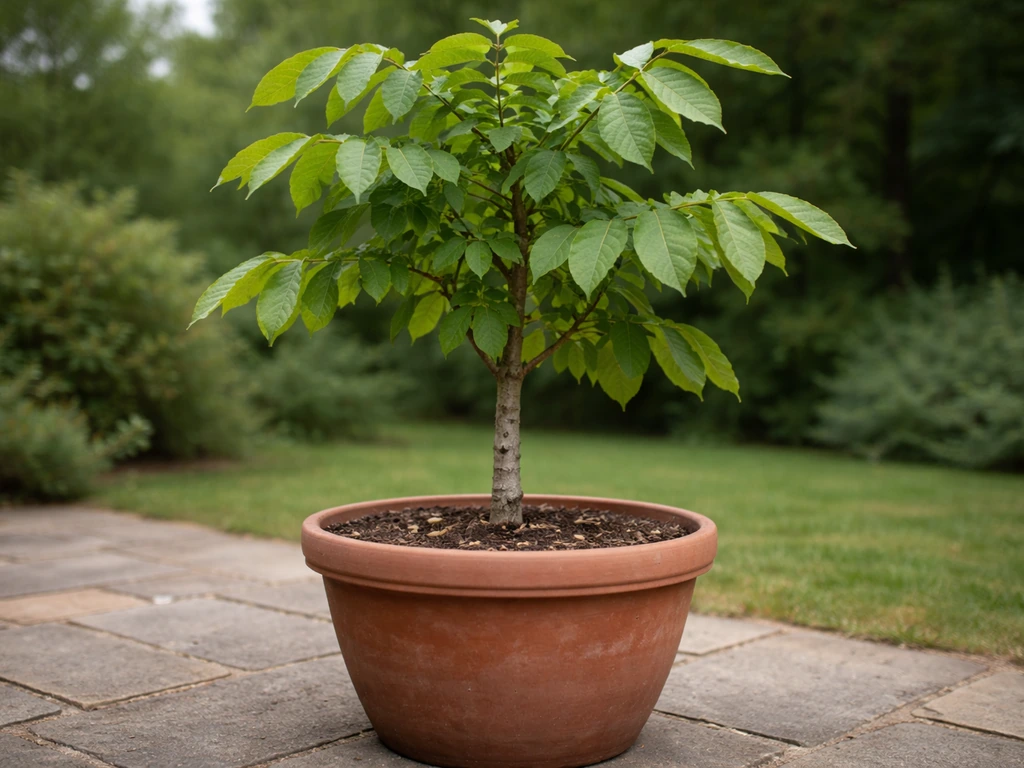
Black walnut is native to eastern North America and is a vigorous, large-growing tree that is genuinely difficult to manage long-term in a container. Its taproot is aggressive and deep, and it produces juglone, a chemical compound that can harm other plants nearby. In a container context, black walnut will outgrow its pot faster, is harder to keep productive at small size, and is a less practical choice unless you specifically want it for ornamental purposes or a short-term specimen. That said, it's hardy in Zones 4 to 9, so it can handle cold if you provide the right winter protection.
Heartnut and Carpathian types
Heartnut (Juglans ailantifolia var. cordiformis) and some Carpathian strains of J. regia are worth considering if you're in a colder region. They tend to be a bit more compact and are noted for cold hardiness. If you're in Zone 4 or 5, these are worth investigating at your local nursery.
| Species/Type | USDA Zones | Container Suitability | Time to First Nuts | Notes |
|---|---|---|---|---|
| English/Persian walnut (J. regia) | 4–8 | Best choice | 4–6 years (grafted) | Grafted dwarf cultivars available; manageable growth |
| Carpathian walnut | 3–7 | Good | 4–8 years | Cold-hardy strain of J. regia; good for northern growers |
| Heartnut (J. ailantifolia var. cordiformis) | 4–8 | Good | 5–8 years | Slightly more compact; mild-flavored nut |
| Black walnut (J. nigra) | 4–9 | Difficult | 10–20 years | Aggressive taproot; juglone issues; harder to contain |
Starting from a nut vs. buying a seedling
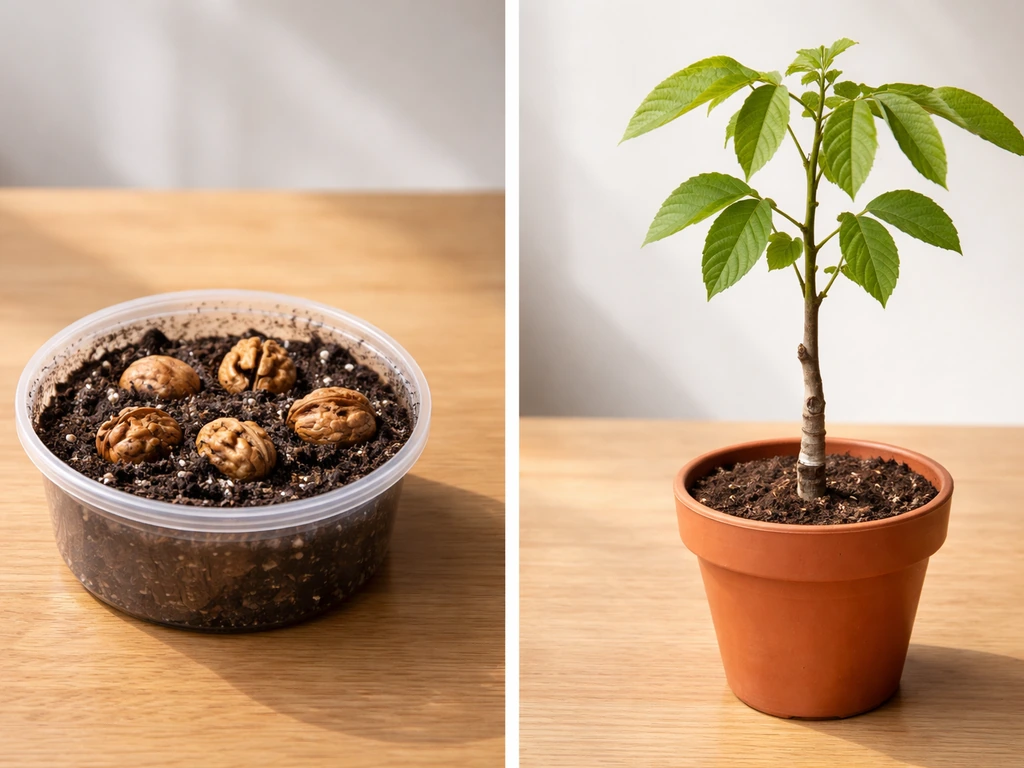
You have two realistic starting points: grow from a nut (seed) or buy a nursery-grown tree. Each has tradeoffs.
Growing from a walnut
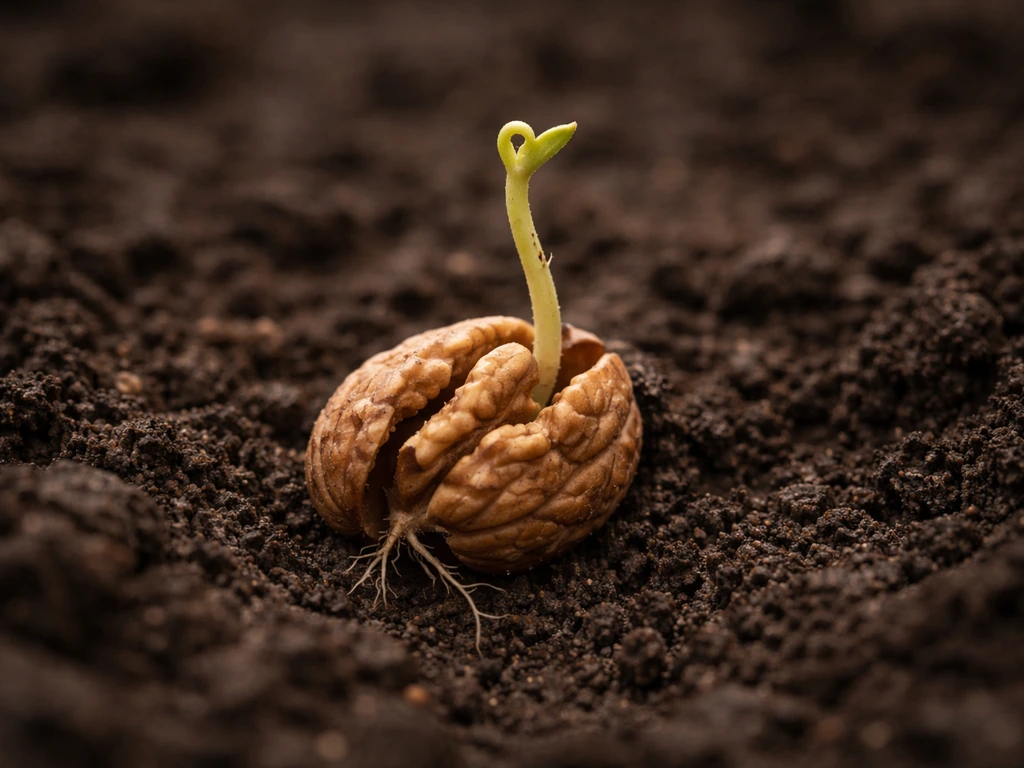
Walnuts have a hard dormancy that requires cold-moist stratification before they'll germinate. The general guidance is 1 to 5°C (roughly 34 to 41°F) for about 90 to 120 days, and USDA Forest Service data backs this up, noting approximately 100 days of cold stratification to overcome dormancy.
The simplest approach: collect fresh walnuts in autumn, remove the husk (wear gloves, the juglone stains), place the nuts in barely moist peat or sand in a sealed bag, and refrigerate them from October through January or February. Then plant them 2 to 3 inches deep in a deep pot or tall nursery container to accommodate the taproot. Germination can be uneven; some nuts may not sprout until the following spring even after stratification, so don't give up too quickly.
If you're sowing outdoors in autumn, nature does the stratification work for you, though squirrels can be a serious obstacle. For more detail on the germination process itself, the topic of growing a walnut tree from a walnut covers the full seed-to-seedling process in depth. If you want the full walkthrough, the guide on can you grow a walnut tree from a walnut explains the seed-to-seedling steps and timeline.
Buying a grafted tree
If you want any realistic chance of nuts within a decade, buy a grafted named cultivar from a reputable nursery. A 1- to 2-year-old grafted English walnut in a #5 (5-gallon) container is an ideal starting size. You skip the stratification process, you know the genetic traits of your tree, and you're starting from a tree that's already been selected for production. The cost is higher than growing from seed, but the time savings and predictability are worth it for most growers.
The container, soil mix, and watering setup
Choosing the right pot
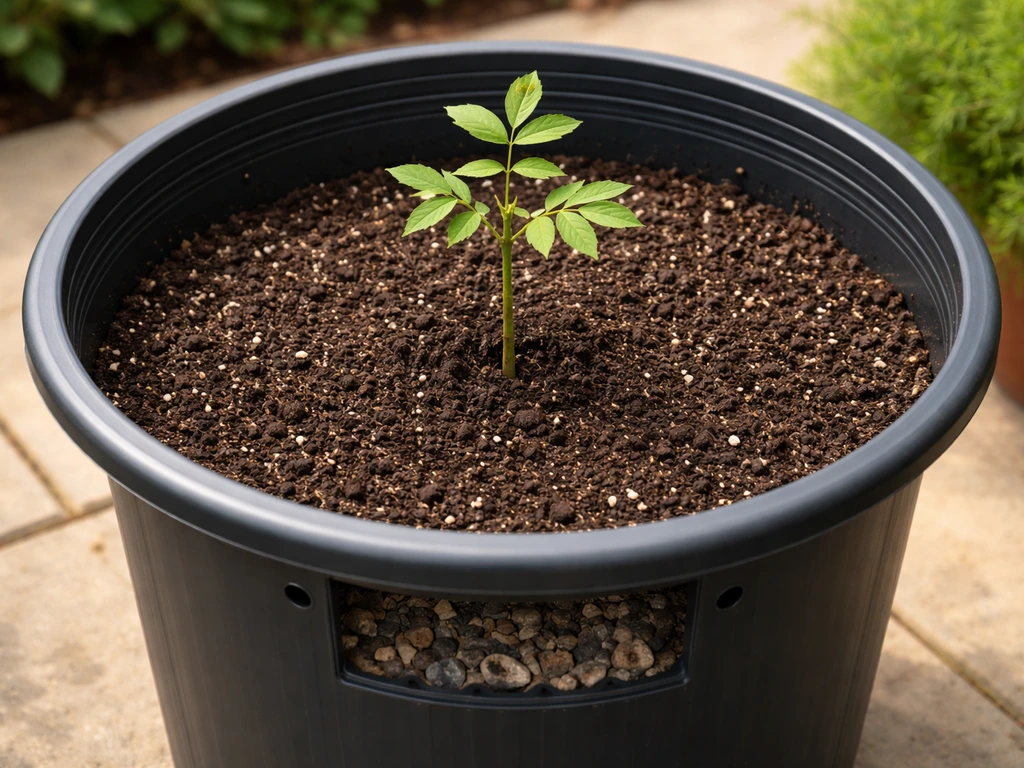
Walnuts have a strong taproot tendency, so the depth of the container matters more than the width. Start a young tree in a 10- to 15-gallon container that's at least 18 inches deep, and plan to move up to a 25- to 30-gallon container within 2 to 3 years. For a long-term container specimen, a 30- to 45-gallon wooden half-barrel or heavy-duty fabric pot works well.
Fabric pots have a real advantage here: they air-prune the roots, which prevents the circling root problem that's a well-documented issue in container-grown trees. Avoid thin-walled plastic pots for long-term growing since they offer minimal insulation and can crack during freeze-thaw cycles. Drainage holes are non-negotiable; a walnut sitting in waterlogged soil will develop root rot fast.
Soil mix
Don't use straight garden soil or cheap potting mix. Walnuts need excellent drainage combined with decent moisture retention. A good working mix is roughly 50% quality loam-based potting compost, 30% coarse perlite or horticultural grit, and 20% aged compost or well-rotted bark. This gives you drainage without drying out too fast. Aim for a slightly acidic to neutral pH, around 6.0 to 7.0. If you're in a region with alkaline tap water, pH management becomes important over time; periodic soil acidifier applications or rainwater use can help.
Watering
Container walnuts dry out much faster than ground-planted trees, especially in summer. During active growth (spring through early autumn), check the top 2 to 3 inches of soil every 2 to 3 days in warm weather and water thoroughly when it's dry. 'Thoroughly' means watering until it drains freely from the bottom, not a quick sprinkle. In hot weather, large containers may need watering every day. In winter, reduce watering significantly but don't let the root ball dry out completely, since desiccation in frozen or near-frozen containers is a real and underappreciated cause of winter death. A slow, light water every 2 to 3 weeks during dormancy in an unheated space is usually enough.
Fertilizing
Container growing depletes nutrients quickly because watering leaches them out. In spring, apply a slow-release balanced granular fertilizer (something like a 10-10-10 or 14-14-14 formulation) according to container size on the label. Follow up monthly through summer with a liquid balanced fertilizer at half strength. Stop feeding by late August to allow the tree to harden off before winter. Overfeeding nitrogen late in the season pushes soft growth that's vulnerable to frost damage.
Light, size control, and pruning
Walnuts need full sun, meaning at least 6 to 8 hours of direct sunlight daily. This is consistent across extension recommendations and is not negotiable if you want a healthy, productive tree. A shaded patio position will give you a leggy, weakly growing tree that's more susceptible to disease and won't fruit. Position your container where it gets the most direct sun available. South- or southwest-facing positions against a wall are ideal in most temperate climates.
Keeping size manageable is an ongoing job. Without pruning, even dwarf cultivars in large containers will outgrow a typical patio space within 5 to 7 years. Prune in late winter just before bud break. Remove crossing or inward-growing branches, and cut back the leader by one-third to control height. You can train container walnuts as an open-centered bush or a low modified central leader, both of which keep light penetrating through the canopy and the tree at a workable height of 6 to 10 feet. Avoid heavy summer pruning, as walnuts are prone to bleeding from cuts made when the tree is in full growth.
Keeping your tree alive through winter (and summer heat)
The real winter risk: frozen roots
In the ground, soil acts as insulation. In a pot, roots are separated from freezing air temperatures by only a few inches of container wall, and that changes everything. When a container root ball freezes solid, the roots can't take up water even when the top of the tree is losing moisture to wind, which causes desiccation injury that looks like drought stress.
In Penn State Extension’s discussion of winterkill mechanisms, desiccation is described as an abiotic winterkill type tied to moisture loss when conditions limit water availability desiccation injury that looks like drought stress. Extended freeze-thaw cycles also physically damage root cells.
Multiple extension sources including Penn State, NC State, and the University of Nevada, Reno all flag this as the primary way container trees are lost over winter.
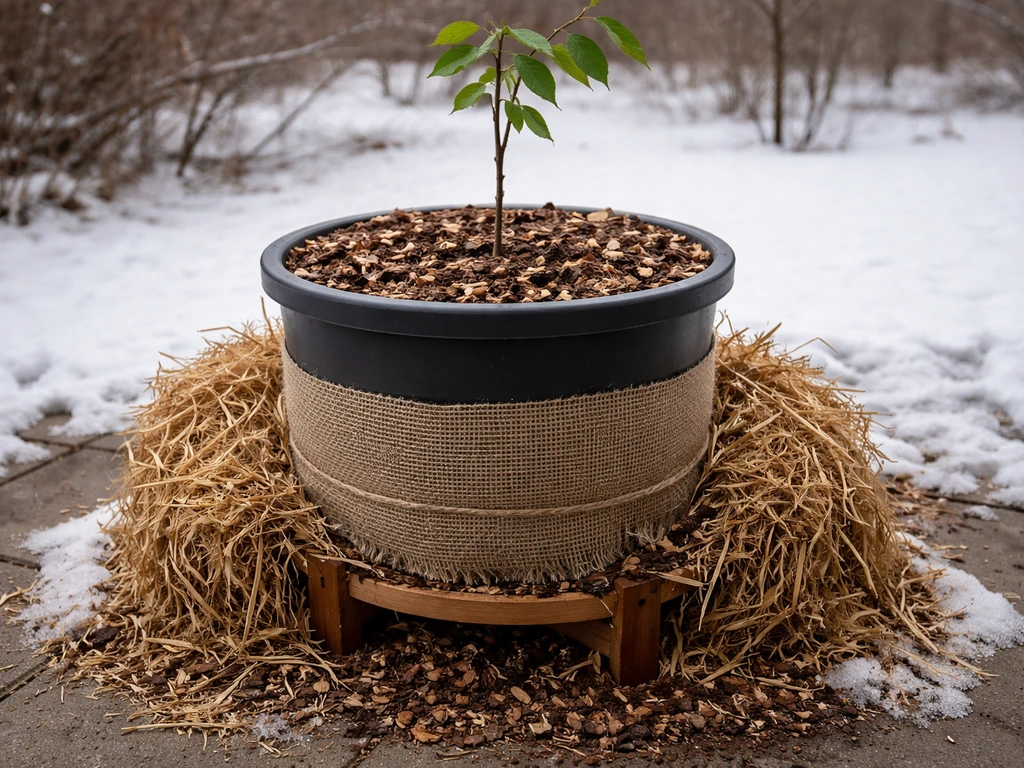
Your best strategies depend on how cold your winters get. If you're in Zone 6 or warmer, moving the container to a sheltered spot (against a south-facing wall, tucked into a corner) and wrapping the pot with burlap or bubble wrap is usually enough. If you're in Zone 4 or 5, the most reliable method is pot burial: sink the entire container into the ground up to its rim for the winter.
The University of Nevada, Reno Extension also recommends winter-root protection approaches such as considering root establishment before winter when planting container-grown trees in northern Nevada landscapes [pot burial: sink the entire container into the ground up to its rim for the winter](https://extension. unr. edu/publication. aspx?
PubID=2754). This gives the root ball the same insulation as ground-planted roots. Alternatively, store the tree in an unheated garage or shed that stays above freezing but doesn't get warm enough to break dormancy early. An unheated garage that stays between 25 and 40°F is ideal.
Check moisture every 2 to 3 weeks and water lightly if the soil is dry.
Summer heat management
In hot climates (Zone 7 and above), containers absorb a lot of radiant heat through their walls, and root zone temperatures can climb high enough to stress or kill roots. Use light-colored containers or wrap dark containers in reflective material. Standing the container in a shallow saucer of water during peak summer heat can help, though this isn't a substitute for proper watering. Moving the pot to a spot with afternoon shade during extreme heat waves (above 95°F) reduces heat load without depriving the tree of morning and mid-day sun.
Will you actually get walnuts, and when
This is the question most people care about most, and the honest answer is: maybe, eventually, and in modest quantities. A grafted English walnut cultivar in a large container with good care can begin producing nuts at 4 to 6 years from planting. Getting a meaningful crop from a container tree is harder because the tree's energy is divided between maintaining root health in a limited space and supporting nut production. Don't expect bushels; expect a light crop that you'll appreciate all the more for the effort.
Pollination: do you need two trees?
Walnuts are technically self-compatible, meaning a single tree can pollinate itself. However, walnut flowers are dichogamous: the male (catkin) and female flowers on the same tree often don't open at the same time, which means self-pollination is limited in practice. For reliable nut set, having a second tree of a different cultivar nearby is genuinely helpful. The cultivars should overlap in their flowering timing; 'Franquette' and 'Hartley' are a classic pair, for example.
If you only have room for one container tree, you'll likely get some nuts in years when the timing works out, but two trees gives you much better odds. Your neighbors' trees or wild walnuts nearby can also act as pollinators if they're within a few hundred feet.
Realistic fruiting expectations by climate
In Zones 5 to 7, container English walnuts can produce reliably if given full sun and proper winter protection. In Zone 4, late spring frosts are the biggest threat to flowers and young nuts; avoid placing your tree in a frost pocket and consider temporary frost fleece during late-season cold snaps. In Zone 8 and warmer, many English walnut cultivars don't get enough winter chill hours to break dormancy and flower properly, so check cultivar-specific chill hour requirements before buying. Low-chill cultivars like 'Chandler' (developed in California) are better suited to warm-winter climates.
Troubleshooting common container walnut problems
- Wilting despite regular watering: Check that drainage holes aren't blocked. Soggy, anaerobic soil causes root rot that looks exactly like drought stress. If roots are brown and mushy rather than firm and white, you have root rot. Repot into fresh mix, trim dead roots, and improve drainage.
- Leaves scorching or dropping in summer: Usually a combination of heat stress and inconsistent watering. Large containers in full sun on hot paving can superheat the root zone. Use a reflective pot wrap and water more frequently; consider an afternoon shade buffer during heat waves.
- Yellowing leaves (chlorosis): In alkaline conditions or after prolonged container growing, iron and manganese become unavailable. Treat with a chelated iron drench and check your watering source. Hard water raises pH over time.
- Leggy, sparse growth with weak branches: Almost always a light problem. Relocate to a sunnier position. A walnut getting fewer than 6 hours of direct sun will grow poorly and won't fruit.
- No nuts after several years: Check pollination first. If you only have one tree, consider adding a second compatible cultivar. Also confirm the tree is getting full sun, adequate water, and appropriate fertilizer. A tree under chronic stress won't fruit.
- Winter dieback: The top few inches of branches die back after winter. This is usually frost damage from a late freeze hitting new growth, or root freeze damage. Improve winter root protection (pot burial or garage storage) and prune dead wood back to healthy tissue in spring.
- Root circling or pot-bound roots: When you repot, if roots are circling the inside of the container, tease them out or score them vertically before repotting into a larger container. Circling roots eventually girdle the tree.
Your next-step checklist
- Choose your species and cultivar: English walnut grafted onto a semi-dwarfing rootstock is the most practical choice for most growers. If you're in Zone 4 or colder, look specifically for Carpathian strains.
- Source a grafted tree from a reputable nursery rather than growing from seed if fruiting is a priority. If you want to grow from seed, collect fresh nuts this autumn and plan for a full winter of cold stratification in the fridge.
- Get the right container: start with a 15-gallon, 18-inch-deep pot with drainage holes. Plan to upsize to 30 to 45 gallons within 2 to 3 years. Fabric pots are worth the investment for root health.
- Mix a well-draining growing medium: 50% loam-based compost, 30% perlite or coarse grit, 20% aged compost. Don't use straight potting mix from a bag.
- Position in full sun (6 to 8 hours minimum). South- or southwest-facing wall positions are ideal in the northern hemisphere.
- Set up a watering routine: check soil every 2 to 3 days in summer, water deeply when the top 2 to 3 inches are dry. Taper off in autumn, water lightly every 2 to 3 weeks in winter.
- Plan your overwintering strategy now based on your zone: pot burial for Zone 5 and colder, sheltered corner plus insulation wrap for Zone 6, shade and heat management for Zone 8 and warmer.
- If fruiting is a goal, consider sourcing a second compatible cultivar for cross-pollination.
- Prune in late winter to control size and shape. Target 6 to 10 feet of height for a manageable container specimen.
- Feed with slow-release balanced fertilizer in spring, liquid feed monthly through summer, and stop all feeding by late August.
Growing a walnut in a pot is genuinely possible, but it rewards people who plan ahead rather than improvise. The trees themselves are tough and adaptable, and watching a walnut grow from a nut to a fruiting tree is one of the more satisfying long-term projects in container gardening.
Understanding how walnuts grow and what drives nut formation is worth exploring further if you want to get the most from your tree, and if you're thinking about companion planting around a future in-ground tree, knowing what vegetables and plants tolerate or avoid juglone will save you some frustration down the road.
If you’re planning companion planting around a walnut tree, a key question is what vegetables will grow near walnut trees without being overwhelmed by juglone or root competition. When you plan your garden around a walnut tree, it's also worth thinking about what will grow under a walnut tree without getting overwhelmed by the juglone effect.
FAQ
Can you grow a walnut tree in a pot if you start from a store-bought nut you ate or shelled at home?
Usually not successfully. Eating nuts are often heat-treated and may be non-viable, and even viable nuts require cold-moist stratification plus fresh timing. If you want to try from seed, use nuts intended for planting (fresh, in-shell) and stratify them as the guide describes.
How do I tell whether a stratified walnut seed is still alive if it does not sprout right away?
Do a simple viability check before discarding. After stratification, examine for firmness and no foul odor, then plant and wait through the first spring flush. If it stays firm but still fails to sprout, it may still break dormancy later, so re-check and allow a longer window rather than replacing immediately.
Is it better to grow a container walnut from a grafted cultivar or from seed for nut production?
For nut goals, grafted named cultivars are usually the better bet because they tend to fruit earlier (commonly within several years) and produce more predictable traits. Seed-grown trees can work as an educational project, but nut timing can be much longer and variable.
What size container is the minimum I should use, and when should I up-pot?
For long-term success, go deeper than wide. A young tree should start around 10 to 15 gallons with at least about 18 inches of depth, then you should plan to move up after a couple of years (often into a 25 to 30 gallon size) before the taproot becomes constrained and growth stalls.
Can I keep a walnut in a small pot if I prune aggressively?
Aggressive pruning alone usually does not solve the main issue, which is root space. In too-small containers, growth often turns weak, watering becomes unpredictable, and winter survival declines due to root stress. If space is limited, choose dwarf or semi-dwarf cultivars and still use a container large enough for the taproot.
Do container walnuts need winter protection even in relatively mild climates?
Yes, because the danger is root-zone freezing and desiccation, not just air temperature. If you cannot bury the pot or provide a cool, protected dormant storage, plan extra insulation around the root ball (wrapping, shelter, and consistent moisture monitoring) so the soil does not freeze solid.
How should I manage watering during winter in a pot?
Water sparingly but do not let the root ball fully dry out. In freezing conditions, the top of the soil can look dry while the root zone still needs minimal moisture. For dormancy in an unheated space, check every few weeks and give light watering only if the mix has dried out.
Why do my walnut leaves look like drought stress even though I watered?
In container culture, winter desiccation can mimic drought. If the root zone froze or fluctuated through freeze-thaw cycles, roots may not take up water even when you do water, leading to leaf and twig damage that resembles under-watering.
What is the best way to handle drainage issues if my pot retains water?
Fix drainage early. Use a mix with gritty components (perlite or horticultural grit) and ensure the container has real drainage holes that are not blocked. If water stands or drains very slowly, root rot risk rises quickly, so repotting into a better-draining mix is safer than simply watering less.
Can I fertilize a container walnut year-round?
No, feeding needs seasonal timing. Stop late-summer feeding to help the tree harden off before cold, since late nitrogen can push soft growth that is more vulnerable to frost injury. In general, use spring and summer feeding patterns rather than continuous fertilization.
Do walnuts need two trees for nuts, or will one pot-grown tree do?
A single tree can set some nuts because English walnuts are technically self-compatible, but practical self-pollination is often limited due to different male and female bloom timing. For more reliable cropping, place a second cultivar nearby with overlapping flowering periods, or rely on very near neighbor trees if they are in sync.
If I only have room for one container walnut, what can I do to improve my odds of nut set?
Choose a cultivar with good local performance and ensure it receives maximum sunlight, then consider pot placement that brings it close to an existing pollinator (neighbor tree or wild trees within the effective distance). Also be mindful of local frost timing, since late frosts can wipe out flowers and young nuts.
Should I expect juglone to harm the plants around my potted walnut right away?
Juglone effects can be limited early on, but they are still possible. In the article’s context, juglone is most associated with black walnut, and in general root competition matters in containers and under plantings near roots. If you plan companion plants, start with tolerant species and avoid placing sensitive plants where roots will aggressively compete.