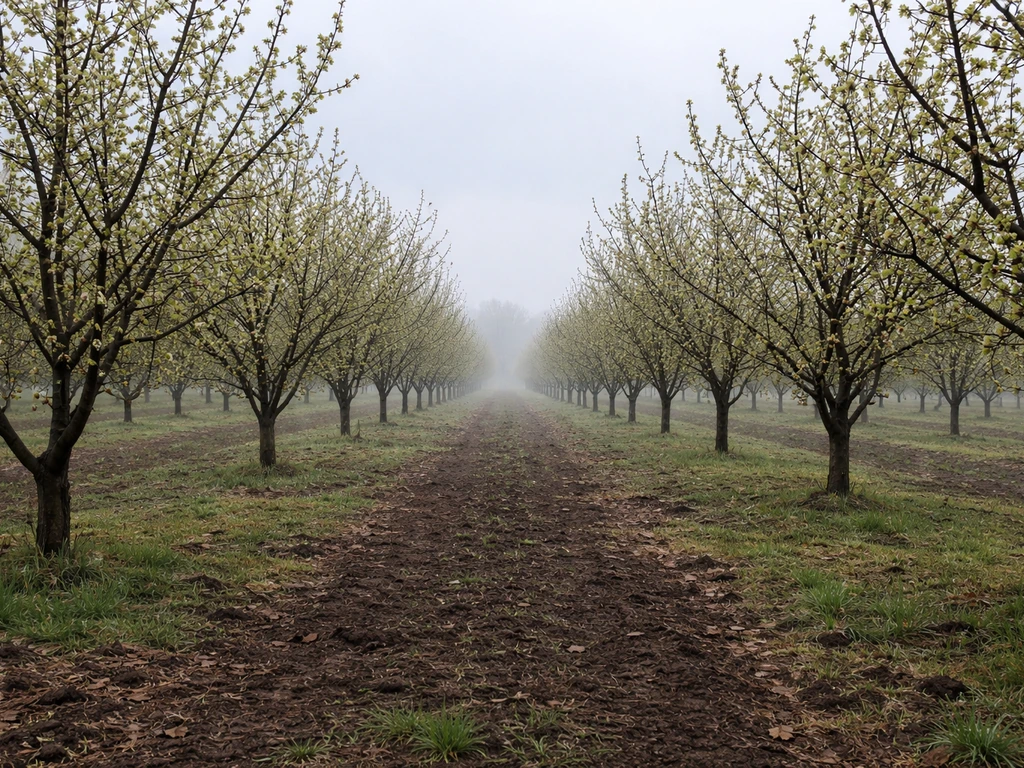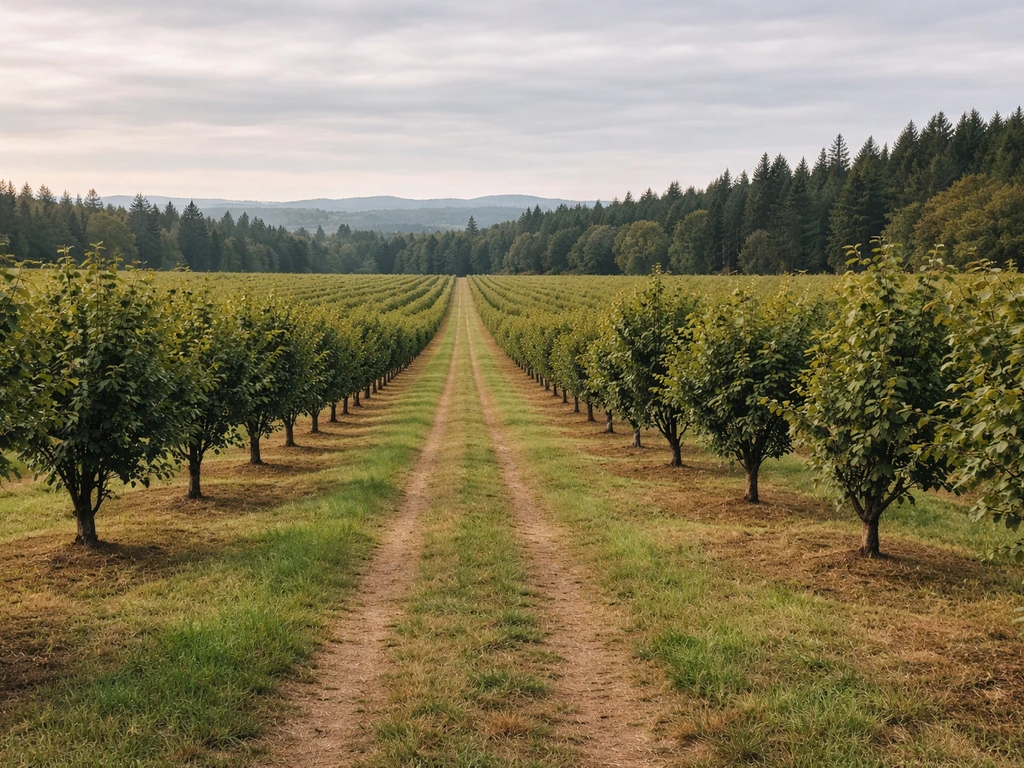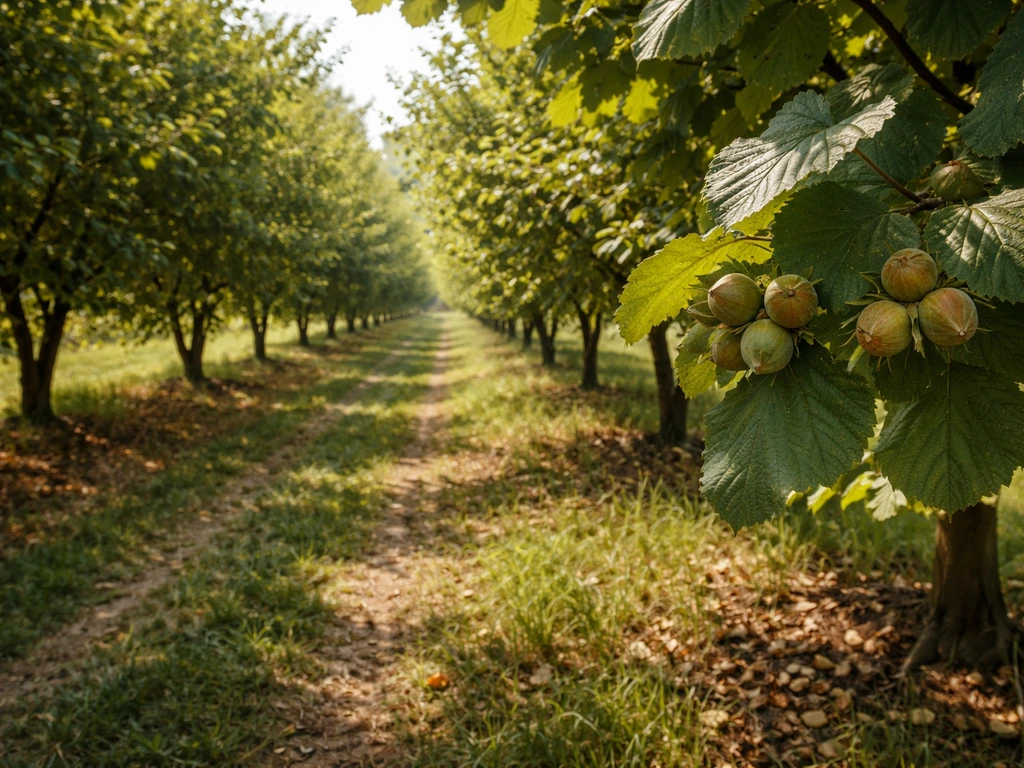
Most hazelnuts cannot fruit reliably in tropical lowlands. The core problem is chill hours: Corylus avellana (European hazelnut) and most commercial cultivars need anywhere from 300 to over 1,500 hours below about 7°C (45°F) just for female flowers to open and become receptive, and that kind of cold simply does not exist in the tropical lowlands. If you are in a hot, low-elevation tropical region, standard hazelnuts will probably grow as ornamental shrubs but will never set nuts for you.
Can Hazelnuts Grow in the Tropics? Species and Care Guide
Marcus Hendricks
6 May 2026
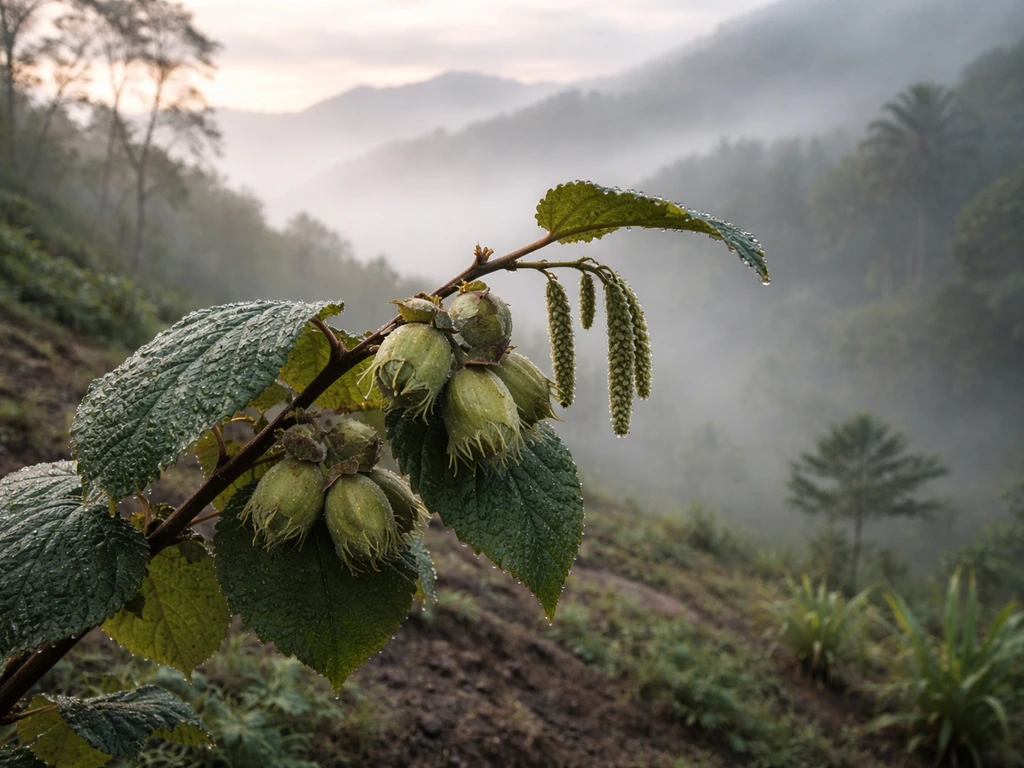
However, if you are at elevation, say 1,000 meters or higher in a highland tropical zone, or in a cooler microclimate with genuine winter nights, there is a realistic window worth exploring. In Australia, that means focusing on cooler, higher-elevation areas rather than tropical lowlands cooler, higher-elevation areas in Australia.
Why hazelnuts struggle in the tropics: the chill hour problem
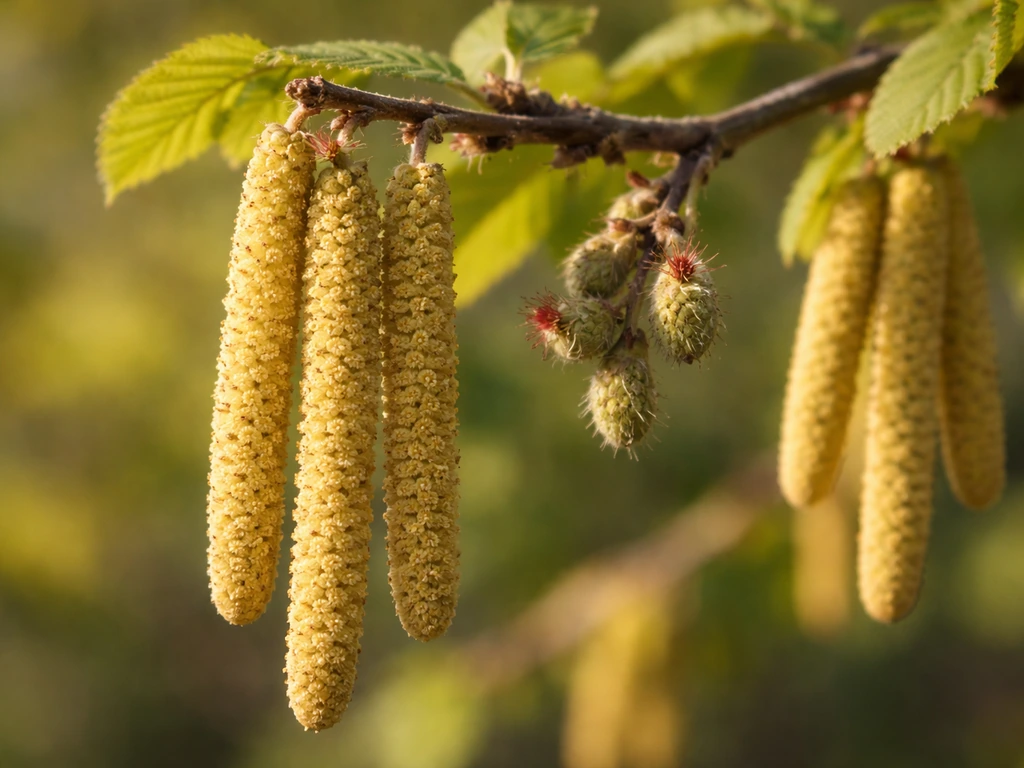
Hazelnuts have a layered dormancy system, and each layer has its own chill requirement. Research measuring multiple hazelnut genotypes found that catkins (the male pollen-producing flowers) require roughly under 100 to around 860 hours of chilling, while female flowers need between 290 and 1,550 hours depending on variety. Leaf and vegetative buds require even more, up to 1,690 hours in some genotypes. In a tropical lowland where nighttime temperatures rarely drop below 20°C, you might accumulate close to zero usable chill hours in a year.
What makes this especially tricky is that catkins and female flowers have different chill requirements, and they respond differently to warmth after chilling. In most hazelnut varieties, catkins release pollen before female flowers become receptive, a trait called dichogamy. Research from New Jersey cultivar trials confirms that catkins generally have lower chill requirements than female flowers, meaning in a borderline-chill environment, pollen can be released before the females are ready, or the females may never properly open at all. This mismatch is a serious fruiting barrier even if the plant survives and looks healthy.
On top of that, post-chill warmth (growing degree days) is required to push flowering forward after dormancy is broken. Studies in southern Ontario and New Jersey both show that the heat required to trigger catkin release and female receptivity differs between the two tissue types. In a warm tropical climate where temperatures jump quickly, you can get a flowering sequence that is completely out of sync, even when a little chill has been accumulated. The plant is essentially confused, and confused hazelnuts do not make nuts.
Where in the tropics hazelnuts might actually work
The honest answer is: mostly highland zones. If you are growing at 1,000 to 2,000+ meters above sea level in a tropical country, your nights can get genuinely cool, sometimes dropping to 5–12°C in the cooler months. In general, hazelnuts grow best where there are cool seasons that provide enough chill hours, rather than consistently warm tropical temperatures.
These highland tropical climates, common in parts of East Africa, highland Colombia or Ecuador, the mountains of Vietnam, parts of highland India (especially Himachal Pradesh or Uttarakhand), or parts of the Philippines like the Cordillera region, can accumulate enough chill hours during a defined cool season to support hazelnut flowering. In India, some highland regions like Himachal Pradesh and Uttarakhand have enough cool-season weather to make hazelnut flowering biologically possible parts of highland India.
It is not guaranteed, but it is biologically possible.
Elevation data from hazelnut trials in Turkey's Black Sea region show that nut yield and quality vary significantly even between 40 m, 320 m, and 650 m sites within a broadly temperate region. That tells you elevation effects are real and measurable. Scale that logic up to a true highland tropical location and the difference between 800 m and 1,500 m becomes decisive. Maritime highland microclimates, those with persistent cool mist, cloud cover, or strong nighttime radiative cooling, are your best realistic target environments.
Coastal mountain ranges that face prevailing winds, south-facing slopes in the southern hemisphere, or valley zones that pool cold air on clear nights are all worth assessing before you write off hazelnut growing entirely. If your coolest month has consistent lows below 10°C and that cool period lasts two to four months, you have something to work with.
Picking the right species and cultivar for a warm climate
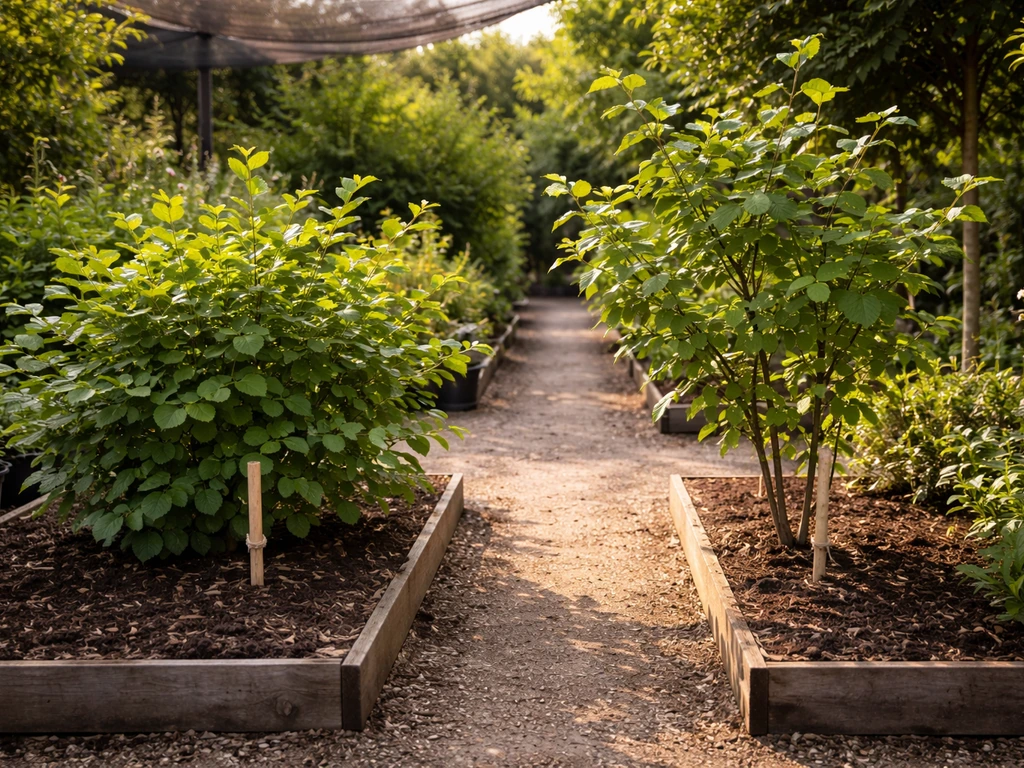
Not all Corylus species are equal in their chill demands. Corylus avellana, the European filbert behind most commercial hazelnut production, is the most demanding and the least suitable for warm climates. If you are in a marginal highland situation, look instead at lower-chill selections developed for warmer regions. Some cultivars developed in the US Pacific Northwest or bred in New Jersey have been screened for lower chill requirements, though even these typically need 400 to 700 chill hours. For genuinely tropical highland trials, your best starting point is to contact agricultural extension programs in countries like Ethiopia, Kenya, Colombia, or India that may have evaluated Corylus under local conditions, because cultivar performance is very site-specific.
Corylus colurna (Turkish hazel) is somewhat more heat-tolerant and drought-adapted, but it is primarily grown as a rootstock or ornamental and produces small, thick-shelled nuts. It is not a commercial nut producer in warm climates, but it may survive and occasionally fruit where C. avellana would fail entirely. Hybrid hazelnuts, crosses between C. avellana and American species like C. americana or C. cornuta, have been developed partly for disease resistance (more on that below) and some show marginally lower chill needs, though they are still fundamentally temperate plants.
How to set up a hazelnut planting in a highland tropical site
Choosing and preparing your site
Drainage is non-negotiable. In humid tropical highlands, soils are often clay-heavy and prone to waterlogging during rainy seasons. Hazelnut roots are extremely susceptible to Phytophthora root rot, and waterlogged conditions are the primary trigger. Pick a site with natural slope or build raised beds and berms to move excess water away from the root zone. OSU Extension guidance specifically warns against placing hazelnut orchards in poorly drained soils, and in the tropics where rain events are often intense, this advice is doubly important.
Hazelnuts prefer a soil pH of around 6.0 to 7.0. Tropical highland soils are often more acidic, so liming before planting is commonly needed. Liming acid soils improves availability of phosphorus, potassium, magnesium, and key micronutrients, all of which matter for nut development. Get a soil test done first. Aim for at least 60 cm of workable, well-drained soil depth before planting.
For sun exposure, hazelnuts need full sun for good yield. In misty highland environments, you want the least-shaded aspect available. In the northern hemisphere tropics, that typically means a south or southeast-facing slope. In the southern hemisphere, a north-facing slope. Avoid frost pockets if your highland site gets occasional freezes, since late frost on open flowers is a yield killer even when chill accumulation is otherwise helpful.
Planting and spacing
Space standard hazelnut bushes at roughly 4 to 5 meters apart in rows, with rows around 5 to 6 meters apart if you are managing multiple plants. In a highland tropical trial setting where you are experimenting rather than farming commercially, you can plant at the closer end of that range. Plant during your driest cool season if possible, when soil is workable but not waterlogged. Bare-root plants (if available) establish better than container-grown stock in some situations, but in a humid tropical region, containerized or freshly dug transplants with intact root balls are safer bets.
Irrigation strategy
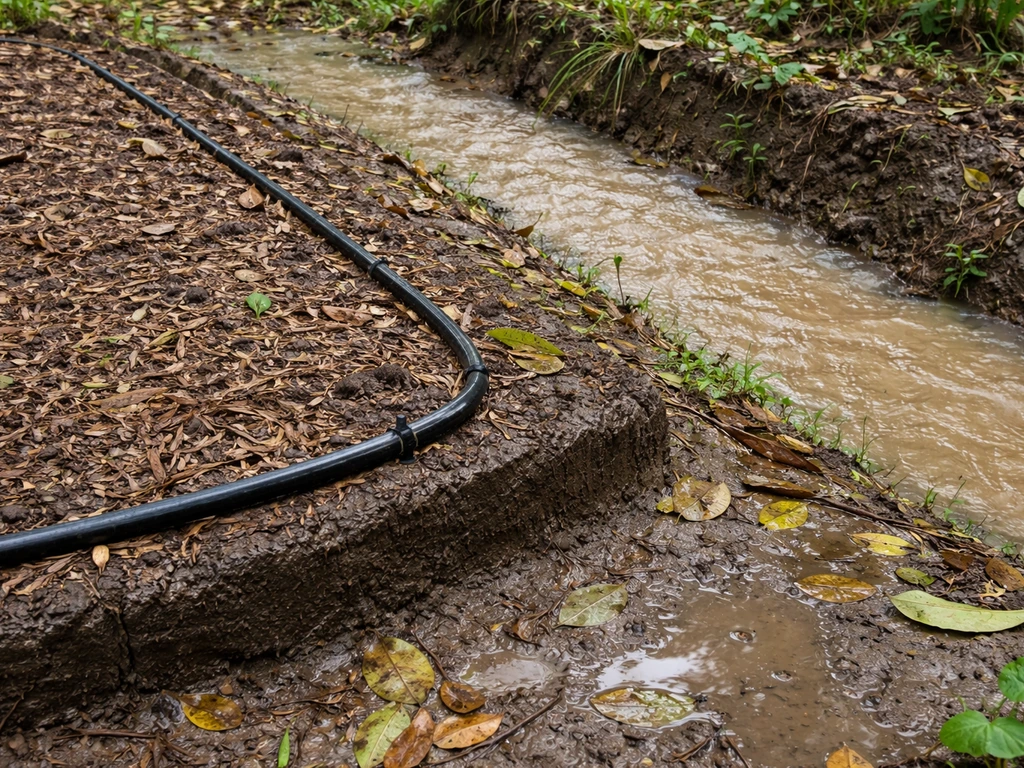
In the humid tropics during rainy season, irrigation is rarely the issue. The problem is too much water, not too little. Your irrigation focus should be the dry season: hazelnuts need consistent moisture during nut fill (roughly late spring through summer in temperate terms, which you will need to map to your local calendar). Drip irrigation directed at the root zone is ideal because it keeps foliage dry, which reduces fungal pressure. Avoid overhead irrigation in humid climates. The New Zealand Tree Crops Association's hazelnut guide notes that in drier areas, irrigation is essential for high yields, and the same logic applies to tropical dry seasons even in otherwise humid regions.
Pollination, training, and what to expect for fruiting
Hazelnuts are monoecious (male and female flowers on the same plant) and wind-pollinated, but they are not reliably self-fertile. You need at least two genetically different compatible varieties planted within about 15 to 20 meters of each other for good nut set. In a tropical highland planting, plant at least three to four different selections if you can, both to cover pollination compatibility and to hedge your bets on which one performs best in your specific microclimate.
The dichogamous flowering habit is your biggest fruiting obstacle in warm climates. Because catkins typically have lower chill requirements than female flowers, you can end up in a situation where pollen is released and spent before the female flowers open. Research confirms that female receptivity can persist for up to about two months if compatible pollen is not received immediately, which is actually somewhat helpful in borderline-chill situations, but only if pollen is still available during that window. In warm climates, tracking flowering phenology for your specific varieties across at least two or three seasons is essential before drawing conclusions about fruiting potential.
For tree training, let the plant establish as a multi-stemmed bush (which is its natural form) or train to a single trunk with a central leader. Remove suckers regularly since hazelnuts produce many root suckers that will crowd the planting if left unchecked. In tropical highland conditions where the dormancy period is less defined, you may see less-organized seasonal growth, so pruning should follow active growth flushes rather than a strict calendar schedule. Light, open canopies are especially important in humid environments to improve air circulation and reduce disease pressure.
Be realistic about fruiting timelines. Even in ideal temperate climates, hazelnuts typically take 3 to 5 years to produce a meaningful first crop. In a marginal highland tropical situation, add more time for the plant to acclimatize. You may get occasional light flowering and a handful of nuts in years 3 to 6 before seeing whether the site is genuinely productive. Do not judge the site by year two.
Pests, diseases, and managing the humid tropical environment
Disease risks in humid climates
Humid tropical highlands create ideal conditions for fungal and bacterial diseases. The two biggest threats to be aware of are Eastern filbert blight (Anisogramma anomala) and bacterial blight (Xanthomonas corylina). Eastern filbert blight is primarily a concern if you are in the Americas or if you are importing plant material from infected regions. It kills European hazelnut trees by girdling via cankers, often within 5 to 10 years of initial infection, and the humidity of tropical highland environments would accelerate its spread. If you are growing in regions where EFB is not endemic, keep it that way by sourcing clean, certified planting material.
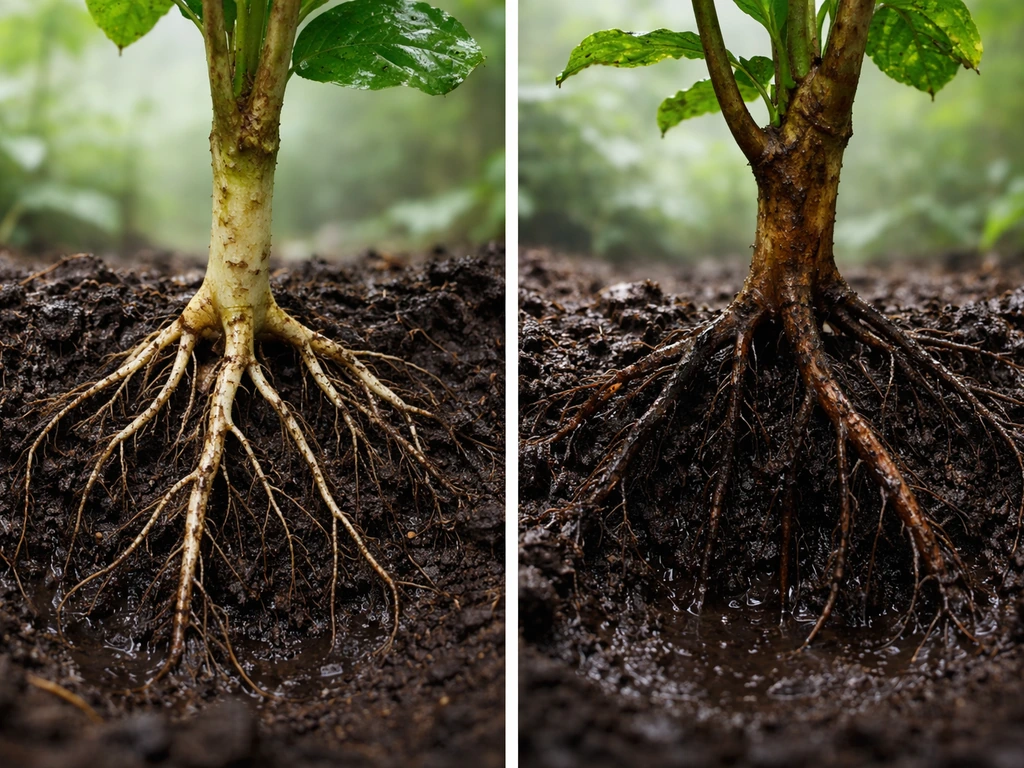
Phytophthora root rot is the disease most likely to kill your hazelnut in a tropical setting. As mentioned, it is triggered by waterlogged or poorly drained soils, and once established it spreads easily through drainage flow on slopes. Prevention through drainage is far more effective than treatment. If you see yellowing, wilting, and dieback despite adequate moisture, dig and inspect the root crown for characteristic brown, water-soaked rot.
Aphids are common pests on hazelnut foliage worldwide and are worth monitoring. In tropical conditions, populations can build quickly without natural winter die-off. Hazelnut weevil (Curculio nucum) causes wormy and blank nuts and is a serious orchard problem in Europe. In tropical regions, you may encounter related local curculionid species targeting nuts. Inspect developing nuts regularly and time any insecticide applications to coincide with early nut development before larvae enter the shell.
Nutrition in a tropical highland hazelnut planting
Hazelnuts have relatively low overall nutrient requirements compared to many fruit trees, but they still need balanced soil fertility. OSU Extension guidance points out that most spring shoot growth comes from nitrogen stored in the tree over winter, not from in-season fertilizer applications. This means that in tropical climates where the dormancy period is compressed or unclear, stored reserves may be lower and the timing of fertilizer applications becomes more critical. Apply a balanced fertilizer at the start of your local cool season to support the growth flush that follows.
Base your fertilizer decisions on leaf tissue analysis rather than assumptions. In tropical highland soils, which are often highly leached, potassium, magnesium, and boron deficiencies are common and can limit nut fill. Boron deficiency in particular causes hollow or blank nuts, which you might mistake for a pollination failure. Soil liming to correct pH also improves availability of multiple nutrients simultaneously, making it one of the highest-return investments before and during early establishment.
Harvesting, realistic yield expectations, and when to pivot
In temperate climates, hazelnuts are typically harvested in late summer to early autumn when nuts fall naturally from their husks. In a highland tropical setting with a less-defined season, you will need to watch the nuts closely for color change and husk browning rather than relying on calendar dates. Harvest promptly after nuts begin to drop, since humid conditions cause rapid mold development on fallen nuts. Dry them quickly to reduce moisture content below 10% for safe storage.
Yield expectations in a marginal tropical highland situation are modest. A well-managed hazelnut bush in a good temperate climate can eventually produce 2 to 5 kg of nuts per plant per year after full establishment. If you are asking specifically about where hazelnuts grow in Europe, focus on cooler temperate regions where winter chill is enough to support reliable flowering and nut set temperate climates. In a highland tropical site, expect considerably less, possibly 0.5 to 2 kg per plant in a good year, with some years producing almost nothing if chill accumulation falls short. Treat the first several years as an extended trial, not a commercial venture.
If hazelnuts are not going to work: realistic alternatives
If you have given hazelnut a genuine 5 to 7 year trial in your highland tropical location and seen no reliable nut set, it is time to pivot. There are excellent nut trees genuinely suited to tropical and subtropical conditions that will reward you far more reliably. Macadamia (Macadamia integrifolia and M. tetraphylla) thrives in humid subtropical and highland tropical environments and produces high-value nuts. Candlenut (Aleurites moluccana) and tropical almond (Terminalia catappa) are adapted to lowland tropics. At somewhat cooler elevations, Carya illinoinensis (pecan) can produce in highland subtropical areas with lower chill requirements than hazelnuts, and some pecan cultivars have been grown successfully in parts of highland Africa and South America.
If your goal is specifically a Corylus plant for habitat, hedging, or occasional light production, Corylus colurna may give you a more resilient multi-purpose tree in the highland tropics without the frustration of a non-fruiting C. avellana. But if reliable nut harvests are the goal, matching the tree to your climate beats trying to force a temperate tree into a tropical one.
Your decision framework at a glance
| Situation | Recommendation |
|---|---|
| Tropical lowland, consistently warm year-round, negligible cool season | Do not attempt fruiting hazelnuts. Choose macadamia, tropical almond, or other suited species instead. |
| Highland tropical, 1,000–1,500 m elevation, cool season nights dipping to 8–12°C | Worth a trial with low-chill C. avellana selections or hybrids. Prioritize drainage, plant 3–4 varieties, monitor phenology for 5+ years. |
| Highland tropical, above 1,500 m, regular cool season with consistent nights below 8°C for 2+ months | Reasonable chance of fruiting. Use best-available low-chill cultivars, manage drainage and fungal disease aggressively, expect modest yields. |
| Subtropical highland (not strictly tropical), similar to highland Kenya, parts of South Africa, highland Colombia) | Best realistic tropical-adjacent scenario. C. avellana has been trialed in some of these regions. Seek local extension advice and proven local selections. |
| Marginal site, uncertain chill accumulation | Plant 2–3 trees as a 5-year trial. Track actual chill hours with a min-max thermometer or logger. Decide after two full fruiting-age seasons with data in hand. |
The most honest thing I can tell you is this: hazelnuts are fundamentally temperate trees, and the tropics are not their home. If you are wondering where hazelnut trees can actually grow, the best odds are in climates that can meet their chill hour needs temperate trees. The biology of chill requirements, dichogamous flowering, and pollination synchrony creates multiple points of failure in warm climates. But highland tropical environments are not all the same, and some genuinely cool, misty, high-elevation sites can deliver enough chill to make hazelnut growing feasible, if not commercially reliable.
If you are curious about where hazelnuts thrive naturally and what climates genuinely suit them, the broader picture of hazelnut climate requirements and global growing regions gives important context for benchmarking your own site. Where does hazelnut grow best outside the tropics? The answer depends largely on how many chill hours the site can provide global growing regions. Start with a soil test, a thermometer logging your actual cool-season lows, and realistic expectations.
Give it time, manage drainage carefully, and you may be pleasantly surprised.
FAQ
How can I estimate whether my specific tropical highland site has enough chill hours for hazelnuts?
Start by tracking nighttime lows with a simple outdoor thermometer (or data logger) during your coolest months. Convert hours roughly below 7°C (45°F) into “chill hours” and also note how many consecutive weeks you get that range, because a short cold snap often cannot compensate for warm breaks. If you are near the low end, prioritize varieties marketed as low-chill and plan to run the trial for at least 2 to 3 flowering seasons.
If my hazelnuts leaf out normally, does that mean they will also fruit?
Not necessarily. Healthy leaf growth can occur even when female flowers never reach receptive stages due to insufficient chilling or poor timing between male catkins and female flowers (dichogamy). The practical check is to observe actual flowering synchronization, then look for nut set within the first few weeks after compatible pollen should arrive.
What’s the safest spacing and number of plants if I can’t source many different hazelnut varieties?
Plan for at least two genetically different compatible selections, ideally three or four, planted close enough that wind pollination can work (about 15 to 20 meters between compatible types). If you only have two varieties, keep them as central neighbors in the planting layout rather than separated to the far ends of the site, since wind patterns in valleys and ridges can reduce effective pollen movement.
Can I use grafted hazelnuts from cooler countries and expect success in the tropics?
Grafted plants can still fail if the cultivar has high chill requirements, even when the graft grows well. There is also an added biosecurity issue, since diseases like eastern filbert blight can be introduced with infected plant material. If you import, ensure you have certified, clean stock and consider quarantining and strict sanitation for at least the first growing season.
If I’m at a marginal site, can I “fix” low chill with fertilizer, pruning, or irrigation timing?
No, not in a reliable way. Fertilizer and pruning can support growth, but they cannot replace missing chilling needed to break dormancy. Instead, focus on matching bloom timing by running good drainage, maintaining consistent moisture during the local nut-fill period, and selecting low-chill cultivars, then evaluate across multiple years to see if chilling is consistently sufficient.
My site gets occasional frost. Will that automatically kill the chances of hazelnuts in the tropics?
It can seriously reduce yields, but not always. The biggest risk is late frost that hits open flowers or very young developing nuts. Use frost-avoidance tactics, like choosing slopes that drain cold air, avoiding frost pockets, and watching phenology closely so you understand whether your flowering overlaps the frost-prone windows.
Is drainage really the main issue, or can pests and disease be equally limiting in tropical highlands?
Drainage is usually the first “deal breaker” in humid tropics because Phytophthora root rot is triggered by waterlogged roots and is difficult to cure once established. Pests like aphids are manageable with monitoring, but root rot can kill trees before you get to assess pollination and fruiting. If you only solve one thing first, solve drainage with slope or raised beds.
What soil test results should I pay special attention to in tropical highland soils for hazelnuts?
Prioritize pH and nutrients tied to nut development, especially potassium, magnesium, and boron. Also confirm you have adequate effective soil depth (ideally at least 60 cm of workable, well-drained soil) and that compaction is not limiting infiltration. If boron is low, you may see hollow or blank nuts that can look like a pollination problem but are actually nutritional.
Why do I sometimes see nuts that look “set,” but they develop hollow or fail later?
Hollow or blank nuts can be caused by nutrient limitations, particularly boron deficiency, even when pollination seems to have worked. In a humid tropical highland, do not assume it is only a timing issue. Combine pollination checks with leaf tissue analysis during the cool season to verify micronutrients before nut fill.
How long should I wait before giving up on hazelnuts in the tropics?
Treat it as a long trial. Even in temperate climates, meaningful cropping usually takes 3 to 5 years, and marginal tropical highlands often require extra acclimatization. If you have had 5 to 7 years with no reliable nut set, pivot to crops that match your chill and heat pattern more directly.
If hazelnuts don’t work for nuts, can they still be useful for habitat or erosion control?
Yes, depending on the species. Corylus colurna (Turkish hazel) is often more resilient as an ornamental and can sometimes fruit small nuts, even when European hazelnut struggles with chilling and synchrony. It can still provide structure for wildlife and hedging, but treat nut production as unlikely unless you confirm local flowering and nut set over multiple seasons.