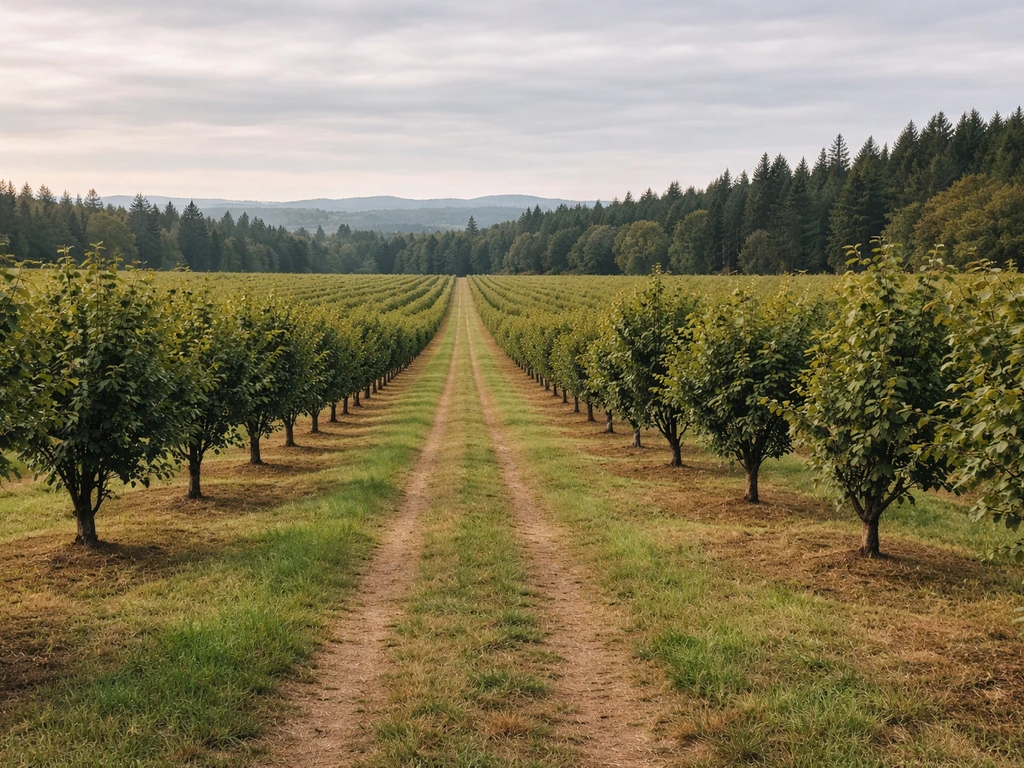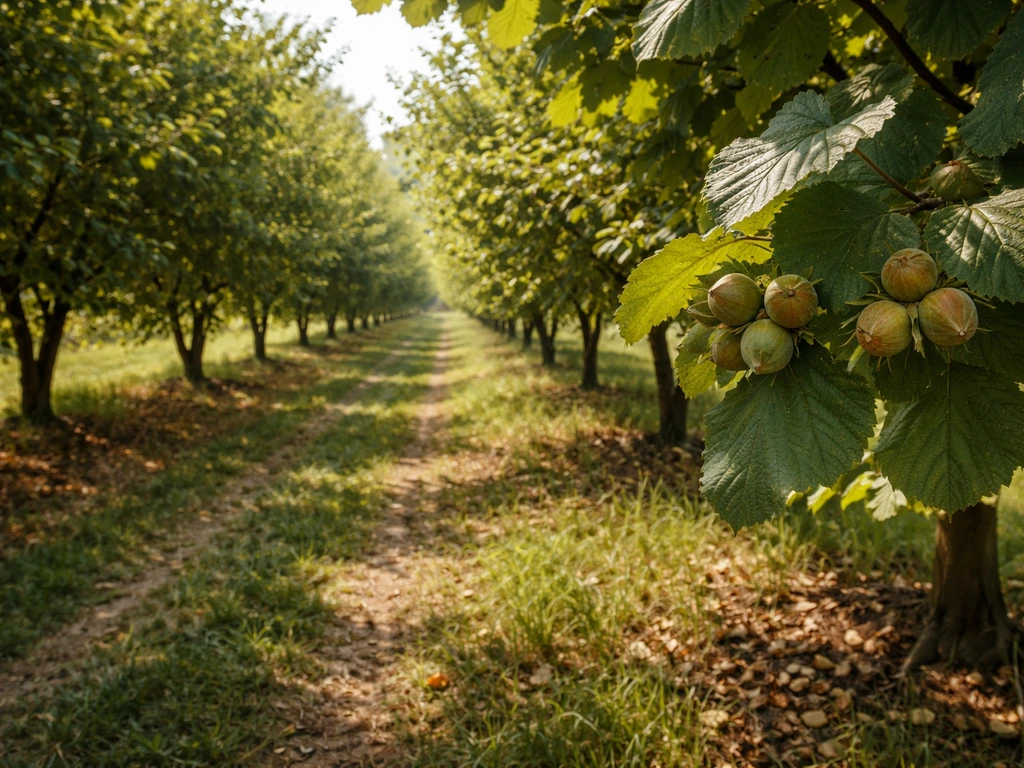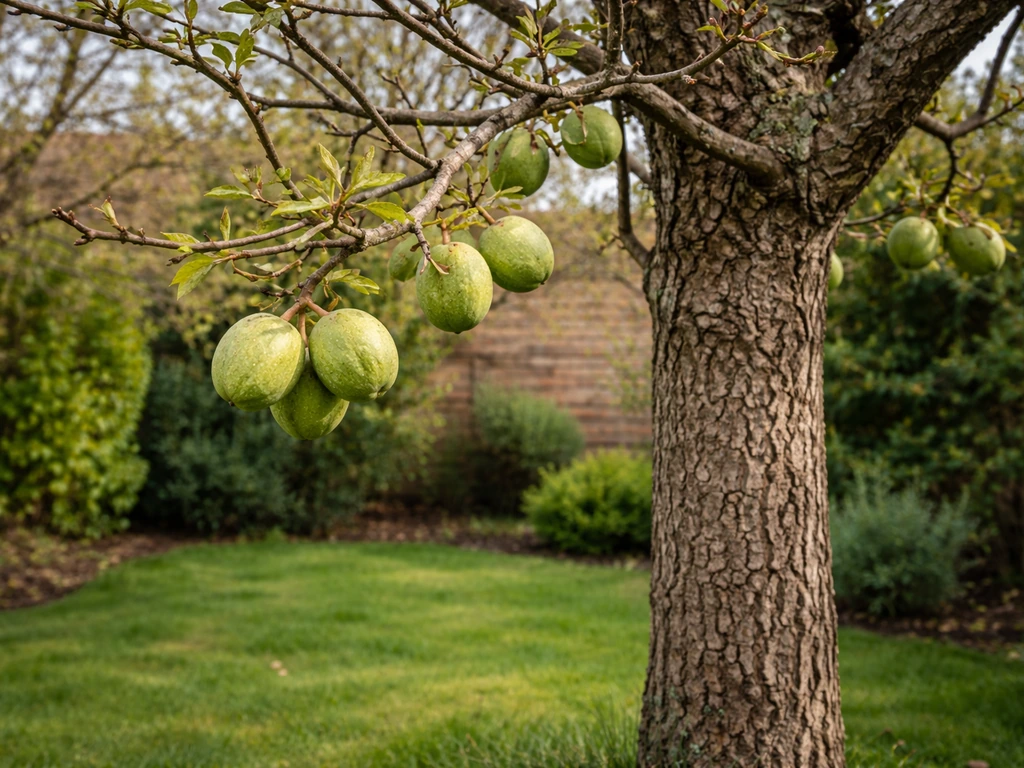
Hazelnuts grow successfully in Australia's cooler temperate regions, mainly in Tasmania, the Southern Tablelands and highlands of New South Wales, Victoria's elevated inland zones, and parts of South Australia. These are the places where winters are cold enough to deliver the chilling hours hazelnut trees need to break dormancy and flower properly. These are the places where winters are cold enough to deliver the chilling hours hazelnut trees need to break dormancy and flower properly.
Where Do Hazelnuts Grow in Australia Best Regions Guide
Marcus Hendricks
23 Apr 2026
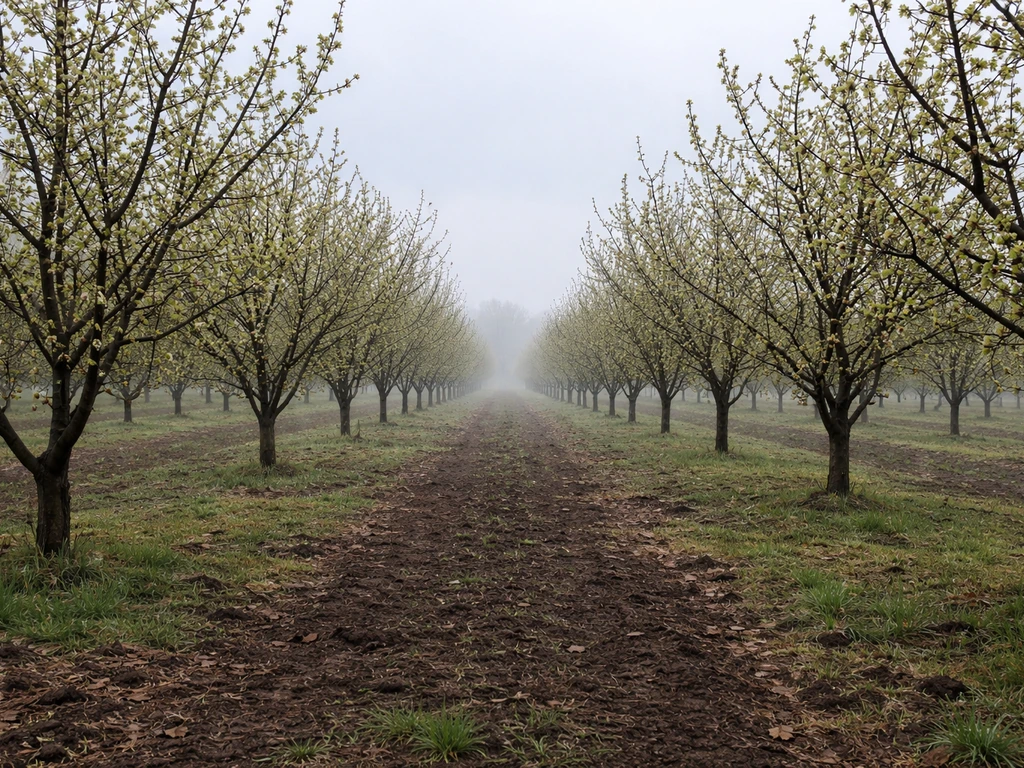
If you're in coastal Queensland, the Northern Territory, or the subtropical lowlands, hazelnuts are not going to work for you without serious compromise, and even then results will be poor. If you’re wondering whether you can hazelnuts grow in the tropics, the answer is generally no because they need reliable winter chilling.
What 'hazelnuts' actually means in an Australian context
Almost every hazelnut grown commercially or in home gardens in Australia is Corylus avellana, the European hazelnut. There are no native Australian Corylus species, so if you're growing or buying hazelnuts here, you're working with introduced European genetics adapted over centuries to cool-temperate climates. What varies between trees is the cultivar, and that matters a lot in Australia because not all cultivars handle marginal conditions equally.
The main cultivars you'll encounter in Australia include Barcelona (also sold as Fertile de Coutard), Butler, Casina, Ennis, Lewis, Hall's Giant, and Tonda di Giffoni (sometimes called TGDL). Each has different chill requirements, leafing timing, and frost tolerance profiles. Some, like Lewis, have relatively low chilling requirements, which makes them candidates for the warmer edge of Australia's suitable growing zones. Others, like Barcelona and Ennis, are better suited to reliably cold sites. Variety selection is one of the first decisions you'll make, and it's directly tied to your local climate.
Hazelnuts are also self-incompatible and wind-pollinated, meaning you need at least two compatible varieties planted together to get a crop. Peak pollination in Australia typically runs July to August, and persistent rain during that window can wash pollen away and reduce yield significantly. This is worth knowing before you plant a single tree and wonder why it never produces nuts.
Australia's hazelnut-growing climate zones
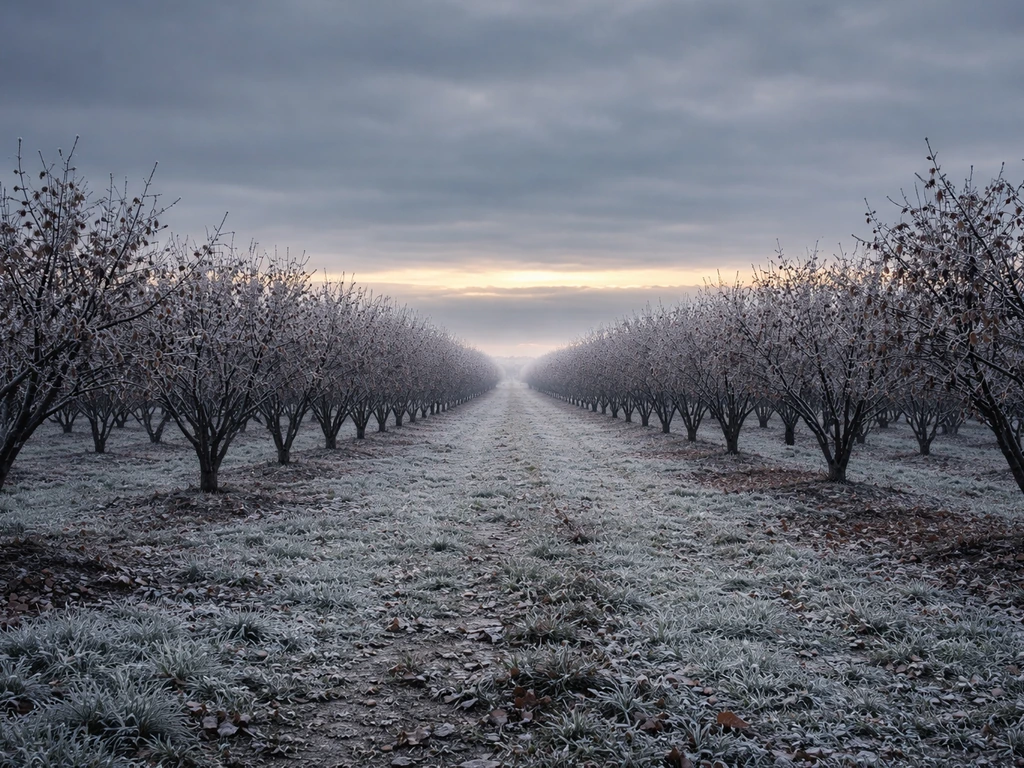
The core requirement for hazelnuts is winter chilling. Trees need a sustained period of cold to complete dormancy before they can flower and set fruit reliably. In Tasmania, the benchmark used by growers is more than 1,500 chill hours between 0°C and 7°C, measured across the May to September period. That's a high bar, and it immediately tells you that most of Australia doesn't qualify.
The zones that do qualify share a recognizable climate profile: cold winters with regular frosts, moderate summers that don't push into extreme heat for extended periods, and rainfall of roughly 750 to 1,200 mm annually. Summer heat matters too. Good flower fertilisation requires mean maximum temperatures above 21°C, but if your hottest month regularly hits above 30 to 35°C with low humidity, you're looking at heat stress that can affect nut development. The sweet spot is a cool, distinct winter followed by a warm but not scorching summer.
Australia's nut-growing climate zones are quite different from those in Europe or the Pacific Northwest of the United States, where hazelnuts also thrive. For U. S. growers, hazelnuts typically do best in cooler climates such as the Pacific Northwest and parts of the Northeast where do hazelnuts grow in the united states.
To figure out where hazelnuts grow in the United States, focus on regions with reliable winter chill and cool, distinct seasons Europe or the Pacific Northwest of the United States. If you are trying to map that same idea to your question, see where do hazelnuts grow in Europe for a Europe-focused comparison Europe or the Pacific Northwest of the United States.
Australia's temperate belt is narrow, runs mainly through the south-east corner of the continent, and is interrupted by low-rainfall areas and high-summer-heat zones that push most of the inland off the list.
Best regions by state
Tasmania
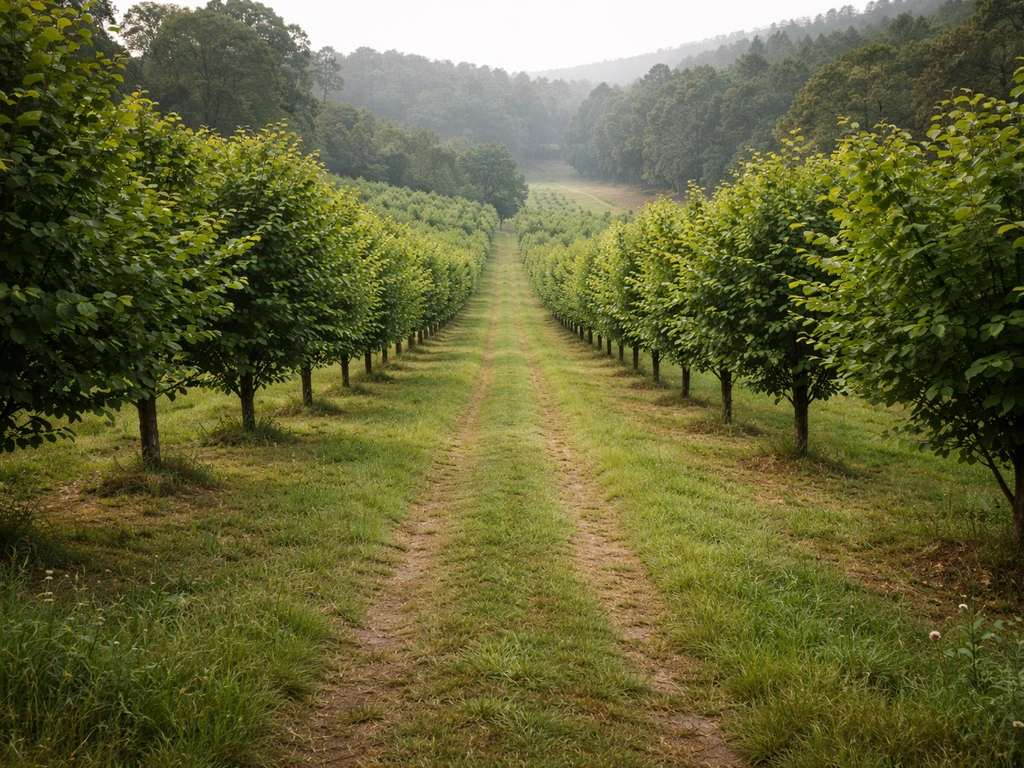
Tasmania is Australia's most reliable hazelnut state and accounts for around 30% of the country's hazelnut production. The best-performing regions within Tasmania are the Central North West, the Meander Valley, and the Northern Midlands. These areas consistently deliver the chill hours hazelnuts need, with July minimum temperatures sitting between -5°C and 10°C, which is ideal. If you're in Tasmania and within or near these regions, you're starting from the strongest possible position in Australia.
New South Wales
In New South Wales, viable hazelnut country is almost entirely in the elevated inland zones: the Southern Tablelands around Batlow, Tumut, and the Snowy Mountains foothills, and parts of the Central and Northern Tablelands where altitude keeps winters genuinely cold. The coastal strip and anything in the western slopes and plains is generally too warm and too dry in winter to deliver enough chill hours.
NSW DPIRD has published a hazelnut growers' handbook with a chill hours ready reckoner that uses monthly mean temperatures for June through August to estimate chilling per month for a given location. A NSW DPI Primefact bulletin also notes hazelnut chill-hour requirements and explains winter chilling concepts used to judge suitability for sites in NSW [chill hours ready reckoner](https://www. dpi. nsw.
gov. au/_data/assets/pdffile/0007/247939/Hazelnut-production. pdf). That's a practical tool worth using if you're in a borderline area.
Victoria
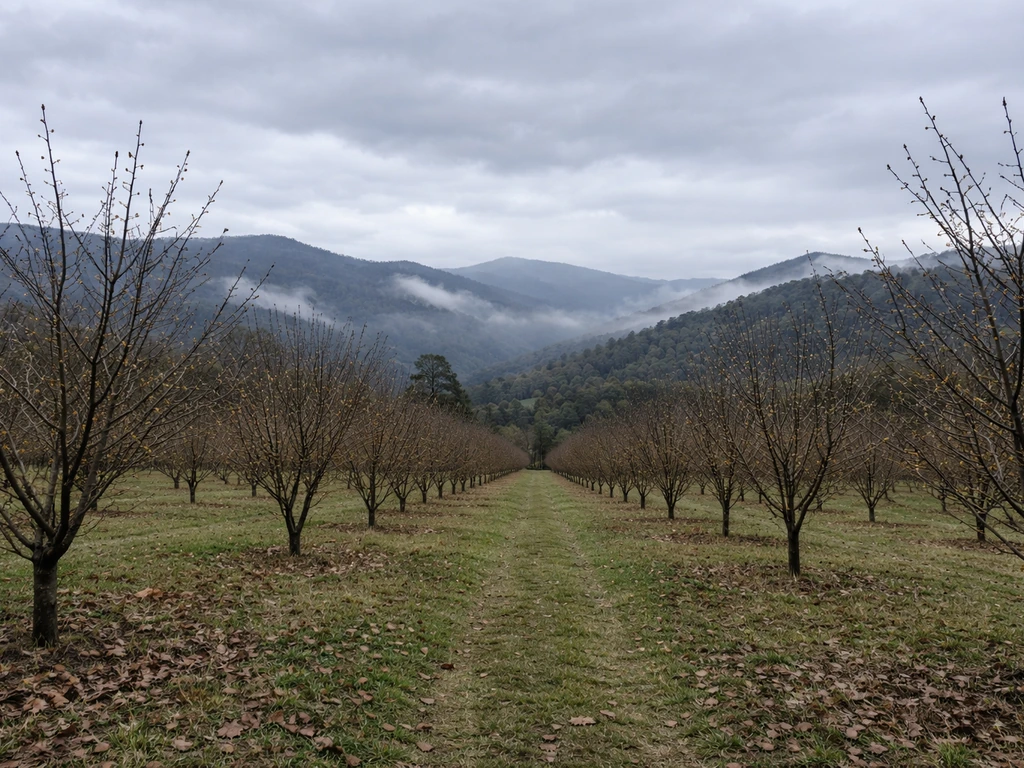
Victoria has suitable pockets in the elevated inland areas: the ranges around Bright, Mount Beauty, and parts of the Strathbogie and Baw Baw regions. The Dandenong Ranges and the wetter southern foothills can work at the right elevation. The Goulburn Valley and Murray plains are generally too warm and too dry for reliable hazelnut production, though some growers in the northern foothills of the Great Dividing Range experiment with lower-chill varieties.
South Australia
South Australia's viable zones are limited to the Adelaide Hills at altitude and parts of the Mount Lofty Ranges. The Adelaide plains and virtually everything further north are too warm. Even in the Hills, chill hours can be marginal in warmer years, so variety selection toward lower-chill cultivars like Lewis is particularly important here.
Other states
Queensland, Western Australia (except possibly very small pockets in the Stirling Ranges or similar), the Northern Territory, and coastal New South Wales are not suitable for commercial hazelnut growing and are unlikely to produce reliable crops even for keen home gardeners. Because hazelnuts need lots of winter chilling, the same limitation applies outside temperate regions, so does hazelnut grow in India only where winters are sufficiently cold? The warm climate and insufficient winter chilling make consistent production essentially impossible with any currently available cultivar.
Why climate matters so much: chill hours, frost, and seasonal timing
Hazelnut trees flower in June and July in Australia, well before most other fruit or nut trees. Bud break comes in September, and harvest follows in March. This timeline is driven almost entirely by accumulated winter cold. Without enough chill hours, the tree doesn't complete dormancy properly: it may leaf out erratically, flower poorly, or fail to synchronize catkin release (pollen) with the receptive female flowers. The result is a blank nut crop or no crop at all.
Frost risk cuts both ways. The female flowers themselves are remarkably tough and can survive temperatures down to -15°C, so mid-winter frost isn't the danger. The real problem is late spring frosts in September and October, which can damage the emerging shoots and new growth right after bud break. Varieties like Tonda di Giffoni and Lewis are noted as having early or late leafing characteristics that can affect their exposure to this risk. Valley floors are classic frost traps in Australian highland areas: cold air pools overnight, and late frosts hit hard. A site with good air drainage on a gentle slope is meaningfully better than a flat valley floor.
Pollination timing adds another layer of climate dependence. Peak pollen shed runs July to August. If that period is wet and cold beyond the norm, pollen can be washed away or fail to disperse, and female flowers close unreceptive. This is why growers in areas with particularly wet or variable winters sometimes see inconsistent yields even in otherwise suitable locations.
Site and soil requirements in Australian conditions
Getting the climate zone right is the first filter. Site selection within that zone is the second, and it's where a lot of home growers trip up. A gentle north-facing or north-east-facing slope is ideal in Australia: it gets winter sun to support chill accumulation without extreme frost pooling, and it warms up adequately in summer. Avoid south-facing slopes that stay cold and shaded, and avoid valley floors where cold air settles.
Soil depth should be at least 60 cm. Hazelnuts have a spreading root system and they don't perform well in shallow soils over rock or hardpan. Drainage is critical: while established trees can tolerate waterlogging for a day or two, young trees are particularly vulnerable, and any site that sits wet for extended periods after rain will cause root problems. If you're digging a hole and it fills with water and stays that way, that site needs drainage work before you plant.
Soil pH should sit between 5.5 and 6.5, neutral to slightly acidic. Many of Australia's naturally acidic soils in highland regions can fall below this range. If your pH is below 5.5, lime or dolomite applied several months before planting is the recommended fix. In established plantings, test pH at least every two years and correct as needed. Very acidic soils in the pH 4.5 range will noticeably stunt growth.
| Site factor | Ideal | Marginal/caution |
|---|---|---|
| Chill hours (0-7°C, May-Sep) | >1,500 hours | 800-1,500 hours (choose low-chill varieties) |
| July min temperature | -5°C to 10°C | Above 10°C (insufficient chilling) |
| Annual rainfall | 750-1,200 mm | Below 750 mm (irrigation needed) |
| Summer max temperature | 21-30°C mean max | Above 35°C mean max (heat stress risk) |
| Soil pH | 5.5-6.5 | Below 5.5 (lime before planting) |
| Soil depth | >60 cm | 40-60 cm (limit vigour, monitor closely) |
| Drainage | Free-draining, no waterlogging | Seasonal wet (young trees at risk) |
| Slope/aspect | Gentle N or NE-facing slope | Valley floor (frost trap), S-facing (cold/shaded) |
How to check if your location is actually suitable
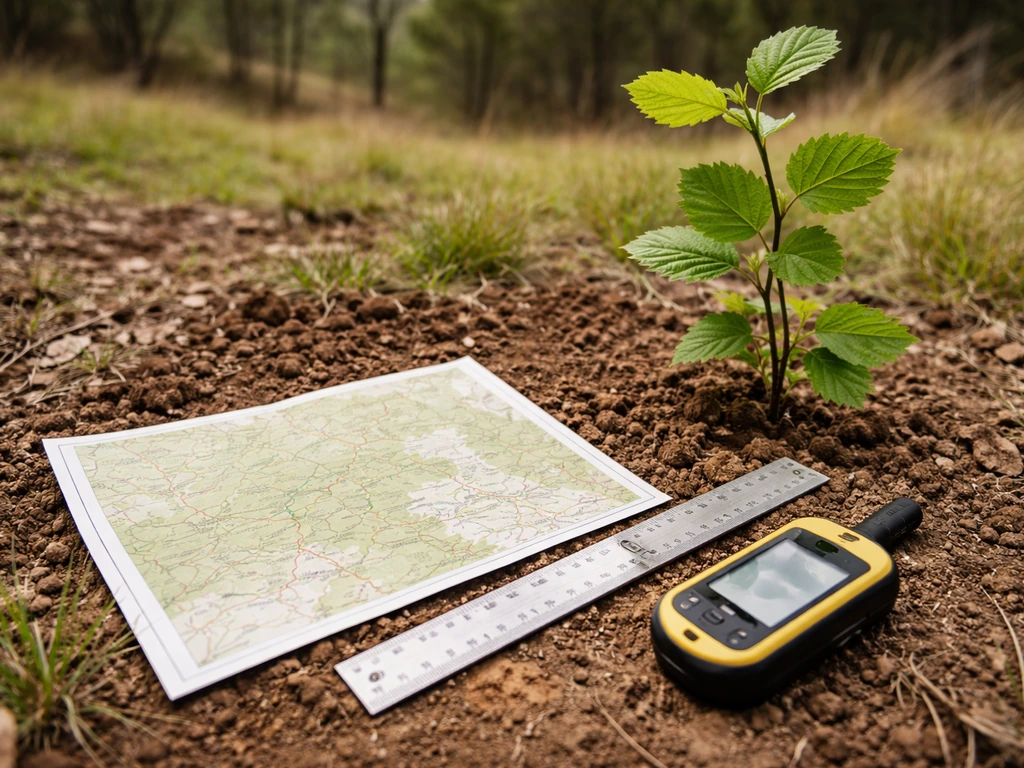
Don't rely on state-level generalizations alone. Australia's climate is patchy, and a 200-metre elevation difference can be the difference between a viable hazelnut site and a marginal one. Here's a practical sequence to assess your specific location.
- Look up your nearest Bureau of Meteorology weather station and find mean monthly minimum and maximum temperatures for June, July, and August. If July mean minimums are consistently above 10°C, you're likely below the chill threshold for most varieties.
- Estimate chill hours using the NSW DPIRD 'winter chill ready reckoner' method: use mean monthly temperatures for the coldest months to calculate approximate chilling hours per month, then add them across May to September. You're aiming for more than 1,500 hours for best results, though lower-chill varieties can work with somewhat less.
- Check average annual frost days for your area (BoM historical records). More annual frost days generally means lower late-spring frost risk in the critical October window is worth examining more closely. A site with very few frosts probably isn't cold enough in winter either.
- Test your soil pH with a basic test kit from a nursery or garden centre. Do this before committing to a planting plan, because low-pH correction takes months to take effect.
- Dig a test hole at least 60 cm deep after significant rainfall and check whether it drains within 24 hours. If it doesn't, site drainage is a problem that needs fixing.
- Identify your slope and aspect. If your land is flat or in a valley bottom, factor in the late-frost risk and consider whether a slightly higher or more exposed spot is available.
- Talk to any local orchardists growing apples, stone fruit, or cherries at similar elevation. If those crops work well without severe heat stress, hazelnuts are much more likely to be viable too, since those crops have broadly similar winter chill and summer heat requirements.
Marginal areas: common problems and realistic alternatives
If you're in a warmer or drier area that sits at the edge of suitable hazelnut country, there are a few realistic options, none of them perfect. Low-chill varieties like Lewis are the first thing to try: they're specifically selected for sites that don't reliably deliver 1,500 hours of chilling. They won't perform like a Barcelona on a prime Tasmanian site, but they give you the best shot in a borderline location. South Australia's Adelaide Hills growers often lean on exactly this approach.
Evaporative cooling and irrigation can partly offset summer heat stress, but they can't compensate for absent winter cold. You can't engineer more chill hours with any practical intervention once the climate is too warm. If your winters are genuinely mild, accept that outcome and either choose a different crop or explore whether elevation gain is possible on your property.
In areas that are climatically marginal due to low rainfall rather than warmth, irrigation can absolutely make hazelnut growing viable. Drip irrigation is standard in commercial plantings in drier zones. The key constraint in dry areas is still the winter temperature profile, not water, so confirm chill hours first before investing in irrigation infrastructure.
For readers in areas too warm for European hazelnuts, there's no close native substitute in Australia. Some growers experiment with other Corylus species from warmer parts of Asia, but these are not commercially established and nut quality is generally not comparable to C. avellana. If your location simply doesn't get cold enough, honest advice is to consider macadamias, pecans, or pistachios depending on your exact climate, rather than pushing hazelnuts somewhere they fundamentally don't belong. Hazelnuts thrive in a climate closer to what you'd find in cool parts of Europe or the highlands of North America, and Australia's matching zones are genuinely limited but rewarding for those who are in them.
The encouraging part is that Australia's viable hazelnut regions are expanding, with growers reporting growing interest and activity in Tasmania, NSW, Victoria, and South Australia. Industry output is growing, and the agronomy knowledge base, including the NSW DPIRD handbook and Tasmanian government factsheets, is now solid enough that new growers in suitable areas have real practical support to work with. If you're in the right zone, this is a genuinely viable crop, not a gamble.
FAQ
How can I estimate whether my exact address has enough winter chilling for hazelnuts in Australia?
Measure your site’s winter temperatures against a chilling-hours calculator (mean temperatures from June to August are commonly used). If you cannot verify chill hours for your exact postcode, treat the area as “borderline” and plan on higher failure risk, especially in warm or low-rainfall years.
Can I still grow hazelnuts in a marginally warm area in Australia if I choose the right variety?
Yes, but only if the variety matches the chill profile. Low-chill types like Lewis can improve your odds at the warm edge, yet they still need enough winter cold to avoid erratic bud break and blank crops.
Why do my hazelnut trees flower but produce no nuts in Australia?
The most common cause is insufficient chill, followed by poor pollination setup. Hazelnuts are self-incompatible, so a single tree often grows leaves and catkins but fails to set nuts, even when flowering looks “normal.” Plant at least two compatible cultivars for reliable production.
When is frost actually most likely to ruin hazelnut crops in Australia?
Watch for late-spring frost after bud break (September to October), not mid-winter frost. Choose a gentle slope with good cold-air drainage, avoid valley bottoms, and consider protecting young trees during extreme frost nights when shoots first emerge.
How does rainy weather during hazelnut flowering affect yield in Australia, and can it be managed?
Because orchards rely on wind and synchronized flowering, persistent wet weather during peak pollen shed (around July to August) can reduce nut set. If your area commonly has that pattern, expect lower yields and consider spacing and orchard layout that improves airflow.
Is slope and aspect important for hazelnuts, and which direction is best in Australia?
Choose a site that warms up early in spring and receives enough winter sun. North to north-east aspects often help trees complete dormancy and then grow steadily, while shaded south-facing sites can stay cold and trigger uneven development.
Can irrigation or other methods compensate if my location is too warm for hazelnuts?
Not much. Cooling systems and irrigation can help summer stress and establish roots, but you cannot replace missing winter cold. If your location repeatedly misses chill-hour thresholds, switching to a different crop is usually the most realistic plan.
What’s the right way to correct acidic soil for hazelnuts in Australia?
If your pH is below about 5.5, correcting acidity is typically done before planting, not during the growing season. Apply lime or dolomite several months ahead, then re-test so you avoid overcorrection that can lock up micronutrients.
How deep and well-drained does the soil need to be for successful hazelnuts in Australia?
Soil depth matters more for root establishment than many home gardeners expect. Aim for at least 60 cm of workable, non-rocky soil with drainage. If water sits in the hole after rain, fix drainage first or you risk long-term tree decline.
If hazelnuts grow in my region, will the yield be consistent year to year?
Use the harvest timing as a check, not a guarantee. Hazelnuts can flower poorly one year due to weather-chilling mismatch, so if you plan new plantings, choose varieties proven locally and expect that yield may vary between seasons.