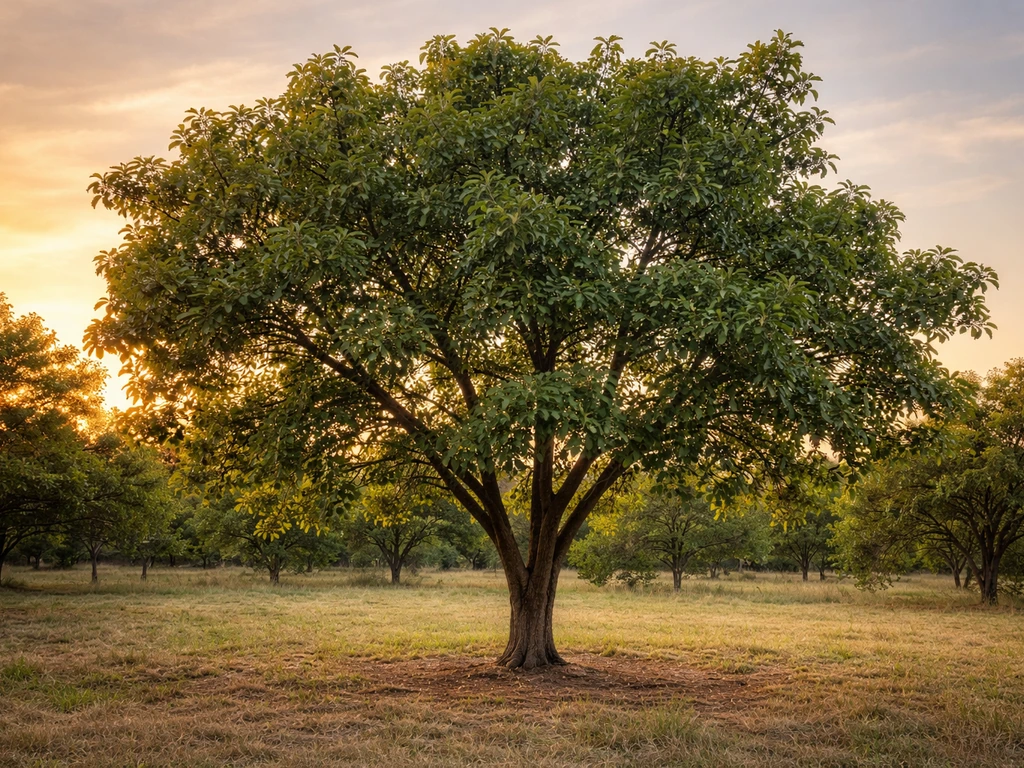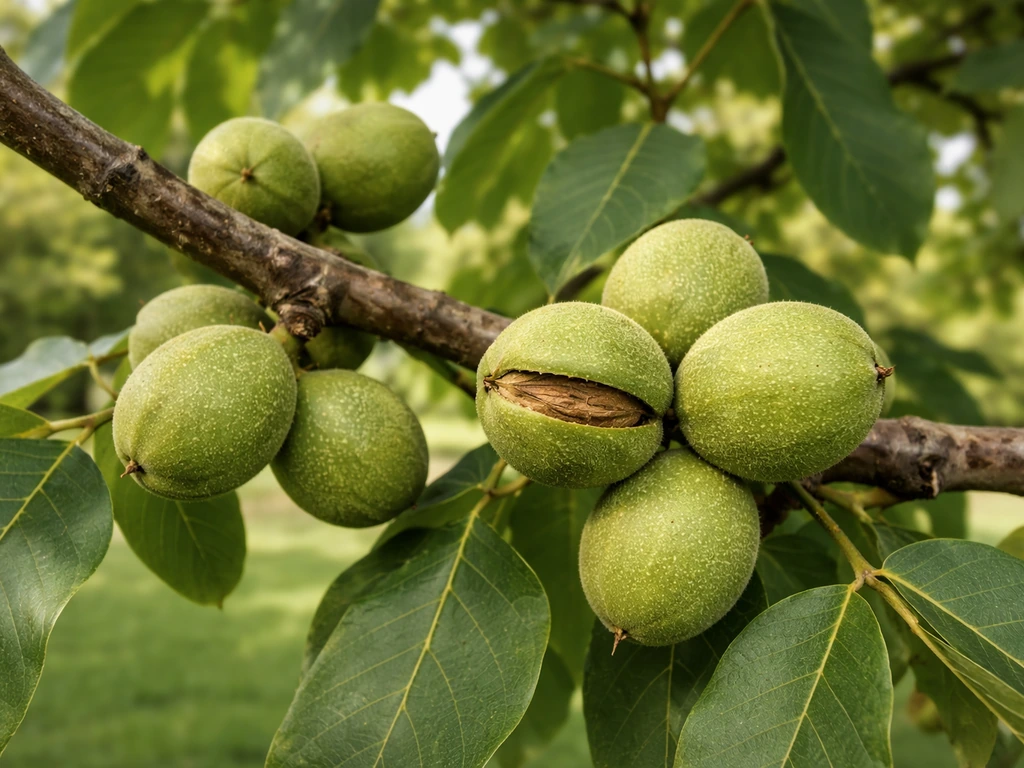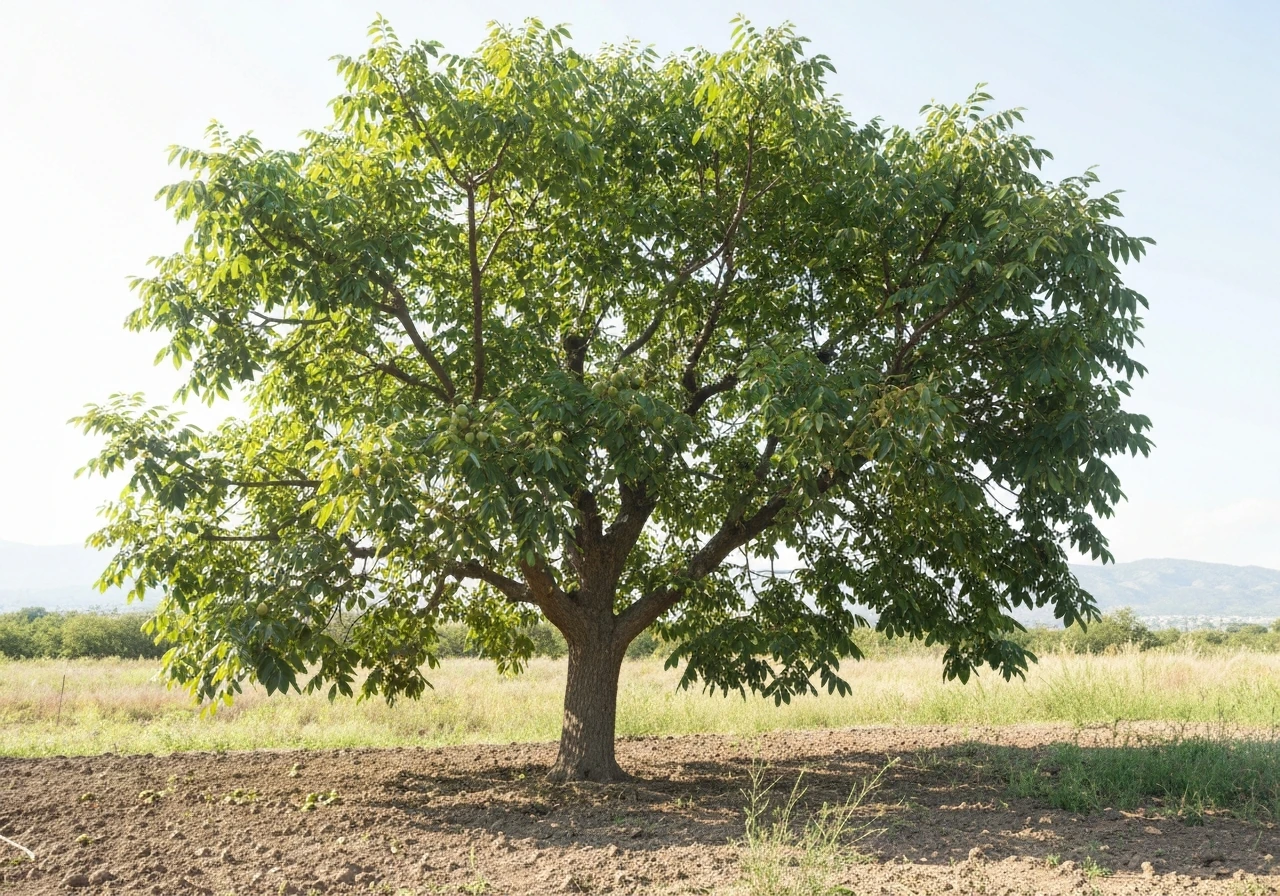
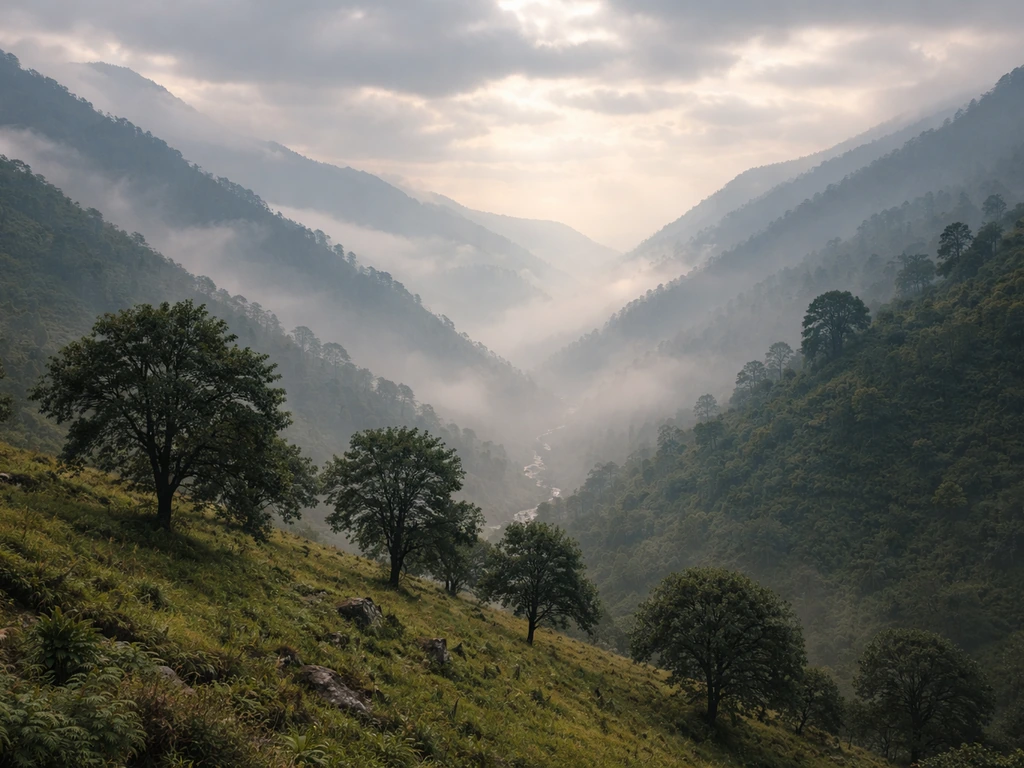
Walnut trees do grow in India, but only in specific Himalayan hill regions where the climate mimics the cold temperate conditions the tree actually needs. If you are in the plains, a coastal state, or a hot interior region, the honest answer is: walnuts will not thrive there, at least not for any reliable nut production. The tree that works commercially in India is Juglans regia, the common or English walnut, and it is concentrated in four main states: Jammu & Kashmir, Himachal Pradesh, Uttarakhand, and Arunachal Pradesh. Everything else in this guide explains why those places work and how to tell whether your own location might qualify.
Where Do Walnut Trees Grow in India? Best Regions
Marcus Hendricks
22 Apr 2026
Walnut vs. English walnut: which species Indian searches are really asking about
When most people in India search for "walnut," they mean the nut they buy at the market: the wrinkled, brain-shaped kernel inside a hard shell. That is Juglans regia, also called Persian walnut or English walnut in horticulture literature. The Government of India's National Horticulture Board and APEDA both treat Juglans regia as India's walnut crop, and ICAR's extension publications cover its propagation techniques (including chip budding) for cultivation across temperate hill zones.
The confusion worth flagging is this: "Indian walnut" sometimes appears as a common name for Terminalia catappa, a tropical coastal tree that produces an almond-like kernel. That tree is entirely different, grows in hot humid climates, and is not what anyone asking about walnut cultivation in India is typically looking for. If you have seen references to a so-called "Indian walnut" that tolerates coastal or lowland heat, they are almost certainly referring to Terminalia catappa or another unrelated species, not Juglans regia.
So for the rest of this article, "walnut" means Juglans regia: the commercially cultivated temperate nut crop that India's government agencies, ICAR researchers, and Himalayan growers all recognize as the walnut of significance.
Does walnut grow in India? quick reality check
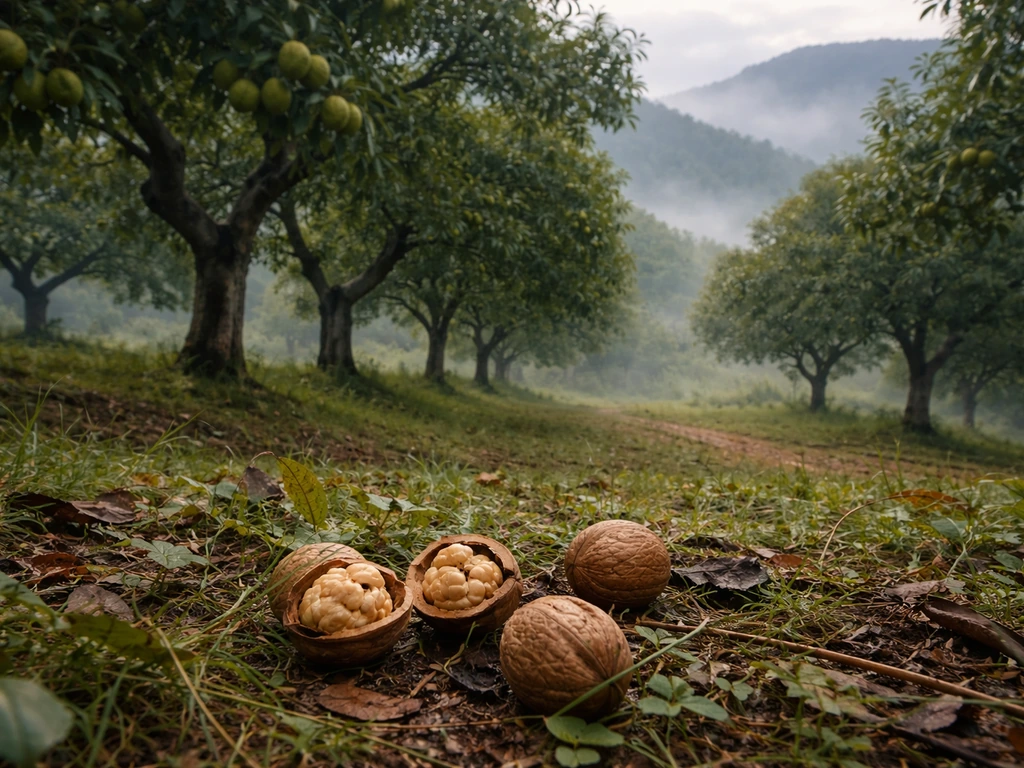
Yes, walnuts grow in India, and India does produce them commercially. If you are asking specifically about whether do walnut trees grow in Texas, the key factor is whether your location provides enough winter chilling and suitable elevation, which Texas generally does not across most areas Walnuts do grow in India. Walnuts do grow on trees, specifically Juglans regia, and those trees need cold winters and the right elevation to set reliable nuts walnuts grow on trees.
But the growing area is geographically narrow. Walnut is classified as a temperate nut fruit crop, which means it needs genuine winters with cold temperatures sustained for months. Most of India's land area simply does not provide that. The plains, the Deccan Plateau, the coastal belt, and the northeastern lowlands all get too warm in winter for walnut to accumulate the cold exposure it needs to break dormancy and fruit properly.
What India does have is a substantial stretch of temperate Himalayan terrain where elevation keeps winters cold and summers mild enough for the tree to function. If you are wondering where walnut trees can grow, India’s reliable options are mostly the temperate Himalayan hill zones rather than the plains and coasts. That is where you find walnut, both in semi-naturalized stands in the northwest Himalayan region and in actively managed orchards. Outside those hill zones, growing Juglans regia for nuts is not realistic under current Indian climate conditions.
Where walnuts grow in India
The four states that APEDA officially lists as India's major walnut-growing regions are Jammu & Kashmir, Himachal Pradesh, Uttarakhand, and Arunachal Pradesh. Government cultivation planning documents, including the NHB's Detailed Project Report for walnut and the TNAU checklist of commercial fruits, list exactly the same states as recommended areas for varieties like CITH Walnut-5 developed by ICAR-CITH (Central Institute of Temperate Horticulture).
Jammu & Kashmir is by far the most prominent producing region, with the Kashmir Valley holding the bulk of India's commercial walnut output. The valley sits at roughly 1,600 m elevation, experiences cold, snowy winters, and has a long history of walnut cultivation that goes back centuries. Trees here are often large and long-lived, and many grow in or near agricultural fields and home gardens rather than in formal orchards.
Himachal Pradesh and Uttarakhand have significant walnut cultivation in their mid-hill and upper-hill zones, particularly in districts with elevations from about 1,200 m upward. In Himachal, areas like Kinnaur, parts of Shimla district, and Kullu valley have walnut. In Uttarakhand, the Garhwal and Kumaon hill tracts host walnut trees, often in mixed agroforestry systems alongside apple orchards.
Arunachal Pradesh is the northeastern outlier. Its higher-elevation temperate tracts in the central and western parts of the state provide the cold conditions walnut needs. It is less commercially dominant than J&K but is officially recognized as a suitable growing zone. World Agroforestry documentation notes Juglans regia's natural range includes the North Western Himalayan region, where it occurs in moist mountain mixed forest contexts.
Ideal climate and elevation: what walnut actually needs
Elevation range
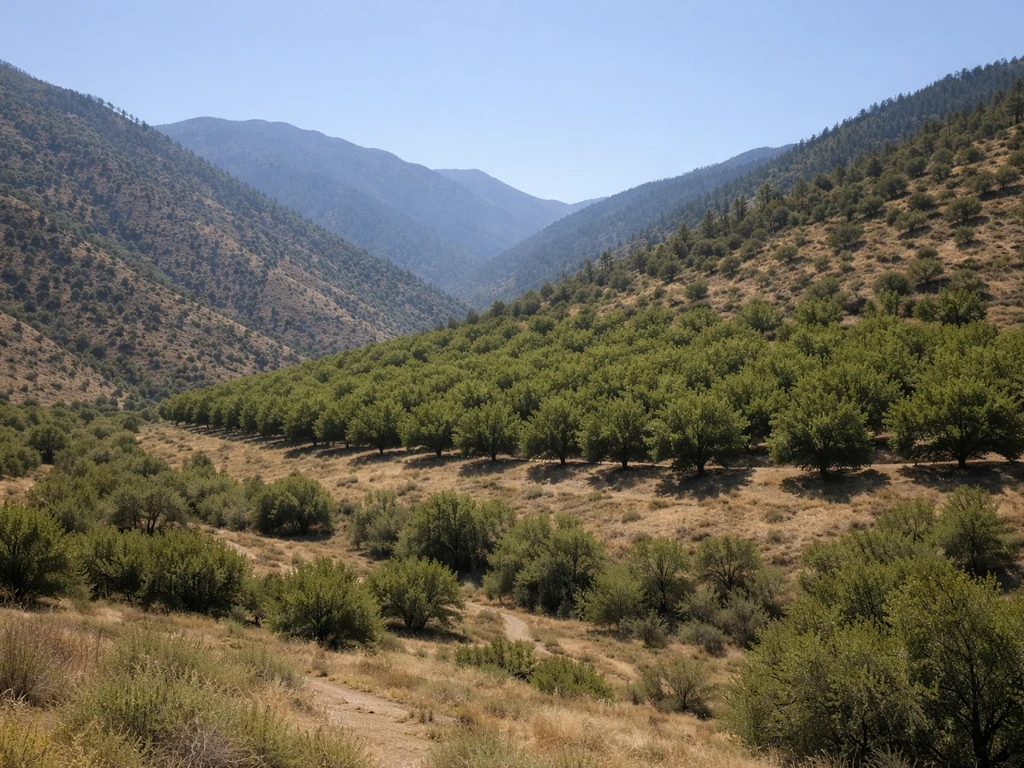
The NHB's cultivation framework places walnut's suitable elevation band at roughly 1,000 to 2,000 m for commercial production in India. World Agroforestry's species database extends that range up to 3,000 m for the species globally. In practice for Indian growers, an elevation of 1,200 to 2,500 m is the working horticultural guideline, with the sweet spot for reliable production sitting between 1,400 and 2,200 m in most Himalayan hill states. Below 1,000 m, winters are generally too warm for adequate chilling. Above 2,500 m, late spring frosts become a serious threat to flowers and young shoots.
Chilling hours
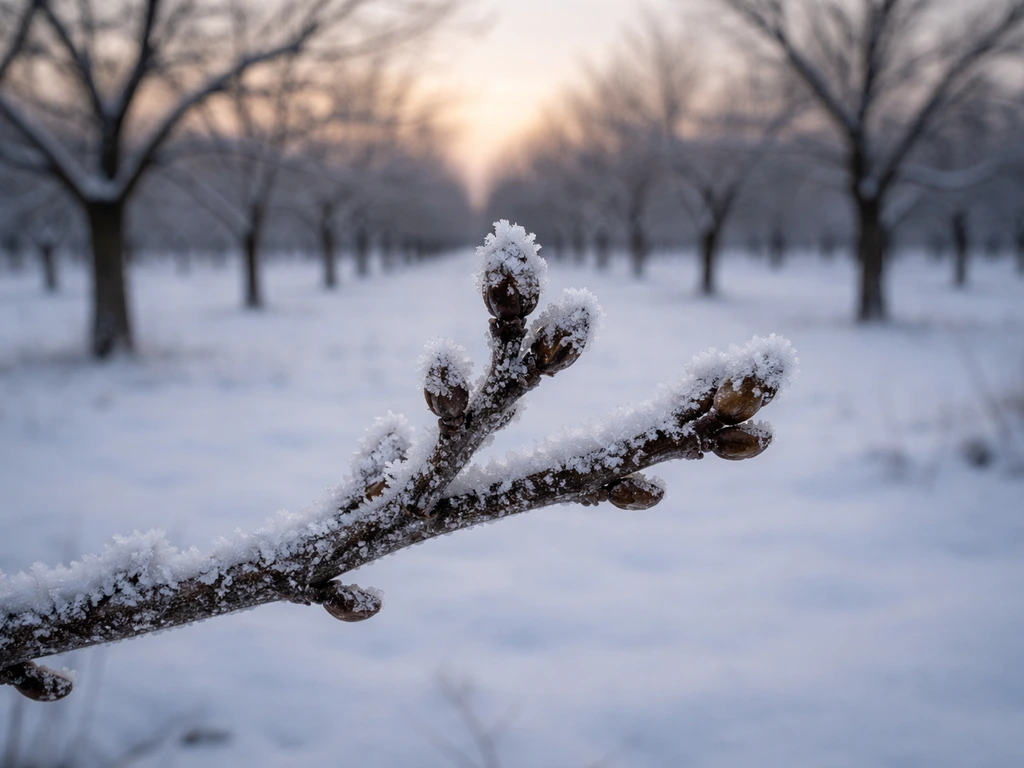
This is the single most important climate variable for walnut, and it is the one most often misunderstood. blank" rel="noopener noreferrer">Chilling hours refer to the cumulative number of hours a tree spends at temperatures between roughly 0 and 7°C (32 to 45°F) during its winter dormancy. That cold exposure is what allows the tree to fully rest and then break dormancy in spring to flower and fruit properly. Without enough chilling, walnut trees break dormancy irregularly, produce poorly, or decline over time. In other words, if a walnut tree does not get enough winter chilling, it may not produce walnuts every year reliably.
Indian agronomy documents are consistent on this: Juglans regia cultivars require between 700 and 1,500 chilling hours depending on the variety. That is a wide range, and it matters enormously for variety selection. A cultivar needing 1,400 hours will fail in a location that only reliably delivers 800. Matching the cultivar to your actual local chilling accumulation is not optional; it is the foundation of whether your planting works.
Temperature limits
Beyond winter chilling, walnut has two other temperature-related vulnerabilities that India's hill growers deal with directly. First, spring frost: walnut leafs out and flowers relatively early, and a late frost after bud break can destroy the entire year's crop. This is a real constraint at higher elevations and in valley floors where cold air pools. Second, summer heat: walnut does not tolerate prolonged high temperatures well, and extremely hot dry summers stress the tree, reduce kernel quality, and increase disease pressure. This is why the mid-elevation temperate belt works and the lower foothills generally do not.
Rainfall and water needs
FAO guidance for walnut points to a rainfall or irrigation equivalent of around 800 mm annually as a reasonable working threshold. The tree needs well-distributed moisture, especially during fruit development in summer. It also requires good soil drainage: Juglans regia does not tolerate waterlogged roots. In practice, the Kashmir Valley and Himachal hill zones receive adequate monsoon moisture, but growers in drier aspects or rain shadow areas need to account for supplemental irrigation. Humid foothill valleys come with their own problem: prolonged leaf wetness encourages walnut blight caused by Xanthomonas arboricola pv. juglandis, a bacterial disease that worsens when wet conditions and moderate temperatures combine.
State by state: which Indian regions are most suitable and why
| Region | Elevation Typical Range | Key Advantage | Main Risk |
|---|---|---|---|
| Jammu & Kashmir (Kashmir Valley) | 1,500–2,200 m | Proven commercial production; long history; ideal chilling accumulation | Spring frost in valley floors; some disease pressure in wet years |
| Himachal Pradesh (Kinnaur, Shimla, Kullu districts) | 1,200–2,200 m | Good elevation range; established agroforestry integration with apple belts | Variable rainfall; some areas have frost or heat extremes at altitude margins |
| Uttarakhand (Garhwal and Kumaon hill tracts) | 1,200–2,000 m | Suitable temperate pockets; walnut present in mixed farming systems | Lower elevations may fall short on chilling; drainage variable |
| Arunachal Pradesh (higher-elevation central and western tracts) | 1,500–2,500 m | Recognized official growing zone; temperate belt meets requirements | Less developed walnut infrastructure; access and market linkage challenges |
| Other Himalayan hill states (Meghalaya highlands, parts of Sikkim) | 1,500+ m | Some temperate pockets may be marginal candidates | Generally marginal; limited documented production; high humidity risk |
For anyone outside these zones, including the entire Indo-Gangetic plain, Rajasthan, peninsular India, and all coastal states, walnut cultivation for nuts is not viable under current conditions. Whether can walnuts grow in the UK depends mostly on winter chilling and whether you have a sufficiently mild but not heat-stressed site. Whether do walnut trees grow in Ireland is another climate question, but the same basics about winter chilling and suitable elevation apply can walnuts grow in the UK. The climate mismatch is not a matter of degree; it is a fundamental incompatibility. No irrigation, soil amendment, or microclimate trick substitutes for genuine cold winters at elevation.
How to tell if your location can actually support walnut
If you are in one of the four recognized states but are not sure your specific location qualifies, here is a practical checklist to work through before planting anything.
- Check your elevation first. If you are below 1,000 m, stop here. Walnut is unlikely to thrive for nut production. If you are between 1,000 and 1,200 m, you are in marginal territory and need to verify chilling data carefully. Above 1,200 m, you are in the working range.
- Estimate your chilling hours. Talk to your state's horticulture department or district agricultural office. They often have local climate data or can point you to the nearest weather station. You are looking for cumulative hours below 7°C (45°F) during the November to February window. You need at least 700 hours for the most low-chill cultivars; ideally 1,000 or more for standard varieties.
- Assess your spring frost history. Ask local farmers or check district agricultural records for the average date of the last frost. Walnut flowers and leafs out in March to April in most Indian hill zones. If your area regularly gets frost past mid-March, factor that into variety selection or plan for frost protection measures.
- Check your summer peak temperatures. If daytime highs exceed 38 to 40°C regularly in June and July, that is a stress signal. Walnut can tolerate warm summers but not prolonged extreme heat, especially at flowering and kernel-fill stages.
- Assess drainage. Walnut roots are highly sensitive to waterlogging. If your land stays wet for extended periods after rain, you need raised beds, slope planting, or drainage improvement before walnut is viable.
- Talk to a local ICAR-CITH extension officer or state horticulture department. ICAR-CITH (based in Srinagar) is India's lead research body for temperate fruit including walnut. They can advise on cultivar selection for your specific chilling range, which is the most practical next step after confirming elevation and drainage.
Planting and cultivation basics for Indian growers
Once you have confirmed your location genuinely fits, here is what walnut cultivation in India actually involves. This is not a quick crop. Walnut trees grown from seed can take 8 to 12 years to bear nuts reliably. Grafted or budded trees, which ICAR promotes using chip budding techniques to improve propagation efficiency, typically come into production in 5 to 7 years. That timeline is not unique to India, but it is worth stating clearly because walnut is a long-term commitment.
Variety selection
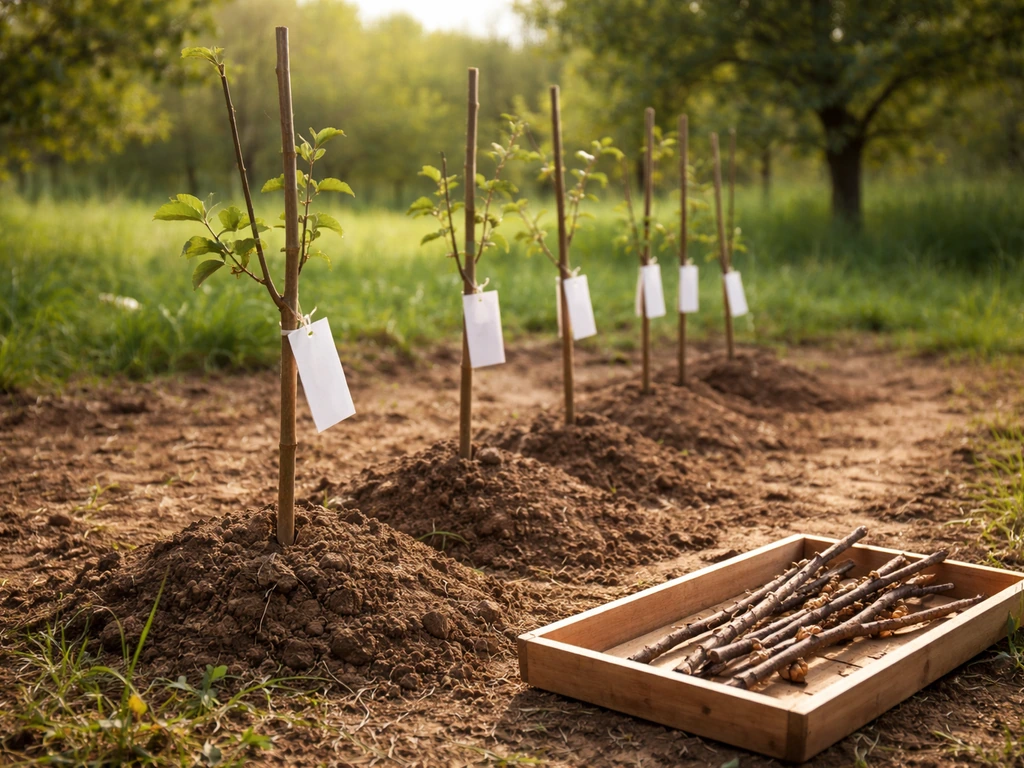
Match the cultivar to your chilling hours. ICAR-CITH has released varieties specifically for Indian temperate hill conditions, including CITH Walnut-5 and others. Government cultivation planning documents list recommended areas for each released variety, which makes it straightforward to identify which varieties are approved for your state. Do not try to grow a high-chill variety in a location that only delivers 700 to 800 chilling hours: the tree will underperform or fail to fruit predictably.
Soil preparation
Walnut prefers deep, well-drained loamy soils with a near-neutral to slightly alkaline pH. It does poorly in compacted, waterlogged, or highly saline soils. On slopes, prepare pits of roughly 1 m by 1 m by 1 m, amend with well-rotted farmyard manure, and ensure the planting site sheds water rather than pooling it. Avoid planting in low-lying frost pockets.
Spacing and planting
Standard orchard spacing for walnut in India is around 10 to 12 m between trees, though older traditional planting in Kashmir uses wider spacing because mature walnut trees become very large. Planting is typically done in late winter to early spring (January to March) or in the monsoon season in areas where summer planting is practical. Grafted plants from certified nurseries are strongly preferred over seedlings for predictable fruiting.
Water and nutrition
Young walnut trees need regular irrigation until established, particularly through their first two dry seasons. Mature trees in areas receiving 800 mm or more of annual rainfall can largely sustain themselves, but supplemental irrigation during the critical kernel-fill period (typically May to July) improves yield and kernel quality noticeably. For nutrition, a balanced program incorporating nitrogen, phosphorus, and potassium, adjusted after soil testing, is the standard approach. Avoid over-application of nitrogen, which promotes lush vegetative growth at the expense of nut development and increases disease susceptibility.
Disease and pest awareness
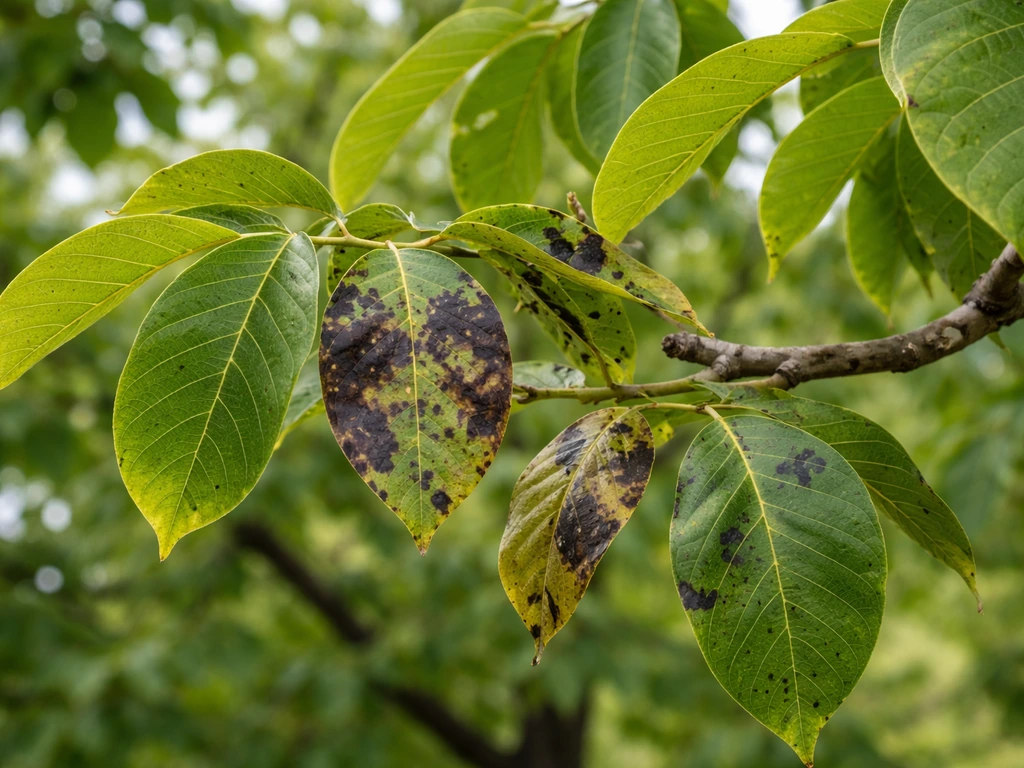
Walnut blight is the primary disease concern in Indian growing regions, particularly in wetter years or humid valley sites. The bacterium involved (Xanthomonas arboricola pv. juglandis) spreads rapidly under wet, mild conditions, infecting young shoots, leaves, and developing nuts. Copper-based sprays applied preventively at bud break and during wet periods are the standard management approach. Keeping trees well-spaced for airflow and avoiding overhead irrigation reduces leaf wetness duration, which directly limits infection risk. Beyond blight, scale insects and aphids are common but manageable with standard horticultural practices.
For anyone comparing walnut's regional limitations to those of other temperate nut crops, walnut is broadly similar to apple in its elevation and chilling requirements within India. If apple orchards are common and productive in your district, walnut is worth serious consideration. If apple does not grow reliably in your area, walnut almost certainly will not either. That is one of the most practical ground-truth checks you can apply without any specialized equipment.
FAQ
How can I estimate whether my exact location has enough chilling hours for Juglans regia?
If you are in the four main states, do a local chilling check before buying planting material. Use nearby weather records or a chilling-hours calculator for your exact district, because a village at 1,300 m can differ sharply from a nearby slope at 1,450 m. Then choose a cultivar that matches your chilling range, since even small mismatches can cause irregular flowering and nut set.
Can walnut trees survive in hot or coastal parts of India, even if they do not produce nuts reliably?
Yes, walnut can still be grown as a landscape or “shade tree” in warmer places, but it is a gamble for reliable nut production. Without sufficient cold exposure, trees may leaf out unevenly and produce very few or no nuts in some years, and they can decline faster because they never fully complete dormancy.
If my area is warm, can I rely on microclimate adjustments like shade, windbreaks, or irrigation to make walnuts productive?
There is no reliable “coastal microclimate trick” that substitutes for winter chilling. You can improve shelter from frost and wind, and you can manage irrigation and drainage, but you cannot generate the missing cold exposure needed for proper bud break and fruiting.
How do I avoid buying the wrong “walnut” species when nursery stock is labeled confusingly?
Do not confuse the common name “Indian walnut.” Terminalia catappa is unrelated, thrives in hot humid climates, and its edible kernel is different from English walnut. If you are buying seedlings, confirm the Latin name Juglans regia (and ideally the cultivar) on the label or purchase documents.
What is a common mistake when choosing a planting spot within the Himalayan belt, and how does frost pocket location affect yield?
Spring frost risk is about where cold air collects, not only about average temperature. Low-lying valley floors and frost pockets can lose buds even when the broader area is suitable, so avoid planting in depressions and orient plantings to reduce cold-air pooling.
Should I grow walnuts from seed or buy grafted plants in India for reliable nut production?
For nut production, seedlings are usually a poor choice because they are genetically variable. Using grafted or budded plants from certified nurseries is the practical way to get predictable bearing time and kernel performance, and it is especially important if you are matching cultivars to chilling hours.
What soil and water conditions most commonly cause walnut failure even in walnut-friendly states?
Walnut water needs are not just “how much rainfall,” it is also how moisture is distributed and how quickly water drains. Even in rainy regions, compacted or waterlogged soils can damage roots, so test drainage and avoid sites where water stays after monsoon showers.
When is irrigation most critical for kernel size and quality in Juglans regia?
If you cannot provide enough rainfall, focus supplemental irrigation on the kernel-development window (roughly late spring into summer). Inadequate water then reduces kernel size and quality, even if the tree survived winter and flowered well.
What simple practices reduce walnut blight risk in humid valley areas?
Yes, especially in wetter, humid aspects. Walnut blight risk rises with prolonged leaf wetness, so overhead irrigation and dense spacing that reduces airflow can increase disease pressure. Keep spacing adequate, manage canopy, and aim for preventive copper sprays at bud break when wet weather persists.
How should I fertilize walnut trees without causing excessive vegetative growth or higher disease pressure?
Nutrient management should follow soil testing. Over-using nitrogen can push excessive vegetative growth, which competes with nut development and can increase disease susceptibility. A balanced N-P-K program, adjusted to your soil results, is typically safer than fixed dosing.
Is comparing local apple performance a good screening test for whether walnuts will work?
If apples do not set fruit reliably in your district, walnuts usually will not either, because both are temperate crops with chilling needs. As a practical check, ask local growers about apple flowering consistency, then verify chilling-hours for your site before investing.