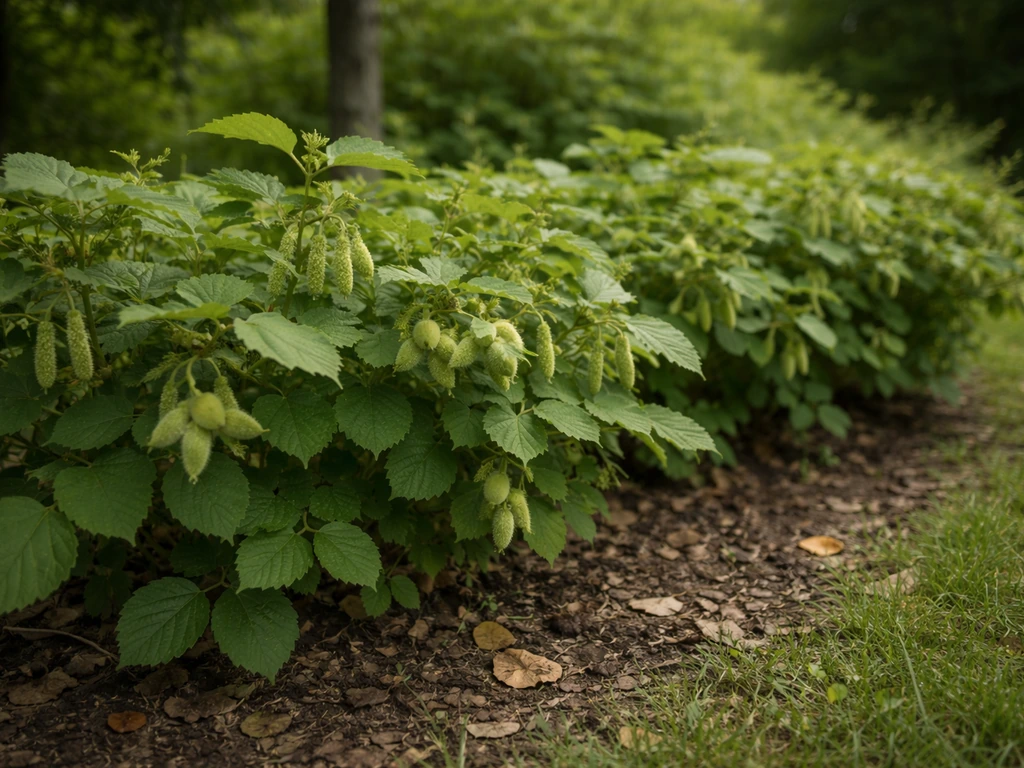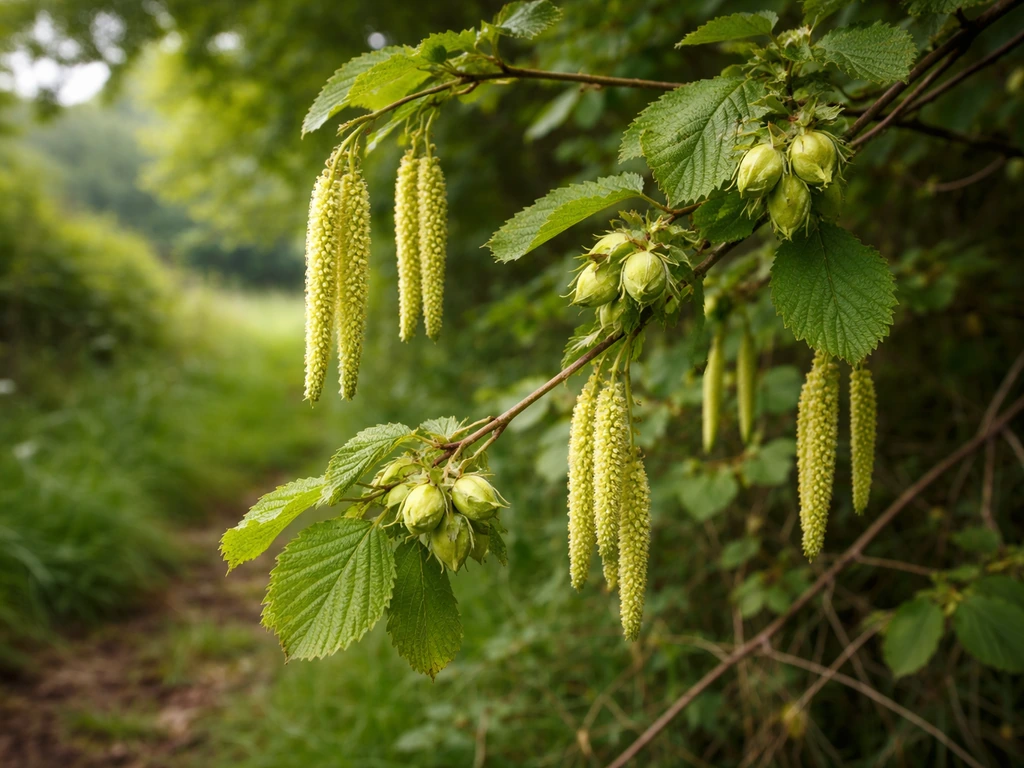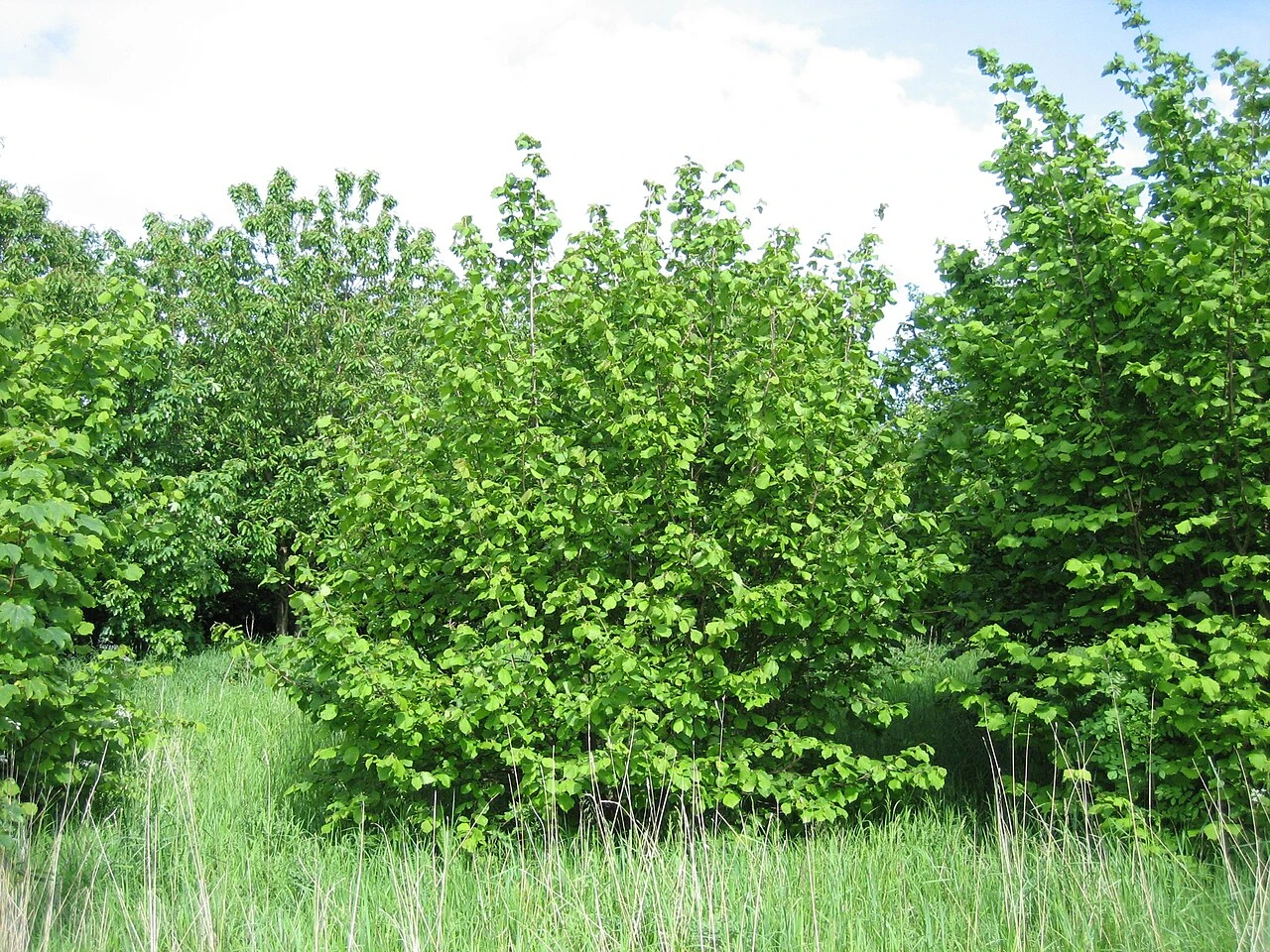
Store-bought hazelnuts can germinate and grow into trees, but only under one condition: they have to be raw and unprocessed. The hazelnuts you find roasted, salted, blanched, or even lightly heat-treated at a grocery store are dead seeds. No amount of stratification or careful planting will bring them back. However, if you can find genuinely raw, in-shell hazelnuts (often sold as 'whole raw hazelnuts' at natural food stores or online), there is a real chance of germination, provided you handle them correctly.
Will Store-Bought Hazelnuts Grow? How to Try
Marcus Hendricks
29 Apr 2026
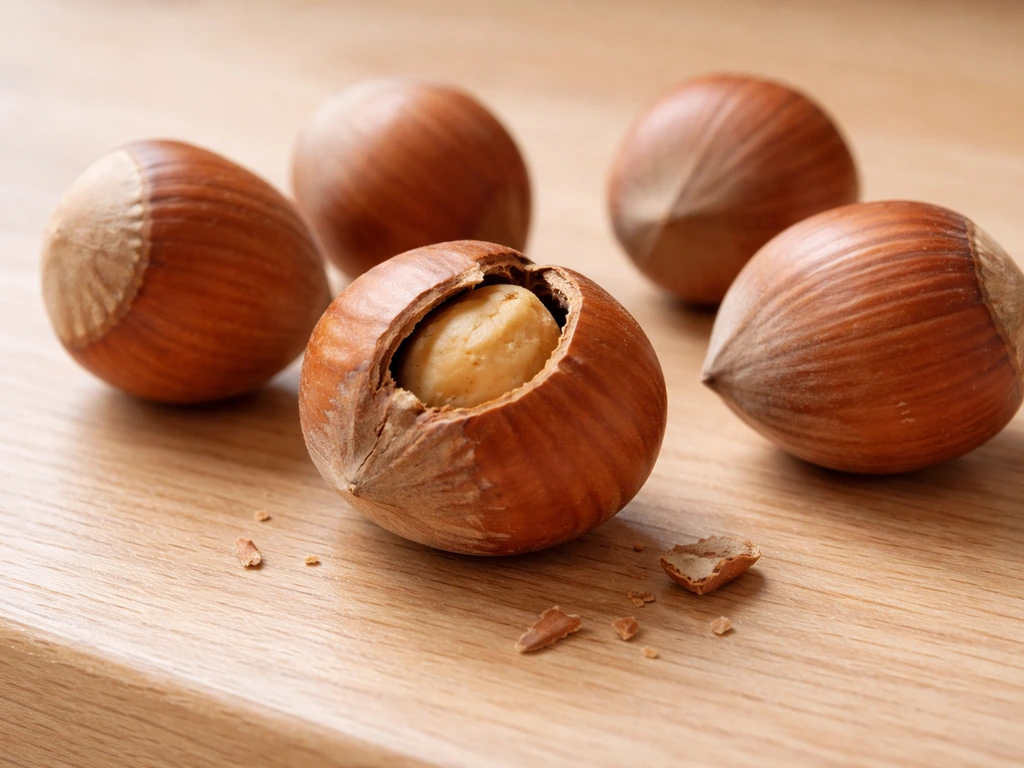
Can store-bought hazelnuts actually sprout?
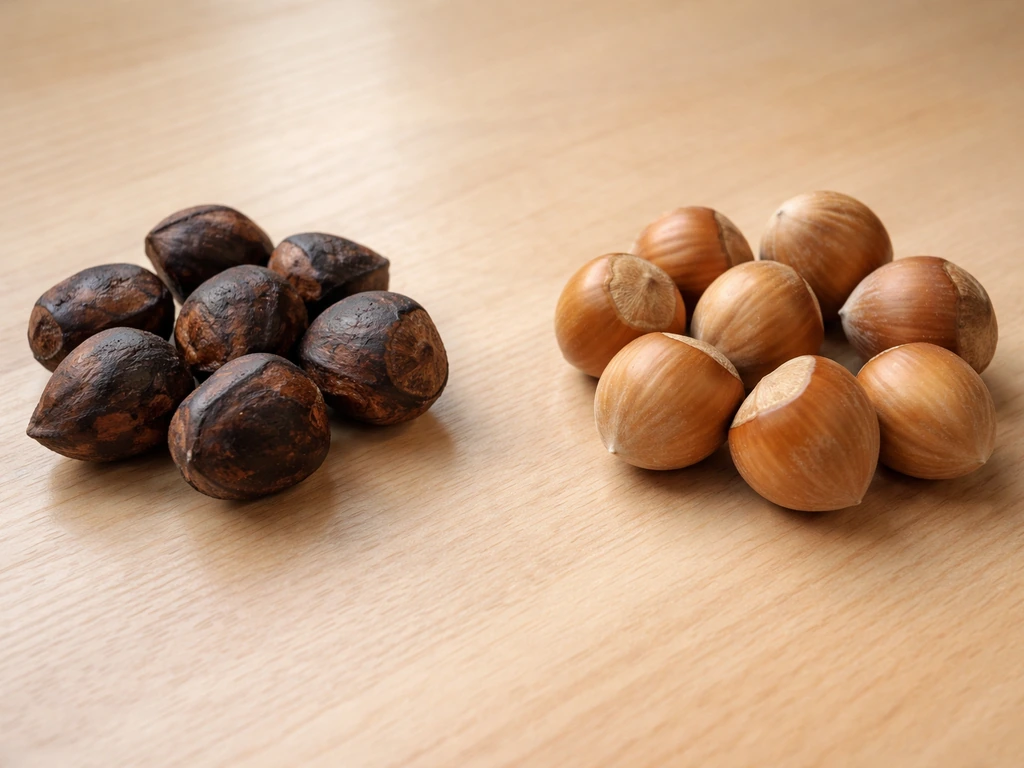
The single biggest factor is whether the nut has been heat-treated. Roasting kills the embryo inside the shell. So does blanching (the process that removes the papery skin), and so does the low-level heat used in many commercial drying processes. The internal temperature needed to kill a hazelnut embryo is surprisingly low, which is why even 'lightly roasted' nuts are almost always nonviable. If the shell has been cracked, if the nut smells nutty in that roasted way, or if the label says anything other than 'raw,' assume it won't sprout.
Raw, in-shell hazelnuts are a different story. These retain a living embryo and can germinate if you replicate the conditions the nut would experience naturally over winter. The challenge with raw store-bought hazelnuts is that viability drops significantly after about a year in storage, and you rarely know how long those nuts sat in a warehouse or on a shelf before you bought them. That doesn't mean they're dead, but it does mean your germination rate might be lower than you'd expect from freshly harvested seed.
One more thing worth knowing: even if the nuts do sprout, the seedlings may not perform like a named cultivar. Hazelnuts grown from seed rarely match the parent plant in nut quality, productivity, or disease resistance. Seed-grown trees can produce nuts that are difficult or impossible to remove cleanly from their husks, which is deeply frustrating after years of waiting. This doesn't mean it's not worth doing, but you should go in with clear expectations.
How to test viability before you bother planting
The most reliable professional viability test for hazelnut seeds is tetrazolium chloride (TZ) staining, which is what seed labs use. In practice, this involves cutting a seed and soaking it in a TZ solution, where living tissue stains pink or red. It's not something most home growers will set up, but if you're working with a large batch and want to know your odds before investing weeks of stratification time, it's worth looking into. Some university extension labs or seed-testing services will run a TZ test for a small fee.
A simpler home test is the float test: drop your shelled hazelnuts into a container of water. Nuts that sink are more likely to be viable; floaters have often dried out or have an empty or damaged kernel. This isn't foolproof, but it takes 30 seconds and eliminates the most obvious duds. After that, crack a couple of sample nuts open and look at the kernel. A healthy, viable kernel will be firm, cream-colored, and intact. If it's shriveled, discolored, or smells off, the batch may have been stored too long.
Once you've sorted your best candidates, give them a light rinse to remove any surface debris or mold spores. Avoid soaking them for extended periods before stratification, as waterlogged nuts can rot rather than stratify. A brief 24-hour soak in cool water is fine to rehydrate slightly dried seeds, but that's the maximum. USDA ARS NCGR Corvallis guidance for Corylus germplasm describes soaking hazelnut nuts for two to four days in water, then stratifying at 4°C for three to five months two to four days in water, then stratified at 4°C for three to five months.
Cold stratification: what it is and how to do it properly
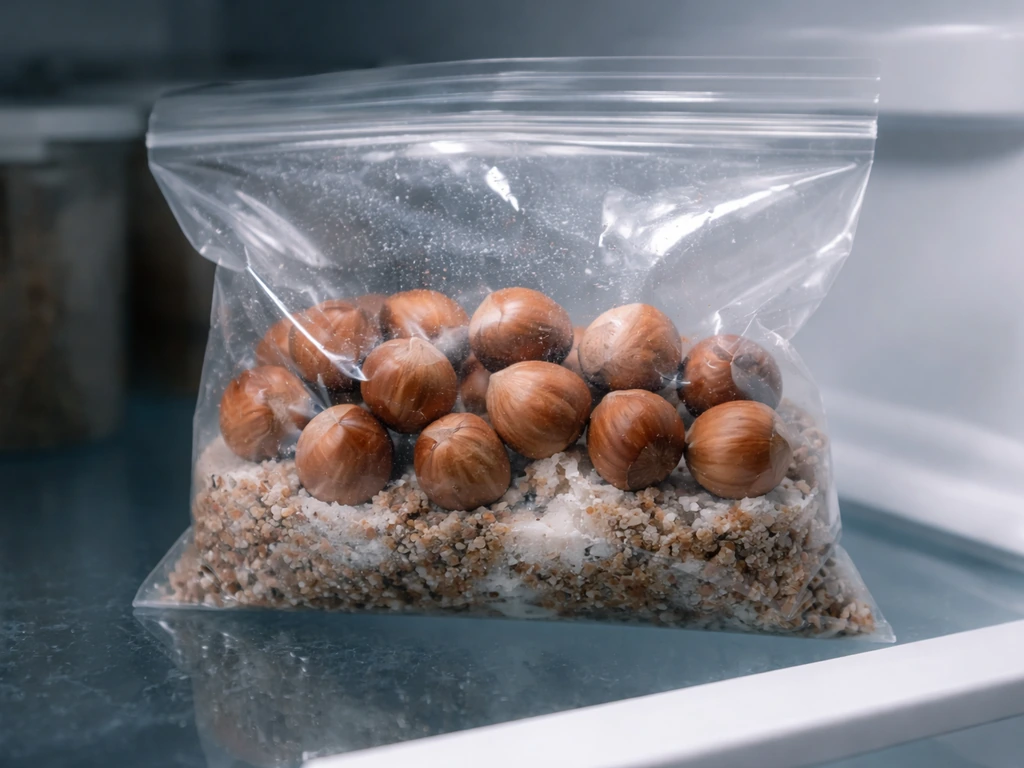
Hazelnuts have a hard dormancy mechanism that mimics winter. In nature, the nut falls in autumn, sits in cold, moist soil through winter, and germinates in spring. You need to replicate this with cold stratification. Skipping this step is the most common reason store-bought hazelnuts fail to sprout even when they were perfectly viable to start.
The standard stratification period for Corylus avellana is roughly 60 days (about two months) at temperatures between 3 and 5 degrees Celsius (37 to 41 degrees Fahrenheit). Forest Research (UK) also suggests sowing Corylus avellana when about 10% of the seed is chitted, using chitting as an indicator that the remaining seeds are close to germination. Some sources suggest that seeds with deeper dormancy benefit from a warm-then-cold stratification cycle, starting with a few weeks at room temperature before moving to the cold phase. If your store-bought nuts are from a batch that may have been stored at room temperature for a long time, this two-stage approach is worth trying.
- Place your nuts in a zip-lock bag or sealed container with moistened (not wet) peat moss or clean sand. The medium should feel like a damp sponge, not dripping.
- Optional warm phase: leave the sealed bag at room temperature (around 20°C / 68°F) for two to four weeks if you suspect deep dormancy.
- Cold phase: move the bag to the refrigerator (3 to 5°C / 37 to 41°F) for a minimum of 60 days. Some hazelnut species related to Corylus cornuta benefit from up to 3 to 6 months of cold.
- Check weekly for mold. If you see any, remove affected nuts, rinse the rest, and repack them in fresh medium.
- Watch for chitting: tiny root tips beginning to emerge from the shell. Once about 10% of your nuts show this, the whole batch is likely close to ready and can be planted. This is a reliable readiness indicator used in forestry seed programs.
Planting your stratified hazelnuts
Container vs. ground planting
Starting in containers gives you the most control, especially if you're not sure whether your climate or soil is ideal yet. Use deep pots (at least 30 cm / 12 inches) filled with a well-draining mix. Hazelnuts have a taproot that can struggle in shallow containers, so depth matters more than width at the seedling stage. Plant each nut about 2 to 3 cm (roughly 1 inch) deep with the pointed end down if you can tell the orientation, though it's not critical.
Direct ground planting works well if you have a spot with well-drained, moist, loamy soil and you're in a suitable climate zone. If you’re wondering what nuts grow in Ireland, the hazelnut’s success will depend on finding the right site conditions in a suitable climate zone. Planting directly saves the transplant step and lets the taproot establish without restriction. Mark the spots clearly because hazelnut seedlings don't look dramatic at first and are easy to disturb or mistake for weeds.
| Factor | Container Planting | Ground Planting |
|---|---|---|
| Control over conditions | High (soil, moisture, location) | Lower (depends on native soil) |
| Taproot development | Restricted in shallow pots | Unrestricted |
| Transplant stress later | Yes, when moving outdoors | None |
| Best for | Uncertain climate/soil; cold regions; testing viability | Confirmed suitable zone; established garden beds |
| Depth needed | 30 cm+ pots | Plant 2–3 cm deep in prepared bed |
Early care after planting
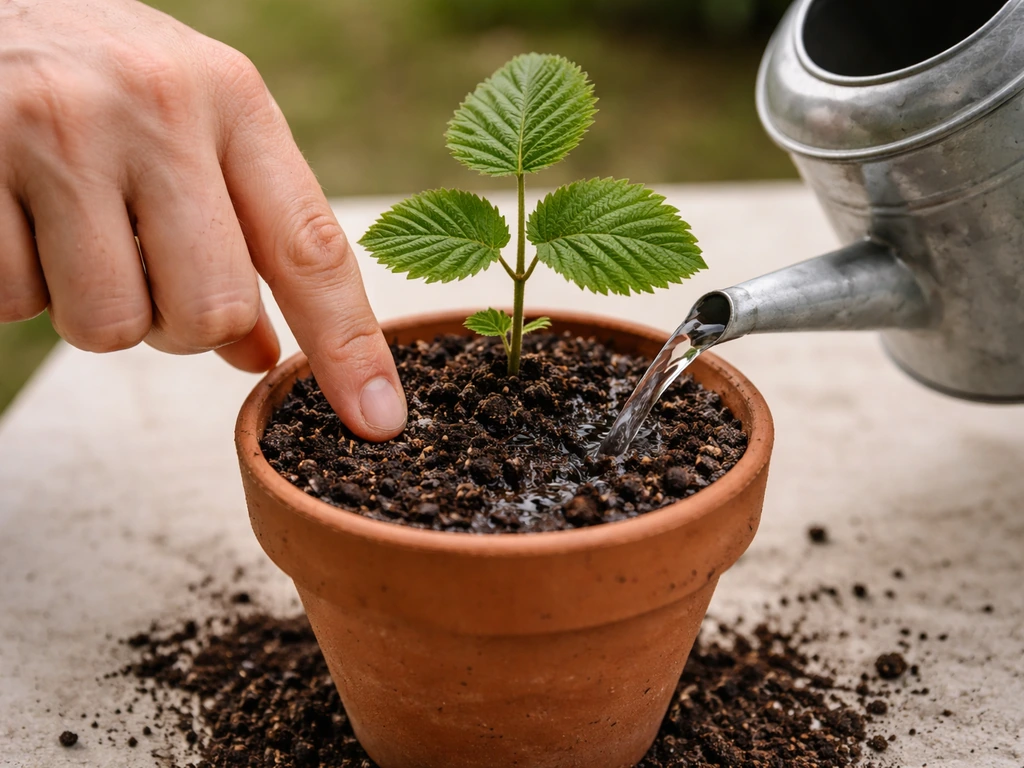
Hazelnuts prefer well-drained, loamy soil with consistent moisture, especially while germinating and establishing. Water deeply but let the root zone dry out slightly between waterings rather than keeping the soil perpetually wet. In hot weather, this may mean watering every few days; in cool spring conditions, once a week or less might be sufficient. Overwatering is a more common killer of hazelnut seedlings than underwatering.
Before you add any fertilizer, take a soil sample and get it tested. Adding nitrogen to a soil that doesn't need it can push leafy growth at the expense of root development and long-term plant health. Start with a soil test result, not a general schedule.
Realistic timeline: from seed to seedling to nuts
Assuming your stratified nuts germinate in spring, you'll see seedling emergence within two to four weeks of planting in warm soil. The first-year plant will look modest: a single stem with a few leaves, spending most of its energy building roots. Don't panic if above-ground growth seems slow in year one.
Hazelnut trees grown from seed typically begin producing nuts in three to four years under good conditions. Full production doesn't happen until the tree is seven to eight years old. That's a long wait, and it's worth being honest with yourself about it. If you're planting store-bought seeds as a learning project or a long-term landscape planting, that timeline is fine. If you want nuts within a couple of years, starting with a nursery-grown cultivar is a much better path.
There's also the cultivar lottery to consider with seed-grown trees. Because hazelnuts are self-incompatible and cross-pollinated, the seedlings you grow will be genetic mixtures of two parent plants, and you won't know which parents those were. Most commercial hazelnuts are selected cultivars bred for large nut size, thin shells, and easy husk release. Seed-grown trees can produce anything from excellent to essentially unusable nuts, including the husks-that-won't-release problem mentioned in hazelnut extension research.
Pollination: the part most people miss
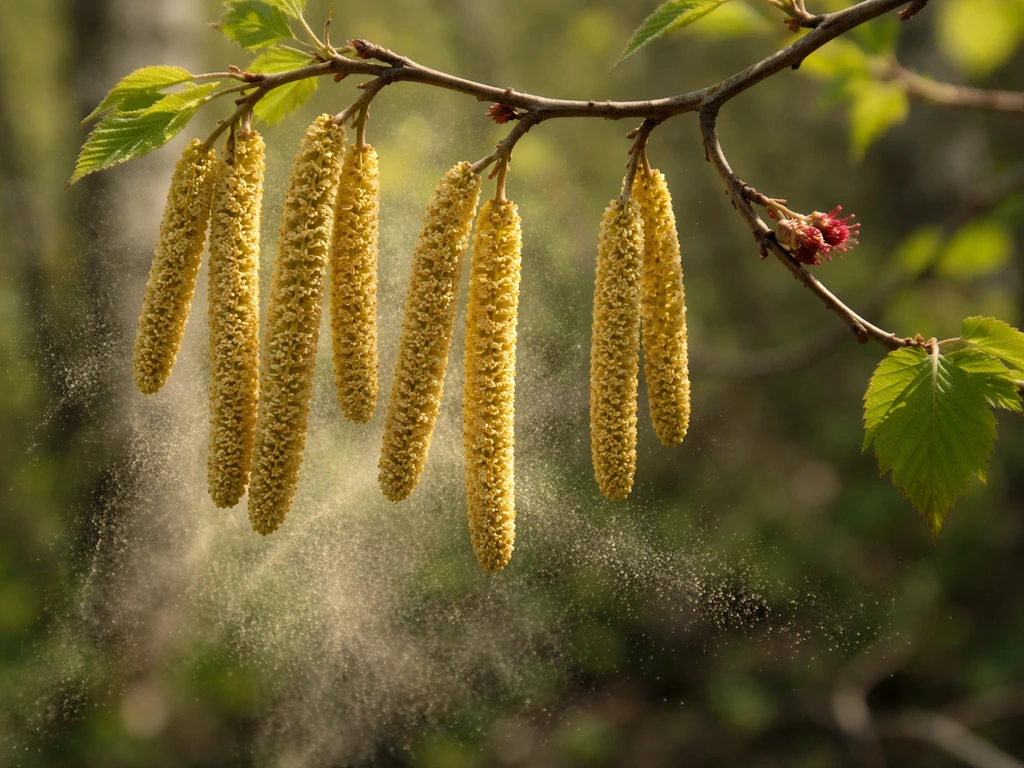
Hazelnuts are wind-pollinated and self-incompatible, which means a single tree will not produce a meaningful crop by itself. This is a hard biological fact, not a suggestion. The incompatibility system in hazelnuts (sporophytic self-incompatibility) means that pollen from the same tree, or even closely related trees, is rejected. You need at least two genetically different, compatible hazelnut plants for cross-pollination to work.
The timing complication is that hazelnuts are dichogamous: the male catkins (which release pollen) and the tiny female flowers often open at different times on the same tree. On a given tree, catkins may shed pollen before the female flowers on that same tree are receptive, or vice versa. For a good nut set, you need compatible pollen from a different plant arriving when the female flowers are receptive. Hazelnut female flowers can remain receptive for up to two months, which gives a wider window than many people expect, but you still need that compatible pollen source nearby.
Each hazelnut catkin produces more than one million pollen grains, and a mature tree carries thousands of catkins, so pollen quantity isn't the limiting factor. The limiting factor is having the right genetic partner nearby. Wind can carry pollen a reasonable distance, but planting your pollinizers within 15 to 20 meters of each other is a safer approach than relying on a neighbor's wild hazelnut down the road.
If you're growing from store-bought seeds, you'll almost certainly end up with seedlings of unknown genetics. Planting two or three seedlings from different seed sources (not all from the same bag of nuts) gives you a better chance of having genetically compatible trees than planting multiples from the same batch. Named cultivars from a nursery give you far more certainty about compatibility.
Climate and soil suitability: where hazelnuts actually thrive
Corylus avellana (the common European hazelnut) is generally suited to USDA hardiness zones 4 through 8, and to Canadian hardiness zones approximately 3b through 9a. That covers a wide range, including most of the UK, Ireland, much of Canada including parts of Ontario, and large portions of the northern United States. If you're in Michigan, the Pacific Northwest, or similar temperate zones, hazelnuts are a genuinely good fit.
In colder regions like northern Ontario, the challenges aren't just winter cold but also late spring frosts that can kill emerging female flowers and Eastern Filbert Blight (EFB), a fungal disease that devastates standard Corylus avellana cultivars. That’s why Ontario growers often focus on locally suited hazelnut varieties rather than trying to rely on whatever store-bought seed happens to be available. Ontario-specific research and breeding programs have been working on cultivars with better winter hardiness and EFB tolerance precisely because the standard European hazelnut isn't reliably suited to the harsher parts of the province. If you're growing in a region where EFB is present (much of eastern North America), seed-grown trees from store-bought nuts carry a high risk of susceptibility because you don't know the parent genetics.
For growers in zones 4 and colder, or in eastern North America where EFB is a concern, the native beaked hazelnut (Corylus cornuta) is a hardier alternative, though it produces smaller nuts. For growers asking do hazelnuts grow in Michigan, using hardier options like Corylus cornuta (beaked hazelnut) can be a safer comparison point in colder zones. American hazelnut (Corylus americana) is another native option that tolerates cold and has some natural EFB resistance. Hybrid cultivars bred specifically for cold hardiness and blight resistance exist and are worth sourcing from a reputable nursery if you're serious about nut production.
Soil requirements are fairly forgiving as long as drainage is good. Hazelnuts dislike waterlogged roots and do best in moist, loamy, moderately fertile ground. They tolerate slightly acidic to near-neutral pH. Avoid heavy clay without amendment, and avoid planting in low spots that collect standing water.
When it doesn't work: troubleshooting and better options
Common reasons store-bought hazelnuts fail to germinate
- The nuts were roasted, blanched, or heat-treated and the embryo was already dead before you started
- Viability was lost during long warehouse or shelf storage (viability can drop significantly after one year)
- Stratification was too short, too warm, or the medium dried out during the cold period
- Mold overwhelmed the nuts during stratification before the dormancy was broken
- Soil was kept too wet after planting, causing the germinating nut to rot
If your nuts didn't germinate after a proper stratification attempt, the most useful next step is to crack open a few of the unsprouted ones and look at the kernel. If it's dry, gray, or has no identifiable embryo, the nuts were dead before you started. If the kernel looks healthy but just didn't sprout, try a longer stratification period (up to three to four months total for a second attempt) or consider adding a warm stratification phase before the cold phase.
Better sourcing options if you want to get serious
If your goal is actually growing hazelnut trees rather than just experimenting, the most reliable path is to source seed nuts directly from a nut grower or seed supplier who can confirm the nuts are fresh and raw, ideally harvested in the current or previous season. Some native plant nurseries sell raw stratified hazelnut seeds ready to plant in spring. Even better for nut production: buy one- or two-year-old cultivar trees from a reputable nursery. You'll pay more upfront, but you'll get a plant of known genetics, known disease resistance, and known compatibility with specific pollinizers, cutting years off your wait for first nuts.
The store-bought experiment is genuinely worth trying if you're curious about the biology or want a low-cost project, but don't plan your orchard around it. Pair any seed-grown seedlings with at least one named cultivar to ensure you have a compatible pollination partner, and treat the seed-grown plants as a bonus rather than your primary strategy.
FAQ
Can I use hazelnuts labeled raw, but bought from a regular grocery store?
Yes, but only if you can confirm the “raw” nuts have not been heat-treated. Some brands label “raw” while still drying them with low heat, which can kill the embryo even if the nuts look unroasted. If the bag says roasted, lightly roasted, blanched, “ready to eat,” or lists any heat/drying instructions, treat them as nonviable.
If my store-bought hazelnuts do not sprout, should I extend stratification or assume they are dead?
You can, and it helps you avoid wasting time on dead nuts. Do a quick kernel check on a few nuts first, then stratify only the most promising ones. If the kernel is shriveled, brown, or smells scorched or rancid, extra stratification time will not fix it.
Does germination work the same with shelled hazelnuts versus in-shell nuts?
Start by sorting shelled from in-shell. Shelled nuts lose viability much faster because the kernel dries out, and the embryo is exposed to damage. If you must use shelled nuts, expect lower germination and consider shortening the time between soaking and starting cold stratification.
What’s the biggest mistake people make during cold stratification?
Cold stratification timing matters, but temperature consistency matters more. If your fridge swings warmer than about 5 to 6°C (41 to 43°F) for long stretches, you can end up with partial or uneven germination. Keep the medium (like damp sand or paper towels in a bag) consistently moist but not wet, and mix or check periodically to prevent early rot.
Is it okay to keep the stratification medium constantly wet?
In many cases, yes, especially for newer seedlings. Hazelnuts dislike repeatedly waterlogged soil, and fungus can set in if the medium stays wet in containers. If you see persistent fungal growth or foul smell, discard that batch and restart with fresh, properly drained medium.
Should I plant immediately when the nuts start to swell or only after they sprout?
Yes, plant after stratification only once the nuts have broken dormancy. If you dig them up and plant too early, they may rot or stall. A practical cue is that viable nuts often swell or show slight radicle movement during the cold phase, then you can pot them promptly.
Will seed-grown hazelnuts taste and shell like the cultivar I bought?
Not reliably. Seed-grown hazelnuts vary because of cross-pollination genetics, so you cannot count on the “easy to release” husk traits of named cultivars. If husk release quality matters to you (for eating and processing), plan to identify one or more seedlings as potential keepers after several years, and grafting named cultivars later is an option if you want to preserve good trees.
If I plant several seedlings from the same store bag, will they pollinate each other?
You should plan to. Even with two or three seed-grown seedlings, genetic compatibility and bloom timing are uncertain, and late frosts can wipe out female flowers in a given year. A safer setup is at least one named cultivar plus one or more compatible partners nearby, spaced about 15 to 20 meters if possible for wind pollen.
Is it better to start hazelnuts in containers or plant directly in the ground?
Mostly, but “seed starting” can be tricky because the taproot develops quickly and does not like root disturbance. If you start in containers, use deep pots and avoid frequent repotting. If you transplant, do it when the root system is small and handle with minimal disturbance.
Why did my hazelnut tree never produce nuts even though it flowered?
They often get it wrong by assuming hazelnuts are self-fertile or by relying on a random neighbor. Because hazelnuts are self-incompatible and timing can differ (male catkins and female receptivity may not overlap), you can still get little or no crop unless compatible pollen is present when females are receptive.