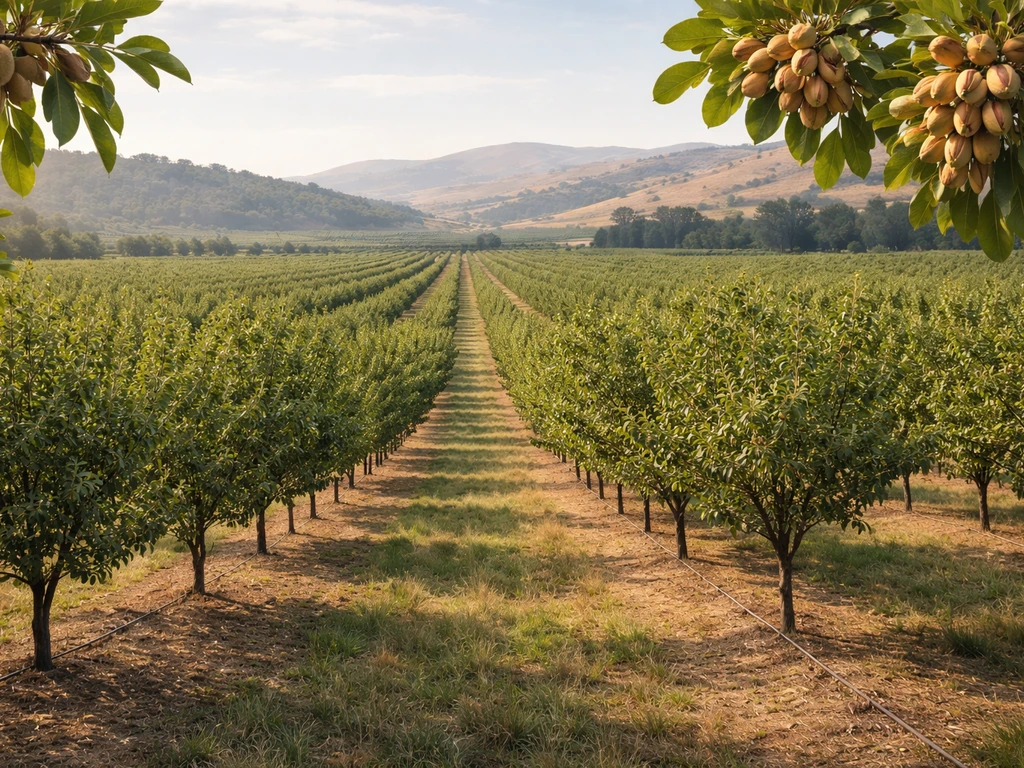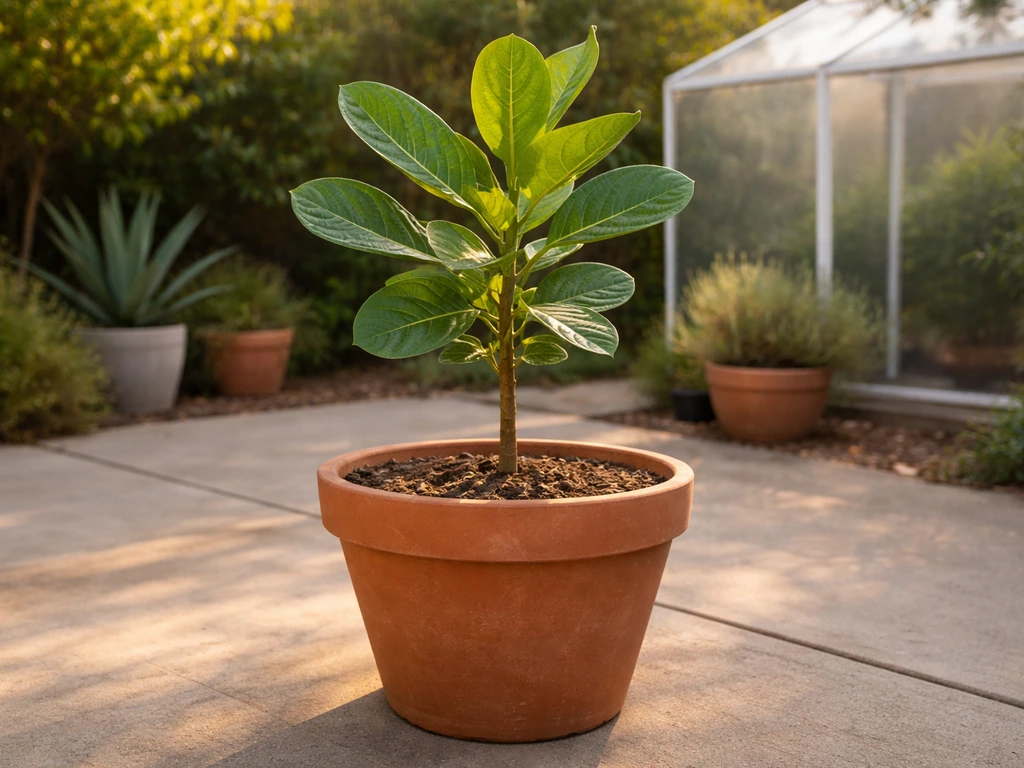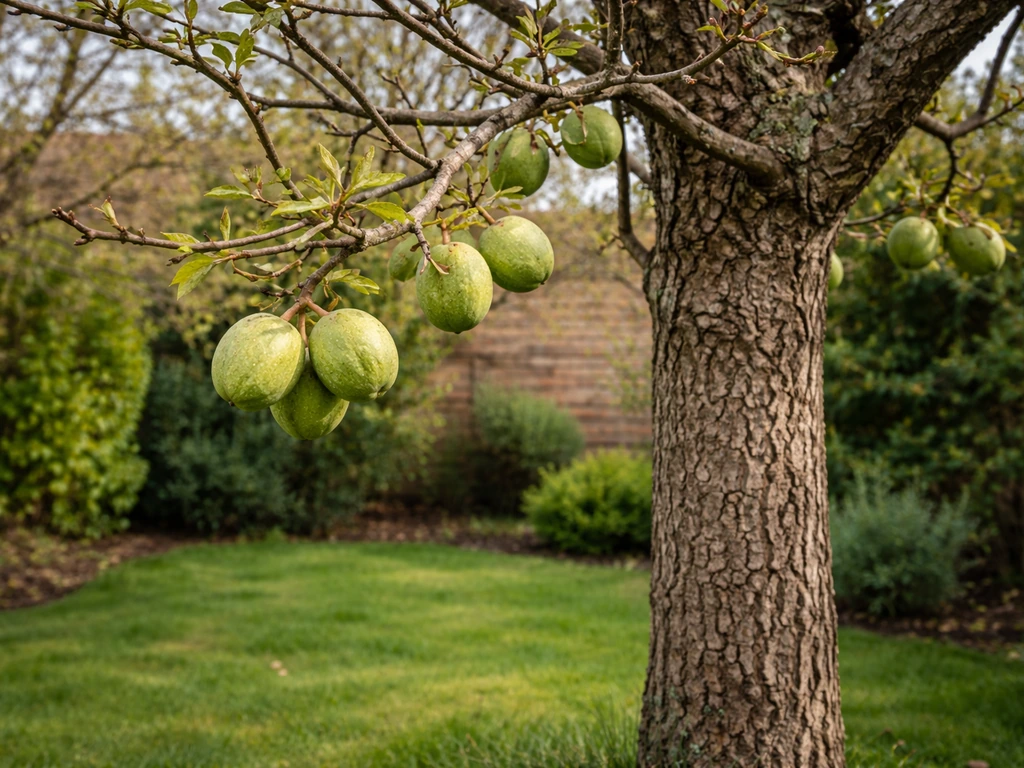
South Carolina is genuinely one of the better states in the Southeast for growing nut trees. Pecans, chestnuts, Chinese chestnuts, hazelnuts, hickories, and black walnuts all grow and produce reliably here, depending on where in the state you are. The Midlands and Coastal Plain favor pecans and chestnuts most. The Upstate, with its cooler winters, opens the door to more chestnut varieties, hazelnuts, and hickories that struggle on the coast. If you want a single recommendation to get started: a Chinese chestnut or an improved pecan cultivar will succeed in more parts of South Carolina than almost anything else you can plant.
What Nut Trees Grow in South Carolina: Best Picks by Region
Marcus Hendricks
19 May 2026
South Carolina's climate and hardiness basics for nut trees
South Carolina runs from USDA hardiness zone 7b in the extreme northwest corner of the state down to zone 9b along the southeastern coast near Hilton Head and Beaufort. That is a meaningful range. Zone 7b means winter lows can dip to around 5 to 10°F in a bad year. Zone 9b means winters rarely push below 25°F. The practical implication for nut trees is that cold hardiness cuts both ways: the coast can grow species that would freeze out in the mountains, but the coast also has more disease pressure and less winter chilling hours, which some nut trees depend on to fruit well.
Summers across the state are dominated by a maritime tropical air mass, the so-called Bermuda High, which pushes hot, humid air over South Carolina from roughly June through September. That humidity is the single biggest headache for nut growers here. It creates ideal conditions for fungal diseases, especially pecan scab, and it means you have to factor disease management into your tree selection from the start. The Midlands, which averages around 42 to 47 inches of annual rainfall, is somewhat drier than the coast, which translates to a slightly lower fungal disease burden, though it is still humid by national standards.
Frost timing matters for bud break and late frost damage. Across most of the Midlands, the median last spring freeze falls somewhere in mid-to-late March, while the Upstate can see freezes into early April in some counties. The coast is largely frost-free by late February or early March. This matters because nut trees that break dormancy early, like pecans, can occasionally get caught by a late freeze in the Upstate or Piedmont. Your freeze-free growing season ranges from roughly 200 days in the mountains to over 280 days near the coast, which affects which pecan cultivars will actually mature nuts before fall.
The nut tree species that actually work in SC
Pecan
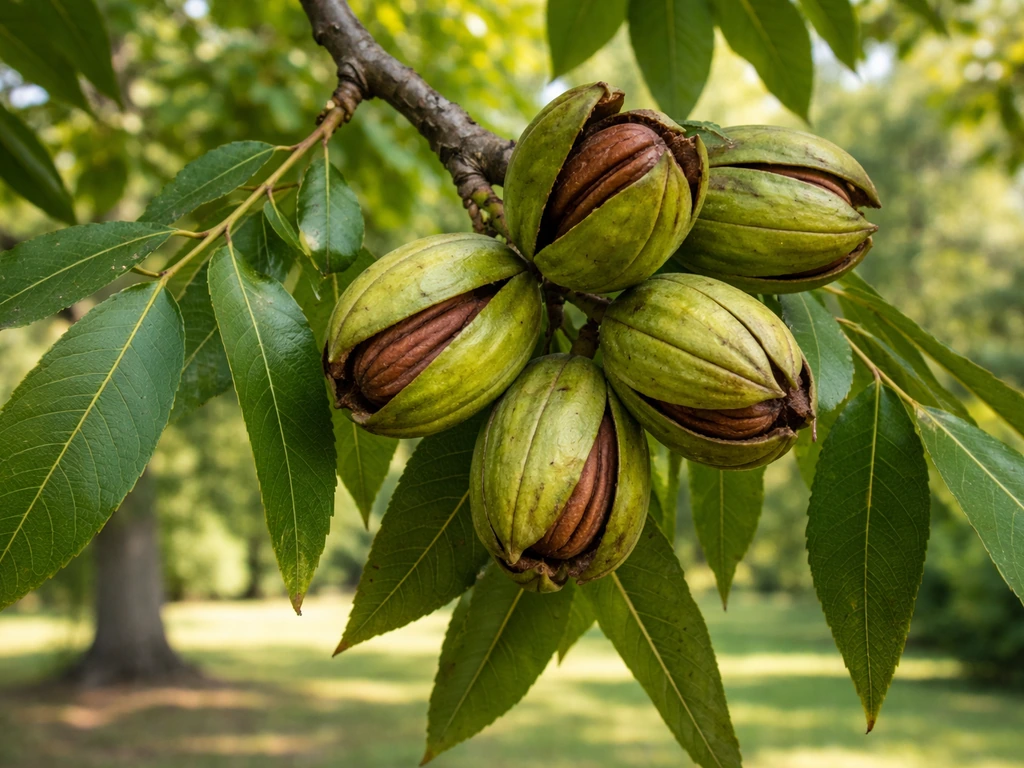
Pecan (Carya illinoinensis) is the marquee nut tree for South Carolina's Midlands and Coastal Plain. It is native to the broader Southeast, thrives in the long hot summers, and produces heavy crops when grown on deep, well-drained soils. The critical decision is variety selection: you need a scab-resistant cultivar. In South Carolina's humid climate, susceptible varieties like 'Stuart' or 'Schley' will be defoliated by scab year after year without intensive fungicide programs. Resistant cultivars like 'Elliot,' 'Sumner,' 'Gloria Grande,' and 'Caddo' are far better choices for home growers and small-scale operations who cannot spray on a commercial schedule. 'Elliot' in particular has become a go-to for low-maintenance SC growing.
Chinese chestnut
Chinese chestnut (Castanea mollissima) is arguably the most underrated nut tree for South Carolina. It is blight-resistant (unlike the American chestnut, which is effectively gone from eastern forests), it handles the heat well, and it produces nuts in as few as three to five years from a grafted tree. It is adaptable across zones 5 through 8, which covers virtually the entire state except the very warmest coastal fringe. Named varieties like 'Abundant,' 'Skioka,' 'AU-Homestead,' and 'Qing' are worth seeking out over seedlings because you get more predictable nut size, earlier bearing, and better flavor. Chinese chestnut prefers well-drained, slightly acidic soils with a pH around 5.5 to 6.5, which matches most SC Piedmont and Upstate conditions naturally.
American hazelnut and hybrid hazelnuts
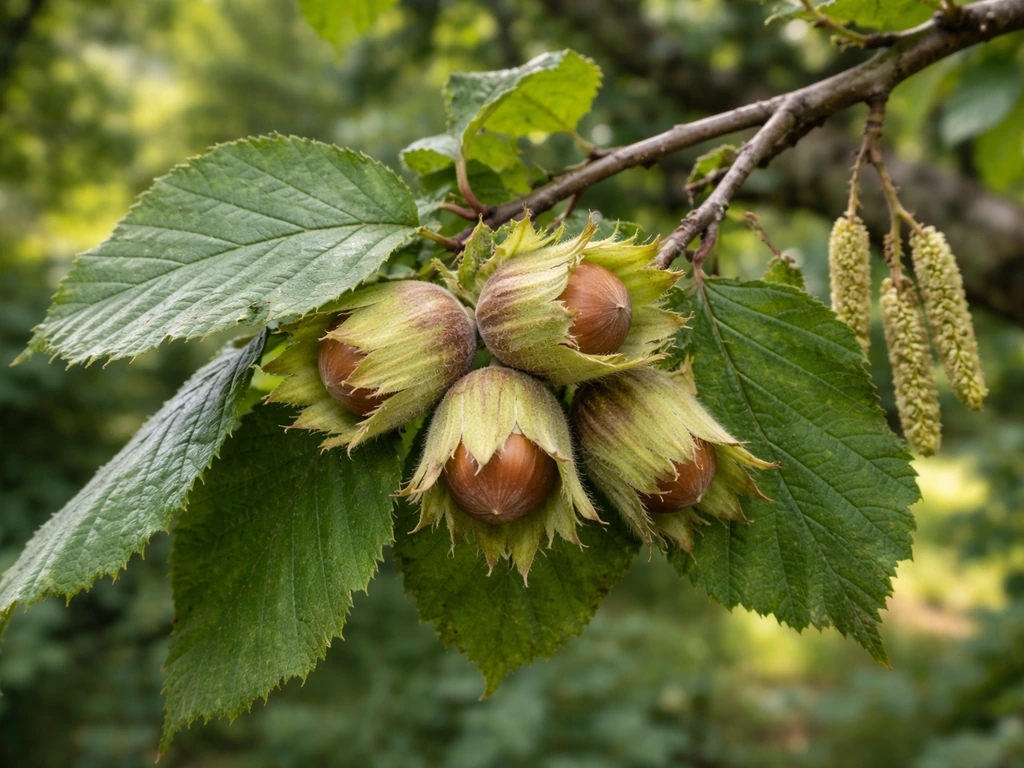
American hazelnut (Corylus americana) is native to the eastern US and grows naturally as far south as Georgia and Alabama, so it handles SC conditions well in the Upstate and Midlands. The nuts are smaller than commercial filberts, but the shrub-sized trees (8 to 15 feet) are incredibly productive and low-maintenance. Hybrid hazelnuts, crosses between American and European or beaked hazelnuts, offer larger nuts and better disease resistance to Eastern Filbert Blight, which is worth considering in humid southeastern conditions. Hazelnuts are faster to bearing than almost anything else on this list, often producing within two to three years of planting.
Black walnut
Black walnut (Juglans nigra) grows throughout South Carolina and is one of the most common native hardwoods in the Upstate and Piedmont. It will produce nuts across most of the state, though nut quality from seedlings varies enormously. Named cultivars like 'Emma Kay,' 'Sparrow,' and 'Kwik-Krop' are worth planting if nut production is your goal, rather than growing from seed or transplanting a random seedling. The big caveat with black walnut is juglone: the roots and leaves produce a compound toxic to many garden plants, including tomatoes, apples, and blueberries. Site it well away from vegetable gardens and fruit trees.
Hickory
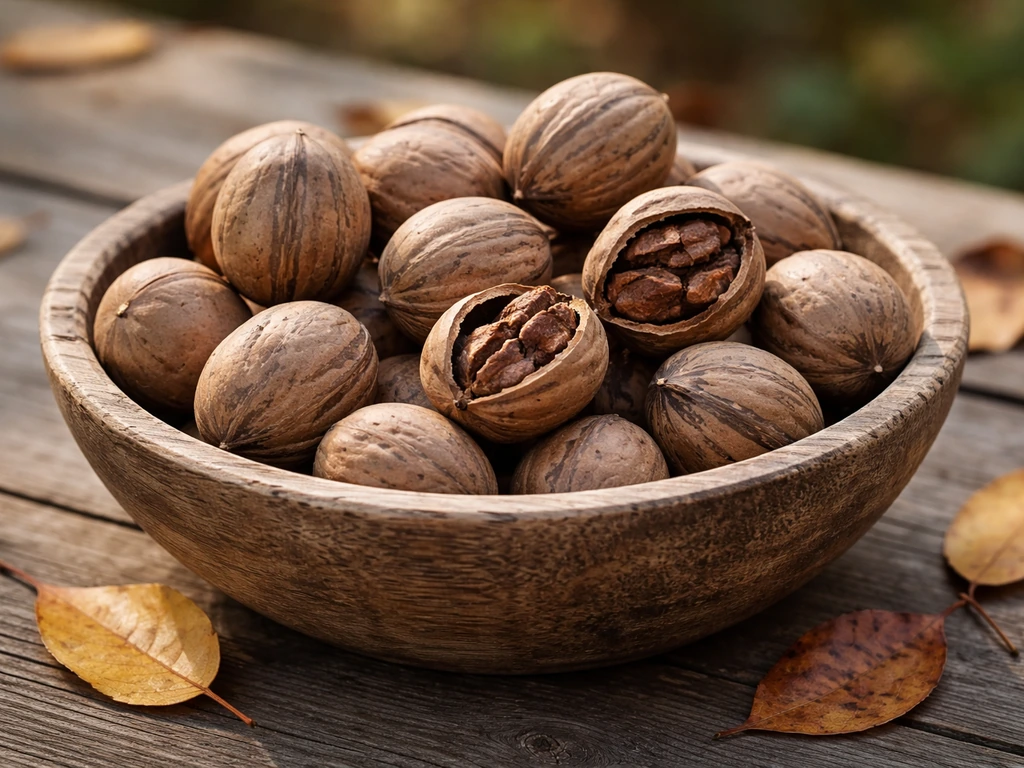
Shagbark (Carya ovata) and shellbark hickory (Carya laciniosa) both grow natively in the Upstate and Piedmont of South Carolina. Nuts are excellent, with rich flavor, but the trees take a long time to bear (sometimes 10 to 15 years from seed) and are difficult to transplant due to their deep taproots. For most growers, hickory is a long-game tree or a choice made when you have an existing native specimen on the property. Hican hybrids (hickory x pecan crosses) mature faster and produce larger nuts, and some show promise in SC conditions, though they are less commonly available.
Heartnut and butternut
Heartnut (Juglans ailantifolia var. cordiformis), a Japanese walnut relative, and butternut (Juglans cinerea) are both viable in the Upstate and cooler Piedmont areas. Heartnut in particular is worth considering for growers in the northwestern part of the state: it matures young, the shells crack easily, and it handles SC winters well. Butternut is unfortunately threatened by butternut canker disease, which limits its long-term reliability without careful disease scouting.
Regional fit: coast vs. Midlands vs. Upstate
Where you live in South Carolina makes a real difference in what you should plant. The three broad regions have meaningfully different climates, and matching the tree to the region saves years of frustration.
| Region | USDA Zones | Best nut trees | What to avoid |
|---|---|---|---|
| Coastal Plain (Lowcountry) | 8b–9b | Pecan (scab-resistant vars.), Chinese chestnut (marginal), tung nut | Hazelnut (insufficient chilling), hickory (marginal) |
| Midlands (Columbia area) | 8a–8b | Pecan, Chinese chestnut, black walnut, hazelnut hybrids | Butternut (disease pressure) |
| Upstate / Piedmont | 7a–7b | Chinese chestnut, hazelnut, black walnut, hickory, heartnut | Pecan (shorter season, marginal maturity) |
On the coast, your main constraint for nut trees is chilling hours: the number of hours below 45°F that many temperate trees need to break dormancy and fruit properly. Charleston, for example, averages only around 500 to 600 chilling hours annually, which rules out many Northern pecan varieties and most standard hazelnut cultivars. Stick to low-chill pecan varieties like 'Elliot' or 'Cape Fear' in the Lowcountry. Chinese chestnut is marginal at the coast but can work in Beaufort County and further inland if you select a variety rated for zone 8.
The Midlands around Columbia is the sweet spot for the most species diversity. You get enough chilling hours for most pecan cultivars and Chinese chestnuts, a long enough season for nuts to mature, and slightly lower humidity than the coast. Black walnut also does well here, and hybrid hazelnuts are worth experimenting with.
In the Upstate, particularly in Oconee, Pickens, and Greenville counties, zone 7b winters mean some of the lower-chill pecan varieties may not perform as well as they do in the Midlands. Chinese chestnut, however, genuinely thrives here. Hazelnuts are excellent in the Upstate. Hickory and black walnut are both native to this part of the state and require minimal special attention beyond site selection.
Planting: site, soil, spacing, and pollination
Site and soil
All nut trees want full sun, meaning six or more hours of direct sunlight daily. This is non-negotiable. Shading reduces nut production and increases disease pressure by limiting airflow and keeping foliage wet longer. The one partial exception is hazelnut, which tolerates light afternoon shade but still prefers sun.
Soil drainage is the other make-or-break factor. Most nut trees, especially pecans and chestnuts, despise wet feet. Pecans in the wild grow on deep alluvial soils along riverbanks, well-drained but with access to deep moisture. In SC's Coastal Plain, you may encounter heavy clay or high water tables, both of which cause problems. If drainage is poor, either select a better site or build raised berms and plant the tree higher. Chestnuts are particularly sensitive to waterlogging and will die quickly in saturated soils. For pH, chestnuts want 5.5 to 6.5 (common in SC Piedmont), while pecans prefer 6.0 to 7.0 and tolerate slightly higher pH than most fruit trees.
When you plant, follow what Clemson Extension emphasizes about planting depth: find the root flare (where the trunk widens at the base) and make sure it sits at or slightly above the soil surface. Planting too deep buries the root flare, suffocates feeder roots, and is one of the most common reasons nut trees decline slowly over several years. It looks like a disease problem but is actually a planting error.
Spacing
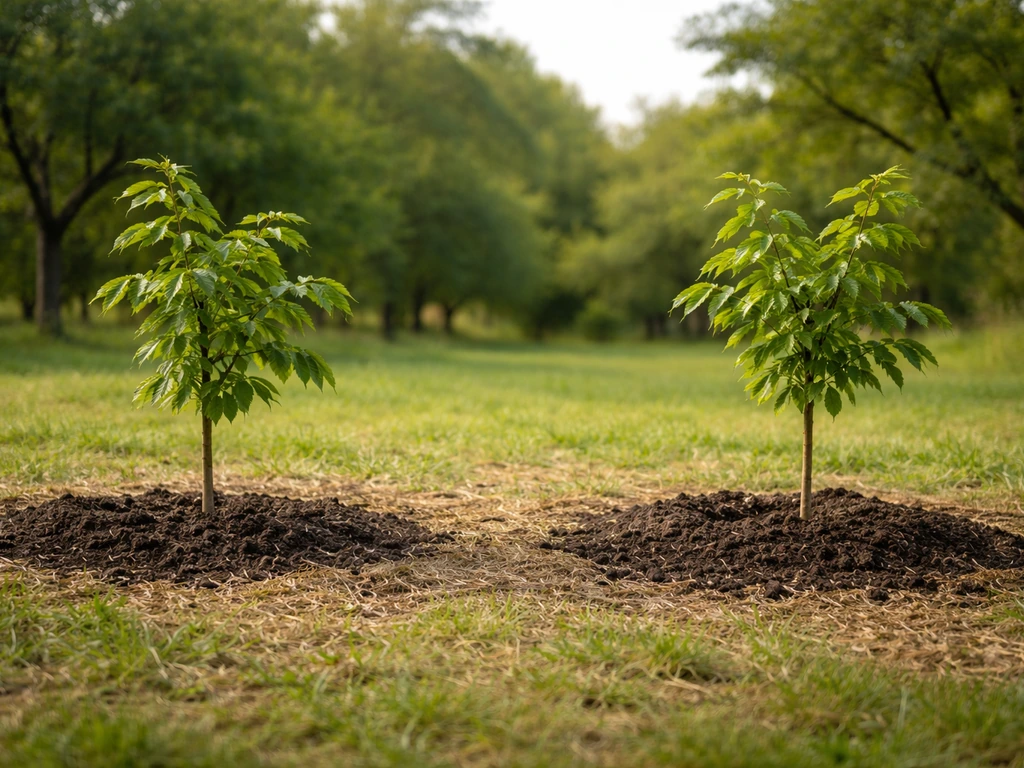
- Pecan: 60 to 70 feet between trees at full spacing for large orchards; 40 feet minimum for home plantings with eventual thinning planned
- Chinese chestnut: 30 to 40 feet between trees
- Black walnut: 40 to 50 feet (and well away from other plantings due to juglone)
- Hazelnut (shrub form): 10 to 15 feet between plants in a row
- Hickory: 40 to 60 feet; plan for its permanent location since transplanting after establishment is very difficult
Pollination
Chestnuts require cross-pollination from a genetically different tree. Plant at least two different varieties, not two trees of the same variety. They can be up to 200 feet apart and still pollinate reasonably well via wind, but closer is better. Pecans are also wind-pollinated and benefit from multiple trees or nearby wild pecan relatives. Pecan flowers have two types (protandrous and protogynous) where pollen shed and receptivity are offset in time, so planting one Type I and one Type II variety (for example, 'Elliot' Type II with 'Curtis' Type I) improves nut set significantly. Hazelnuts require cross-pollination as well; plant at least two different varieties. Black walnut and hickory are generally more self-fruitful but still benefit from having another tree nearby.
Care and maintenance: watering, fertilizing, training, and production timelines
Watering
New nut trees need consistent moisture for their first two growing seasons while roots establish. In SC summers, that typically means supplemental watering during dry spells, roughly once or twice per week if rainfall is below an inch. After year two or three, most nut trees are surprisingly drought-tolerant once established, particularly black walnut, hickory, and pecan on deep soils. Chinese chestnut handles dry periods but performs noticeably better with adequate summer moisture during nut fill (July and August). Mulching with 3 to 4 inches of wood chips out to the drip line conserves moisture, moderates soil temperature, and suppresses weeds without the need for herbicides near roots.
Fertilizing
Young nut trees benefit from a modest nitrogen application in early spring to push new growth. A balanced slow-release fertilizer or a split application of 10-10-10 works for most species in years one through three. Avoid heavy nitrogen applications in late summer, which push soft growth that can be damaged by early fall frosts, especially in the Upstate. For pecans specifically, zinc deficiency is extremely common in South Carolina soils and shows up as small, distorted leaves with a phenomenon called 'mouse ear.' Apply foliar zinc sulfate or chelated zinc in spring and again in early summer if you see symptoms. Chestnuts on naturally acidic SC soils usually do not need aggressive fertilization once established.
Training and pruning
Most nut trees require minimal structural pruning compared to fruit trees. For pecans and chestnuts, the goal in the first few years is to establish a single central leader and remove competing upright branches. Remove any dead, diseased, or crossing wood annually. For hazelnuts grown as multi-stem shrubs, you can rejuvenate older plants by removing one-third of the oldest stems each year. Avoid heavy pruning of established nut trees in summer, as wounds heal more slowly and disease entry is a risk.
Time to first harvest
| Nut tree | Years to first nuts (grafted/named variety) | Years to full production |
|---|---|---|
| Chinese chestnut (grafted) | 3–5 years | 8–10 years |
| Pecan (grafted) | 5–7 years | 10–15 years |
| Hazelnut (named variety) | 2–3 years | 5–8 years |
| Black walnut (named variety) | 4–6 years | 10–12 years |
| Hickory (seedling) | 10–15 years | 20+ years |
| Heartnut (grafted) | 3–5 years | 8–10 years |
These timelines assume grafted or named-variety trees planted as young container or bare-root stock. Seedling-grown trees from seed or random nursery stock generally take longer, sometimes twice as long for pecans. Buying grafted trees from a reputable nursery is the single most impactful thing you can do to shorten the time to first harvest.
Pests, diseases, and common reasons trees fail in SC
Pecan scab
Pecan scab (Venturia effusa) is the dominant disease problem for pecans in South Carolina and across the humid Southeast. The fungus infects new growth, shucks, and nuts during the wet spring and early summer period, causing black lesions that can completely destroy the nut crop on susceptible varieties. The only practical solution for home growers without a commercial spray program is to plant scab-resistant varieties. This point cannot be overstated: if you plant 'Stuart' or 'Desirable' in the SC Midlands or Lowcountry without spraying fungicides on a tight schedule, you will be disappointed. Plant 'Elliot,' 'Sumner,' or 'Gloria Grande' instead.
Chestnut blight and Phytophthora
Chinese chestnuts are resistant to chestnut blight but are not immune. Occasional blight cankers can appear on individual branches. Prune out infected wood well below the canker and disinfect tools. More commonly, chestnuts in SC fail due to Phytophthora root rot from poor drainage. If your soil stays wet after rain, chestnuts will struggle regardless of variety. Raised planting beds or bermed planting spots solve this in most cases.
Weevils and other nut feeders
Pecan weevil (Curculio caryae) is a serious pest across the state, with larvae feeding inside developing nuts. Timing insecticide applications to the adult emergence window (late July through September) controls them if needed, but prompt harvest and destruction of infested nuts reduces populations over time. Hickory shuckworm and stink bugs also damage pecan crops. For chestnuts, the chestnut weevil is the main insect pest; it bores into nuts before harvest. Harvesting promptly when nuts fall and not leaving them on the ground reduces weevil pressure.
Common failure modes
- Planting the root flare too deep (slow decline over years, often mistaken for disease)
- Planting scab-susceptible pecan varieties and expecting to fruit without fungicide programs
- Planting only one chestnut tree and wondering why it never nuts (cross-pollination required)
- Ignoring zinc deficiency in pecans until significant growth distortion appears
- Planting hickory or walnut without accounting for juglone toxicity affecting nearby garden plants
- Underestimating spacing and then crowding trees after year 10, which increases disease and reduces yield
- Using nursery seedlings of unknown parentage instead of grafted named varieties, extending the wait for first harvest by years
Picking the right tree for your actual goals
Here is a direct, honest breakdown based on common goals. If you want something low-maintenance with reliable nuts and do not want to spray, plant Chinese chestnut (two different varieties for pollination). It is the easiest nut tree to manage in most of South Carolina, produces in a reasonable timeframe, and handles the climate from the Upstate to the Midlands without constant intervention.
If you want the fastest return and have the Upstate or Midlands climate, go with hazelnut. A pair of hybrid hazelnut plants can produce nuts within two to three years of planting. They are shrub-sized, easy to manage, and not disease-prone in SC conditions.
If a large, commercial-scale yield is your goal and you are in the Midlands or Coastal Plain, improved pecans are your tree. Commit to scab-resistant varieties, plan for the five-to-seven year wait before significant production, and account for spacing and zinc management upfront. The long-term payoff from a well-sited pecan on deep Midlands soil is genuinely impressive, but it requires patience and proper variety selection from day one.
If you are in the Upstate and want to plant something that will outlast you and add real value to the property, black walnut or shagbark hickory fits that profile. Neither is a quick-gratification tree, but both are native, ecologically valuable, and produce high-quality nuts. Just site the walnut well away from gardens and other trees.
South Carolina growers are in a genuinely good position compared to many other states. In southern California, the best nut trees are also highly dependent on your local microclimate, especially cold tolerance and chill hour requirements. If you are curious how the choices shift when you move to neighboring states, similar decisions apply in North Carolina (which shares the Upstate climate) and Virginia further north, though the species mix and zone constraints differ in each case. You might also be wondering, do cashews grow in California, and if so what conditions they need to produce. If you are specifically wondering what nuts grow in California, the same approach applies: start with your zone, then narrow by cold hardiness, disease pressure, and pollination requirements. The core principle stays the same everywhere: match the tree to your specific zone, prioritize grafted named varieties, and address pollination and disease before you plant rather than after. If you are wondering what nut trees grow in Arizona, the same approach applies: pick species and cultivars that match your heat, cold, and rainfall patterns. If you are specifically wondering what nut trees grow in Virginia, the best choices depend on your USDA hardiness zone and whether you can handle site drainage and disease pressure. In Utah, the best nut trees are strongly limited by cold hardiness and winter chilling, so choosing the right species and variety matters as much as it does in South Carolina. For New Mexico, the best nut tree options depend heavily on your USDA hardiness zone, winter chill hours, and whether you can provide well-drained soil.
FAQ
What nut trees in South Carolina are actually low-spray or no-spray options for home gardeners?
If you want nuts without a fungicide routine, Chinese chestnut is the most forgiving choice. Plant two named varieties for cross-pollination, and focus your effort on drainage and harvesting nuts promptly. In contrast, pecans typically need scab-resistant cultivars and often still benefit from some level of disease management in very humid sites, even when you choose resistant types.
How can I tell whether my area has enough winter chilling hours for a specific pecan or hazelnut variety?
Use the variety’s chilling requirement as your filter, then match it to your local area, not just the USDA zone. The coast in Charleston-area weather can be too warm for many “Northern” pecan and standard hazelnut cultivars, even though both can sometimes survive winter lows. The practical workaround is choosing low-chill pecans and, for hazelnuts, sticking to varieties that are intended for milder winters in the Southeast.
Do I need two trees for pollination if I plant Chinese chestnut, pecans, or hazelnuts?
Yes for best results with chestnut and hazelnut. Chinese chestnut and hazelnut generally require cross-pollination from a genetically different variety, so two different named varieties are the right approach. Pecan trees are wind-pollinated and can set nuts with nearby trees, but you will usually improve nut set by planting two cultivars with complementary flower timing (Type I and Type II).
What’s the fastest nut tree to start getting harvests in South Carolina?
Chinese chestnut and hybrid hazelnuts tend to have the shortest timelines. Grafted Chinese chestnut can begin producing in about three to five years, and hazelnuts often start in about two to three years. Pecan and hickory are slower, and seedlings usually double the timeline compared with grafted, named stock.
Should I plant nut trees from seed or buy grafted named varieties in South Carolina?
For consistent nut quality and earlier production, buy grafted named cultivars from a reputable nursery. Seedling-grown black walnuts and other species can vary widely in nut size and quality, and seedlings generally take longer to reach full bearing. Grafted trees also let you select disease-resistant pecan cultivars and predictable Chinese chestnut types.
Why do my pecan leaves look distorted or curled, and what should I check first?
In South Carolina, zinc deficiency is a common cause of small, distorted leaves with a “mouse ear” appearance. Check for symptoms in spring and early summer, then consider foliar chelated zinc or zinc sulfate as directed for the product. Don’t assume it’s a pest issue until you confirm nutrition, since scab and nutrient problems can be confused early on.
I have heavy clay or a high water table, can I still grow chestnuts or pecans?
Chestnuts are especially sensitive to waterlogging, so poor drainage can kill them even when the variety is correct. If your soil stays wet after rain, build a raised bed or bermed planting spot, and make sure the root flare sits at or slightly above the soil surface. Pecans tolerate more conditions than chestnuts, but “wet feet” still reduces performance and can lead to chronic decline.
How should I space nut trees for good pollination and disease control?
Closer is generally better for cross-pollination, and wider spacing improves airflow. Chinese chestnut needs a different variety nearby, but they can still pollinate from a distance, so focus on having two varieties within a reasonable yard scale. For fungal disease pressure, avoid crowding that limits airflow and keeps foliage wet longer.
What planting mistake most often causes nut trees in South Carolina to decline slowly?
Planting too deep, burying the root flare. This can look like a disease problem over time, but the underlying issue is suffocated feeder roots and poor establishment. When planting, locate the root flare where the trunk widens at the base and keep it at or slightly above soil level.
Do I need to water nut trees after planting in South Carolina summers?
Yes for the first one to two growing seasons, then taper. During dry spells, plan for supplemental watering roughly once or twice per week if rainfall is light, and especially during nut fill for Chinese chestnut (summer). After establishment, many species become more drought-tolerant, but newly planted trees always need consistent moisture while roots establish.
Is pruning different for pecans and chestnuts compared with fruit trees?
It is usually less aggressive. Early on, focus on establishing one central leader and removing competing upright branches, then clear out dead, diseased, or crossing wood annually. Avoid heavy summer pruning because wounds heal more slowly and can raise disease entry risk.
What should I do about pecan weevil and chestnut weevil?
For pecan weevil, timely harvest matters, remove infested nuts, and don’t leave dropped nuts to sit on the ground. For chestnut weevil, prompt harvest when nuts fall and cleaning up fallen nuts reduces next season’s pest pressure. In both cases, good orchard-yard sanitation reduces insect populations more than small timing mistakes do.
Can I plant black walnut near my vegetable garden or fruit trees in South Carolina?
You should avoid it. Black walnut releases juglone from roots and leaves, which can be toxic to many common garden and fruit crops, including tomatoes, apples, and blueberries. Site the walnut well away from beds and fruit plantings, and plan the separation with future canopy growth in mind.
What nut tree is best for a long-term property addition in the Upstate?
For a long-lived, property-anchoring choice, black walnut or shagbark hickory are strong candidates. They are native and produce high-quality nuts, but they are not fast, so set expectations for a long wait, especially if you start from seed. Proper site selection (especially for walnut away from other crops) is more important than early fertilizing or rapid pruning.
Citations
South Carolina climate differences across the state can be characterized using freeze/frost probability tables (e.g., “freeze/frost occurrence dates” and “freeze-free period (days)”) published by the South Carolina State Climatology Office.
https://www.dnr.sc.gov/climate/sco/ClimateData/SC_Frost_Freeze_Dates.pdf
The State Climatology Office provides county/station tables of median and earliest/latest spring freeze dates (air ≤ 32°F) and median/earliest fall freeze dates, enabling risk estimates for planting timing.
https://www.dnr.sc.gov/climate/sco/Education/facts/fall_spring_freeze.pdf
South Carolina’s precipitation and elevation patterns differ geographically (e.g., Midlands driest on average, with precipitation totals described as mostly ~42–47 inches in the Midlands in state climatology materials), affecting disease pressure for nut trees.
https://www.dnr.sc.gov/climate/sco/cli_sc_climate.php/data/SC_Frost_Freeze_Dates.pdf
South Carolina’s climatology materials explain that summer weather is dominated by a maritime tropical air mass (“Bermuda high”), supporting hot/humid summers that raise foliar disease risk (including for pecans).
https://www.dnr.sc.gov/climate/sco/ClimateData/cli_sc_climate.php
USDA hardiness zones in South Carolina span approximately 7b in the extreme northwest to 9b along the southeastern coast (zone map reference standard for winter minimum temperatures).
https://www.sare.org/wp-content/uploads/plant_hardiness_zones.pdf
A zone map breakdown indicates South Carolina spans multiple USDA zones (including around 7b–9b depending on location), supporting the use of separate coastal/Midlands/Upstate plant choices.
https://plantmaps.com/en/us/f/hz/state/south-carolina/plant-hardiness-zones
Reporting based on average frost/freezing timing indicates spring freeze risk typically declines after March and last frost can occur later in the season across the state (useful for timing spring planting/establishment).
https://www.southcarolinapublicradio.org/sc-news/2026-03-19/when-is-south-carolinas-last-frost-and-freeze-of-the-season
Clemson Extension materials emphasize that correct planting depth is critical: the root flare should be at/above the soil line (not buried) to avoid oxygen/health problems.
https://www.clemson.edu/extension/bradford-pear/tree-care.html