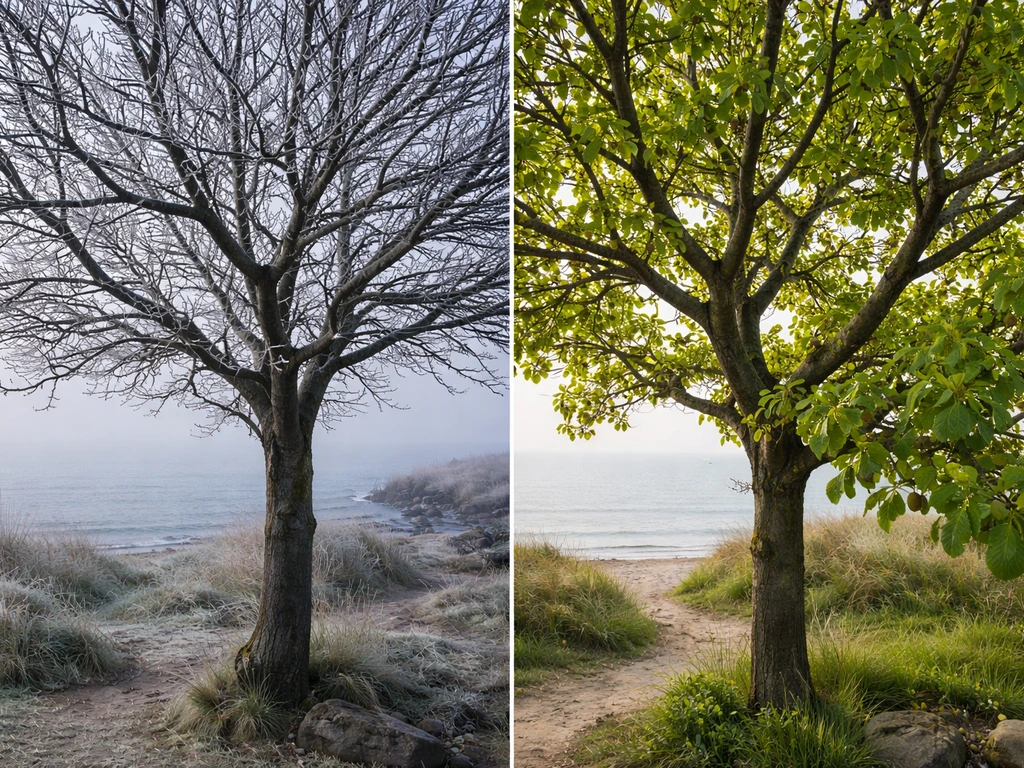
Can cashews grow in California? The short answer
Technically yes, but barely, and only in very specific spots. In North Carolina, the best options for growing nut trees are species that tolerate the local winters rather than tropical cashew-type trees. Cashew trees (Anacardium occidentale) are tropical plants that originated in northeastern Brazil, and California is not a tropical state. That said, a narrow band of frost-free microclimates in Southern California, particularly in coastal areas around San Diego, parts of the Los Angeles basin, and a few protected inland spots, gets warm enough to keep a cashew tree alive outdoors year-round. The honest framing: in most of California, you are growing cashews as a container plant that spends winters indoors or in a greenhouse. In only the warmest, most sheltered spots can you attempt outdoor growing, and even then you are one cold snap away from real damage. If you are looking to actually harvest edible cashew nuts rather than just grow an interesting tropical tree, you need to go in with clear eyes about the time, effort, and climate management involved. If your real goal is to harvest what nuts grow in California, you also need to plan for the long timeline and careful winter management cashew trees require cashew nuts.
What cashews actually need from their climate
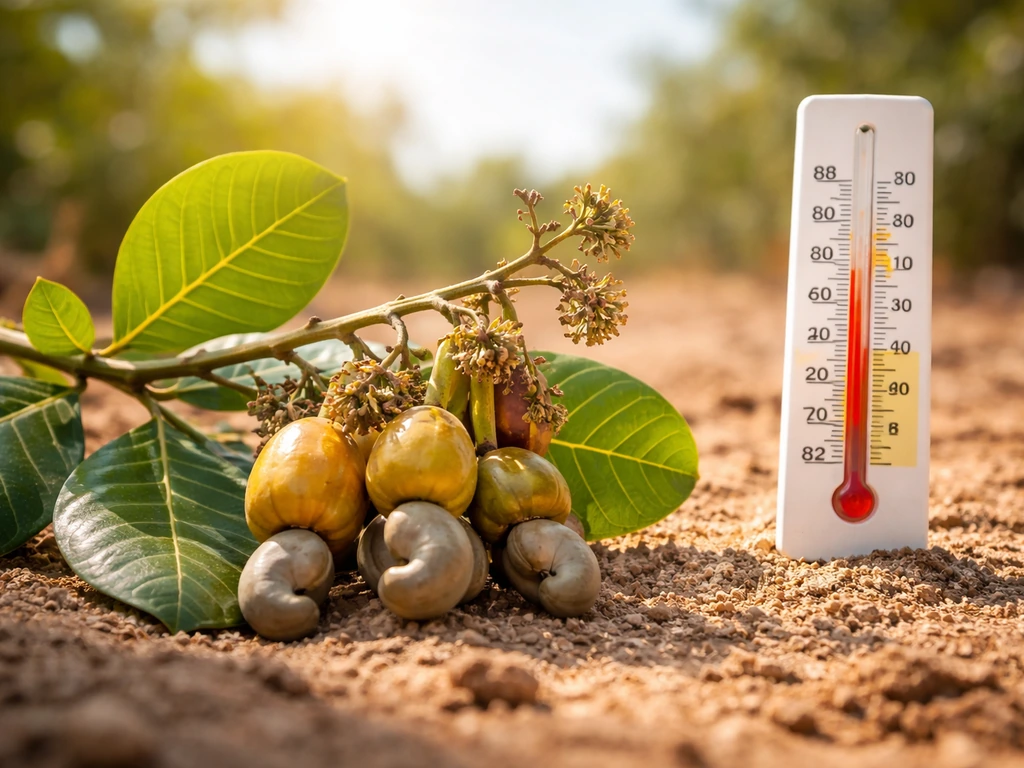
Cashew is a warm-season tropical, and its climate requirements are non-negotiable in a way that, say, a walnut or almond is not. Understanding exactly what the tree needs tells you immediately whether your location is a realistic candidate or whether you are signing up for a container-and-greenhouse project.
Temperature: the dealbreaker
The ideal range for cashew is 68 to 86°F (20 to 30°C). It performs well in that band for growth, flowering, and fruit set. Once you get outside it in either direction, performance drops. On the cold end, foliage damage starts at 32°F (0°C) and serious structural damage to the tree happens around 25°F (-4°F). Some horticultural growers recommend not letting temperatures drop below 38°F (3.3°C) at all if you want to protect the tree. PFAF puts the preferred minimum at 18°C (64°F) for reliable performance. What this means practically: even a single hard frost will set the tree back significantly. A prolonged cold spell, even without frost, will inhibit growth and shut down flowering.
Light, humidity, and water
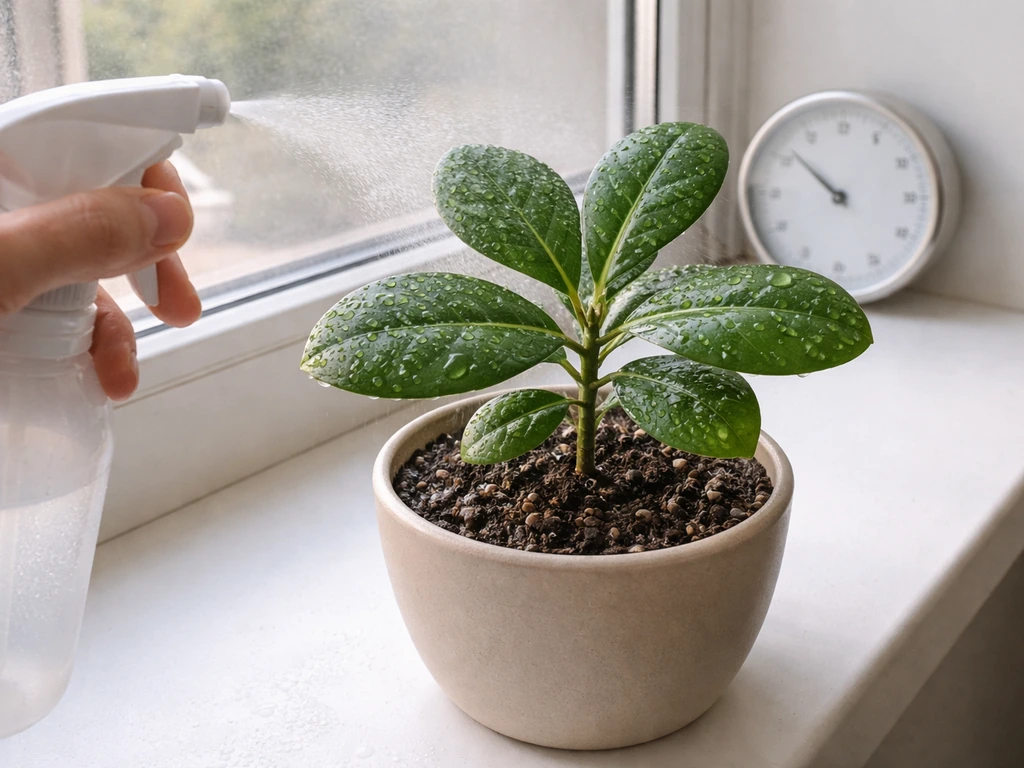
Cashew wants full sun, high heat, and moderate humidity. The optimal relative humidity range is roughly 65 to 80%. Annual rainfall in its native range runs from about 700 to 2000 mm, but good drainage matters as much as total water, since cashew roots are prone to rot in waterlogged soil. A 3 to 4 meter depth of loamy, well-draining soil is ideal in the ground. There is a key seasonal twist: cashew actually prefers a distinct dry season during flowering, because heavy rain and high humidity during bloom sharply increase flower and fruit drop and ramp up fungal disease. California's dry summers work in your favor here, but it is the mild-to-cold California winters that create the problem.
Which parts of California are even worth trying
California's climate diversity is staggering, and that means the answer is not the same across the state. The Central Valley gets brutal summer heat but also cold winter nights. The Sierra Nevada and northern interior are obviously out. The coast north of Los Angeles stays too cool even in summer to satisfy a cashew. The realistic candidates are in the southern third of the state, and only in the right microclimates.
Your best bet for outdoor cashew growing is in USDA Hardiness Zones 11 and possibly Zone 10b. The USDA Hardiness Zone Map is based on average annual extreme minimum winter temperatures, shown in 10°F zones with 5°F half-zones blank" rel="noopener noreferrer">USDA Hardiness Zones 11 and possibly Zone 10b.. Plantmaps' California hardiness zone listings similarly place parts of the state (such as Hermosa Beach) into USDA hardiness zones like 11a and 10b blank" rel="noopener noreferrer">USDA Hardiness Zones 11 and possibly Zone 10b. In California, those zones appear in a narrow strip: parts of coastal San Diego County, some protected inland San Diego valleys, and occasionally frost-free pockets in the Los Angeles coastal plain. Zone 10a and below carries meaningful frost risk for a plant this sensitive. Before you plant anything in the ground, run through this checklist:
- Look up your ZIP code on the USDA Plant Hardiness Zone Map and the Old Farmer's Almanac frost date tool to see your average last and first frost dates for 2026.
- Check whether you have had any frost at all in the past five years. Even one frost night disqualifies a site for unprotected outdoor cashew growing.
- Assess your microclimate: south-facing walls, reflected heat from pavement, and proximity to the ocean all push temperatures a few degrees warmer than the zone average suggests.
- Look at your nighttime lows in January and February, which are California's coldest months. If you regularly see nights below 40°F (4°C), plan for container growing rather than in-ground planting.
- Check local frost maps (Plantmaps has an interactive average frost days map for California) to visualize risk beyond just your zone designation.
Even in the warmest California pockets, the tree may survive but still underperform on fruiting because California's mild winters can be just cool enough to reduce flowering. Think of outdoor growing in California as a best-case scenario that requires active site selection and monitoring, not a given.
How to grow cashews in California: step by step
Whether you are going for a container tree or trying your luck in the ground in a warm Southern California spot, the process starts the same way. Here is how to approach it practically.
Container vs. in-ground: which should you choose?
| Factor | Container Growing | In-Ground Growing |
|---|
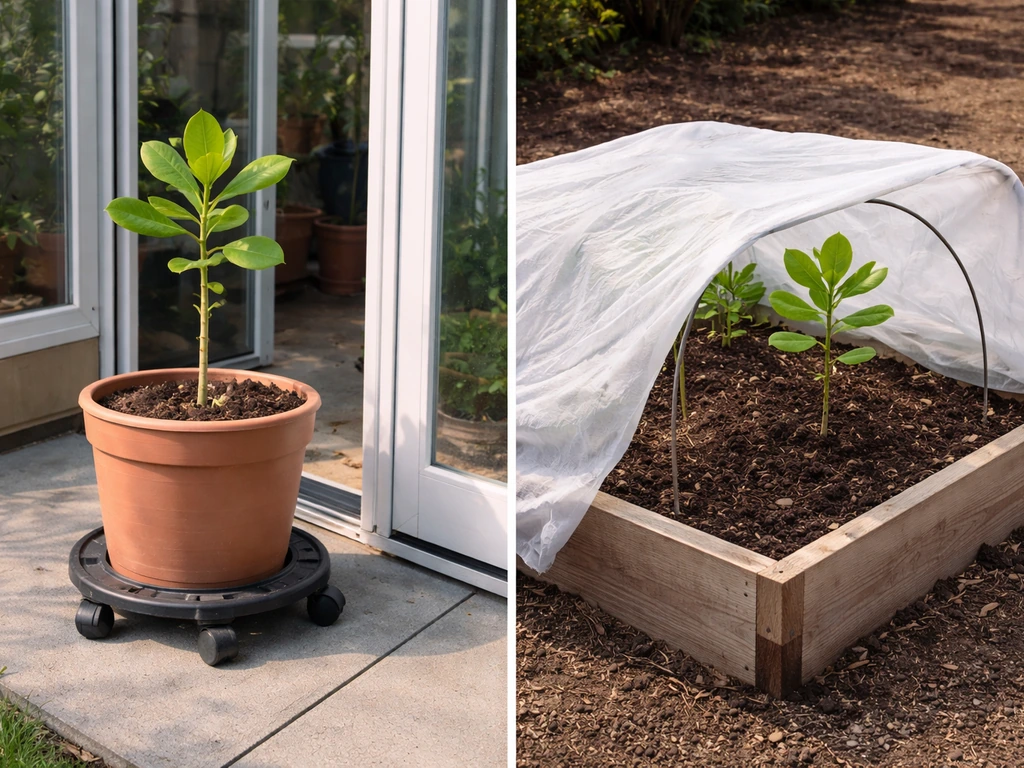
| Frost protection | Easy: move indoors or to greenhouse | Difficult: requires heavy covering or heating |
| Tree size | Kept manageable by pot size and pruning | Can reach 30+ feet without control |
| Fruiting potential | Lower (restricted roots, smaller canopy) | Higher if climate is suitable |
| Soil control | Full control over mix and drainage | Depends on your native soil |
| Who it suits | Most California growers | Frost-free Zone 10b/11 spots in SD/LA coast |
| Long-term risk | Low (can always bring inside) | High if any frost events occur |
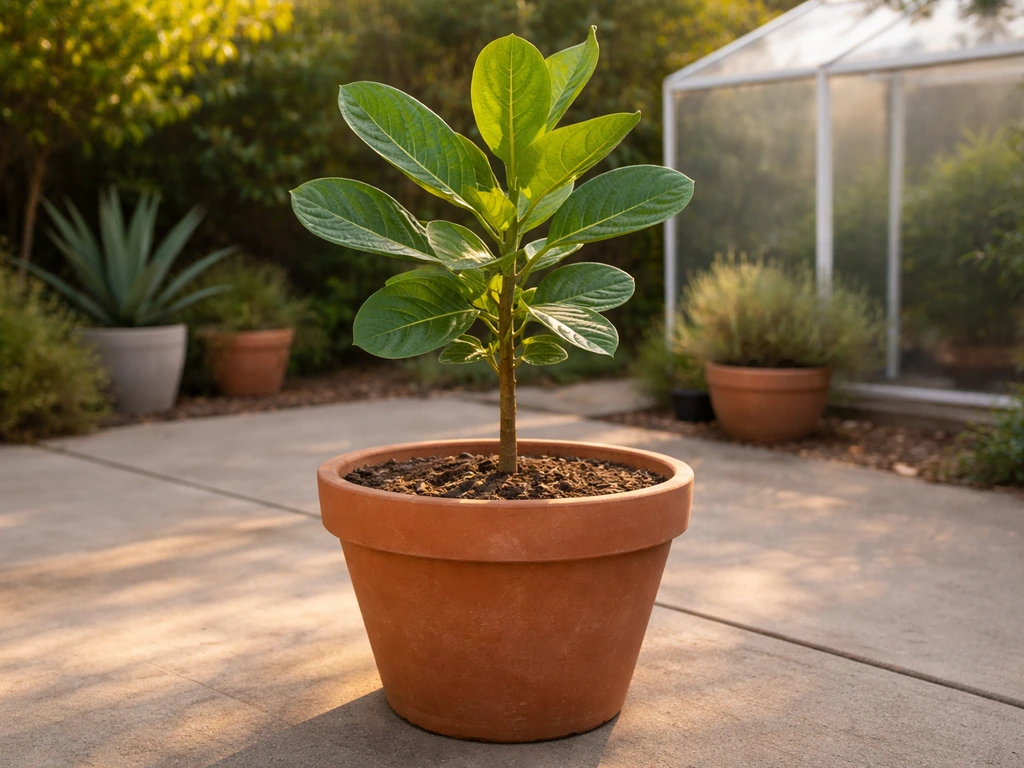
For the vast majority of California growers, container is the right call. A large container (25 to 30 gallons or bigger as the tree matures) gives the tree enough root space to grow and fruit while letting you bring it inside for winter. In-ground planting makes sense only if you are in a demonstrably frost-free location and you have confirmed that your site has not seen temperatures below 38°F in recent years.
Step-by-step growing guide
- Source your planting material. A grafted cashew sapling from a specialty tropical nursery is strongly preferred over seed. Grafted trees can begin bearing fruit in 2 to 4 years after planting, while seed-grown trees typically take 5 to 7 years. If you are starting from seed, make sure the nut is fresh (seeds lose viability after about 6 months) and unroasted (commercially sold cashews are heat-processed and will not germinate).
- Prepare your container or planting site. For containers, use a well-draining mix: coarse sand, perlite, and loamy potting soil in roughly equal parts. For in-ground planting, work the soil deeply, at least 2 to 3 feet, and ensure water drains away from the root zone. Raised beds can help in areas with heavy clay.
- Plant at the right time. In California, late spring (May or June) is ideal, giving the tree the full warm season to establish before you need to worry about cold. Avoid planting in fall.
- Water consistently but carefully. Cashew hates both drought stress and waterlogged roots. Water deeply when the top 2 inches of soil dry out. In summer heat, this may be every few days for containers. Reduce watering significantly in fall and winter.
- Fertilize during the growing season. A balanced slow-release fertilizer (something like 10-10-10) in spring and midsummer supports vegetative growth. Once the tree starts flowering, shift toward a lower-nitrogen formula to encourage fruit retention.
- Train the canopy for container trees. In a pot, you want to encourage a manageable, open shape. Prune crossing branches and tip-prune to keep height in check. A well-managed container cashew can be kept under 8 to 10 feet.
- Plan your winter management now, before you need it. Container trees should move indoors or into a heated greenhouse before nighttime temperatures approach 45°F. Place near a south-facing window or under grow lights. Reduce watering during indoor overwintering but do not let the root ball dry out completely.
Germination and getting seedlings started
If you are starting from seed rather than a grafted plant, the cashew nut's thick seed coat means germination is slower than you might expect. Soak the seed in water for 24 hours before planting. Sow the nut at a depth of 1 to 2 cm with the scar (the slightly curved attachment point) facing upward, which is the orientation the nut has when hanging on the tree. Use a well-draining seedling mix in a deep pot or polybag to accommodate the taproot, which develops quickly.
Expect germination in 2 to 4 weeks when sown in polybags. You can start tracking for germination signs around day 10. Keep the germinating seeds in a consistently warm spot, ideally 75 to 85°F (24 to 29°C), and do not let them sit in cold soil. The seedling stage moves faster than you might think: cashew develops a taproot aggressively, and seedlings should be transplanted into their permanent container within 3 to 4 months to avoid cramping that taproot. Once you damage a cashew taproot, the tree's establishment trajectory is set back significantly. Be careful with the roots at every repotting stage.
What cashews look like when they actually flower and fruit
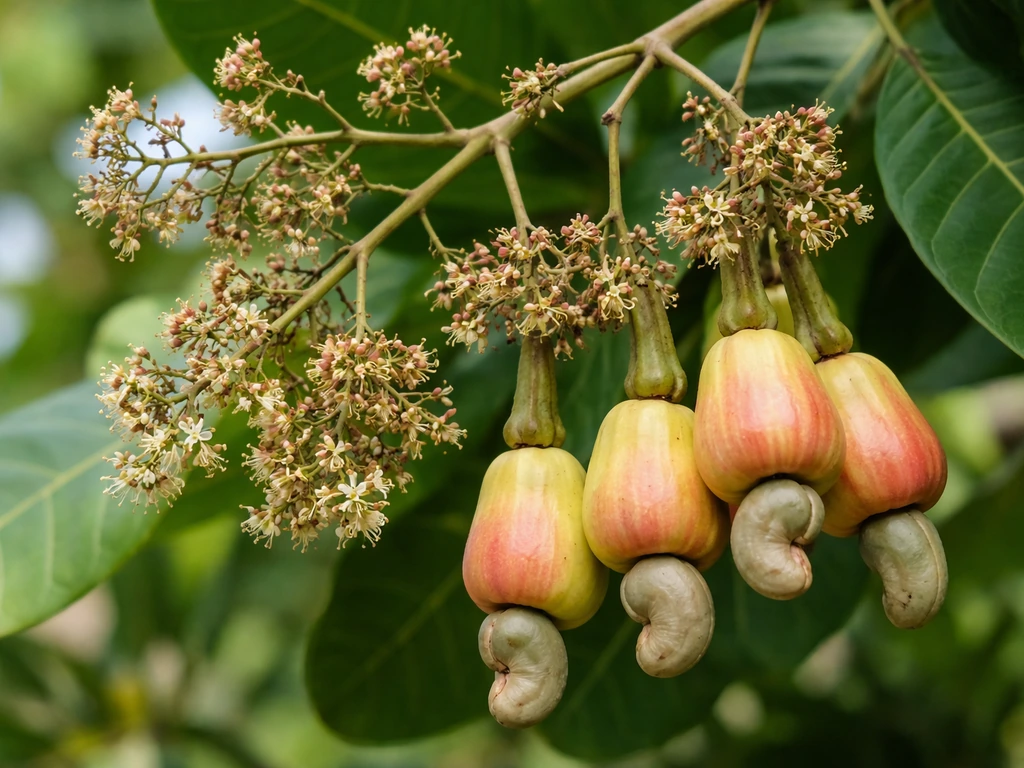
This is worth spending time on because the cashew fruit structure surprises most people the first time they see it. What we call the "cashew nut" in the grocery store is actually the seed of the true botanical fruit, which is a small, kidney-shaped drupe (technically an achene) with a double-layered shell. That shell contains caustic oils, which is why raw cashews require careful processing before eating. The part that looks like a pear or apple hanging below the nut is the cashew apple, an enlarged fleshy pedicel (the flower stalk that swells up after fertilization). The nut literally hangs off the bottom of the cashew apple. When you grow a cashew tree, you will see the cashew apple first, bright red or yellow depending on the variety, and the gray-green nut dangling from its base.
Flowering in cashew happens on panicles (branched clusters) at the tips of branches. From successful pollination to nut maturity is about 50 days. Maximum fruit set typically happens within the first 3 to 4 weeks of the fruiting period. Flowering tends to be triggered by a dry period followed by renewed warmth, which mimics the seasonal pattern of cashew's native habitat. In California, this might align with late winter to spring if your tree is kept warm enough. One important caveat: if your tree experiences cool nights during the flowering period, flower and fruit drop increases sharply. This is one of the most common reasons California cashew growers end up with a nice-looking tree but no nuts.
Realistic expectations: time, pests, cold events, and what you are actually growing
Time to first nuts
If you buy a grafted cashew tree and plant it in a large container, you might see first flowering in 2 to 4 years. Seed-grown trees typically take 5 to 7 years to bear. Some CIFOR documentation suggests flowering can begin within 3 to 5 years under good conditions. These timelines assume consistent warmth, good nutrition, and no significant cold setbacks. In California, where you may have an indoor winter period each year, add time to those estimates. A cold-damaged tree that had to recover loses a full growing season, sometimes more.
Disease and pest risks
Two diseases are especially relevant to California cashew growers. Anthracnose (caused by Colletotrichum species) is the more serious one in humid conditions and attacks new growth, flowers, and young nuts. California's dry summers actually reduce anthracnose pressure during flowering, which is one of the few climate advantages you have. Powdery mildew (Oidium anacardii) attacks cashew panicles and flower clusters and is more likely when you have high humidity around bloom time. Managing both comes down to good air circulation, avoiding overhead watering, sanitation (removing fallen leaves and debris), and fungicide treatment when disease pressure is high. For container trees kept indoors in winter, watch for spider mites, which thrive in dry indoor conditions.
Cold protection when you need it
If you are growing in the ground in a marginal location, have a cold-protection plan before planting, not the night a frost is forecast. For young in-ground trees, frost cloth rated to at least 28°F and a string of incandescent bulbs underneath can get you through a brief cold snap. For container trees, there is no debate: move them inside. If you have a tree too large to move easily, that is a sign it should have been planted in the ground in a frost-free zone or kept smaller through pruning. Do not let a container tree outgrow your ability to protect it.
Ornamental tree vs. nut producer: knowing which you are growing
Most California cashew growers, if honest, are growing an ornamental tropical tree with the possibility of nuts. That is not a failure. Cashew is genuinely attractive, with a spreading canopy, glossy leaves, and bright flowers. But if your goal is edible cashew nut production, understand that the processing step alone (removing the caustic shell oil) makes home processing genuinely difficult and potentially hazardous without the right setup. Commercial cashew operations roast the nuts at high heat in controlled conditions for a reason. A few nuts for curiosity? Doable. Replacing your store-bought supply? Not realistic from a California container tree. Comparing this to other California nut crops, almonds, pistachios, and walnuts are far better suited to the state's climate and far more practical for any grower focused on actual yield. If you are specifically asking what nut trees grow in New Mexico, it helps to focus on species that tolerate arid conditions and local winter lows almonds, pistachios, and walnuts. In Virginia, the most practical nut options are typically hardy trees like walnuts, pecans, and chestnuts that match your local winter lows nut trees like walnuts, pecans, and chestnuts. In Utah, look for nut tree species that can handle the state’s cold winters and arid conditions nut trees grow in Utah. In Arizona, what nut trees grow in Arizona depends mostly on choosing species that tolerate hot, dry conditions and winter lows typical for your area. If your goal is the best nut trees for Southern California, you may want to compare cashew options with more locally reliable producers like almonds, pistachios, and walnuts. If you are specifically wondering what nut trees grow in South Carolina, the same idea applies: match species to your local winter lows and growing conditions.
Your next steps if you want to try it
Start by confirming your site's frost risk using your ZIP code on both the USDA Hardiness Zone Map and the Old Farmer's Almanac frost date tool for 2026. If you are in Zone 10b or 11 with no frost events in recent years, you can consider in-ground planting in a sheltered south-facing spot. If you are anywhere else in California, commit to the container approach from day one. Source a grafted cashew from a specialist tropical plant nursery rather than trying to germinate a nut, and size your container to at least 25 gallons from the start. Plan your indoor overwintering space before summer ends, because that is when you will need it. Go in knowing this is a long game: 2 to 4 years minimum before you see a cashew apple, and that assumes no cold setbacks along the way.