Nutsedge starts sprouting when soil temperatures hit 60–65°F in spring, which depending on where you live lands somewhere between late April and early June. That's your window. Once you see those distinctive triangular stems pushing up through your lawn or garden beds, the plant is already pulling energy from underground tubers that may have been waiting in the soil for years. The sooner you act after emergence, the better your odds of actually making a dent in the infestation. Here's everything you need to know to time that correctly.
When Does Nutsedge Grow? Timing, Causes, and Control Steps
Marcus Hendricks
13 Apr 2026
When nutsedge actually shows up: the seasonal timeline
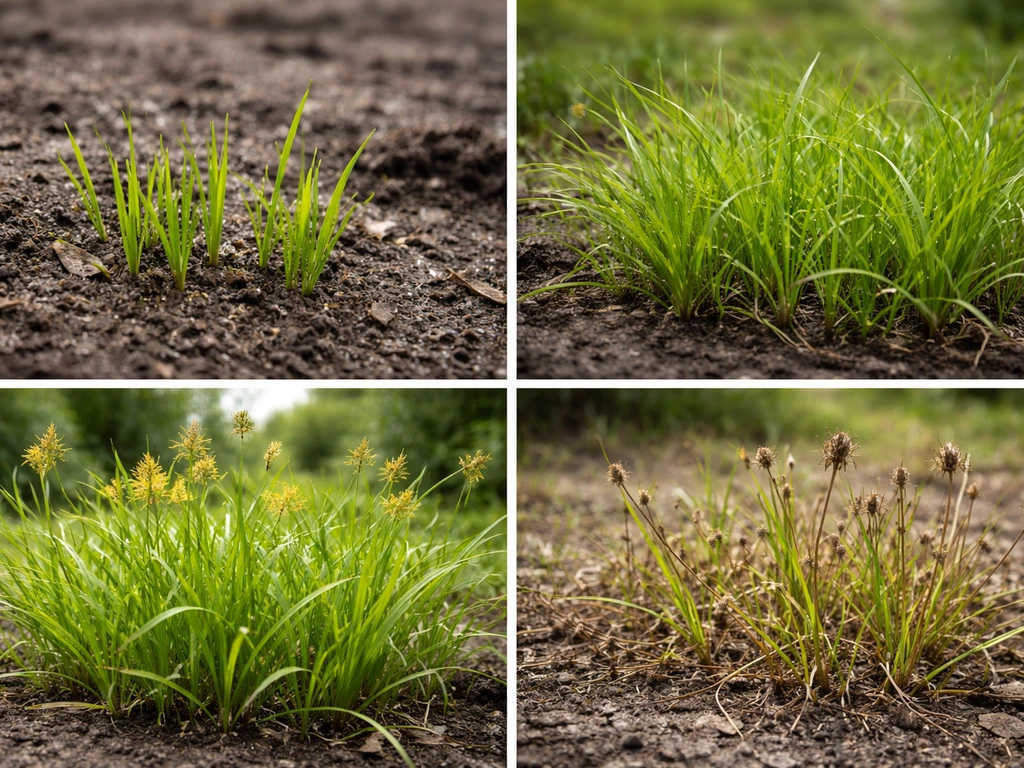
Yellow nutsedge (Cyperus esculentus) follows a fairly predictable seasonal arc: it emerges in spring, flowers through summer, and sets seed from late summer into fall. Purple nutsedge (Cyperus rotundus) follows a similar pattern but is more common in warmer, southern regions. The hard trigger for yellow nutsedge is soil temperature. Growth begins in earnest once the top few inches of soil reach 60–65°F. In the Upper Midwest and Northeast, that typically happens in May. In the Mid-Atlantic and transition zones, you might see emergence in late April. In the Deep South and California, it can start in March or even earlier in a warm year.
Early spring tillage often doesn't eliminate the problem, because shoot and germination formation can continue through late May or early June. Meaning: if you till once in April thinking you've solved it, new shoots are still coming. Yellow nutsedge flowers from July through September, producing umbrella-shaped seedhead clusters at the tops of triangular stems. Tuber formation in plants that emerged in spring begins in late summer when day length drops to around 14 hours.
SARE’s purple nutsedge guidance explains that shorter day lengths promote dormant tubers, while longer day lengths favor tubers that sprout sooner day length drops to around 14 hours. If your nutsedge emerged later in the season, that tuber formation timeline shifts back by roughly a month or more.
Purple nutsedge flowers even earlier, typically 7–8 weeks after emergence, and occasionally as soon as 3 weeks after in warm conditions.
Why nutsedge grows where it does: the real drivers
Moisture is the biggest factor. Yellow nutsedge thrives in moist, poorly drained soils, and it's practically a diagnostic indicator that your drainage is off. If you have a low spot in your lawn that stays soggy after rain, or an irrigation zone that runs too long, nutsedge will find it before you do. University of Maryland Extension describes it specifically as a colonizer of wet areas with poor drainage, and their recommendation starts with diverting or improving drainage to reduce infestations. That's not just good advice for the weed, it's good advice for your soil overall.
That said, nutsedge is more adaptable than people realize. It tolerates sustained flooding but does poorly on sandy, dry soils unless irrigation keeps them consistently moist. It can persist in both full sun and moderate shade, so shading it out once it's established isn't a reliable strategy. It also thrives in disturbed soil, which is why you often see it erupting in areas that were recently tilled, graded, or replanted. Any soil disturbance that breaks up the tuber chains and spreads fragments around is essentially planting more nutsedge. High soil fertility, especially nitrogen-rich conditions, can also accelerate growth.
Where nutsedge grows: geography and site types
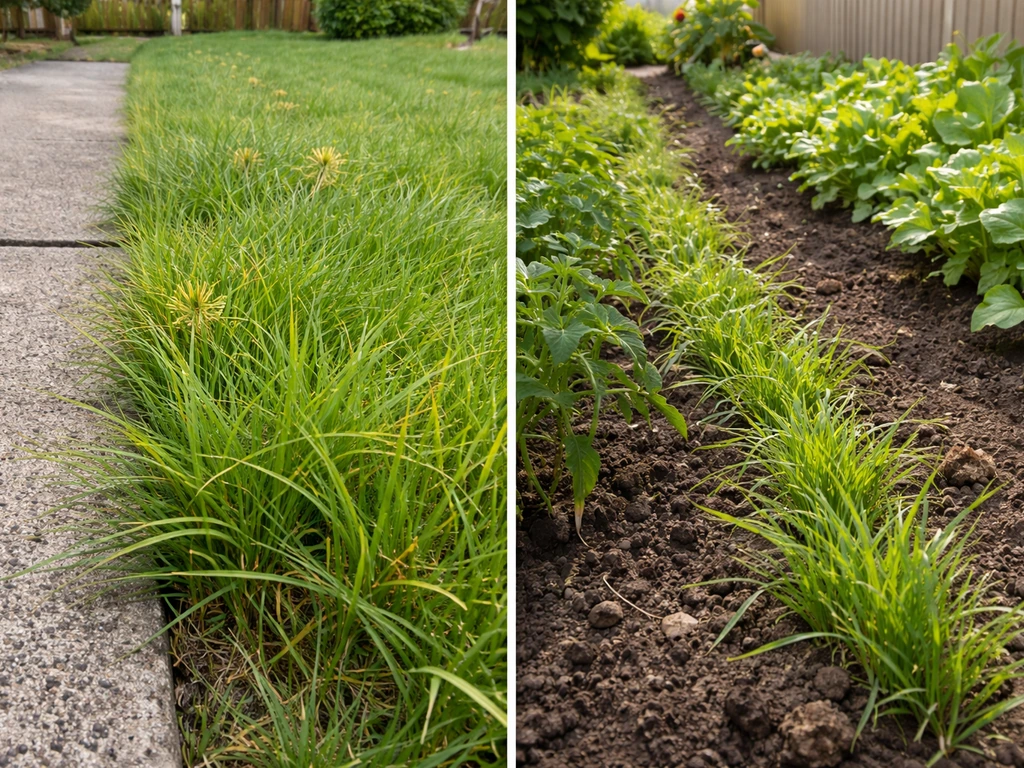
Yellow nutsedge is found across most of the continental United States and into southern Canada. It's particularly common in the Midwest, Mid-Atlantic, and Pacific Coast states. Purple nutsedge is more heat-dependent and tends to dominate in the Southeast, Gulf Coast states, Hawaii, and parts of California. Both species have been documented across multiple continents, and purple nutsedge is considered one of the world's most troublesome weeds due to its aggressive underground spread.
In terms of site types, you'll find nutsedge in home lawns, vegetable gardens, ornamental beds, crop fields, and along roadsides and waterways. It pushes right through mulch in landscape beds, and UC IPM notes that surface cover changes alone are not enough to suppress it once it's rooted. Low-lying areas, compacted soils with poor infiltration, and over-irrigated lawns are the most common hot spots. If your neighbors are dealing with it and you share a low drainage corridor, you're likely to see it show up regardless of what you do on your own property.
How nutsedge grows: life cycle and spread mechanics
Understanding how nutsedge reproduces is the key to understanding why it's so hard to get rid of. Both species reproduce primarily through underground tubers (sometimes called nutlets), not seeds. Seeds are produced, but they contribute relatively little to the actual spread and persistence of the plant. The tubers are the real problem. Yellow nutsedge tubers are concentrated in the top 6 inches of soil, though some can reach 8 inches deep. Purple nutsedge develops an extensive subterranean system of rhizomes and tuber chains, with new tubers forming from apical buds and scales on existing tubers.
The timing of underground development matters enormously for control. For purple nutsedge, tuberization can begin within just 17 days after shoot emergence. Dormant tubers don't appear until about 6–8 weeks after sprouting, and chain formation occurs around 10 weeks after shoot emergence. That means by mid-summer, you could have an extensive underground network that wasn't there in May. Mature tubers can remain dormant in the soil for years, some sources citing viability up to 10 years, and they are not controlled by herbicide treatments targeting the shoots. This is why a single season of control rarely eliminates the problem. You're working down a reservoir.
Mowing doesn't solve it either. Research on purple nutsedge found that mowing at 0.5 inches three times per week reduced spread and tuber production but still allowed plants to produce extensive rhizomes and tubers over a growing season of about four months. Nutsedge simply regrows from the tuber bank. And any time you dig, till, or move soil, you risk fragmenting and redistributing tubers to new areas. This is a weed that actually benefits from some of the most common garden interventions.
This underground persistence is worth keeping in mind when you explore the broader world of nut-forming plants. If you're curious about how underground energy storage works across different plant types, how nuts grow covers the biology of nut formation in ways that help clarify why tuber-based storage systems are so effective at surviving stress.
Yellow vs. purple nutsedge: a quick comparison
| Feature | Yellow Nutsedge | Purple Nutsedge |
|---|---|---|
| Scientific name | Cyperus esculentus | Cyperus rotundus |
| Primary range (US) | Nationwide, common in Midwest/Northeast | Southeast, Gulf Coast, warm-winter states |
| Soil temp for emergence | 60–65°F | Slightly higher; warm-season dominant |
| Flowering window | July–September | As early as 3 weeks after emergence |
| Tuber chain formation | Late summer (14-hour day length) | Around 10 weeks after shoot emergence |
| Tuber depth | Mostly top 6 inches, up to 8 inches | Extensive chain network, variable depth |
| Tuber dormancy | Years | Up to 10 years reported |
| Key site preference | Moist, poorly drained soils | Moist, fertile soils; heat-tolerant |
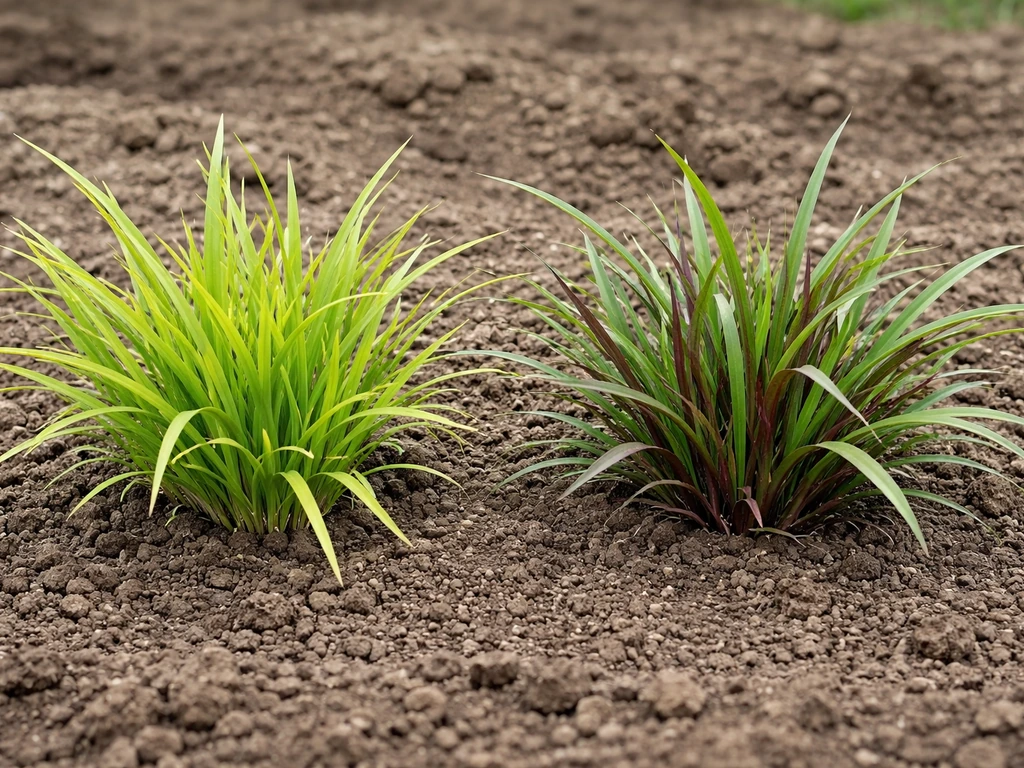
The practical takeaway: if you're in a northern state, you're almost certainly dealing with yellow nutsedge. If you're in the South or Southwest, purple nutsedge may dominate or co-exist with yellow nutsedge. Both require the same basic control philosophy: target active shoots early, before the tuber bank gets replenished.
Reading the plant to time your action
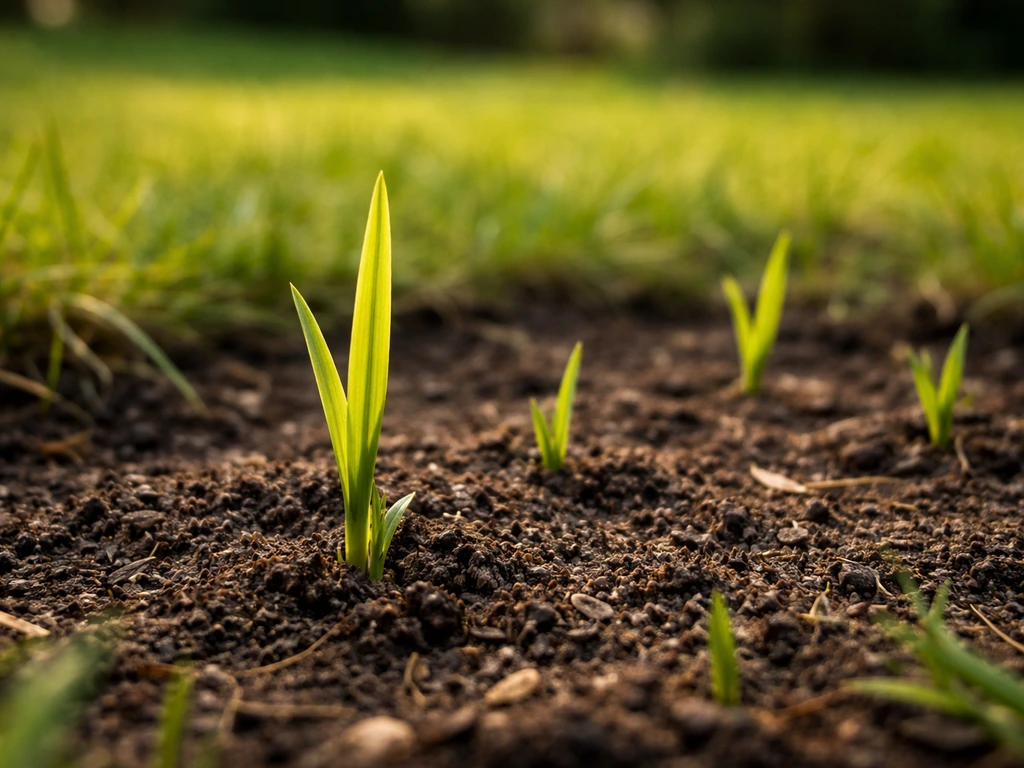
The best time to intervene is when plants are small and actively growing, specifically at the 3–5 leaf stage. At this point, the plant hasn't yet invested heavily in new tuber production and is most vulnerable to both mechanical and chemical control. Visually, a young nutsedge plant will have 3–5 narrow, grass-like leaves emerging from a triangular stem base. If you're not sure whether you're looking at nutsedge or a grass, squeeze the stem: nutsedge has a distinctive triangular cross-section, not round or flat like most grasses.
Once you see umbrella-shaped seedheads forming (yellow nutsedge produces golden-brown clusters from July onward), the plant has already shifted resources toward reproduction and tuber replenishment. Control is still worthwhile, but you've lost the early-season advantage. For purple nutsedge, the flowering indicator comes faster, sometimes within 3 weeks of emergence, so you need to be watching from the moment temperatures warm up in late spring.
Here's a simple field checklist to identify growth stage right now:
- Soil temperature at 60–65°F and you're seeing the first triangular shoots: this is emergence, your earliest intervention window
- Plants have 3–5 leaves, stems are triangular, no seedheads visible: this is the 3–5 leaf stage, ideal for herbicide application
- Stems are taller than surrounding grass, seedheads beginning to form or fully open: the plant is actively replenishing tubers, control is harder but still important
- Seedheads have dried and plants are yellowing in late fall: above-ground dieback, but tubers are overwintering and will re-emerge next spring
Paying attention to phenology (what the plant is doing above ground and when) is how experienced growers track weed pressure across the season. It's a similar observational skill to what you'd apply when timing harvest or pruning decisions for any perennial plant. The same kind of careful timing applies in tree nut production: for example, how tree nuts grow illustrates how seasonal cues govern growth and reproduction across different species, a principle that applies equally well to understanding persistent weeds like nutsedge.
What to actually do right now
If it's spring and you're seeing new shoots, your first priority is to avoid disturbing the soil any more than necessary. Don't till through an infested area unless you're prepared to follow up with consistent control throughout the season. Tilling spreads tuber fragments. Instead, focus on the following actions based on your current growth stage.
Fix the drainage first
If nutsedge keeps coming back in the same spots year after year, drainage is almost always the underlying issue. Divert downspouts away from problem areas, adjust irrigation run times and coverage, and consider installing a French drain or raising low spots with soil amendments. Improving drainage won't eliminate existing tubers, but it removes the primary site advantage that keeps nutsedge thriving where other plants struggle.
Small patches: dig them out properly
For a small, isolated patch, hand-digging can work if you do it thoroughly. You need to go down at least 8 inches and remove as much of the tuber mass as possible. Refill with clean soil. Expect regrowth from any tubers you missed, and plan to follow up every time you see new shoots. Consistency over two to three seasons can substantially reduce a small infestation. This is slow work, but it's effective if the patch hasn't spread widely.
Herbicide timing: hit the 3–5 leaf window
For larger infestations, selective post-emergent herbicides (products containing halosulfuron-methyl or sulfentrazone are common options for lawns and landscape beds) work best when applied at the 3–5 leaf stage. Rutgers emphasizes that initiating control early, before new tubers form, is critical to reducing future severity. A single application rarely provides complete control. Plan on two to three applications across the season following label directions, and expect to repeat the program in subsequent years as dormant tubers germinate. Never apply when plants are stressed from drought or extreme heat, as uptake is poor and you waste the treatment.
What won't work on its own
- Mowing alone: nutsedge regrows from tubers and continues tuber production even under aggressive mowing schedules
- Mulching: nutsedge emerges through even thick mulch layers and is not reliably suppressed by surface coverings
- Single-season herbicide application: dormant tubers in the soil will continue to sprout in subsequent years
- Shading: while nutsedge prefers full sun, it persists in moderate shade once established
The honest reality is that nutsedge management is a multi-year commitment, not a one-time fix. If you start now, during the spring emergence window, and stay consistent, you can make meaningful progress each season. The goal in year one is to prevent new tuber formation as much as possible. The goal in years two and three is to draw down that tuber bank until it's small enough to manage easily. Think of it less like pulling a weed and more like managing a persistent underground plant system, which is essentially what it is.
This kind of long-view thinking about underground plant systems is actually pretty common when you study how nuts and seeds persist in the landscape. Where beech nuts grow gets into how mast-producing trees sustain themselves across seasons, which gives you an appreciation for just how much biological investment plants put into their underground and reproductive reserves. Nutsedge is doing the same thing, just from an adversarial angle.
One more thing worth noting: if you're dealing with nutsedge in a vegetable garden or orchard setting, your options narrow because many herbicides aren't labeled for use near edible crops. In those situations, hand removal, diligent cultivation at the right depth, and consistent drainage improvement are your primary tools. It's slower, but working with the biology rather than against it, timing your interventions to the plant's actual growth stage, is what makes the difference between spinning your wheels and making real progress. Some of the same principles that govern nut development in species like how Brazil nuts grow, where timing and environmental conditions dictate reproductive success, apply directly to understanding why nutsedge behaves the way it does.
FAQ
If my soil is warm, should I start control immediately, or only after I see shoots?
A good rule is to act when you can confirm active growth, not just warm weather. Even if soil temperatures hit 60–65°F early, nutsedge may not be visible immediately, so check low areas and look for 3–5 narrow leaves at the base of the triangular stem (the 3–5 leaf stage) before timing digging or herbicide.
Why might nutsedge grow earlier in my yard than the regional timeline suggests?
Yes, you can see earlier growth in microclimates. Areas that warm faster, like south-facing slopes, blacktop edges, compost piles, or areas warmed by retained heat, can produce shoots weeks ahead of your broader “late April to early June” expectation.
Does mowing stop nutsedge growth, or do I still need to treat it?
Mowing can reduce above-ground growth but it does not stop tuber development. In practice, if you mow, you should treat that as a way to monitor regrowth, then apply control at the 3–5 leaf stage, because once flowering starts the plant has already shifted resources toward replenishing the underground tuber bank.
Can I eliminate nutsedge with one treatment if I catch it early?
You can, but timing matters and “single pass” results are unlikely. Because tuberization and chain formation can begin within weeks after emergence, a one-time spray or one-time digging effort often misses the later flushes from remaining tubers, so plan follow-ups and watch for new shoots before deciding you are done.
How does my irrigation schedule affect when nutsedge emerges and how long it keeps coming back?
Yes, especially where irrigation is heavy or drainage is poor. If your irrigation schedule keeps the top few inches consistently moist, emergence can be prolonged and the weeds can appear in waves, which means you might need multiple applications or repeated hand removal across the same season.
Why did nutsedge suddenly appear after I tilled, aerated, or replanted?
Often, yes. If you disturbed soil recently, like after grading, replanting, aerating, or moving mulch, you may be “bringing up” tubers that were already present but not yet growing. That can make it look like nutsedge starts earlier or suddenly expands in a previously clean area.
What’s the fastest way to confirm I actually have nutsedge and not a grass before treating?
Look for triangular stem cross-sections, especially when the plant is young. If you squeeze the stem and it feels distinctly triangular rather than round, plus you see grass-like leaves arising from a triangular base, that supports nutsedge identification, which matters because control timing is built around the correct weed.
What if I’m at the 3–5 leaf stage, but the weather is hot or the soil is dry?
If the plants are stressed, uptake and performance drop. Avoid applying when nutsedge is drought-stressed or during extreme heat, because even if the calendar timing is perfect (3–5 leaf stage), reduced absorption can lead to poor results and more regrowth.
Can nutsedge pause during spring and restart later, even though temperatures warmed up?
Yes, in some situations you may see a delayed “first flush” after an early warm spell. If cold snaps, heavy shade, or dry conditions hold the topsoil below the growth threshold, emergence can pause, then resume when conditions become favorable again.
If I only improve drainage in one low spot, will the nutsedge still spread from elsewhere?
In lawns and ornamental beds, you can often spot the strongest pressure in persistent wet spots, compacted areas with poor infiltration, and irrigation overlap zones. If you fix only those hot spots, you can reduce emergence locally faster, but you still need to prevent replenishment from the tuber bank in treated patches.