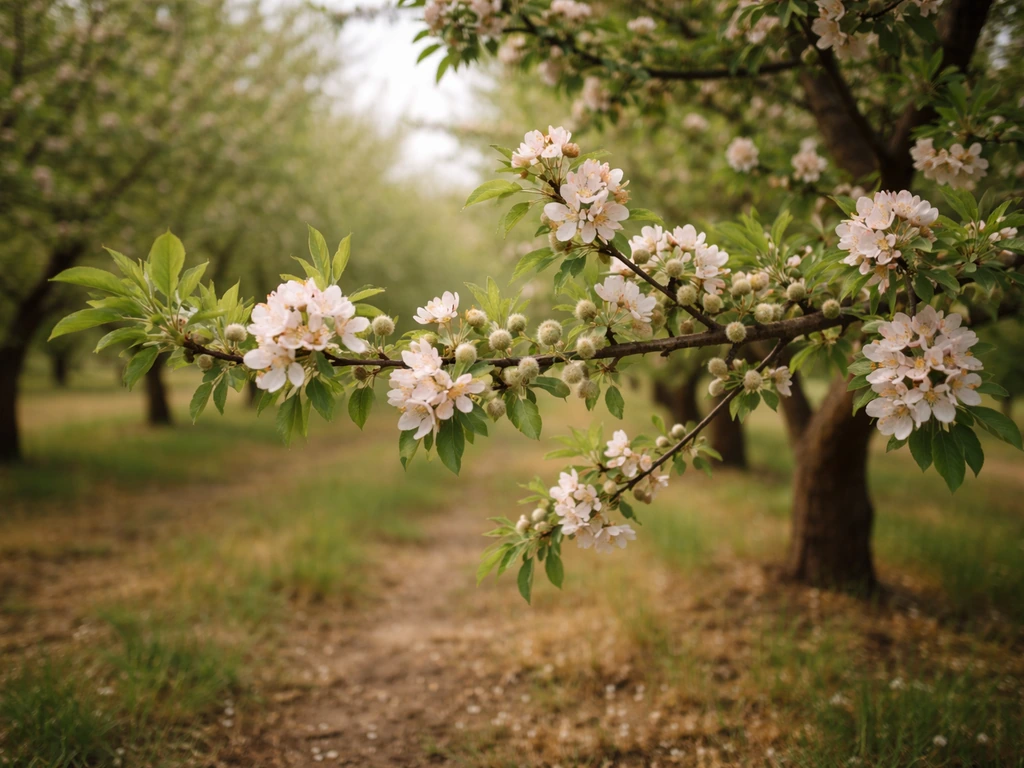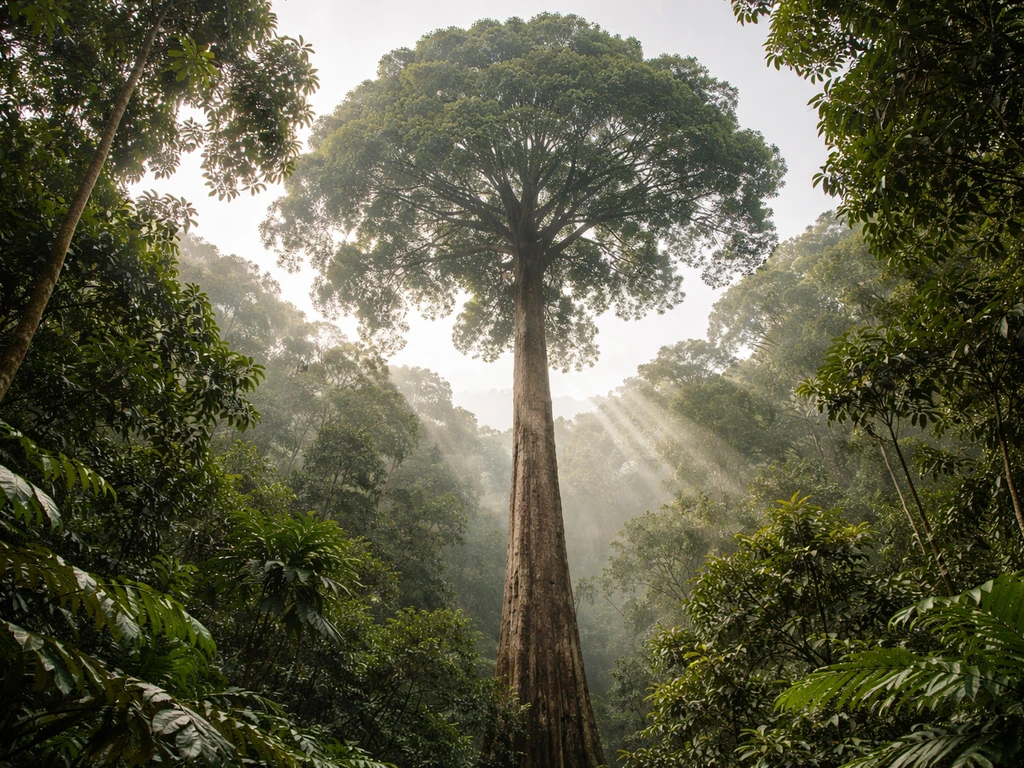
Beech nuts grow on beech trees (genus Fagus), and where exactly you find them depends heavily on which beech species you're talking about and whether the local climate gives those trees what they need to actually set fruit. In North America, the relevant species is American beech (Fagus grandifolia). In Europe, it's European beech (Fagus sylvatica).
Where Do Beech Nuts Grow and How to Grow Them
Marcus Hendricks
18 Apr 2026
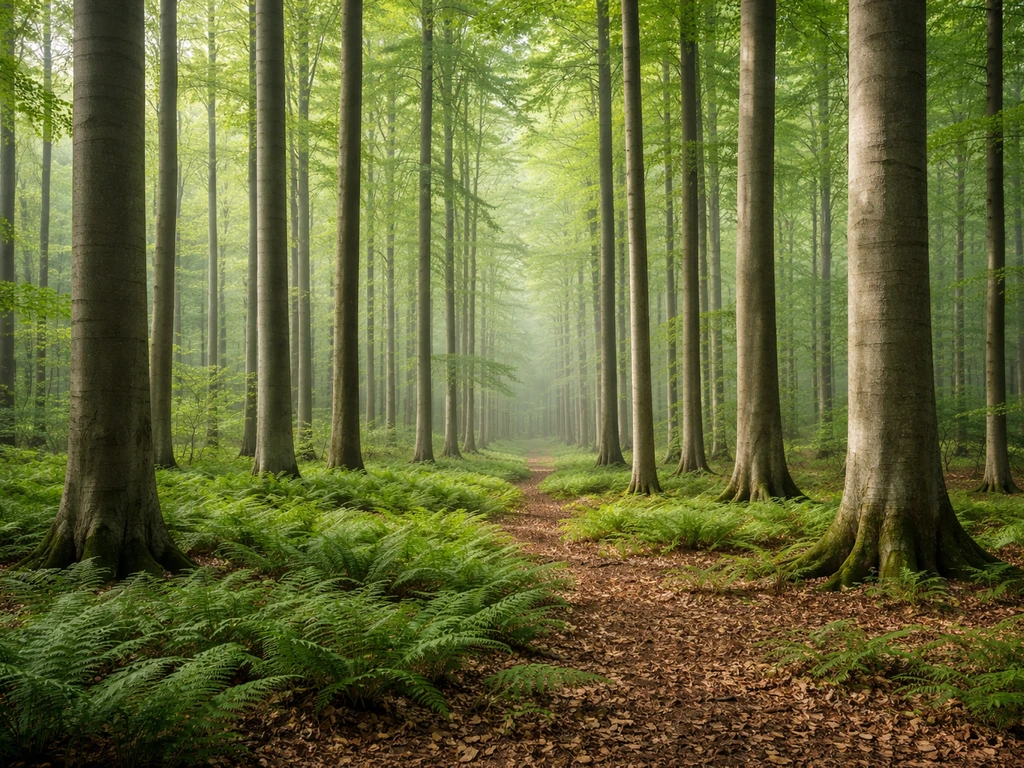
Both produce the same basic structure: a spiny, four-lobed husk called a cupule that splits open after the first heavy frosts of autumn and drops small, triangular, edible nuts. The nuts mature roughly 5 to 6 months after spring pollination. But knowing the tree exists somewhere and knowing it will reliably produce nuts are two different things, and that gap is exactly what this guide closes.
First, make sure you're talking about the right beech
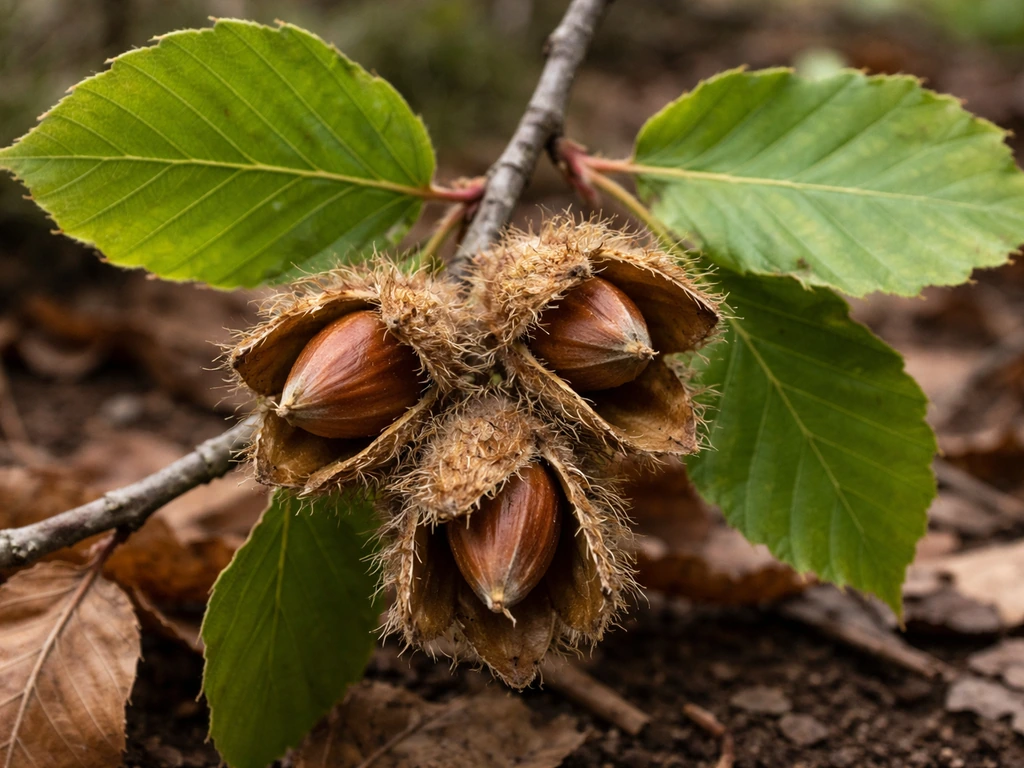
The genus Fagus contains about 11 recognized species worldwide, but only a handful are widely relevant to nut production. American beech (Fagus grandifolia) is the only Fagus species native to the United States. European beech (Fagus sylvatica) is native across a broad swath of Europe from southern Scandinavia to the Mediterranean and is also widely planted as an ornamental in North America, where it can produce nuts but is not naturalized in the wild the same way.
Then there are the Asian species: Fagus crenata (Siebold's beech, native to Japan) and Fagus japonica (Japanese beech), both of which produce edible nuts but are rarely grown outside their native range or botanical collections. Fagus orientalis (Oriental beech) covers parts of the Middle East and the Caucasus and follows the same cupule-and-nut pattern.
Why does the species distinction matter? Because if you're in the eastern United States looking for beech nuts in the wild, you're almost certainly looking for Fagus grandifolia. If you see a copper-leaved ornamental beech in a park or suburban yard, that's almost certainly a Fagus sylvatica cultivar, which can produce nuts but often doesn't produce them reliably in North American conditions. Ornamental varieties selected for foliage color rather than fruiting performance are also less likely to set a heavy crop. Get the species right before you start troubleshooting your nut yield.
Where beech trees naturally grow
American beech in North America
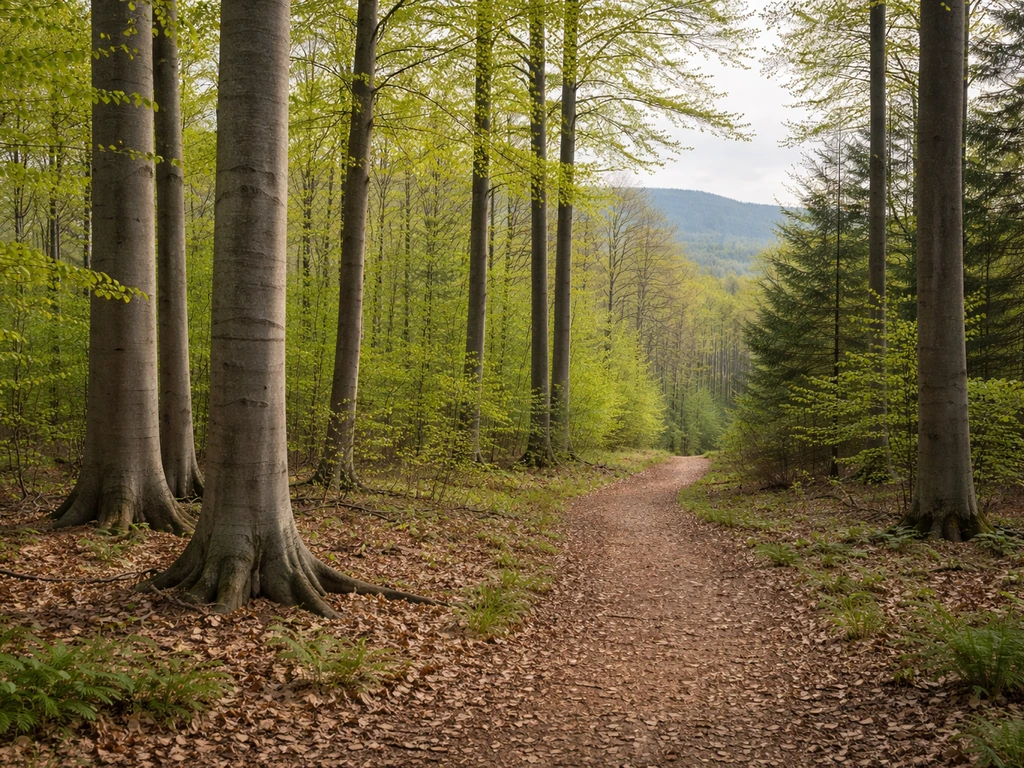
American beech has one of the broadest native distributions of any hardwood in the eastern United States. Its native range runs from Maine and the Maritime Provinces of Canada west through Quebec and Ontario, then sweeps south all the way to northern Florida and eastern Texas, with the western boundary roughly following Wisconsin and Missouri. Within that range, it's a dominant or co-dominant species in many mature hardwood forests, typically growing alongside sugar maple, yellow birch, and eastern hemlock in the northern part of its range, and with tulip poplar, oaks, and magnolias further south.
Outside that native band, American beech doesn't naturalize well. You won't find wild stands in the Great Plains, the Mountain West, or the Pacific Coast states. The tree needs moisture, moderate temperatures, and specific soil conditions that the drier interior of the continent simply doesn't provide consistently.
European beech across Europe and beyond
European beech (Fagus sylvatica) dominates much of central and western Europe's temperate forest zone. It grows across France, Germany, Switzerland, the British Isles, Denmark, and southern Scandinavia, then extends east through Poland, the Czech Republic, and into parts of the Balkans. It reaches its southern limits in the mountains of Spain, Italy, and Greece, where it's restricted to higher elevations because of summer heat and drought at lower altitudes. European beech has also been widely planted in New Zealand, the Pacific Northwest of the U.S., and parts of eastern Australia as an ornamental, but these are cultivated trees, not wild stands.
The climate and soil conditions that actually determine nut production
A beech tree existing in a location and a beech tree producing nuts reliably are not the same thing. The conditions below are what separate a tree that sets a decent crop from one that flowers, gets hit by a late frost, and drops nothing worth collecting.
Temperature and hardiness zones
American beech thrives in USDA hardiness zones 4 through 9, though its nut production is most consistent in zones 5 through 7. In zone 4 (minimum winter temps around -30°F / -34°C), the trees survive but late-spring frosts can damage flowers and reduce nut set in any given year. At the warm end, zone 9 conditions (hot, dry summers in many regions) push the tree into stress that limits flowering and nut development.
European beech is generally suited to zones 4 through 7, with some cultivars tolerating zone 8 if the summer is not excessively hot and dry. The critical temperature events are not winter cold per se, but late frost after bud break in spring, which can destroy the female flowers before pollination occurs.
Soil type and pH
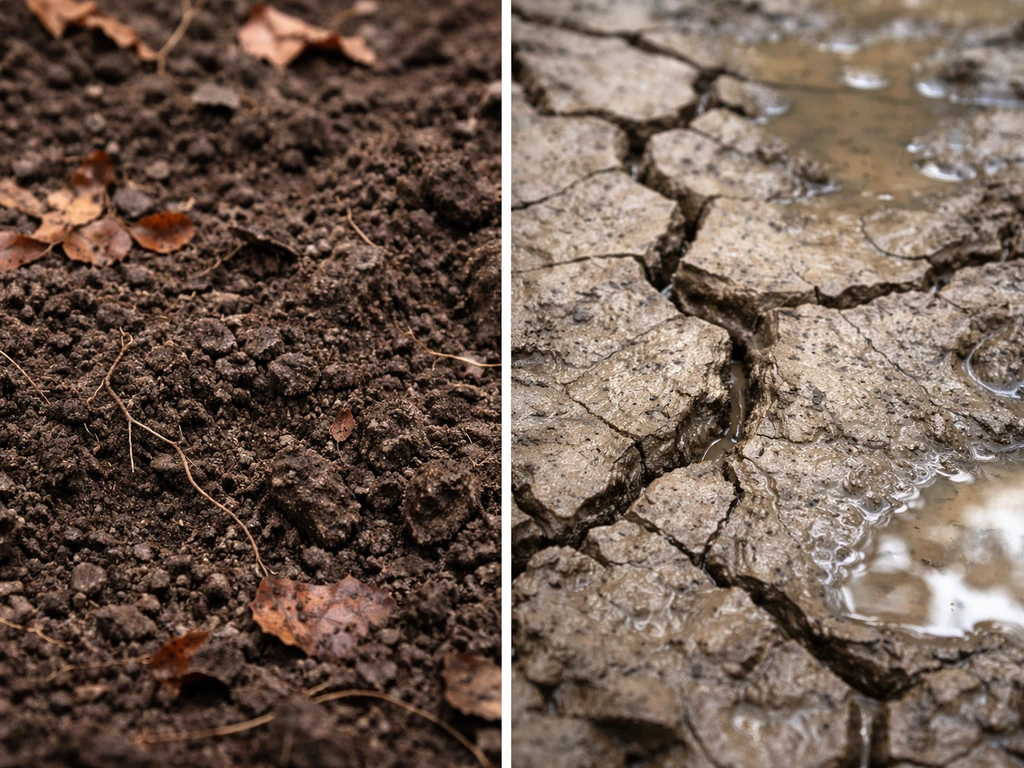
Both American and European beech strongly prefer well-drained, moist soils. American beech is intolerant of soil compaction, which is one of the main reasons urban plantings often underperform. On pH, the data is fairly consistent: American beech does best in acidic to neutral soils, with an optimal range of around 5.0 to 6.5 and tolerating up to about 7.4 to 7.5 before performance noticeably drops. If your soil is alkaline (above 7.5), expect chlorosis, slow growth, and poor nut production. Deep loams or sandy loams with organic matter are ideal. Clay-heavy soils that stay waterlogged after rain are a problem because the tree needs moisture but not standing water around its roots.
| Condition | American Beech (F. grandifolia) | European Beech (F. sylvatica) |
|---|---|---|
| USDA Zones | 4–9 (best: 5–7) | 4–7 (some cultivars to 8) |
| Soil pH | 5.0–6.5 optimal, tolerates to 7.4 | 5.0–6.5 optimal |
| Soil drainage | Well-drained, moist; intolerant of compaction | Well-drained, moist; sensitive to waterlogging |
| Soil texture | Deep loam or sandy loam preferred | Deep loam or clay-loam, well-structured |
| Moisture needs | Consistent moisture; drought-sensitive | Consistent moisture; drought reduces nut set |
| Late frost sensitivity | High (damages spring flowers) | High (damages spring flowers) |
Elevation, rainfall, and light: the site-level details
Beech trees are adaptable in elevation but are typically found at low to mid elevations in the eastern U.S., from near sea level up to about 3,000 to 4,000 feet in the Appalachians. At higher elevations, growing seasons shorten and frost risk increases, both of which reduce reliable nut production. European beech occupies a similar profile, growing at lower elevations in the north of its range and climbing higher in the south, where montane conditions provide the cooler temperatures it needs.
Rainfall is genuinely important. American beech naturally occurs in regions that receive at least 30 to 40 inches of annual precipitation, well-distributed across the growing season. A moist spring matters especially: research on European beech confirms that spring moisture conditions correlate with seed production intensity, while summer drought can function as a physiological cue that either triggers or suppresses the following year's mast event depending on timing. Late frost, which can occur even in zones well within the tree's hardiness range, is one of the most reliable killers of a nut crop because it destroys flowers that have already opened.
Light is where beech trees have a split personality. American beech is famous for its shade tolerance, which is why it persists and reproduces in the understory of mature forests. But shade tolerance is not the same as preferring shade for nut production. A beech tree growing in heavy shade may survive for decades and still produce very few nuts. Trees at forest edges, in gaps, or on well-lit slopes produce substantially more nuts than those buried under a closed canopy. If you're planting for nut production rather than just growing the tree, prioritize a site with at least partial sun, ideally getting direct sun for several hours per day.
Growing beech trees for nuts: zone suitability and planting realities
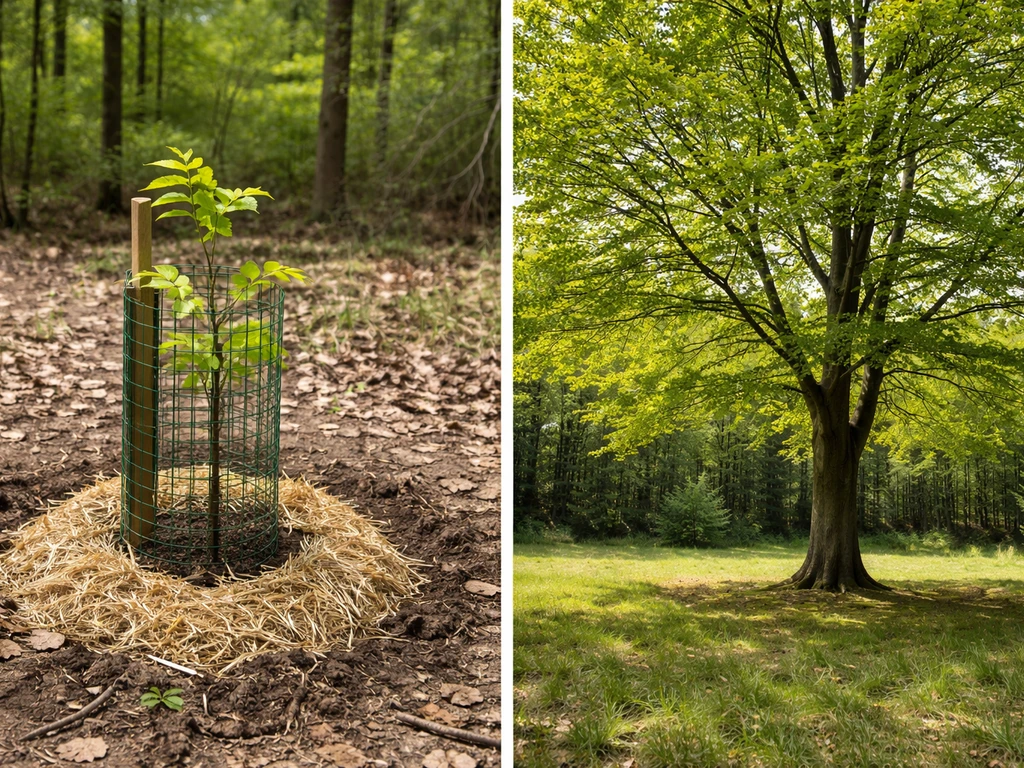
If you want beech nuts from your own trees, set realistic expectations from the start. American beech does not begin producing meaningful quantities of nuts until it is roughly 40 years old. Large, reliable crops don't really happen until trees are around 60 years old. That is not a typo. This is a long-term investment, not a 5-year project. If you're planting a young beech tree today for nut production, you are planting it for future generations as much as yourself, or you're hoping to use it to supplement foraging from mature wild stands in the interim.
On top of the age issue, beech is a mast-seeding species. Even mature trees don't produce nuts every year in large quantities. Mast years, when virtually all the trees in a region simultaneously produce a heavy crop, are separated by lean years with very few nuts. Research on Siebold's beech in Japan found the average interval between mast years in one study was about 7 years. European beech shows similar patterns, and there is evidence that climate warming may be disrupting the synchrony of mast events, making crop timing less predictable. American beech follows comparable boom-and-bust cycles.
For planting, zones 5 through 7 are your sweet spot in North America for Fagus grandifolia. Choose a site with slightly acidic, well-drained soil (target pH around 5. Clemson University’s American beech guide recommends targeting blank" rel="noopener noreferrer">a soil pH of about 5.5 to support strong performance. 5 to 6.5), consistent moisture, and at least a few hours of direct sun. Avoid compacted soils, poorly drained low spots, and sites with known late-frost exposure in spring. Give the tree plenty of space: American beech is a large canopy tree that can exceed 80 feet at maturity. Spacing for orchard-style planting is typically 30 to 40 feet between trees to allow crown development and adequate light for nut production.
One detail worth knowing: reproduction in wild beech stands can actually improve when partial canopy cutting reduces competition from less shade-tolerant species. This is relevant if you're managing a woodlot. Thinning competitors can release existing beech trees and encourage them to move into higher-production life stages faster than they would under a fully closed canopy.
How to find beech stands near you
If your goal is finding beech nuts now rather than growing your own, the most practical approach is locating mature wild stands. Here's how to check efficiently.
- Check your state's native tree range maps. USDA FEIS and state forestry agency websites carry distribution data for American beech by county. If your county shows beech presence, look at state forests, national forests, or conservation areas nearby.
- Look for the right forest type. In the Northeast and Mid-Atlantic, American beech grows in mixed hardwood forests, often on north-facing slopes or in moist coves. In the Midwest, it's more restricted to areas with adequate moisture. If you're in beech-maple or beech-birch forest types, you're in the right habitat.
- Identify the tree by bark. American beech is the tree with smooth, gray, elephant-skin bark that holds its characteristic look even on older trees. Beech leaves are simple, oval, with wavy-toothed margins and prominent parallel veins. The dried leaves often persist through winter, which is a useful off-season ID feature.
- Visit in late September through November. Beech nuts fall after the first heavy frosts open the burs. In most of the northeastern and mid-Atlantic U.S., this means October into early November. The window for collecting fallen nuts is short, often just a couple of weeks before wildlife moves in.
- Check tree age and canopy position. Young, understory beech trees produce few nuts. Look for large-diameter trees (12 inches DBH or more) with some crown exposure. Mature trees at forest edges or gaps are your best bets.
- Confirm it's a mast year locally. Talk to local foragers, state wildlife biologists, or check hunting forums (squirrel and deer hunters track mast crops closely). A lean year means a long walk for very few nuts regardless of how many trees you find.
Why your area might not produce beech nuts, and what to do about it
There are several reasons beech trees in a given location fail to produce nuts, and most of them are diagnosable. Working through this list can save a lot of frustration.
- Wrong species or cultivar: Ornamental Fagus sylvatica cultivars planted in North American landscapes are often selected for foliage, not fruiting. They may produce no nuts, or very few. Confirm you're dealing with Fagus grandifolia if you're in North America and expecting wild-type productivity.
- Trees are too young: If beech trees in your area were planted or regenerated within the last 30 to 40 years, they simply haven't reached the age at which meaningful nut production begins. There's no workaround for this except time.
- It's a non-mast year: Even healthy, mature beech trees produce very little in lean years. One poor season doesn't mean your site is wrong. Track multiple years before drawing conclusions.
- Late spring frost damage: If flowers are killed before pollination, you get no nuts that year regardless of tree health. Frost-prone valleys and low spots are especially problematic. Consider this when choosing a planting site.
- Heavy shade: Trees buried in a closed canopy rarely produce heavy nut crops. Partial canopy release through thinning can improve production over several years.
- Soil compaction or drainage problems: These stress the tree and reduce reproductive output. Compacted soils around urban and suburban plantings are a very common culprit.
- Soil pH out of range: Alkaline soils above 7.5 lead to nutrient deficiencies that reduce overall tree vigor and nut production. A soil test is cheap and eliminates guesswork.
- Beech bark disease: In many parts of the northeastern U.S., American beech populations are heavily affected by beech bark disease, a combination of scale insect damage and fungal infection. Infected trees often show rough, scaly bark, cankers, and reduced vitality, which can significantly limit nut production in affected stands.
If your area genuinely can't support beech (wrong zone, soil too alkaline, or climate too dry), the honest answer is that beech nuts are not your crop. If you want to understand how does brazil nuts grow, it helps to compare Brazil nut requirements with the beech requirements discussed here beech nuts.
Understanding the full picture of how different nut trees match to specific growing conditions, from the demanding ecology of beech to the very different requirements of other tree nut species, helps you make better decisions about what to grow or where to forage. Beech is worth the patience in the right location. In the wrong one, it's a beautiful tree that will rarely reward you with a meaningful harvest.
The core answer to where beech nuts grow is this: in moist, well-drained, slightly acidic soils, within the native range of Fagus grandifolia across the eastern United States and Canada, or within the European range of Fagus sylvatica, on mature trees (at least 40 years old) with adequate canopy exposure, in mast years, after the first frosts of autumn. how do tree nuts grow. Every one of those conditions matters.
If you're wondering when does nutsedge grow, that's a different plant with its own seasonal pattern. If you want to know the timing day to day, beech nuts typically drop after the first heavy autumn frosts and mature months after spring pollination when do beech nuts grow. If you’re also curious about other nut trees, the growth cycle and habitat needs for Brazil nuts are quite different from beech how does brazil nuts grow.
Miss one, and you might find the tree but not the nuts.
FAQ
Do beech nuts only grow in the exact native range, or can I find them outside it?
Yes, but only if the tree is actually producing and you target the right window. Beech cups split after the first heavy autumn frosts, then nuts drop soon after. If you wait until winter, you can still find nuts, but higher winds and animal caching reduce how many intact nuts you’ll collect.
If I have a beech tree in my yard, how can I tell whether it will actually produce beech nuts?
You can occasionally find nuts from planted European beech in North America, but reliable wild production is uncommon. The easiest practical rule is to look for mature trees growing on suitable moist, well-drained, slightly acidic soils and in climates that avoid frequent late-spring frost damage.
What are the most common reasons a beech tree flowers but produces few or no nuts?
Check four things: age (real crops usually start around 40 years, with big mast years closer to 60), canopy exposure (partial sun is far better than deep shade), site moisture and drainage (avoid compacted or waterlogged soil), and frost risk around spring bud break (late frost can wipe out flowers even in the right hardiness zone).
Why do I sometimes find plenty of beech husks but no nuts, or very few nuts?
Even in the right area, beech is mast seeding, so a “no nuts this year” outcome can be normal. Plan to scout across multiple years, and focus on the pattern of local mast years rather than judging a site based on a single season.
How should I time foraging if the weather is unusually warm or the frost comes late?
Look for recently opened cups and fallen nuts, not just husks still on branches. If you find cups that never seem to split, the tree may be failing to set fruit due to late frost, drought timing, or insufficient light, rather than because you missed the drop.
Does USDA hardiness zone alone predict whether beech nuts will be plentiful?
Warm springs can push bud break earlier, which increases the chance that a late frost hits after female flowers open. In that scenario, nut drop can be dramatically lower even though the tree survived winter.
Are there microclimates where beech nuts grow better even within the same general area?
Not fully. Two sites in the same zone can differ in late-frost exposure, soil compaction, and drainage, all of which affect flowering and nut set. A low spot that holds cold air or water can underperform compared with a nearby slope with better cold-air drainage and airflow.
If beech grows in my local forest, where should I look on the ground to find the most nuts?
Yes. In woods, beech often fruits better at edges, gaps, or well-lit slopes than under a closed canopy. For wild foraging, this means you may get nuts within the same stand from trees on the perimeter or where light reaches the canopy.
Can I collect beech nuts and store them, or do they need to be used immediately?
Yes, and it matters for success. Nuts are typically dropped in autumn after frosts, then they can be eaten quickly by wildlife. If you want to collect and store, prioritize harvesting early in the drop window and keep nuts cool and dry to reduce mold and spoilage during storage.
Will European beech that’s planted for landscaping always produce nuts where I live?
It is possible, but your best indicator is whether the tree produces in its environment. If your species is likely correct but the tree is too young, too shaded, or repeatedly hit by late frost, you may not see meaningful nut production for years. If you are in North America and using a planted ornamental beech, also consider that some cultivars are selected for foliage color and may crop inconsistently.