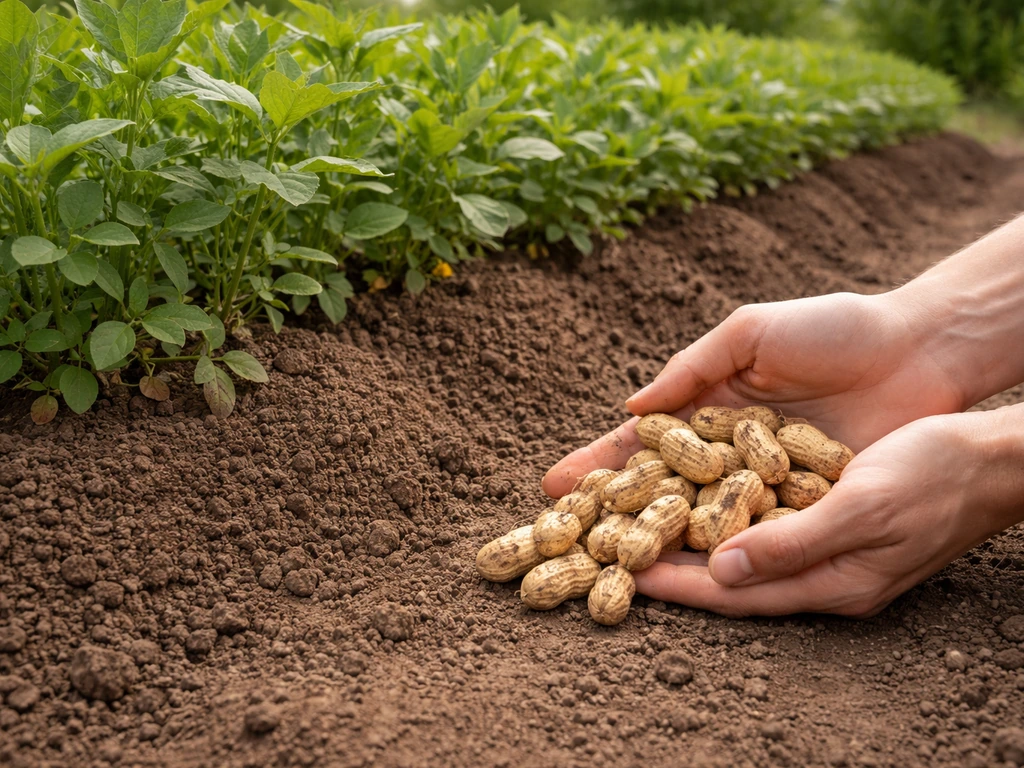
Monkey nuts grow underground, not on trees. In most English-speaking contexts, especially British English, 'monkey nut' simply means a peanut (Arachis hypogaea) still in its shell. Peanuts are one of the most unusual crops in the plant world because the blank" rel="noopener noreferrer">flowers form above ground but the actual pods mature below the soil surface, a process called geocarpy. So if you've been picturing a nut hanging from a branch, the reality is pretty much the opposite.
Do Monkey Nuts Grow Underground? How to Grow Peanuts
Marcus Hendricks
24 Apr 2026
What exactly is a monkey nut?
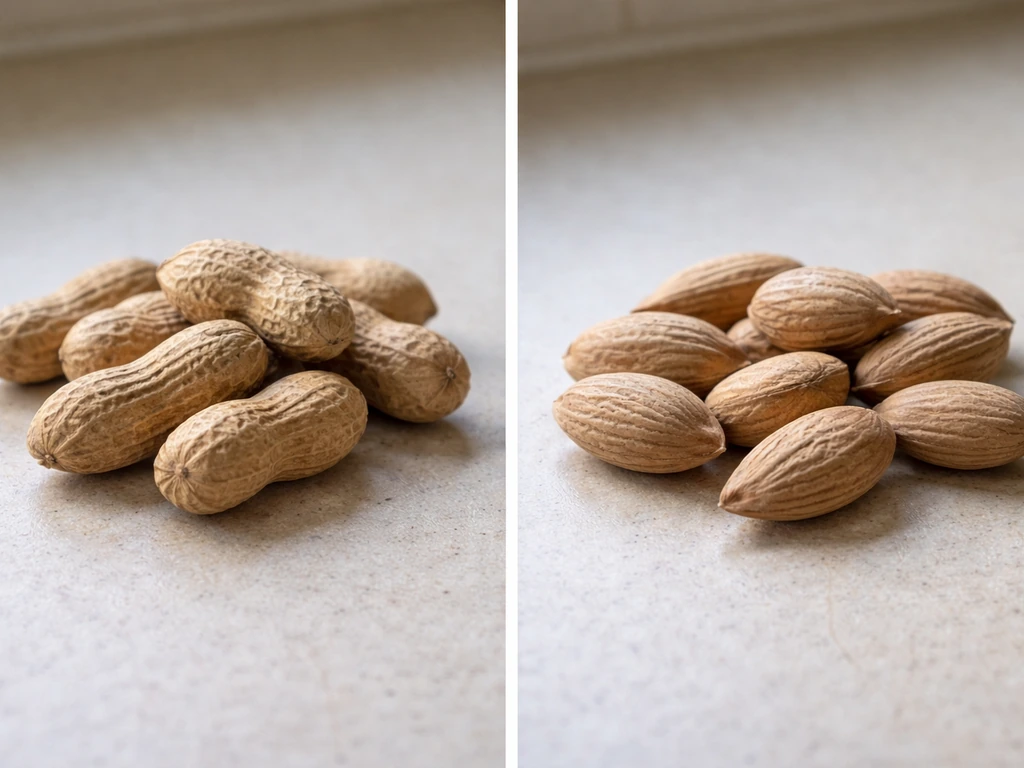
In the UK and many Commonwealth countries, 'monkey nut' is the standard everyday term for a peanut in its unshelled pod. The Collins English Dictionary defines it plainly as another name for a peanut. Walk into any UK pub or pick up a bag from a market stall and that's what you're getting: Arachis hypogaea, the common groundnut.
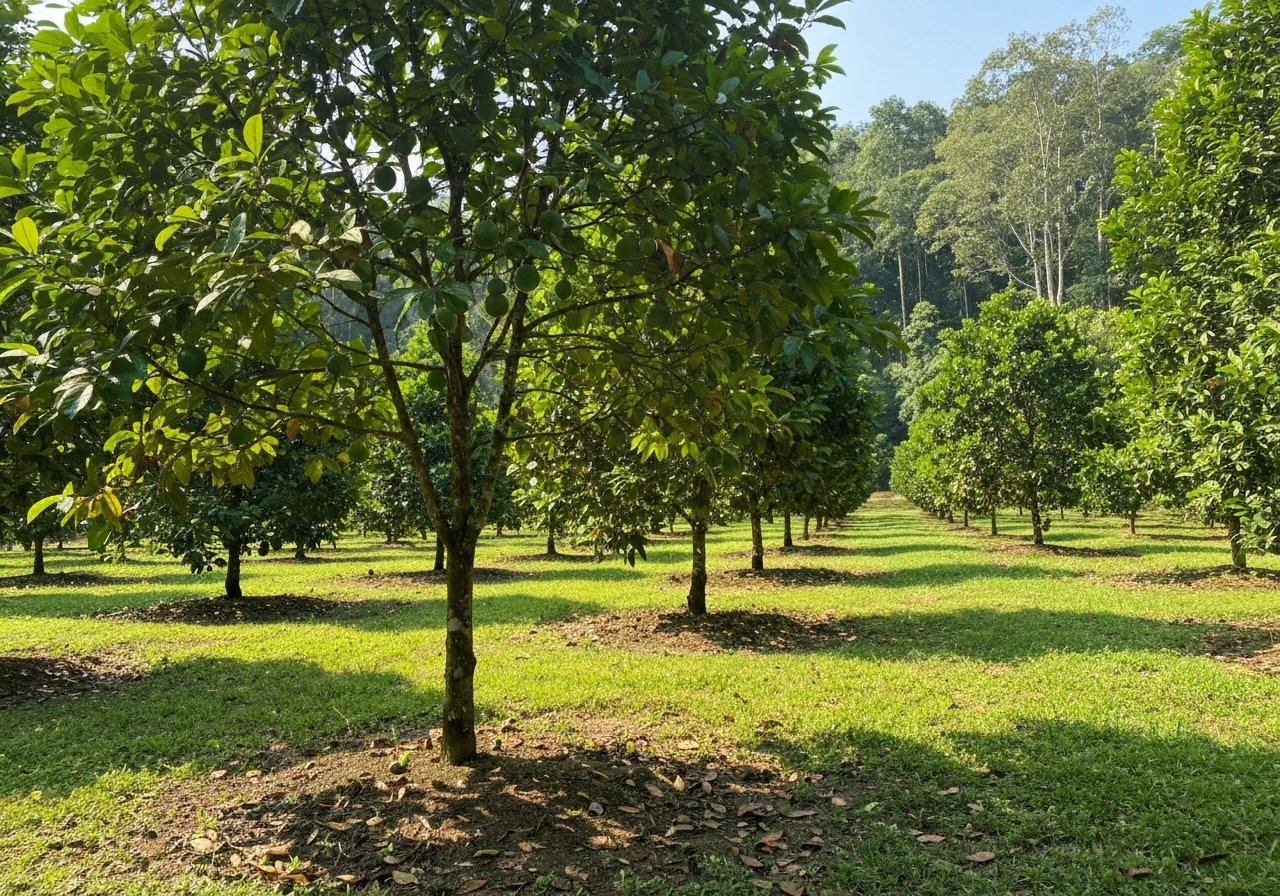
That said, the name gets applied to a couple of unrelated plants in different parts of the world. Hicksbeachia pinnatifolia, an Australian rainforest tree, is sometimes called monkey nut because of its large red seeds. Anacardium humile, a dwarf relative of the cashew found in Brazil, also carries the name in some references. These are genuinely tree-grown or shrub-grown species, which is probably one reason people get confused about whether monkey nuts come from the ground or from trees. For the purposes of this guide, and for the vast majority of people searching this question, we're talking about peanuts.
Where monkey nuts (peanuts) grow
Peanuts are native to South America and thrive in warm, frost-free climates. The main commercial growing regions today are the southern United States (Georgia, Texas, Virginia, North Carolina), large parts of sub-Saharan Africa, India, China, and Argentina. In the US, peanuts grow best in USDA hardiness zones 7 and warmer, where the growing season is long enough and summer temperatures are reliably high.
In cooler climates like the UK or the northern US, you can grow peanuts as an annual if you have a long, warm summer, but you're working against the crop's natural preferences. If you’re wondering whether peanuts can be grown locally, you may be asking whether does nutmeg grow in connecticut is realistic for your growing conditions northern US.
If you want to grow peanuts in Connecticut, focus on long enough warm conditions (or start indoors) since they need about 120 to 150 frost-free days peanuts can be grown locally. The plants need around 120 to 150 days of frost-free growing weather, and soil temperatures need to be consistently warm for pegging and pod development to happen properly. Gardeners in shorter-season climates often start plants indoors and use raised beds or black plastic mulch to extend warmth.
How monkey nuts actually grow underground
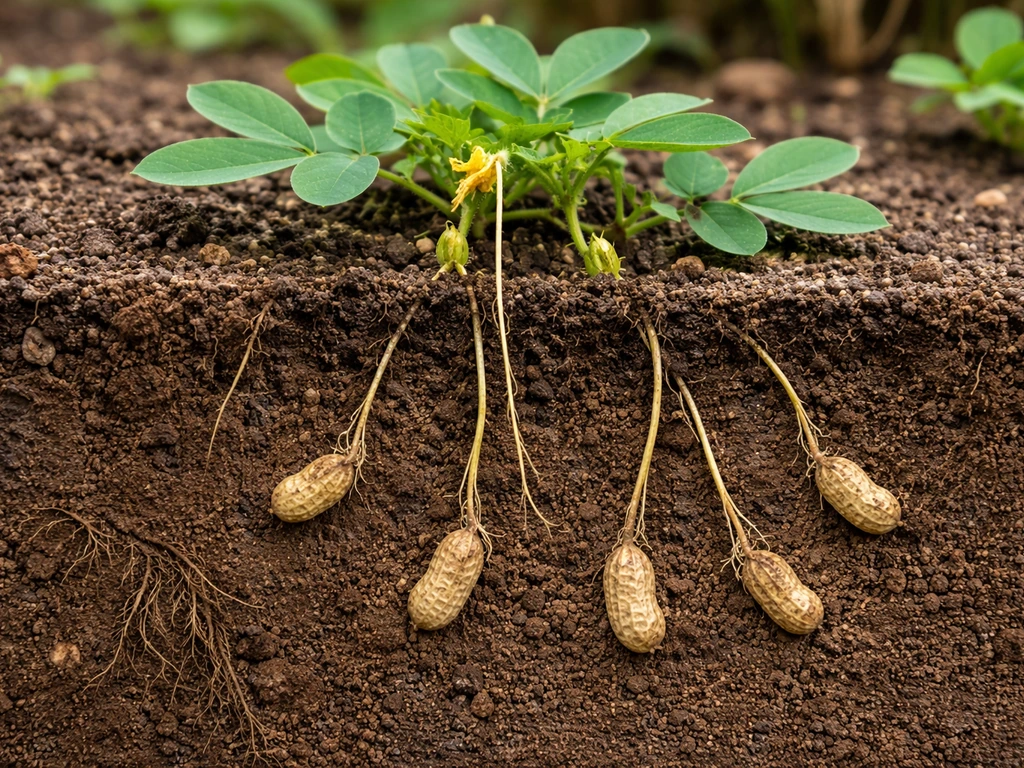
The biology here is genuinely fascinating and worth understanding if you want to grow them well. The peanut plant looks a bit like a low-growing bushy legume, reaching about 1 to 2 feet tall. It produces small yellow flowers above ground, usually starting around 4 to 6 weeks after germination. Those flowers are self-pollinating, so you don't need to worry about pollinators.
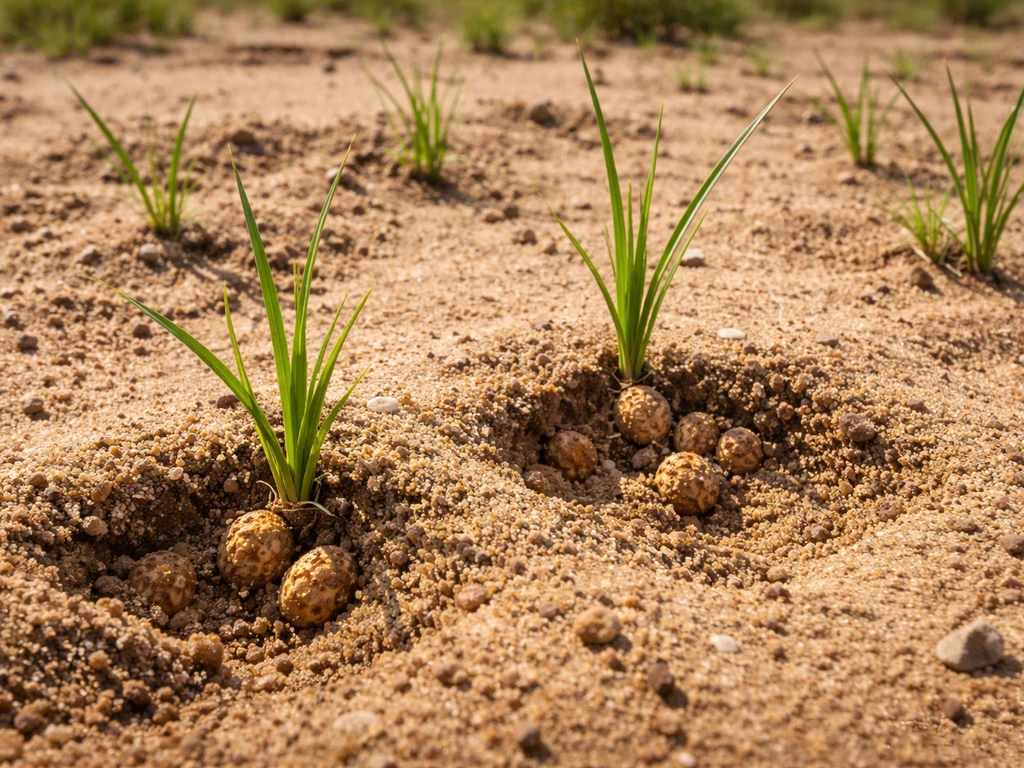
After a flower is fertilized and the petals wither, something unusual happens. A specialized stalk called a gynophore (or more commonly, a 'peg') grows downward from the base of the flower toward the soil. This peg elongates and physically pushes the fertilized ovary into the ground, typically to a depth of 1 to 2 inches. Once underground, the ovary swells and develops into the pod we know as a peanut shell, with the seeds forming inside. The species name 'hypogaea' literally means 'under the earth,' which tells you everything you need to know about how the plant was named.
This is why soil structure matters so much for peanuts. If the ground is compacted or too hard, the pegs can't penetrate, and you won't get pods. Loose, sandy, or well-tilled soil is not just a preference for this plant, it's a biological requirement.
How to grow monkey nuts step by step
Choosing a site and preparing the soil
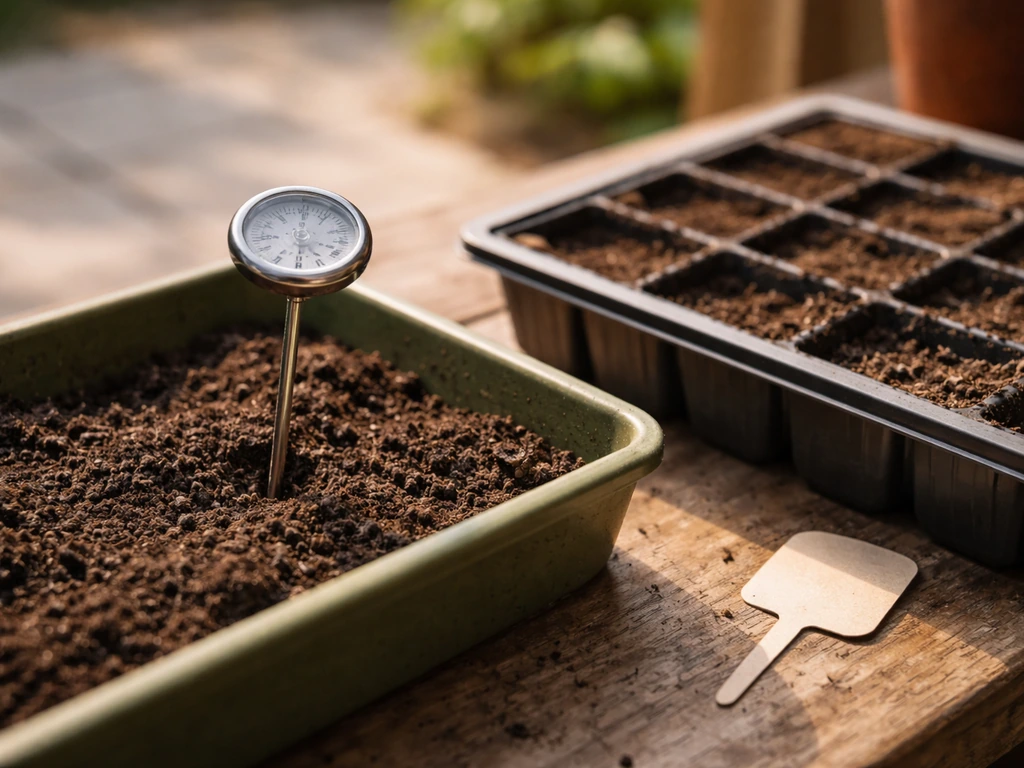
Pick the sunniest spot you have, full sun is non-negotiable. Peanuts need warm soil, and shaded ground stays cool and damp, which is the worst combination for this crop. Sandy loam is ideal. If your soil is heavy clay, work in plenty of sharp sand and compost to improve drainage and loosen the structure. Aim for a soil pH of 6.0 to 6.5. Below 5.8, apply garden lime and retest before planting. Peanuts fix their own nitrogen through root nodules (they're legumes), so you don't need a nitrogen-heavy fertilizer at planting. Go easy on the nitrogen or you'll get a lot of leafy growth and poor pod set.
Timing and temperature
Don't rush planting. Soil temperature needs to be at least 68 to 70°F (20 to 21°C) before you sow. Planting into cool soil leads to poor germination and weak stands. In the southern US, that typically means mid-April to mid-May. Peanuts USA says peanuts are typically planted after the last frost in April or May when soil temperatures reach about 65, 70°F (approximately 20°C) mid-April to mid-May. In the UK or northern states, you may not hit those temperatures outdoors until late May or even June, so starting seeds indoors 4 to 6 weeks before your last frost date, then transplanting once the soil is warm, is a sensible approach.
Sowing and spacing
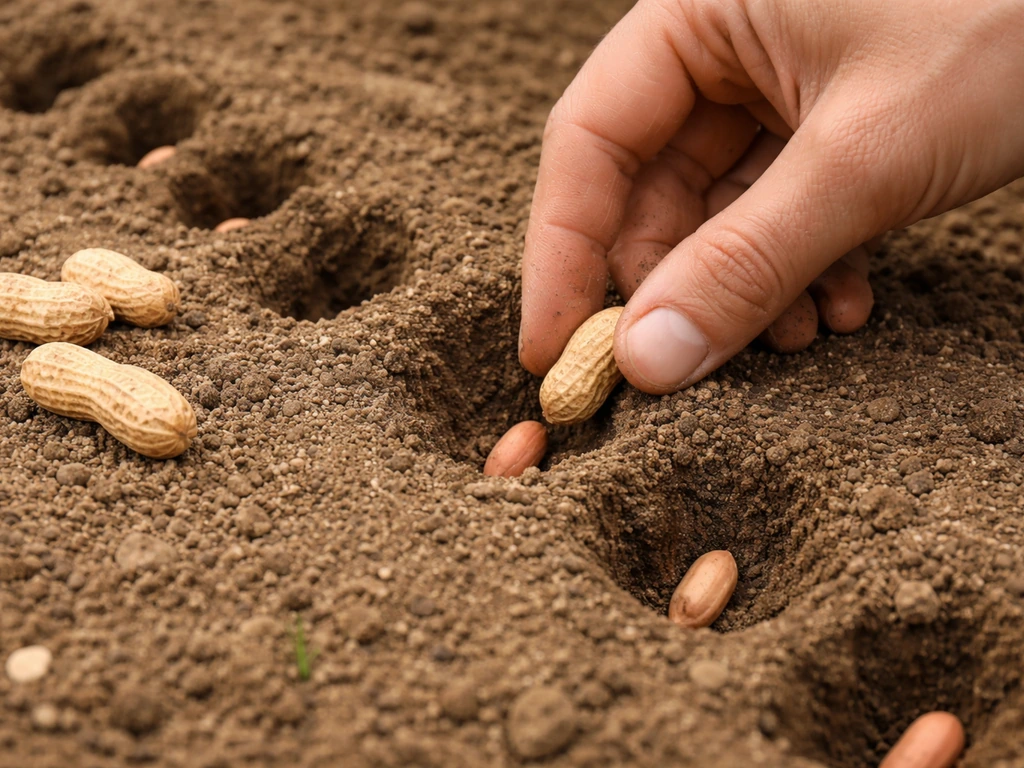
Use raw (unroasted) peanuts still in their shells, or shelled raw kernels, as your seed. Roasted peanuts won't germinate. Plant seeds about 1.5 to 2 inches deep, spacing plants 6 to 8 inches apart in rows about 24 to 36 inches apart. If you're transplanting seedlings started indoors, handle the roots gently since peanuts don't love being disturbed.
Watering and feeding
Keep the soil consistently moist but not waterlogged during germination and early growth. Once the plants start flowering and pegging, consistent moisture is important, but avoid saturating the pegging zone around the base of the plant. Overwatering at this stage encourages the fungal pod-rot problems that ruin crops. Calcium is important for good pod fill, and sandy soils in particular can be calcium-deficient. A light application of gypsum (calcium sulfate) around the base of the plants when flowering begins is a widely used practice among peanut growers. The UF/IFAS AG sheet also notes that gypsum application can improve calcium uptake by the pod in dry years and recommends gypsum for certain peanut production types, including seed/Virginia types regardless of soil.
Earthing up and hilling
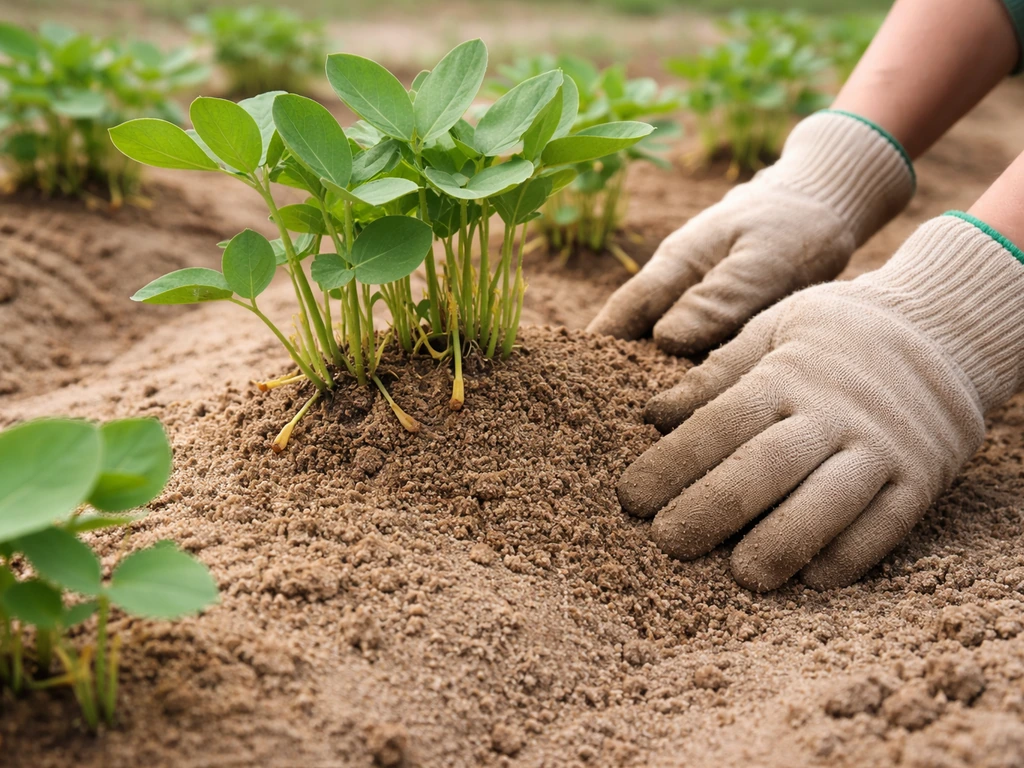
Once plants are about 12 inches tall and you start to see the pegs forming and bending toward the soil, gently mound loose soil around the base of each plant. This gives the pegs easy access to soft soil and encourages more pods. Don't compact the soil while doing this, keep it loose.
Common problems and how to fix them
| Problem | Likely cause | What to do |
|---|---|---|
| Seeds don't germinate | Soil too cold, seeds planted too deep, or roasted seeds used | Wait until soil hits 68°F+; plant raw seeds 1.5–2 inches deep |
| Pegs form but no pods develop | Soil too compacted or dry during pegging | Loosen soil around plant base; maintain consistent moisture |
| Pods rot underground | Excessive moisture, poor drainage, or calcium deficiency | Improve drainage; apply gypsum when flowering starts |
| Leaves develop dark spots | Early or late leaf spot fungal disease (Cercospora/Passalora) | Remove affected leaves; apply appropriate fungicide if severe |
| Web-like lesions on foliage | Web blotch disease | Improve air circulation; rotate crops next season |
| Southern blight (white fungal growth at stem base) | Sclerotium rolfsii fungal infection | Remove infected plants; avoid overwatering; rotate crops |
| Poor plant growth overall | Wrong soil pH or nitrogen excess | Test and adjust pH to 6.0–6.5; reduce nitrogen fertilizer |
Pod rot is probably the most demoralizing thing that can happen because you don't discover it until harvest. The main drivers are excess soil moisture, poor drainage, and calcium deficiency, so addressing all three proactively is worth the effort. Southern blight, caused by Sclerotium rolfsii, is particularly damaging in warm, humid conditions and shows up as a white cottony growth at the soil line. Crop rotation is your best long-term defense: don't plant peanuts in the same spot year after year.
Harvesting, curing, and using your monkey nuts
Knowing when to dig
Peanuts take roughly 120 to 150 days from planting to harvest, with many runner-type varieties hitting maturity around 135 days. But calendar days are only a rough guide. The plant keeps producing flowers and pegs throughout the season, so pods are not all at the same stage at once. The practical way to check maturity is the hull-scrape method: dig up a few pods, scrape the outer surface of the hull with a knife, and look at the color of the inner surface. Immature pods show white or cream coloring inside; mature pods show dark brown or black coloring. Aim to harvest when roughly 70 to 80 percent of pods show that darker interior coloring.
Digging and curing
Use a garden fork to loosen the soil broadly around each plant before pulling it up. Lift the whole plant, shake off excess soil, and hang or lay the plants upside down in a warm, well-ventilated spot to cure. In commercial operations, freshly dug peanuts are dried down to about 8 percent moisture, often with forced-air drying. At home, curing in a dry, airy shed or greenhouse for 2 to 4 weeks works well. You're aiming for pods to feel dry and the kernels to rattle slightly inside the shell before you store or roast them.
Storing and eating
Once cured to below 10 percent moisture, peanuts store well in mesh bags or open containers in a cool, dry place for several months. If you're eating them as classic monkey nuts (shell-on, roasted), spread the dried pods on a baking tray and roast at around 350°F (175°C) for 20 to 25 minutes. You can also boil freshly dug green peanuts in heavily salted water for a completely different, softer eating experience that's popular in the southern US.
A quick note on other 'nut' crops that grow differently
Peanuts are pretty unique in their underground fruiting habit. Most other nuts, whether you're looking at cobnuts, tiger nuts, or more exotic species like fox nuts, have very different growing habits and structures. Tiger nuts, for example, are actually tubers from a sedge plant, also grown underground but in a completely different way. Cobnuts grow on hazel trees and are fully aerial. Understanding how each type forms is half the battle when you're deciding what to grow and where, and it's worth exploring those differences if you're curious about expanding your nut-growing repertoire beyond peanuts.
FAQ
If monkey nuts are peanuts, why do the flowers grow above ground but the pods form underground?
Yes. Peanuts have flowers above ground, but the fertilized ovary develops on a downward-growing peg (gynophore) that must reach the soil for pods to form. If the soil surface is too hard or too cold, the pegs may not penetrate and you can end up with lots of flowering but few pods.
Can I grow monkey nuts from roasted peanuts or peanut snacks?
No. Do not use roasted peanuts as seed. You need raw peanuts, still in the shell or as unroasted kernels, because roasting typically kills the embryo and prevents germination.
Can I grow peanuts (monkey nuts) in pots or grow bags?
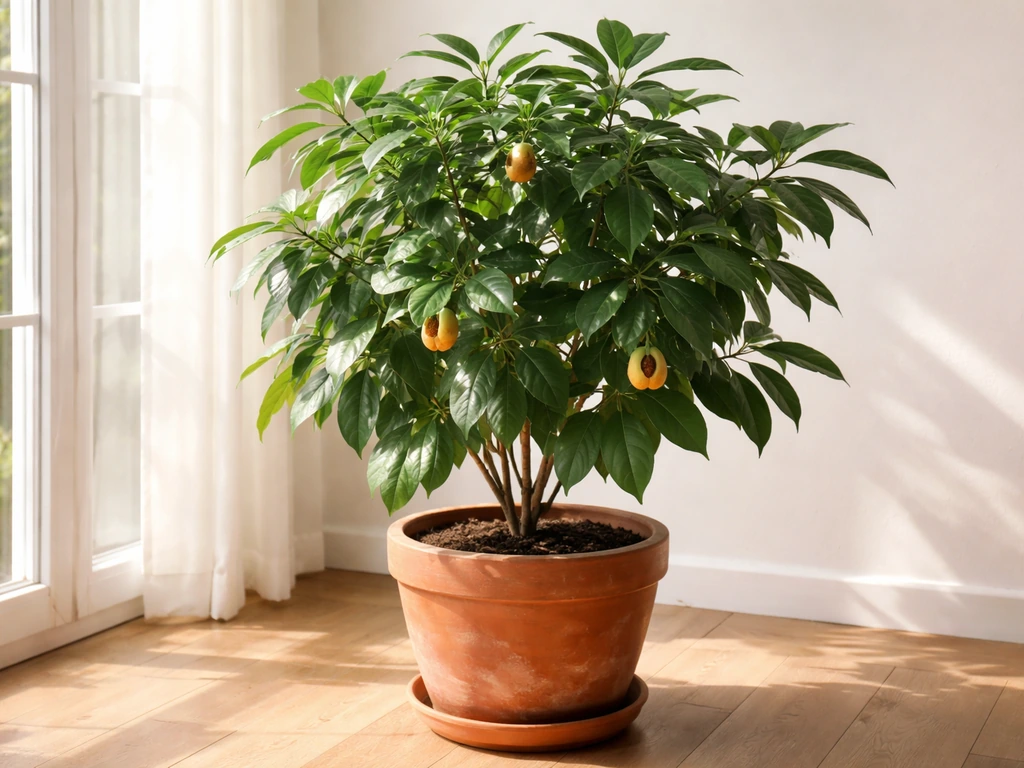
You can plant in containers, but you must keep the soil loose and give enough depth for pegging. Use a deep pot or grow bag, fill with a sandy loam, and keep it in full sun. Avoid compacting the mix, and do not overwater during pegging because the underground zone is where rot problems start.
Should I start peanuts indoors in the UK or northern US, and when should I transplant them?
Yes, but timing matters. Starting seeds indoors can help you hit the required warm soil temperature, but transplant carefully and avoid disturbing roots, since peanuts do not like being handled once pegging begins. Transplant only after your outdoor conditions and soil warmth are suitable.
How can I tell I’m buying the right plant when it says “monkey nut”?
They are not grown from “monkey nut tree” products, but from specific peanut seeds (Arachis hypogaea). If a label says “monkey nut” but the seller is referring to a different species (some “monkey nut” names apply to unrelated plants), it may not behave like peanuts and will likely fail if planted expecting underground pods.
How do I know when to harvest peanuts if pods mature at different times?
The goal is warm, loose soil and enough time for pods to mature. In practice, harvest only when a majority of pods show dark interior hull coloring using the hull-scrape check, because pods mature at different times. Pulling earlier because the plant looks done can leave many pods immature.
How much should I water peanuts during flowering and pegging?
Avoid constant wet soil, especially around the plant base during flowering and pegging. Instead of frequent heavy watering, aim for consistent moisture that does not saturate the pegging zone. Poor drainage and prolonged dampness are key drivers of pod rot.
Why do my peanut plants flower but fail to form pods?
It is mostly a soil temperature and soil penetration problem, not a seed problem. Cold, compacted, or crusted soil can stop pegging. Also check that you planted at the right depth and waited until soil temps were warm (around 20 to 21°C or warmer) before sowing.
Do peanuts need calcium or fertilizer for good pod fill?
Yes. If your soil is deficient in calcium, pod fill can suffer. A common approach is using gypsum (calcium sulfate) lightly around the base when flowering begins, particularly in sandy soils, while avoiding nitrogen-heavy feeding that encourages leaf growth instead of pods.
What soil pH should I aim for when growing peanuts outdoors?
Do a simple soil test first, because pH and calcium balance matter. If pH is below about 5.8, incorporate lime ahead of planting and retest, since peanuts prefer slightly acidic to near-neutral conditions (roughly 6.0 to 6.5).
Should I mound soil around peanut plants, and could mounding hurt the crop?
Many growers “mound” or gently mound loose soil around the base once pegs begin bending toward the ground. This helps pegs access soft soil, but you should not compress it. If you mound too early or pack soil down, you can reduce penetration and increase rot risk.
What is the best way to prevent pod rot or southern blight?
Yes, particularly if you plant in the same bed repeatedly. Rotate away from peanuts, since pathogens like those causing southern blight can build up in soil. Even with good drainage, repeating peanuts in the same spot can raise disease pressure.