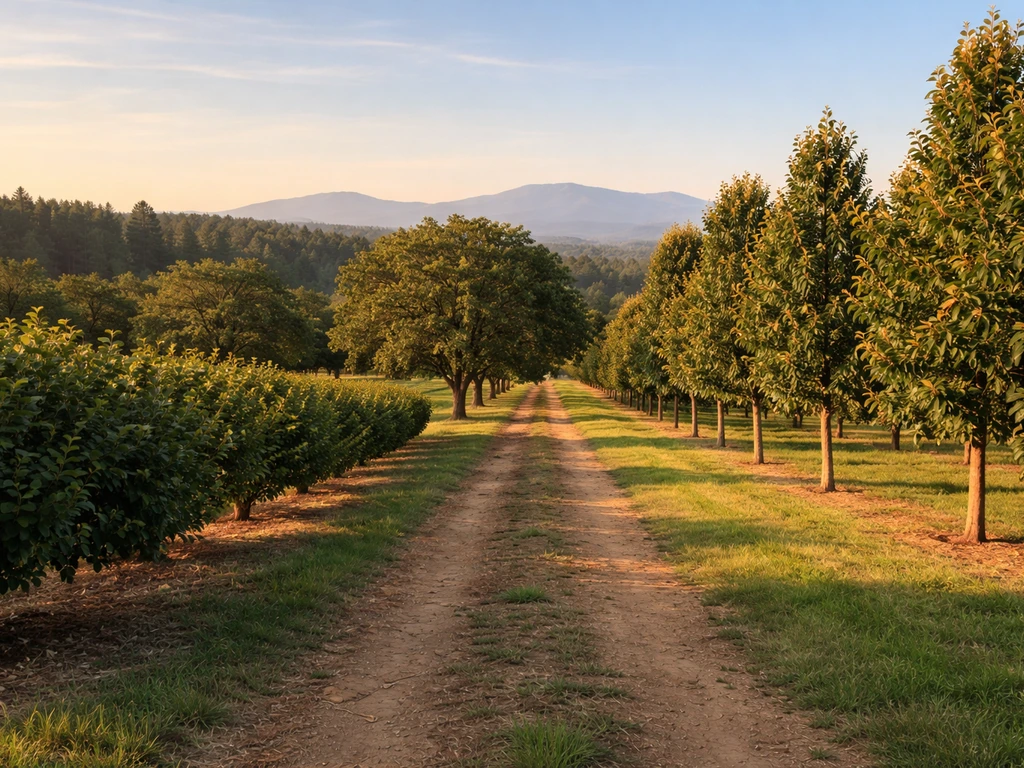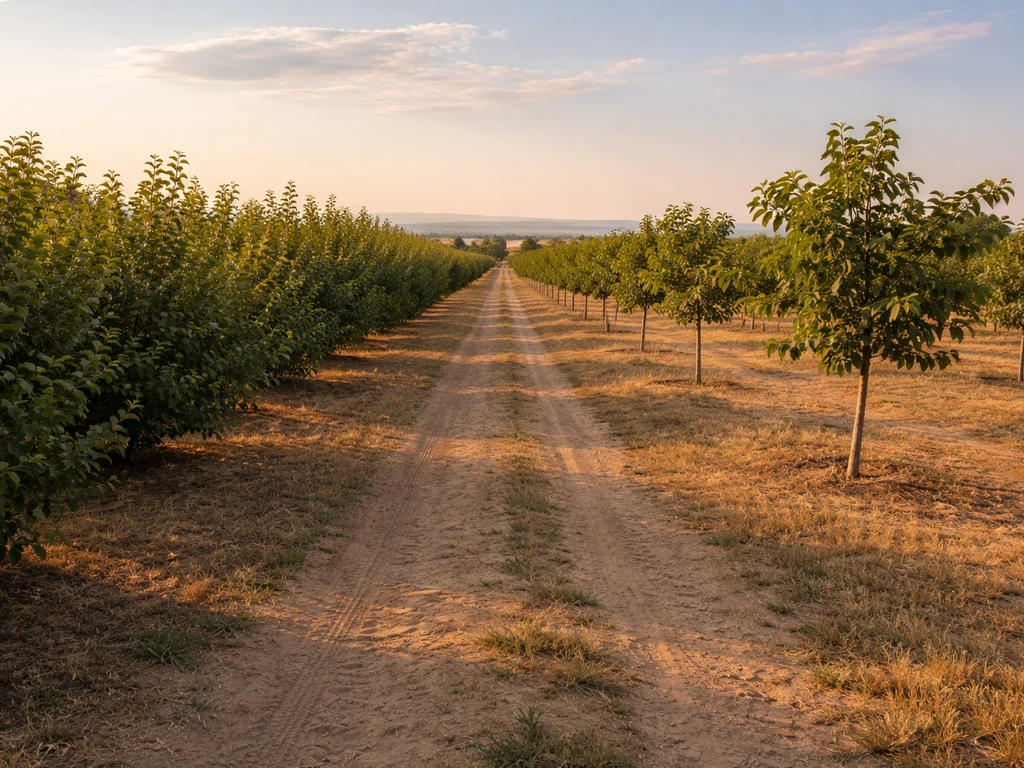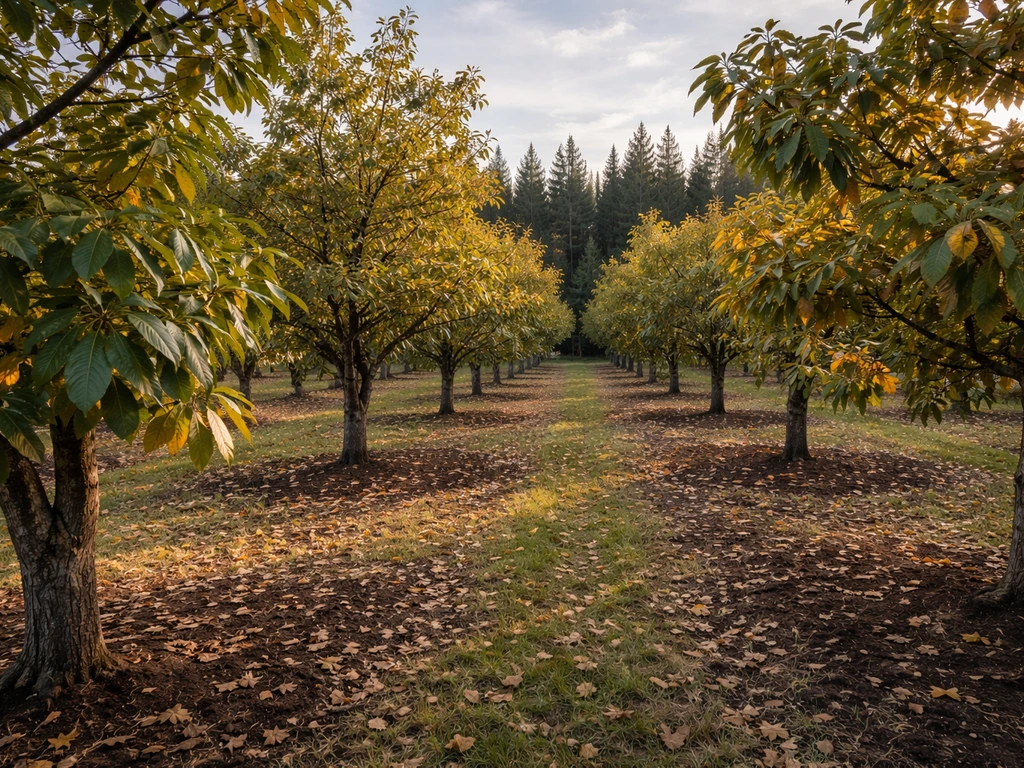
Illinois supports a solid lineup of nut trees: black walnut, butternut, shagbark hickory, shellbark hickory, pecan (in the southern third), American chestnut hybrids, Chinese chestnut, American hazelnut, and hazelnut hybrids bred for Midwest conditions. Most of these are either native to Illinois or cold-hardy enough to thrive statewide. A few, like pecan, are viable but only in the warmer southern zones.
What Nut Trees Grow in Illinois: Best Options by Zone
Marcus Hendricks
1 May 2026
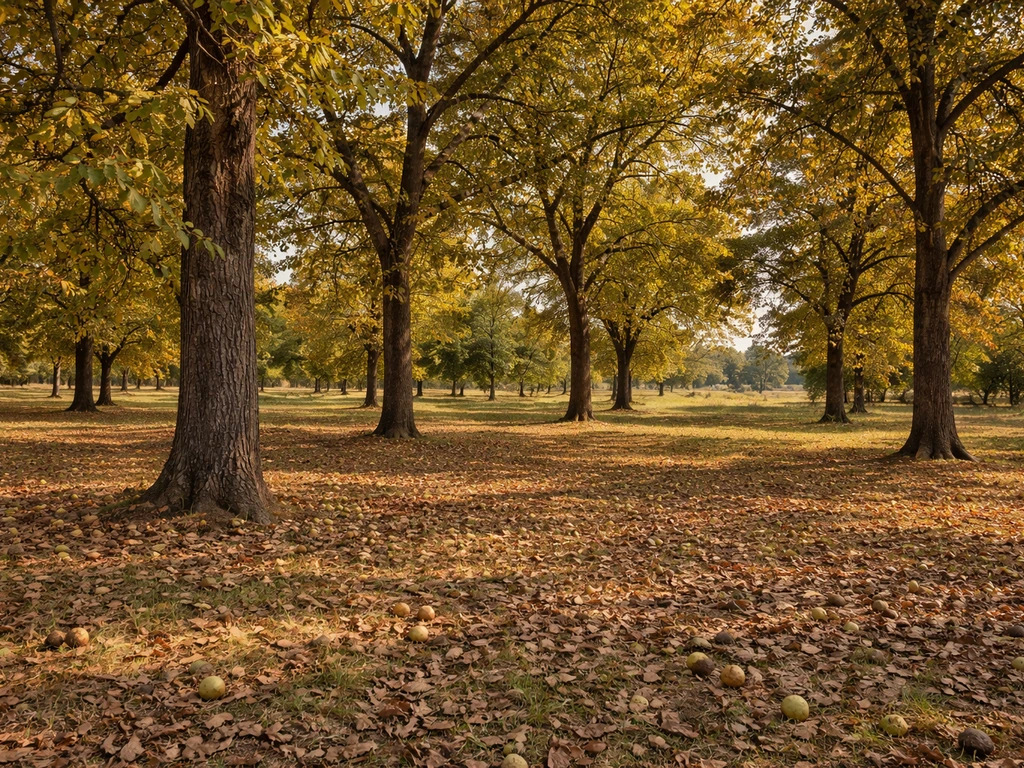
If you want the easiest wins, black walnut and shagbark hickory grow almost anywhere in the state, and American hazelnut is the fastest path to actual nuts. In Idaho, your best bets are similarly dependable cold-hardy species like black walnut and American hazelnut, chosen based on your local growing zone and frost dates American hazelnut is the fastest path to actual nuts..
The short list: nut trees that actually work in Illinois
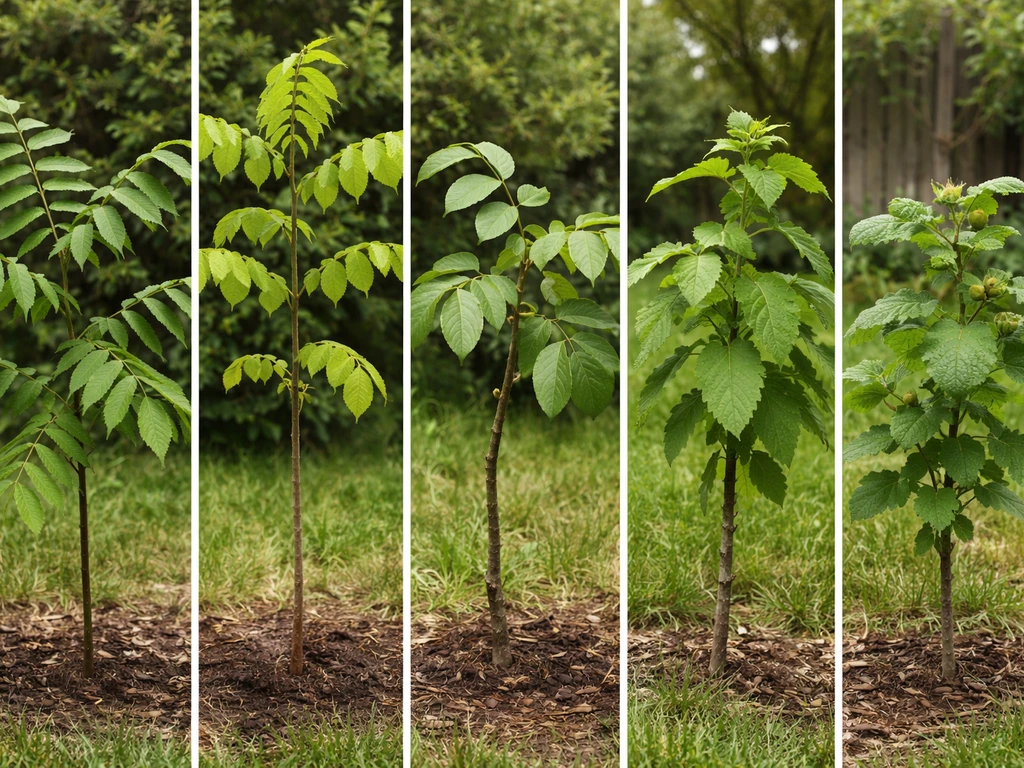
| Tree | Best Zones in IL | Difficulty | Years to First Nuts |
|---|---|---|---|
| Black walnut (Juglans nigra) | 5a–7b (statewide) | Easy | 4–7 years |
| Butternut (Juglans cinerea) | 5a–6b (north/central) | Moderate | 4–6 years |
| Shagbark hickory (Carya ovata) | 5a–7b (statewide) | Easy | 10–15 years |
| Shellbark hickory (Carya laciniosa) | 5a–7b (statewide) | Easy | 10–15 years |
| Pecan (Carya illinoinensis) | 6b–7b (southern IL only) | Moderate–Hard | 6–10 years |
| Chinese chestnut (Castanea mollissima) | 5a–7b (statewide) | Easy–Moderate | 3–6 years |
| American chestnut hybrid | 5a–7b (statewide) | Moderate | 4–7 years |
| American hazelnut (Corylus americana) | 5a–7b (statewide) | Easy | 2–4 years |
| Hazelnut hybrids (Corylus hybrid) | 5a–7b (statewide) | Easy–Moderate | 2–4 years |
Illinois climate basics: zones, cold, and frost
Illinois spans USDA Plant Hardiness Zones 5a through 7b, which is a wider range than most people realize. The northern tip near the Wisconsin border sits in Zone 5a, meaning average annual minimum temperatures around -20°F. Central Illinois (think Peoria, Springfield) is generally Zones 5b to 6a, with lows averaging -10 to -5°F. Southern Illinois, especially the far southern counties near the Missouri and Kentucky borders, pushes into Zones 6b and 7a, and a few pockets even touch 7b. This matters enormously for nut trees because cold-hardiness ratings are tied directly to these minimums, not to average winter temperatures.
Frost timing is the other big variable. Illinois uses 32°F as the standard frost threshold and 28°F as the hard freeze threshold. A hard freeze in late spring can wipe out a full year of nut production even on a perfectly cold-hardy tree, because the flower buds and catkins emerge before the last frost date in many years. In northern Illinois, the last frost averages late April to early May. In the south, it's typically late March to mid-April. If you're planting anything that flowers early, like hazelnuts, this gap matters a lot.
One more thing worth flagging: microclimates inside your yard can shift your effective zone by half a zone in either direction. A low-lying spot that collects cold air on still nights is a frost pocket and will suffer more late-spring freezes than an elevated or south-facing site nearby. If you're choosing between two spots in your yard, always give the nut tree the higher ground.
Walnuts and related nut trees for Illinois
Black walnut: the Illinois workhorse
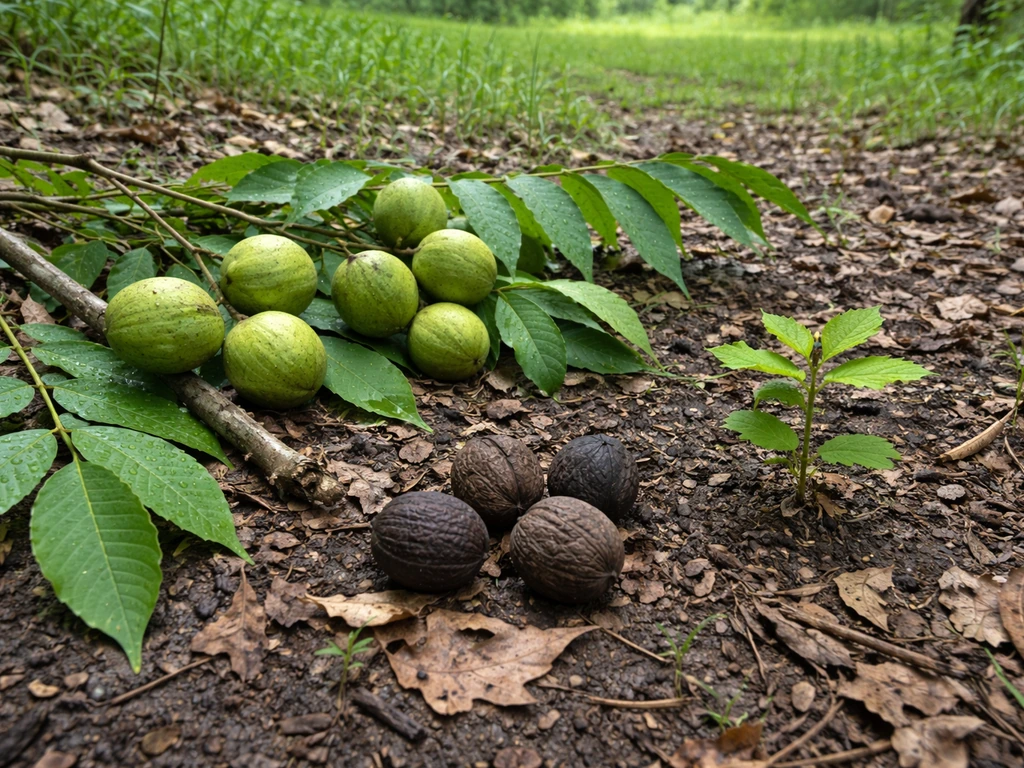
Black walnut (Juglans nigra) is native to Illinois and genuinely thrives here. It grows statewide across all zones, tolerates a wide range of soils, and produces large crops of rich, distinctive nuts once established. Trees can reach 50 to 75 feet at maturity, so this is not a small-yard tree, but it will grow vigorously and start producing in roughly 4 to 7 years from a young grafted tree (longer from seed). The flavor is stronger and more assertive than English walnut, which is either a feature or a bug depending on who's eating.
The big caveat with black walnut is juglone, a chemical compound the roots release that is toxic to many other plants, including tomatoes, apples, and a long list of ornamentals. Keep your garden and orchard at least 50 to 60 feet away from the drip line. Also worth knowing: thousand cankers disease (TCD) is a serious and growing threat to black walnut. TCD is caused by a fungus (Geosmithia) carried by the walnut twig beetle, and it creates cankers under the bark that eventually kill the tree. Amber staining and cracking above cankers are the visible symptoms. Choose locally grown or TCD-monitored nursery stock and avoid moving wood from affected regions.
Illinois Extension includes black walnut in its tree selection guidance for good reason: it's one of the most reliable nut producers for the state. If you want a relatively fuss-free nut tree that's already proven in Illinois soils, black walnut is the default recommendation.
Butternut: black walnut's more cold-sensitive cousin
Butternut (Juglans cinerea) is also native to parts of Illinois and produces oily, mild-flavored nuts that many people prefer for baking. It's cold-hardier than English walnut and does well in northern and central Illinois, but it has a major problem: butternut canker, a fungal disease that has devastated wild populations across the eastern US. Healthy trees can still be productive, but you need to source from disease-resistant or resistant-selected nursery stock when available. Think of butternut as a rewarding but higher-maintenance choice compared to black walnut.
English (Persian) walnut: works, but needs care
English walnut (Juglans regia) is what most people picture when they think of walnuts in the grocery store. It can be grown in Illinois, but it's more cold-sensitive than black walnut, with most cultivars hardy only to about Zone 5b or 6a. Northern Illinois growers should choose Carpathian-type English walnuts, which were selected from Eastern European seed sources and are rated to Zone 4 or 5. Even then, the flower buds of English walnut are susceptible to late spring frosts, which can cut your harvest dramatically in a bad year. Central and southern Illinois are more reliable for this species.
Hickories, pecans, and other hard-nut trees
Shagbark and shellbark hickory: native, reliable, and worth the wait
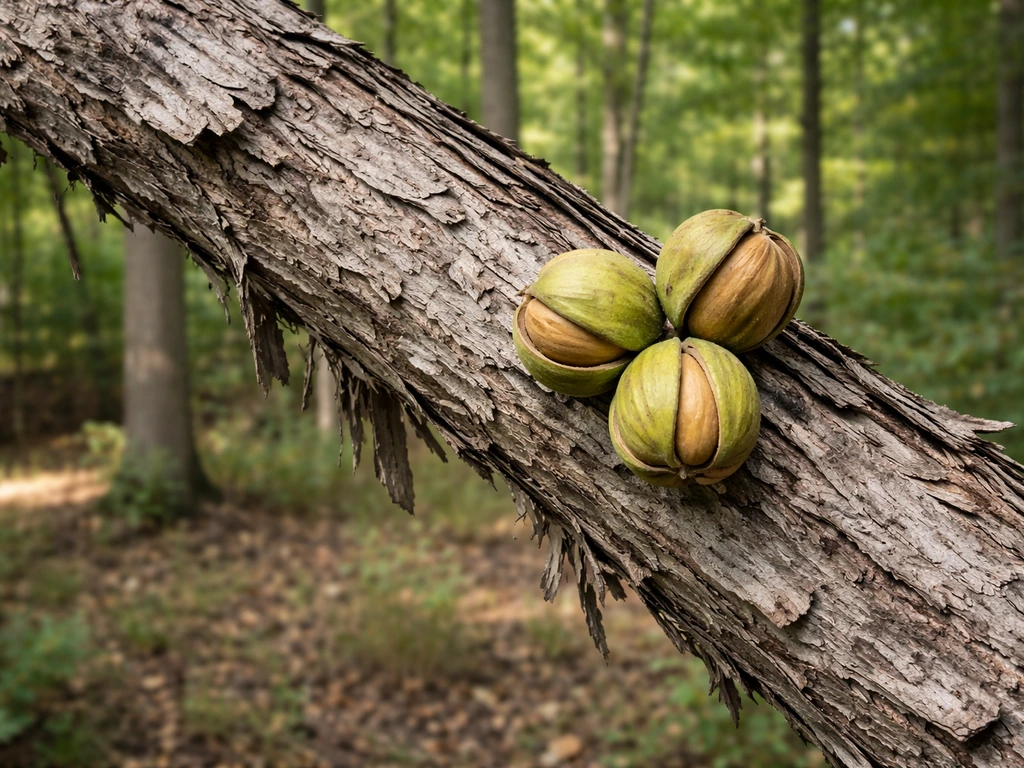
Shagbark hickory (Carya ovata) and shellbark hickory (Carya laciniosa) are both native to Illinois and both produce excellent nuts. Shagbark nuts are smaller and tend to be found in drier upland sites; shellbark grows in wetter bottomlands and produces larger nuts. Both are cold-hardy statewide and require very little intervention once established. The trade-off is time: hickories are notoriously slow to bear, typically taking 10 to 15 years from a seedling.
Grafted hickory trees can cut that timeline down to 5 to 8 years, but grafted hickories are harder to source and more expensive. If you're planting for yourself and have the patience, hickories are among the most rewarding nut trees you can put in the ground in Illinois. They also live for centuries and essentially take care of themselves after establishment.
Pecan: only realistic in southern Illinois
Pecan (Carya illinoinensis) is actually native to the river bottoms of southern Illinois, which surprises a lot of people given its reputation as a Deep South crop. The species name even comes from Illinois. That said, pecan needs a long growing season (around 170 to 200 frost-free days depending on the cultivar) and warm summer temperatures to mature its nuts. That requirement largely limits viable production to Zone 6b and warmer, meaning roughly the southern quarter of Illinois.
Northern and central Illinois growers who try pecan will often get a tree that survives winter but doesn't reliably mature its crop before fall frost. If you're in southern Illinois, look for northern-adapted cultivars like 'Major', 'Colby', 'Fritz', and 'Peruque', which were bred or selected specifically for shorter growing seasons. Avoid Gulf Coast cultivars, which simply won't mature in Illinois.
Heartnut and other Juglans species
Heartnut (Juglans ailantifolia var. cordiformis) is a Japanese walnut relative that produces heart-shaped nuts that crack easily and cleanly, which is a genuine advantage over the notoriously difficult-to-crack black walnut. It's cold-hardy to about Zone 5 and can be grown in most of Illinois. It tends to bear earlier than black walnut and doesn't produce juglone at the same intensity, though there's still some allelopathic effect. It's not widely available, but specialty nurseries do offer it, and it's worth considering if you want a walnut-type tree with easier cracking.
Chestnuts and hazelnuts: two very different experiences
Chinese chestnut and American hybrids
Chinese chestnut (Castanea mollissima) is the most practical chestnut for Illinois. It's resistant to chestnut blight, the fungal disease that wiped out the American chestnut in the early 20th century, and it's cold-hardy to Zone 4 or 5 depending on the seed source. Chinese chestnut trees reach 40 to 60 feet at maturity, start producing in 3 to 6 years, and can yield large, sweet nuts. You need at least two trees for cross-pollination, and ideally those two trees should be different cultivars rather than seedlings from the same parent. Good cultivars for Illinois include 'Colossal', 'Dunstan Hybrid', and several others developed by programs like the Dunstan Chestnut breeding work, which crossed Chinese chestnut with surviving American chestnut genetics.
American chestnut hybrids from The American Chestnut Foundation (TACF) are another option. These are backcross hybrids that are mostly American chestnut genetics with blight resistance bred in from Chinese chestnut. They're not yet fully available to home growers at scale, but some regional programs and cooperators do offer them. If you're interested in restoration-type planting alongside nut production, these hybrids are worth investigating. They bear more slowly than pure Chinese chestnut and the blight resistance, while substantial, is still being refined.
One thing to get right with chestnuts: soil pH. Chestnuts strongly prefer acidic to slightly acidic soils, ideally pH 4.5 to 6.5. Illinois soils vary widely, but much of central and northern Illinois tends toward neutral to slightly alkaline pH, especially in agricultural areas. Test your soil before planting and amend if needed, or choose a naturally acidic site.
Hazelnuts: the fastest nut crop you can grow in Illinois
If you want nuts in the shortest amount of time, American hazelnut (Corylus americana) is your answer. University of Illinois Extension includes blank" rel="noopener noreferrer">American filbert (Corylus americana) in its shrub profile, noting it as a shrub native to Illinois. It's native to Illinois, fully cold-hardy statewide, and begins producing nuts in 2 to 4 years. It grows as a multi-stemmed shrub reaching 6 to 12 feet, which makes it manageable for smaller properties. The nuts are small but flavorful and genuinely abundant when conditions are right. Illinois Extension specifically recommends American hazelnut as a native plant with real commercial and home garden potential.
European hazelnut (Corylus avellana) is the species behind the large hazelnuts sold commercially, and you'll find it marketed in nursery catalogs. The problem is Eastern Filbert Blight (EFB), a fungal disease that has been devastating to European hazelnut in the Midwest and eastern US. Illinois Extension notes that Eastern Filbert Blight has been devastating to European hazelnut in the Midwest, making EFB management a key consideration for growers Eastern Filbert Blight (EFB). Illinois Extension explicitly flags EFB as a major limiting disease for European hazelnut in the region. Unless a cultivar is specifically rated as EFB-resistant, you're taking a significant risk planting European hazelnut in Illinois.
The better alternative is hazelnut hybrids developed specifically for Midwest conditions, particularly those from breeding programs at the University of Nebraska and other land-grant institutions. These crosses between American and European hazelnut aim for larger nut size while retaining cold-hardiness and EFB tolerance. Named hybrids like 'Jefferson' (developed in Oregon but with reasonable Midwest trials), and selections from the Arbor Day Farm's hazelnut program, are worth evaluating. If you're wondering what nuts grow in Oregon, this kind of regional breeding insight can help you pick varieties likely to perform in your own climate developed in Oregon. Always confirm EFB resistance before buying any hazelnut beyond the straight American species.
Planting checklist and care basics
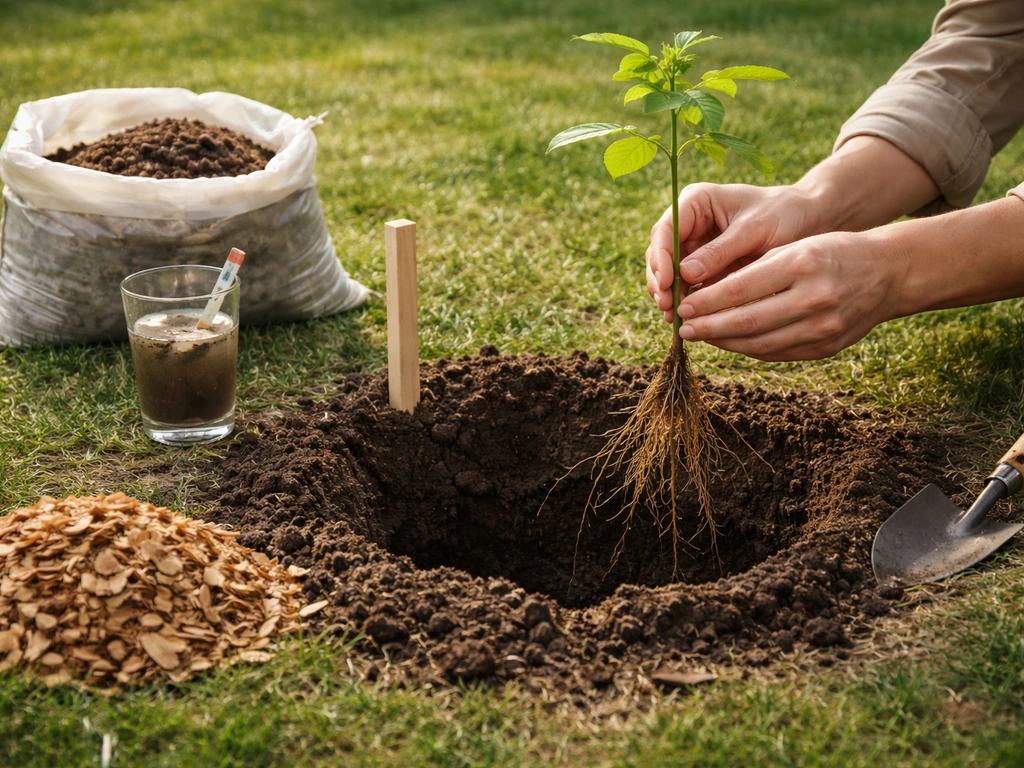
University of Illinois Extension recommends spring planting as the preferred timing for all Illinois areas, ideally just after the soil thaws and before active growth starts. Late fall planting can work in southern Illinois but carries more risk in the north. For site selection, full sun is non-negotiable for productive nut trees: at least 6 to 8 hours of direct sun daily. Soil should be deep, easily worked, and well-drained. Nut trees do not tolerate wet feet; consistently waterlogged roots will eventually kill even a native hickory or black walnut.
- Test soil pH before planting: most nut trees prefer 6.0–7.0, chestnuts prefer 4.5–6.5
- Choose full sun: 6–8 hours minimum, avoid north-facing slopes and shaded corners
- Check drainage: dig a hole 12 inches deep, fill with water, and confirm it drains within an hour
- Identify frost pockets: avoid low-lying areas where cold air settles on still nights
- Spacing: black walnut and hickories need 40–60 feet apart at maturity; chestnuts 30–40 feet; hazelnuts 8–12 feet
- Water during establishment: 1 inch per week for the first 2 growing seasons, more during drought
- Mulch the root zone: 3–4 inches of wood chips out to the drip line, kept away from the trunk
- Avoid fertilizing in year one: let the tree establish roots before pushing top growth
One practical note on soil for Illinois specifically: if you're in the central or northern part of the state on former agricultural ground, your soil may be compacted and have a relatively high pH from decades of tillage and lime applications. Deep-rooted nut trees can eventually work through compaction, but chestnuts in particular will struggle in high-pH soils. A soil test from your local Extension office is worth the small cost before you invest in a tree.
Pollination, timing, and realistic yield expectations
Several nut trees require cross-pollination, and understanding which ones do will save you a frustrating wait for nuts that never come. Chestnuts are the most important case: a single chestnut tree will produce very few nuts or none at all. You need at least two trees, and they should ideally be different cultivars. American hazelnut is also self-incompatible, meaning you need two or more plants from different genetic sources for good nut set. Black walnut and hickories are technically wind-pollinated and can set some nuts from a single tree, but nut production is substantially higher with multiple trees nearby. Pecans need cross-pollinators as well, and the two cultivars should ideally be different pollen-shed types (Type I and Type II).
On timing: hazelnuts flower very early, often in February or March in Illinois, which means late cold snaps can damage the catkins and reduce nut set for that year. Chestnuts flower in June, which is past the frost risk for most of the state and makes them more reliable year to year. Walnuts and hickories flower in spring but are generally past frost risk by the time critical pollination happens. Pecans flower late enough that frost is rarely the problem; instead, it's the total heat accumulation needed to mature the nut that creates the regional limit.
How long before you actually get nuts? Grafted or named cultivars bear earlier than seedlings in almost every species. Hazelnuts are the fastest: 2 to 4 years for American hazelnut. Chestnuts follow at 3 to 6 years for Chinese chestnut. Black walnut from a grafted tree can produce in 4 to 7 years. Hickories are the longest wait at 10 to 15 years from seedling, 5 to 8 from a grafted tree. Pecan in southern Illinois runs 6 to 10 years. These are ranges, not guarantees; drought, late frost, and pest pressure in any given year can mean a near-zero crop even from a mature, otherwise healthy tree.
Choosing cultivars, sourcing trees, and common problems to watch for
Start by confirming your zone and site
The first practical step today is to confirm your USDA hardiness zone. The USDA Plant Hardiness Zone Map is available online and searchable by zip code. Illinois ranges from Zone 5a in the north to 7b in the far south, and knowing your zone tells you immediately which species are options and which are a stretch. Once you know your zone, walk your site and note where the sun hits, where water pools after rain, and whether any areas feel like natural frost pockets. That 15-minute site assessment will prevent more problems than any product or technique.
Sourcing: local and regional beats mail-order commodity stock
For nut trees in Illinois, prioritize nurseries that source from the Midwest or from similar climates. A black walnut seedling grown in North Carolina and shipped to Illinois may be perfectly genetically fine, but locally grown or regionally adapted stock tends to establish faster and handle Illinois-specific weather patterns better. For chestnuts, seek out named cultivars with documented performance in Zone 5 or 6 rather than unnamed seedlings. For hazelnuts, explicitly ask whether the plant is the straight American species, a hybrid, or a European cultivar, and confirm the EFB resistance status before buying.
Common problems to plan for
- Thousand cankers disease in black walnut: monitor for amber staining and bark cracking; buy from reputable sources with clean stock
- Butternut canker: no cure; choose resistant selections when available and remove heavily infected branches promptly
- Eastern Filbert Blight in European hazelnut: avoid unrated cultivars; stick to American hazelnut or confirmed-resistant hybrids
- Juglone toxicity from walnut roots: site walnuts away from vegetable gardens, fruit trees, and susceptible ornamentals
- Late spring frost damage to flowers: site trees on elevated, well-drained ground and avoid low-lying frost pockets
- Squirrel and deer pressure: young trees need trunk protection; mature trees lose significant nut yield to wildlife
- Pecan scab (a fungal disease): choose scab-resistant northern cultivars for southern Illinois rather than susceptible southern varieties
- Chestnut blight: use only blight-resistant cultivars; pure American chestnut seedlings are not viable for nut production
How Illinois compares to neighboring states
Illinois's nut tree options overlap significantly with neighboring states. Wisconsin and Michigan share the cold end of Illinois's range, making black walnut, hickory, and American hazelnut the reliable core in those states as well. Because Wisconsin sits on the colder end of the Midwest, black walnut, hickory, and American hazelnut are usually the most dependable nut-tree choices there.
Indiana and Ohio are climatically similar to central and southern Illinois, with pecan becoming more viable in their southern zones just as it does here. Pecan becomes more viable in Ohio’s warmer southern areas, while cold-hardy options like black walnut and American hazelnut are the most reliable starting points Indiana and Ohio are climatically similar.
Because Indiana sits in a similar climate band to central and southern Illinois, many of the same nut trees are realistic there, including pecan where summers are long enough. Missouri, which borders Illinois to the south and west, has a warmer climate overall and supports a wider pecan range. If you're specifically planning for Missouri, start by comparing your USDA zone and frost-free days to what each species needs.
If you're researching nut trees for neighboring states, the species lists are similar but the zone cutoffs shift, especially for pecan and for marginal cultivars of English walnut.
The bottom line for Illinois is that you have genuinely good options across the entire state. Black walnut and American hazelnut are the easiest entries. Chinese chestnut offers the best balance of manageable size, moderate timeline, and nut quality. Hickories reward patience with almost no maintenance. And if you're in southern Illinois, a northern-adapted pecan cultivar is worth serious consideration. Pick one or two species that fit your zone and site, buy named cultivars from a regional source, plant in early spring, and give the trees the full sun and good drainage they need. The rest is mostly waiting.
FAQ
What’s the easiest nut tree to grow in northern Illinois (Zone 5a to 5b) if I want reliable nuts?
Start with American hazelnut or black walnut. American hazelnut is the fastest producer, and it is more tolerant of the early spring flowering risk than many tree nuts. If you pick black walnut, plan for juglone effects by keeping nearby susceptible plants (like tomatoes and apples) out of the drip line area.
Can I plant English walnut in Illinois, and what’s the biggest reason people fail with it?
Yes, but reliability depends on cultivar cold hardiness and late frost damage. The most common failure is flower-bud injury from late spring frosts, even when the tree survives winter. Choose a hardier type (Carpathian-style if available) and avoid planting in frost pockets.
Is it necessary to plant multiple nut trees in Illinois, or can I get nuts from one tree?
It depends on the species. Chestnuts and American hazelnut generally need cross-pollination from at least two different cultivars or genetic sources. Black walnut and hickories can set some nuts from one tree due to wind pollination, but production is typically much higher with another nearby.
Do hazelnuts flower too early in Illinois, and can I do anything to protect them?
Yes, American and European-type hazelnuts can flower very early, so late cold snaps can reduce the nut set. You can reduce risk by choosing a higher, well-drained site that is less prone to frost pockets, and by avoiding low areas even if the soil looks ideal.
Why is site drainage such a big deal for Illinois nut trees?
Nut trees dislike wet, oxygen-poor root conditions, which can slowly kill even cold-hardy species. In Illinois, a common mistake is assuming “clay just needs more watering,” when the real issue is standing water after storms. If puddles persist more than a day or two, treat it as a drainage problem before planting.
What soil pH problem should I watch for if I’m planting on former farmland?
Many former agricultural fields have higher pH from liming and compaction from machinery. Chestnuts especially struggle when pH is too high, so a soil test is worth it before buying a tree. If you are targeting chestnut, pick a naturally acidic site or be prepared to amend.
How far should I keep other plants from black walnut to avoid problems?
Aim for at least 50 to 60 feet from the black walnut drip line for sensitive crops, and use wider spacing if your yard has frequent root-sucking conditions like dry summers. Juglone doesn’t always kill plants immediately, so gardeners often notice decline after a season or two, not right away.
What should I do if I suspect thousand cankers disease on a black walnut?
If you see symptoms such as cracking and amber staining above canker areas, stop moving walnut wood locally and contact a qualified local extension or plant health source for diagnosis guidance. Also choose nursery stock that is locally grown or from programs that monitor TCD, since early prevention is far easier than cure.
Are pecans realistic anywhere in Illinois, or only the southern quarter?
Pecan is realistically viable mainly in Zone 6b and warmer because it needs both winter survival and enough heat to mature nuts before fall frost. In cooler zones, pecans may live but fail to ripen. If you plant pecan, select northern-adapted cultivars suited to shorter growing seasons.
How do I choose chestnut seedlings or grafted plants in Illinois?
Look for named Chinese chestnut cultivars and confirm they are selected for disease resistance and performance in climates like Illinois. If you rely on unknown seedlings, you can end up with variable blight resistance and growth habits. Also remember chestnuts usually need two trees for meaningful nut production.
What’s the fastest way to narrow down “what nut trees grow in Illinois” for my exact yard?
Confirm your USDA zone by zip code, then do a quick site walk for three things: direct sun hours, places where cold air settles, and where water pools after rain. That combination often predicts success better than the species list alone, especially for hazelnuts and any tree that flowers early.