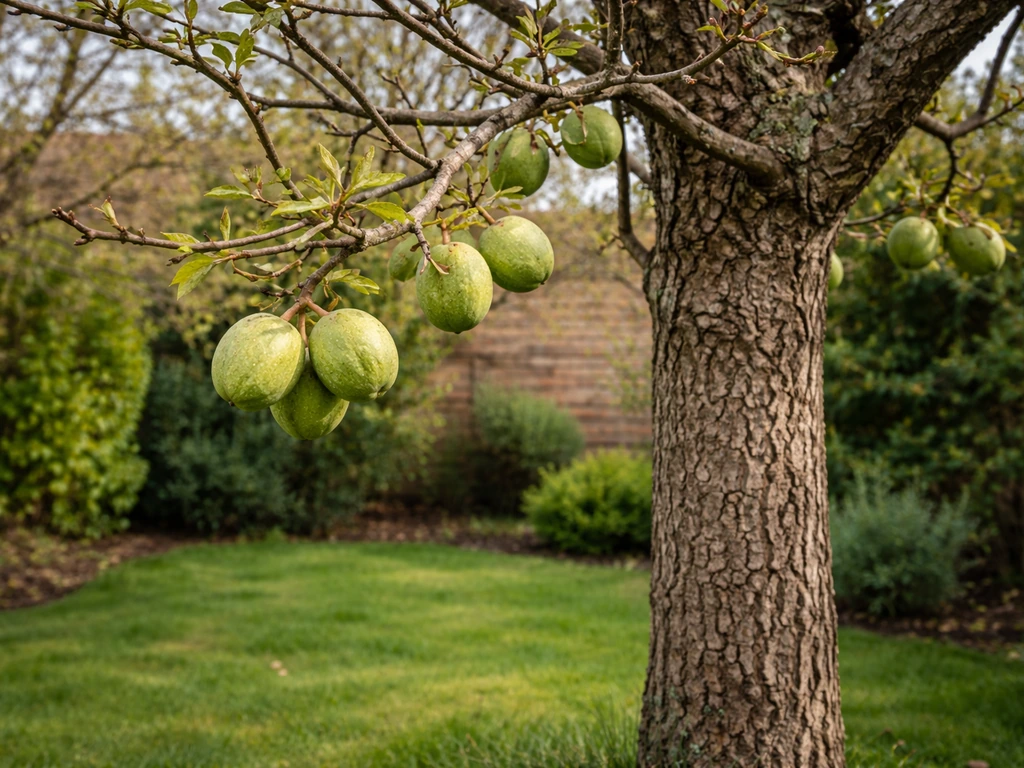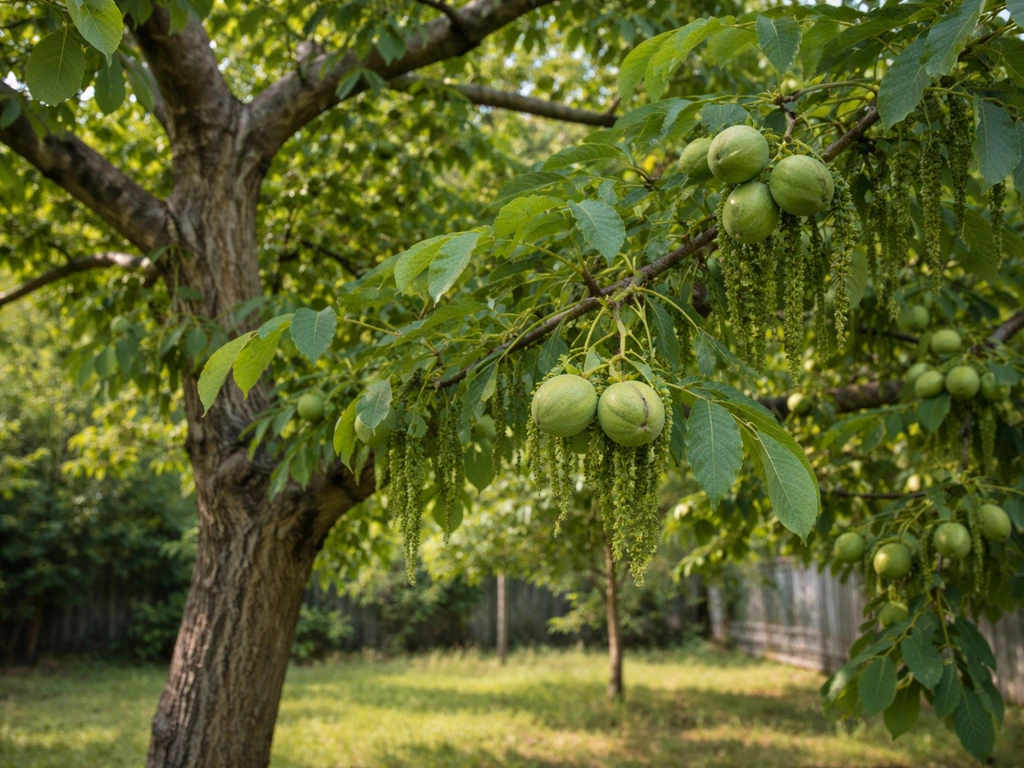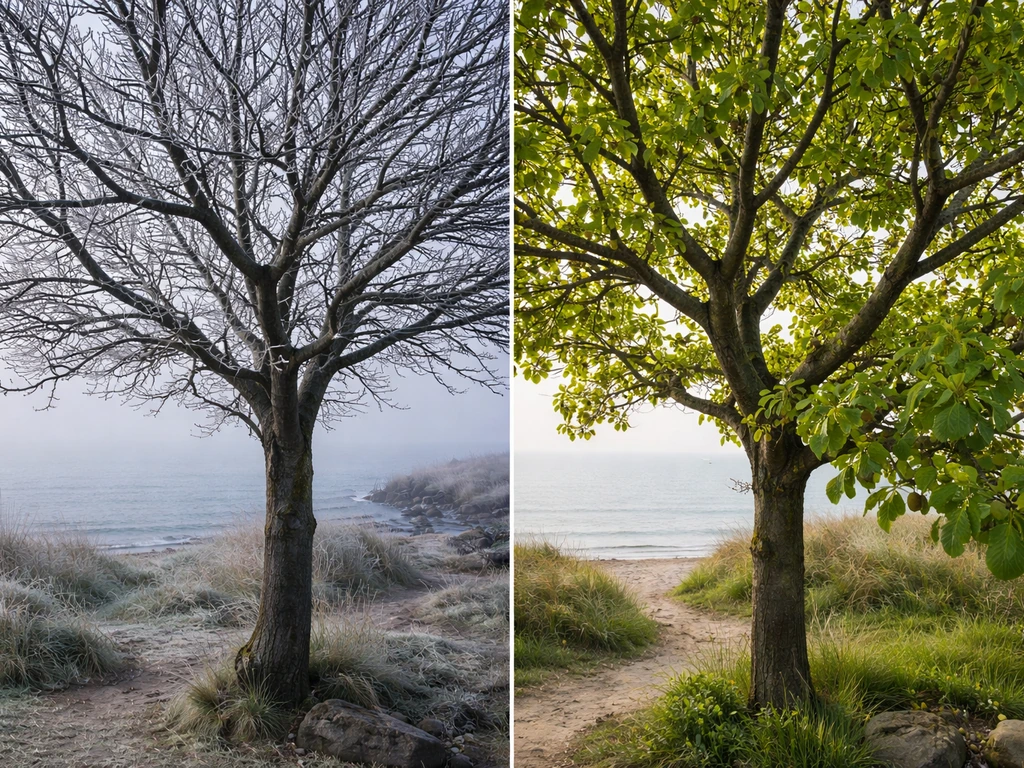
A walnut tree grows the way most long-lived hardwoods do: slowly, deliberately, and on its own schedule. From a seedling in the ground to your first real nut harvest, you're looking at 4 to 7 years at minimum, and often longer. The payoff is substantial, but only if your climate, soil, and site actually match what the tree needs. This guide walks through the whole picture: what walnut trees are, where they grow naturally and commercially, how the growing season unfolds week by week, and exactly what you need to set one up for success.
How Does Walnuts Grow Step by Step, Where and When
Marcus Hendricks
3 Apr 2026
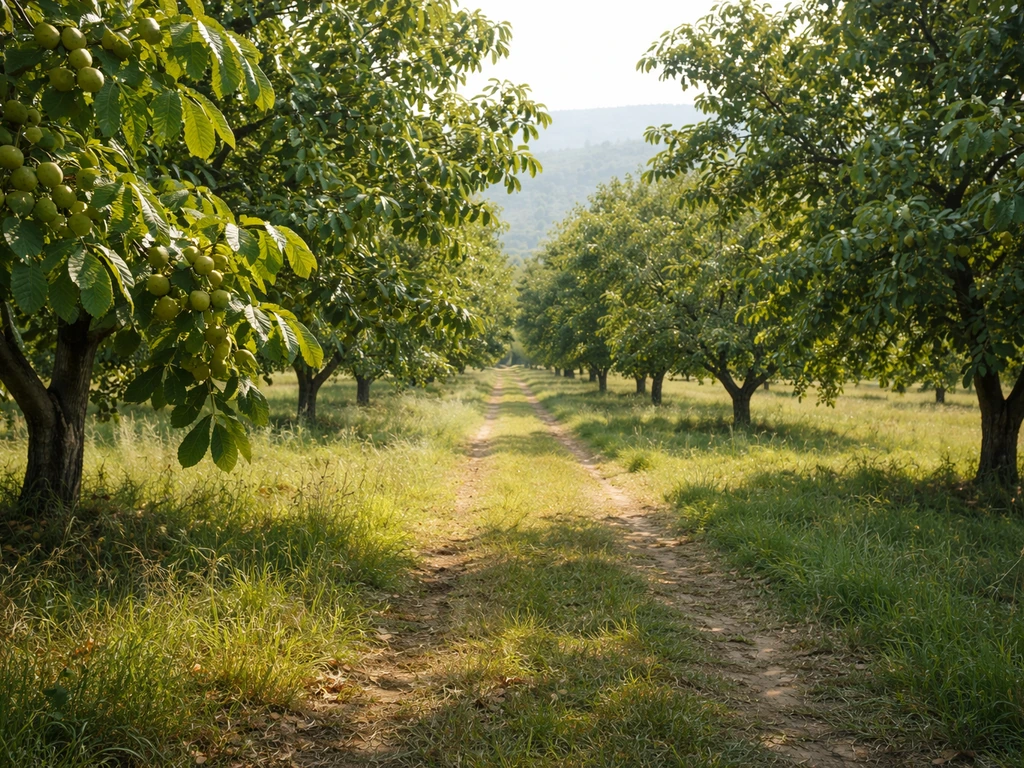
Walnut tree basics: species, size, and lifespan
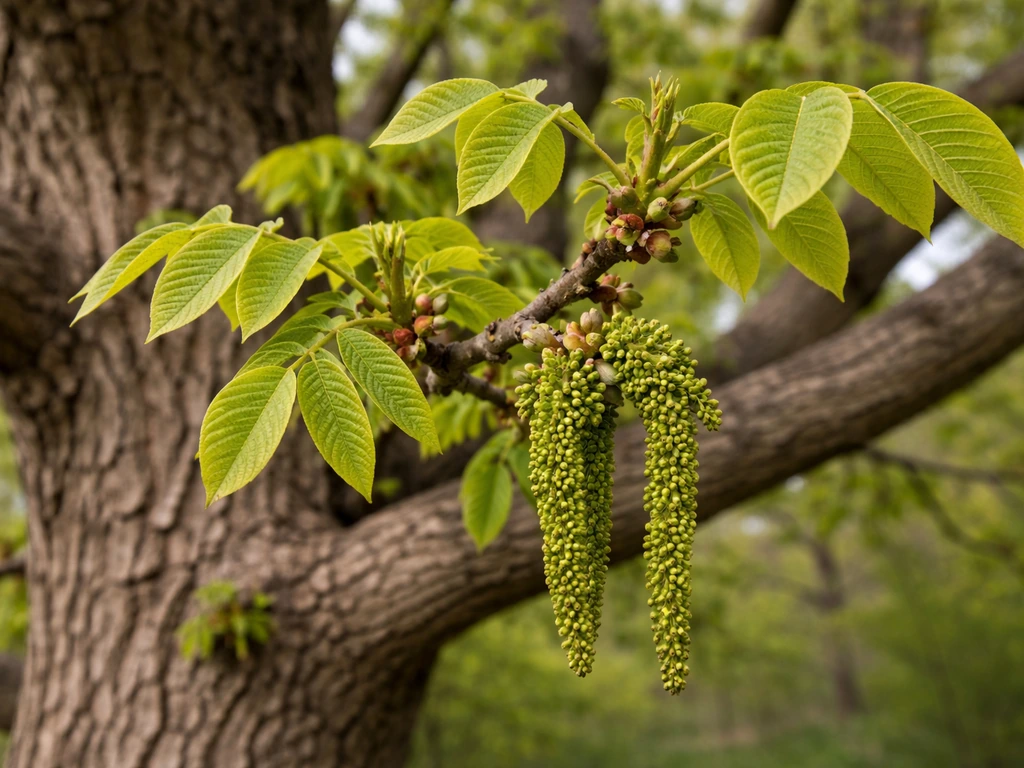
There are around 21 species in the genus Juglans, but two dominate the conversation for growers: black walnut (Juglans nigra) and English walnut, also called Persian or common walnut (Juglans regia). These two trees behave quite differently in the landscape and in the orchard, so knowing which one you're dealing with matters from the start.
Black walnut is a forest giant. Mature trees regularly exceed 45 feet in height, and in ideal conditions they can push well past that. It produces hard-shelled nuts with intensely flavored kernels, and its wood is prized for furniture and gunstocks. One thing every gardener needs to know: black walnut roots exude a compound called juglone, which is toxic to a wide range of plants. Azaleas, rhododendrons, blueberries, peonies, and most solanaceous crops (tomatoes, peppers) will struggle or die if planted too close. Plan your garden layout accordingly before you put a black walnut in the ground.
English walnut is the species behind virtually all commercial walnut production. It grows somewhat shorter than black walnut in most settings, has thinner shells and milder-flavored kernels, and is the species you'll find in the grocery store. It's hardy to approximately USDA Zone 5b or 6, depending on the cultivar, so it can handle cold winters but not extreme ones. Both species are long-lived trees, capable of producing nuts for decades once established.
Where walnuts naturally come from
Black walnut is native to North America. Its natural range runs from western Vermont and Massachusetts down through the mid-Atlantic, across to the Midwest, and south into Oklahoma and central Texas. Interestingly, it largely skips the Mississippi River Valley and Delta. It's well-established in states like Iowa and is considered a valuable native tree there. The native habitat spans a wide precipitation range: from under 640 mm per year in parts of northern Nebraska to over 1,780 mm in the Appalachians, which tells you the tree is adaptable to moisture levels, as long as drainage is good.
English walnut has Eurasian roots. Its native range stretches from southeastern Europe through southwestern and central Asia, the Himalayas, and into China. The exact wild range is a bit blurry because humans have been cultivating and moving this tree for thousands of years, but its home territory is essentially the temperate mountain zones of the Old World. If you want to understand where English walnuts grow and why they thrive in certain places, the key thread is elevation, moderate cold, and well-drained slopes, which is exactly the kind of terrain found throughout its native Eurasian corridor.
Where walnuts grow best in the real world
In the United States, the English walnut story is almost entirely a California story. California produces virtually all of the English walnuts grown commercially in the country, concentrated in the Sacramento and San Joaquin Valleys. The combination of hot, dry summers, mild winters with enough chill hours, and deep fertile soils makes those valleys close to ideal. If you're curious about the specifics of that region, there's a lot to unpack about where walnuts grow in California and why the Central Valley dominates production so completely.
Outside California, English walnut production exists in Oregon and Washington on a smaller scale. Black walnut, meanwhile, grows across a wide swath of the eastern and central US, where it's often found in woodlots, along roadsides, and in home landscapes. For a broader look at regional suitability across the country, the breakdown of where walnuts grow in the US covers the full geographic picture including which species works where.
In Europe, English walnut production is significant in France, Romania, and parts of the Mediterranean. In Asia, China and Iran are major producers. All of these regions share a common profile: temperate climate with distinct winters, adequate but not excessive cold, warm summers, and good soil drainage. Walnut's geographic footprint globally reflects just how specifically the tree has tracked human agriculture into temperate zones over millennia.
Canada presents a narrower window of opportunity. Southern Ontario has a notable black walnut presence, and it sits at the northern edge of that species' native range. English walnut is trickier farther north due to late spring frost risk and shorter growing seasons. The question of where walnuts grow in Canada comes down almost entirely to which part of the country you're in and whether your microclimate can protect against the killing frosts that wipe out early season growth.
The seasonal growth cycle: buds to harvest
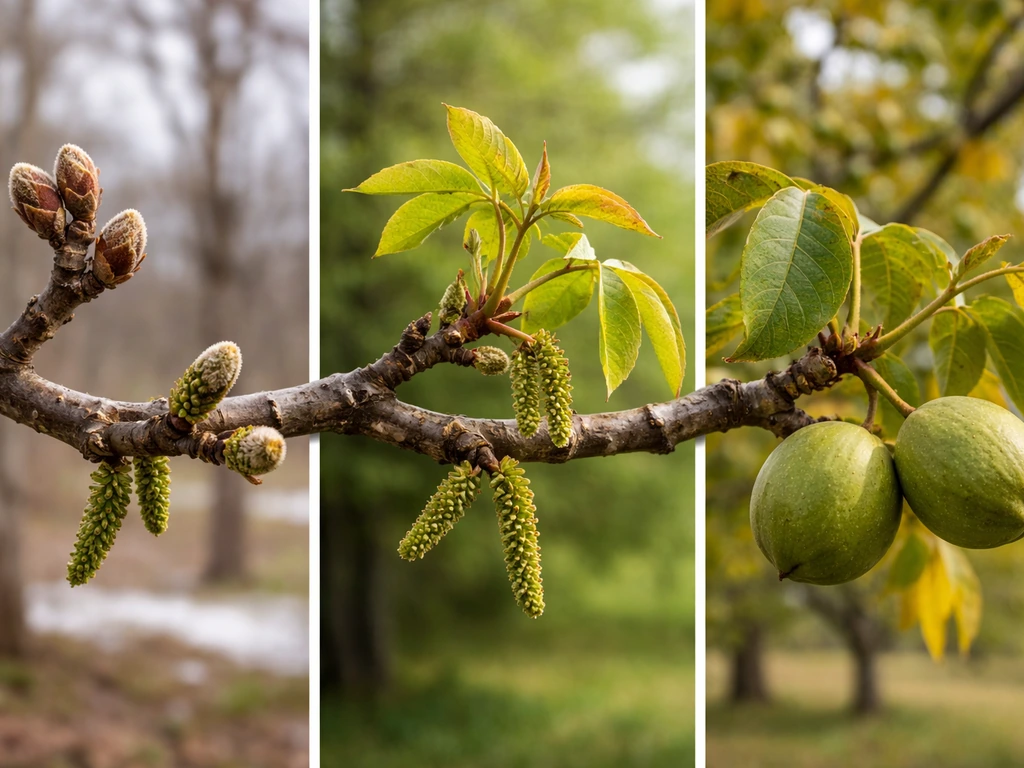
Walnut trees run on a predictable annual clock, and understanding that clock is key to both growing them successfully and diagnosing problems when things go wrong.
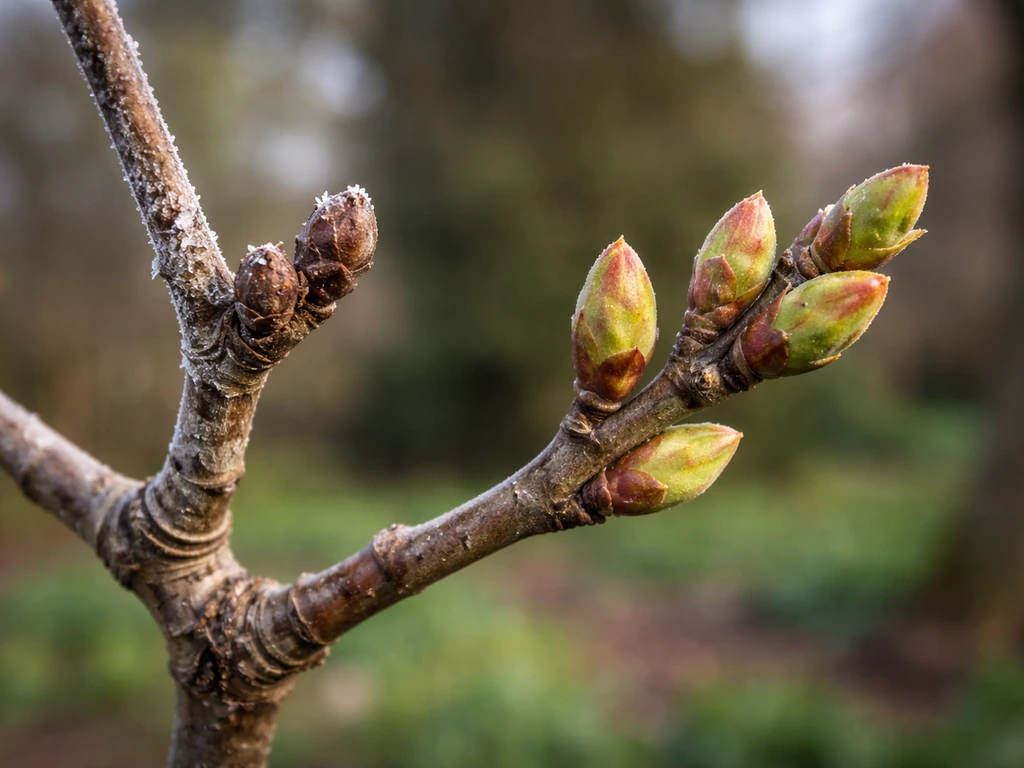
In late winter, after the tree has accumulated enough chilling hours (more on that in a moment), buds begin to swell. Bud break timing varies by cultivar and is actually one of the primary traits researchers use to characterize different Juglans regia genotypes. Bud break in spring triggers leaf emergence and, shortly after, the appearance of the flower structures.
Walnuts are monoecious, meaning a single tree carries both male and female flowers, but they're separate. Male flowers appear as long, drooping catkins. Female flowers are small, clustered structures at the shoot tips. Here's the wrinkle: walnut exhibits what's called heterodichogamy, where the male and female flowers on a given tree don't open at the same time. Some cultivars are protandrous (male flowers open first), others are protogynous (female flowers open first). In protandrous cultivars, the female receptivity window averages around 10.8 days; in protogynous ones, it's closer to 12.4 days. The upshot is that a single tree may have limited self-pollination ability, and planting two overlapping cultivars significantly improves nut set.
After pollination in spring, the nuts develop through summer. The green husk surrounds the developing shell and kernel throughout this period. By late summer to early fall, the hull begins to split and the nuts drop to the ground. Harvest is typically defined by what percentage of nuts have fallen naturally, with formal phenological staging systems using measurable criteria tied to that drop percentage. For black walnut in the Midwest, harvest usually falls in September through October. For English walnut in California, commercial harvest runs from mid-September through November depending on the cultivar.
How a walnut grows: from seedling to nut-bearing tree
If you plant a walnut seed directly in the ground, the first year is almost entirely root development. The taproot pushes deep before the top growth really takes off. This is actually one reason walnut transplants can be challenging: the taproot doesn't like being disturbed. Starting from a containerized nursery tree or a young bare-root sapling with minimal root disturbance gives you a better head start than trying to transplant an established volunteer seedling.
Years one through three are mostly about getting established. You'll see vigorous shoot growth in a good site, but don't expect nuts. By years four to six, a grafted English walnut tree on a good rootstock may begin producing its first light crop. Seedling-grown trees take longer. Black walnut typically begins bearing in five to seven years, but consistent, meaningful production often takes a decade. This is a long-term investment, and growers who go in expecting otherwise tend to get frustrated.
A mature walnut tree develops a broad, spreading crown. Black walnut grows with a clear trunk before branching begins higher up, giving it a distinctive upright form in woodland settings. English walnut in open orchard conditions spreads more widely, with lower branching when not trained otherwise. Both species use wind for pollination, which is part of why spacing and airflow matter so much in orchard design.
What walnuts actually need: the honest growing requirements
Chill hours
This is the single most important factor most home growers overlook. Walnuts need a period of winter cold to break dormancy properly, and if they don't get it, bud break is erratic, flowering is disrupted, and nut production suffers. Black walnut has a notably high chilling requirement: over 1,400 hours below 45°F. English walnut's requirements vary significantly by cultivar, which is why cultivar selection for your specific region matters so much. A low-chill cultivar planted in a cold climate may break dormancy too early and get hit by late frost. A high-chill cultivar in a mild-winter zone may never fully break dormancy. Understanding what climate walnuts grow in is really, at its core, a question about chill hour accumulation and frost timing.
Soil
Both species want deep, well-drained, fertile soil with a near-neutral pH. Black walnut specifically does best on deep, moist (but not waterlogged), nearly neutral soils. Shallow soils, hardpan layers, and anything with poor drainage will stunt growth and shorten the tree's productive life. If your soil drains slowly after rain, either fix the drainage or plant elsewhere. Walnuts do not tolerate wet feet.
Sun and spacing
Full sun is non-negotiable. Walnuts planted in shade produce poorly and are more susceptible to disease. For spacing, black walnut in a timber or nut context is typically planted at 30 to 40 feet apart to allow crown development. English walnut orchards are often spaced at 25 to 30 feet in traditional systems, with high-density plantings running closer. At minimum, give any walnut tree enough space that neighboring trees don't shade it out within 10 to 15 years.
Water
Established walnut trees are moderately drought-tolerant, but consistent moisture during nut development (July through harvest) directly affects kernel fill and yield. Irrigation is standard practice in California orchards precisely because summer rainfall is minimal there. In the eastern US, natural rainfall often suffices for black walnut, but in dry summers, supplemental watering during nut fill will pay off.
Black walnut vs. English walnut: which one fits your situation
| Attribute | Black Walnut (J. nigra) | English Walnut (J. regia) |
|---|---|---|
| Hardiness zone | Zones 4–9 | Zones 5b–8 (cultivar dependent) |
| Mature height | 45+ feet | 30–60 feet |
| Chill hours required | 1,400+ hours | 400–1,500+ hours (varies by cultivar) |
| Time to first nuts | 5–7 years (often 10 for full production) | 4–6 years (grafted trees) |
| Shell thickness | Very thick, hard | Thinner, easier to crack |
| Juglone toxicity | Yes, significant | Minimal |
| Commercial use | Primarily timber and wild harvest | Primary commercial nut crop |
| Pollination | Wind, benefits from multiple trees | Wind, cultivar overlap strongly recommended |
| Best US regions | Eastern and central US | California, Pacific Northwest, mild temperate zones |
For most home growers in the eastern half of the US, black walnut is the more naturally suited choice because it's native to the region and adapted to local soils and rainfall patterns. If you're in California or the Pacific Northwest and want to produce edible walnuts for the kitchen or small-scale sale, English walnut is the obvious pick. In colder northern climates like parts of the upper Midwest or Canada, look for cold-hardy English walnut cultivars specifically bred for those conditions, or stick with black walnut.
Common obstacles and what to do about them
Late frost and timing problems
The biggest threat to walnut production in most regions isn't cold winters: it's late spring frosts hitting after bud break. Once the catkins and young leaves emerge, a hard frost kills them, and that's your entire nut crop for the year. Choosing a cultivar that breaks dormancy later in spring (a later-leafing variety) reduces this risk substantially. Avoid planting in frost pockets, which are low spots where cold air settles on still nights. A slight slope that drains cold air away from the tree is significantly safer than a flat bottom.
Pollination gaps
Because of the heterodichogamy issue described earlier, a lone walnut tree may produce poorly even in a perfect site. Plant at least two trees of overlapping but complementary types: one protandrous and one protogynous cultivar, so that the pollen-shedding window of one overlaps with the female receptivity window of the other. This is standard practice in commercial orchards and should be standard practice for serious home growers too.
Key pests to watch for
Codling moth is one of the most damaging walnut pests, burrowing into the developing nut and making it unmarketable. Management in commercial settings uses pheromone monitoring to time interventions by degree-day accumulation, not just calendar date. Pheromone-based disruption methods can be layered into conventional spray programs to reduce overall chemical use. Walnut husk fly is another significant pest: its larvae feed inside the husk, staining the shell and kernel. Once an infestation establishes, insecticides are typically necessary, but reducing conditions that favor the pest before reaching that point (sanitation, monitoring) limits the damage. Cultivar selection also matters here because early, mid, and late season cultivars face different pest pressure timing from both codling moth and walnut husk fly.
Disease: walnut blight
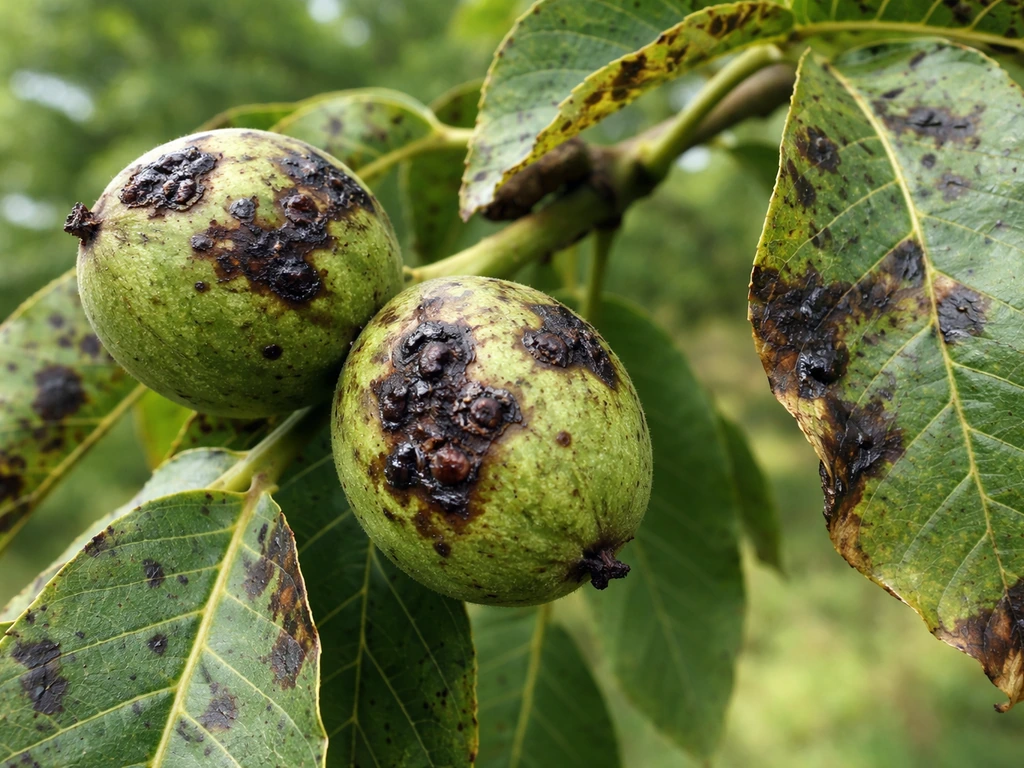
Walnut blight (Xanthomonas arboricola pv. juglandis) is a bacterial disease that targets young shoots, leaves, and catkins, showing up as black lesions. It spreads in wet spring weather, which makes the timing of early-season rains a major factor in how severe blight pressure is in a given year. Good airflow through the canopy (achieved through proper spacing and pruning) reduces the moisture that this disease needs. In high-pressure regions, protective copper-based sprays applied at bud break are the standard preventive approach.
Your next steps if you're planning to plant
- Check your USDA hardiness zone and, more importantly, count your average annual chill hours. If you're in Zone 7 or warmer, focus on low-chill English walnut cultivars and confirm they meet your local chill accumulation.
- Assess your soil: dig a 2-foot test hole after rain and check drainage at 24 hours. Standing water means drainage work is needed before you plant anything.
- Identify your frost risk: look up the average last spring frost date for your zip code and compare it to the typical bud break timing of the cultivar you're considering.
- Plan for two trees minimum if you want reliable nut production. Select one protandrous and one protogynous cultivar that overlap in flowering time.
- Source grafted trees from a reputable nursery rather than growing from seed if your goal is nut production on a reasonable timeline.
- If you're planting black walnut, map out a 50-foot buffer around its future canopy footprint and avoid placing vegetable gardens, blueberries, or other juglone-sensitive plants within that zone.
Walnuts are genuinely rewarding trees for the right site and the right grower. They're not difficult in the way that finicky fruit trees can be, but they are slow and unforgiving of bad site choices. Get the location right, match the cultivar to your climate, and give the tree the space and patience it needs. That's really the whole game.
FAQ
Can I grow walnuts from a store-bought walnut, and will it produce nuts quickly?
You can sometimes germinate fresh walnuts from the shell, but seed-grown trees do not stay true to the cultivar, so nut quality and bearing time can vary widely. Expect a long juvenile period (often 7 to 10 years or more for meaningful crops), and the taproot makes later transplanting difficult, so plan to grow it in place or use a deep, containerized setup from the start.
Do walnuts really need cross-pollination, or will one tree set nuts on its own?
Many walnut cultivars can have limited self-pollination because male and female flowers often open at different times on the same tree. In practice, planting two cultivars with overlapping timing is the best way to improve nut set, especially in home plantings where you cannot rely on nearby pollen sources.
What’s the biggest reason my walnut flowers but doesn’t drop many nuts?
The most common causes are late spring frost (flowers and young tissues get killed) and poor overlap in pollen timing between trees. Also check that the tree receives full sun and has enough water during nut fill, because stress after pollination can reduce kernel development even if nuts start forming.
How do I avoid late frost damage if I live near a frost pocket or low area?
Avoid planting in valley bottoms or anywhere cold air pools at night. Use a gentle slope or a site with cold-air drainage, and consider creating distance between the trunk and surrounding vegetation that can trap cold. Even with a good cultivar, microclimate can outweigh the general zone rating.
How do I choose between high-chill and low-chill walnut cultivars for my area?
Match chill-hour needs to your typical winter accumulation. If you choose a high-chill cultivar for a mild-winter site, dormancy may not break fully and flowering can be erratic. If you choose a low-chill cultivar for a colder area, bud break can be too early and get hit by late frost, so look for cultivar recommendations specific to your nearest region or climate band.
Why is soil drainage so critical for walnuts, and how can I test it quickly?
Walnuts dislike wet feet because standing water reduces root oxygen and can stunt the tree for years. A practical test is to dig a hole, fill it with water, and time how long it takes to drain; if it stays saturated for a long period after rain, you likely need improved drainage or a raised planting position.
How much water do walnuts need during the nut development period?
During nut fill (roughly July through harvest depending on location), consistent moisture supports kernel size and yield. If you have deep soils and reliable rainfall, you might not irrigate often, but in hot, dry summers, supplemental watering is commonly the difference between light and good crops. Avoid overwatering, since walnuts still require drainage.
What spacing should I use in a home orchard if I want airflow and easy harvest?
Your goal is to prevent canopy shading and to keep foliage from staying wet. Many orchard systems use about 25 to 30 feet for English walnuts and 30 to 40 feet for black walnuts in traditional setups. If you plan to prune for an open canopy, you can sometimes use tighter spacing, but never so tight that neighboring trees shade the lower crown within 10 to 15 years.
Is there a way to reduce walnut blight and other wet-weather problems without heavy spraying?
Good airflow is your foundation: proper spacing, pruning to open the canopy, and avoiding overhead wetting where practical. In regions with frequent wet springs, protective strategies often start at bud break, but the exact approach depends on local disease pressure and whether your cultivar is prone to infections.
How should I handle fallen walnuts at harvest time, especially for black walnuts?
Wait until nuts have naturally dropped a meaningful portion of the crop, then collect promptly. Black walnut hulls can stain and are messy, so plan for gloves and cleanup. Also be aware that timing affects kernel quality and storage performance, so don’t let nuts sit on damp ground for extended periods.
Why do walnuts fail after transplanting even if the site seems perfect?
Walnuts develop a deep taproot, and root disturbance can set growth back severely. That’s why moving established trees is risky. If you must transplant, use young nursery stock with minimal root disruption, keep roots handled carefully, and expect a longer recovery period than you would with many shallow-rooted fruit trees.
What’s a realistic timeline for the first nuts if I plant a grafted tree versus a seedling?
Grafted English walnut trees may start with light crops around years 4 to 6 under good conditions, while seedling-grown trees typically take longer. Black walnut often bears in about 5 to 7 years, but consistent production can take closer to a decade, so plan for long-term commitment rather than expecting early returns.