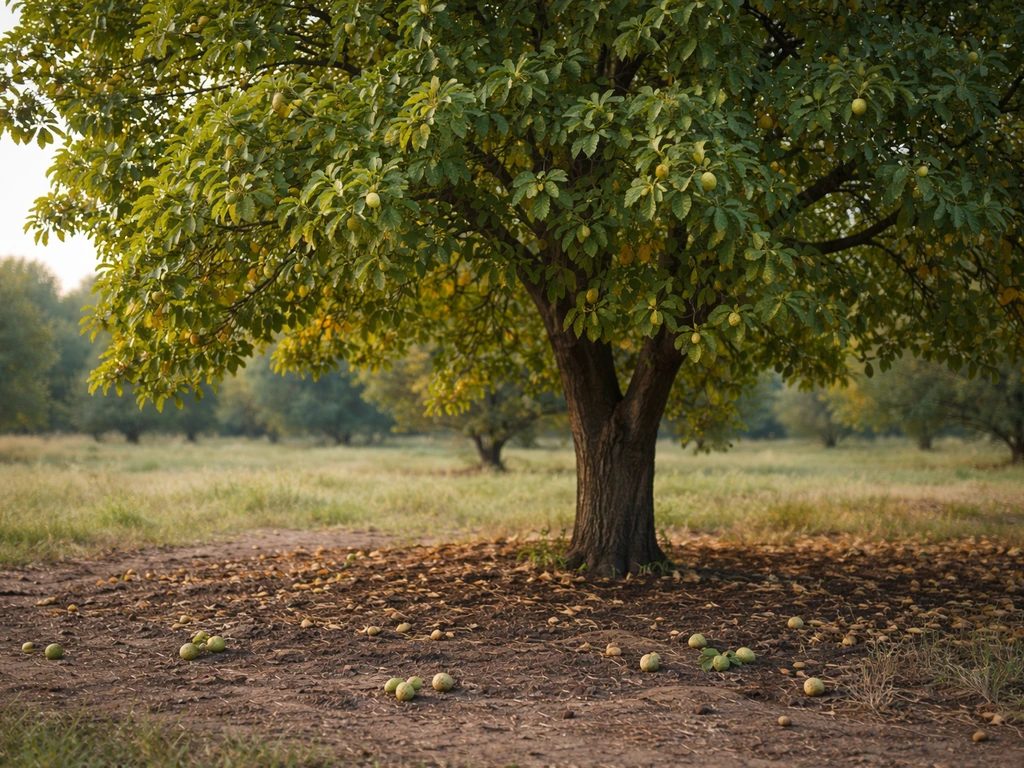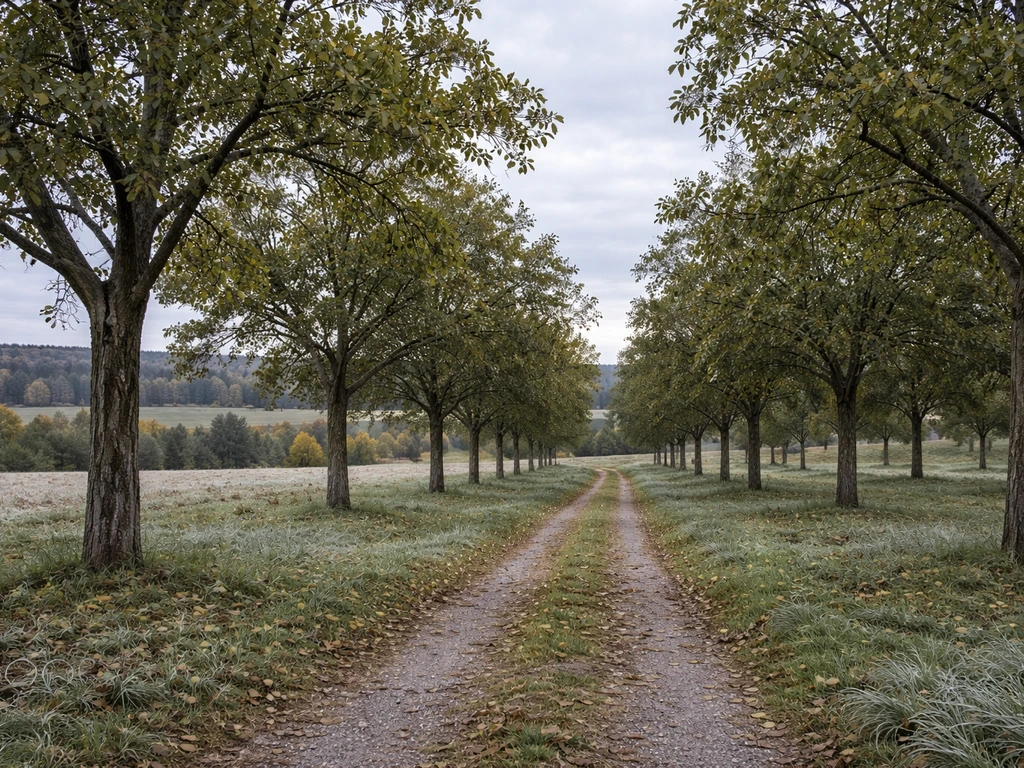
Walnut trees can grow across a surprisingly wide range of climates, from the cool temperate forests of the northeastern United States to the foothills of the Himalayas, but not every walnut species belongs in every region. The short answer: if you're in USDA Hardiness Zones 4 through 9, there's almost certainly a walnut species that can work for your location. The longer answer depends on which species you're talking about, your soil drainage, your winter lows, and whether you can give the tree enough sun and root space. Let's get into the specifics.
Where Can Walnut Trees Grow Best by Climate and Zone
Marcus Hendricks
5 Apr 2026
Walnut types and why the answer depends on the species
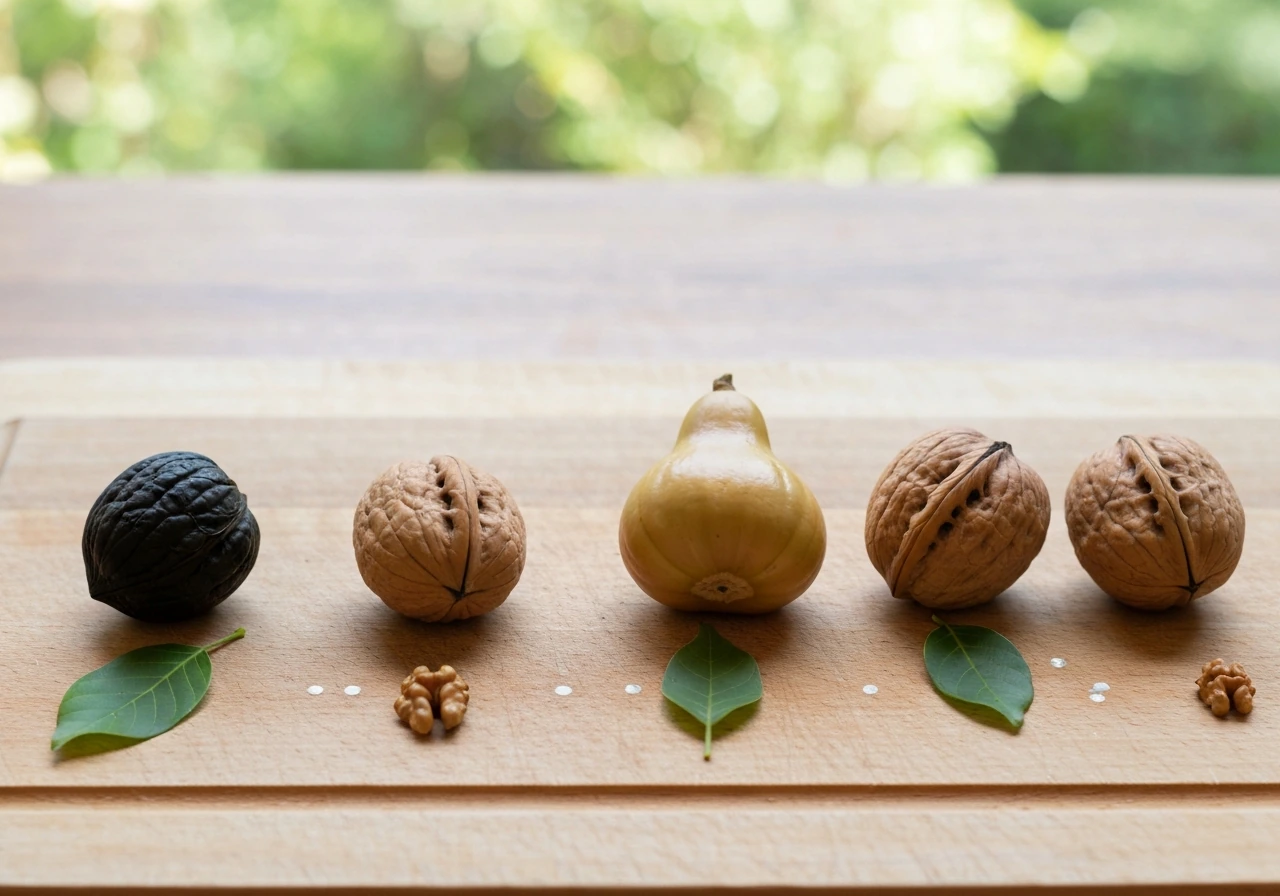
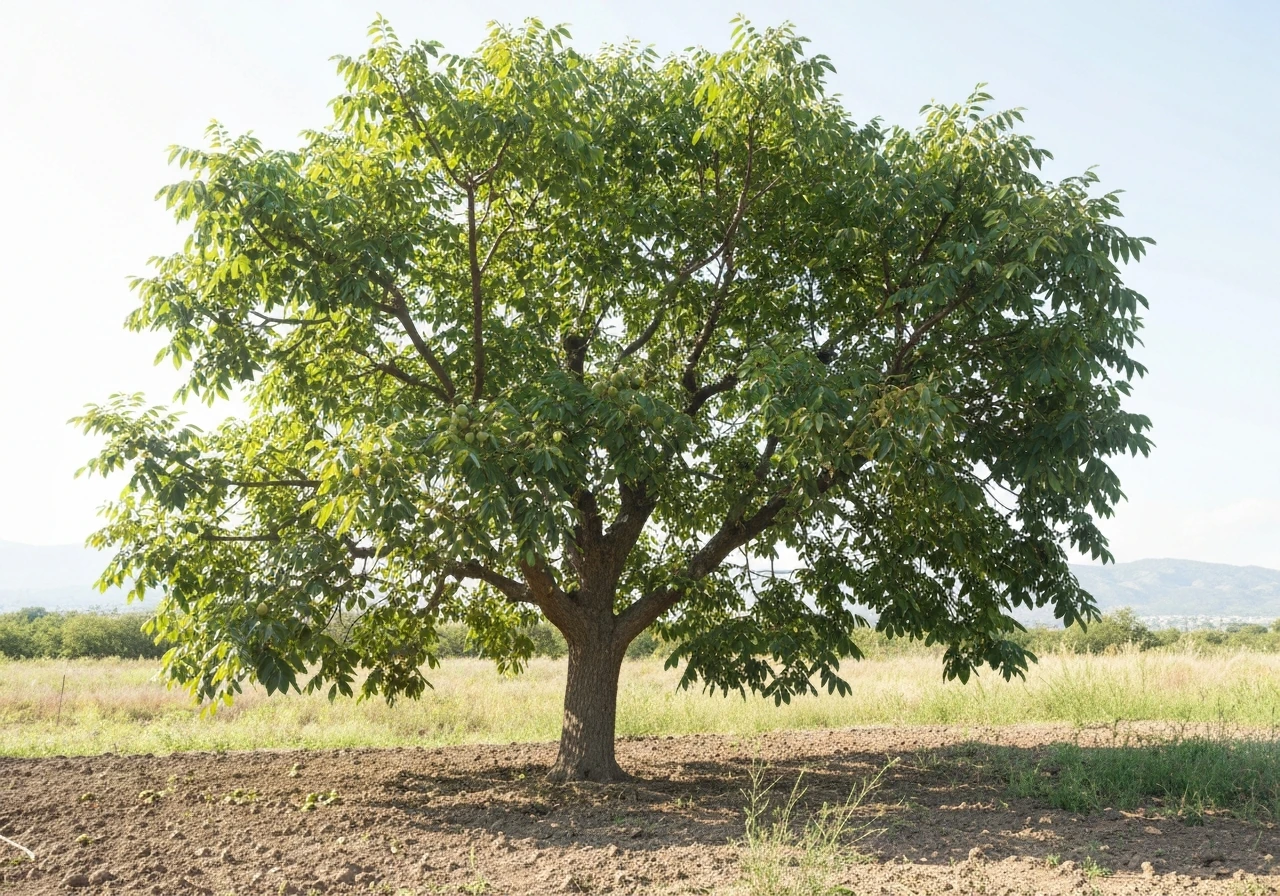
The word 'walnut' covers about 21 species in the genus Juglans, but for practical growing purposes, four species come up most often: black walnut (Juglans nigra), English or Persian walnut (Juglans regia), butternut (Juglans cinerea), and Japanese walnut (Juglans ailantifolia). Each has a distinct native range, cold tolerance, and climate sweet spot. When someone asks where walnut trees grow, they often mean English walnut (since that's what you buy at the grocery store), but black walnut is the dominant species across most of North America, and butternut and Japanese walnut extend the cold-hardiness range further north than either of the other two.
A lot of readers don't realize that walnuts do in fact grow on trees in distinctly different forms depending on the species. Black walnuts have a thick, hard shell encased in a green husk and are notoriously difficult to crack. English walnuts have a thinner shell and are the commercial standard. Butternuts are smaller and oilier. Japanese walnuts are mild-flavored but rarely grown for commercial production. Knowing which one you want shapes everything about site selection.
| Species | Native Range | USDA Zones | Best Use |
|---|---|---|---|
| Black Walnut (J. nigra) | Eastern/Central North America | 4–9 | Timber, nuts, wildlife |
| English/Persian Walnut (J. regia) | SE Europe to Central Asia | 5–9 | Commercial nut production |
| Butternut (J. cinerea) | Eastern North America | 3–7 | Cold-climate nut production |
| Japanese Walnut (J. ailantifolia) | Japan | 5–7 | Ornamental, cold-hardy hybrid rootstock |
Climate basics: hardiness zones, cold tolerance, and heat needs
USDA Plant Hardiness Zones are built on average annual extreme minimum winter temperatures, and the most current version covers the blank" rel="noopener noreferrer">1991 to 2020 climate normal period. That matters for walnut growers because the map has shifted slightly warmer in some regions compared to older versions, meaning some borderline zones have moved. You can look up your zone using the blank" rel="noopener noreferrer">2023 USDA Plant Hardiness Zone Map and enter your zip code to get a precise zone assignment.
Black walnut is comfortable in Zones 4 through 9 and is one of the more adaptable walnuts in terms of winter cold. English walnut is slightly less cold-hardy in general, but specific cultivars bred for northern climates (like 'Carpathian' varieties) push survivability into Zone 5 with some protection. Butternut is the cold-hardiness champion of the group, reliably surviving into Zone 3 in parts of Canada and the upper Midwest. Japanese walnut, as noted by Oregon State University in their landscape plant profile, is hardy to Zone 5 and is native to Japan, making it a practical option for gardeners in cool-temperate regions who want a walnut that won't die back in a hard winter.
Cold tolerance is only half the equation. Walnuts also need enough heat units during the growing season to set and mature nuts. English walnut in particular needs a long enough warm period, typically 150 to 170 frost-free days depending on the cultivar, to fully develop its crop. In short-season climates like Zone 4 or the northern edge of Zone 5, late spring frosts can kill the emerging buds and wipe out the year's crop even if the tree itself survives the winter. This is why 'Carpathian' types, which leaf out later and avoid the worst late frosts, are so popular in marginal zones.
Site requirements that limit where walnuts grow
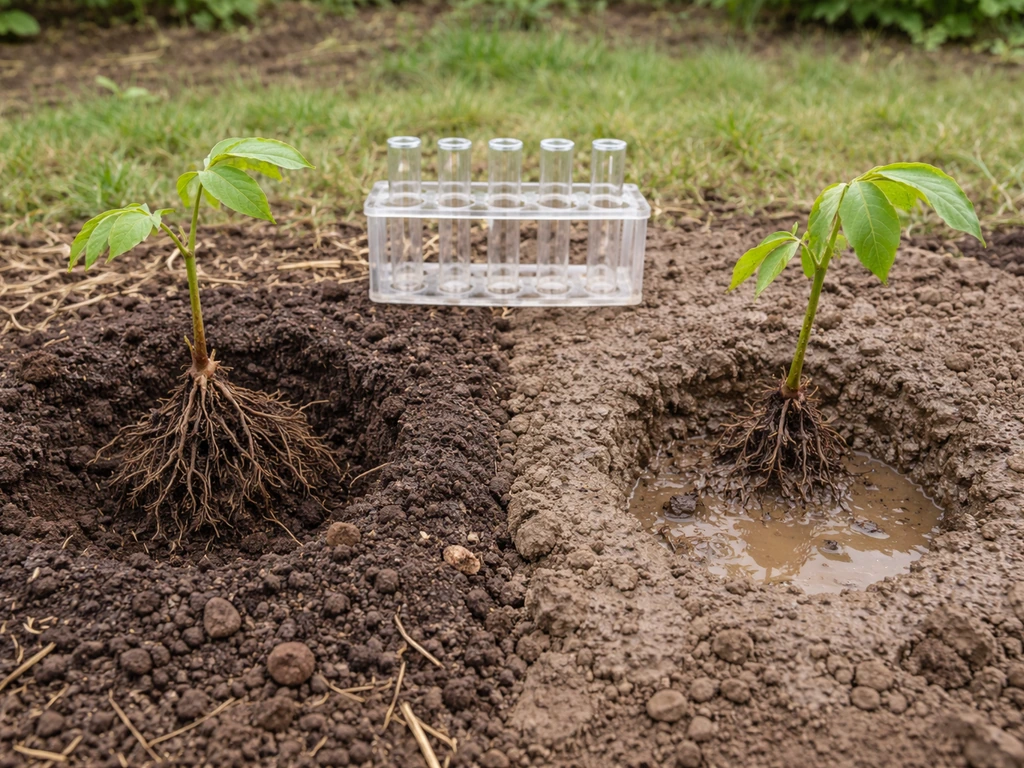
Zone compatibility is the starting point, but site conditions can make or break a walnut planting even within a suitable zone. Drainage is the most common dealbreaker. Walnuts develop a deep taproot and cannot tolerate standing water or compacted, poorly drained soils. The USDA Forest Service's habitat notes on butternut describe its preferred habitat as hillsides and streambanks with well-drained soils in mixed hardwood forests, which gives you a useful mental model: walnuts want moisture accessible at depth but not waterlogged roots near the surface.
Soil pH should sit between 6.0 and 7.5 for best results. Strongly acidic or strongly alkaline soils cause nutrient uptake problems and can stunt growth. Black walnut is somewhat more tolerant of variable soil chemistry than English walnut, but neither performs well in heavy clay that holds water after rain. Loamy, deep soils with good organic matter are the ideal, and the tree benefits from a rooting depth of at least 3 feet without hitting hardpan or rock.
Sun is non-negotiable. Walnuts need full sun, meaning at least 6 to 8 hours of direct sunlight per day. Shade from buildings or competing trees suppresses growth and reduces nut production dramatically. Wind exposure is worth thinking about too: young trees can be damaged by strong prevailing winds, and late spring windstorms in the Midwest can knock developing catkins and flowers off the tree before pollination occurs. Planting in a location with some windbreak to the north and west, without cutting off sunlight, is the ideal setup.
One thing many growers underestimate is juglone, the allelopathic chemical walnut roots release into the soil. It's toxic to a wide range of plants, including tomatoes, peppers, and many ornamentals, so placement matters not just for the walnut's sake but for the rest of your garden.
Where walnuts actually grow in the wild
Black walnut's native range covers most of the eastern half of the United States, from southern Ontario and New England down through the Southeast, and west through the Great Plains to Nebraska and Kansas. The USDA Forest Service's ecological review of Juglans nigra describes it as often a riparian-associated tree across much of its native range, meaning you'll commonly find wild black walnuts growing near streams, river floodplains, and low-lying areas with reliable soil moisture. This isn't because they tolerate flooding, but because seeds (the nuts themselves) are heavy and tend to wash downstream and germinate in moist, fertile bottomland soils.
Butternut's native range is narrower, concentrated in the northeastern United States and southeastern Canada, extending south along the Appalachian Mountains into Georgia. It's a tree of mixed hardwood forests and slopes, tending to appear on limestone-influenced soils. Unfortunately, butternut has suffered severe decline from butternut canker disease, which has wiped out large portions of the wild population. Disease-resistant selections are now the focus of conservation work, and FAO documentation on seed conservation has highlighted butternut as a species of concern for native genetic preservation.
English walnut originated in a corridor stretching from southeastern Europe through Turkey, Iran, and into Central Asia and parts of northwestern China. It thrives in the Mediterranean-influenced climates of California's Central Valley, where the vast majority of commercial US walnut production happens, as well as in parts of France, Italy, and the Carpathian Basin in central Europe. Walnut growing in India centers on the Kashmir Valley, where the climate provides the combination of cold winters (for chilling requirements) and warm summers that English walnut needs to produce well.
Translating regions to zones: a practical growing map
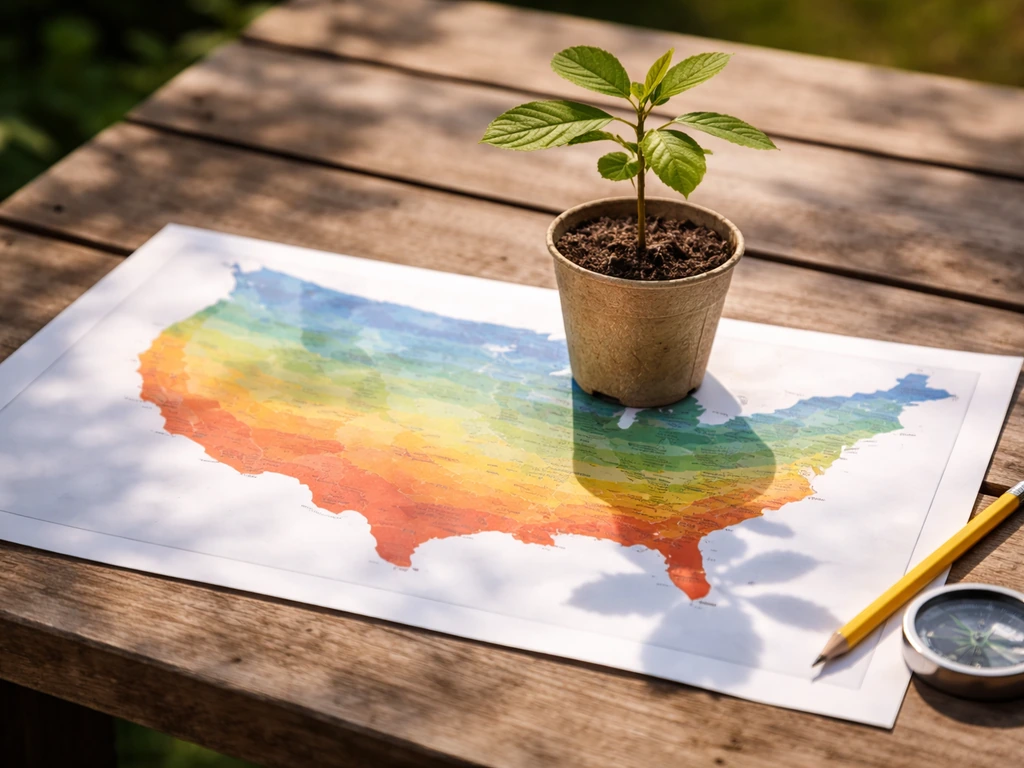
If you want to think about walnut suitability in terms of broad geography rather than species-by-species details, here's how the regions break down:
- Upper Midwest and Northeast US (Zones 4–5): Black walnut and butternut are the primary options. English walnut can survive with cold-hardy 'Carpathian' cultivars but late frost remains a risk for annual nut crops.
- Mid-Atlantic and Southeast US (Zones 6–8): Black walnut thrives here. English walnut can be grown but struggles in the humid heat of the deep South, where fungal disease pressure increases significantly.
- Pacific Coast and California (Zones 7–9): English walnut's commercial heartland. California's Central Valley (Zone 9) produces the majority of US commercial walnuts. The mild, dry climate minimizes disease and allows consistent nut maturation.
- Great Plains (Zones 5–7): Black walnut is native to much of this region and extremely well-suited to it. English walnut is marginal. Drought tolerance becomes a key consideration in western portions.
- UK and Northern Europe (Zones 7–9 equivalent): English walnut is grown successfully in southern England, France, and central Europe. Reliable summers with adequate warmth are the limiting factor.
- Central Asia and Mediterranean (Zones 7–10): The ancestral home of English walnut. Countries like Iran, Turkey, and Uzbekistan are among the world's top producers.
- Himalayan foothills and Kashmir (Zones 6–8 equivalent): English walnut production is significant and has centuries of cultivation history here.
If you're in Texas, the situation is more nuanced than a simple yes or no. Walnut growing in Texas is possible with the right species and region, since the state spans multiple zones and includes native populations of Texas black walnut (Juglans microcarpa) in the central and western parts of the state.
For gardeners in the British Isles, climate suitability is a genuine question because cool, cloudy summers can limit nut development even where winters are mild enough for tree survival. Growing walnuts in the UK is achievable, particularly in the warmer southern counties, but it's worth understanding the heat-unit limitations before investing in a tree. Similarly, walnut trees in Ireland face the additional challenge of high rainfall and relatively cool summers, which pushes most growers toward the most sheltered, south-facing sites available.
How to decide if your location can grow walnuts
Before planting anything, run through this checklist. It's not exhaustive, but if you can answer yes to all of these, you're in a good position to move forward with at least one walnut species.
- Check your USDA Hardiness Zone using the 2023 map. If you're in Zones 4–9, you have at least one suitable walnut species. Zone 3 growers should look specifically at butternut or cold-hardy hybrid selections.
- Count your frost-free days. If you have fewer than 140 frost-free days, English walnut is a poor bet. Black walnut and butternut are more forgiving of shorter seasons.
- Test your drainage. Dig a hole 12 inches deep and fill it with water. If it drains in under an hour, your drainage is fine. If it sits for several hours or overnight, you need to either amend the site or choose a different location.
- Check your soil pH. A simple test kit from any garden center will tell you if your soil falls between 6.0 and 7.5. Outside that range, plan to amend before planting.
- Assess sun exposure. Walk your candidate planting site and observe how many hours of direct sun it receives on a clear day. Six hours minimum, eight or more is better.
- Think about space. Black walnut trees can reach 70 to 100 feet tall with a canopy spread of 60 to 70 feet at maturity. English walnut is somewhat smaller but still needs substantial room. Don't underestimate this.
- Consider what else is growing nearby. Remember the juglone issue. Keep walnuts at least 50 to 80 feet from vegetable gardens and sensitive ornamentals.
- If you're on the marginal edge of the zone range, talk to your local cooperative extension office or county agricultural agent. They'll know which cultivars have performed well in your specific region.
One question growers often ask once they've committed to planting is whether the tree will produce nuts consistently year after year. Annual walnut production is affected by factors beyond just zone suitability, including late frost timing, pollination conditions, and the tree's age and health, so understanding the rhythm of production helps set realistic expectations before you plant.
The bottom line on where walnuts can grow
Walnuts are genuinely adaptable trees, but only when matched to the right species and site. Black walnut is the workhorse of North American growing: tough, wide-ranging, and productive in the right soil. English walnut is the commercial gold standard but demands a longer, warmer season and lower disease pressure. Butternut and Japanese walnut extend the cold-hardiness frontier northward for gardeners in shorter-season climates. Your job is to figure out which species matches your zone, your soil, your drainage, and your space, and then commit to the site preparation that gives the tree its best start. Get those fundamentals right, and walnut trees are rewarding, long-lived additions to almost any temperate landscape.
FAQ
If my zone is suitable, will a walnut always produce nuts every year?
Yes, as long as the nuts can mature in your warm season. Pick a cultivar matched to your length of frost-free period, and if you are at the northern edge, prioritize later leaf-out types that reduce late spring frost damage to buds and catkins.
How do I know whether my climate has enough heat units for walnut nut development?
To check heat availability, count frost-free days and compare them to the cultivar’s requirement (English walnut often needs roughly 150 to 170). In short seasons, the tree may survive winter, but buds can fail to set a crop due to cold spells or late frosts during flowering.
What spacing and rooting depth should I plan for when deciding where walnut trees can grow on my property?
Use the tree’s mature size to plan distance, and give the taproot room by avoiding spots with buried compacted fill, old construction debris, or underdrained lawn areas. A common mistake is planting too close to patios or fences where root expansion and soil disturbance later become unavoidable.
If I plant nuts I collected, will my walnut tree grow correctly for my area and produce the kind of walnuts I want?
Walnuts can regenerate from seedlings, but they are not reliable for true-to-type nut quality. If you want predictable production, buy grafted or selected cultivars and expect that seed-grown trees may take longer to bear and can be inferior in shell thickness or flavor.
How far should I keep other plants from a walnut tree because of juglone?
Walnut allelopathy (juglone) mainly affects many garden plants near the dripline. If you want vegetables or ornamentals nearby, keep them farther from the trunk, use raised beds with clean topsoil, and observe for at least a full growing season before assuming the issue is soil nutrients.
What should I do if my yard is windy, but I still want to plant a walnut tree?
Young trees are more sensitive to damage, so in windy sites use a temporary support or install a windbreak that does not cast shade on the crown. Avoid pruning in a way that removes too much leaf area right before winter, since that can increase stress after windy, cold periods.
Can I grow walnuts in heavy clay soil if I add compost and mulch?
Yes, but only if you can guarantee drainage. Do not rely on raised beds alone if the subsoil stays waterlogged, since the taproot eventually reaches deeper zones. The safest approach is improving subsoil drainage or choosing a slope or higher spot with consistent, non-soggy moisture.
How should I correct soil pH for walnut planting, and how much amendment is too much?
For soil amendments, focus on building a deep loamy profile rather than just adjusting the top few inches. If pH is out of range, correct it before planting and avoid aggressive liming close to planting time, since sudden chemistry swings can stress young roots.
If I plant a walnut near my house or garden, what long-term issues should I anticipate?
Walnut canopies often get very large, so you want to think about long-term shade effects on other trees and turf. Replanting nearby with shade-tolerant species and planning for leaf drop (and the allelopathic zone) prevents trouble later.
Are there disease or rainfall-related reasons walnuts might fail in places that match the hardiness zone?
Not necessarily. English walnut and many commercial selections are more vulnerable to disease, and the right cultivar selection matters. In humid regions, spacing for airflow and choosing disease-tolerant selections can reduce problems even when the overall zone looks suitable.