Walnuts vs walnut products: what's actually on the tree
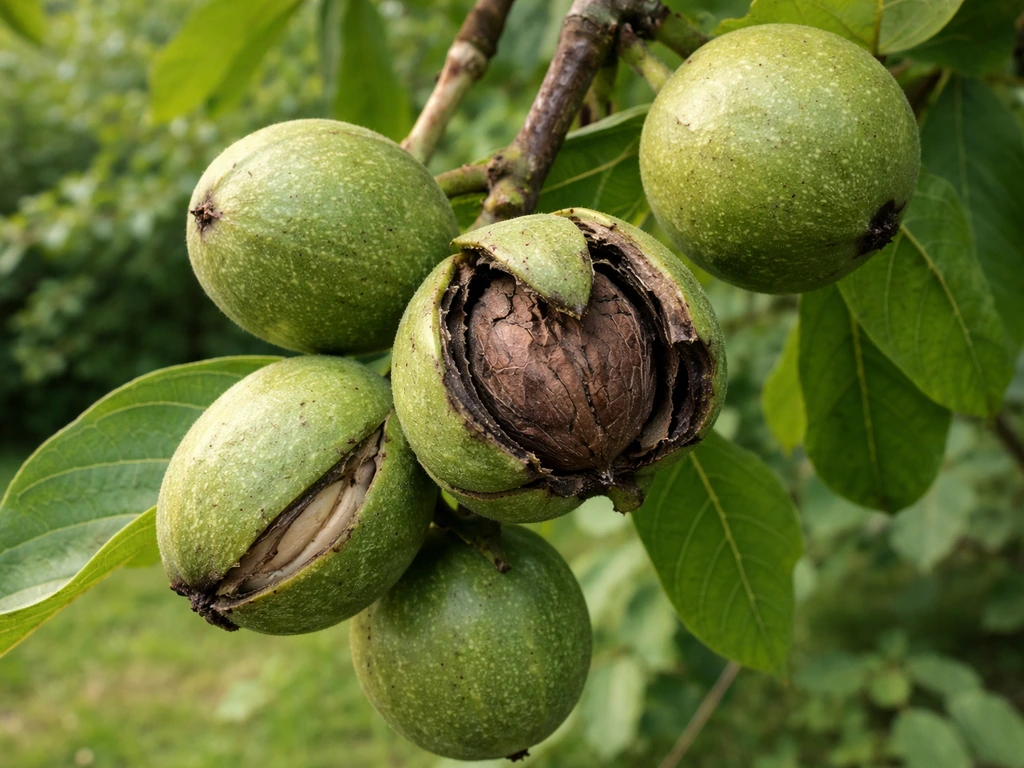
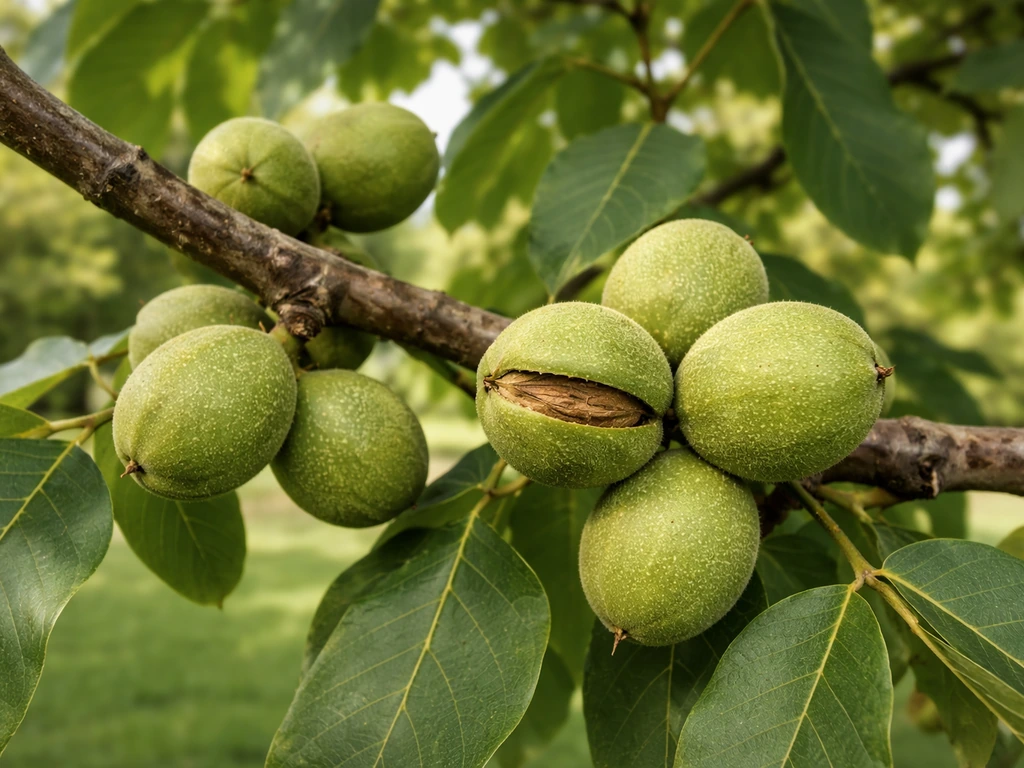
When people say "walnuts," they usually mean the shelled or in-shell kernel sold at grocery stores. But what grows on the actual tree is a complete fruit, not just a naked nut. The walnut fruit is structured like a drupe (think peach or cherry, but dry instead of juicy). This drupe-like structure matches detailed descriptions of the pericarp and seed capsule cell ultrastructure in developing walnut fruit structured like a drupe. There's an outer fleshy husk, called the pericarp, that starts green and turns dark brown to black as it matures. Beneath that husk is the hard shell, which is the hardened endocarp (the "stone" layer, in botanical terms). The edible kernel sits inside that shell.
So when walnuts fall from a tree, they often still have the green or blackened outer husk attached. That husk is what stains your hands and clothes (a notoriously persistent dark brown dye). By the time walnuts reach you at the store, that outer layer has been removed. Understanding this structure matters if you're foraging from a wild tree or harvesting from your own, because you'll need to remove the husk before you can do anything with the nut.
Which walnut tree species actually produce the nuts
The genus Juglans has around 21 species, but two dominate when people talk about walnuts in practical terms: the English walnut (Juglans regia, also called the Persian or common walnut) and the black walnut (Juglans nigra). There are also butternuts (Juglans cinerea), Hinds walnuts, and several others, but for most growers and foragers, it comes down to these two.
English walnut (Juglans regia)
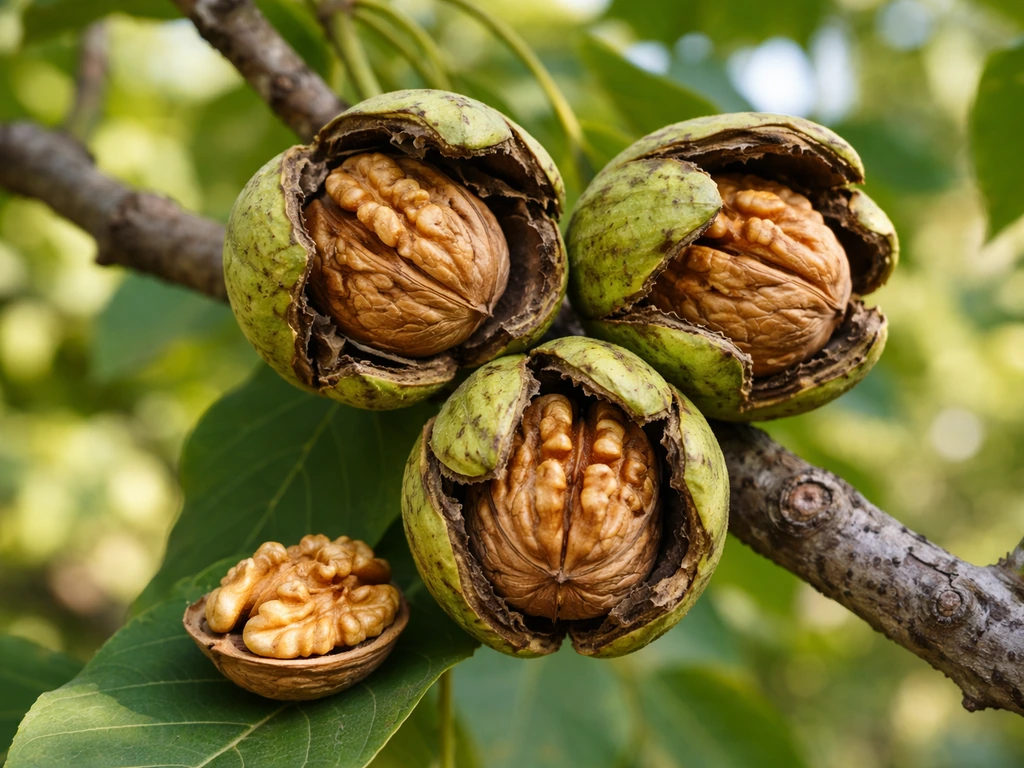
This is the walnut most people mean when they say "walnut." It's the one in grocery stores, baked goods, and commercial orchards worldwide. The shell is thinner, the kernel is milder in flavor, and the husk separates more easily at harvest. Commercial production is heavily concentrated in California's Central Valley in the U.S., but the tree grows across a wide range of temperate climates. It's the go-to species if you're planting for edible nuts.
Black walnut (Juglans nigra)
Black walnut is native to eastern North America and produces a nut with a much thicker, harder shell and a stronger, more assertive flavor. It's prized in baking and confectionery, but cracking the shell without specialized equipment is genuinely difficult. The husk is also much more aggressively staining. Black walnut trees are large (often reaching 75 to 100 feet tall) and they produce juglone, a chemical compound toxic to many nearby plants, which affects what you can grow in their vicinity. Wild black walnuts are very common across the eastern and central U.S.
| Feature | English Walnut (Juglans regia) | Black Walnut (Juglans nigra) |
|---|
| Shell thickness | Thin, easy to crack | Very thick, hard to crack |
| Kernel flavor | Mild, buttery | Bold, earthy, strong |
| Husk removal | Relatively easy | Difficult, very staining |
| Tree size | 40–60 ft typical | 75–100 ft common |
| Primary use | Commercial, culinary | Specialty baking, wild harvest |
| Juglone production | Lower impact | High, affects neighboring plants |
| Native range | Central Asia to SE Europe | Eastern/central North America |
| Years to first nuts | 4–7 years (grafted) | 10–15 years from seed |
If you're planting a walnut tree specifically for edible nuts and you want a reasonable harvest in your lifetime, English walnut is the practical choice. Grafted English walnut trees can begin producing in as few as 4 to 7 years. Black walnut from seed can take 10 to 15 years before meaningful nut production begins.
What the tree actually looks like: identifying true walnut trees
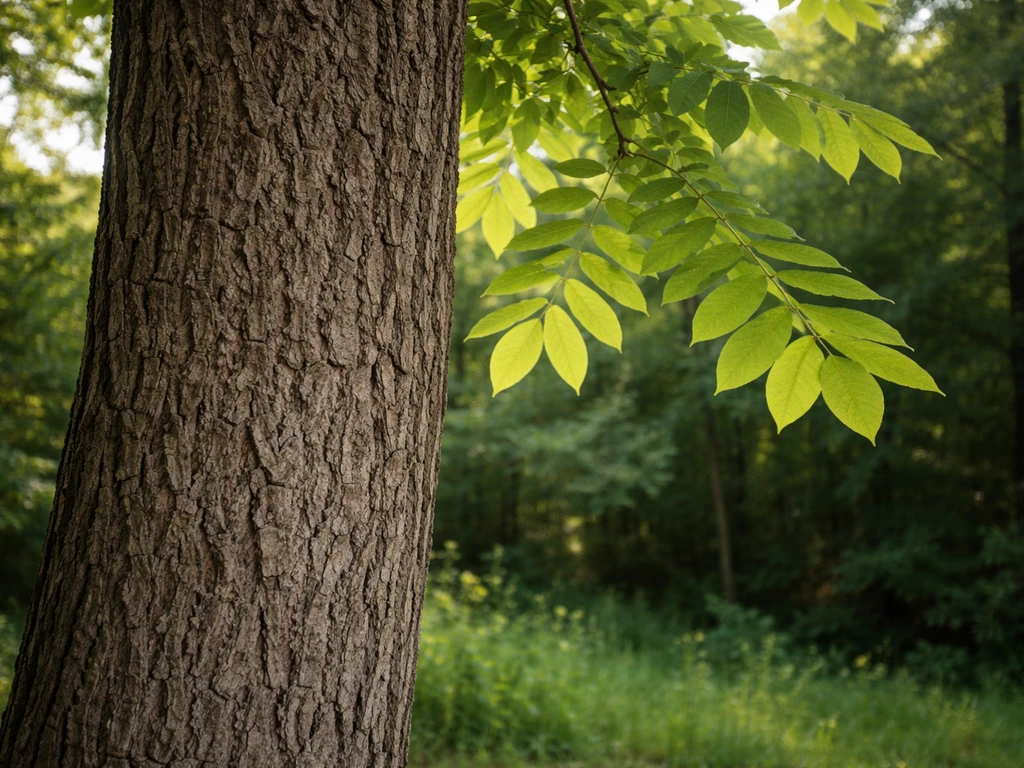
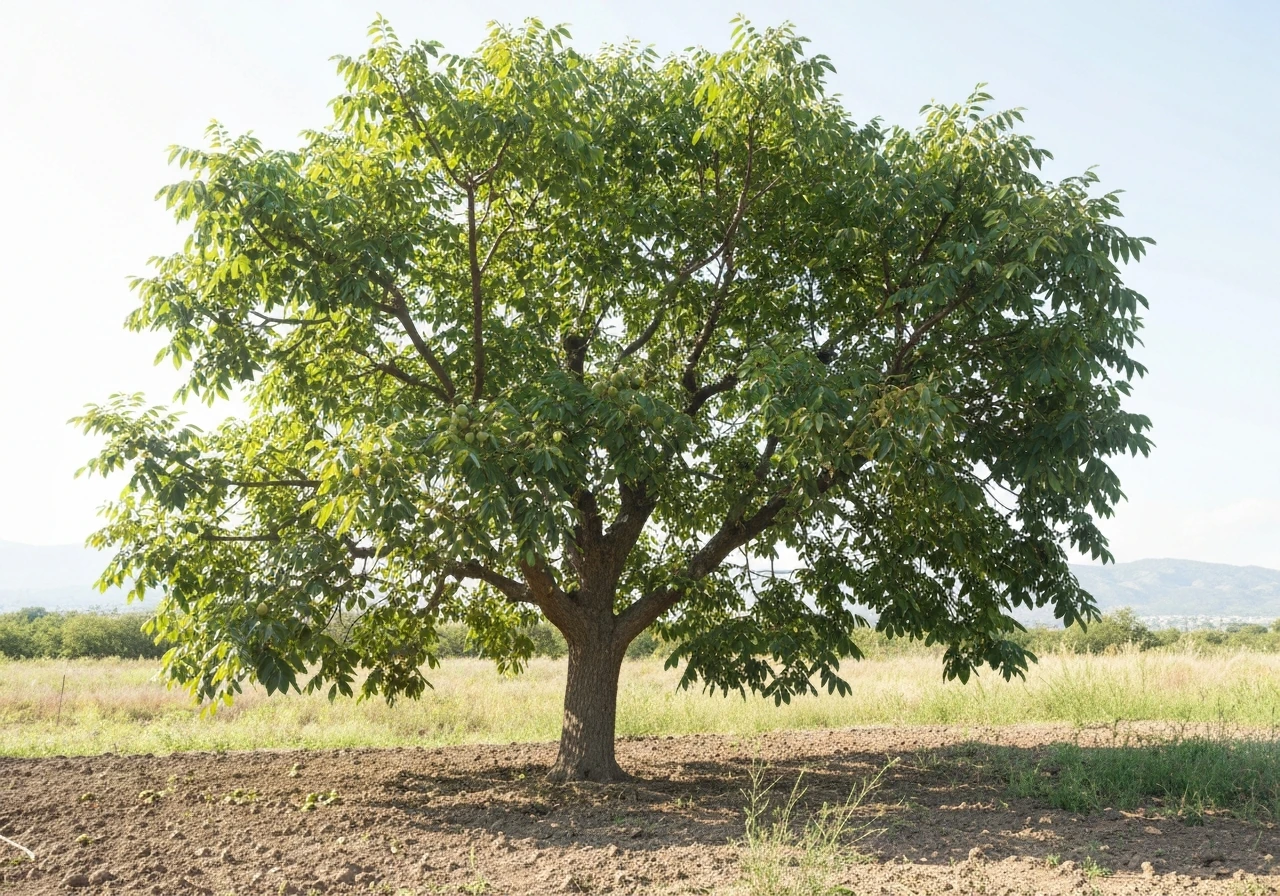
If you're standing in front of a tree and wondering whether it's a walnut, there are some reliable identification markers. Walnut trees have large, pinnately compound leaves, meaning each leaf is made up of multiple paired leaflets along a central stem, often with a single leaflet at the tip. English walnut typically has 5 to 9 leaflets per leaf; black walnut usually has 15 to 23 leaflets. The leaves have a distinctive, slightly spicy smell when crushed.
Walnut bark is gray-brown with a rough, interlocking ridge pattern. The pith (inner wood visible in a cut twig) is chambered, meaning it has distinct air-filled sections separated by thin walls. That chambered pith is one of the most reliable distinguishing features and sets walnuts apart from most common lookalikes. In spring, walnuts produce catkins (long, hanging male flower clusters) and small female flowers, both on the same tree, since Juglans trees are monoecious.
Common lookalike trees to rule out
Tree of Heaven (Ailanthus altissima) has similar compound leaves but lacks the chambered pith, has a very different bark, and produces clusters of winged seed pods rather than nuts. Hickories (Carya species) are closely related to walnuts and also have compound leaves and husked nuts, but their pith is solid (not chambered) and their husks split open into four sections at maturity, unlike walnut husks. Sumac and ash also produce compound leaves, but their fruits look nothing like walnuts once you know what to check for. The safest confirmation: look for round green fruits in late summer (they look a bit like small green apples), smell the crushed leaves, and check the twig pith for chambering.
How a walnut tree grows from planting to nut production
Walnut trees start as either grafted nursery stock or from seed (called a nut). Grafted trees are the standard choice for anyone who wants predictable fruit production, since they're grown from wood of known productive trees. Seed-grown trees are genetically variable and take longer to produce. In the first few years, the tree focuses almost entirely on establishing a root system and trunk structure. Don't expect nuts during this phase.
Once the tree hits maturity, it flowers in spring. Walnut trees are wind-pollinated, and timing matters: the male catkins and female flowers on the same tree don't always shed pollen and become receptive at the same time, a condition called dichogamy. Some cultivars are protandrous (male flowers open first) and some are protogynous (female flowers open first). For reliable pollination and nut set, planting two compatible cultivars nearby is strongly recommended.
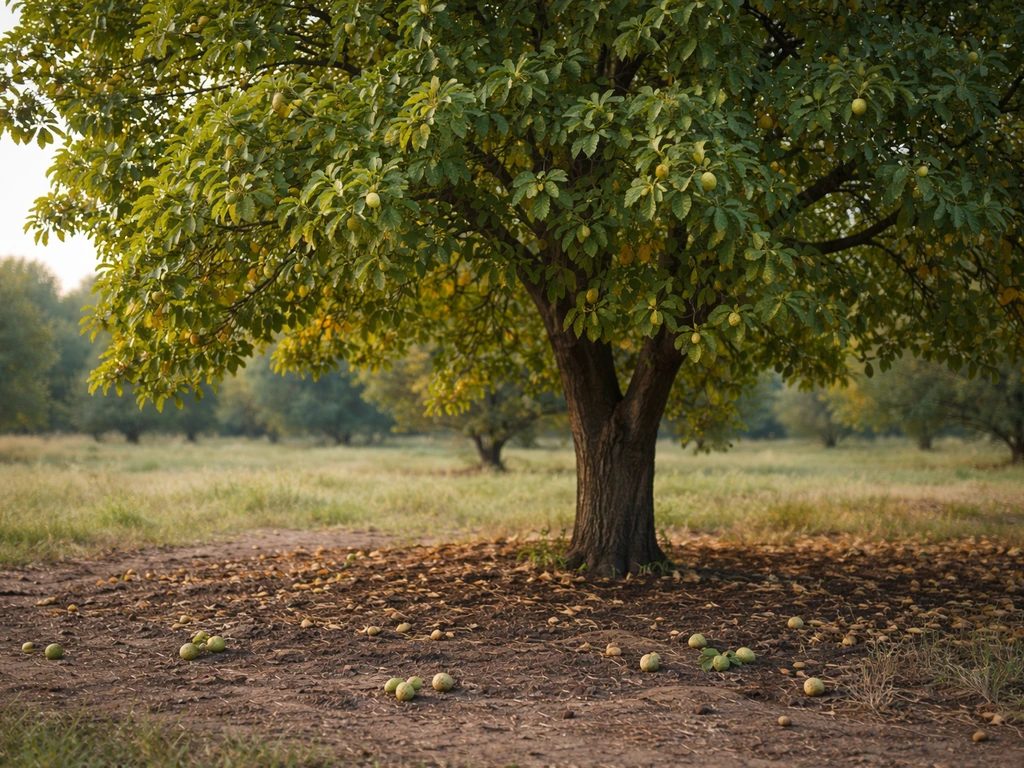
After pollination, the fruit develops through summer. The green husk is visible and growing from late spring onward. By late summer to early fall (depending on species and climate), the husks start to turn yellow or brown and loosen. Harvest timing for English walnut is typically September through October in most temperate climates. Once nuts begin dropping, collect them quickly to prevent mold and pest damage. Do walnut trees grow walnuts every year is a question worth addressing here: established trees do produce annually under normal conditions, but heavy crops in one year can lead to lighter production the following year, a pattern called alternate bearing.
Where walnuts thrive: climate, region, and what limits them
English walnuts are best suited to USDA Hardiness Zones 5 through 9, though specific cultivars can stretch those limits in both directions. They need a genuine winter chill (roughly 400 to 1,500 chill hours depending on cultivar) to break dormancy properly, but they're also sensitive to late spring frosts that can kill newly emerged buds and flower clusters. That combination (needing cold winters but being vulnerable to late frosts) is one of the most common limits on where they can be successfully grown. California's Central Valley hits this balance almost perfectly, which is why it dominates commercial production.
Black walnut is cold-hardier, thriving in Zones 4 through 9 and tolerating harder winters than English walnut. It's also more drought-tolerant once established, though it still prefers deep, well-drained soils. Both species do poorly in waterlogged conditions or very shallow soils. Where walnut trees can grow depends heavily on these climate constraints, particularly the frost timing and soil depth.
Regional suitability at a glance
In the southern United States, English walnuts often struggle with insufficient winter chill and summer heat stress, while black walnut can do reasonably well. Growing walnut trees in Texas is possible for black walnut in the eastern and northern parts of the state, but English walnut is a tougher fit across most of Texas. In Europe, English walnut has been cultivated for centuries across France, Italy, Hungary, and parts of Germany. The U.K. sits at the cool, marginal edge of its range. Whether walnuts can grow in the UK comes down largely to the region and cultivar choice, with sheltered southern gardens being more viable than northern or exposed sites. Walnut trees in Ireland face similar challenges, with maritime climate conditions that can work against consistent nut set. In South Asia, walnut cultivation has a long history, and where walnut trees grow in India is primarily the Himalayan foothills and Kashmir, where the cool elevations match the tree's climate requirements.
Key climate requirements to check before you plant
- Adequate winter chill hours (400 to 1,500 hours below 45°F, depending on cultivar)
- Late frost risk: walnut buds emerge early in spring and are easily killed by frost after bud break
- Deep, well-drained soil (ideally loam or sandy loam with a pH of 6.0 to 7.0)
- Full sun exposure (at least 6 to 8 hours of direct sunlight daily)
- Sufficient space: even English walnut needs 30 to 40 feet of clearance from buildings and other trees
- Low risk of standing water or flooding, which encourages crown rot
How to confirm the tree in front of you will actually bear walnuts
Identification is step one, but even a confirmed walnut tree may not produce nuts reliably if it's young, stressed, or in a poor location. Here's a practical checklist for evaluating an existing tree:
- Confirm the species: check for chambered pith in a cut twig, compound leaves with the characteristic smell, and gray-brown ridged bark.
- Look for past fruit drop: green or blackened husks on the ground under the tree in late summer or fall are a good sign the tree has been producing.
- Check the tree's age and size: a young tree under 10 feet tall from seed is unlikely to be fruiting yet; grafted trees may fruit sooner.
- Assess the site: is the tree in full sun with good drainage? Shaded or waterlogged trees often produce poorly regardless of species.
- Look for a second tree nearby: if the tree is isolated and has never produced well, lack of cross-pollination may be the culprit, especially for English walnut.
- Check local frost records for late spring: a tree in a frost pocket will lose its blossoms most years and rarely set fruit.
If all those boxes check out and the tree still isn't producing, the most common remaining causes are overly acidic or compacted soil, excess nitrogen (which pushes vegetative growth at the expense of fruiting), and irrigation stress during flower development. These are solvable problems, but they require honest site assessment rather than just hoping the tree will come around.
The bottom line for growers and curious gardeners
Walnuts absolutely grow on trees, specifically trees in the genus Juglans. What forms on the tree is a complete fruit with a fleshy outer husk, a hard shell underneath, and the edible kernel inside. The walnut you eat is that kernel. The two species most relevant to practical growing are English walnut for commercial and home orchard use, and black walnut for its native presence across North America and specialty culinary uses. Identifying a true walnut tree comes down to the compound leaves, chambered twig pith, and the distinctive green husked fruits. And whether a tree in your yard or region will actually produce comes down to age, pollination, site conditions, and climate. None of those are mysteries once you know what to look for.