Yes, a walnut will grow into a tree if the seed is viable and you give it the cold stratification it needs to break dormancy. That part is non-negotiable: walnuts don't just sprout when you stick them in the ground. They need roughly 90 to 120 days of cold, moist conditions before the embryo is ready to germinate. Get that right, plant at the correct depth, and keep moisture consistent, and you have a genuinely good shot at a tree. Skip the cold treatment or plant a dried-out nut, and nothing happens.
Will a Walnut Grow Into a Tree? Germination Steps
Marcus Hendricks
29 May 2026
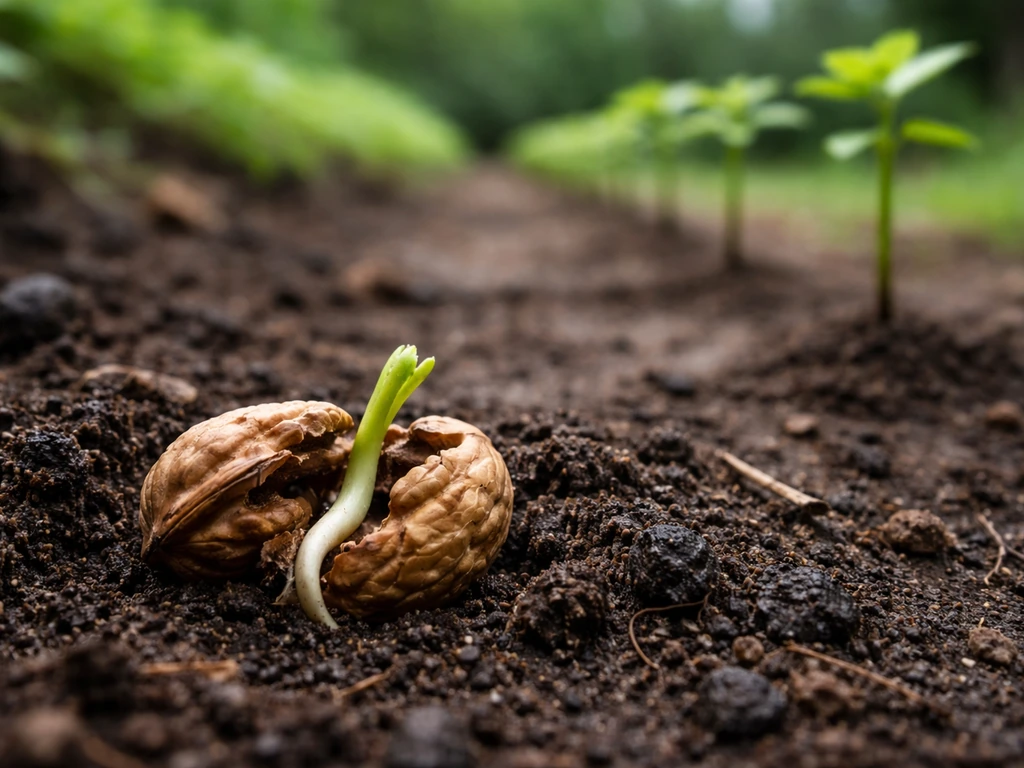
What actually happens when you plant a walnut
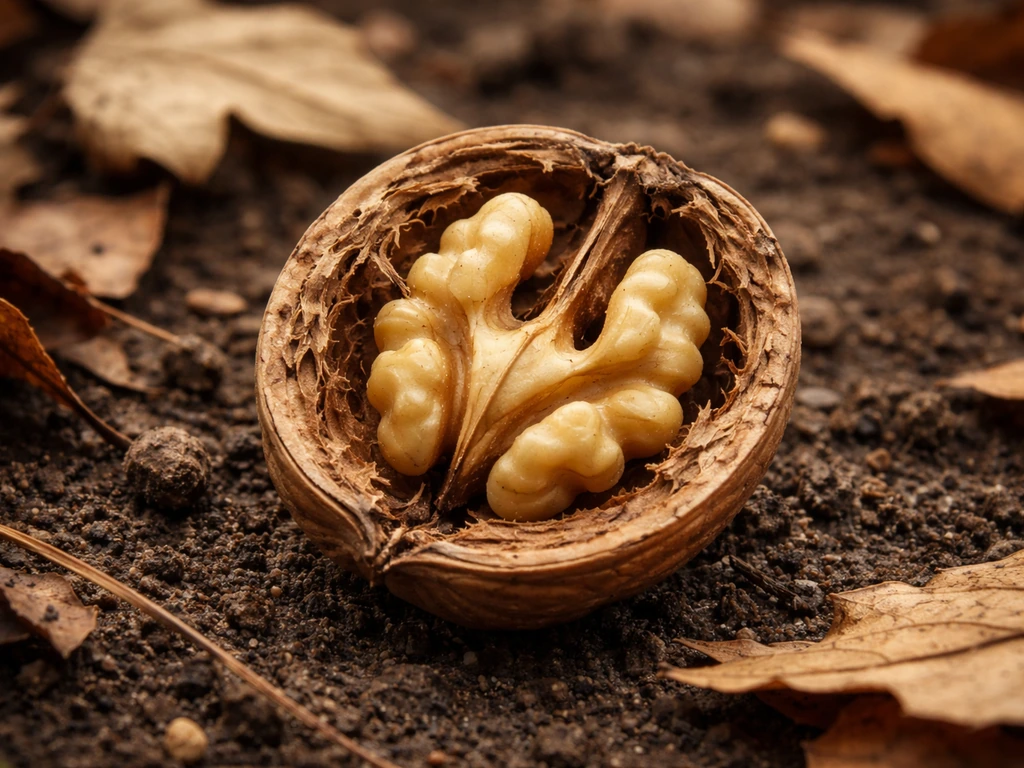
A walnut that falls from the tree in autumn is dormant. The embryo inside is alive but locked in a kind of biological pause that prevents it from germinating until conditions signal that winter has passed. In nature, the nut sits in the leaf litter, gets frozen and thawed through the winter, and sprouts the following spring. Sometimes germination is delayed all the way to the second year, which is normal and not a sign that the seed is dead. When you're trying to grow one at home, you're essentially mimicking that same natural winter cycle in a more controlled way.
The realistic outcome if you do everything right: a small seedling emerges in spring, grows vigorously through its first summer (black walnut especially puts on impressive early height), and begins establishing a deep taproot. What you won't have for a long time is nuts. This is a tree you're planting for the future, not the next season.
How to germinate a walnut at home
First, check whether your walnut is worth planting
Before you do anything else, test viability. The simplest method is a float test: drop the walnut (still in the shell) into a bucket of water. Nuts that sink are generally sound and full. Nuts that float are often hollow, dried out, or damaged. Keep in mind that if the nut is severely dried out, even a good seed may float because moisture loss affects the density, so use the float test as a first filter rather than an absolute verdict. Fresh, recently harvested nuts with intact shells give you the best odds. Cracked, shriveled, or very old nuts stored in a warm dry place are unlikely to sprout.
Cold stratification: the step most people skip
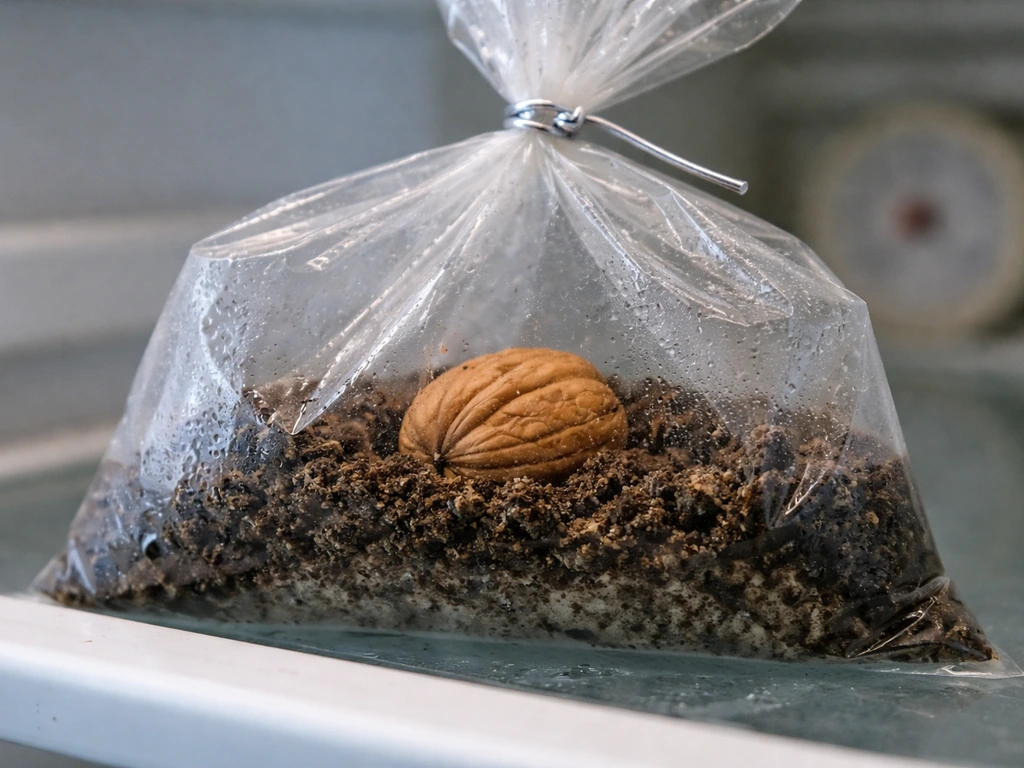
Cold stratification is where walnut germination lives or dies. The goal is to keep the nut cold and moist for about 90 to 120 days, which satisfies the dormancy requirement the seed accumulated over the growing season. The target temperature range is roughly 34 to 41 degrees Fahrenheit (about 2 to 5 degrees Celsius). Your refrigerator works well for this.
- Remove the outer husk if it's still on the nut, since the husk contains compounds that can inhibit germination.
- Rinse the shell thoroughly and let it dry briefly (not fully dry, just surface dry).
- Fill a zip-lock bag or sealed container with moist peat moss, sand, or vermiculite. The medium should feel damp but not dripping.
- Bury the walnuts in the medium, seal the bag loosely, and place it in the back of the refrigerator.
- Check every two to three weeks. If the medium is drying out, mist it lightly. If you see white fuzzy mold spreading to the nut itself, remove that nut, rinse the others, and replace the medium.
- After 90 days at minimum (120 days is even better for black walnut), the nuts are ready to plant. Some will have already begun to crack and show a tiny root tip, which means they're ahead of schedule and should go into soil immediately.
If you're working with autumn-collected nuts and you prefer the natural approach, you can plant them directly in the ground in late fall. The soil's natural freeze-thaw cycle does the stratification for you, and seedlings emerge the following spring. This fall-direct-seeding method works well but gives you less control over rodents, moisture, and seed placement.
Planting: depth, timing, and what to put the nut into
Once stratification is complete, plant the nut about 2 to 3 inches deep. Too shallow and the seedling can heave out or dry out; too deep and the emerging shoot can't push through. Plant with the seam of the shell oriented sideways (horizontal), which lets the taproot push downward naturally. Timing for spring planting should coincide with soil temperatures warming to roughly 50 degrees Fahrenheit or above. Germination and early root development happen best at soil temperatures in the 70 to 85 degree Fahrenheit range, so don't rush planting into frozen or near-frozen soil.
Best conditions for early growth
Walnuts grow best in deep, well-drained, fertile soils with a neutral to slightly acidic pH. Choosing the best walnut tree to grow starts with matching the species to your climate, soil, and sunlight conditions Walnuts grow best. They do not like standing water or compacted ground. A clay-heavy soil that holds moisture without draining will stress seedlings and encourage root rot. Sandy soils that drain too fast create drought stress. Loam is ideal. If you're working with suboptimal soil, amend it with compost before planting rather than hoping the tree adapts.
Moisture management in the first year is critical. Keep the soil consistently moist but not waterlogged, especially during the first few months when the taproot is still short and the seedling can't reach deep reserves. If you're wondering how much water does it take to grow a walnut, focus on keeping the root zone consistently moist but never waterlogged. Walnuts are naturally found on moist, well-drained bottomlands, not dry ridges, so consistent moisture early on is genuinely important, not just nice to have.
For light, walnuts want full sun from day one. Don't try to start a walnut in shade thinking you'll move it later. Even as a seedling, insufficient light slows growth and weakens the stem.
Container vs. in-ground planting
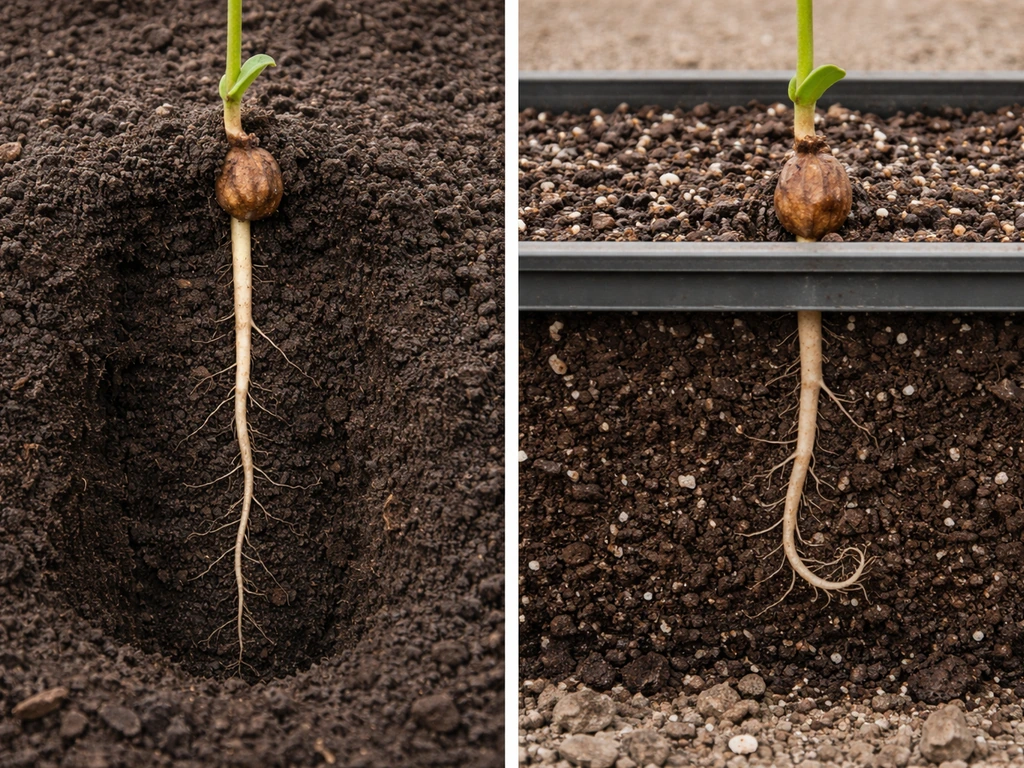
You can start a walnut in a container, but it comes with a serious catch: walnuts develop a deep taproot very quickly, and a pot that's too shallow will curl or restrict that root within weeks. If you're using a container, choose something tall and narrow (at least 12 to 18 inches deep) rather than a standard round pot. The goal is to get it into the ground within one growing season before the taproot becomes pot-bound. In-ground planting from the start is generally easier and produces faster early growth, as the taproot can drive downward without restriction. If you're in a climate where late frosts are a concern, a container start lets you protect the seedling indoors for the first few weeks.
Transplanting and caring for the seedling after it sprouts
The walnut taproot is both the seedling's greatest strength and its biggest vulnerability during transplanting. It drives deep fast, anchoring the tree and pulling up water, but it's also easy to damage. If you started in a container, transplant to the ground by the end of the first growing season, before the root wraps or kinks. Dig a hole deep enough that the seedling sits at the same depth it was growing in the container. Planting too deep buries the root collar and invites crown rot; planting too shallow exposes roots and stresses the seedling.
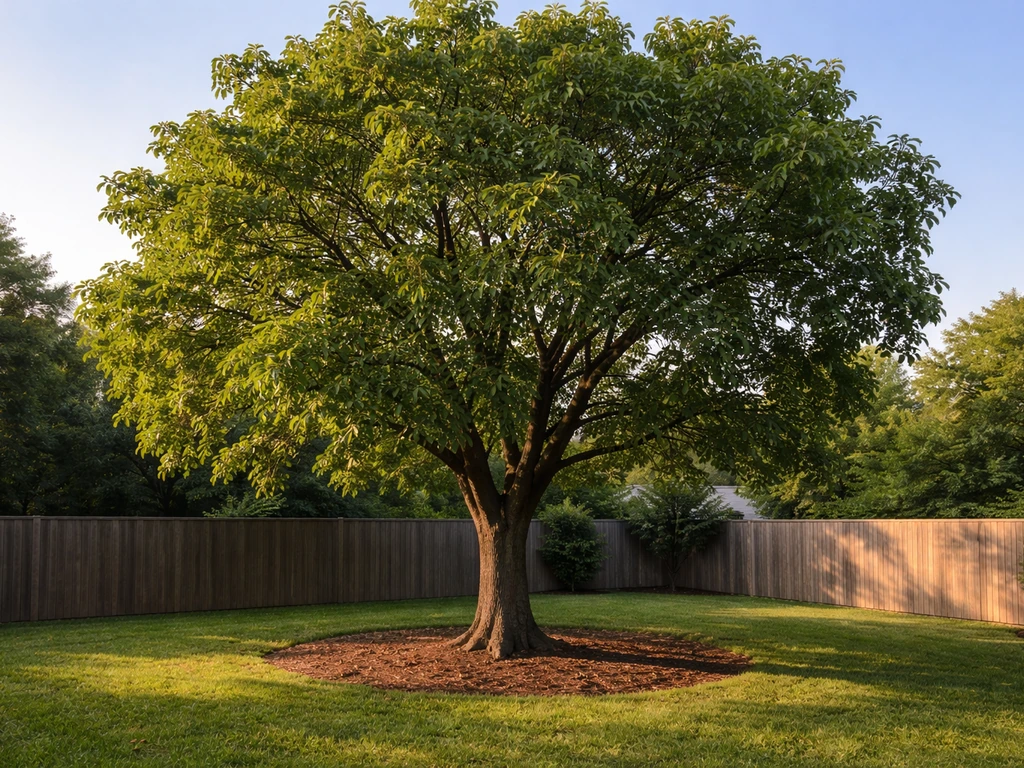
After transplanting, water thoroughly to settle the soil around the roots and eliminate air pockets. Apply a 3 to 4 inch layer of organic mulch (wood chips or straw work well) in a ring around the base, keeping it a few inches away from the stem itself. Mulch conserves moisture, moderates soil temperature, and reduces weed competition, all of which matter a lot in the first two years. Avoid piling mulch against the trunk, since that traps moisture and can cause stem rot.
Watering in the first two years should be consistent rather than occasional deep soaks. The goal is to keep the root zone moist without saturating it. During dry spells, water deeply once or twice a week rather than light daily sprinkling. As the tree's root system expands, it becomes increasingly drought-tolerant, but early on it needs reliable moisture to establish.
English walnut vs. black walnut: picking the right one for your region
Not all walnuts are the same, and choosing the wrong species for your climate is one of the most common reasons home-grown walnut projects fail in the long run. The two species most relevant to North American and temperate European growers are the English walnut (Juglans regia) and the black walnut (Juglans nigra). They behave differently in the ground and have different climate preferences.
| Feature | Black Walnut (Juglans nigra) | English Walnut (Juglans regia) |
|---|---|---|
| Native range | Eastern North America | Central Asia and southeastern Europe |
| USDA hardiness zones | Zones 4 to 9 | Zones 5 to 9 (with some cold-hardy cultivars to Zone 4) |
| Stratification needed | 90 to 120+ days at 34 to 41°F | Similar cold stratification required; optimal rooting temperature ~75°F |
| Shell thickness | Very thick, hard hull | Thinner shell, easier to crack |
| Nut flavor | Strong, earthy, distinctive | Milder, familiar commercial walnut flavor |
| Juglone production | High (toxic to many plants nearby) | Lower juglone production |
| Typical mature height | 50 to 75 feet | 40 to 60 feet |
| Nut production from seed | 8 to 12+ years | 5 to 7+ years for grafted; longer from seed |
Black walnut is the hardier, tougher tree and is the better choice for most of the eastern United States, especially the Midwest. It's a native species that has co-evolved with the local soil biology, climate patterns, and wildlife. English walnut performs better in milder, drier climates (think California's Central Valley or Mediterranean-climate regions) and is more frost-sensitive as a young tree. If you're in a region with cold winters and humid summers, black walnut is almost always the more reliable choice for growing from seed. It's also worth noting that black walnut produces high levels of juglone, a compound in its roots and leaves that is toxic to many common garden plants, so siting matters when choosing where to grow one.
If you're still figuring out which walnut species fits your specific situation, the species comparison is just the start. Factors like your soil drainage, frost dates, and available space all feed into that decision alongside species selection.
How long until your walnut tree actually makes nuts
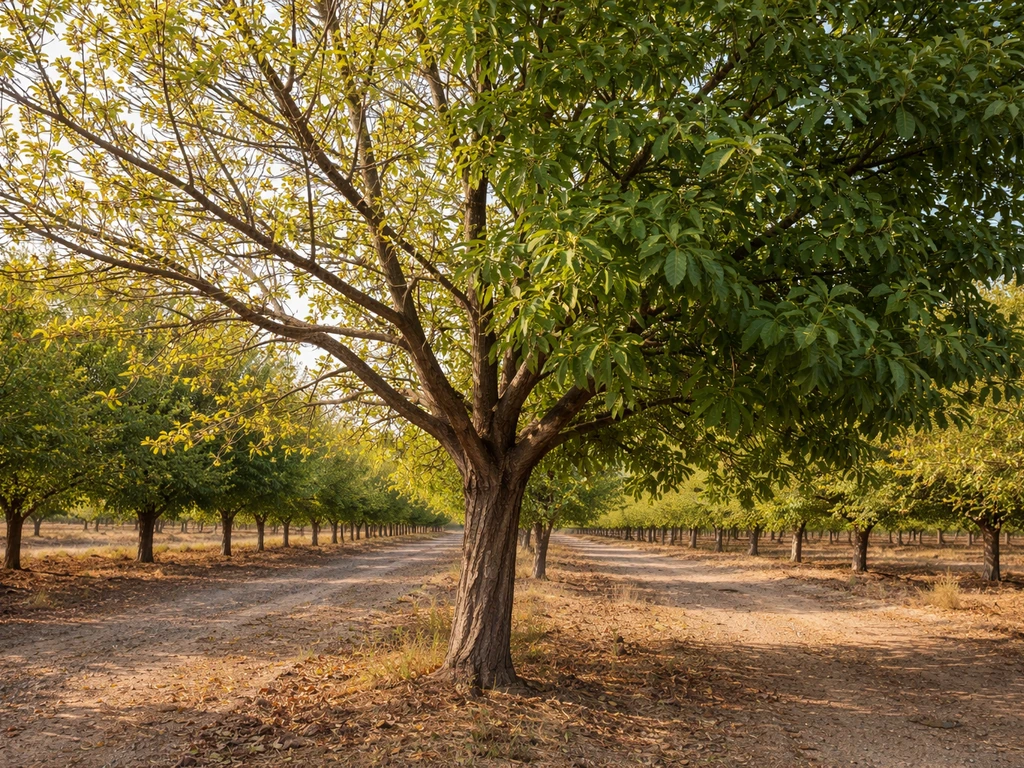
This is where honest expectations matter. A black walnut grown from seed can begin producing nuts when it's open-grown and well-sited at roughly 8 years old. But that's the optimistic early end. More realistic for consistent commercial-level nut production is a minimum of around 12 years, and many trees take 15 to 20 years to produce a meaningful crop. English walnut trees grafted onto rootstock can produce faster (sometimes as early as 5 to 7 years), but a seedling-grown English walnut also takes well over a decade. Walnut seed crops also tend to be irregular, with good mast years followed by light years, even from mature trees.
None of that should discourage you from planting. A walnut tree is a genuinely worthwhile long-term addition to a property, both for its nuts and its timber value. But go in knowing that the payoff is measured in years and decades, not seasons. The tree you plant today is probably one your household will still be harvesting from fifteen years from now.
Why walnuts fail to sprout (and how to fix it)
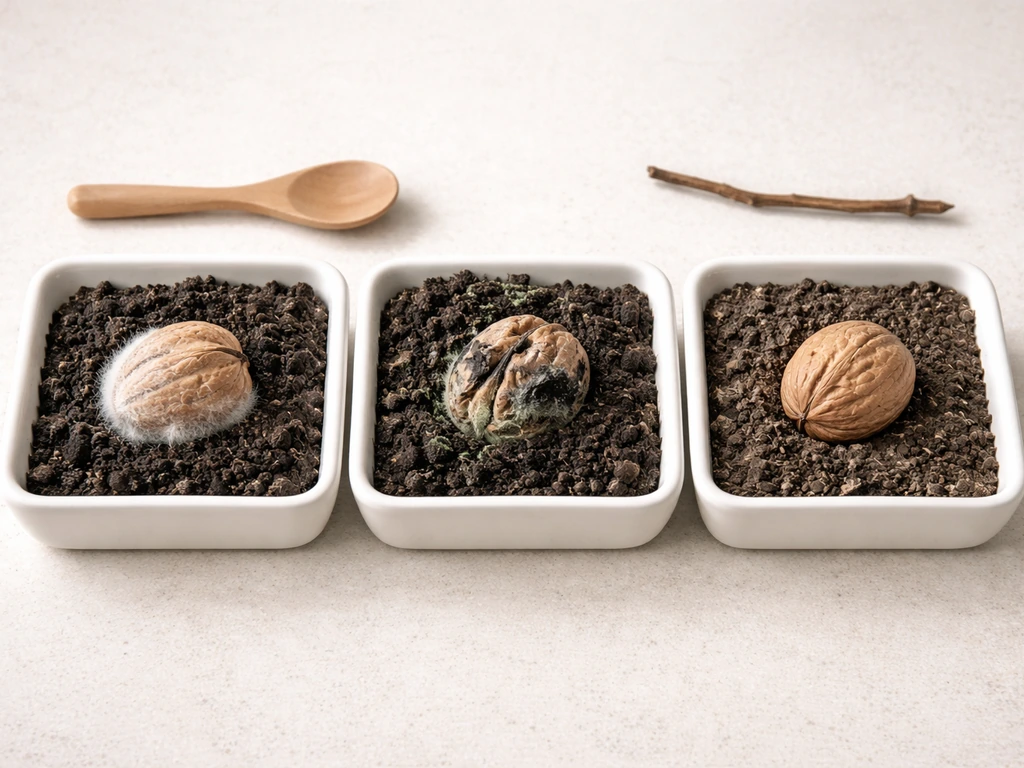
Most walnut germination failures trace back to a small set of predictable problems. Here's what actually goes wrong and what to do about it.
Insufficient or skipped stratification
This is the single most common failure. If you plant a walnut in spring without cold treatment, it almost certainly won't sprout that season. The seed isn't broken; the dormancy simply hasn't been broken. The fix is straightforward: don't skip stratification. If you already planted an unstratified nut, it might still germinate the following spring if your winters are cold enough, but you've lost a year. Plan ahead and start your cold treatment in late autumn for spring planting.
Mold during stratification
Some surface mold on the stratification medium is normal and harmless. Mold that spreads to and penetrates the shell is the problem, because it can destroy the embryo. Keep the medium damp but not wet, inspect every few weeks, and remove any nuts that show active mold on the shell surface. If mold is spreading across multiple nuts, dump the medium entirely, rinse the nuts, and restart with fresh moist peat or sand. Good airflow (a loosely sealed rather than airtight bag) also helps.
Dried-out seed
Walnuts that were dried out in storage before stratification often fail even with correct cold treatment. The embryo can desiccate and die before you ever get started. This is why freshly harvested nuts outperform old hardware-store walnuts or nuts that sat in a warm, dry location for months. If you're sourcing nuts for planting, collect them fresh in autumn or get them from a reliable source that has kept them properly stored. Soaking the nuts in water for a few days before starting stratification can help rehydrate the seed and improve outcomes.
Wrong planting depth
Plant too shallow (less than 1 inch) and the nut dries out, gets eaten by squirrels, or the seedling heaves. Plant too deep (more than 4 inches) and the shoot can't push through the soil before its energy reserves run out. Two to three inches is the reliable target. Press the soil firmly around the nut to eliminate air pockets, which can dry out the shell.
Weak or failing seedlings after sprouting
Seedlings that emerge but then stall or yellow are usually dealing with waterlogged soil, inadequate light, or poor soil nutrition. Walnut seedlings are notably susceptible to Phytophthora root rot in overly wet or poorly drained soil. If a seedling collapses at the base or shows brown, mushy roots, drainage is almost always the culprit. Move it (carefully) to better-drained ground or improve drainage around the planting site. For slow, pale seedlings in otherwise well-drained soil, a light application of balanced fertilizer and full sun exposure usually helps significantly.
Rodents and wildlife
Squirrels will dig up and eat stratifying or freshly planted walnuts with impressive reliability. If you're direct-seeding in fall, cover the planting area with hardware cloth staked to the ground until the seedling has emerged and established. For container-stratified nuts, keep them inside where wildlife can't reach them.
Your next steps starting today
The steps below give you a clear path from wherever you are right now. Whether you have a walnut in hand or are still sourcing one, this sequence applies.
- Source fresh walnuts from a local tree or a grower who has kept them cold and moist since harvest. Avoid old, dried commercial nuts.
- Run a float test: keep sinkers, discard persistent floaters (with the caveat that dried-good nuts may also float).
- Remove the husk if present, rinse the shell, and pack the nut in moist peat or sand in a sealed bag in the refrigerator.
- Stratify for at least 90 days, ideally 100 to 120 days, at 34 to 41 degrees Fahrenheit. Check monthly for mold or signs of sprouting.
- Once nuts show a cracked shell or emerging root tip, or once 90 to 120 days have passed, plant them 2 to 3 inches deep in full sun, in well-drained fertile soil.
- Water consistently to keep the soil moist but not saturated. Mulch the area with 3 to 4 inches of organic material, keeping it away from the stem.
- Protect from wildlife with hardware cloth if planting outdoors.
- If growing in a container, transplant to the ground by the end of the first growing season before the taproot becomes restricted.
- Be patient: germination may not happen until year two, and nut production is a decade or more away.
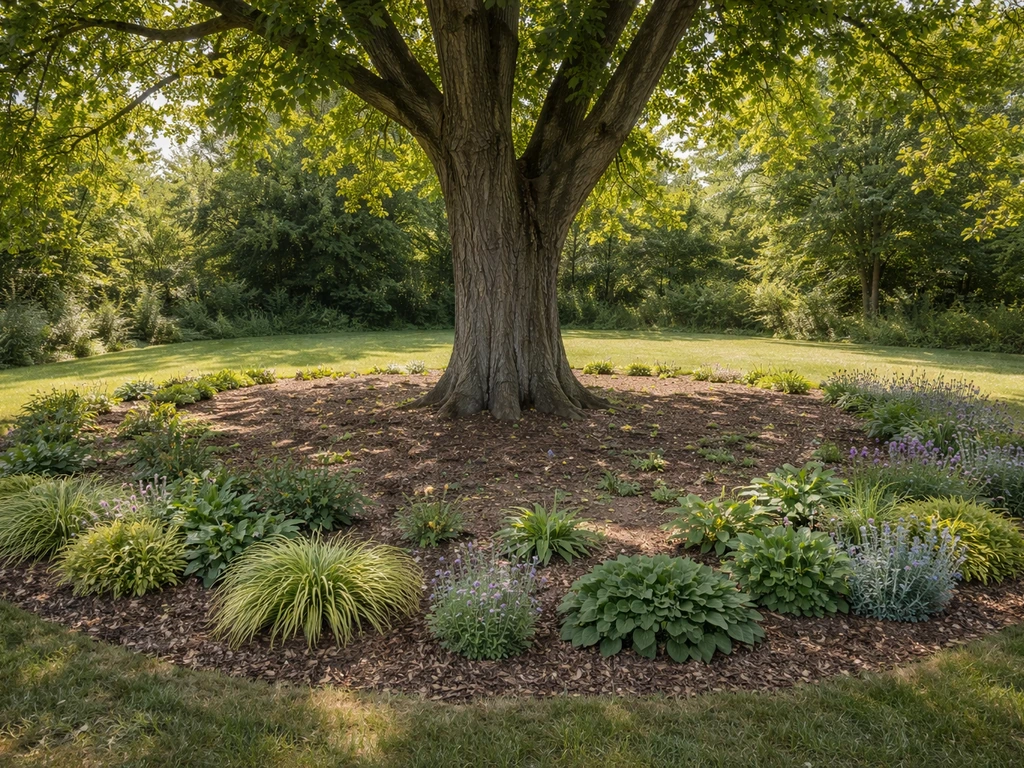
One thing worth considering as you plan: where you site the tree matters as much as how you germinate it. Black walnut's juglone production affects what can grow nearby, which is a real practical issue if you're working with an established garden. Plan your planting site carefully, because black walnut juglone production can affect what grows nearby what can grow nearby. That question of what grows well near a walnut tree is worth thinking through before you choose your planting location, since moving a walnut after its taproot has established is not a realistic option. If you are wondering what flowers will grow under a walnut tree, focus on species that tolerate juglone and limited light what grows well near a walnut tree.
FAQ
Will a walnut from the grocery store grow into a tree, or does it usually fail?
It often fails because many grocery “walnuts” are dry-roasted or stored warm and dry, which kills the embryo or makes stratification inconsistent. If you can find raw, in-shell, uncracked nuts that were stored cool and moist, your odds improve, but they still typically need the same 90 to 120 days of cold, moist treatment before they will sprout.
How can I tell whether my walnut stratification is going well if I cannot see the embryo?
A good sign is that the medium stays evenly damp, not soggy, and the nuts do not develop widespread mold on the shell surface. If you see mold spreading across multiple nuts, that is usually your cue to restart with fresh moist medium and improved airflow, rather than trying to salvage the current batch.
Can I speed things up by using a warm soak or heat after cold stratification?
Warmth can encourage mold if the medium is too wet or airflow is poor, and it does not replace the required cold period. After you complete the cold window, move to planting and then keep soil moisture consistent, rather than trying to “thermally force” germination prematurely.
What moisture level should I aim for during stratification (wet, damp, or dry)?
Aim for damp like a wrung-out sponge. If the medium is waterlogged, oxygen drops and mold and embryo damage become more likely. If it is too dry, the nut can desiccate even while in cold storage, leading to non-germination later.
Do I need to crack the walnut shell to improve germination?
Generally no, cracking increases the chance of drying out and lets mold access the embryo more easily. If a walnut is viable, it is usually better to keep it intact and simply manage stratification properly, then plant at the correct depth.
If my walnut sprouts in the container, should I keep it there longer or move it to the ground right away?
For best results, transplant by the end of the first growing season when the taproot is still manageable. Waiting too long increases the risk that the root becomes curled, kinked, or pot-bound, which can cause stalling after transplant even if the seedling initially grows well.
My seedling emerged but then turned pale and weak, what is the most likely cause?
The most common causes are not enough sunlight or excess water leading to poor oxygen around the roots. Before adding fertilizer, check drainage and whether the soil stays constantly wet, because root rot risk rises quickly in saturated conditions.
Can I plant walnuts directly in spring without cold stratification and expect them to sprout later?
Sometimes you might get delayed germination, but it is unreliable because dormancy may not break during a single season. If you want predictable timing, stratify first, and if you already planted in spring without stratification, expect a potential second-year sprout rather than a guaranteed quick result.
Do walnuts always take years before producing nuts, or is there a faster way?
Seed-grown walnuts are typically slow to start nut production, often taking around a decade or longer for meaningful yields. If faster nut-bearing is your goal, grafted English walnut on appropriate rootstock can begin producing earlier, but it still depends heavily on site and management.
How do I protect planted walnuts from squirrels and other animals without harming germination?
Use a physical barrier at the seed location. For direct seeding, hardware cloth staked in place is effective until the seedling emerges, then remove or loosen the barrier so the plant can grow unimpeded. Avoid burying plastic or wrapping that traps heat and moisture in a way that can increase rot or mold.
If my seed fails to germinate, how long should I wait before re-trying?
Do not assume failure after the first spring. Walnut germination can be delayed into the second year, so if there are no signs by early summer of the first season, it is still reasonable to leave the planting area alone and monitor through the next season before concluding the seed was not viable.
Does black walnut affect what I can plant nearby, and should that change where I sow or transplant?
Yes. Black walnut releases juglone from roots and leaf material, which can inhibit many common garden plants. Because moving a walnut after its taproot establishes is difficult, plan the site spacing and nearby plant selection from the start, especially if you are planting near existing beds or ornamentals that are sensitive to juglone.