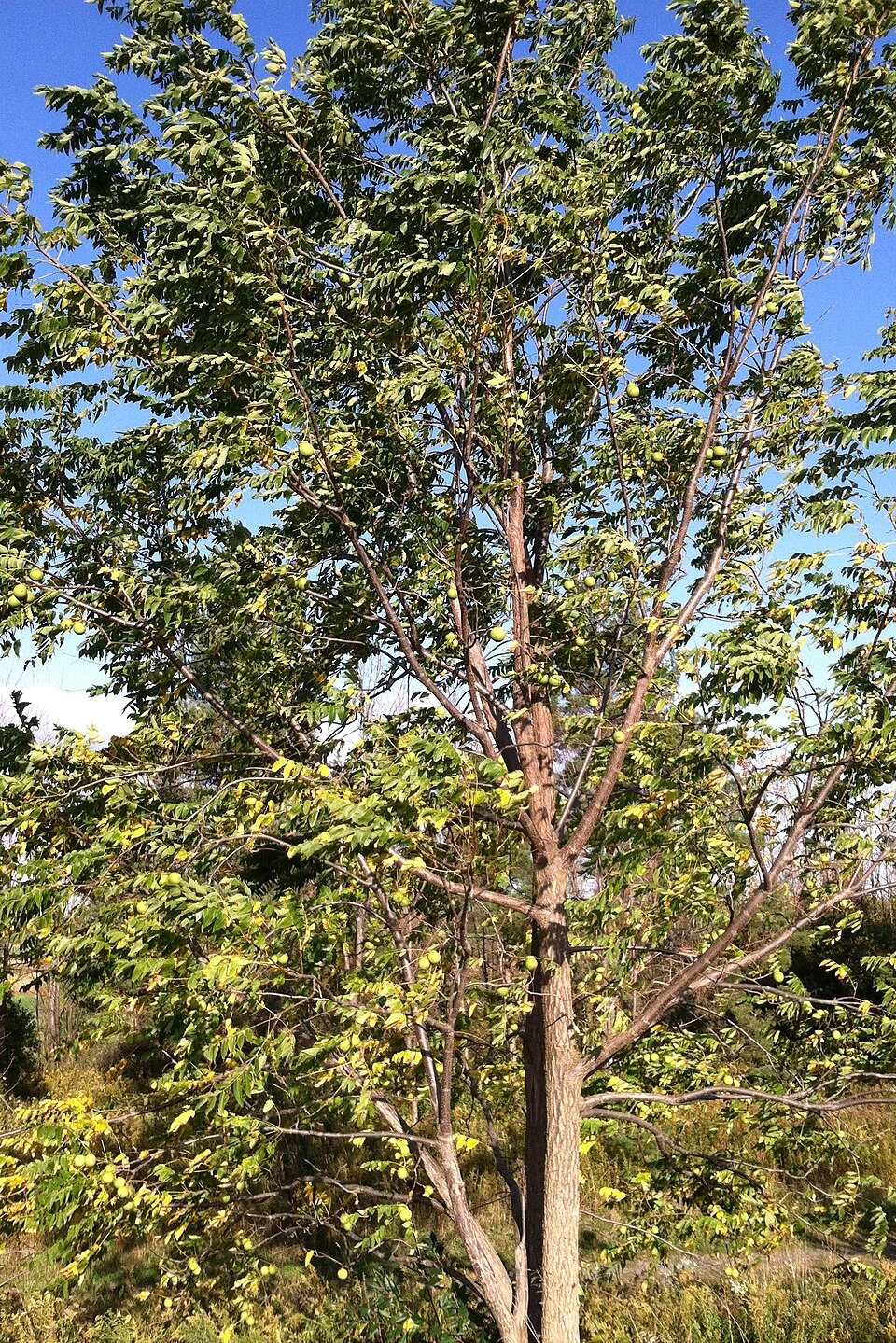
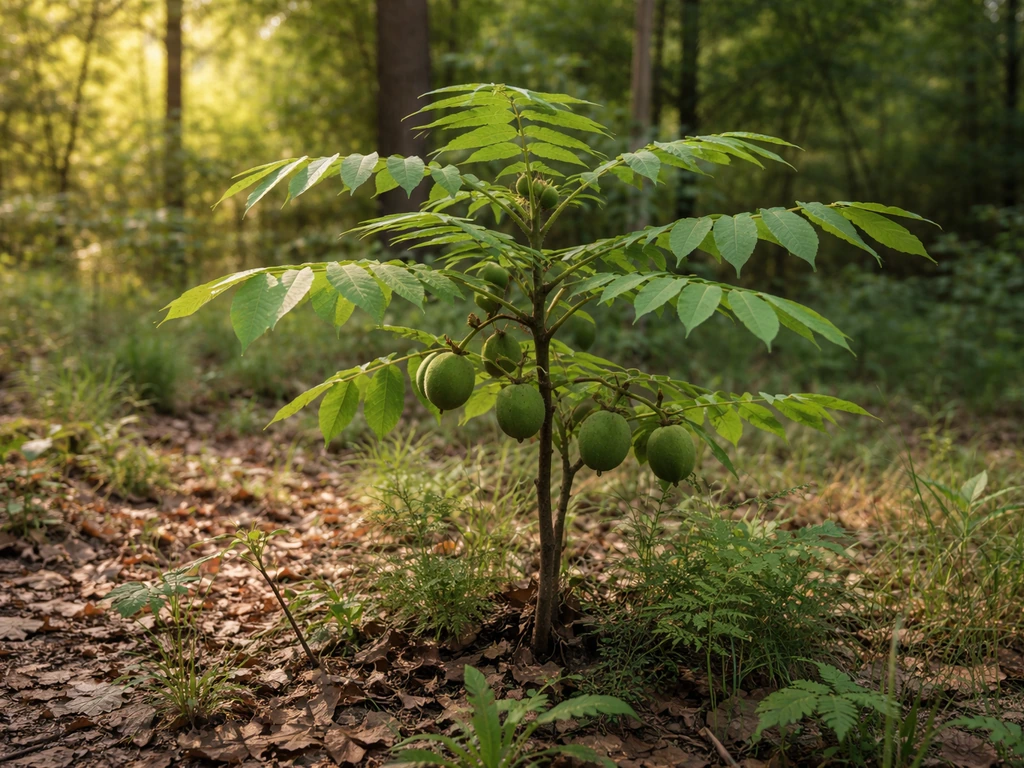
Black walnuts (Juglans nigra) grow from a stratified nut planted in deep, well-drained soil in full sun, develop a strong taproot in their first year, and take roughly 8 to 10 years on a good site before they produce nuts reliably. They're not difficult trees, but they are unforgiving of wet feet, heavy shade, careless transplanting, and skipped weed control. If you get those four things right, you're most of the way there.
How Do Black Walnuts Grow: Plant, Germinate, and Care
Marcus Hendricks
1 Jun 2026
Where black walnuts naturally thrive
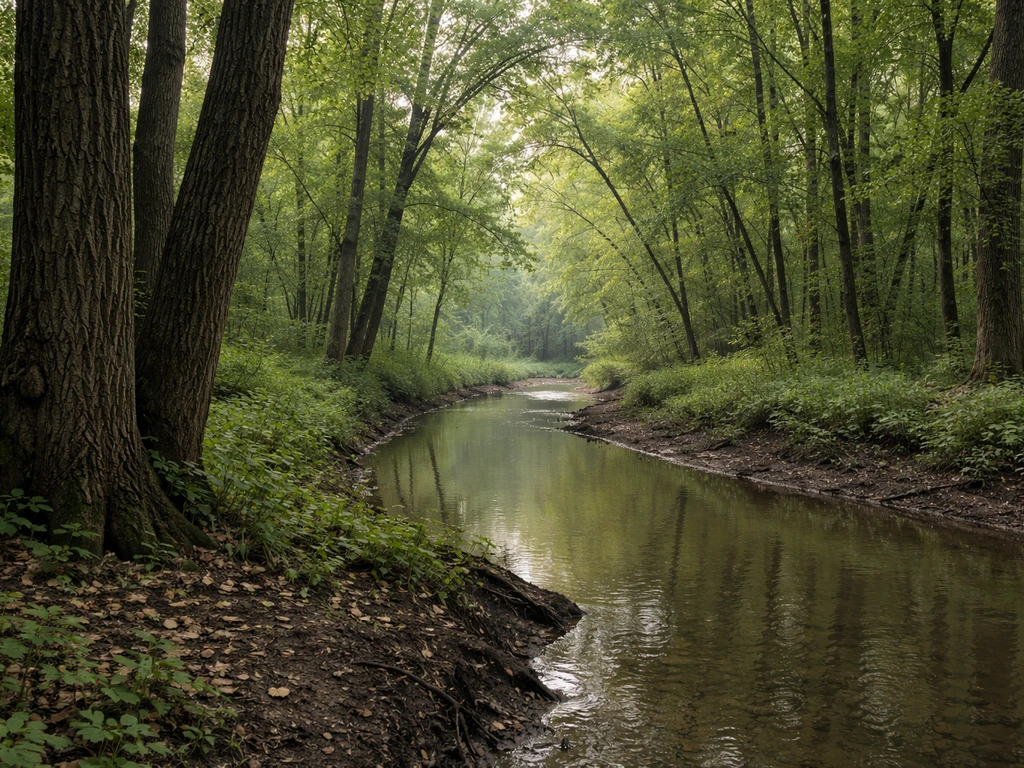
Black walnut is native to the eastern and central United States, where it naturally occupies rich bottomland and mixed hardwood forests from southern Ontario down through the Appalachians and west into Kansas and Nebraska. It's most productive on deep, moist but well-drained sites in the interior of the continent. In Canada it's considered hardy in zones 4b through 7b. In the US, it performs best in USDA zones 4 through 9, though the sweet spot is zones 5 through 7 where the tree gets the warm summers and reasonably consistent summer rainfall it needs.
One thing worth understanding early: cold hardiness in black walnut isn't a single number. There's meaningful genetic variation across seed sources, and a seedling grown from nuts collected in southern Missouri will behave differently in a Minnesota winter than one grown from Minnesota-local seed. If you're planting near the northern edge of its range, source your seed or seedlings locally. The tree's natural growing season runs roughly 115 to 135 days, with most of its height growth packed between late April and mid-July. After that, the tree focuses on root development and nut maturation for the rest of the summer.
Choosing the right site
Soil and drainage
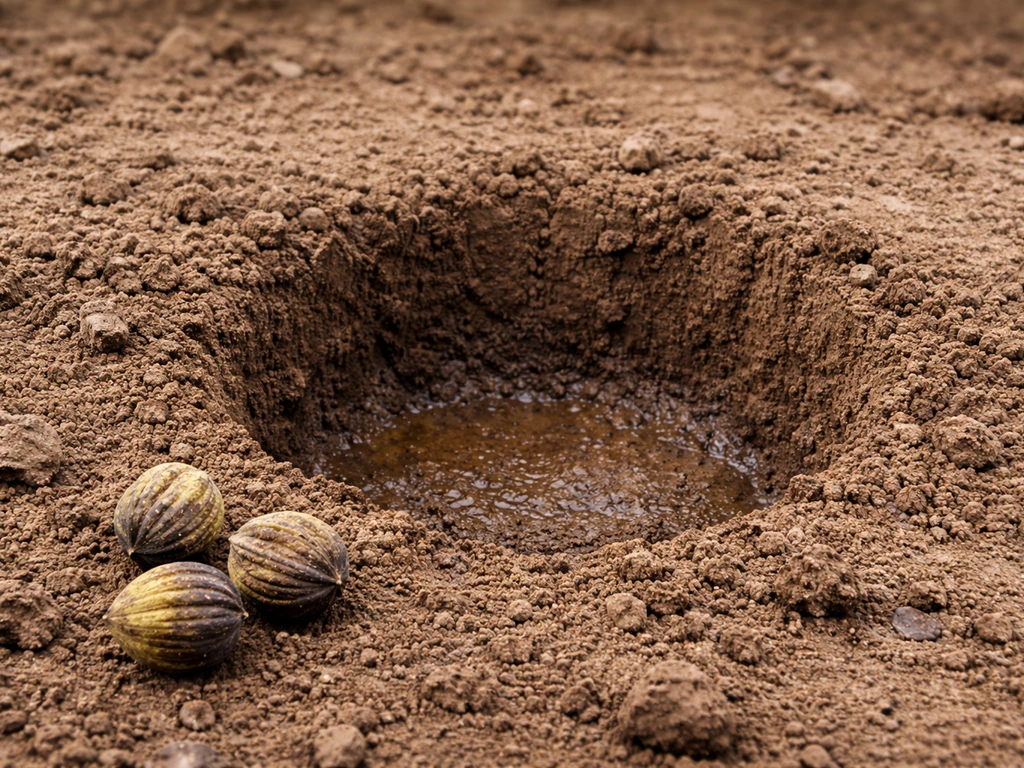
Black walnut wants deep, fine-textured soil with a pH between 6.5 and 7.2 and organic matter in the 2 to 3.5 percent range. That sounds like a lot of qualifications, but it basically means good agricultural loam. Rocky, compacted, sandy, or heavy clay soils all limit what this tree can do. Drainage is non-negotiable: if standing water sits over the root zone for more than about two days, young trees die. Period. Don't plant in low spots, seasonal wet areas, or anywhere with a shallow restrictive layer that would trap water.
Sun and space
Black walnut is shade-intolerant, especially when young. It needs full sun from day one. Even moderate shading from nearby trees or structures slows growth significantly and can cause seedlings to fail entirely. Plan the site around long-term canopy exposure, not just what conditions look like today.
Spacing depends on your goal. For a home yard where you want nuts and shade, 40 to 60 feet between trees is appropriate, since these trees can eventually reach 80 feet or more in height. For a small plantation setting, Purdue Extension recommends starting at 12 by 12 feet (about 300 trees per acre) if you intend to thin aggressively for timber form, while the University of Minnesota suggests 15 by 15 feet if you want both timber quality and nut production. In a home-yard context, just give each tree room to develop a full canopy and don't crowd it with other large-canopy trees.
Starting black walnuts from seed
Collecting and testing nuts
Collect nuts in September or October when the green hulls start dropping. The hull will stain everything it touches, so wear gloves. Remove the hull promptly and rinse the shells. A simple float test gives you a quick viability check: sink the nuts in water and discard any that float. Floaters are usually hollow or damaged inside. You won't catch every bad nut this way, but it filters out the obvious failures.
Cold stratification: the step most people skip
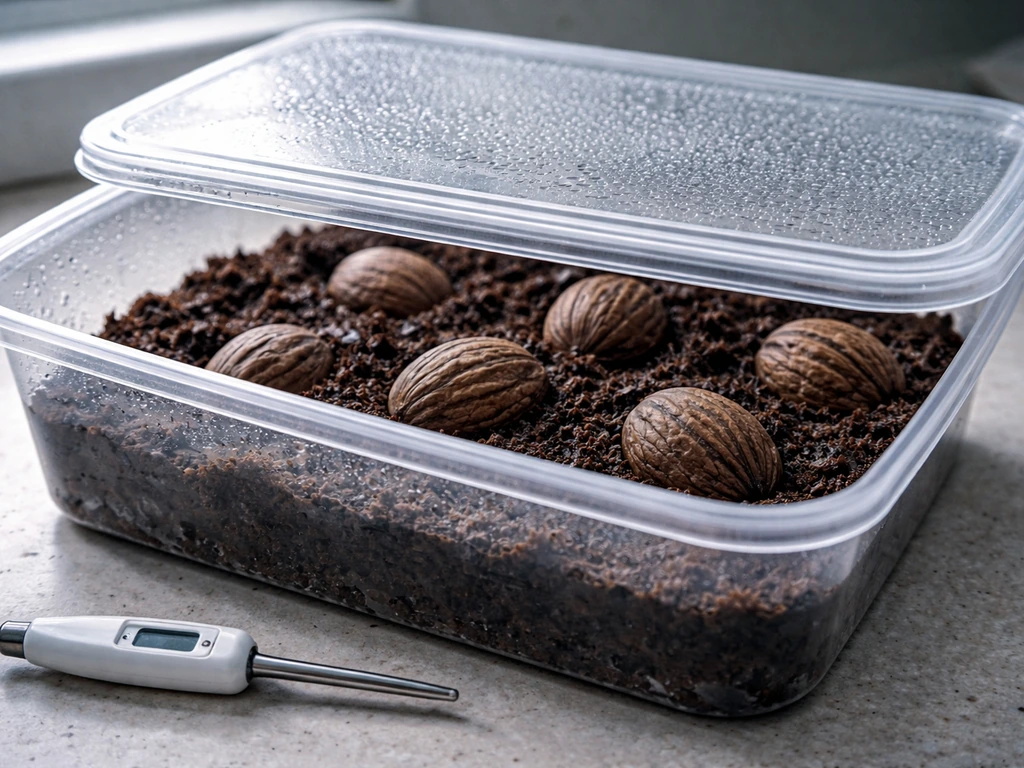
Black walnut seeds have a hard dormancy that mimics winter. To break it, they need 90 to 120 days of cold-moist stratification at around 34 to 40 degrees Fahrenheit. In practice, you have two options. The first is to plant nuts outdoors in fall and let natural winter conditions do the work. The second is artificial stratification: pack the nuts in slightly damp peat or sand in a mesh bag or perforated plastic bag and refrigerate them from around November through February or March. Either method works. Fall direct-seeding is simpler and works well if you can protect the nuts from squirrels.
One thing that trips people up: black walnut germination can be delayed into a second year even with proper stratification. If your nuts don't sprout in the first spring, don't assume they're dead. The silvics research documents a striking example where nuts that failed to germinate after 12 weeks in a seedbed were re-stratified for another 9 months, and 81 percent of them then germinated within 3 weeks. Patience and a second round of cold treatment can rescue what looks like a failure.
Planting depth and timing
Plant nuts 1.5 to 2 inches deep with the seam of the nut oriented vertically. Spring planting after the last frost is ideal because it gives the seedling a full growing season to establish a root system before its first winter. Avoid planting so early that a late hard freeze penetrates more than about an inch into the soil around the roots. The taproot that emerges in year one is the most important thing the tree will grow, and protecting it matters.
Caring for seedlings and young trees
Weed control is everything
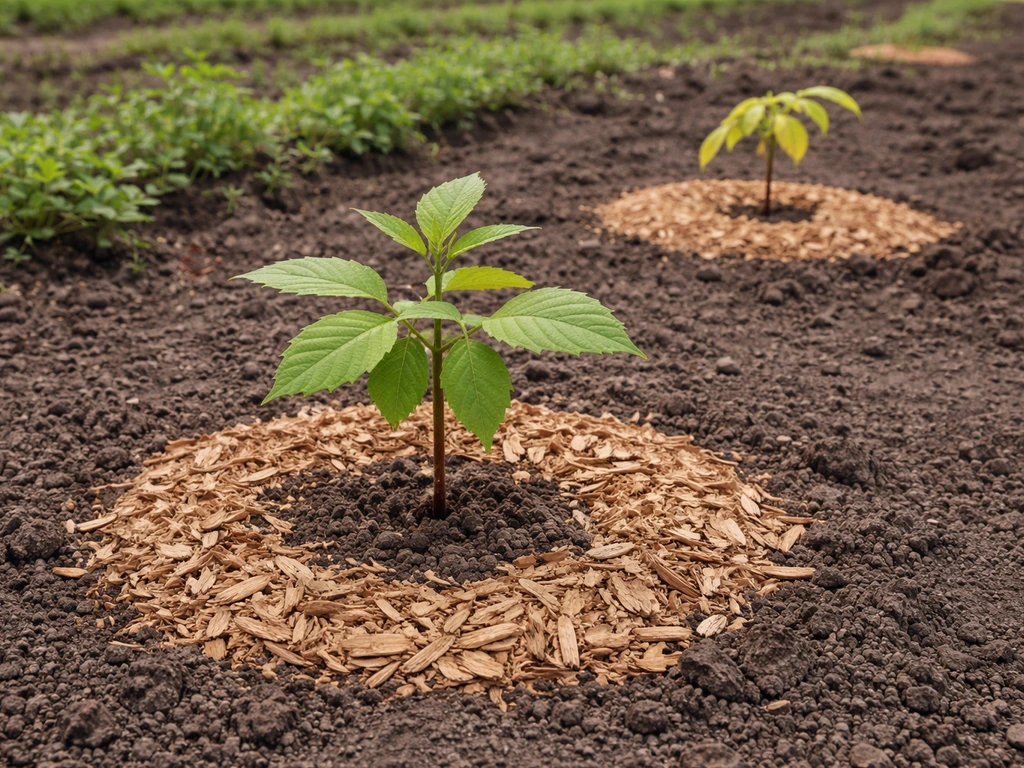
If there is one thing that consistently kills black walnut plantings, it's neglected weed control. Purdue Extension states plainly that without it, black walnut plantations invariably fail or grow far below potential. Grass and broadleaf weeds compete aggressively for water and nutrients right at ground level where the young tree is trying to establish. Keep a weed-free circle at least 3 to 4 feet in diameter around each tree for the first three years minimum. The University of Minnesota Extension recommends maintaining that control for at least three full years. After that, trees are typically large enough to compete better on their own.
Mulching, watering, and frost heave
A 3 to 4 inch layer of wood chip mulch (not black walnut material, for reasons covered later) pulled back a few inches from the trunk helps retain moisture, suppress weeds, and moderate soil temperature. During the first two summers, water during dry spells to keep the soil consistently moist but not saturated. Young black walnuts can handle dry periods better than waterlogged soil, but drought stress in year one sets the tree back considerably.
Frost heave is a real and underappreciated killer of first-year seedlings. Alternating freeze-thaw cycles in late winter can physically push the taproot upward or thrust the whole seedling out of the ground. Mulch reduces this risk by moderating soil temperature swings. If you find a seedling heaved up in early spring, gently press it back down and firm the soil before it dries out.
Fertilizing
On decent agricultural soil, black walnut doesn't need heavy fertilization in its first couple of years. A light application of balanced fertilizer (something like 10-10-10) in early spring can help on poor soils, but over-fertilizing a young tree pushes soft growth that's more vulnerable to pest and disease pressure. Get a soil test before you reach for the fertilizer bag. If pH is in range and organic matter is reasonable, good weed control and adequate water will do more for the tree than any fertilizer program.
Transplanting cautions
Black walnut develops a deep taproot fast, and that taproot does not tolerate disturbance well. If you're transplanting nursery seedlings, do it in early spring before bud break, handle the roots carefully, and plant immediately. Don't let roots dry out, even for a few minutes. Moving a black walnut that has been in the ground for more than one season is risky because you almost certainly can't get the full taproot. Direct seeding in the final location avoids this problem entirely, which is worth considering if you have the patience.
Pollination, growth rates, and when to expect nuts
Black walnut is monoecious, meaning individual trees produce both male (catkin) and female flowers, but the timing of male and female flowering often doesn't overlap perfectly on the same tree. This is called dichogamy, and it's why planting more than one tree improves nut set. Wind carries the pollen, so you don't need bees, but you do need another tree nearby. Two or more trees within a few hundred feet of each other will cross-pollinate reliably.
Growth rate varies significantly by site quality. On good deep loam, a young black walnut can put on 2 to 3 feet of height per year. On poor or compacted soil, the numbers are sobering: one long-term study on Kansas strip-mine spoil showed diameter growth averaging only about 6 mm per year and height growth around 33.5 cm per year during the first 10 to 12 years. That's about 13 inches of height per year, which is genuinely slow. The lesson is that site quality dominates everything in the early years.
Nut production is a long game. Trees begin producing nuts regularly when they're about 8 to 10 years old on a good site, or once they reach roughly 15 to 25 feet in height. Production before that happens but is usually light and irregular. Nut crops are also somewhat mast-like in behavior, meaning there can be heavy years followed by lighter ones regardless of tree age or management. Fruits ripen in September or October and drop shortly after the leaves fall. Don't plant a black walnut expecting nuts in five years; it's more realistic to think of it as a 10-year investment.
Juglone and allelopathy: planning what grows nearby
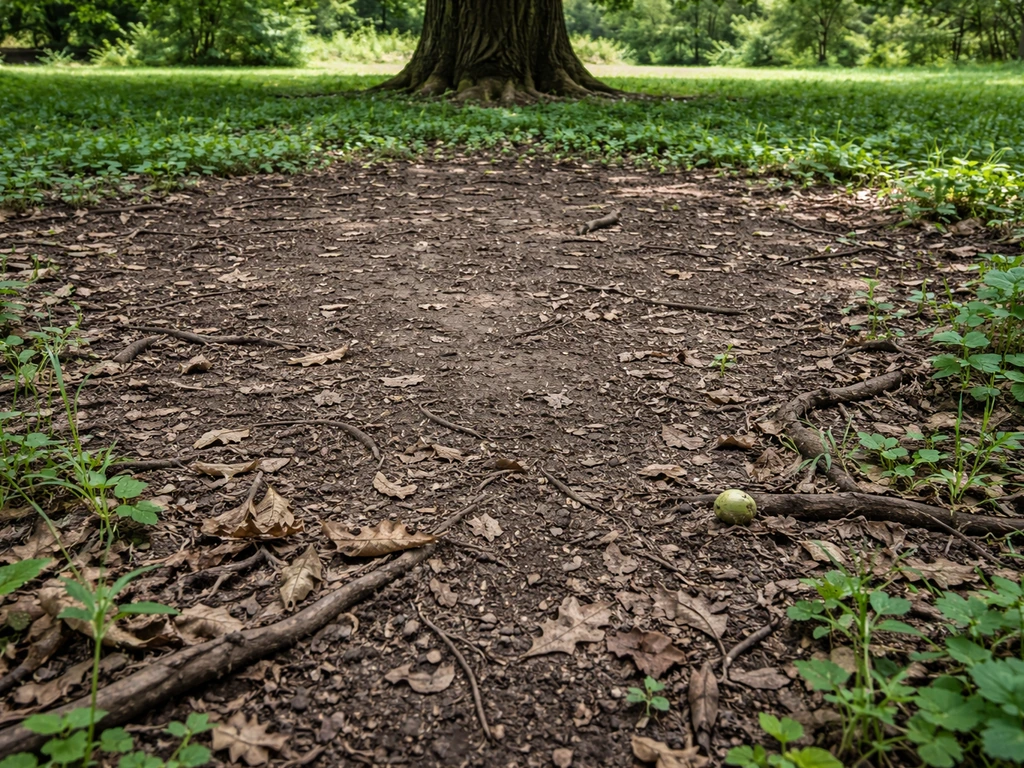
This is the part that surprises most new growers. Black walnut produces a compound called juglone (5-hydroxy-1,4-naphthoquinone) in its roots, leaves, nut hulls, bark, and wood. Juglone leaches into the surrounding soil and inhibits or kills a range of plants. It's not a myth or an exaggeration. Tomatoes, peppers, eggplant, and potatoes are particularly sensitive and will show wilting, yellowing, and death when planted within the root zone. Certain ornamentals like rhododendrons, azaleas, and some crabapples are also highly susceptible.
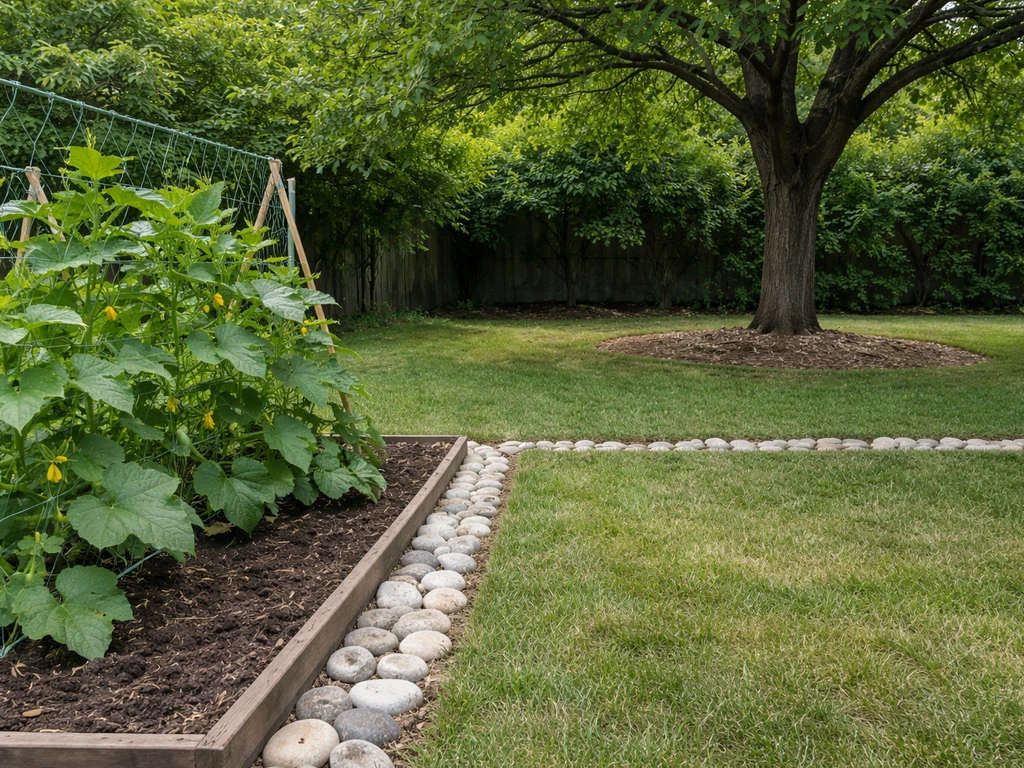
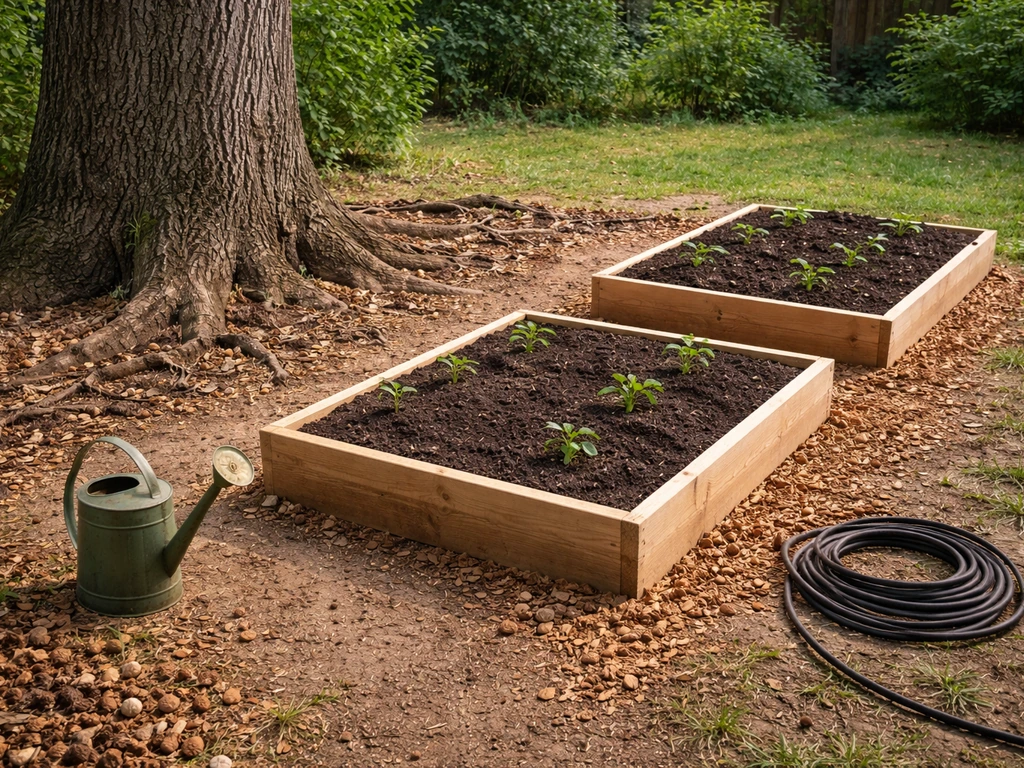
The toxic zone extends roughly as far as the canopy drip line, and in some cases even further where roots have spread. The intensity of the effect depends on soil type, drainage, and how much decomposing walnut material is present. Practical mitigation steps include never mulching sensitive plants with black walnut leaves, hulls, or wood chips, and keeping vegetable gardens at least 50 to 60 feet from the trunk of a mature tree.
Not everything is sensitive to juglone. Many plants tolerate or even thrive near black walnuts, including most grasses, corn, beans, carrots, beets, and various ornamentals like hostas, daylilies, and black-eyed Susans. Lettuce can sometimes struggle near black walnut because juglone in the soil can interfere with sensitive plants lettuce near black walnut trees. Planning your yard layout with juglone zones in mind before you plant vegetables or ornamental beds will save real frustration later. The sibling topics on this site covering vegetables that grow near black walnut trees, and whether specific plants like cucumbers or lettuce can tolerate the zone, are worth reading before you finalize your landscape plan.
Troubleshooting common failures
No germination
The most common reason black walnut seeds don't germinate is insufficient stratification. The USDA Forest Service (gtrnc074) describes that cold stratification and dormancy behavior are key determinants of whether black walnut seeds germinate or appear to fail. If your nuts got less than 90 days of cold-moist conditions, they likely haven't broken dormancy. The fix is to re-stratify them. As noted above, re-stratification after an initial failure can produce strong germination in a second attempt. Also check for squirrel predation if you direct-seeded outdoors. Squirrels find and eat stratifying black walnuts with impressive efficiency. Covering the seed bed with wire mesh or hardware cloth eliminates this problem.
Weak or stalled seedling growth
If seedlings germinate but just sit there looking pale and small, the first thing to check is weed competition. Even grass growing a foot away from a seedling competes for water and nutrients enough to stall growth. The second thing to check is drainage. If the soil stays wet for days after rain, the tree is stressed at the root level even if the surface looks fine. Poor soil depth, a compacted hardpan, or a heavy clay layer beneath a thin topsoil layer all cause this. There's no fix for a truly bad site except to choose a better one.
Pests and disease basics
Black walnut is generally a tough tree with few catastrophic pest issues in most of its range, but a few problems are worth knowing. Thousand cankers disease (caused by the walnut twig beetle and an associated fungus) has spread into parts of the eastern US and can be lethal to trees. Anthracnose is a common leaf disease that causes brown lesions and early defoliation in wet springs. It looks alarming but rarely kills a tree that's otherwise healthy and well-sited. Walnut caterpillar can defoliate trees in late summer; a single defoliation rarely kills an established tree but repeated events weaken it. For a home-yard tree, good site selection and avoiding stress through proper drainage and weed control does more to prevent serious pest and disease problems than any spray program.
Long-term management whether you have one tree or a small planting
For a single yard tree, the main management tasks after year three are pruning to develop a strong structure, monitoring for pests and disease, and keeping the area around the base free of weeds and competing vegetation. Prune in late winter or early spring while the tree is dormant. The goal in the first decade is to develop a straight central leader and remove competing double-leaders early, when the branch diameter is small. Purdue Extension's pruning guidance for young black walnut emphasizes maintaining that central leader and removing lateral branches from the main stem systematically as the tree grows. Don't take off more than about 25 percent of the live crown in a single pruning.
For a small plantation or orchard planting, plan for thinning. If you started at 12 by 12 or 15 by 15 foot spacing, you'll need to thin over time as crowns close in. Trees that are left to compete too long without thinning slow each other's growth and develop poor form. The goal is to progressively remove the worst-formed trees and let the best ones have the space and light they need to develop properly.
In terms of what to do right now based on where you are in the process: if you have nuts and it's fall, plant or stratify them immediately. If it's spring and you missed stratification, either purchase nursery seedlings for spring planting or plan ahead to stratify nuts this coming fall. If you already have a young tree in the ground, prioritize weed control and check your drainage before anything else. And if you're planning a yard that will include a black walnut, map out the juglone zone before you decide where the vegetable garden and sensitive ornamentals will go. If you're wondering whether butterfly bush will grow under black walnut, the juglone zone is the related factor to check before planting. A little planning now saves a lot of replanting later.
| Stage / Task | Timing | Key Action |
|---|---|---|
| Nut collection | September to October | Collect fallen nuts, remove hull, float test for viability |
| Stratification (artificial) | November through February/March | 90 to 120 days cold-moist at 34 to 40°F in damp peat or sand |
| Planting (spring) | After last frost, soil workable | Plant 1.5 to 2 inches deep, seam vertical, full sun, deep loam |
| Planting (fall/direct seed) | October to November | Plant at same depth, protect with wire mesh against squirrels |
| Weed control | Years 1 through 3 minimum | Maintain 3 to 4 ft weed-free circle around each tree |
| Frost heave check | Early spring, years 1 to 2 | Inspect and re-firm any heaved seedlings before soil dries |
| Pruning for form | Late winter, years 2 onward | Establish central leader, remove competing double leaders |
| First reliable nut production | Year 8 to 10 on good site | Expect irregular crops before tree reaches 15 to 25 ft height |
FAQ
Can I plant black walnuts right away in spring without stratifying them?
Yes, but the timing matters. If you cannot stratify in time for spring planting, keep the nuts cold-moist (not drying out) and plan a new stratification window so you are not relying on an already-partially-dormant seed batch. Also expect variable germination, even with perfect cold treatment.
How do I stop squirrels from eating black walnuts before they sprout?
Squirrels are the main reason direct-seeded nuts fail outdoors, even when stratification is correct. Use wire mesh or hardware cloth over the seed area, anchor it so it cannot be lifted, and keep it in place until seedlings are established. Otherwise you can lose most viable nuts quickly.
What’s the most common mistake when cold-stratifying black walnut nuts?
Measure stratification as actual cold-moist time, not calendar time. The nuts must stay slightly damp and at the right temperature range, and they should not freeze solid for long periods during artificial stratification. If the medium dries out or warms too much, dormancy often resets and germination becomes delayed.
My black walnut nuts did not germinate in year one, are they dead?
If they do not sprout the first spring, re-stratify is often worth it rather than discarding. Many nuts germinate in a second attempt after additional cold-moist treatment. When you re-stratify, re-check that the nuts remain moist but not waterlogged and protect them from critters.
Why do my black walnut seedlings look pale and small?
Check drainage and weed pressure before changing your fertilizing plan. Pale, stunted seedlings usually indicate either competition from grass and broadleaf weeds or root stress from wet soil. Only after you confirm the basics should you consider a soil test and a small, balanced nutrient input.
How much sun is enough when planting black walnut in a yard with nearby trees?
Avoid planting too close to other large shade trees and structures, since black walnut needs full sun while young and also requires space for a future canopy. Even if the spot is sunny today, tree growth around it can create shading that slows or prevents establishment. Plan for long-term light exposure, not just the current season.
Is fall planting safer than spring planting for black walnuts?
Treat fall direct-seeding as a race against both squirrels and late freezes. Plant deep enough (about 1.5 to 2 inches) and time it so the seedbed is not left exposed for long periods. If you experience repeated deep freezes soon after planting, seedlings can be damaged around the root zone.
Can I mulch around vegetables with black walnut hulls or leaves?
Yes. Mulch helps, but keep it away from the trunk and do not use black walnut leaves, hulls, or wood chips as mulch over garden beds with sensitive plants. If you mulch a vegetable area, use a non-walnut source material and monitor plant stress because juglone can affect growth even without visible symptoms.
How far should I keep vegetables from a mature black walnut tree?
Yes, but with a careful plan. Keep at least 50 to 60 feet from mature trunks for sensitive crops like nightshades, and consider that the toxic influence can extend beyond the canopy drip line in some soils. If you want vegetables closer, prioritize tolerant crops and use raised beds with fresh topsoil away from the walnut’s root zone.
What should I do if my soil stays wet after rain?
If your site has shallow hardpan or compacted layers, black walnut will struggle even if the surface looks fine. If standing water or soggy soil persists for more than about two days around the root zone, plan on moving the planting location. There is no reliable quick fix, because the taproot needs depth and aeration.
Can I transplant a black walnut from one spot to another in my yard?
Black walnuts are hard to transplant because the taproot does not take disturbance well. If you must transplant, do it very early in spring before bud break, handle roots gently, plant immediately, and do not allow root drying even briefly. Moving trees after more than one season in the ground is especially risky because much of the taproot is lost.
How long do I need to keep the area weed-free around young black walnuts?
Start weed control early and stay consistent for at least the first three years. Keep a weed-free circle around each tree to reduce competition right at the root level. Once trees are large enough, they can compete better, but letting weeds take over in year one or two often causes long-term setbacks.
Do I need to spray black walnut to prevent pests and diseases?
For most serious issues, prevention beats treatment. Anthracnose, walnut caterpillar, and other problems are often manageable by keeping trees unstressed through good drainage and weed control, and by maintaining overall vigor. If you spray without addressing the site stressors, you often waste effort while the tree remains susceptible.
If I have only one black walnut tree, will I still get nuts?
If multiple trees are not available nearby, nut set is often poor due to timing mismatches between male and female flowering (dichogamy). Planting two or more trees within a few hundred feet usually improves cross-pollination. If you only have one tree, expect light and irregular nut production.
When should I realistically expect black walnuts to start producing nuts?
Expect a long timeline. Reliable nut production is typically around 8 to 10 years on a good site, often after the tree reaches roughly 15 to 25 feet in height. If your tree is younger, misshapen or sparse nuts are common, and “mast-like” heavy crops may still arrive unpredictably.
What pruning approach is safest for young black walnut trees?
You can prune to support structure, but do it conservatively while trees are young. Focus on developing and maintaining a central leader and removing competing leaders early, and avoid removing more than about a quarter of the live crown in one pruning session. If you prune heavily, you can increase stress during establishment.