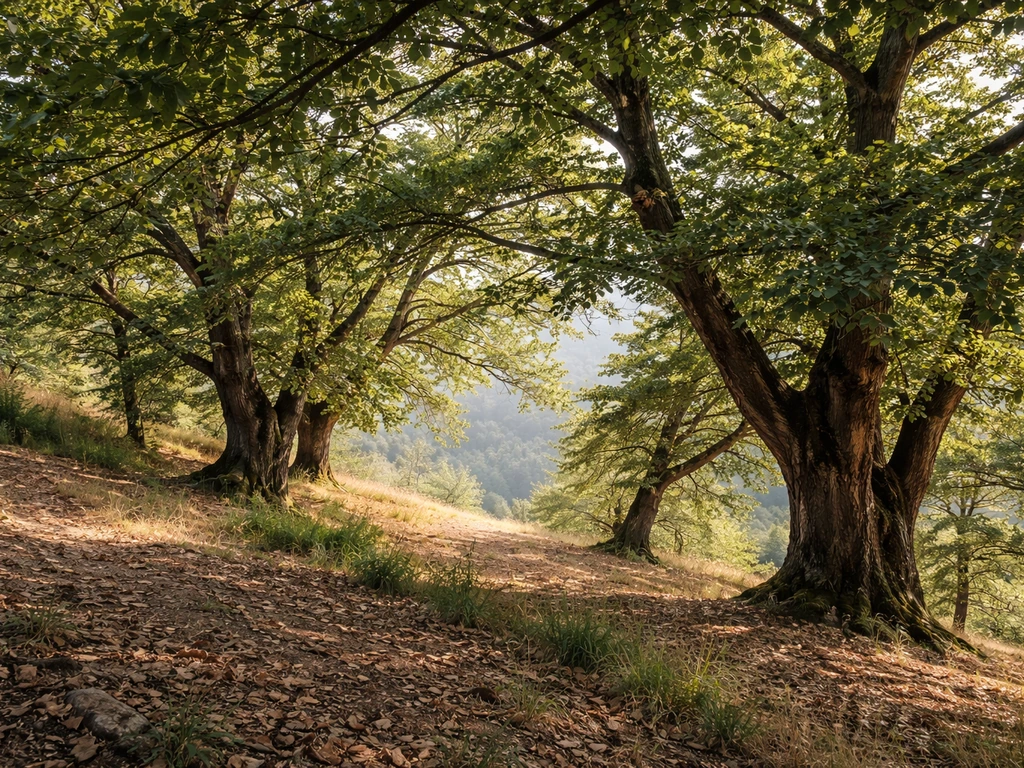
Sweet chestnuts (Castanea sativa) grow natively across central-southern Europe and into Asia Minor, thriving in places like northern Spain, southern France, central and northern Italy, the Balkan Peninsula, and the Caucasus region. Beyond that native range, they've been successfully planted across the UK, parts of North America, Australia, and New Zealand wherever the climate is warm-temperate and the soil is well-drained and slightly acidic. The single biggest factor that determines whether a site will work isn't temperature or rainfall, it's drainage. Waterlogged soil will kill this tree, full stop.
Where Do Sweet Chestnuts Grow UK Europe and Beyond
Marcus Hendricks
20 May 2026
Which tree are we actually talking about?
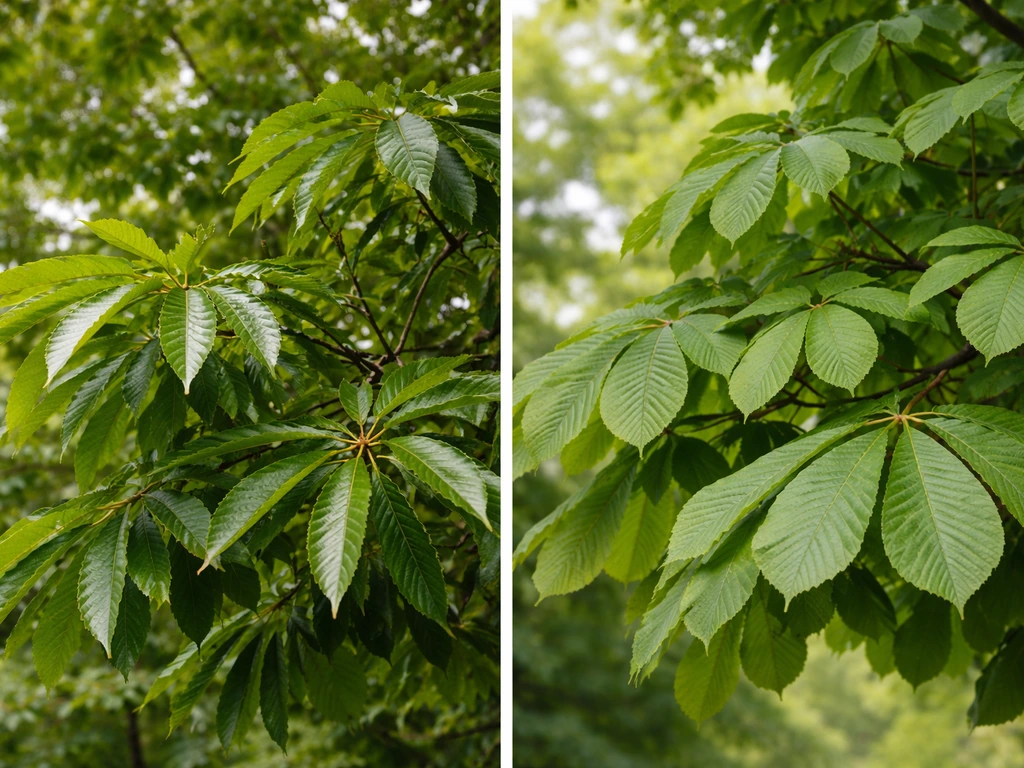
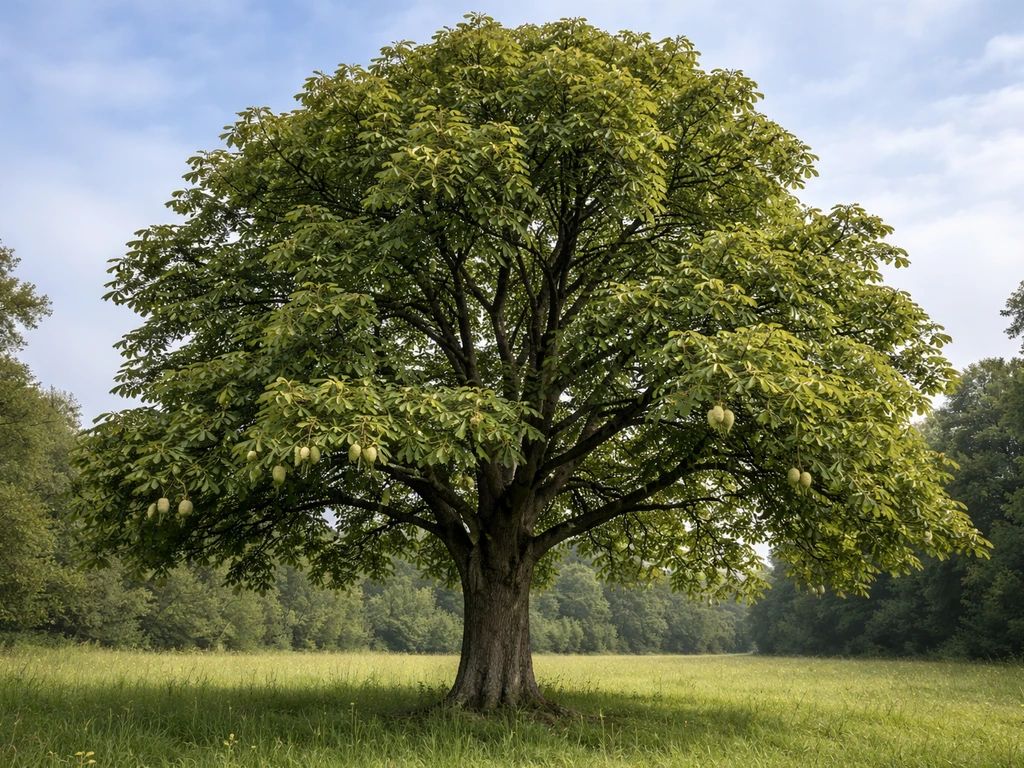
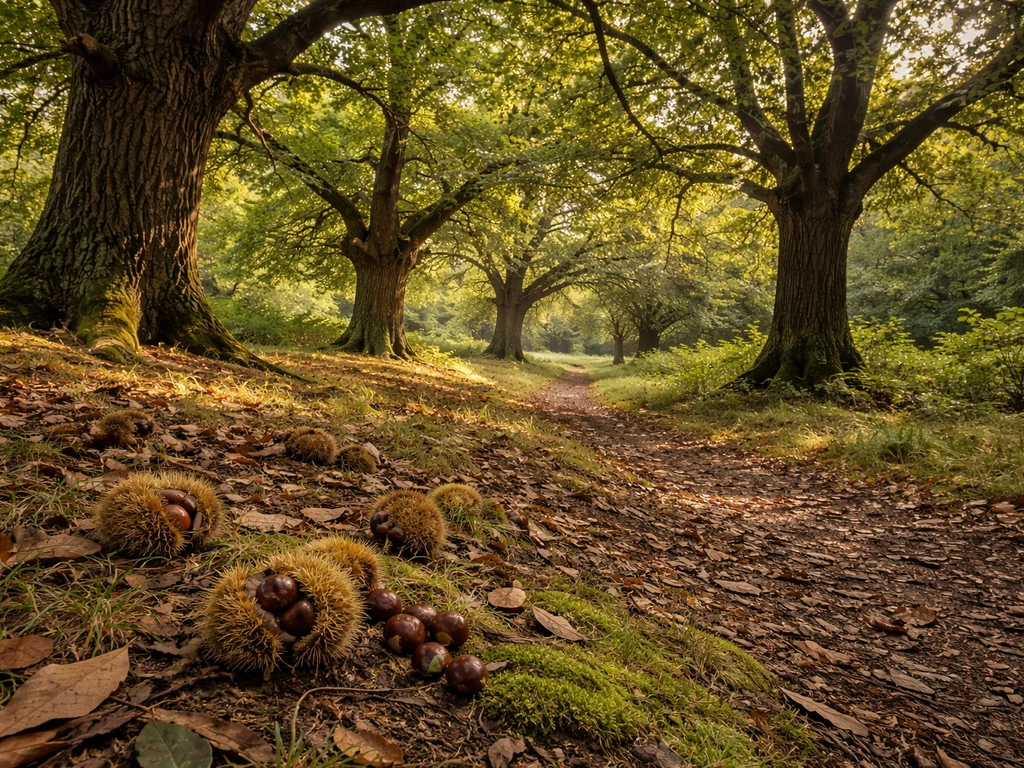
Before anything else, it's worth nailing down the species, because 'chestnut' is one of the most confusing common names in the tree world. Castanea sativa is the European sweet chestnut, the one with edible nuts, the spiny green burr that splits open at maturity, and the long yellowish catkins in summer. Its leaves are alternate, simple, glossy, and heavily serrated. The bark on older trees develops a distinctive rugged, spirally grooved texture that's hard to mistake once you've seen it.
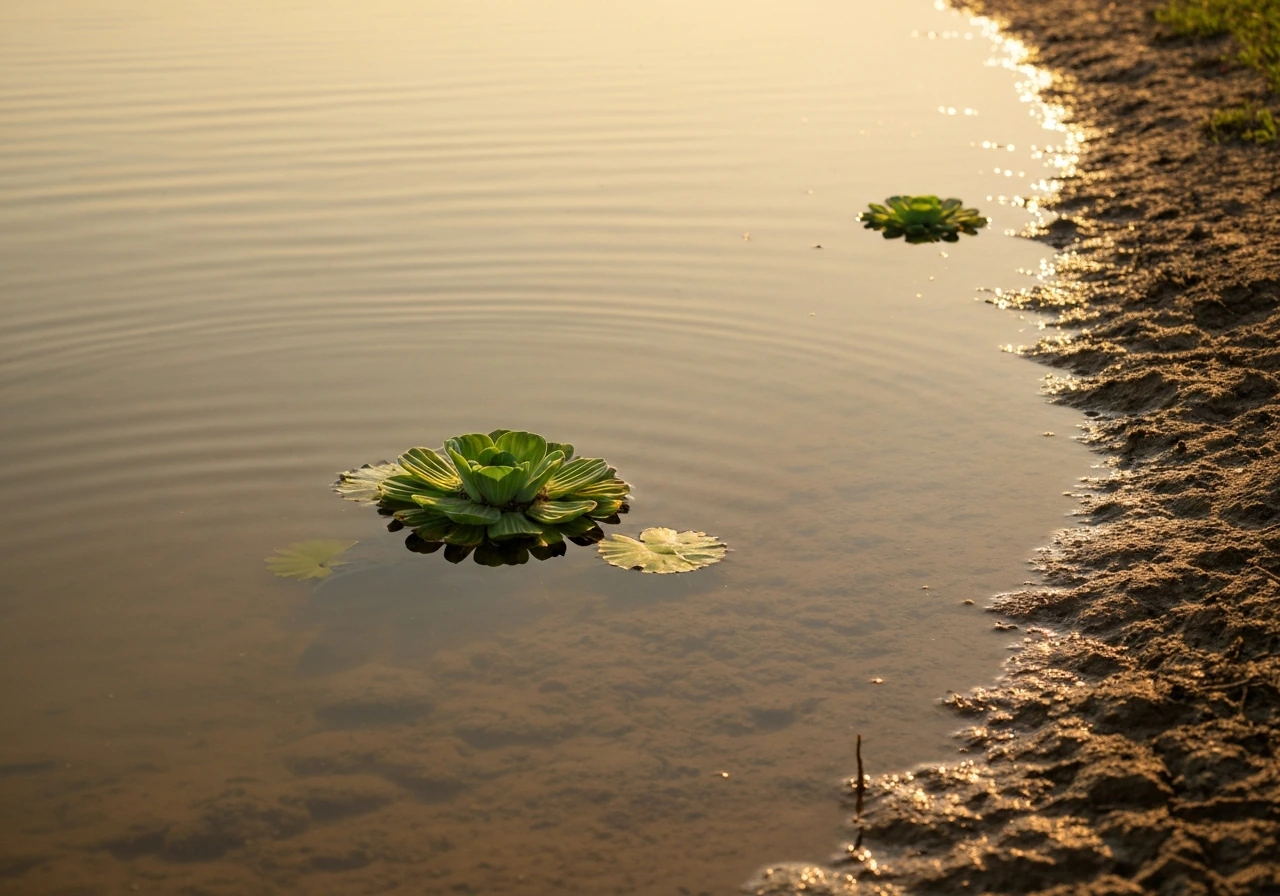
The lookalike most people get confused by is horse chestnut (Aesculus hippocastanum). That tree has opposite, palmate leaves made up of five leaflets, completely different from the single, elongated leaves of Castanea sativa. Horse chestnuts also have a very different spiny casing that's much less dense, and their nuts (conkers) are not edible. If you're growing in North America, you'll also encounter American chestnut (Castanea dentata) and Chinese chestnut (Castanea mollissima), which are genuinely related to sweet chestnut but are separate species with different growing profiles and disease resistance characteristics. Water chestnut is something else entirely, an aquatic plant with no botanical connection to Castanea at all. Water chestnut is an aquatic plant, so you’ll usually need wet or pond-like conditions rather than the hillside, well-drained setups sweet chestnut prefers Water chestnut is something else entirely.
Where sweet chestnut actually comes from
Castanea sativa's native range stretches across the warm-temperate zones of Europe and western Asia. Its core territory includes the northern Iberian Peninsula, southern France, central and northern Italy, the southern Balkans, western and northern Turkey, and the Caucasus. Within that range, it typically grows at altitudes between about 200 and 1,800 meters, which tells you something useful: it's not a lowland coastal tree, and it's not an alpine species. It sits in that middle band of hill country and moderate uplands where soils are often acidic, rainfall is decent, and temperatures don't swing to extremes.
In its natural habitat, sweet chestnut is a woodland and wood pasture tree. It grows in mixed deciduous forests alongside oaks and other broadleaves. It's adapted to fire disturbance and has a strong ability to resprout from the base after cutting or burning, which is why it became so closely associated with coppice woodland management across Europe, a tradition that continues today in places like southern England and the Italian Apennines. Historically, the tree was so economically important (as food, timber, and tannin source) that it was planted far outside its native range centuries ago, blurring the line between 'native' and 'naturalised' in many regions.
Climate and soil: what this tree actually needs
Temperature and frost
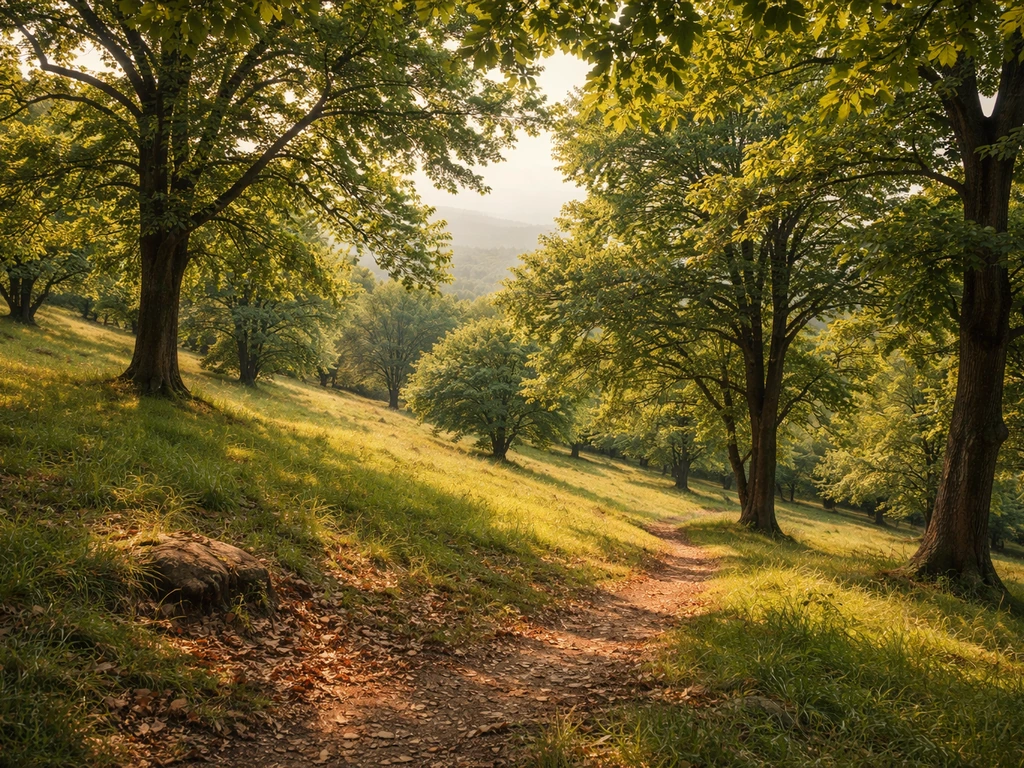
Sweet chestnut is a warm-temperate species. It needs a long enough growing season to mature its nuts, which means it genuinely struggles in climates with short, cool summers. It's sensitive to late spring frosts, a frost hitting after bud break can wipe out a season's growth and, in young trees, cause serious setbacks. Once established, mature trees can handle moderate winter cold, but this is not a tree for continental climates with harsh winters. Think southern England, not Scotland; northern France, not Scandinavia.
Rainfall
The commonly cited annual rainfall range for Castanea sativa sits at roughly 900 to 1,600 mm, with around 1,300 mm being a central sweet spot. That said, the tree is comparatively drought tolerant once established, so if your region trends toward the drier end of that range, it's not automatically a dealbreaker. What matters more is that the rainfall doesn't arrive in concentrated bursts that saturate the soil without adequate drainage. Mediterranean-style summer dry periods are actually fine for this species, it evolved in them.
Soil pH and type
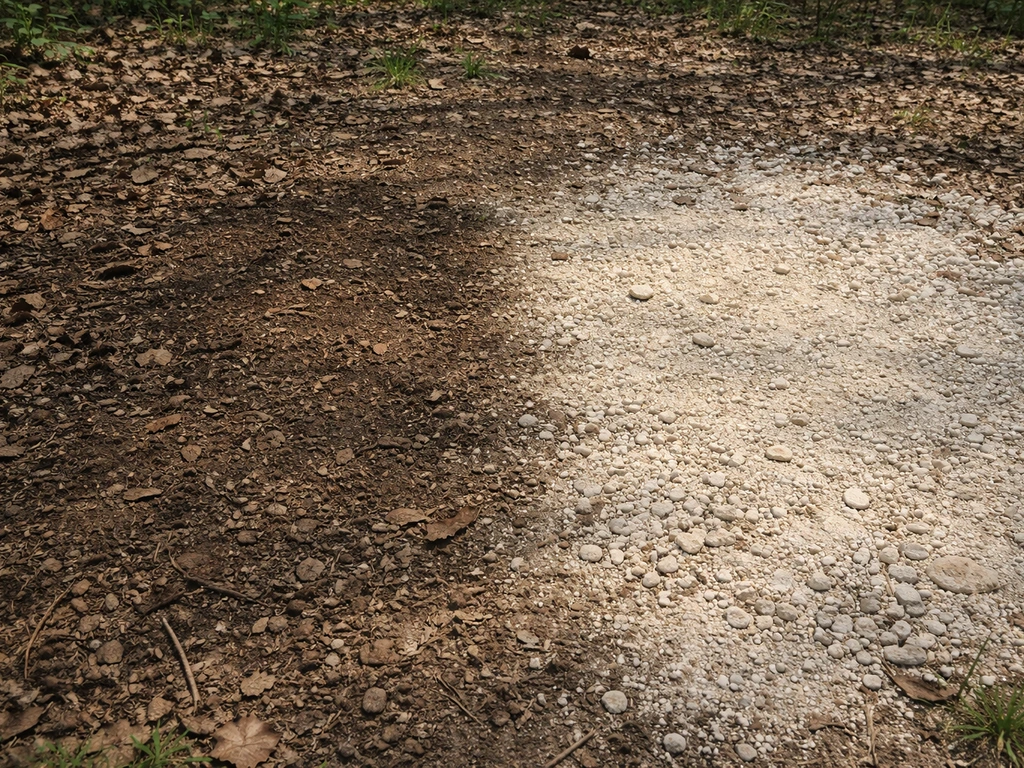
Sweet chestnut is very sensitive to high soil pH. Shoot for a slightly acidic pH between 4.5 and 6.5. Soils containing active limestone are a problem, the high pH interferes with the tree's ability to take up key nutrients, and you'll see it struggle visually (yellowing leaves, poor growth) even if everything else looks right. Sandy loams and well-structured loam soils work well. Clay soils aren't automatically ruled out, but they need to drain freely. If your clay sits wet in winter, you're going to have serious problems.
Drainage: the non-negotiable
This is the factor that kills more sweet chestnut plantings than anything else. Waterlogged or poorly drained soil creates ideal conditions for Phytophthora root and collar rot diseases, particularly Phytophthora cinnamomi and P. cambivora. These pathogens can devastate trees, and wet soil is the main trigger. Well-drained soil isn't just preferable for sweet chestnut, it's essential. No amount of great climate or perfect pH will compensate for roots sitting in standing water.
Wild woodlands vs planted orchards and coppice: two very different pictures
In the wild, sweet chestnut occupies mixed deciduous woodland, often on slopes or well-drained hillsides where water moves freely through the soil. You'll find it growing alongside sessile oak and various other broadleaves, typically on acidic, free-draining soils derived from siliceous parent rock rather than chalk or limestone.
The planted picture is quite different. Across much of Europe, sweet chestnut has been cultivated for centuries in two main systems: coppice woodland (cut on rotation for poles, stakes, and timber) and traditional orchards (managed for nut production). Castanea sativa is managed for multiple production goals, including timber or wood production through coppice or high forest, and fruit production via traditional orchards, and European synthesis sources describe it as multipurpose and suitable for coppice-resprouting systems. In the UK, sweet chestnut coppice covers roughly 12,000 hectares, concentrated in the southeast of England, Kent and East Sussex in particular. These plantations exist partly because the climate in that corner of England is warm enough by UK standards, but also because it suits coppice rotation management very well, given the tree's strong resprouting ability after cutting. For nut production orchards, the tree is managed very differently, individual trees spaced around 8 to 10 meters apart to allow canopy development and maximize fruit yield. For timber, planting densities run around 3,000 stems per hectare; for coppice, closer to 1,500 stems per hectare.
Where it grows by region
| Region | Suitability | Main use / notes |
|---|---|---|
| Southern France, Italy, Iberian Peninsula | Excellent (native range) | Traditional orchards, coppice, timber; core sweet chestnut country |
| Balkans, Turkey, Caucasus | Excellent (native range) | Wild woodland and cultivated orchards; long-established presence |
| Southeast England (Kent, East Sussex) | Good | Largest sweet chestnut coppice area in UK; nut production possible in good sites |
| Rest of England / Wales | Moderate to marginal | Increasingly risky further north and west; frost and short seasons limit nut ripening |
| Scotland / Ireland | Generally marginal | Too cool and wet for reliable nut production; some shelter-planting possible |
| Pacific Northwest USA / Northern California | Good on well-drained sites | Planted successfully; disease pressure varies; avoid wet soils |
| Mid-Atlantic and Southeast USA | Moderate | Hot summers work; watch drainage and chestnut blight pressure |
| Northeast USA / Canada | Challenging | Cold winters limit it; American or Chinese chestnut species often better suited |
| Victoria / Tasmania, Australia | Good to excellent | Major commercial production zone; post-harvest fungal diseases are the main concern |
| New Zealand (South Island/highland) | Good | Blight-free and gall-wasp-free; Phytophthora root rot still a drainage-related risk |
Across the broader chestnut family, it's worth noting that the growing requirements for sweet chestnut differ from those of other chestnuts. American chestnut, for example, has a different native range and disease profile, and horse chestnuts occupy quite different ecological niches despite the shared common name. Horse chestnuts (Aesculus hippocastanum) grow best across temperate parts of Europe, and they can thrive in places that have cool winters and well-drained soil. If your location sits on the colder or wetter edge of sweet chestnut suitability, other Castanea species might deserve a closer look.
How to tell if your specific location will work
Climate zone guidance is useful as a starting point, but the real test is site-level assessment. Here's how to work through it practically.
- Check drainage first and most seriously. After heavy rain, observe the area for 24 to 48 hours. If water pools or the soil stays soggy, that's a red flag. A percolation test gives you a more precise read: dig a hole about 30 cm deep, fill it with water, let it drain, refill it, and time how long it takes to empty. Healthy drainage clears the hole in a few hours. If it's still sitting there the next day, sweet chestnut is going to struggle.
- Test your soil pH. A basic home test kit will get you close enough to know if you're in range. If you're above pH 6.5 or on chalky/limestone-derived soil, either amend significantly or reconsider the site. Lab testing is worth it if you're planning a serious planting.
- Map your frost pockets. Cold air drains downhill and collects in hollows and low-lying areas, which is exactly where late spring frosts are worst. Young sweet chestnuts are especially vulnerable during establishment. A site on a gentle slope with good cold air drainage is far better than a flat valley bottom.
- Assess your wind exposure. Sweet chestnut isn't particularly wind-sensitive once established, but young trees in exposed upland sites will struggle. If you're in a windy location, factor in shelter planting or establishment protection.
- Look at your local disease pressure. In the UK, chestnut blight (Cryphonectria parasitica) has been present since 2011 and affects existing woodlands. In Australia and New Zealand, Phytophthora root rot is the primary biological risk. Knowing what disease pressures exist in your region lets you choose resistant varieties and manage site conditions proactively.
- Check regional examples near you. If there are established sweet chestnut trees within 10 to 20 kilometers of your site on similar soil types, that's one of the best positive indicators you can get. Local horticultural societies and forestry extension services often hold this kind of regional data.
The honest summary on where sweet chestnuts will and won't work
Sweet chestnut is not a universally easy tree to place. It rewards sites that genuinely match its requirements and punishes sites that don't, particularly on drainage. If you're in southern England, France, Italy, central Europe, southeastern Australia, or New Zealand and you have free-draining acidic soil, you're in good shape and it's worth pursuing seriously. If you mean where sweet chestnut grows best, it prefers warm-temperate climates and free-draining, slightly acidic soils. If you're in a colder continental climate, on chalky soil, or dealing with a site that holds water, the odds are stacked against you and you'd be better off looking at other Castanea species or reconsidering the planting location. Get the soil drainage and pH right, protect young trees from late frosts during establishment, and this is a tree that can be genuinely rewarding, for timber, nut production, or both. Extension guidance also flags that blank" rel="noopener noreferrer">standing water after rain is a strong signal of poor drainage, which increases risk for tree roots.
FAQ
Can sweet chestnuts grow in colder northern climates like Scotland or Scandinavia?
It will usually only establish where winters are mild enough to avoid repeated bud-kill after late frosts. If you’re in a cooler region, choose a sheltered slope or woodland edge, avoid frost pockets (valleys and low spots), and consider leaving the first years focused on establishment rather than expecting a full nut crop.
If my area has warm summers but wet winters, can sweet chestnuts still work?
No, sweet chestnut can tolerate drought better than it tolerates wet ground. Even if your summers are warm, repeated saturation in winter can trigger root and collar rot, so you need evidence the soil drains quickly after heavy rain.
Is clay soil ever suitable for sweet chestnuts?
Treat clay as a risk factor only if it stays wet. The decision aid is simple: check whether your planting spot dries out within a few days after winter rain. If standing water forms, fix drainage or choose another site, because sweet chestnut cannot compensate with better pH or climate.
How strict is the 4.5 to 6.5 soil pH range, and what happens over time?
Slightly acidic is the target, but it is not just about average pH. If limestone is present within the rooting zone, pH can drift higher over time, which gradually reduces nutrient uptake, so test both current pH and soil chemistry consistency across the area.
What are the best ways to tell if a site is well-drained before planting?
Sweet chestnut is poor at surviving in sites that remain waterlogged, even temporarily. Before planting, look for hydrology clues like persistent dampness, algae, or moss in the same area every year, and confirm with a simple soak-and-drain test to judge infiltration.
Do spacing and management differ depending on whether I want nuts, coppice poles, or timber?
Yes, but you’ll likely need different management. Coppice and nut orchards rely on different spacing and light regimes, and late frosts can affect young trees more than mature ones, so align the system you choose with your local frost pressure and your goal (nuts versus poles or timber).
If sweet chestnuts struggle in my area, can other chestnut species take their place?
American chestnut and Chinese chestnut may grow in places where sweet chestnut struggles, but they are not guaranteed substitutes, especially for disease resistance and nut production traits. If your climate is the limiting factor, compare species trial results locally rather than assuming all chestnuts share the same fit.
Can I grow sweet chestnuts on chalk or limestone-rich ground by adding soil treatments?
They do not reliably tolerate chalky, high-limestone soils. If your soil is alkaline or you can’t avoid limestone-derived areas, you should expect chlorosis and slow growth, and you may end up spending more on soil amendments and monitoring than on switching to a better site.
How do I set up a planting for nut production, so I actually get nuts?
For nut production, you may need a pollination plan. Sweet chestnut is wind-pollinated, but orchard layout matters, and yield can drop if trees are too isolated, so plan for adequate numbers and spacing rather than planting a single tree.