You can absolutely grow oak trees from acorns in Australia, but success depends on picking the right species for your climate, sourcing fresh viable acorns, and managing dormancy correctly. Most failures happen because people skip cold stratification, plant dead acorns, or choose a species that simply doesn't suit their region. Get those three things right and you'll have a healthy young oak in the ground within a season.
How to Grow Oak Trees from Acorns in Australia
Marcus Hendricks
1 May 2026
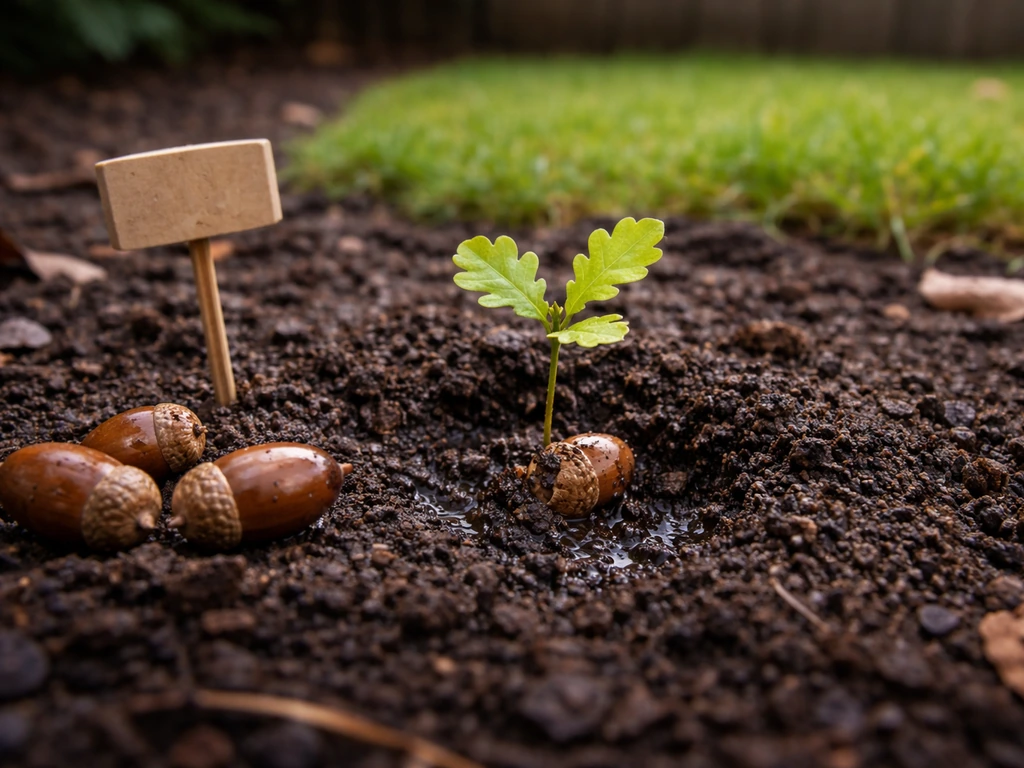
Which oak species actually thrive in Australia
Not every oak will perform across the whole country, and this is where a lot of Australian growers go wrong. The most widely grown species here is the English oak (Quercus robur), and for good reason: it's tough, adaptable, and produces acorns reliably in temperate zones. It does best in southern Australia, particularly Victoria, the ACT, southern NSW, Tasmania, and parts of South Australia, where winters are cool enough to satisfy its dormancy requirements.
Pin oak (Quercus palustris) is another solid choice for temperate and cooler high-rainfall areas. It's commonly planted in Canberra and Melbourne gardens and handles heavier clay soils better than many other oaks. Turkey oak (Quercus cerris) and Hungarian oak (Quercus frainetto) are less common but are proving useful in areas with variable rainfall. Scarlet oak (Quercus coccinea) is worth considering in Victoria and Tasmania for its autumn colour and moderate cold requirement.
For warmer zones in coastal NSW, Queensland, and parts of Western Australia, the options narrow considerably. North American red oak (Quercus rubra) can be pushed into warmer temperate areas, but it needs genuine cool winters to perform well. If you're in a subtropical or tropical zone, traditional deciduous oaks are generally not suited, and you'd be better exploring native species like the Australian silky oak (Grevillea robusta), which isn't a true oak but fills a similar ecological niche. This article focuses on true oaks in the genus Quercus, which are the ones grown from acorns.
| Species | Best Australian Regions | Climate Notes |
|---|---|---|
| English oak (Q. robur) | Victoria, ACT, southern NSW, Tasmania, SA | Needs cool winters; very adaptable to soil types |
| Pin oak (Q. palustris) | Victoria, ACT, southern NSW, Tasmania | Tolerates wetter, heavier soils; reliable autumn colour |
| Scarlet oak (Q. coccinea) | Victoria, Tasmania, ACT highlands | Requires cold winters; excellent autumn display |
| Turkey oak (Q. cerris) | Southern and temperate zones | Handles drought reasonably well once established |
| Northern red oak (Q. rubra) | Cooler temperate zones only | Needs proper cold period; struggles in warm winters |
| Holm oak (Q. ilex) | SA, WA, coastal NSW, Mediterranean-style climates | Evergreen; tolerates dry summers and poor soils |
Holm oak (Quercus ilex) deserves a special mention for drier parts of South Australia and Western Australia. It's evergreen rather than deciduous, handles dry Mediterranean-style summers, and is one of the few true oaks that copes in low-rainfall areas. If you're in Perth or the Adelaide Hills, holm oak is worth serious consideration.
Collecting viable acorns: timing, sources, and the float test
In Australia, acorns from deciduous oaks typically fall between March and May, depending on your location and the species. Acorn production depends on oak species and local climate, so the timing can shift by region and year acorns from deciduous oaks typically fall between March and May. Acorns can begin sprouting soon after stratification is complete, which is why timing matters when do acorns grow.
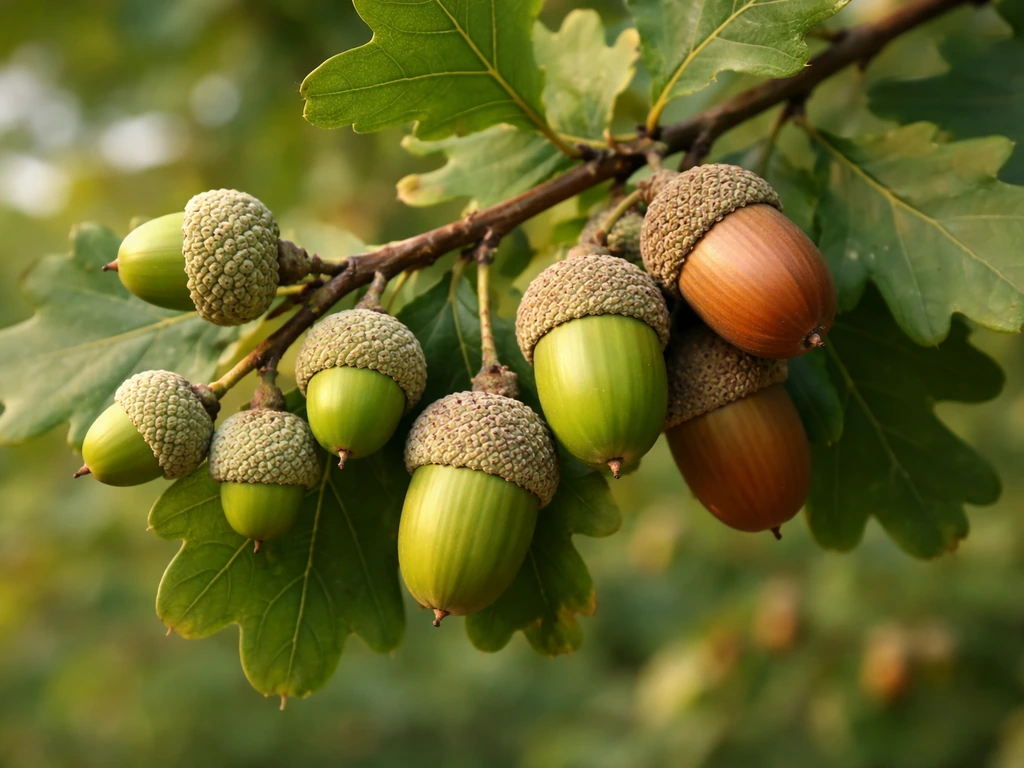
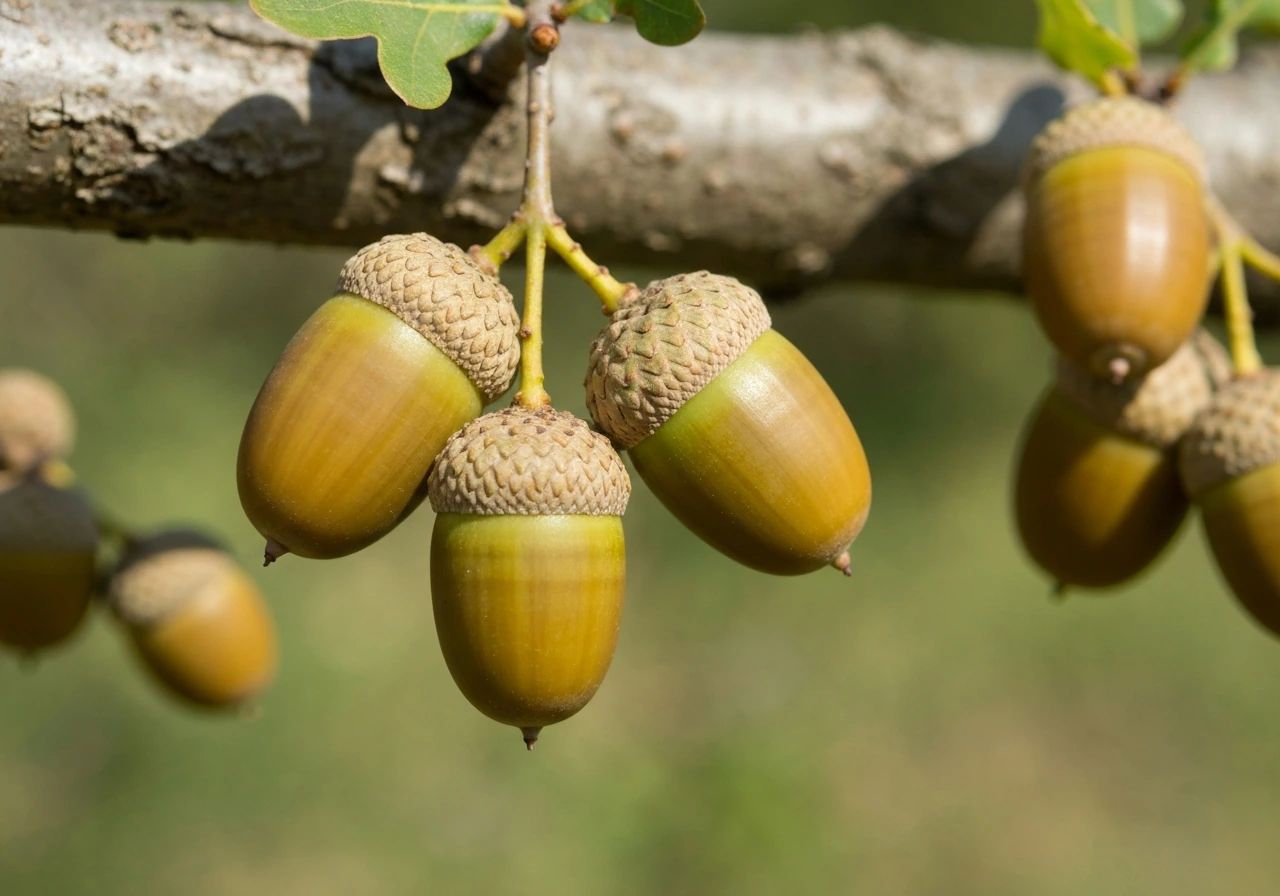
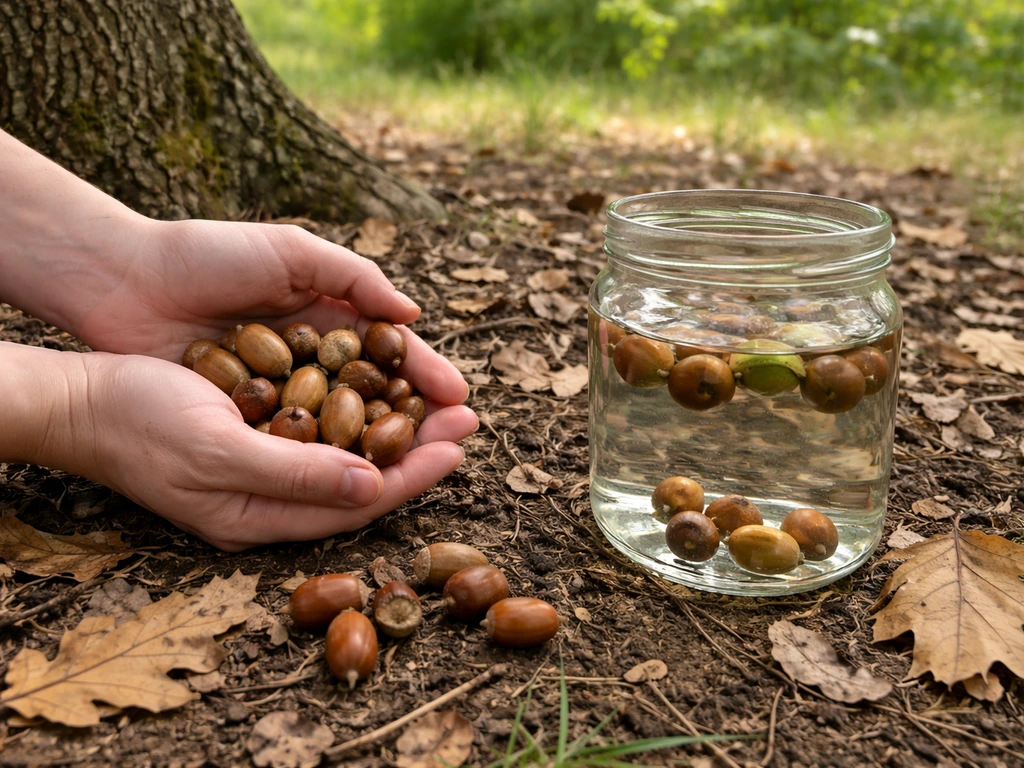
English oak acorns are usually ready to collect from established trees in parks, botanical gardens, and private properties from late March through April in most of southern Australia. Knowing when do acorns grow in your area helps you collect them at peak viability instead of after they have already begun to decline. The acorns you want are plump, brown or greenish-brown, firm to the touch, and still capped or recently dropped. Avoid any that are black, soft, visibly mouldy, or have small exit holes from weevils.
Your best sources are mature specimen trees in your local area. Botanic gardens in Melbourne, Canberra, Adelaide, and Sydney grow a wide range of oak species, and most allow acorn collection from the ground. Local parks with large English oaks are also reliable. The key rule is collect fresh: acorns desiccate quickly once fallen, and even a week in dry summer heat can kill the embryo. Collect them within a day or two of falling and get them into storage or stratification immediately.
Before you do anything else, run a float test. Drop your acorns into a bucket of water and leave them for a few minutes. Acorns that float are generally hollow, infested, or dried out and won't germinate. Discard them. The ones that sink are your planting candidates. This simple step, well documented by horticultural extension services, can save you weeks of wasted effort on dead seed. After the float test, spread the sinkers on a dry cloth for 30 minutes and then move them into storage or straight into stratification.
Short-term storage before stratification
If you can't start stratification immediately, store your tested acorns in a sealed plastic bag with slightly damp (not wet) sphagnum moss or perlite in the crisper drawer of your fridge. Keep them at around 2 to 5 degrees Celsius. Most oak acorns will stay viable for 4 to 8 weeks in these conditions, but the sooner you start the stratification process, the better. Never freeze acorns and never let them dry out completely.
Breaking dormancy: cold stratification for Australian growers
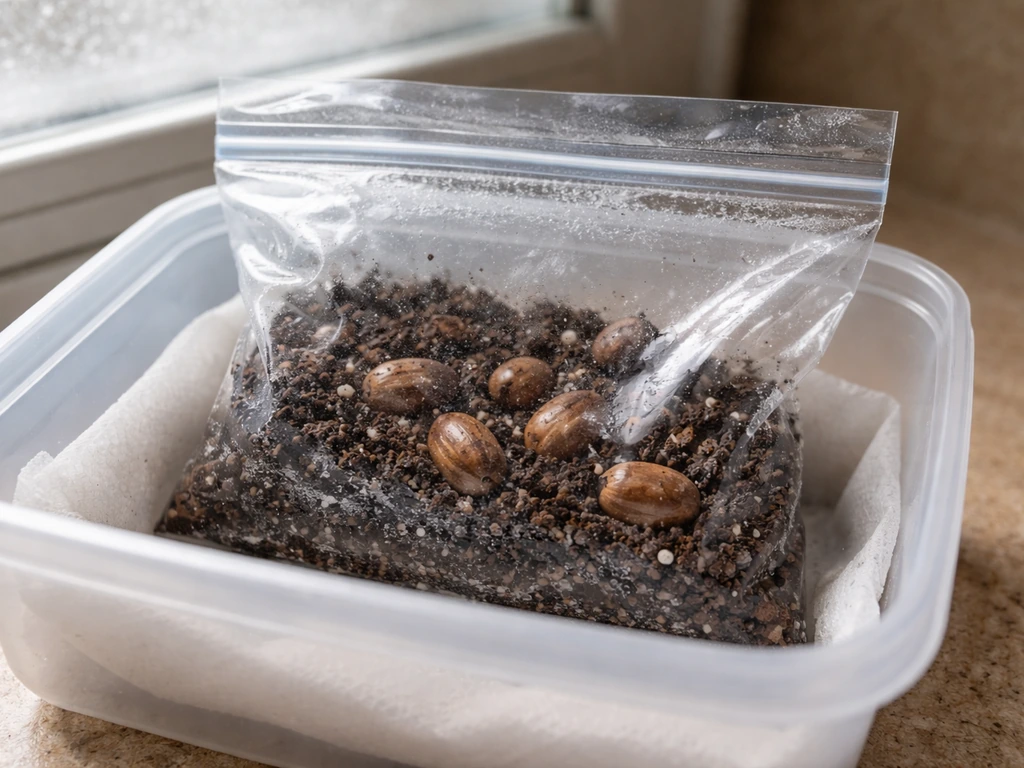
Most temperate oak species need a period of cold-moist stratification to break dormancy before they'll germinate. Think of it as simulating a northern hemisphere winter in your fridge. Without this step, many acorns simply won't sprout, or will take so long that mould and rot take over first.
The standard method is to place your float-tested acorns in a zip-lock bag with damp sphagnum moss or barely damp paper towel, seal the bag with some air inside, and put it in your fridge at around 4 to 5 degrees Celsius. Research on northern red oak (Quercus rubra) has shown that stratification at 5°C for 8 to 12 weeks produces significantly faster and taller seedling growth compared to shorter cold periods. English oak generally needs 6 to 10 weeks. Holm oak, which is less strictly dormant, can germinate with minimal or no stratification, which is part of why it's easier to work with.
Check the bag every week or two. You're looking for the first sign of a radicle (the small white root tip) emerging from the pointed end of the acorn. Once you see that, the acorn is ready to plant whether or not the full stratification period is up. Some acorns will germinate inside the bag in the fridge, and that's fine. Just plant them carefully without breaking the root tip. If you see green or black mould developing on any acorns, remove those immediately, rinse the rest in clean water, and either return them to a fresh bag or plant them straight away.
| Oak Species | Cold Stratification Duration | Temperature |
|---|---|---|
| English oak (Q. robur) | 6 to 10 weeks | 4 to 5°C |
| Pin oak (Q. palustris) | 8 to 12 weeks | 4 to 5°C |
| Scarlet oak (Q. coccinea) | 8 to 12 weeks | 4 to 5°C |
| Northern red oak (Q. rubra) | 8 to 12 weeks | 4 to 5°C |
| Turkey oak (Q. cerris) | 6 to 8 weeks | 4 to 5°C |
| Holm oak (Q. ilex) | Minimal to none | Room temperature or fridge |
From stratified acorn to young tree: a step-by-step guide
Once your acorns show a root tip or have completed stratification, you're ready to plant. If you want a fuller look at the whole life cycle, understanding how do acorns grow from seed to young tree helps you troubleshoot at each stage. You have two main options: start in pots, or direct sow into the ground. Both work, but they suit different situations.
Starting in pots
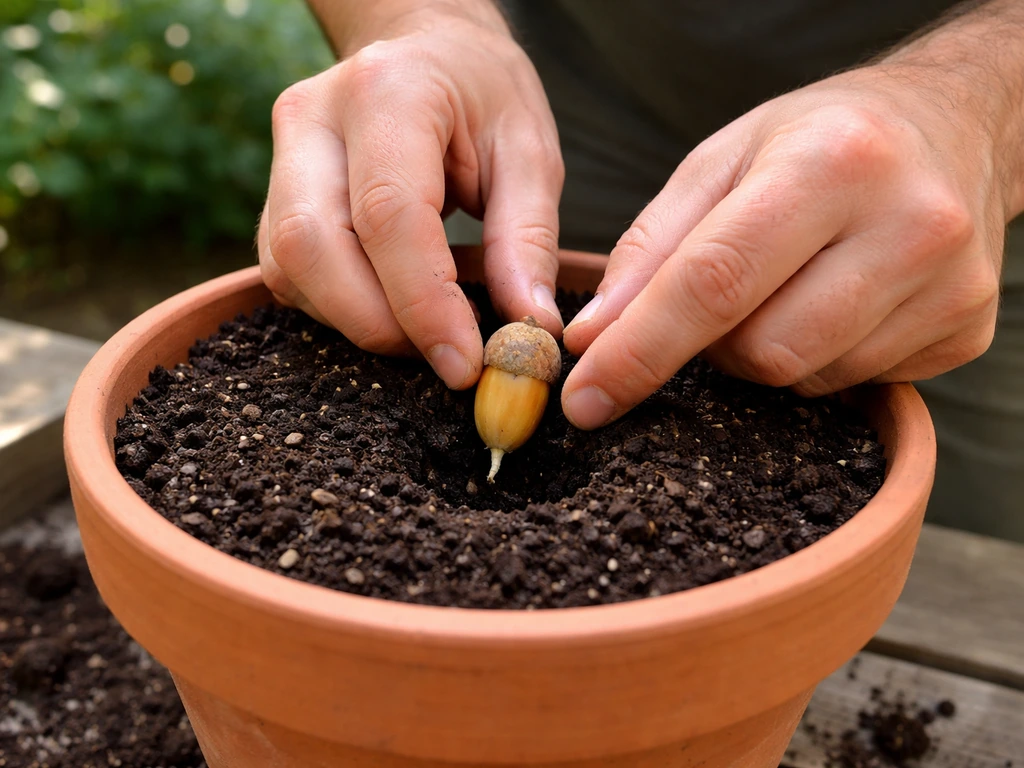
Pots give you more control, especially in areas where snails, possums, or rabbits are a real threat to tiny seedlings. Use deep containers rather than wide shallow ones because oak taproots grow fast and straight down. A 20 to 30 cm deep tube or a tall native tube pot works well. Fill with a mix of good quality potting mix and about 30 percent coarse sand or perlite for drainage. Plant each acorn on its side or with the pointed end slightly down, at a depth of about 2 to 3 cm. Cover lightly and water in gently.
Place pots in a warm but sheltered spot, out of direct harsh afternoon sun while the seedling is tiny. Once the first leaves (which look nothing like mature oak leaves at first) are properly open and the seedling is 8 to 10 cm tall, you can move it to a spot with more morning sun. Keep the potting mix consistently moist but never waterlogged. Most oak seedlings will be ready to transplant to the ground when they're 15 to 25 cm tall with a few sets of true leaves, which typically takes 2 to 4 months from germination.
Direct sowing into the ground
Direct sowing is closer to what happens in nature and can result in a stronger root system because the taproot grows undisturbed. Choose your permanent planting site, loosen the soil to at least 30 cm deep, and plant the stratified acorn 3 to 5 cm deep. Mark the spot clearly. The main downside is vulnerability to pests: slugs, snails, and birds can remove acorns before they even sprout, and mice love them. If you direct sow, protect the area with a wire cage or at least a layer of bird mesh pinned to the ground until you see the seedling emerge.
- Run the float test and discard any acorns that float.
- Stratify sinkers in damp moss or paper towel in a sealed bag at 4 to 5°C for the appropriate time for your species.
- Check weekly for mould and the first sign of a radicle.
- Once root tips appear, plant acorns 2 to 3 cm deep in deep pots or 3 to 5 cm deep in the ground.
- Keep the growing medium consistently moist and protect from direct harsh sun initially.
- Transplant pot-grown seedlings to their permanent site when 15 to 25 cm tall.
Soil, sunlight, water, and site: what Australian conditions actually need
Oak trees are not particularly fussy about soil type once established, but they are very fussy about drainage in the early years. The single most common reason young oaks fail in Australian gardens is sitting in poorly drained clay soil that stays wet through winter. Before you plant, dig a test hole 30 cm deep, fill it with water, and watch how fast it drains. If water is still sitting there after an hour, you need to either improve the soil structure with gypsum and compost, build a raised bed, or choose a different site.
Most oaks prefer a slightly acidic to neutral soil pH, somewhere between 6.0 and 7.0. Australian soils vary widely, so it's worth getting a cheap pH test kit from a hardware store before you plant. If your soil is strongly alkaline (above 7.5), you may see iron chlorosis in oaks, where the leaves yellow while the veins stay green. Adding sulphur or composted organic matter can help bring the pH down gradually.
For sunlight, established oaks want full sun, at least 6 hours per day, with morning sun being more important than afternoon sun. In hot inland areas of Australia, some afternoon shade can protect young trees from heat stress in their first two summers. Young seedlings under 30 cm tall can handle more shade than mature trees and actually benefit from some protection in the first season.
Watering in the establishment phase (the first 2 to 3 years) is critical. Deep, infrequent watering is far better than frequent shallow watering. Aim for a deep soak once or twice a week in dry weather, letting the soil partially dry between watering. This encourages the taproot to grow downward in search of moisture, which is what makes oaks so drought-tolerant long term. In southern Australia, established English oaks generally need supplemental watering only in extended dry spells during summer.
Transplanting and long-term care
The best time to transplant a pot-grown oak seedling into the ground in Australia is in autumn (March to May) or early spring (August to September), avoiding the heat of summer and the hard frosts of inland winter. Water the pot thoroughly the day before transplanting to reduce root shock. Dig a hole twice as wide as the root ball but no deeper. Set the seedling so the root crown sits just at or slightly above ground level. Never plant deep. Backfill with the original soil (amended with compost if the soil is very poor), firm gently, water in well, and then step back.
Mulching
Apply a 7 to 10 cm layer of coarse organic mulch (wood chips, bark, or leaf litter) in a circle around the young tree, keeping it about 10 cm away from the trunk. This is one of the highest-return things you can do for a young oak. It conserves soil moisture, moderates soil temperature, suppresses weeds that compete for water and nutrients, and encourages beneficial fungal networks in the soil that oaks actively rely on.
Fertilising
Young oaks benefit from a light application of a balanced slow-release fertiliser in their first two or three springs. Avoid high-nitrogen fertilisers that push a lot of soft leafy growth quickly, as this growth tends to be more susceptible to pests and environmental stress. A native-friendly or low-phosphorus fertiliser is often recommended in Australian conditions because high phosphorus can interfere with the mycorrhizal fungi that oak roots depend on. Once your oak is established and growing strongly, annual feeding is largely unnecessary.
Pruning
In the first few years, keep pruning to an absolute minimum. Let the tree put energy into root development rather than healing wounds. Remove any dead, crossing, or diseased branches cleanly in late winter before the growing season starts. As the tree matures, light shaping to establish a clear central leader and well-spaced scaffold branches will set up the tree's long-term structure. Oaks respond better to small, regular corrective pruning than to major cuts.
Pests and diseases to watch for in Australia
- Leaf miners and gall wasps: Common on English oak in Australia. Galls look alarming but rarely harm a healthy tree. Leaf miners cause pale trails in leaves. Generally no treatment is needed.
- Aphids: Can cluster on new growth in spring. A strong jet of water or insecticidal soap spray deals with outbreaks. Beneficial insects usually catch up within a few weeks.
- Borers: More serious. Look for sawdust-like frass near small holes in the trunk or branches. Prune out and destroy affected wood if possible.
- Phytophthora root rot: A fungal-like water mould that kills roots in poorly drained soils. Prevention through good drainage is far more effective than any treatment.
- Powdery mildew: White powdery coating on leaves, especially in humid periods. Improve air circulation and avoid overhead watering. Sulphur-based sprays help if the problem is persistent.
Why your acorns aren't sprouting (and how to fix it)
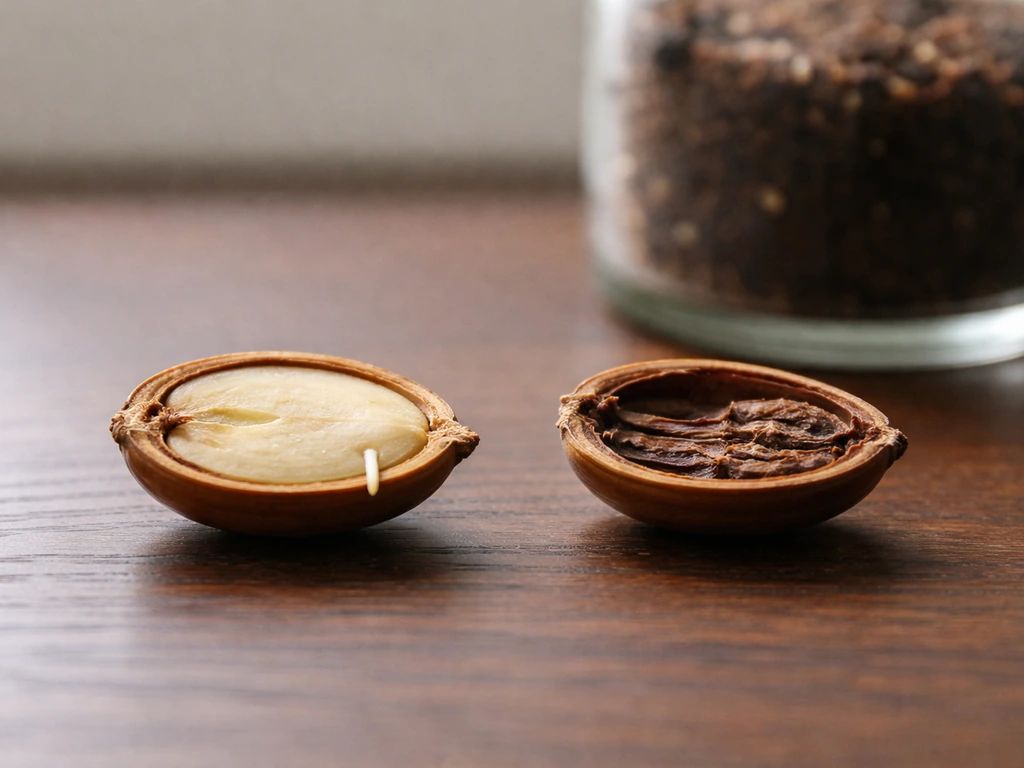
The most common failure is simply planting acorns that were never viable to begin with. If your float test shows most acorns floating, the batch was probably collected too late, stored incorrectly, or came from a stressed tree. Start fresh with a new collection if you can. Acorn viability in Australia is often reduced when acorns sit on hot ground for days before collection, so timing your collection right after they fall is non-negotiable.
The second most common failure is skipping or shortcutting cold stratification. If you plant English oak or pin oak acorns without any cold treatment and wonder why nothing happens after 6 weeks, that's the answer. Forest Research UK recommends storing acorns moist at about 4°C for seed storage, aligning with cold, moist fridge conditions before sowing [Quercus robur](https://www. forestresearch.
gov. uk/tools-and-resources/seed-storage/quercus-robur/). The embryo is dormant and waiting for a cold signal that never came. The RHS “Growing Trees and Shrubs from Seed” advice recommends using a [warm pre-treatment for up to about 12 weeks at around 18 to 24°C](https://www.
rhs. org. uk/plants/types/trees/trees-shrubs-from-seed), followed by cold stratification, to improve germination by breaking dormancy. Put the remaining acorns through the full fridge stratification process before planting the next batch.
Mould in the stratification bag is a sign of too much moisture rather than too little. The moss or paper towel should be damp enough that you can't squeeze any water out of it. If you're seeing fluffy grey or black mould, your medium is too wet. Remove affected acorns, rinse the rest, let them air-dry for 30 minutes, and restart with drier medium. A small amount of white powdery coating on the acorn shell is not always mould: it can be naturally occurring and harmless.
Weak or leggy seedlings that look pale and stretched are almost always a light problem. Move them to a brighter location with more direct morning sun. Damping off, where seedlings suddenly collapse at the base as if pinched, is caused by soil-borne fungi and is usually linked to overwatering and poor air circulation. Let the growing medium dry slightly between watering, remove any dead seedlings immediately, and avoid misting leaves in humid weather.
If your seedlings sprout well but then stall and don't put on growth, check two things: root space and nutrition. Oaks in pots that are too small or too shallow hit a wall fast. Repot into a deeper container and you'll often see an immediate growth response. If roots aren't the issue, a dilute application of balanced liquid fertiliser can kickstart growth in the active season.
Growing oaks from acorns is genuinely satisfying, but it's a multi-year process that rewards patience. In practice, only a small portion of acorns eventually become mature trees, so expectations matter how many acorns grow into trees. If you are wondering what trees grow acorns, it helps to focus on true oaks in the genus Quercus, since that is where the acorns come from.
The biology of acorn germination and the early growth stages are fascinating to follow closely, and understanding why each step matters, from the float test to stratification to drainage, makes the whole process more reliable and less frustrating. Once your oak is in the ground and established, you'll have a tree that could easily outlive you.
FAQ
Can I grow English oak or other true oaks from acorns any time of year in Australia?
You can only do it reliably if you still have viable acorns and you can complete cold stratification afterward. Acorns collected outside the normal March to May window often have reduced viability, so if you miss collection season, it is usually better to buy stored viable acorns or wait for the next fall collection rather than forcing summer planting.
What’s the fastest way to tell if the acorn embryo is still alive after stratification?
Beyond the float test, open one spare acorn as a check: the kernel should look firm and off-white, not dried out and shriveled or dark and hollow. Also look for a clean white radicle, if you see it then viability is high even if the full cold period is not finished.
Should I plant the acorn root tip immediately when it appears in the fridge?
Yes. Once the radicle is visible, delay increases the risk of breakage or drying. Plant carefully with the tip pointing downward, keep the pot mix evenly moist, and avoid rotating the container after planting so the fragile root stays oriented.
My stratification bag has mold, but not every acorn is affected. What should I do?
Remove any visibly mouldy acorns first, then reduce moisture in the medium. If you can squeeze out water from the moss or towel, it is too wet. Rinse the remaining acorns with clean water, restart with a drier bag medium, and keep the bag in a stable part of the fridge away from warm fluctuations.
Do I need to stratify holm oak (Quercus ilex) the same way as English oak?
Usually you can do less. Holm oak is less tightly dormant, so some batches germinate with minimal or shorter cold treatment. However, even for holm oak, you still want fresh, viable acorns and you should monitor moisture closely, because high moisture can cause rot before germination.
What depth should I plant acorns in pots versus direct sowing?
In pots, a shallow depth is typically best, around 2 to 3 cm, because the taproot still gets straight growth but you can control conditions. For direct sowing, go slightly deeper, about 3 to 5 cm, to reduce exposure to birds and small rodents. In both cases, avoid planting too deep, because seedlings can fail to reach the surface.
Do oaks grown from acorns need fertiliser early, or can I just wait?
You can often wait until after you see proper leaf growth, then use a light balanced slow-release feed in spring. Skip high-nitrogen fertilisers, because they encourage soft growth that is more vulnerable to stress and pests. If seedlings are pale but otherwise upright, check light first, pale color often comes from insufficient morning sun rather than missing nutrients.
How do I prevent damping off in seedling pots?
Use a well-draining potting mix with coarse perlite or sand, water so the mix dries slightly between waterings, and keep air moving around the seedlings. Avoid misting leaves in humid weather. If seedlings collapse at the base, remove dead ones immediately and let the surface dry more than usual before watering again.
Why do my seedlings look leggy and pale even after stratification worked?
That pattern is usually insufficient light. Move seedlings to a brighter spot with more morning sun once they start leafing, and avoid keeping them too warm and dark. Legginess can also worsen if the pot is too small, because the plant spends energy on survival rather than steady stem thickness.
What’s the best wildlife protection for direct sowing in Australia?
Bird mesh pinned to the ground works well, and a rigid wire cage is better where mice are common. Make sure the protection sits directly over the planting spot, not just around it, because acorns can be dragged out through gaps. Remove the protection once you see true seedlings emerging strongly.
How can I tell if my planting site has a drainage problem before I commit?
Do the 30 cm test hole, fill with water, and watch the drain time. If water still remains after about an hour, assume winter waterlogging risk. In that situation, improve soil structure with compost and gypsum where appropriate, build a raised bed, or choose a different spot rather than relying on watering control.
When is it safe to transplant a pot-grown oak into the ground?
Transplant when the seedling is robust enough to handle outdoor conditions, typically after it reaches about 15 to 25 cm with several sets of true leaves. Time it for autumn (March to May) or early spring (August to September), and water the pot thoroughly the day before transplanting to reduce root shock.
Should I prune an oak sapling that’s still establishing?
Keep pruning minimal in the first few years. The main early cuts should be removing dead or diseased material in late winter. Focus instead on protecting the leader, giving the seedling good light, and maintaining drainage and mulch, because early heavy pruning redirects energy from root establishment.
How many acorns should I collect if I want a few trees?
Expect a low conversion rate, because viability varies and not every germinated acorn survives the first year. A practical approach is to collect and stratify more than your target number, then plan for extra loss from pests, mold issues, and winter wet. Collecting in good condition matters more than trying to “save” acorns that were already borderline.
If my acorns all float in the water test, does that always mean I should throw them away?
Usually yes, but first double-check the test method. Use cool water, don’t overhandle the acorns, and give them a few minutes rather than hours, because storage artifacts can change buoyancy. If almost all float, treat the batch as non-viable and start fresh with a new collection or a new source.