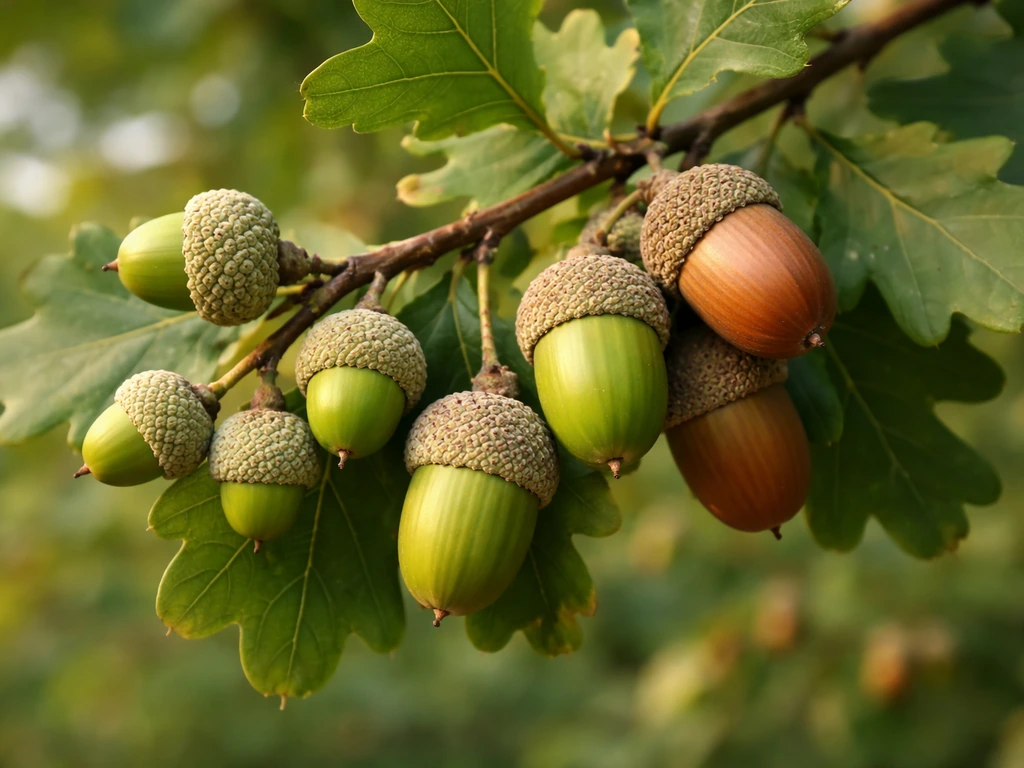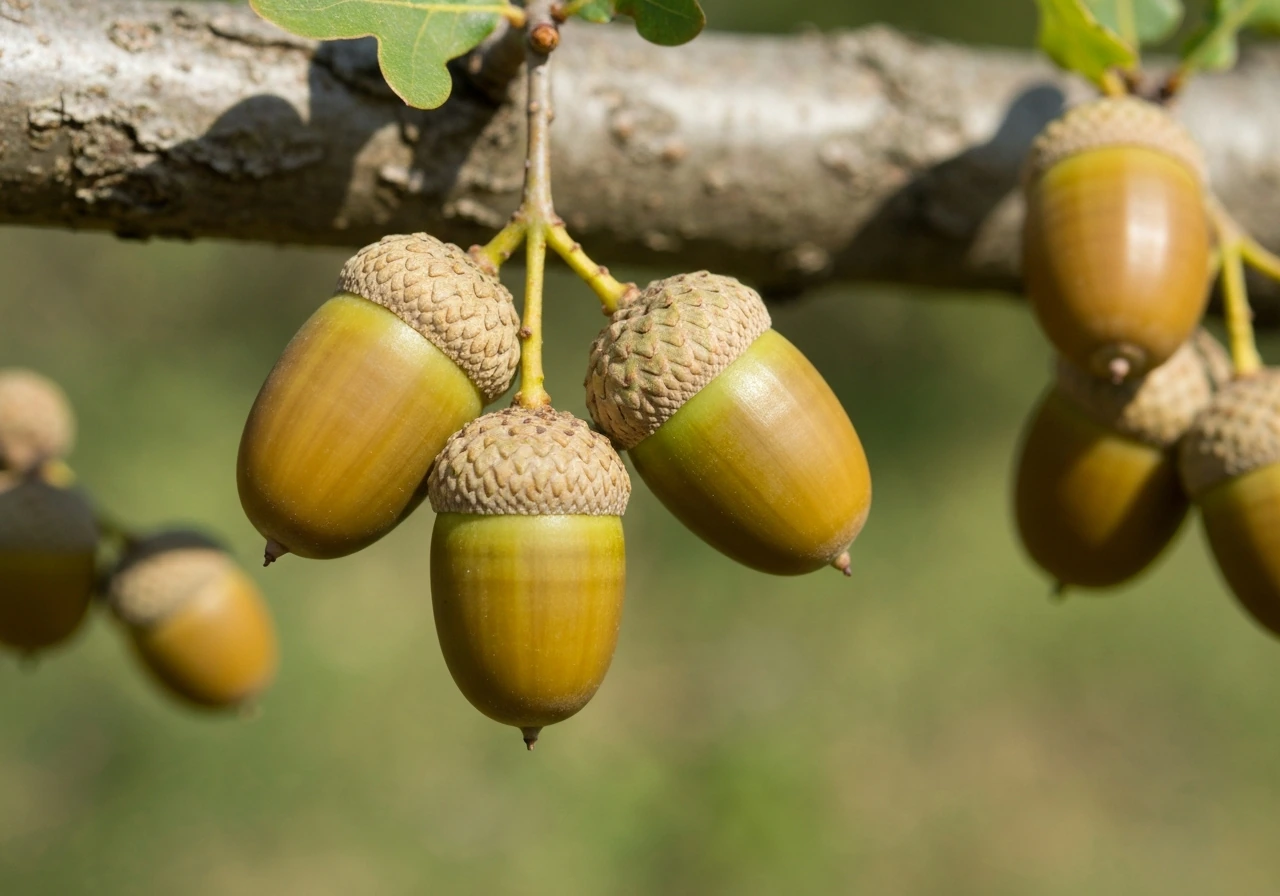
Oak trees leaf out in spring, typically between March and May depending on species and location, then flower shortly after. Acorns begin forming from those flowers, swell visibly through summer, and reach full maturity in fall. Oak trees produce acorns, and the specific acorn timeline starts with spring flowering after leaf-out. For white oaks, that whole cycle takes one growing season. For red oaks, the acorns you see forming this summer won't be fully ripe until fall of next year. So if you're standing under your oak right now wondering when you'll see acorns, the honest answer is: late summer through October for white oaks, and the following September or October for red oaks.
When Do Oak Trees Grow Acorns? Timing and Stages
Marcus Hendricks
30 Apr 2026
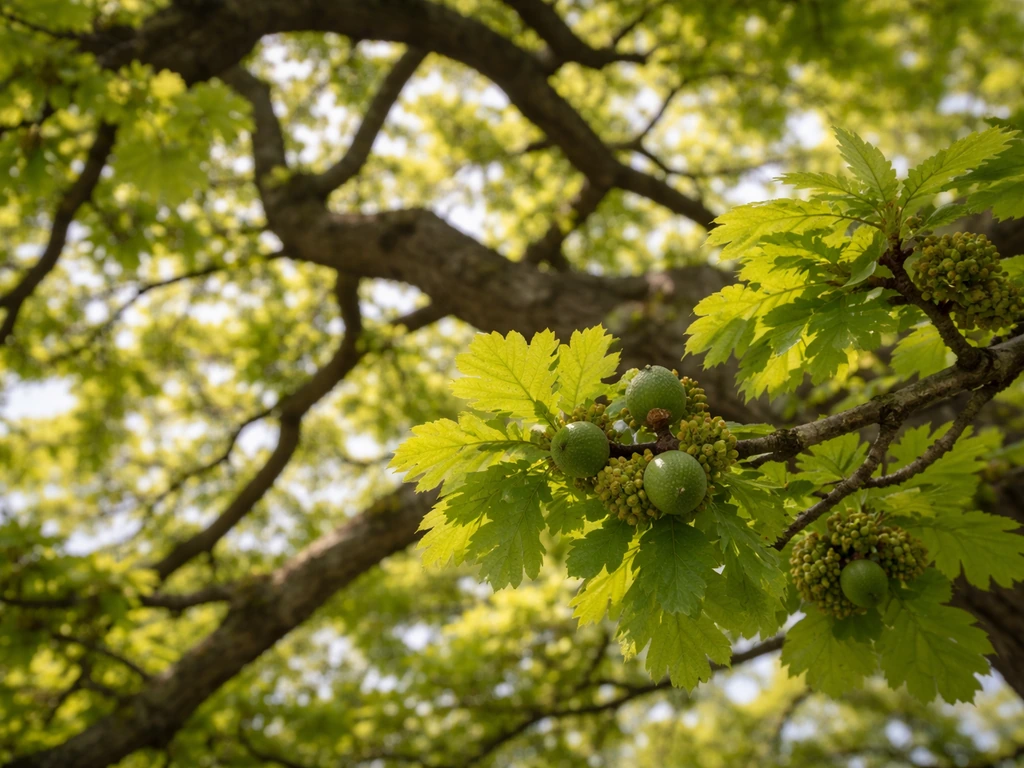
When oak trees leaf out in spring
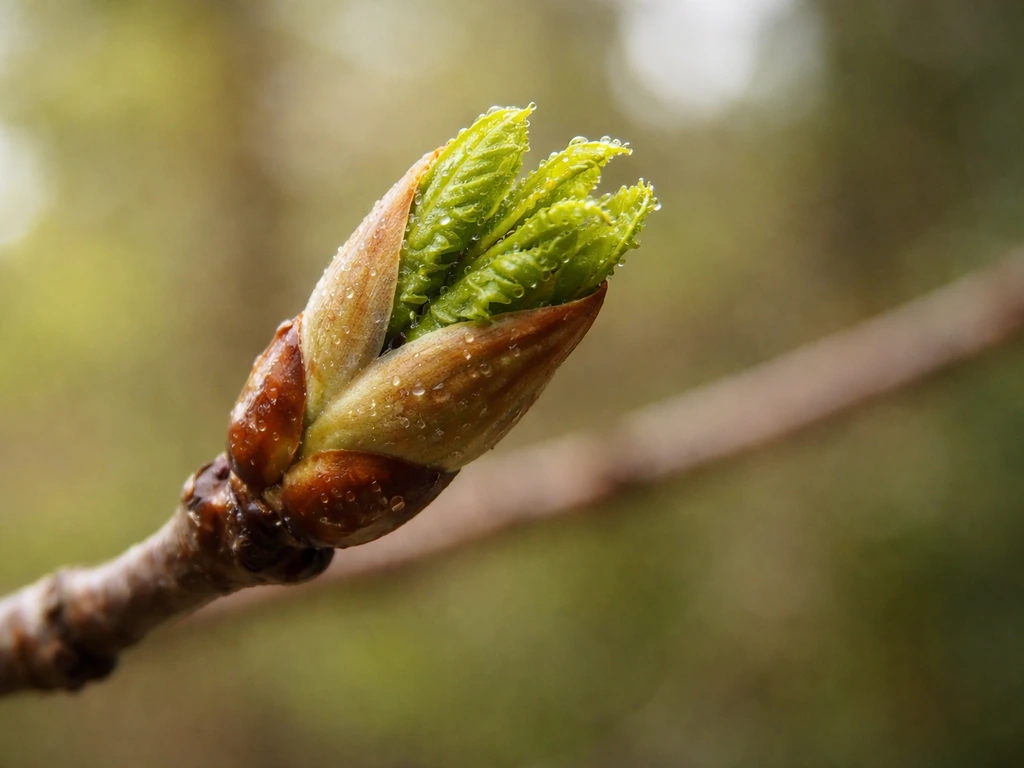
Leaf-out is the starting gun for everything else that happens on an oak. The moment bud scales split open and new green growth becomes visible, called budburst, marks the transition from dormancy to active growth. For most oaks in the eastern and central United States, that window falls somewhere between late March and early May. Northern red oak tends to push leaves a little later than white oak in the same location, though both respond heavily to local temperature accumulation rather than the calendar date alone.
Long-term phenology records from Harvard Forest confirm that leaf-out timing for both white oak and red oak varies measurably year to year and has shown a gradual trend toward earlier leafing over decades of observation. What drives it most reliably is accumulated warmth, measured as degree days above a base temperature threshold, combined with day length cues. A warm March can push leaf-out two to three weeks earlier than a cool one. Drought and unusual warming experiments have also shown that heat stress can shift bud burst and leaf unfolding noticeably, which matters if you're in a region with unpredictable late-winter warm spells.
From a practical standpoint, watch for bud swell first. Buds will fatten and turn greenish before scales actually break. That swelling phase typically begins two to four weeks before full leaf-out and is your signal that flowering is coming soon.
When acorns form: the full timeline from flower to nut
Oak flowers are easy to miss because they're not showy. Male flowers appear as dangling yellow-green catkins, usually emerging right around or just before leaf-out in April and May. Female flowers are tiny, barely visible at the base of new leaves, and those are the ones that become acorns. Pollination happens via wind during that short spring window. In other words, the acorn timeline depends on the species, but they typically start forming right after spring flowering and mature later in the same or the next year when do acorns grow on trees.
Here is where white oaks and red oaks part ways completely, and understanding this difference is the most practically useful thing you can take from this article.
White oak group: one-season development
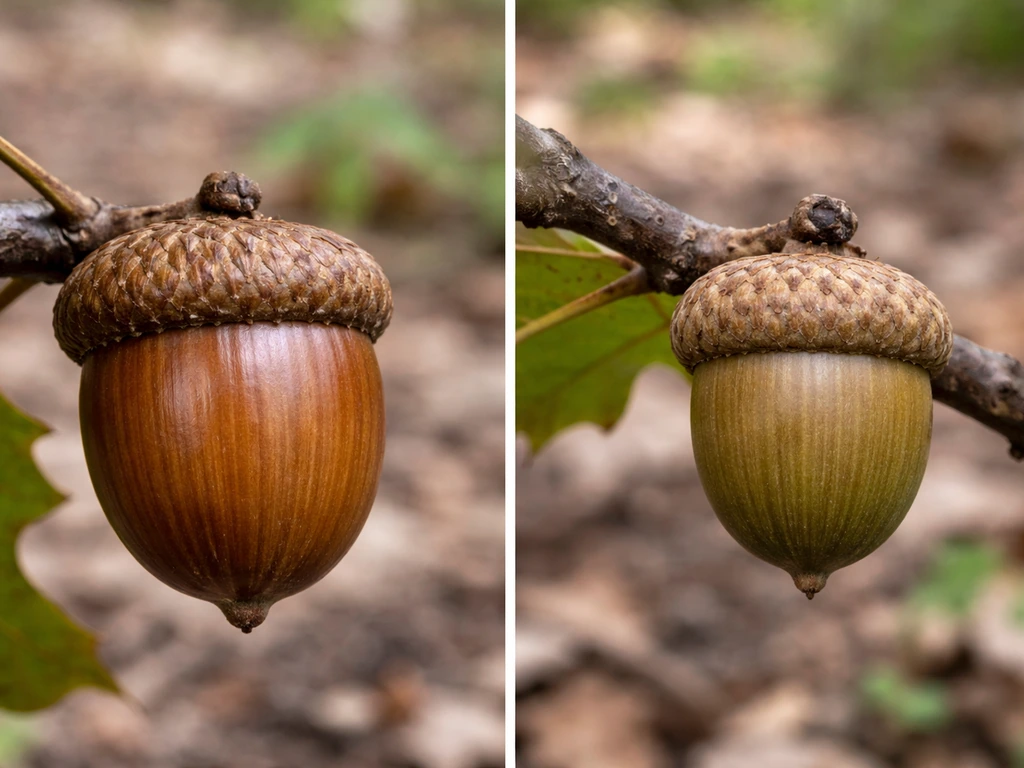
White oaks (Quercus alba and other white-oak-group species) complete acorn development in a single growing season. After pollination in spring, the acorn reaches maturity approximately 120 days later, which puts full maturity somewhere in late summer to early fall depending on your location. Acorn drop begins about 25 days after maturity and wraps up within a month. So spring flowers in April become mature acorns by August or September in warmer parts of the range, or by September or October further north.
Red oak group: two-season development
Red oaks take two full growing seasons to ripen an acorn. Northern red oak flowers in April or May, but the pollen tube growth is extremely slow, and fertilization of the ovule doesn't occur until the following spring. The acorn you can see on the tree in its first summer is already there, but it's essentially in a resting state. Development accelerates in the second year, and the acorn finally ripens and drops in September or October of that second fall. Southern red oak and Shumard oak follow the same two-year pattern, with seedfall typically occurring in September and October of the second season.
This two-year cycle also means that red oaks carry two cohorts of acorns simultaneously in some years: small first-year acorns near the tips of new growth, and larger maturing second-year acorns from last year's flowers. It's a distinctive look once you know what you're seeing.
| Feature | White Oak Group | Red Oak Group |
|---|---|---|
| Flowering time | April to May | April to May |
| Development cycle | 1 growing season | 2 growing seasons |
| Maturity after pollination | ~120 days | ~16 months |
| Typical acorn drop | Late summer to early fall (year 1) | September to October (year 2) |
| Example species | White oak (Q. alba) | Northern red oak, southern red oak, Shumard oak |
When acorns become noticeable on the tree
The first few weeks after fertilization, acorn development is nearly invisible to the naked eye. The ovary hasn't swelled yet, and even with a close look you'd struggle to spot anything. From a practical observer's standpoint, don't stress about catching those earliest stages. The acorns become reliably noticeable once the ovary starts to enlarge, which for white oaks typically happens by late June or early July in most of the eastern US. By midsummer, you'll see small green acorns in their caps quite clearly.
For red oaks, first-year acorns become visible in roughly the same early-summer window, but they stay small. The second-year cohort is much more obvious by late July and August, swelling noticeably as they approach maturity. Full-size green acorns in August, transitioning to brown by September, is the visual cue that drop is approaching.
A practical maturity check: if you gently press on the cap of an acorn and it separates easily from the nut, the acorn is mature. If it resists or the cap feels firmly attached to a still-green nut, it needs more time. Collecting acorns after they've naturally fallen is the most reliable way to ensure they're ready, though in some years acorns drop earlier than normal due to stress or insect damage.
How species and local climate shift the schedule
The timing windows above are averages. Real-world variation can shift them by several weeks in either direction, and the two biggest levers are species identity and your local climate.
Species matters a lot even within the white-oak or red-oak groups. Northern red oak flowering is documented in USDA plant guides as occurring in April through May, and fruit can begin development early enough that in some southeastern locations (like North Carolina) acorn development is noticeably further along by August than it would be for the same species in New England. Bur oak, a white-oak-group member, tends to be one of the earliest to leaf out across the Plains states. Live oaks in the Southeast behave quite differently from northern deciduous oaks.
Climate is the other major variable. Western oaks growing in water-limited environments show earlier and more intermittent bud break and flowering than their central and eastern counterparts. In Australia and the Southern Hemisphere, English oak (Quercus robur) reverses the calendar entirely, leafing out in September or October (Southern Hemisphere spring), with acorn development corresponding to summer and fall in the Southern Hemisphere. Frost sensitivity around flowering time is a real risk for oaks in those climates, where late frosts can damage catkins and reduce the crop.
Cold or rainy weather during the spring flowering window is one of the most common reasons for a poor acorn year in northern red oak. Wind pollination requires dry, mild conditions. If your area had a wet, cold April, expect fewer acorns regardless of how healthy the tree looks otherwise.
Growing conditions that affect leaf-out and acorn production
Even a perfectly timed spring means nothing if the tree's underlying growing conditions aren't supporting good reproductive output. These are the factors that most reliably affect both the timing and the quantity of acorns.
- Tree age: Northern red oak typically doesn't bear fruit at all until around 25 years old, and most trees don't produce acorns in meaningful quantities until they're closer to 50 years old. If you have a young tree, this isn't a timing question, it's a waiting question.
- Accumulated warmth (degree days): Leaf-out and flowering are triggered by heat accumulation after winter dormancy, not just the calendar. A warm late winter accelerates the schedule; a cool one delays it.
- Moisture: Drought stress during summer acorn development can cause acorns to abort before maturity. Adequate soil moisture through June, July, and August is important for a complete crop.
- Sunlight: Oaks in full sun generally produce more acorns than heavily shaded trees. Suppressed understory oaks may leaf out but produce little or no fruit.
- Winter chilling: Like most deciduous trees, oaks need a period of cold dormancy to reset their internal clock. Insufficient chilling in mild winters can delay or reduce spring flowering.
- Mast year cycles: White-oak-group oaks tend toward heavier crops roughly every 4 to 7 years, with light or failed crops in between. This is a normal biological pattern, not a sign of a sick tree.
Environmental stress of any kind, whether from drought, compacted soil, root damage, or disease, can cause acorn abortion even after successful pollination. If your oak leafs out normally but drops small, undeveloped acorns by midsummer, stress is the most likely culprit. Check soil drainage, look for signs of root compaction, and consider whether the tree has had consistently dry summers recently.
What to watch for in your yard, and how to plan around it
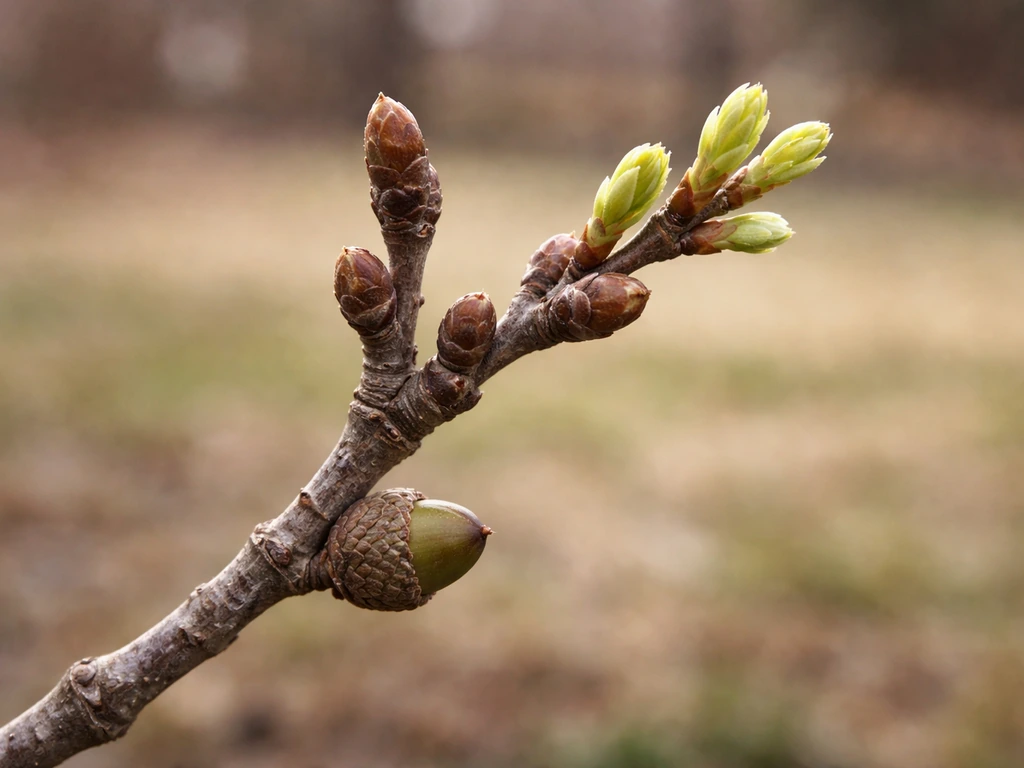
If you want to get practical about observing your oak's progression, here's a simple sequence to track through the season. Each stage tells you something useful about what to expect next.
- Watch for bud swell in late winter to early spring. This is your earliest signal that the tree is breaking dormancy. In most of the US, this happens anywhere from February in the South to April in the North.
- Look for catkins (male flowers) around the time of bud burst. Those dangling yellow-green clusters appear right as leaves begin to unfurl, usually April through May. Their presence means pollination is underway.
- Scan for tiny female flowers at the base of new leaves during the same spring window. These are easy to miss but become the acorns.
- Check for swelling acorns by late June or early July. Small green acorns in their caps are visible by midsummer on white oaks and first-year red oaks.
- Monitor acorn size and color through August. Acorns swelling and beginning to brown signal approaching maturity for white oaks.
- Watch for natural drop in September and October. For white oaks, that's the harvest window. For red oaks, this is when second-year acorns mature and fall.
- Do the cap test before collecting. A cap that separates easily from a firm, brown nut means the acorn is mature and viable.
If you're growing or planning to grow oaks from acorns, the most reliable collecting strategy is to gather from the ground shortly after natural drop begins, before they dry out or get taken by wildlife. If you're in Australia, the same core steps apply, but your timing and species choice will depend on local seasons and the specific oak variety you have access to grow oaks from acorns. Acorns that have fallen naturally are more reliably mature than those still on the tree. White oak acorns need to be processed or planted quickly because they have low dormancy and begin germinating almost immediately after ripening. Red oak acorns are more forgiving for short-term storage.
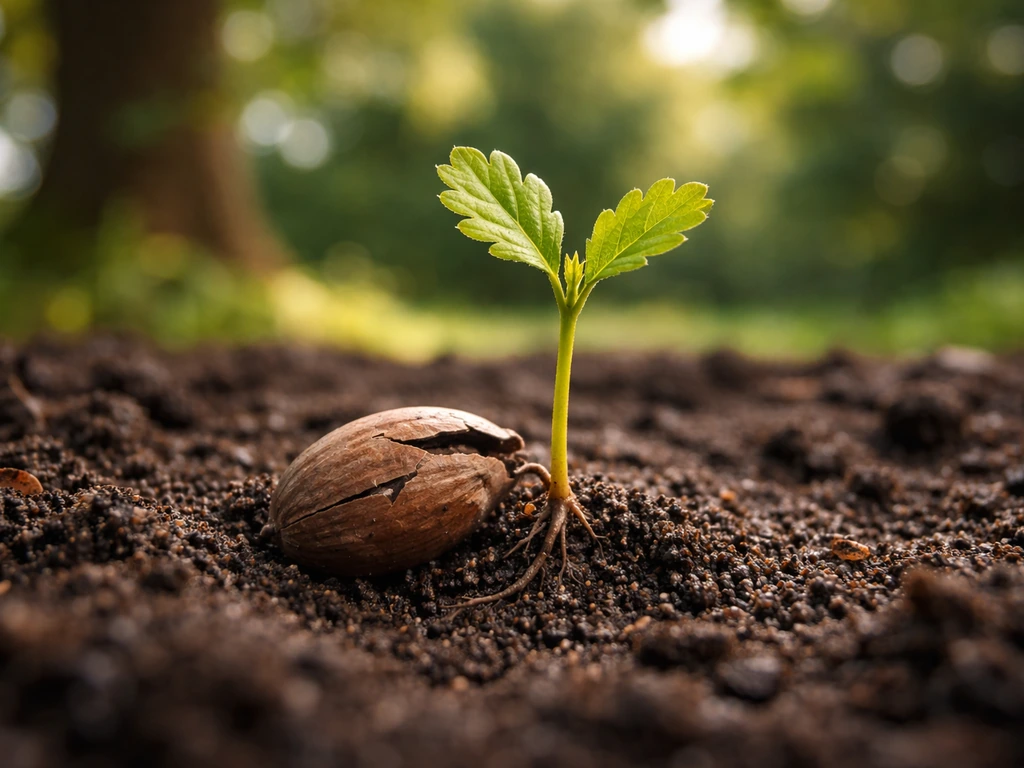
Understanding this full seasonal arc, from bud swell in March or April through acorn drop in September or October, also helps you make sense of the bigger picture questions around oak reproduction, like why some years produce enormous crops and others produce almost nothing, or how many of those acorns actually develop into established trees. Those questions get into the biology of mast events and seedling survival, which connect closely to how acorns grow into new trees and what it takes for any given acorn to make it past its first season. If you're also tracking how acorns grow into seedlings, see the section on what to watch for in your yard, and how to plan around it how acorns grow into new trees.
FAQ
Why might my oak have catkins in spring but not many acorns later?
Catkins can appear even when female flowers are limited or fertilization fails, and wind pollination is weather-dependent. A wet, cool April or late frosts around flowering can reduce the crop even if the tree leafs out normally.
How can I tell whether an acorn on the tree is from this year’s flowers or last year’s (especially on red oaks)?
Red oaks can carry two cohorts at once. Look for size differences and maturation stage, first-year acorns stay smaller and lag, second-year acorns swell later and begin turning brown closer to September or October.
If I see green acorns in August on a white oak, will they be ready soon?
Often yes, but not always immediately. White oak acorns typically complete within one growing season, yet maturity still varies by location and weather, so use the cap test (cap separates easily from the nut) or wait for natural drop.
What does it mean if acorns drop early, before they fully develop?
Early drop is frequently linked to stress after pollination, such as drought, compacted or damaged roots, or disease. If leaf-out looked normal but acorns abort midsummer, focus on soil drainage and summer water conditions.
Do acorns grow every year, or can oaks skip years entirely?
Oaks do not produce equal quantities annually. Many species show mast-like swings, so you may see bumper crops one year and much less the next, even when budburst timing is normal.
When should I start collecting acorns if my goal is planting or storage?
Start when natural drop begins, not when they are first visible on the tree. Fallen acorns tend to be more reliably mature, and for white oaks you should process or plant quickly because they start germinating soon after ripening.
Can I remove acorns from the tree by shaking, and are they likely mature?
Shaking can work, but it increases the chance you collect immature nuts because caps may still be firmly attached. For best maturity, collect from the ground shortly after drop begins and avoid taking acorns that are still green and hard to detach.
How do late frosts affect the acorn timeline?
Frost can damage catkins and reduce successful pollination, leading to fewer acorns. In climates where late frosts are common, you may see a weaker crop even if leaves still emerge at the usual time.
Do warm spells in late winter change when acorns start forming?
They can shift budburst earlier, which moves the entire sequence forward. However, if warmth is followed by a cold snap, flowering can still be harmed, so timing may shift but the acorn yield may not improve.
Is the “cap separates easily” maturity check reliable for all oak types?
It is a useful general cue, but the exact feel can vary by species and how dry the acorn is. If you are unsure, combine the cap test with timing (late summer for white oaks, early fall for mature red-oak second-year acorns).