Acorns grow on oak trees, and only oak trees. That's the short answer. The word "acorn" literally refers to the nut of the oak, so if you're looking at an acorn, you're looking at the fruit of a tree in the genus Quercus. No other tree produces acorns, so there's no need to second-guess what you're seeing. The more useful question is which oak species you're dealing with, where it grows, and when you can actually expect to find acorns on it.
What Trees Grow Acorns? Identify Oak Trees That Produce Them
Marcus Hendricks
4 Apr 2026
Acorn-producing tree basics: the oak family
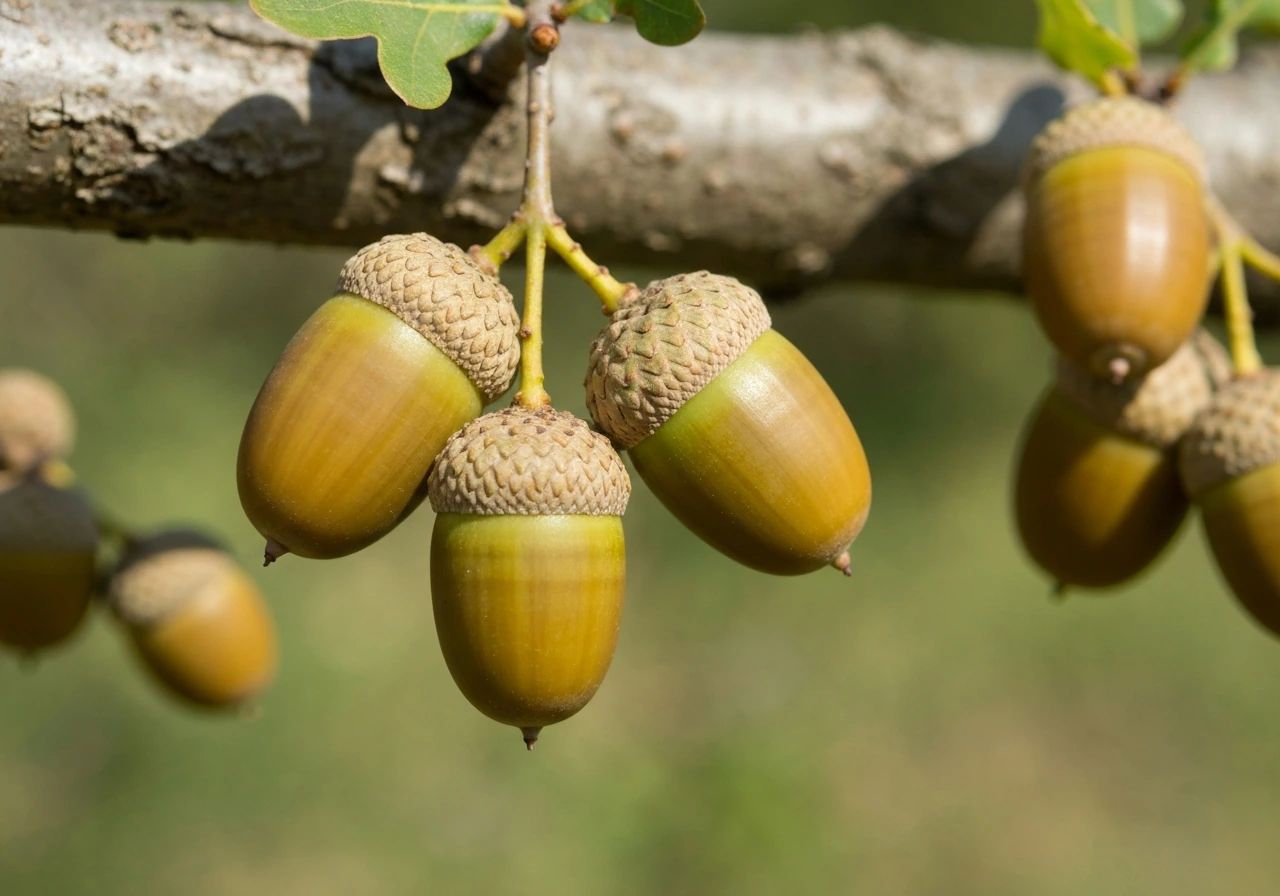
Oaks belong to the genus Quercus, which sits within the plant family Fagaceae (the beech family). Within that family, oaks are uniquely defined by their fruit: botanists describe it as a non-valved nut called an acorn. While beeches and chestnuts are also in Fagaceae, they don't produce acorns. Acorns are structurally distinct, consisting of a nut partially enclosed by a cupule, which most people call the acorn cap or cup. That cap-and-nut combination is the botanical fingerprint of a Quercus.
There are roughly 435 oak species worldwide, with about 90 of those native to North America alone. They range from towering forest trees to shrubby scrub oaks, but they all share that same basic fruit structure. If a tree is in the genus Quercus, it grows acorns. Full stop.
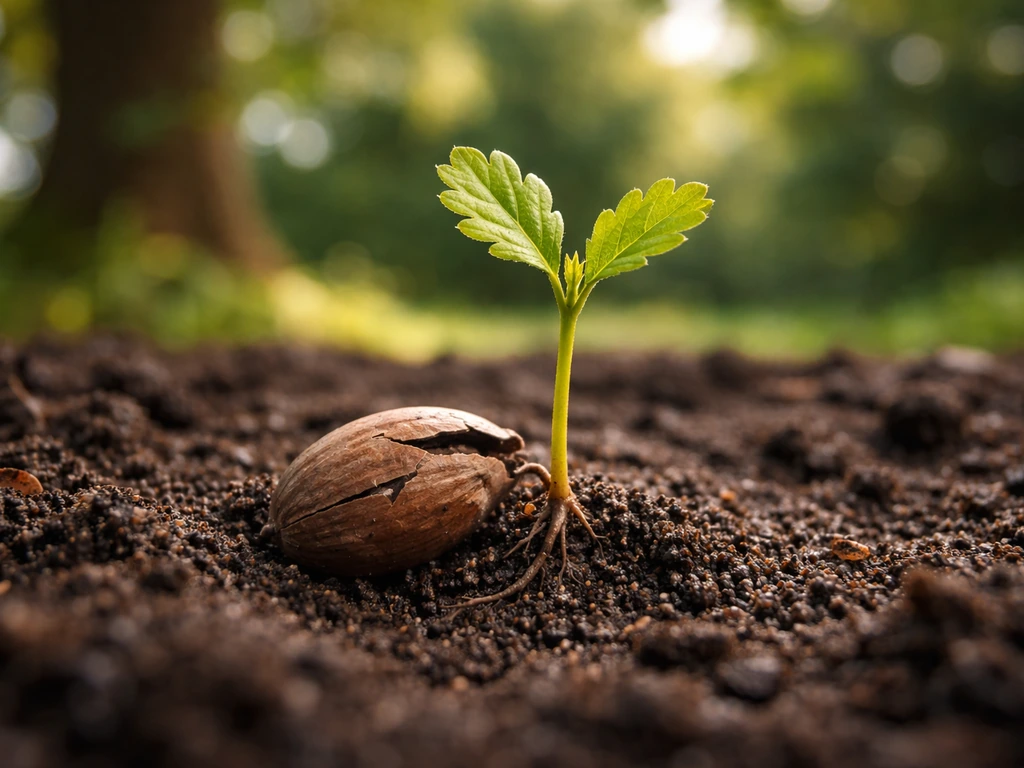
Understanding how acorns grow from flower to fully formed nut helps explain why production is so unpredictable from one year to the next. Acorns develop from the tree's ovary after pollination, but high rates of flower abortion mean the final acorn count can be dramatically lower than the flower count suggested.
Which oak species actually produce acorns
All oaks produce acorns, but some species are far more commonly encountered than others depending on where you live. Here are the ones you're most likely to come across in North America and beyond.
Northern red oak (Quercus rubra)
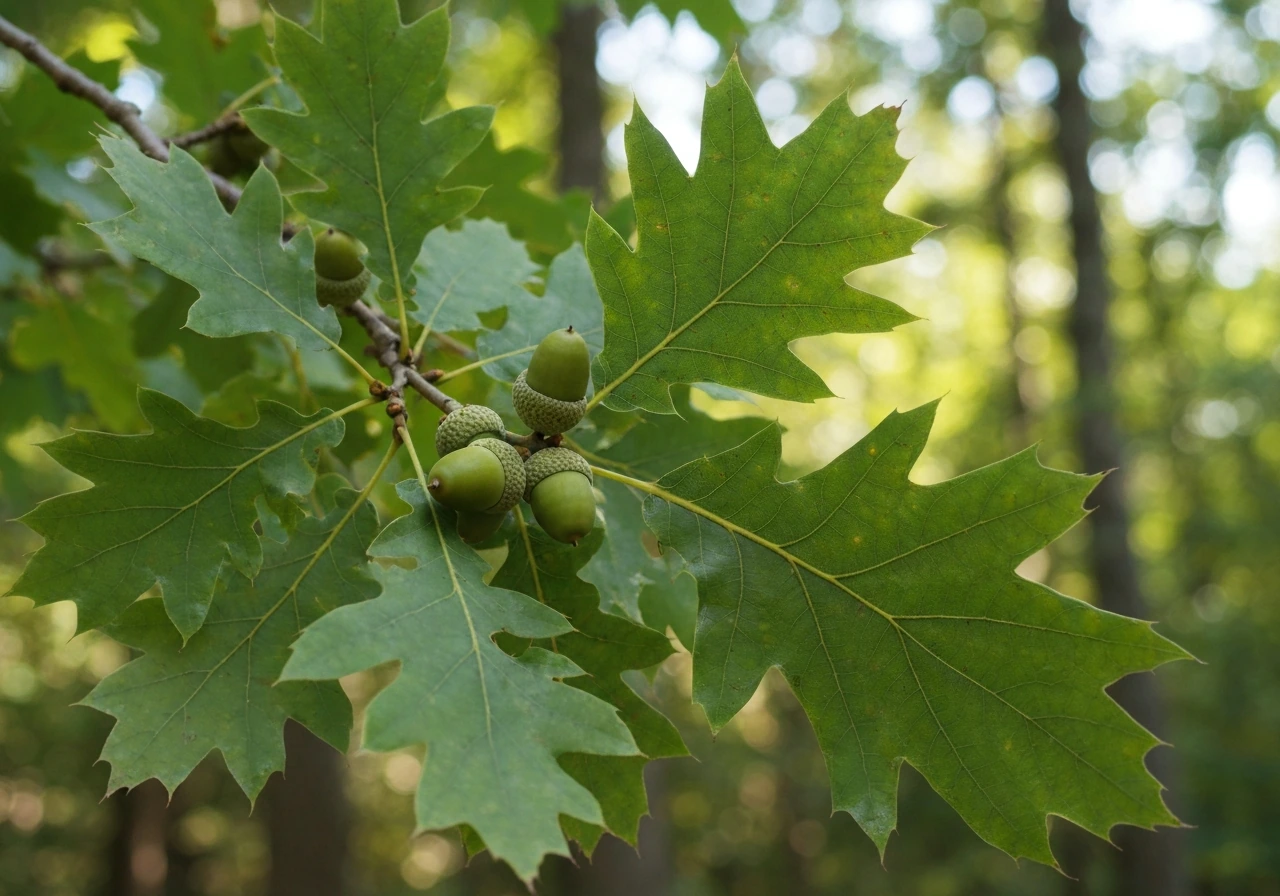
This is one of the most widespread oaks in eastern North America, recognizable by its large leaves with pointed, bristle-tipped lobes. It produces medium-sized, flattish acorns that take two full growing seasons to mature, which is typical of the red oak group. One important caveat: northern red oak often doesn't bear fruit until around age 25, and abundant production usually doesn't kick in until the tree is closer to 50 years old. Crown size matters too. Acorn production in northern red oak peaks at around 20 inches in diameter at breast height, then tends to decline as the tree grows larger.
White oak (Quercus alba)
White oak is the classic large shade tree of eastern North American forests. Its leaves have rounded lobes (no bristle tips), and its acorns mature in a single growing season, unlike the red oak group. A mature white oak can drop thousands of acorns in a good year, but those good years are not guaranteed annually. White oak mast frequency is typically listed as producing large mast crops every 4, 10 years blank" rel="noopener noreferrer">mast frequency as producing large mast crops every 4–10 years. The USDA documents good acorn crops occurring only blank" rel="noopener noreferrer">every 4 to 10 years, with significant variation among individual trees and stands. In poor years, the entire seed crop can be wiped out.
Bur oak (Quercus macrocarpa)
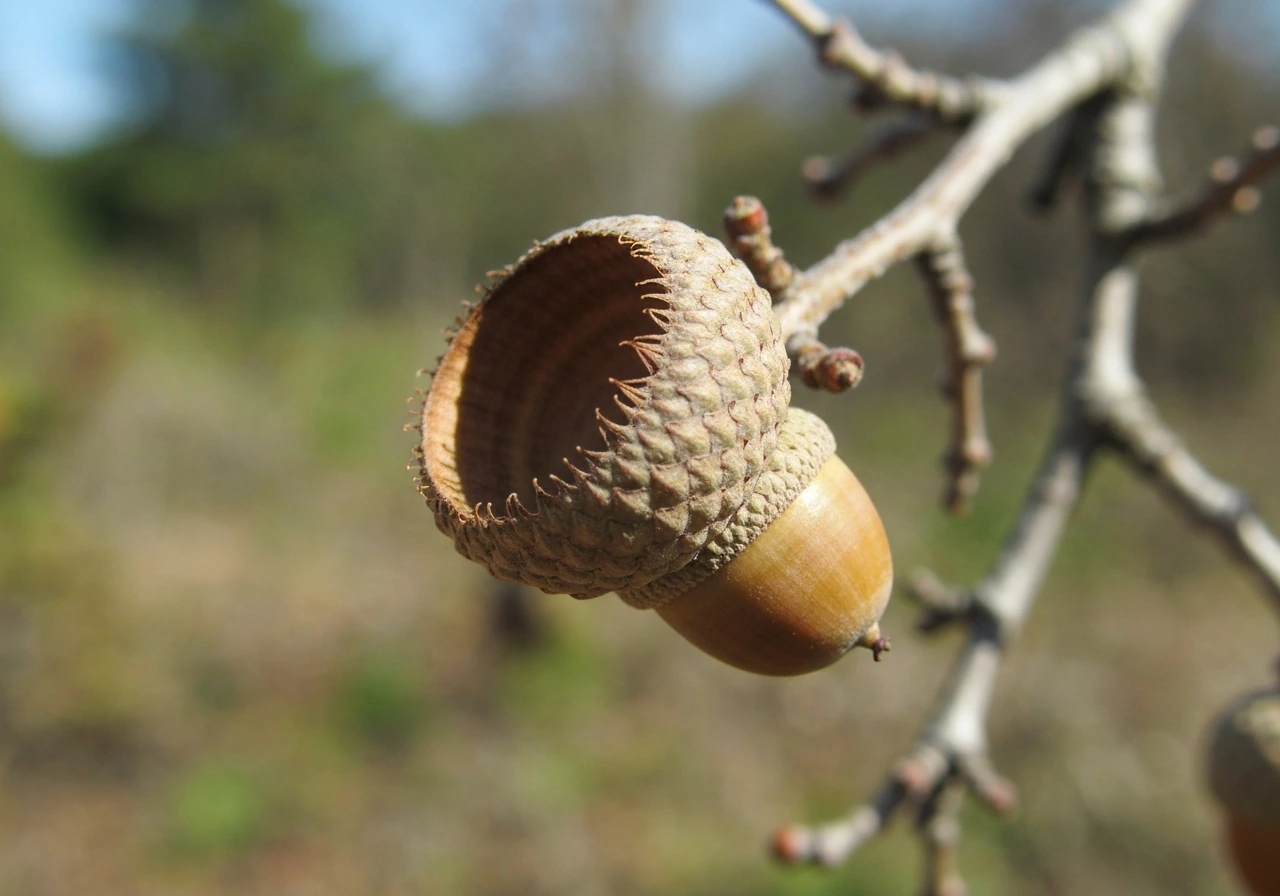
Bur oak is a rugged, drought-tolerant species common across the central US and into Canada. Its acorns are distinctive: they're large and have a deep, fringed cup that partially encloses the nut, giving them a shaggy appearance unlike most other acorns. Bur oak falls in the white oak group, so its acorns mature in one season. Some northern populations produce acorns that can remain dormant through winter and germinate the following spring rather than immediately after falling.
English oak (Quercus robur)
English oak (also called pedunculate oak) is the dominant oak of Europe and has been widely planted as an ornamental in Australia, New Zealand, and elsewhere. It produces elongated acorns on long stalks, which is how you can tell it apart from many other species. In cultivation contexts outside its native range, patience is essential: English oak can take close to 50 years before its first significant acorn crop.
Other notable species
- Willow oak (Quercus phellos): narrow, willow-like leaves that look nothing like a "typical" oak, but it still produces small acorns
- Pin oak (Quercus palustris): a common street and landscape tree in the eastern US, with deeply cut leaves and small round acorns
- Live oak (Quercus virginiana): an evergreen oak of the southeastern US with small, dark acorns on elongated clusters
- Engelmann oak (Quercus engelmannii): a rare California native with small acorns, now cultivated in Australia among other places
How to tell you're looking at an oak (field identification)
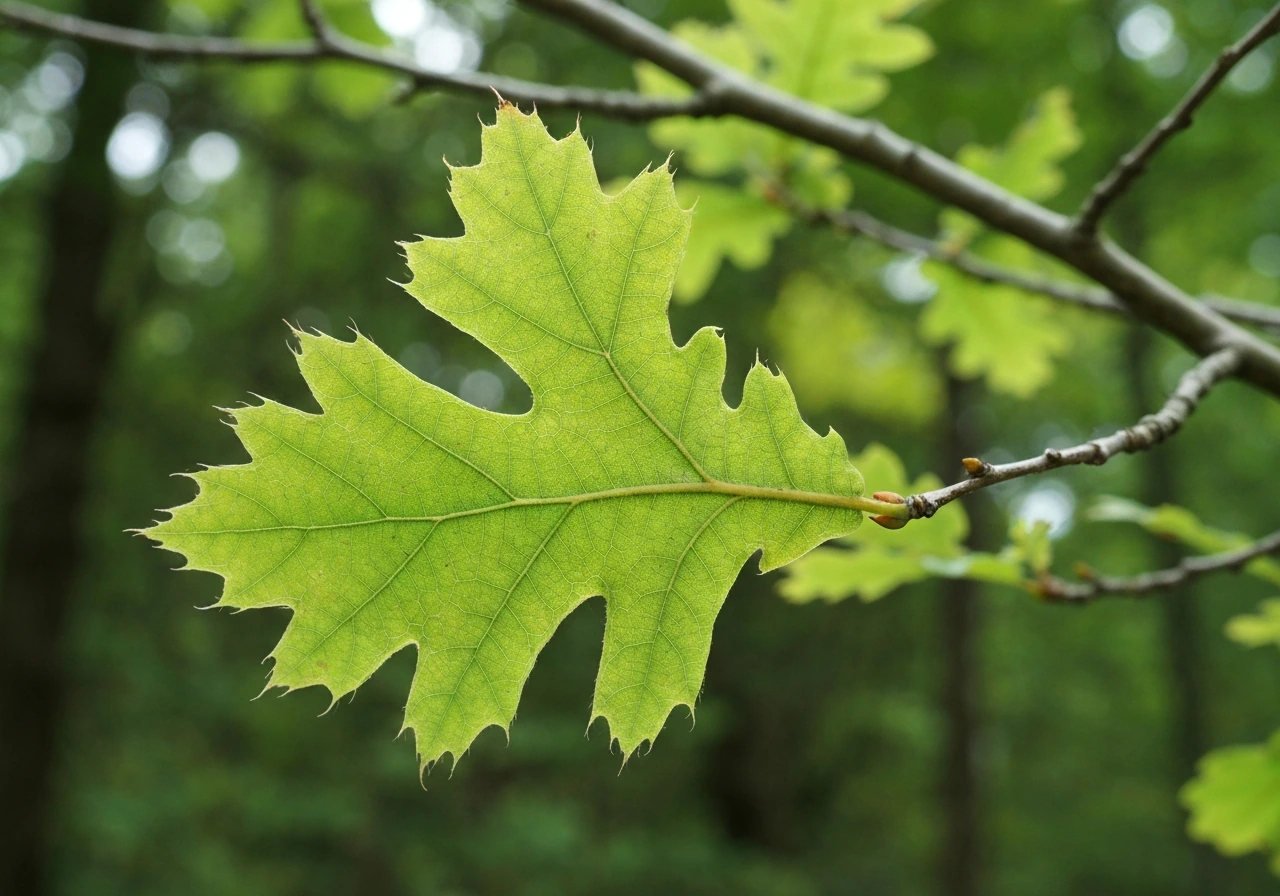
If you're standing in front of a tree and want to confirm it's an oak, there are a few reliable things to check. No single feature alone is definitive for every species, but in combination they make oak identification fairly straightforward.
- Look at the leaves: most oaks have lobed leaves, but the lobe shape is the key distinction. Rounded lobes with no sharp tips point to the white oak group; pointed lobes with small bristle tips at the end indicate the red oak group. Exceptions like willow oak exist, so don't rely on lobing alone.
- Check the acorn cup: if there's a fallen acorn nearby, look at the cap. A shallow, saucer-like cup suggests white oak or red oak. A deep, fringed cup that covers more than half the nut strongly suggests bur oak. A long-stalked acorn with a modest cup is typical of English oak.
- Notice the bark: older oaks typically have deeply furrowed, plated gray-brown bark, though younger trees can look smoother.
- Watch for acorn color change: acorns shift from green to brown as they approach maturity in fall. A tree dropping green acorns isn't necessarily diseased; timing varies by species.
- Use multiple features together: some oak species require both leaf and acorn characteristics together to make a confident ID, since closely related species can look nearly identical from the leaves alone.
If you want to dig deeper into the timing side of things, knowing when oak trees grow acorns relative to their flowering cycle helps you figure out what stage you're observing in the field.
Where oaks thrive and what that means for acorn production
Oaks are broadly adaptable, but each species has a preferred climate range. White oak, northern red oak, and bur oak dominate different parts of temperate North America. White oak prefers well-drained, slightly acidic soils in the eastern US and can tolerate both dry ridgelines and moist bottomlands. Northern red oak is similarly adaptable but tends to favor slightly moister, more fertile sites. Bur oak is the drought-tough outlier, pushing further west into the prairie edge than almost any other eastern oak.
Acorn output is heavily influenced by local conditions beyond just species identity. The USDA lists weather patterns, soil characteristics, overstory density, disease pressure, and individual tree traits like crown size and age as the primary drivers of production. Larger, healthier crowns produce more acorns. A tree crammed into a small space or stressed by drought or disease will produce fewer, and some years it won't produce any.
For readers in Australia wondering whether oaks produce acorns there at all: yes, they do, though with some important caveats. Several oak species have been cultivated in Australia since the early 19th century. English oak has been in ornamental trade there since around 1817, and events like the Australian Oak Open Days have documented acorn production from multiple species including Q. macrocarpa, Q. robur, and Q. canariensis in Canberra. If you're researching whether acorns grow in Australia, the answer is yes, but production timelines and viability can be affected by dry years and biosecurity considerations around seed collection and movement.
White oak group vs red oak group: a practical comparison
The single most useful thing to know about acorn timing is the difference between the two major oak groups. It affects when you'll see acorns on the tree, how quickly they drop, and how they behave after falling.
| Feature | White oak group | Red oak group |
|---|---|---|
| Common examples | White oak, bur oak, swamp white oak | Northern red oak, pin oak, live oak |
| Acorn maturation | One growing season | Two growing seasons |
| Leaf lobe tips | Rounded, no bristles | Pointed with bristle tips |
| Acorn taste | Less bitter (lower tannins) | More bitter (higher tannins) |
| Germination timing | Soon after falling (some exceptions in cold climates) | Following spring after second-year drop |
| Acorn production frequency | Good crops every 4 to 10 years | Highly variable; similar mast-year patterns |
This distinction matters practically. If you find an acorn in late summer that's still green and attached to a red-oak-group tree, that acorn is in its first year of a two-year development cycle. It won't be mature until the following fall. On a white-oak-group tree, that same green late-summer acorn is nearly ready to drop within weeks.
How acorns develop and when to expect them
Oaks flower in spring, with wind-pollinated catkins releasing pollen before or as the leaves open. After pollination, the fertilized ovule begins developing into an acorn inside the forming cupule. For white-oak-group trees, this process runs start to finish within a single growing season. For red-oak-group trees, the acorn overwinters in a nearly dormant state after the first season and resumes growth the following spring, maturing in fall of the second year.
For white oak specifically, acorn drop follows flowering by about 25 days and is typically complete within about a month once it starts. That's a narrow window. If you're planning to collect acorns from a white oak, you need to be ready in early-to-mid fall and check frequently. For red oaks, the window is similarly concentrated but falls in the second autumn after flowering.
If you want a more detailed breakdown of the development timeline, the article on when acorns grow covers the seasonal progression in more depth, including what to look for at each stage.
One thing that surprises most people: mast years (years of extremely heavy acorn production) are not the norm. They're the exception. Between mast events, production can be low enough that animals clean up every acorn before it has a chance to germinate. Blue jays are particularly effective dispersers, caching acorns and forgetting some, which is one of the main ways oaks spread into new areas. But in a low-production year, there simply may not be much to find.
It's also worth understanding just how rarely an acorn becomes a tree. How many acorns actually grow into trees is a humbling number. The combination of predation, drought, competition, and sheer timing means the vast majority of acorns never establish as seedlings, let alone survive to become mature oaks.
Seasonal expectations: when to actually find acorns
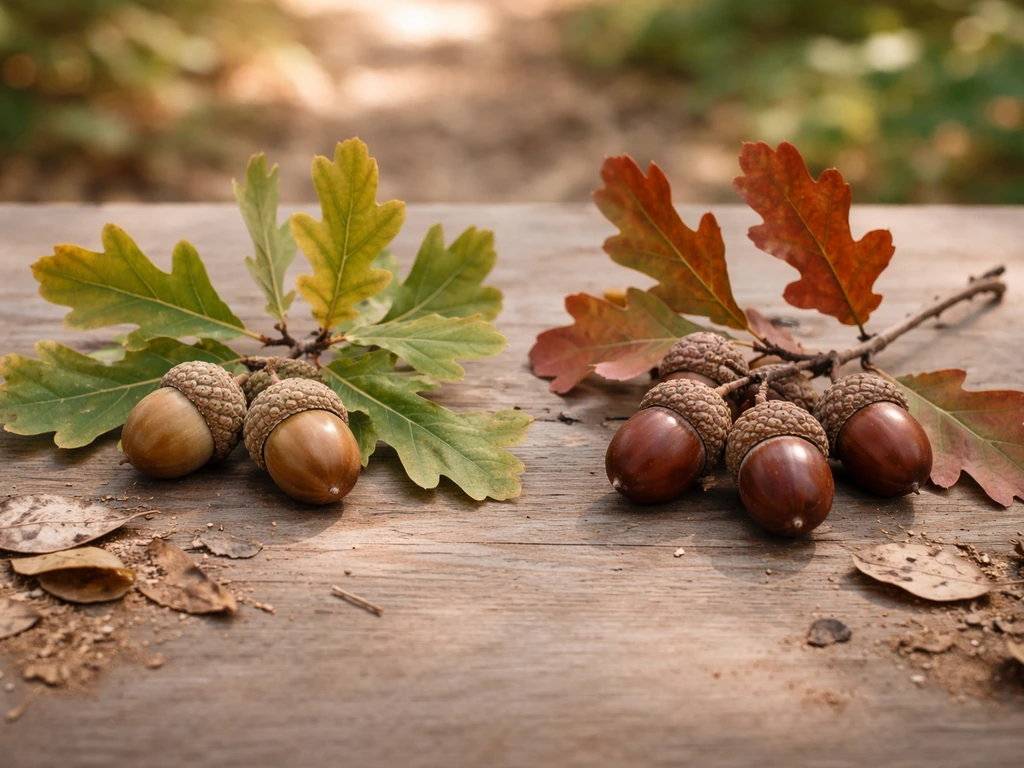
In most of temperate North America, acorns from white-oak-group trees are ready to collect from late August through October. Red-oak-group acorns from second-year development drop from September through November in most regions. Both windows shift earlier in warmer southern climates and later in the northern part of each species' range.
For a more precise answer tied to your region and species, the article specifically on when acorns grow on trees walks through geographic variation in timing and what environmental cues typically trigger the final maturation push.
If you're in a year following a drought or a spring with poor pollination weather, expect a low-production year regardless of species. Conversely, if conditions were favorable the prior spring, you may be heading into a mast year. Either way, the best approach is to start checking your local oaks in late summer and follow the color change from green to brown as your field guide for when drop is imminent.
If you're growing oaks for acorns
Growing oaks from acorns is straightforward in the right climate, but the timeline requires patience. If you're based in Australia and considering cultivating oaks, the process has some added complexity around biosecurity and species selection. The practical guide on how to grow oak trees from acorns in Australia covers species suitability and the specific steps involved in getting an oak established in that climate.
For growers anywhere: choose a species suited to your climate and soil, plant where the tree will eventually have room for a large crown (crown size directly correlates with acorn output), and don't expect meaningful production for at least a decade or two. A northern red oak won't hit its productive stride until it's around 50 years old. White oaks are similarly slow. Managing expectations is half the battle with nut trees.
The bottom line is this: if you want acorns, you need an oak. Every single oak species produces acorns, they just vary enormously in size, timing, cup shape, and how reliably they produce in any given year. Knowing your species, your oak group (red or white), and your local climate puts you in the best possible position to find, identify, and plan around acorn-bearing trees wherever you are.
FAQ
Do any non-oak trees ever produce “acorn-like” nuts that could be mistaken for true acorns?
Some plants have nuts that look similar, but true acorns are the botanical fruit of Quercus, with a nut partially enclosed by a cupule. If the nut is not from an oak, it will lack that specific cupule-and-nut structure typical of Quercus.
How can I tell red-oak-group acorns from white-oak-group acorns if I only find a fallen nut?
A practical clue is maturation behavior, but you can also look at the cup. Red-oak-group acorns are part of a two-year cycle, while white-oak-group acorns are one-year, so if you find late-season acorns on a white-oak-group tree they are often near drop, whereas on red-oak-group trees the same timing usually indicates they are immature.
Why did I find only a few acorns this year, even though an oak is healthy?
Oak “mast” years are irregular, flower abortion is common, and local conditions can suppress production. Stressors like drought, disease pressure, and dense canopy competition can also cut output, so low numbers one year do not necessarily mean the tree is failing.
Can I reliably collect viable acorns from any oak tree in any year?
Not reliably. In low-production years, many acorns may be missing, damaged, or predated. Even in good years, viability can vary by individual tree and your collection timing, so selecting a healthy stand and collecting promptly after fall can improve results.
What happens if I collect “green” acorns or acorns that are still soft?
Green or immature acorns are usually not ready to germinate. For red-oak-group oaks, immature nuts can still be in their first year of a two-year development, so they typically require additional time to fully mature before becoming viable for planting.
Do acorns stay good if I delay collection after they fall?
Often, no. Fallen acorns can be removed quickly by animals or damaged by moisture and insects. Since drop windows can be fairly tight (especially for white-oak-group trees), frequent checking during the likely drop period improves your odds of fresh, intact nuts.
How long does it take before an oak grown from acorns produces its own acorns?
It depends on species and age at maturity. As a rule of thumb, some oaks, like northern red oak, may not become noticeably productive until decades are in place, while others can start later or sooner depending on growth conditions and crown development.
Are there good acorn-producing oaks for backyard planting, or do I just need to wait for mast years?
You need both. Planting an oak suited to your climate helps, but you should still expect big year-to-year swings. Choosing a tree with room for a large mature crown is important, because crown size and health strongly influence how many acorns you will get.
Can acorns produce trees in my area if I plant them outside their home range?
Sometimes, but success can drop if the species is poorly matched to your climate or soil. Local adaptation matters, so use species that naturally occur or are well established in your region rather than assuming any Quercus acorn will thrive everywhere.
Is it true that acorns from bur oaks can remain dormant through winter?
Yes, some northern bur oak populations can produce acorns that delay germination until the following spring. That means you might plant in fall and see no immediate sprouting, which is normal for those populations.
If I am in Australia, can I plant acorns right away, and will they germinate reliably?
Not always right away. Dry years can reduce nut viability, and germination patterns can vary by species. Also, seed collection and movement can be constrained by biosecurity rules, so it is smart to confirm local requirements before transporting acorns.
What’s the safest way to confirm an oak is producing acorns when identification is uncertain?
Use multiple checks together, not a single feature. Pair leaf-lobe shape and acorn cup characteristics with the basic “cupule encloses a Quercus nut” structure, and if possible verify timing consistent with local oak groups (red versus white) to reduce misidentification.