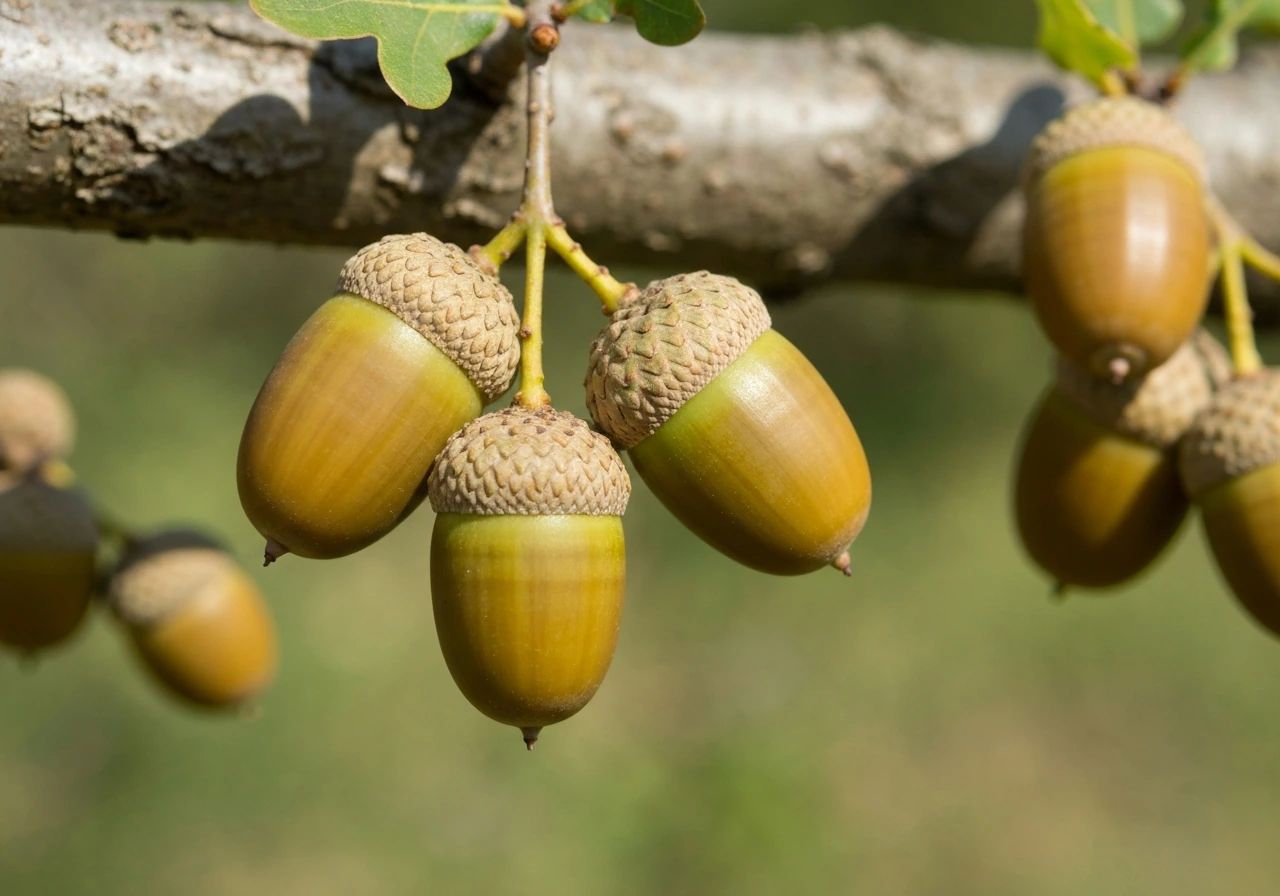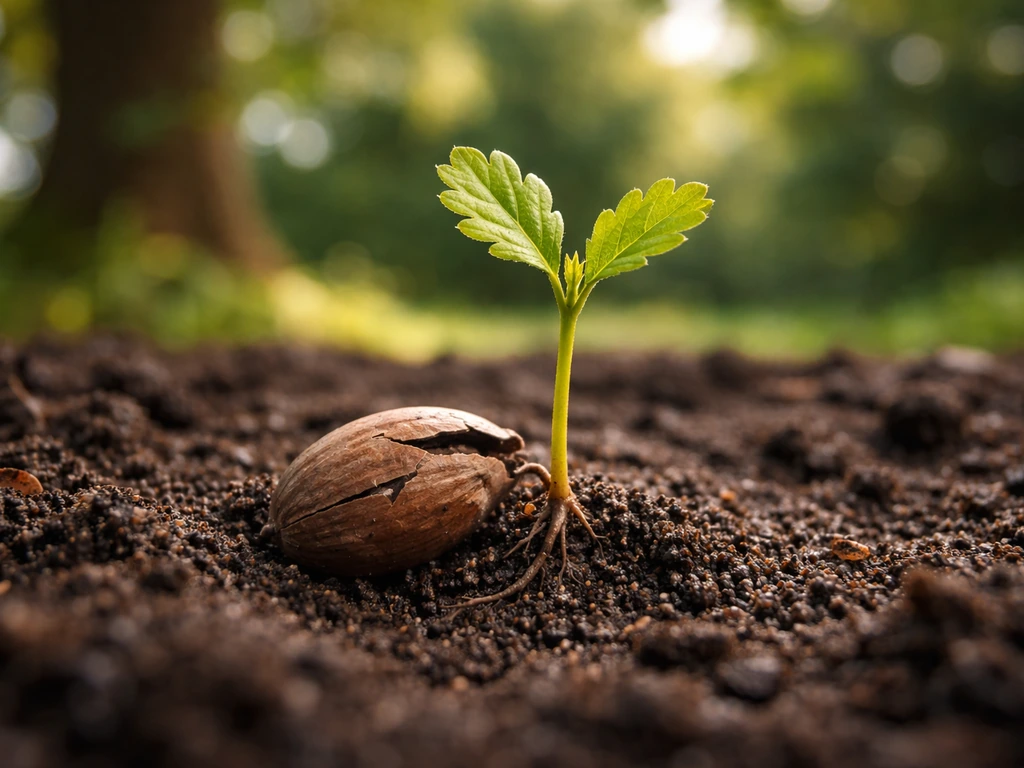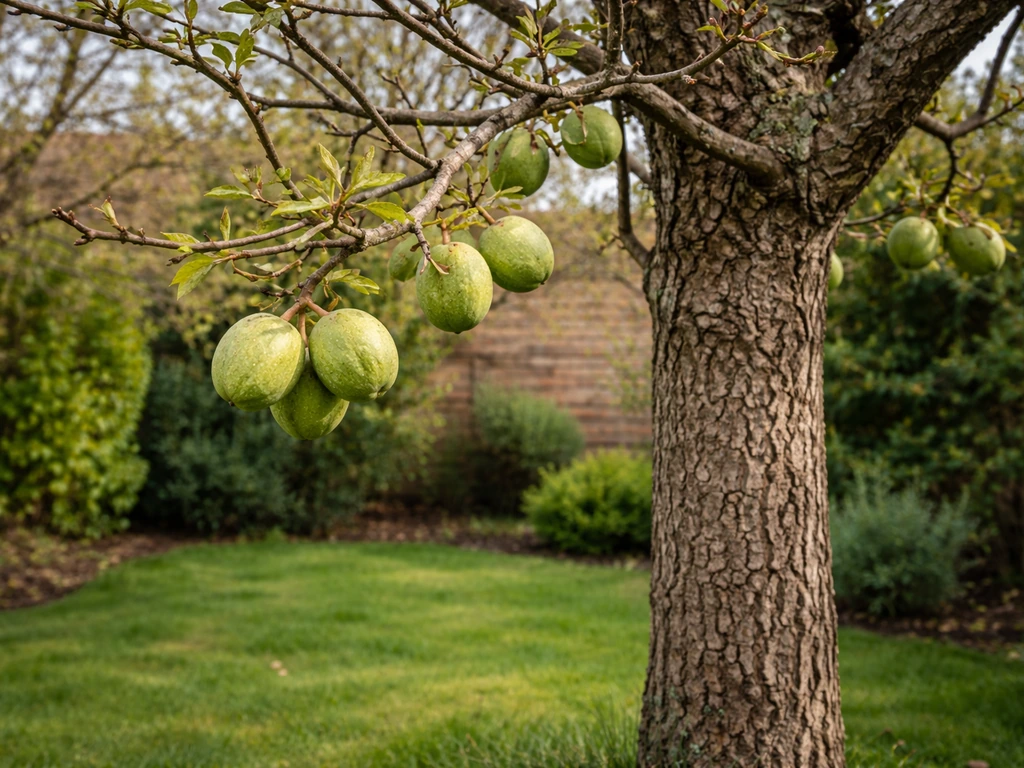
Acorns start growing in spring, right when oak trees flower, but when exactly that happens depends on two things: which oak species you have and where you live. For most people in the Northern Hemisphere, the visible action starts between February and May. By fall (September through November for most zones), acorns are either fully ripe and dropping or still filling out for a second season. If you want a direct answer to what's happening on your tree right now, that depends on whether you have a white-oak-group or red-oak-group species, so let's get into that first.
When Do Acorns Grow? Months, Cues, and Regional Timing
Marcus Hendricks
12 Apr 2026
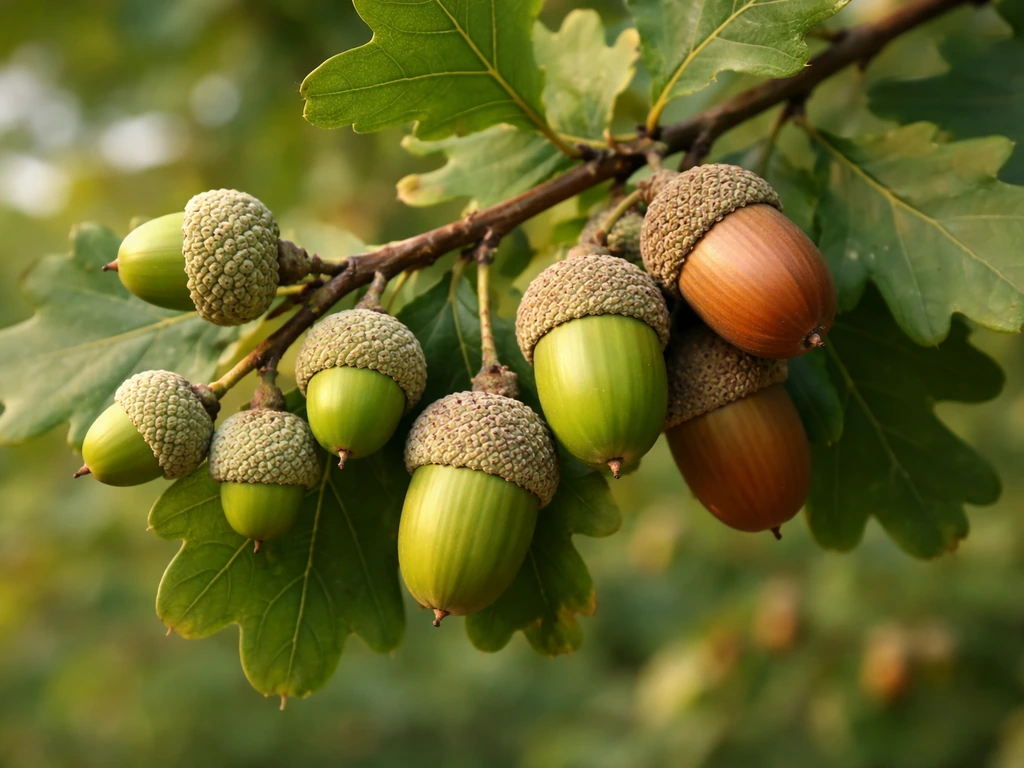
What 'acorns grow' actually means: flowering vs nut development
When people ask when acorns grow, they usually mean one of three different things without realizing it: when oak trees flower and pollinate, when the small green nutlets first appear on the branches, or when full-sized acorns ripen and fall. These are all different stages, separated by weeks or months, and they don't all look like what most people picture as 'acorn growth.'
The process starts with flowering. Oak trees produce two types of flowers on the same tree: male catkins (the dangling yellow-green strands that release clouds of pollen) and much smaller female flowers. The male catkins are the showy part that most people notice in spring. The female pistillate flowers are tiny and easy to miss, but they're what actually become acorns. Understanding how acorns grow from those first tiny female flowers through to a mature nut is key to figuring out what stage your tree is in right now.
After pollination, fertilization occurs and the ovary begins developing into the acorn we recognize. But here's where the two main oak groups split dramatically: white-oak-group trees fertilize quickly and produce a mature acorn within the same growing season, while red-oak-group trees go through a 13-to-15-month delay between pollination and fertilization, meaning the acorn you see ripening this fall was actually pollinated last spring. That single biological difference explains most of the confusion people have about acorn timing.
Acorn growth timing by season and month
Here's how the calendar plays out for a typical Northern Hemisphere oak, broken into the main stages. Timing shifts by a few weeks depending on your zone and species, but this gives you the practical framework.
| Month Range | Stage | What to Look For | Oak Group |
|---|---|---|---|
| February – April | Male catkin emergence and pollen release | Dangling yellow-green strands, pollen clouds | Both groups |
| March – May | Female flower receptivity and pollination | Tiny red-tipped female flowers at branch tips | Both groups |
| April – June | Early nut set (nutlet visible) | Small green bumps at base of former female flowers | White oak group (same-year) |
| May – July | Rapid development or first-year dormancy | Green acorns enlarging, or no visible nut (red oak) | White oak (growth); Red oak (dormant) |
| July – September | Acorn fill and maturation | Acorns reaching full size, caps forming | White oak group |
| September – November | Ripening and drop | Brown acorns falling, caps separating | Both groups (red oak: year 2) |
| Following spring – fall | Red oak second-year development | Acorns from last year's pollination sizing up | Red oak group only |
For white oaks specifically, the USDA Forest Service documents a roughly 120-day window from pollination to mature acorn, all within one growing season. Female flowers appear 5 to 10 days after the male catkins open, so the whole pollination window is compact. For northern red oak, acorns ripen in September and October of the second year after the spring pollination that started the process. That's a roughly 18-month arc from pollen release to ripe acorn.
White oak vs red oak: the timing gap that changes everything
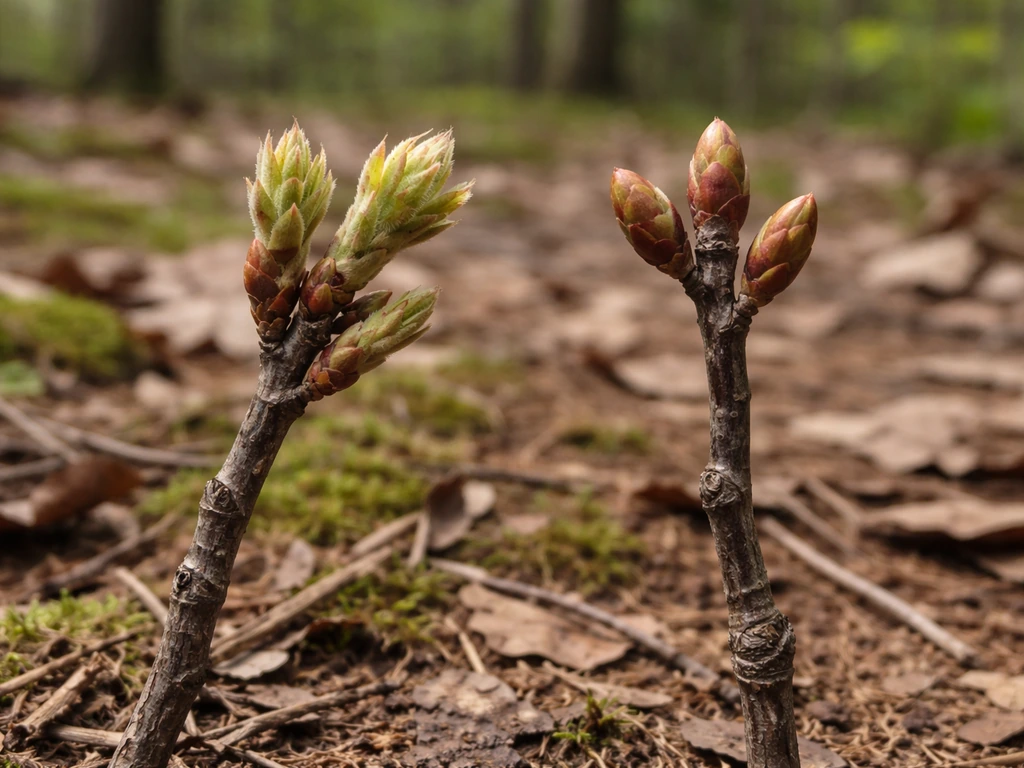
The species on your property matters more than almost anything else when it comes to acorn timing. Knowing what trees grow acorns and which group they belong to will immediately tell you whether to expect nuts this fall or whether you're looking at next fall at the earliest.
White-oak-group species (white oak, bur oak, swamp white oak, chinkapin oak) follow an annual cycle. Pollination happens in spring, fertilization follows within one to two months, and acorns mature in the fall of that same year. These are the oaks whose acorns drop every autumn without waiting for a second season.
Red-oak-group species (northern red oak, black oak, pin oak, scarlet oak, water oak) follow a biennial cycle. The pollen tube from spring pollination grows extremely slowly, taking roughly 13 months to reach and fertilize the ovule. Rapid acorn development only happens in the second growing season, after fertilization finally occurs. If you have a red oak that flowered last spring, those acorns are developing right now and will ripen this coming fall.
There's also a practical consequence of this timing difference when frost hits. A late spring freeze damages white-oak female flowers directly, cutting that year's crop. Red oaks are largely unaffected by the same freeze because their developing acorns from last year's pollination are already past the vulnerable female-flower stage. This is why when oak trees grow acorns can differ dramatically between species growing side by side in the same yard after a rough spring.
How region and climate shift the timing
Climate and USDA hardiness zone affect acorn timing in two main ways: they shift the start date of flowering, and they affect whether flowering and early nut set survive long enough to produce a crop. A white oak in USDA Zone 6 (think Missouri or Virginia) typically starts flowering in April. That same species in Zone 8 (coastal Georgia or the Pacific Northwest lowlands) may begin three to five weeks earlier. Meanwhile, a Zone 4 or 5 planting in Minnesota or northern Wisconsin sees flowering pushed into mid-May, compressing the growing season and sometimes clipping acorn development before full maturation.
Temperature swings at flowering time are the real risk factor. Research from Missouri found that only about 7% of white oak flowers actually matured into acorns, with most flowers aborting by early July. Cold snaps, drought, and poor pollination conditions during the brief spring window all drive that loss. Purdue Extension data shows white oaks produce reliable crops only about 2 out of every 5 years in the Midwest because of exactly this variability. Red oaks fared slightly better in the same Missouri research, with about 12% of black oak flowers reaching maturity, though individual tree variation is high.
If you're in a zone with late, unpredictable frosts (Zone 5 and colder especially), white oak crops are more year-to-year gambles than in the South. Red-oak-group species become more reliable backups precisely because their critical development window doesn't overlap with spring frost season in the same way.
For readers in the Southern Hemisphere, particularly Australia, the season labels flip but the biology doesn't change. Acorns do grow in Australia on introduced oak species like English oak (Quercus robur), and in that context, leaves and flowers emerge in early spring (September), with acorns appearing after flowering and ripening in autumn (March through May). If you're trying to grow oak trees from acorns in Australia, you're working with this reversed seasonal calendar, but the developmental sequence from flowering to ripe nut follows the same biological arc.
How to tell what stage your acorns are in right now
You don't need special equipment to figure out where your tree is in the acorn development cycle. Here's what to look for at each stage, starting from earliest spring and moving through fall.
Spring: catkins and female flowers
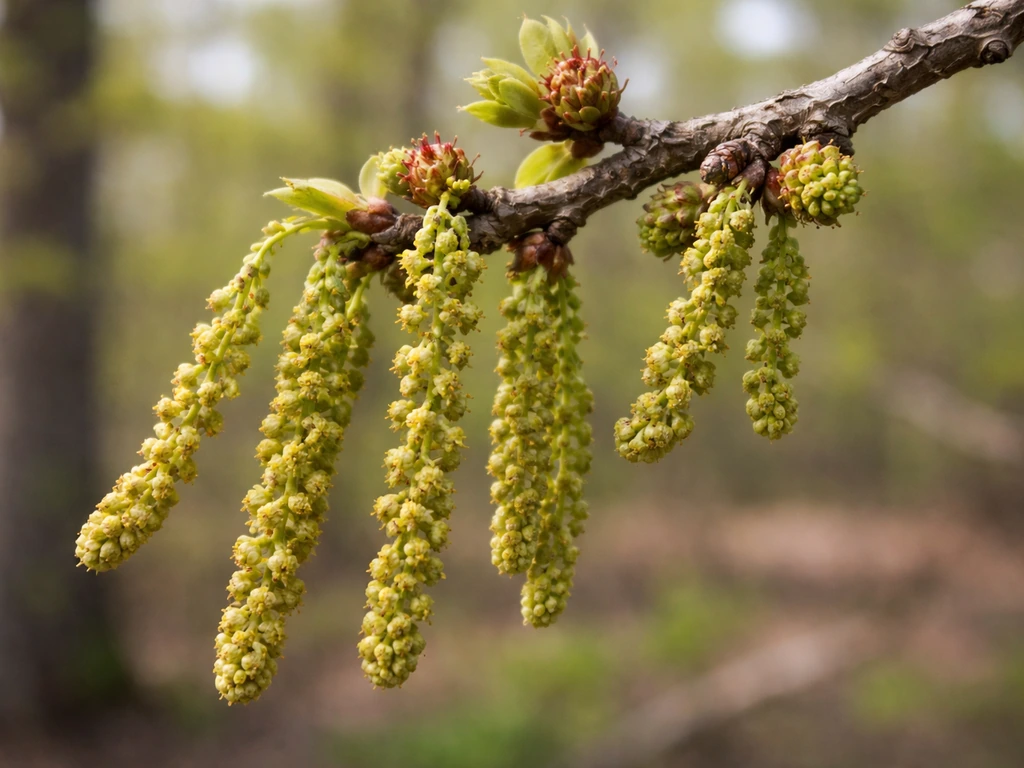
When you see the male catkins hanging from the branch tips, pollen is either about to release or already releasing. Look at the catkins: if they're elongated and loose, pollen is shedding. Female flowers are much smaller, typically appearing as tiny reddish or greenish bumps at the base of new leaf clusters, right where new growth emerges. They're easy to miss but they're there. For northern red oak specifically, the male catkins transition from tight to 'hanging loosely' at the open-flower stage, which signals the active pollination window.
Late spring to early summer: early nut set
If pollination succeeded, you'll start seeing tiny green nutlets developing where the female flowers were. On white-oak-group trees, these appear within a few weeks of flowering. They look like small green beads, sometimes with a miniature cup already forming around the base. On red-oak-group trees, you may see a very small bump in year one, but it stays small. The real swelling happens in the second growing season. Understanding exactly when acorns grow on trees through these early-summer stages helps you know whether what you're seeing is normal stalling or a sign of poor pollination.
Summer: the fill period
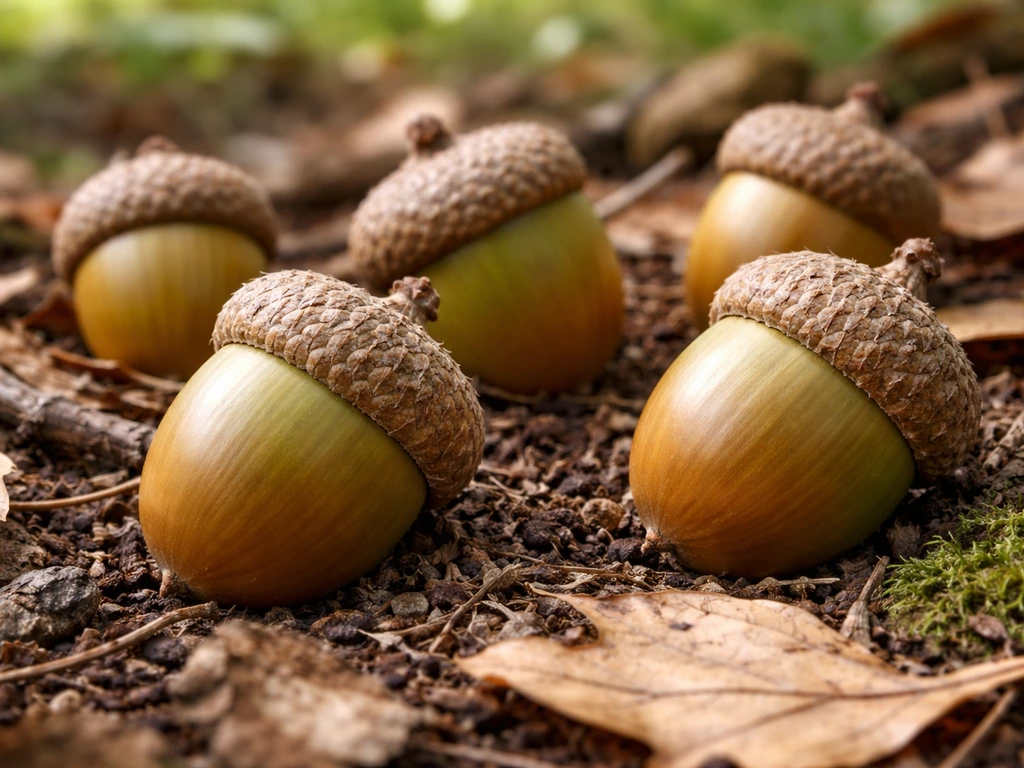
By July and August, white-oak-group acorns should be clearly visible, roughly half to three-quarters of their final size, with the cup covering one-quarter to one-third of the nut. If you're not seeing this on a white oak by mid-July, that year's crop has likely aborted, which happens far more often than people expect. Red-oak acorns in their second year are also filling rapidly through summer, reaching full size before the shell hardens and the nut ripens in September or October.
Fall: ripening and drop
Ripe acorns change from green to tan or brown, and the cap often loosens or separates naturally. Acorns that fall while still green and hard either dropped early due to stress or are naturally early-maturing varieties. Sound ripe acorns are firm, fully brown, and the seed inside (if you split one) should be creamy white without mold or hollowness.
Not seeing acorns yet? Check these things first
Before assuming something is wrong, work through this list. Most 'my oak isn't producing acorns' situations have one of a handful of root causes.
- Tree age: Most oak species don't produce acorns until they're at least 20 years old, and peak production typically doesn't start until 50 years or more. Young trees in landscaping are often nowhere near productive age.
- Wrong time of year for your species: If you have a red-oak-group species and you're looking in summer of a flowering year, there simply won't be visible acorns yet. You're waiting for next fall.
- Late spring frost damage: If your area had a hard frost in late April or early May, it may have killed the female flowers on white-oak trees before pollination completed. Check if the catkins were already out when the frost hit.
- Poor pollination conditions: Cold or wet weather during the brief flowering window reduces pollen viability and transfer. Even a healthy tree may set almost no acorns in a bad pollination year.
- Summer drought stress: Severe drought between June and August causes trees to abort developing acorns as a survival response. This is separate from pollination failure and can wipe out what looked like a good crop.
- Biennial masting pattern: Many oaks don't produce every year regardless of conditions. White oaks in the Midwest average good crops only about 2 out of every 5 years. Tracking production over several years tells you more than any single season.
- Health and canopy competition: A stressed or suppressed oak in heavy shade diverts resources away from reproduction. A tree with a full, open canopy and good light is far more likely to produce.
One useful reality check: consider what proportion of all oak flowers ever become acorns. Research documents that only 7 to 12 percent of flowers make it to mature acorns even in decent conditions. So a tree that flowered heavily and then produced a modest crop isn't failing, it's performing normally. The question of how many acorns grow into trees is a separate issue, but the answer starts with this same low flower-to-nut conversion rate.
Your practical next steps based on today's date
It's mid-April 2026 in the Northern Hemisphere. Here's what that means in practical terms. If you have a white-oak-group tree in Zones 5 through 7, you are right in the active pollination window or just past it. Look for catkins that have shed pollen and tiny female flowers or early nutlets forming at branch tips. If the catkins are brown and dry, pollination is finishing up, and in the next few weeks you'll know whether nut set occurred.
If you have a red-oak-group tree, any acorns you see developing right now are second-year acorns from last spring's pollination. They should be visibly swelling through the summer and ripening by September or October. This spring's catkins are setting up next fall's crop, not this one.
If you're still not sure which oak you have, the leaf shape and acorn cup depth are your fastest identification clues. White-oak-group leaves have rounded lobes; red-oak-group leaves have pointed, bristle-tipped lobes. Knowing your species narrows the timing answer down from a broad seasonal range to something specific to your tree and yard.
The bottom line is this: acorns start growing in spring when flowering happens, they develop through summer, and they ripen in fall, either in the same year (white oak group) or the following year (red oak group). Your location shifts that window by a few weeks in either direction, and annual weather determines whether any given year produces a good crop or nearly none at all. Watch your tree through April and May, note whether you see early nutlets forming by early June, and you'll have a clear picture of what your fall looks like before summer even arrives.
FAQ
If I see acorns dropping early, does that mean they were never going to grow on my tree?
Not necessarily. Early drops in late spring or early summer often happen when developing nutlets abort after poor pollination, heat, or drought stress. For white-oak group trees, you are usually looking at nut set that failed before the acorns could swell, while for red-oak group trees, an early drop can still occur but is less likely to reflect the final year since the bulk of the visible growth happens in the second season.
Why do my white oaks flower heavily but produce few or no mature acorns that fall?
White-oak production is tightly linked to whether female flowers survive the short window between flowering and early summer. Even in good years, only a small fraction of flowers reach maturity, and late cold snaps, hot spells, or dry weather around pollination can push that fraction near zero for a given tree.
How can I tell whether I am seeing nutlets forming this year versus next year on a red oak?
On red-oak group trees, any nutlets you notice in spring or early summer are typically part of the second-year arc. They may look small or unchanged through much of the first year, then swell noticeably during the following summer before shell hardening and ripening in early fall. If the acorns never appreciably enlarge over the first warm season after pollination, that usually indicates the long development delay rather than a failure.
Does mowing, trimming, or lawn chemicals around the oak affect when acorns grow?
Yes, indirectly. Soil compaction and root stress can reduce flowering success and lead to lower nut set, which shifts the practical timing of what you see by reducing the number of acorns that progress past early development. Also, broadleaf herbicide drift is more likely to stress young shoots and can weaken the tree during the critical spring window, lowering the crop you would otherwise expect in fall.
What weather events most often change the normal “when acorns grow” timeline in spring?
Temperature swings at flowering time are the biggest disruptor. Late freezes can damage female flowers directly for white oaks, while drought and heat during the short pollination period reduce successful fertilization. You may still see catkins and bumps early, but fewer nutlets will persist into summer.
Do acorns ripen all at once, or can I see different ripening dates on the same tree?
They usually do not ripen perfectly simultaneously. Within a single tree, differences in microclimate (sun exposure, slope, and wind) can spread ripening by days to a couple of weeks. It helps to check a few branches, including shaded versus exposed areas, before concluding the entire crop failed.
Can container-grown or newly planted oaks produce acorns on the same schedule as mature trees?
New or stressed trees often delay or skip flowering, so the visible timeline may start later or not at all, even if the species normally follows the annual or biennial pattern. If the tree is newly planted, focus on leaf and shoot vigor first, because an oak that is not establishing roots may not invest enough energy into nut development.
Are acorns considered “growing” when the cups appear, or only when the nut swells?
For practical tracking, cup formation is an early clue but nut swelling is the more reliable indicator of progress toward ripening. Cups can begin while the nut is still small, especially on white-oak group trees, whereas the strongest “growth” signal is the size increase through summer leading to a firm shell in fall.
If my goal is to collect acorns for planting, when should I pick them relative to ripening?
Collect after they fully color (tan to brown) and when the cap looks naturally loosened or ready to detach. Avoid picking while acorns are still green and hard, because those are more likely to be immature or have poor viability. If you plan to store them, keep them cool and dry and separate any that show mold spots or damaged caps.