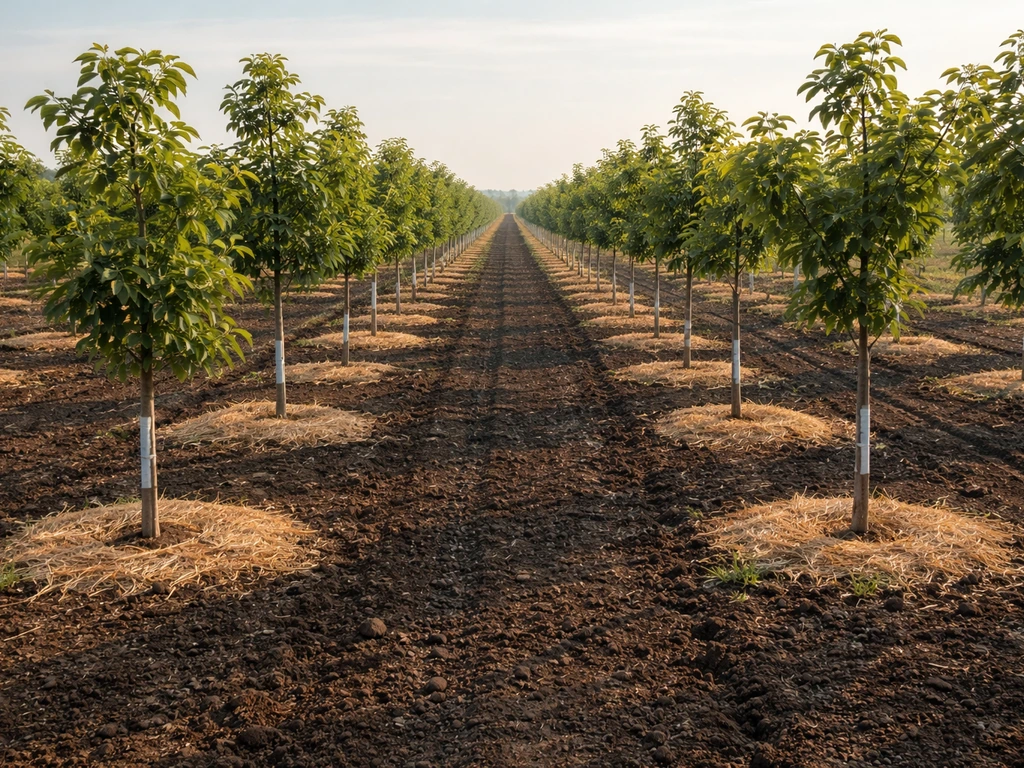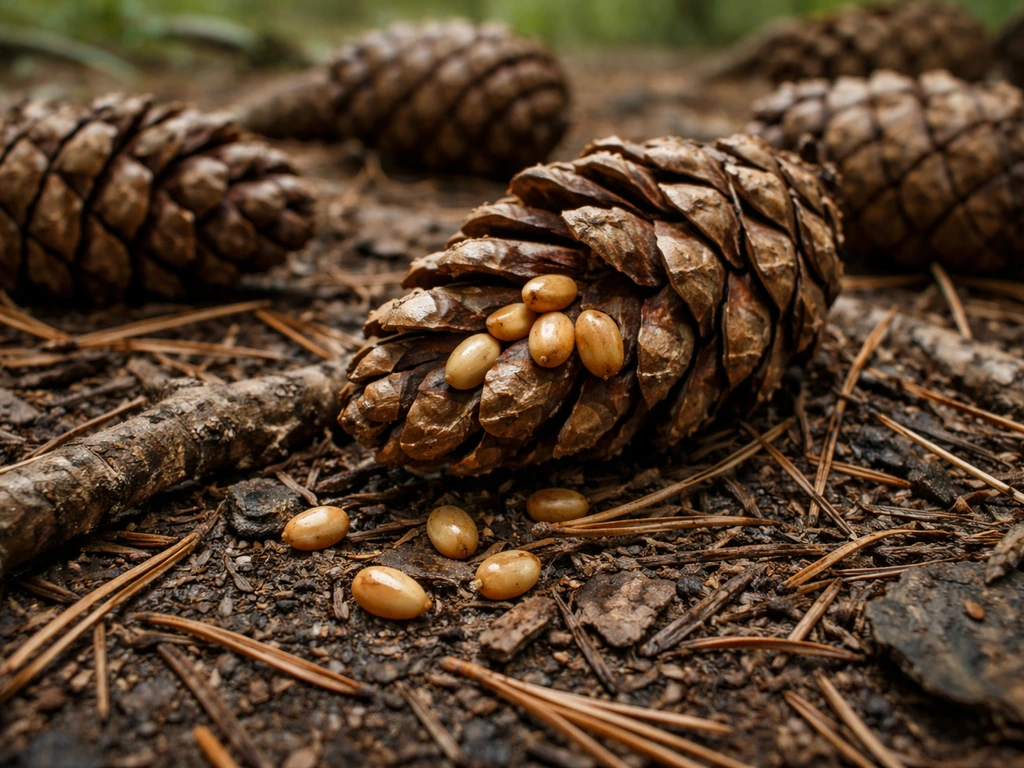
Yes, you can absolutely grow beech trees from beech nuts, and it's one of the more rewarding ways to propagate a native tree from seed. The process is not instant or effortless, but it's straightforward if you follow the right steps: collect fresh, viable nuts in autumn, keep them cold and moist over winter through a process called cold stratification, then sow them in early spring once they show signs of germinating. Done right, you'll have seedlings ready to transplant within 18 months to two years.
Can You Grow Beech Trees From Beech Nuts? How-To
Marcus Hendricks
31 May 2026
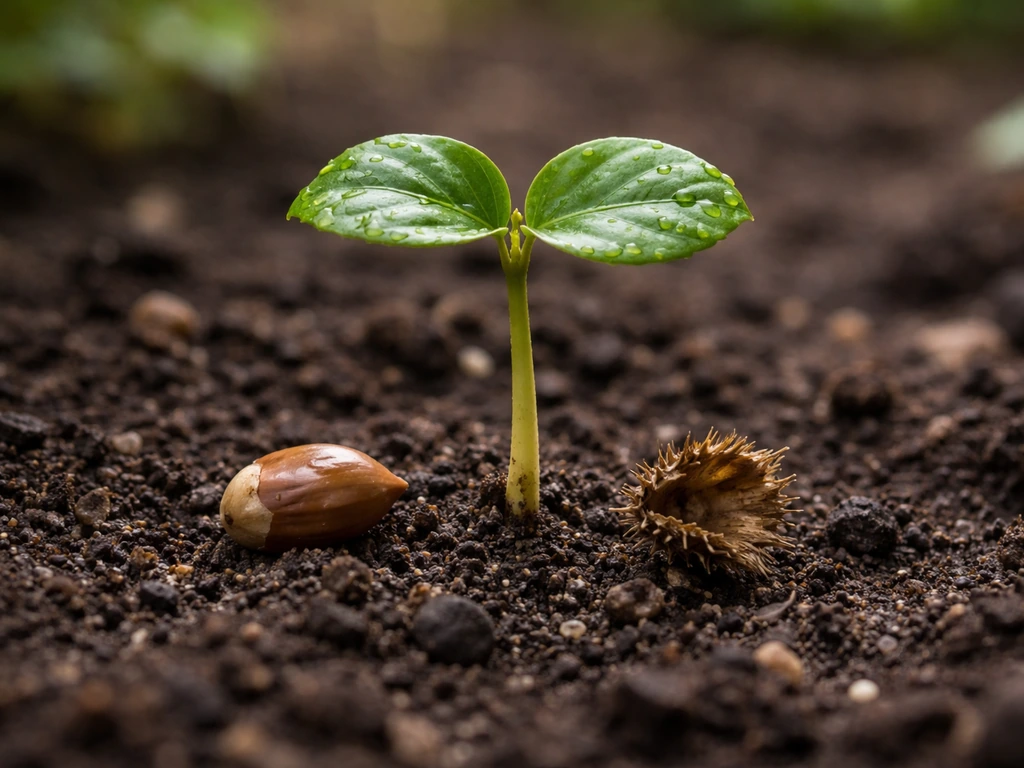
Can beech nuts really grow into beech trees?
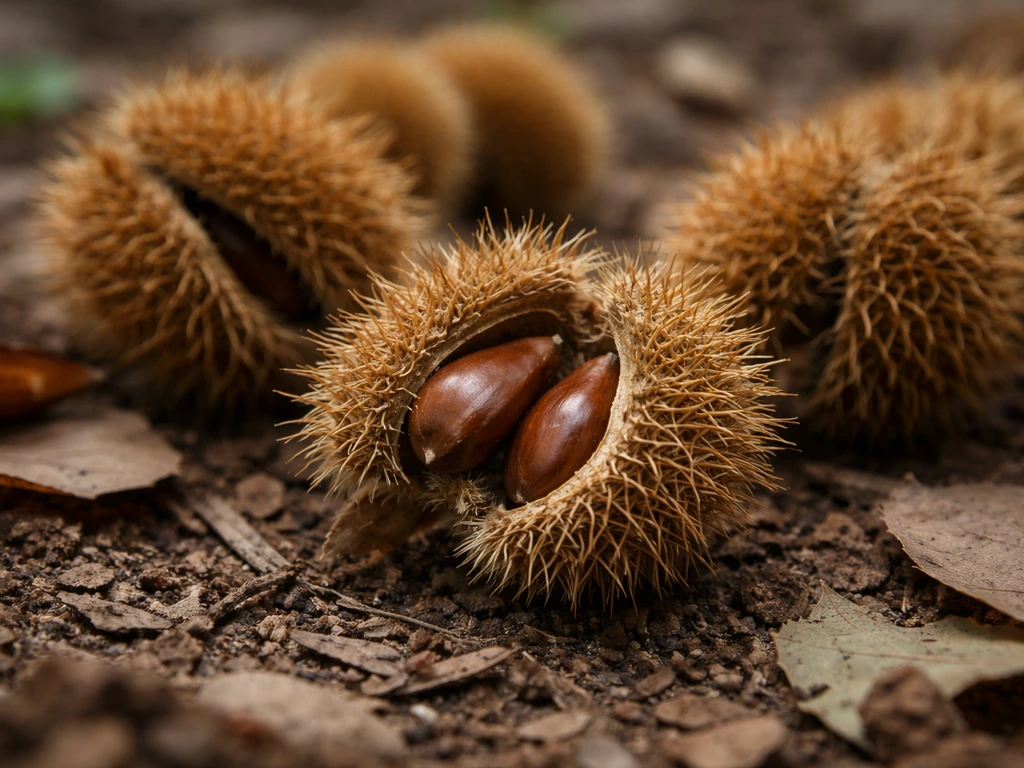
Beech nuts, also called beech mast, are true seeds housed inside a spiky bur. They are fully capable of producing healthy beech trees under the right conditions. The tricky part isn't whether they can germinate, it's whether the specific nuts you collect are viable, and whether you give them the cold, moist dormancy-breaking period they need before sowing. Skip that, and most of them simply won't sprout. Give them what they need, and germination rates can be genuinely impressive.
One thing worth knowing upfront: growing from seed means genetic variation. Your seedlings won't be exact clones of the parent tree. They'll share most of the same traits, but colour, form, and growth rate can vary slightly. If you want a named cultivar like Fagus sylvatica 'Purpurea' (the purple beech), seed won't reliably reproduce it. For straight species trees, whether European beech or American beech, seed is the most natural and cost-effective propagation method available.
Choosing the right beech species and sourcing local nuts
There are two species most growers will be working with. Fagus sylvatica is European beech, native to central and western Europe, and the species most commonly grown in the UK and across temperate Europe. Fagus grandifolia is American beech, native to eastern North America, ranging from Nova Scotia down through the Appalachians and into the Gulf states. Both produce viable seed, but their ecological requirements differ, and using locally adapted nuts gives you a real head start.
The single best source of nuts is a healthy local tree of the right species for your region. American beech nuts come from trees that have adapted to your local rainfall, frost timing, and soil over generations. European beech collected from a tree in your area will similarly outperform imported seed from a different climate. Beech has a strong mast year pattern, meaning it produces bumper seed crops every few years rather than consistently every autumn, so timing your collection to a good mast year makes a significant difference in the quality and quantity of nuts you find.
If you're in the UK or temperate Europe, Fagus sylvatica is your default choice. If you're in eastern North America, Fagus grandifolia is the species to work with. Mixing them up or trying to grow European beech outside its native climate range (or vice versa) without understanding local adaptations can lead to disappointing results. Both species are explored further in the context of how long beech and other nut trees take to establish, which is worth understanding before you commit.
Collecting, storing, and testing beech nut viability
When and how to collect
For American beech, seed fall begins after heavy frosts cause the burs to open, and dissemination is completed within just a few weeks. That window is short, so you need to be watching trees from mid-autumn onward. For European beech in the UK, the RHS recommends collecting ripe beech mast in late summer or autumn, just as burs are opening naturally. The key in both cases: collect fresh nuts promptly. Nuts that have been on the ground long, or that dried out during a warm autumn, lose viability fast.
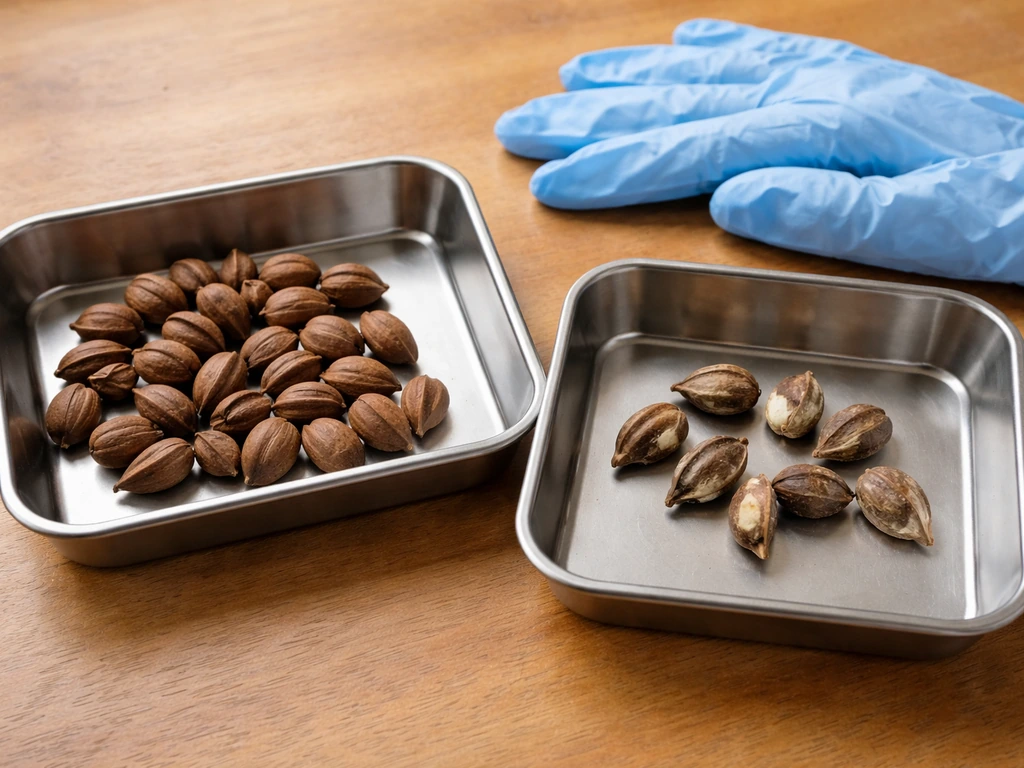
Collect nuts that feel heavy and firm. Discard any that are hollow, visibly mouldy, or have small exit holes that indicate insect damage. A simple float test in water gives you a rough viability screen: nuts that sink are generally more likely to be viable; floaters are often hollow or infested. It's not a perfect test, but it takes about 30 seconds and weeds out obvious duds. For a more reliable check, cut a sample of 10 to 20 nuts open and examine the embryo. A healthy embryo is firm, white or cream-coloured, and fills the seed. USFS Tree Seed Technology describes classifying seeds as viable or damaged by insects and disease, including using blank" rel="noopener noreferrer">embryo condition indicators such as dead, missing, or deformed embryos to determine viability. A dead or damaged embryo will look brown, shrivelled, or simply absent.
Short-term storage before stratification
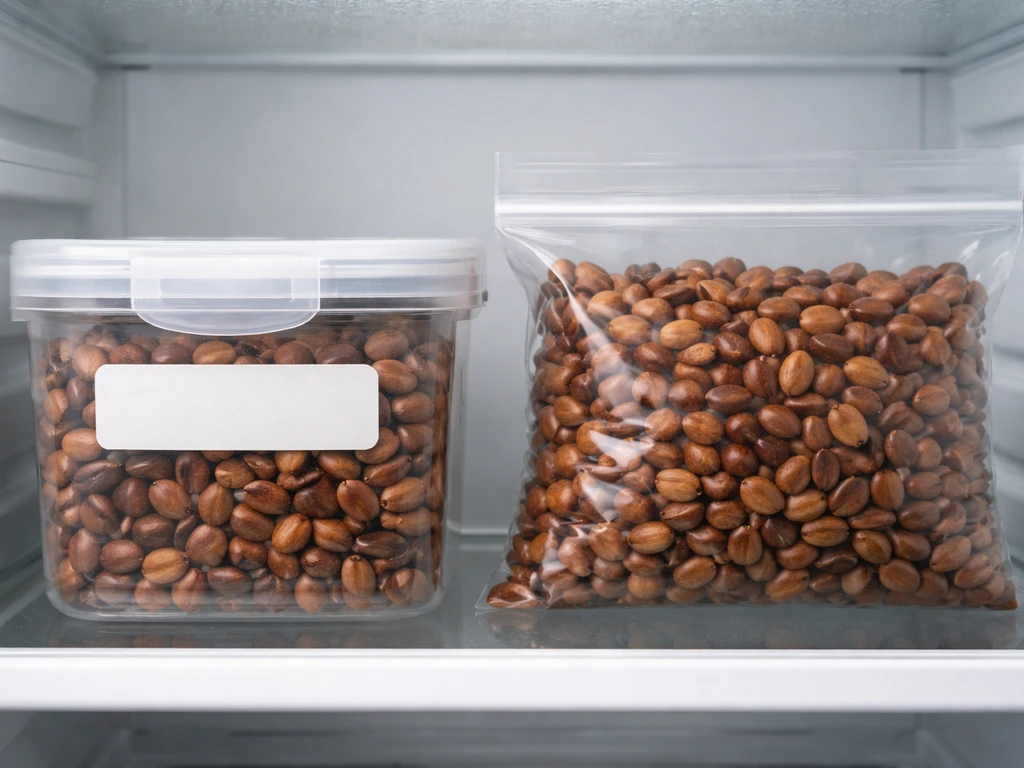
If you can't begin stratification immediately after collection, store the nuts at 0 to 5°C with a seed moisture content of around 28 to 32% (fresh-weight basis). In practical terms, this means slightly damp, not wet, and cold but not frozen. A refrigerator works well. Keep them in a breathable bag or container with some barely moist vermiculite or slightly damp sand mixed in. Airtight plastic bags without any medium are not ideal because the seeds need some gas exchange. Don't let them dry out completely, and don't let them sit in standing moisture either.
Cold stratification and timing for germination
Beech nuts have physiological dormancy, meaning even a viable, healthy seed won't germinate without a cold, moist period that mimics winter. This is non-negotiable. Trying to sow fresh, unstratified beech nuts in spring without this pretreatment will give you very poor or zero germination. The good news is that stratification is simple to do at home.
The standard protocol for Fagus sylvatica is cold stratification at 3 to 5°C for approximately 3 to 4 months, followed by warmer conditions (15 to 20°C) that trigger germination. Forest Research in the UK provides a concrete example of the timing: for a target sowing date of 1 March, artificial pretreatment should begin around 8 November. That's roughly 15 to 20 weeks of cold pretreatment, which aligns with using most of calendar winter for dormancy-breaking. Collect in October or November, start stratification immediately, and target spring sowing.
Moisture is the most critical variable during stratification, and the research literature is emphatic on this point. Seeds must be imbibed (fully water-absorbed) to benefit from the cold treatment. Mix your nuts with barely moist sand, peat-free compost, or vermiculite at roughly a 1:3 seed-to-medium ratio, place them in a zip-lock bag left slightly open for airflow, and put them in the refrigerator at 3 to 5°C. Check every two to three weeks. If the medium feels dry, mist it lightly. If you see moisture pooling, open the bag more. Good aeration matters because seeds respire during stratification, and CO2 buildup or oxygen deprivation can damage viability.
For fall sowing: if you want to skip artificial stratification entirely, sow fresh nuts directly outdoors in autumn and let natural winter conditions do the work. This is the simplest approach and works well where winters are reliably cold and wet. The risk is predation by squirrels and mice, which find beech mast highly attractive.
Knowing when stratification is done
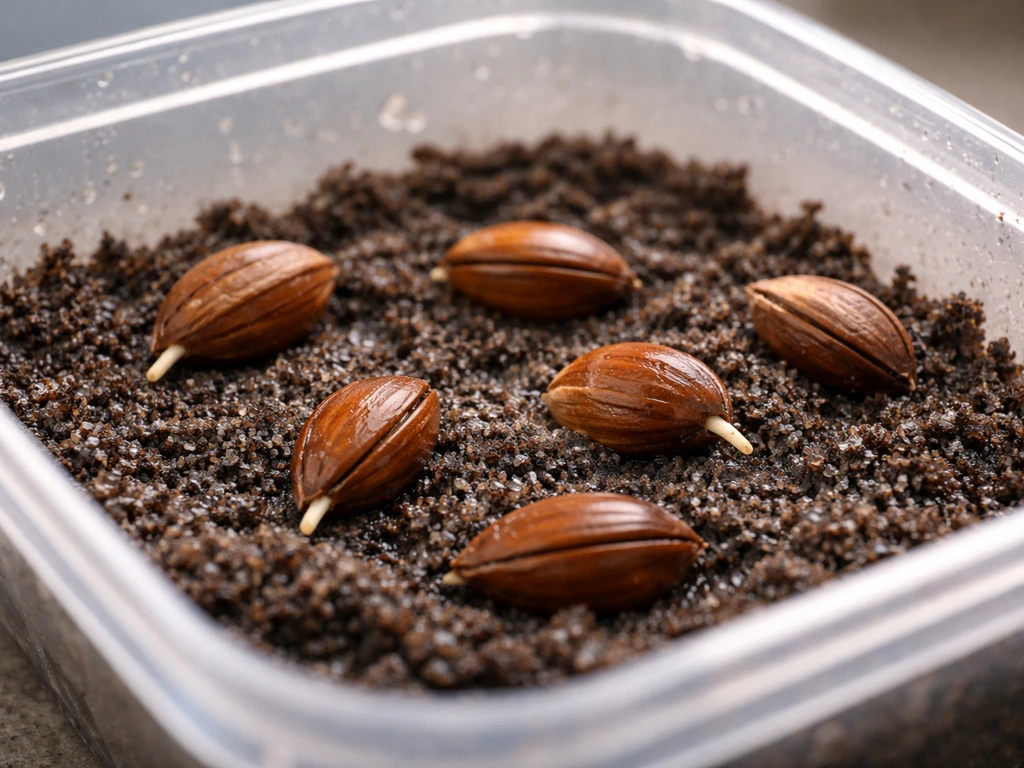
Don't just count weeks mechanically. Watch your stratifying nuts. Forest Research advises sowing when around 10% of seeds show chitting, meaning the radicle (the first root tip) is just beginning to emerge. At that point, stratification has done its job and delaying sowing risks the roots getting tangled in the medium. Move them to sowing conditions promptly once you see this.
Sowing methods: direct sowing vs pots and seed trays
| Method | Pros | Cons | Best for |
|---|---|---|---|
| Direct outdoor sowing (fall) | No refrigerator needed; natural stratification; minimal effort | High predation risk from squirrels/mice; harder to monitor; difficult to control conditions | Rural growers with access to protected beds; American beech in natural woodland settings |
| Pot/tray sowing (spring, after stratification) | Full control over moisture, temperature, and pest protection; easy to monitor germination | Requires refrigerator space for stratification; more hands-on during seedling phase | Most home gardeners; urban or suburban settings; small-scale propagation |
| Outdoor bed sowing (spring, pre-stratified) | More natural growing conditions than pots; suitable for larger quantities | Less protection from pests and weather extremes; harder to transplant later | Larger-scale propagation where some losses are acceptable |
For most home growers, the pot or seed tray method in spring gives the best control. Use a free-draining, peat-free seed compost. Sow beech nuts on their sides or flat, and cover with half an inch (about 1.2 cm) of compost or soil. That's the planting depth guidance from UF/IFAS for European beech, and it holds as a practical standard. Too deep and emerging seedlings exhaust themselves before reaching light, which also increases pathogen exposure time.
One nut per cell or pot is ideal if you're using modular trays, as it avoids root competition and makes transplanting much easier. If you're sowing in a tray, space nuts at least 5 cm apart. Place trays in a sheltered spot with good indirect light and temperatures around 15 to 20°C. Germination typically begins within two to four weeks of sowing once properly stratified nuts are given warmth.
Seedling care, common problems, and what to do if nothing germinates
Early seedling care
Once seedlings emerge, they need good light but not scorching direct sun during the hottest part of the day. Beech is a woodland tree and tolerates dappled shade, but seedlings grown in deep shade get leggy and weak fast. Keep the compost consistently moist but never waterlogged. Young beech seedlings are surprisingly sensitive to both drought and sitting water.
Damping-off: the main seedling killer
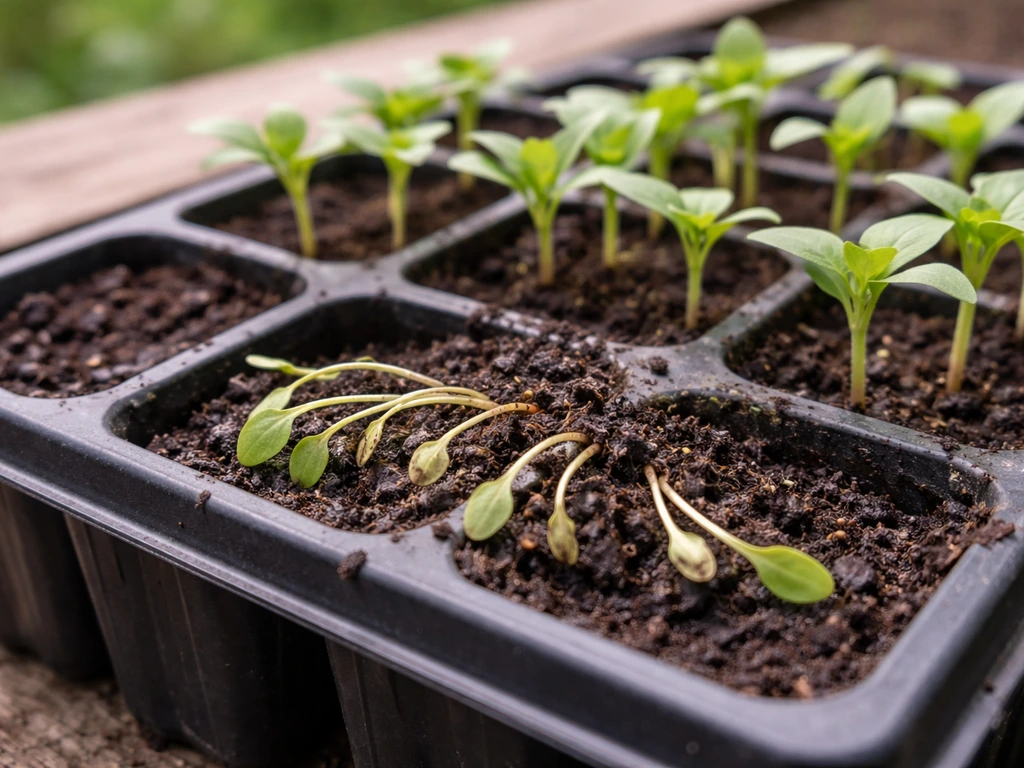
Damping-off is a fungal disease complex that causes otherwise healthy-looking seedlings to suddenly keel over and collapse at the soil line. It's caused by several soil-borne pathogens and can wipe out an entire tray quickly. One infected seedling in a tray often means neighbours are already affected. The conditions that invite it are predictable: overwatering, overcrowding, insufficient airflow, planting too deep, and using non-sterile growing media.
Prevention is far easier than cure. Use fresh, sterile seed compost each season. Don't reuse old compost from previous batches. Water from below by sitting pots in a tray of water rather than overhead watering, and never leave pots standing in water for more than an hour. Thin out overcrowded seedlings early. If you see damping-off in one seedling, remove it and its immediate neighbours immediately, reduce watering, and improve airflow around the tray.
What to do if your beech nuts don't germinate
Before assuming failure, check the following in order. First, was the stratification period long enough? Three months at 3 to 5°C is the minimum. If you cut stratification short, the nuts may still be dormant. Put them back in the fridge for another 4 to 6 weeks and try again. Second, did the nuts dry out during stratification? Dried-out nuts won't germinate even if they were viable at the start. There's no recovering dried-out seed, unfortunately. Third, were the nuts viable at collection? Cut a few open. If the embryo is brown and shrivelled, the original batch had viability problems. Fourth, is the sowing environment warm enough? Below 10°C, germination stalls. Move trays somewhere warmer and give it another two weeks before giving up.
Transplanting to the yard and what to expect long-term
Beech seedlings benefit from at least one full growing season in containers before transplanting to their permanent position. The RHS recommends lifting and replanting saplings roughly 18 months after germination, after two seasons' growth, by which point they'll typically be in the 30 to 60 cm range and better able to establish without check. Don't be tempted to rush transplanting with tiny seedlings under 15 cm; beech dislikes root disturbance when small.
When transplanting, keep the root system moist right up until the moment of planting. Spread roots out naturally in the planting hole rather than bunching or spiralling them. If any roots are excessively long and won't fit without cramping, you can snip the tips of long laterals, but avoid cutting back the main root system significantly. Beech is sensitive to transplant stress, so water in well and consider temporary shade cloth protection for the first summer if your site is exposed.
On a practical timeline: beech is not a fast-growing tree. Expect modest growth of 30 to 60 cm per year in good conditions during the early years. The trees are long-lived and eventually majestic, but you're playing a long game. A beech grown from a nut you collect this autumn won't be a substantial garden tree for 10 to 15 years. That said, there's something genuinely satisfying about establishing a tree from a nut you picked up yourself, and beech seedlings grown from local stock tend to be better adapted to your specific site than nursery-grown stock from distant sources.
Protection through the early years
- Use a tree guard or wire spiral around young transplants to protect from rabbit and deer browsing, which can kill a sapling outright in winter.
- Mulch around the base with a 5 to 10 cm layer of bark or wood chip, keeping it clear of the stem, to retain moisture and suppress competing grass and weeds.
- Water during any dry spells in the first two summers; established beech is reasonably drought-tolerant but young transplants are not.
- Check for grey squirrel damage to the bark on young trees, particularly in late winter when other food is scarce.
- Avoid waterlogged ground. Beech is notably intolerant of prolonged waterlogging and will decline on poorly drained soils.
Growing beech from seed takes patience and attention to the right details at the right time of year. But the process itself, from collecting fresh nuts in autumn to watching those first seedlings emerge in spring, gives you a real connection to the tree and a better understanding of what it needs to thrive. You might also be wondering monkey nuts how do they grow, and that process is different from beech seeds because it involves its own dormancy and growing conditions. If you're curious about how other nut trees compare in terms of germination time and growing effort, it's worth exploring how species like pine nuts and other woodland nuts handle their own seed dormancy and establishment timelines. If you're wondering how betel nut grows in the same way, it also starts with seed requirements and the right warm, humid conditions how does betel nut grow. Pine nuts have their own dormancy and timing requirements, so the steps for getting them growing are a bit different from beech.
FAQ
If I find beech nuts late in the year, can I still grow them? (What if they were on the ground for weeks?)
It can, but beech seed quality is the limiting factor. If you still have viable nuts, you can start stratification at home, but germination may be lower than with fresh seed. Aim to check viability first (cut a sample to confirm a firm, cream embryo) and then run the full cold, moist stratification, not just a brief fridge period.
Can you sow beech nuts straight in spring without cold stratification?
No. Beech needs a winter-like cold, moist dormancy break (physiological dormancy). If you sow unstratified nuts, most will simply stay dormant and will not reliably sprout. A practical workaround is to put the nuts into cold, moist stratification even if you missed spring sowing, then plant as soon as chitting starts.
Do I have to use sand or compost during cold stratification, or can I use a different method?
Usually yes for home projects, but only if you can control moisture. A common mistake is mixing the medium too wet, which can reduce oxygen and increase fungal risk. Use barely moist medium (it should clump slightly when squeezed, then fall apart), keep the bag slightly ventilated, and check every 2 to 3 weeks to adjust moisture and airflow.
What’s the best time to plant the nuts after cold stratification, once they start showing signs of germinating?
You want to sow when the radicle is just beginning to emerge, not when long roots have formed. If you delay and the roots get tangled, transplanting becomes harder and root damage increases. Treat early “chitting” as the cue to move promptly into sowing conditions.
How deep should I plant beech nuts in a pot or seed tray, and what happens if I plant them too deep?
Covering is important, but too much depth is a frequent problem. If you bury deeper than about 1.2 cm (for European beech guidance), seedlings may fail to emerge or emerge weakly. If you are using a larger container or loose soil, keep the effective depth consistent so emergence timing and energy use are similar across seeds.
Why did some or all of my beech nuts not sprout, and how do I diagnose the cause?
If only a few seeds are failing, the issue is often viability, moisture mistakes during stratification, or temperature too low during germination. If many fail together, reassess the whole chain: were the nuts viable at collection, did the stratification run long enough, was the medium kept barely moist, and are trays kept warm (around 15 to 20°C) once sowing starts.
Can you skip artificial stratification by sowing beech nuts outdoors in autumn, and how risky is it?
It depends on where you live and whether winters are reliably cold enough. Direct outdoor sowing can work, but your success rate drops if rodents get to the nuts first. If you try fall sowing, consider protective measures such as hardware cloth over the bed and removing competing cover where mice and squirrels forage.
Will seedlings grown from seed look like the parent tree (for example, purple beech)?
Short answer, beech seedling genetics will vary because trees grown from seed are not clones. So you cannot guarantee traits like purple foliage from seed (for example, a named cultivar). If you need a specific cultivar, you would typically use propagation methods that preserve identity, rather than seed.
How should I harden off beech seedlings before planting them outside?
Yes, but do it gradually. Sudden full sun can stress woodland-adapted seedlings. Start with sheltered light, then increase exposure over a couple of weeks, and avoid the hottest part of the day until you see steady, healthy new growth.
When is the right time to transplant beech seedlings, and is it okay to move them before 15 cm tall?
Transplanting too early often causes check and can increase failure, especially if roots are disturbed. A safer approach is to keep them in containers through at least one full growing season, aiming for about 18 months after germination before moving to permanent ground, unless you can transplant carefully without root damage.
What are the most common causes of damping-off in beech seedlings and how can I prevent it?
Yes, but be intentional. Overwatering and poor airflow are the main routes to damping-off. Water from below when possible, keep seedlings spaced, use fresh sterile compost each season, and remove any collapsed seedlings quickly along with immediate neighbors to reduce spread.