Tree nuts grow through a surprisingly structured process: a flower gets pollinated, the ovary tissues harden and transform, a kernel develops inside a protective shell, and eventually the whole thing ripens and drops (or splits) at harvest. That's the short version. The longer version involves chill hours, soil drainage, pollinator ratios, and years of patience before you see a single nut. If you want to understand how tree nuts form and whether you can actually grow them where you live, this guide walks through all of it practically, species by species.
How Do Tree Nuts Grow From Flower to Harvest and Where
Marcus Hendricks
14 Apr 2026
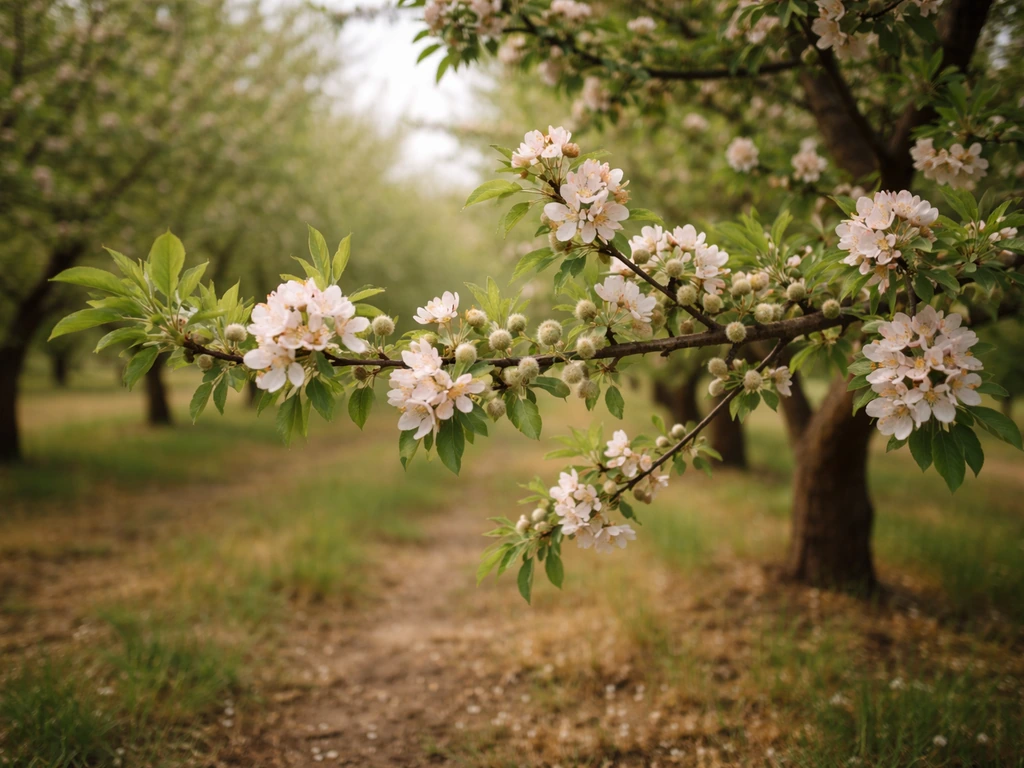
How nut trees actually form nuts, from flower to harvest
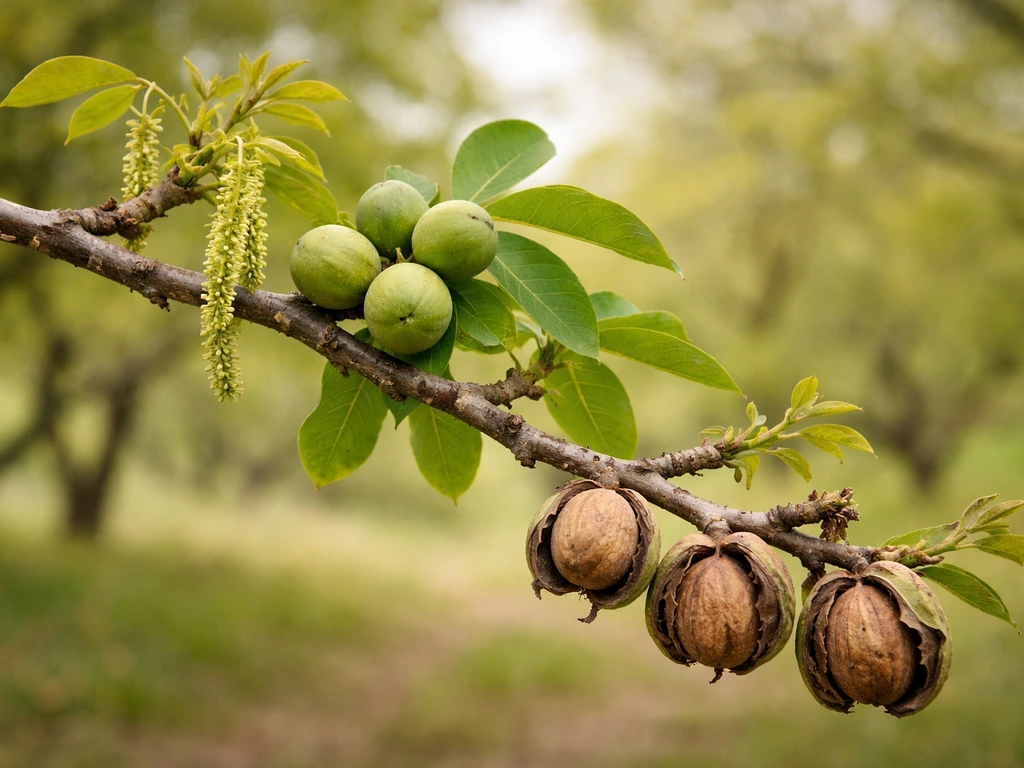
Most people think of a nut as just a hard seed, but botanically it's more layered than that. What you're eating when you crack open a walnut or peel an almond is the kernel (the seed), which sits inside a hardened endocarp (the shell). That shell is derived from the ovary wall of the flower. The outer hull or husk, the papery or fleshy layer you remove before you get to the shell, is the rest of the ovary tissue that dries, splits, or breaks down at maturity. So every tree nut you eat started as a flower, and the packaging around it is transformed flower anatomy.
In botanical terms, many culinary tree nuts are drupes, meaning they have a structure similar to a peach: an outer fleshy layer (exocarp and mesocarp) surrounding a woody stone (the hard endocarp) with a seed inside. The walnut in its green hull, the almond before it dries, and the pecan all follow this pattern. The 'nut' stage is when the outer fleshy material dries down or falls away, leaving the hardened shell and kernel.
The timeline from flower to harvestable nut varies by species but follows the same basic sequence: bud break, flowering, pollination, fertilization, shell and kernel development, and finally hull split or husk dehiscence at maturity. For almonds, the period from flowering to full nut size has been documented at roughly 12 weeks, after which the hull splits open to signal harvest readiness. Pistachios take longer and the hull-splitting process is tied to cell-wall changes in the hull tissue that break down at physiological maturity. Pecans undergo what growers call 'shell hardening,' where cells in the outer embryo layers lignify (toughen) as the kernel fills in, a process heavily influenced by heat accumulation through the summer. how nuts grow in general follows this same trajectory across species, but the timing and environmental triggers differ significantly.
Pollination is where a lot of growers run into trouble, and it's worth understanding the mechanics early. Most tree nuts are wind-pollinated, not bee-pollinated, which means pollen has to physically drift from a male flower (or a male tree) to a female flower at exactly the right time. For pistachios, pollen viability matters more than sheer pollen quantity: too much pollen can actually trigger flower abscission (the tree drops flowers), while poor-quality pollen reduces fruit set and the percentage of nuts that properly split at harvest.
Where tree nuts grow naturally around the world
Understanding native ranges matters because it tells you what a species evolved to handle. Pistachio (Pistacia vera) is native to northeast Iran, northern Afghanistan, and central Asia, ranging from Turkmenia to the Pamir-Alai and Tien Shan mountain systems. That origin means it evolved for hot, dry summers (daily mean temperatures around 30°C for roughly three months) combined with cold, dormant winters. It is genuinely a continental climate plant.
English walnut (Juglans regia) has a broad native range stretching from Iran and central Asia westward through the Balkans and into parts of southeastern Europe. In the wild it grows in mixed mountain forests on moist but well-drained soils, which explains its preference for deep loam with good drainage in cultivation. Persian and Central Asian origins also mean it handles cold winters but resents late spring frosts, which damage its early-emerging catkins.
Pecan (Carya illinoinensis) is native to the south-central United States and northeastern and central Mexico, concentrated in the bottomlands of the Mississippi River system. Its native band runs from southeastern Iowa and eastern Kansas south to central Texas, with scattered populations extending locally into the Midwest. That river-bottom origin matters: pecans evolved in deep, alluvial soils with access to water and long, hot growing seasons. where beech nuts grow tells a very different geographic story, reflecting how different nut species have carved out entirely separate ecological niches across the northern hemisphere.
Brazil nuts occupy a completely different ecological position from any of the above. They grow in lowland Amazonian rainforest and depend on a specific orchid bee for pollination and an agoutis (a large rodent) to crack and disperse their extremely hard pods. how Brazil nuts grow is a fascinating case study in how deeply a nut tree can be intertwined with its ecosystem, and why they essentially cannot be farmed outside their native range.
What nut trees actually need to thrive where you are
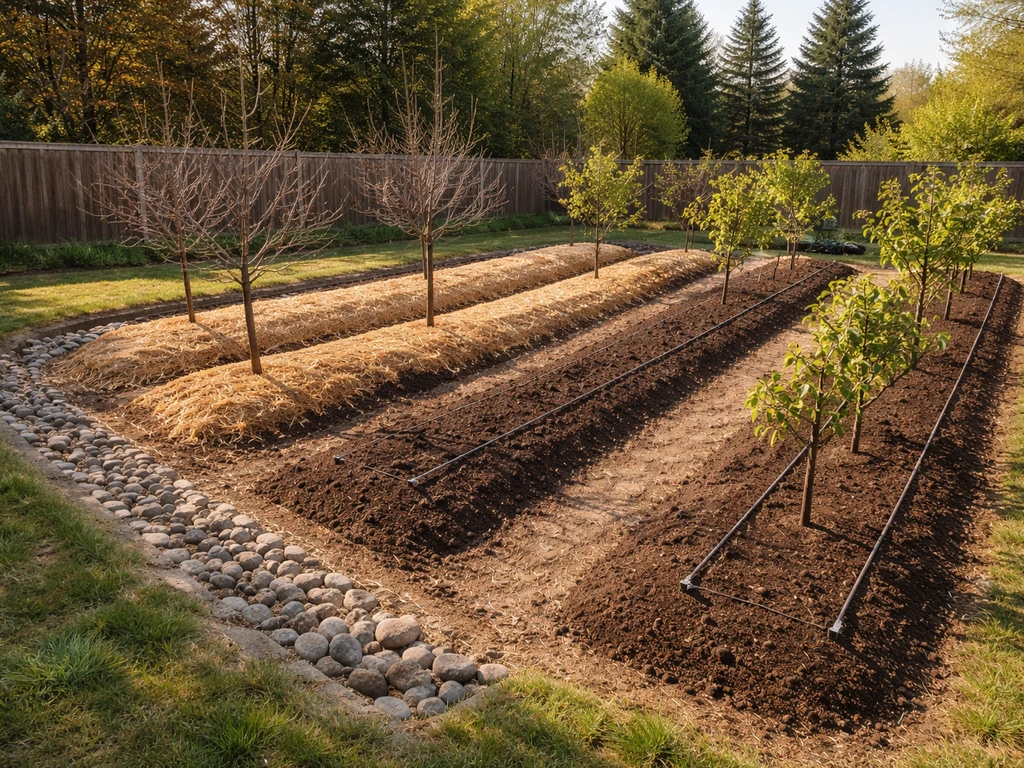
Climate fit comes down to four variables: winter chill hours, summer heat, rainfall or irrigation capacity, and soil drainage. Get any one of these wrong and you will either get no nuts or a dead tree.
Chill hours: the number most home growers overlook
Chill hours are the cumulative hours below about 7°C (45°F) that a tree needs during winter dormancy to break dormancy uniformly in spring. Without enough chill, buds break erratically or not at all, and you get poor flowering and almost no nut set. Almonds are on the low end, needing roughly 250 to 600 hours depending on the cultivar and the reference source used. Hazelnuts (filberts) sit around 800 hours. Pistachios need somewhere in the range of 700 to 1,000 hours below 7°C, which surprises people who assume a hot-climate nut has minimal chill needs. Pecans vary widely by cultivar: southern varieties used in Texas have low chill requirements, while northern-adapted varieties need significantly more, and terminal buds actually have lower chill requirements than lateral buds on the same tree.
Summer heat and growing season length
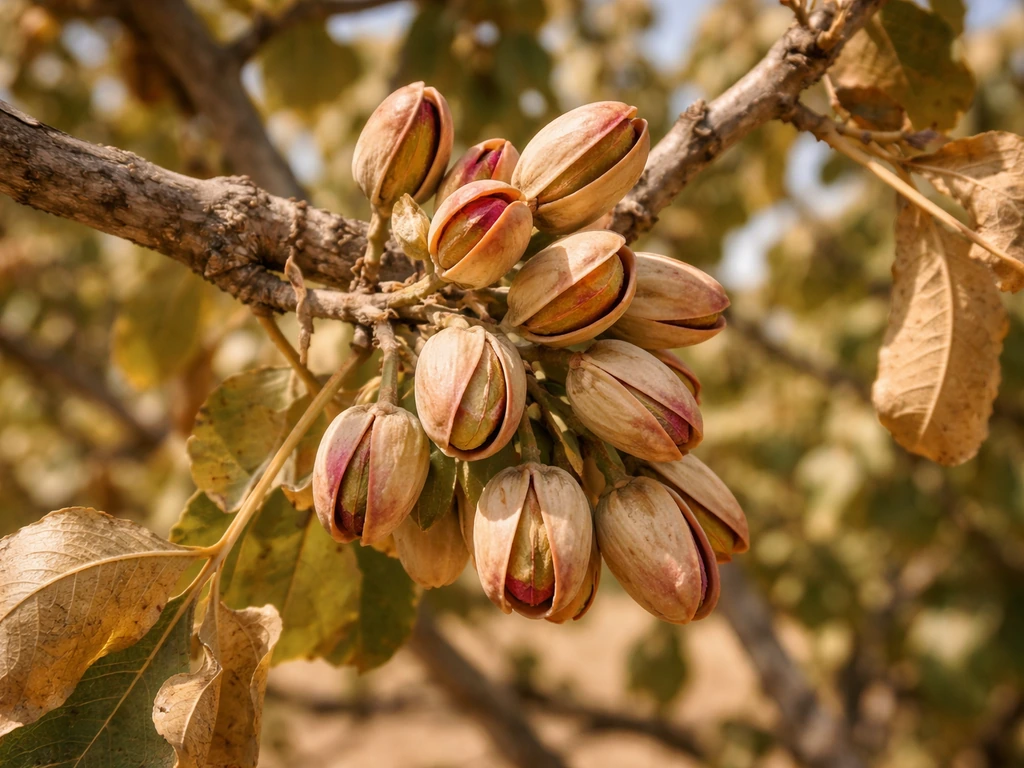
Pistachio has the highest heat requirement of any common tree nut. It needs a long, hot, dry summer to properly fill the kernel and trigger hull split at maturity. That's why California's San Joaquin Valley is the dominant US production region. Pecan similarly needs a long frost-free growing season (150 to 200+ days depending on cultivar) for the kernel to fill before fall. Push a long-season pecan variety into a short-season northern climate and you will get shell without kernel, or the shell will still be green when frost arrives.
Soil, drainage, and depth
This is where a lot of home growers fail silently. Most nut trees need well-drained soil at least 4 feet deep. Shallow or compacted soils restrict root development and keep the tree in a permanent state of stress. Pecans, true to their river-bottom heritage, can handle occasional flooding but need very deep, fertile soil and resent shallow hardpan. Walnuts prefer deep loam with good drainage and thrive in mountain-valley conditions that mirror their native habitat. A good rule of thumb: if water pools on your site for more than 48 hours after heavy rain, it is not suitable for most nut trees without significant drainage work.
Which nut trees fit which regions
Here is how the main cultivated tree nuts stack up against climate zones and regional conditions:
| Nut Tree | USDA Zones | Chill Hours Needed | Summer Requirement | Best US Regions |
|---|---|---|---|---|
| Pecan | 6–9 | Varies by cultivar (low to moderate) | Long, hot (150–200+ frost-free days) | South-central US, Mississippi Valley, SE states |
| Pistachio | 7–11 | 700–1,000 hrs (<7°C) | Hot, dry (mean ~30°C for 3+ months) | California Central Valley, desert SW |
| English Walnut | 5–9 | 500–700 hrs | Moderate to warm; frost-free spring critical | Pacific Coast, parts of Midwest and Mid-Atlantic |
| Almond | 7–9 | 250–600 hrs (cultivar-dependent) | Warm and dry at harvest | California, parts of Pacific NW and SW |
| Hazelnut/Filbert | 4–9 | ~800 hrs | Moderate; tolerates cooler summers | Pacific NW, Great Lakes, Northeast US |
If you are in the Southeast with humid summers, pecan is your most practical choice, but pick scab-resistant cultivars from the start. If you are in zones 7 to 9 in a dry inland climate with hot summers, pistachio or almond are worth serious consideration. The Pacific Northwest suits hazelnuts and English walnuts particularly well. Gardeners in the cold Midwest and Northeast face the toughest nut-growing conditions but can succeed with cold-hardy hazelnut varieties and selected black walnut or hickory species.
One thing worth noting: nutsedge is a grassy weed that becomes a genuine management problem in young nut orchards, especially in poorly drained or irrigated situations. If you are doing site prep, understanding when nutsedge grows in your region helps you time pre-planting weed control so you are not fighting it the same year you plant young trees.
Starting your own nut trees: site selection and planting basics
Let me be direct: growing nut trees is a long-term commitment, not a quick garden project. Pistachios typically require 5 to 6 years between planting and the first meaningful nut harvest, and that's under good conditions. Pecans can take even longer if started from seed. Grafted or budded trees cut years off the wait, but you are still looking at 3 to 7 years before significant production from any major nut species.
For site selection, prioritize full sun (at least 8 hours daily), good air movement to reduce fungal disease pressure, and well-drained soil at least 4 feet deep. Avoid frost pockets: cold air settles in low spots, and late-spring frost events hitting newly emerged blossoms can wipe out an entire year's crop on a tree that otherwise performed perfectly. This is especially critical for almonds and pistachios, which flower early.
Before planting, do a soil test. Nut trees are sensitive to pH and nutrient balance, and correcting calcium or pH issues after planting is far harder than doing it beforehand. Pecan orchard establishment guidance specifically calls out soil testing and addressing lime needs before trees go in the ground, and the same principle applies to every nut species.
For planting method, you have two basic options: plant grafted or budded trees, or plant seeds and graft later. Grafted trees give you a known cultivar and a faster path to bearing. Seeds are cheaper but unpredictable in quality and add several years to your timeline. If you are planting more than a few trees, grafted trees are almost always worth the premium.
Spacing matters more than most beginners expect. Pecan trees at full maturity need substantial room: final spacings of 80 feet by 80 feet (roughly seven trees per acre) are cited in orchard planning guidance for mature stands. Planting too close creates competition for light and air movement, increases disease pressure, and ultimately reduces yield per tree. You can start with closer temporary spacing and thin over time, but plan for the mature canopy from day one.
Pollination planning is non-negotiable for most nut species. Pecans, pistachios, and hazelnuts all need cross-pollination from a different cultivar or (in pistachio's case) a separate male tree. For pecans, planting at least four different cultivars is recommended to ensure proper pollination and protect against complete crop failure in a bad pollen year. For pistachios, you typically need one male tree (such as Peters) for every eight to twelve female trees.
Why your nut tree isn't producing (and how to fix it)
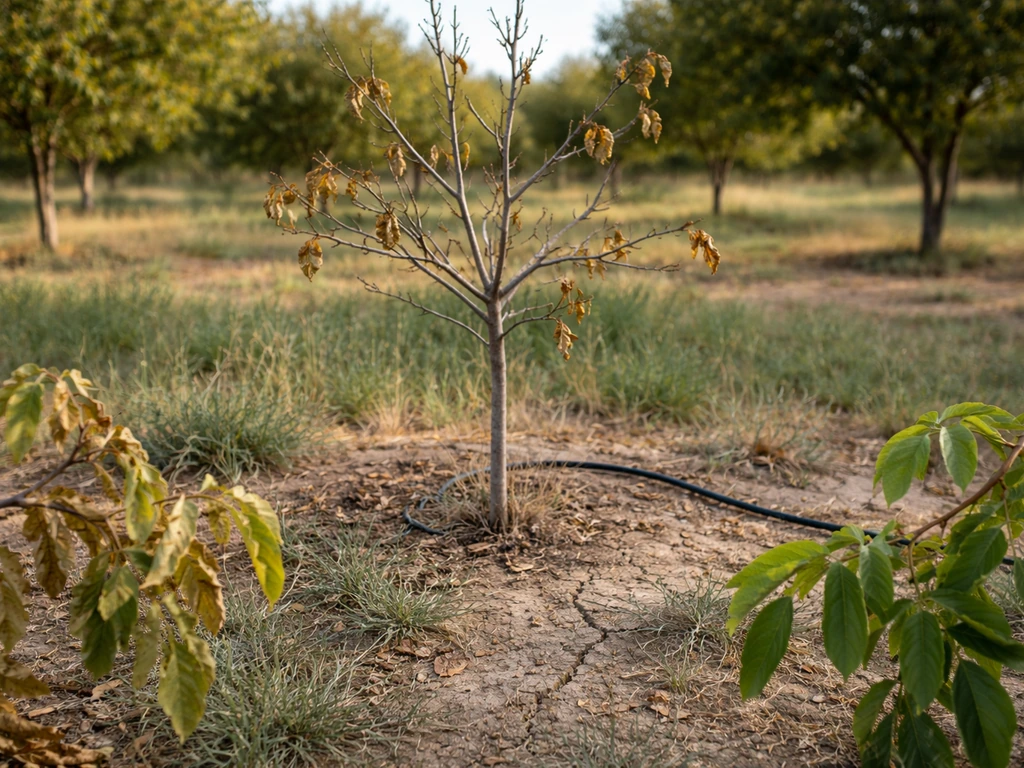
Nut production problems almost always trace back to one of five causes: wrong climate fit, insufficient chill or heat, pollination failure, disease pressure, or poor site conditions. Here is how to work through them:
- Wrong climate fit: If you chose a variety with a growing season requirement longer than your frost-free window, or with heat needs your climate can't meet, no amount of management will fix it. Match cultivar to climate before you plant.
- Insufficient chill hours: Trees that don't get enough winter chill break dormancy erratically, produce weak flowering, and set almost no fruit. This is increasingly a problem in warming winters across zones 8 and 9.
- Late frost damage: A single frost event during bloom can eliminate the entire year's crop. Varieties that bloom later (like many pecan and walnut cultivars) carry less risk. Site selection on elevated ground reduces frost pocket exposure.
- Pollination failure: Without the right pollinator variety present (or with mismatched bloom timing between male and female flowers), trees flower but set no nuts. Poor pollen viability has the same effect. For pistachios specifically, pollen viability directly affects both fruit set and the percentage of nuts that properly split at harvest.
- Pecan scab and other fungal diseases: In humid climates, pecan scab (caused by Fusicladium effusum) can devastate crops on susceptible varieties. Scab is worst during rainy periods with high humidity. Planting scab-resistant varieties is the single most effective long-term solution; fungicide programs are an option but become difficult to manage reliably for home growers with large trees.
- Walnut blight: In regions with wet springs, walnut blight (bacterial) requires protective spray treatments at 7 to 10 day intervals during prolonged wet periods. A spray-prediction model called XanthoCast is available to help time treatments to actual infection risk rather than a fixed calendar schedule.
- Nutrient and water stress: Nut filling is energy and water intensive. Trees under drought stress during kernel fill produce undersized or shriveled kernels. Inconsistent irrigation or compacted, nutrient-poor soil limits yield even on otherwise healthy trees.
The good news is that most of these problems are preventable at the planning stage. Choose the right species and cultivar for your climate and zone, prepare your site properly, plant pollinators alongside your main trees, and you eliminate the majority of production failures before the first tree goes in the ground. The patience is the hard part; the biology, once you understand it, is mostly on your side.
FAQ
Can I grow tree nuts the same way across all species, or do I need different rules for each one?
You cannot use one universal method. Even when the flower-to-harvest sequence is similar, each species has different limits for winter chill, heat units, and flowering timing, plus different pollination setups (for example, pistachios need a specific male to female ratio). Your plan should start with species first, then cultivar selection for your local frost and heat pattern.
Do I need two different trees for pollination, or can one tree self-pollinate?
Many commonly grown tree nuts still require cross-pollination. Almonds and walnuts often benefit from compatible partners, pecans generally need multiple cultivars, and pistachios require a dedicated male tree for reliable fruit set and hull split. If you buy a “single” tree, confirm whether it is truly self-fertile in your cultivar, because nursery labels are not always consistent.
What happens if I have enough chill hours, but my spring has late frosts?
Late frost can destroy catkins or newly emerged blossoms, which breaks the crop chain even if winter dormancy was perfect. This leads to “no nuts” the same year despite good chill. The practical fix is site selection to avoid frost pockets and, for small plantings, active frost protection during the narrow flowering window.
How do I know whether my location has enough heat for kernel fill, not just enough to keep the tree alive?
Survival is not the same as nut production. A tree can live in a marginal area but still fail to fully fill kernels if the growing season ends too early or if you get cool, wet conditions during kernel development. For pistachios and many pecans, pay attention to long, frost-free days and the typical timing of hull split relative to your first fall frost date.
What’s the most common mistake that causes “shell but no kernel” or poor fill?
The most common causes are insufficient heat accumulation for the length of the season, frost damage to developing fruit, or incorrect harvest timing. If the shell hardens but the kernel does not mature, it usually means the tree did not get enough effective warmth after flowering. A workaround is selecting earlier-maturing cultivars matched to your local first-frost timeline.
Can I grow tree nuts in containers or raised beds instead of deep soil?
Container culture is usually limited to very young trees because most nut trees need deep, well-drained rooting space (often well beyond typical pot depth). Raised beds can work only if the bed plus underlying native soil provide enough depth and drainage. If waterlogged soil forms at depth, roots stay stressed, and nut production can stall for years.
How important is soil drainage compared with irrigation?
Drainage is often more important than irrigation quantity. Overwatering or poorly drained soil reduces root oxygen, increases stress, and raises disease pressure. A useful check is whether water ponds after rain for more than about 48 hours; if it does, plan major drainage or pick a different site before planting.
What soil test results matter most for nut trees?
pH and calcium-related balance are usually the first targets, and many orchards correct lime needs before planting. Nutrients can be adjusted after planting, but correcting major pH problems is much harder and slower once roots establish. Ask your soil lab for pH, buffer capacity, and key nutrients, then align amendments with the specific species’ typical targets.
How do I choose between planting grafted trees now versus planting seeds and grafting later?
Grafted trees give you cultivar identity and a faster, more predictable path to production. Seedling trees are cheaper but unpredictable for nut quality, timing, and even pollination compatibility. If you are planting more than a few trees and care about consistent harvest, grafted trees almost always reduce risk and years.
What’s the right time to start managing weeds like nutsedge in a new orchard?
Start timing weed control around the planting year and the seasonal emergence pattern in your area. Nutsedge is especially problematic when young trees are establishing and roots are small, so late or reactive treatment can still mean heavy competition during the first critical growth period. Build weed control into your site prep plan, not just a “first year after planting” activity.
If my trees bloom but don’t set nuts, what should I troubleshoot first?
Begin with pollination compatibility and timing, then check whether weather during flowering (wind, rain, or frost) interfered. After that, evaluate disease pressure and whether the tree received enough heat to support fruit development. Fertilizer alone rarely fixes a pollination or heat shortfall.
How long should I realistically wait for my first meaningful harvest?
Expect multiple years even with good conditions. Pistachios often take about 5 to 6 years for a meaningful first harvest, pecans can take longer, and seed-started trees can add more time and uncertainty. If you want earlier production, budget for grafted trees and still plan on several years before you can judge performance.
What spacing should I use if I want a smaller backyard orchard?
Spacing affects light penetration and disease pressure at maturity, not just at planting. Pecans are commonly planned for extremely wide final spacing, and if you crowd trees, you can reduce yield and increase fungal issues by limiting airflow. If you must start close, have a thinning plan and commit to adequate long-term room for canopy growth.
How do I harvest tree nuts properly if the crop splits or drops at different times?
Species and cultivar can differ in the timing of hull split or husk dehiscence, so “one harvest day” rarely works. Harvest when nuts reach physiological maturity indicators such as hull split, then handle drying or curing consistently to avoid mold. If you delay until everything drops, you often lose quality from pests or weather exposure.