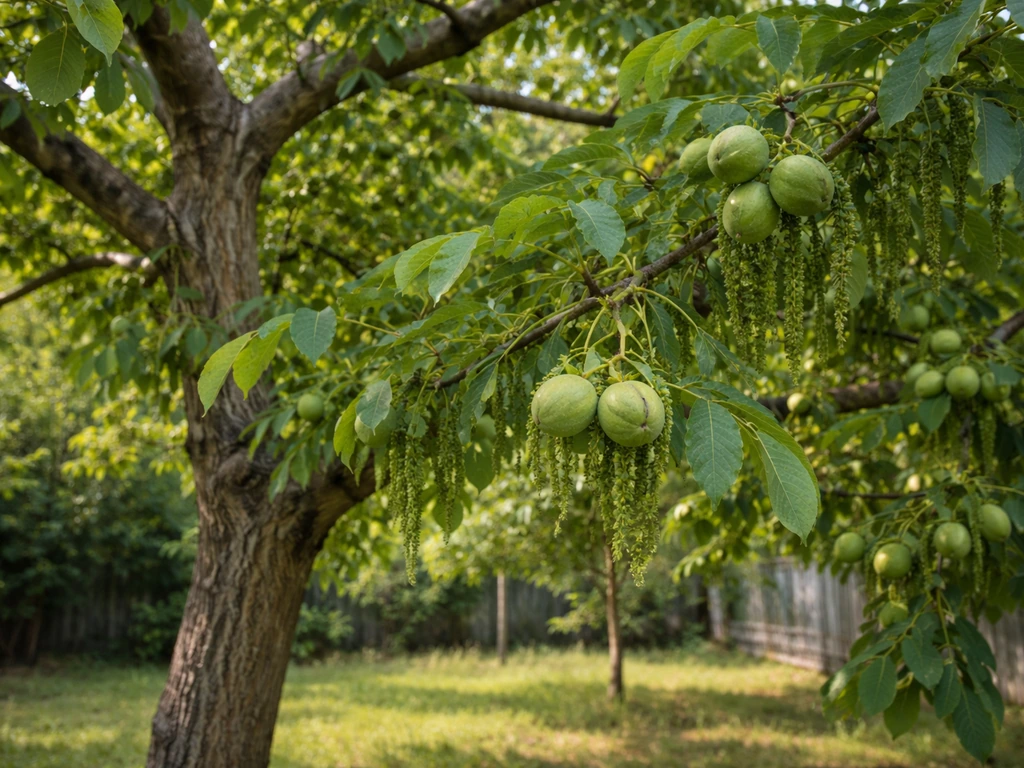
Do nuts grow in the ground or on the tree?
Most nuts grow above ground, on trees or shrubs. But a few crops that people commonly call "nuts" actually develop underground, and the most familiar example is the peanut. That's the short answer. The confusion happens because "nut" is used loosely in everyday language to mean almost any hard-shelled, edible seed, regardless of where or how it forms on the plant. Botanically speaking, a true nut is a hard-shelled fruit that doesn't split open at maturity, like an acorn or a hazelnut. By that strict definition, almost nothing you buy in a nut aisle is a true nut. But for practical gardening purposes, the question most people are really asking is simpler: do I dig these up from the ground, or do I harvest them from a tree or bush? The answer depends entirely on which crop you're talking about.
The ones that actually develop underground
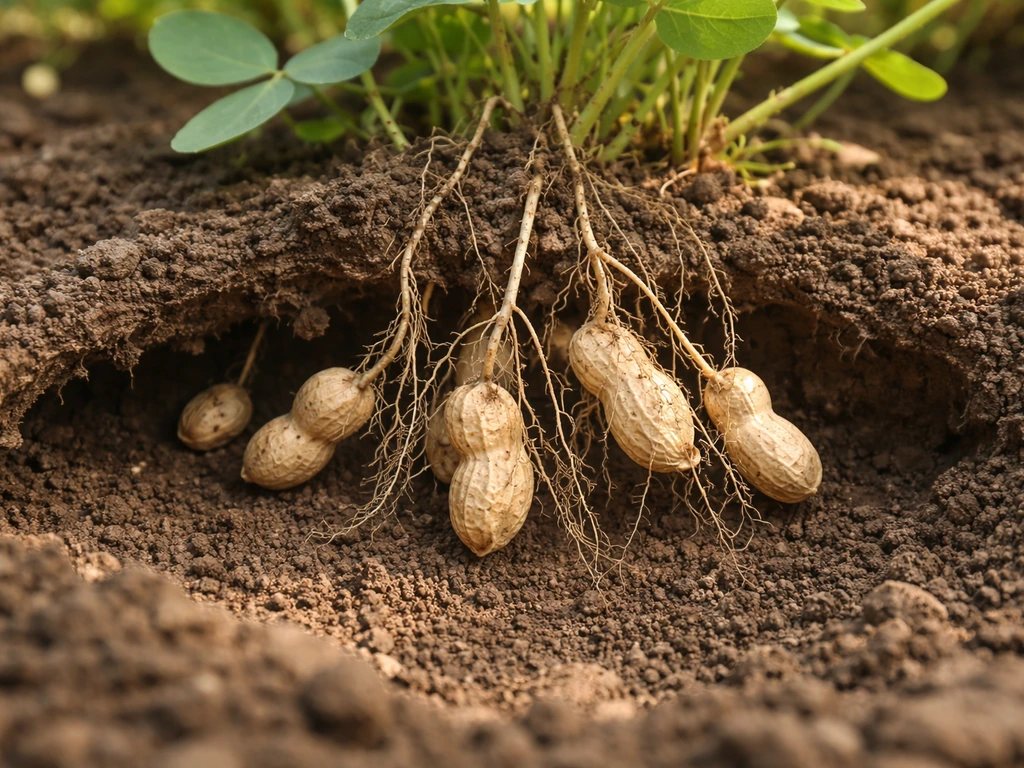
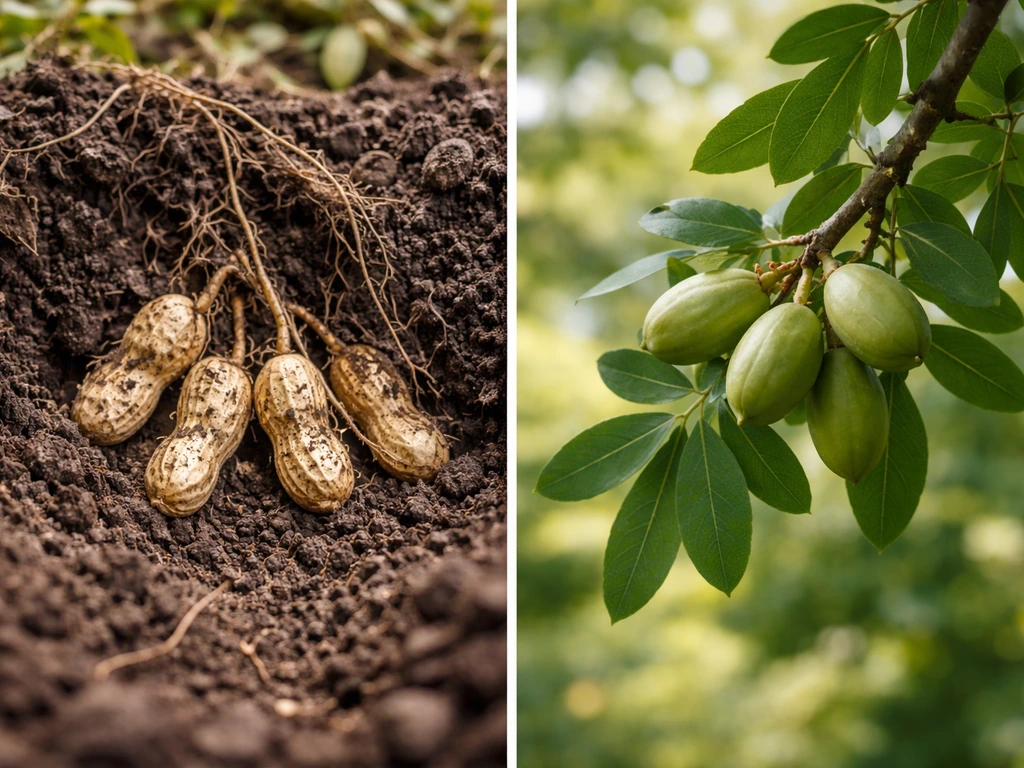
The peanut (Arachis hypogaea) is the standout example of a nut-like food that genuinely grows underground. It's technically a legume, not a nut at all, but it's sold and eaten as a nut, so it earns its place here. What makes peanuts genuinely unusual is the way they form. The plant flowers above ground, just like any normal flowering plant. After the flower is fertilized, though, something strange happens: a structure called the peg (botanically, the gynophore) elongates and pushes the developing ovary downward into the soil. Once it's a few inches underground, the pod starts to develop around the seeds. This process is called geocarpy, the production of fruit below the soil surface, and peanuts are the textbook example of it. You'll see the leafy plant growing normally above ground with small yellow flowers, but the actual edible part is forming in the dark, below your feet. At harvest time, you pull the entire plant out of the ground and the pods come up attached to the roots.
Tiger nuts (Cyperus esculentus) are another underground crop that gets lumped into the "nut" category by consumers. They're actually small tubers that form on the roots of a sedge plant, not true nuts or legumes. But they're small, rounded, chewy, and slightly sweet, so they get marketed as nuts and used the same way. The plant looks like a clump of grass above ground. Underground, it produces clusters of small, wrinkled tubers roughly the size of a chickpea. These are what you harvest. Groundnuts (Apios americana), sometimes called hopniss or Indian potato, are a similar story: a vining legume that produces edible tubers underground while the plant climbs above the soil. These are less commonly grown today but have a long history of use in North America.
The common thread for all of these is that you're harvesting something that formed below the soil surface, even if the rest of the plant lives above it. None of these are trees. They're low-growing annuals, perennials, or sedges that you plant in a garden bed, not an orchard.
The nuts people call "underground" that aren't
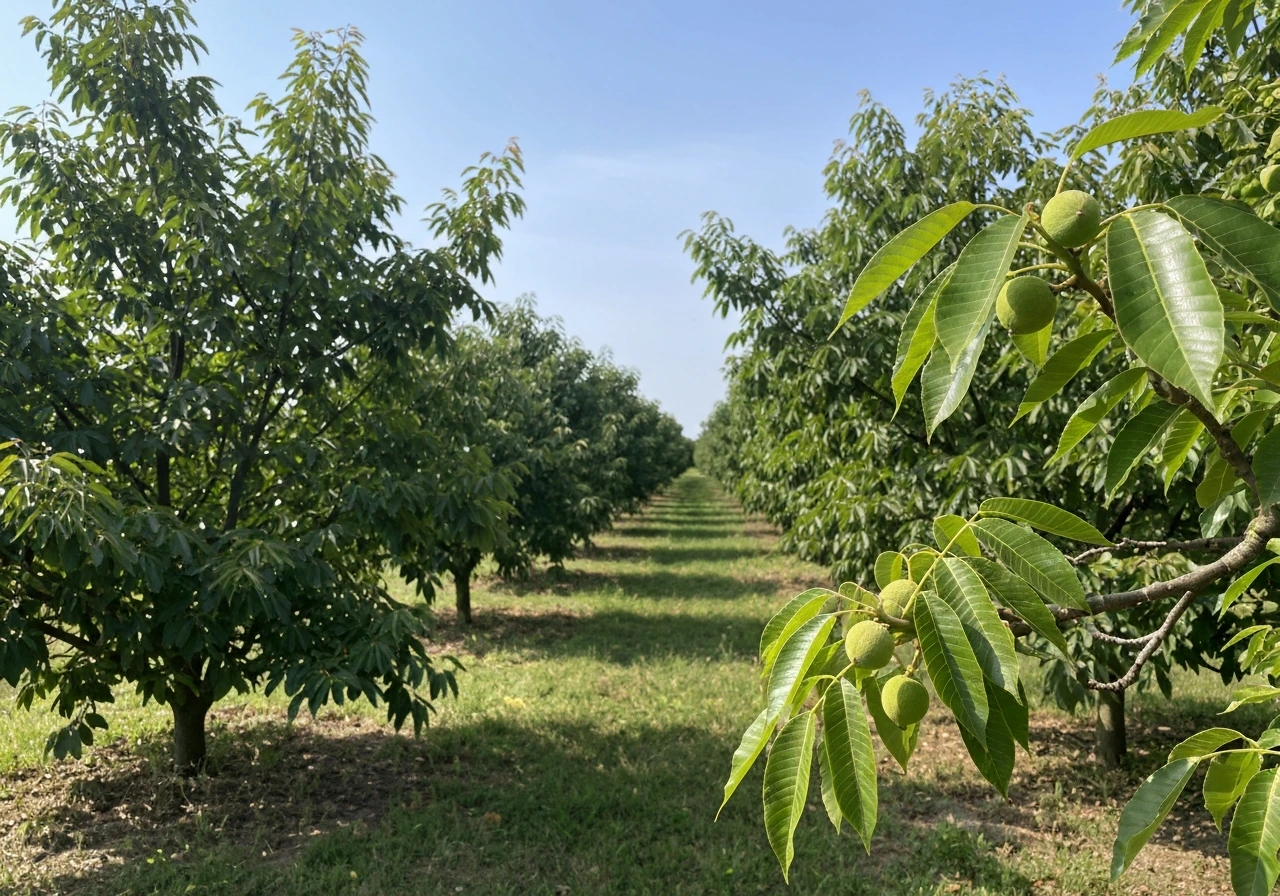
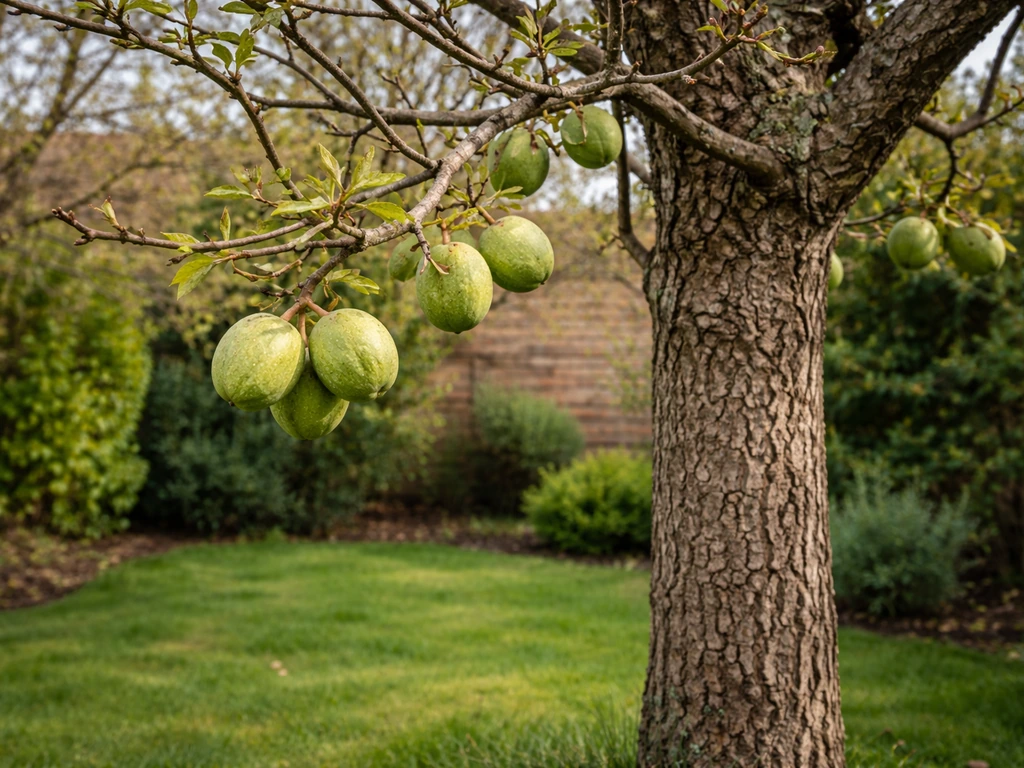
A lot of people search "what nuts grow in the ground" because they've seen a nut sitting on the ground and assumed it grows there. It doesn't. Walnuts, pecans, chestnuts, hazelnuts, almonds, pistachios, macadamias, and Brazil nuts all grow on trees or large shrubs. They fall to the ground at maturity, which is where most people encounter them, but the development happens entirely above ground, inside husks or shells attached to branches. If you want to understand exactly what nuts grow on trees and how those crops form from flower to harvest, that's a separate topic worth digging into. The short version is that finding a nut on the ground just means it dropped, not that it grew there.
There's also a middle category worth mentioning: nuts that grow on bushes rather than tall trees. Hazelnuts are the most practical example here, since they grow on large shrubs that can be kept pruned to a manageable size. If you're working with a smaller yard and want to grow your own, what nuts grow on bushes is worth reading before you commit to planting a full-sized walnut or pecan tree. The point is that all of these still develop above ground on the plant, even if the plant itself is shorter than a typical tree.
Underground vs. above-ground nut crops at a glance
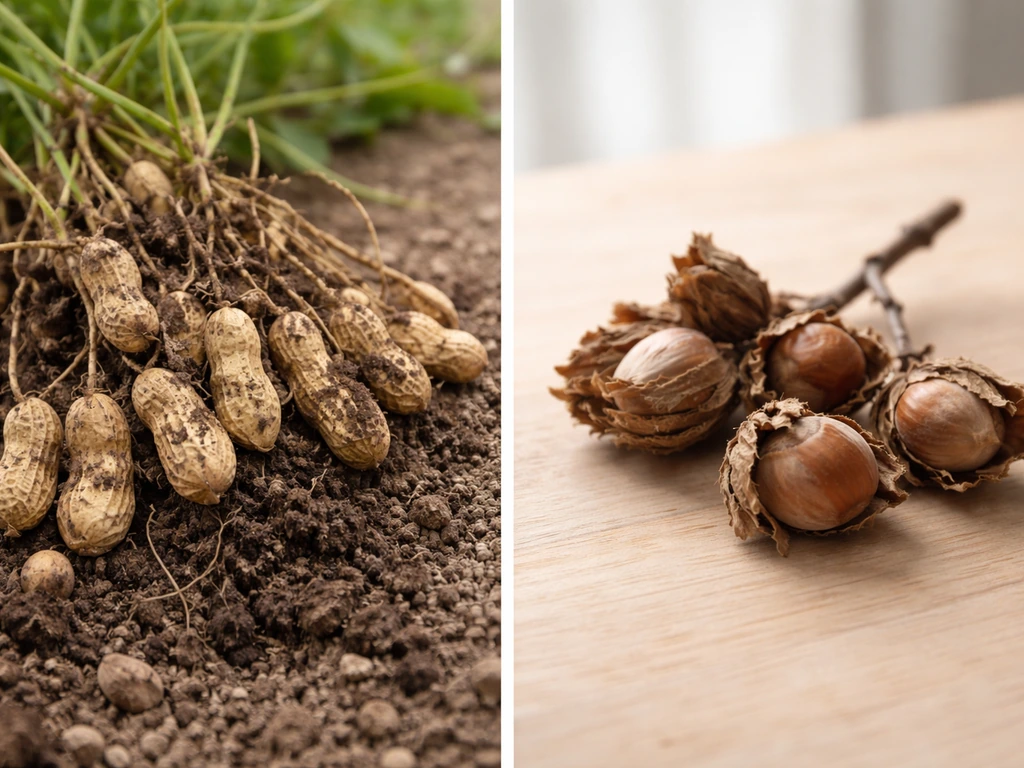
| Crop | Where it develops | Plant type | Botanical category | Harvest method |
|---|
| Peanut | Underground (pods) | Annual herbaceous plant | Legume | Pull entire plant from soil |
| Tiger nut | Underground (tubers) | Perennial sedge | Tuber | Dig tubers from soil |
| Groundnut (Apios) | Underground (tubers) | Perennial vine | Legume/tuber | Dig tubers from soil |
| Walnut | On tree (husk) | Large deciduous tree | True nut | Collect fallen nuts or shake tree |
| Pecan | On tree (husk) | Large deciduous tree | Drupe (nut-like) | Collect fallen nuts |
| Hazelnut | On shrub (husk) | Large shrub or small tree | True nut | Collect or rake from ground |
| Chestnut | On tree (spiny burr) | Deciduous tree | True nut | Collect fallen burrs |
| Almond | On tree (hull) | Small to medium tree | Drupe | Shake tree, collect from ground |
What you can realistically grow, and where
This is where most people hit a wall, because climate makes or breaks nut growing. If you want to grow something that genuinely develops underground, peanuts are the most practical choice for home growers across a wide range of climates. They're warm-season annuals that need at least 120 to 140 frost-free days and soil temperatures above 65°F at planting. That puts them squarely in USDA Hardiness Zones 6 through 11 for outdoor growing, though gardeners in Zone 5 can sometimes pull a crop if they start plants indoors a few weeks early and transplant after last frost. Sandy, well-drained soil is strongly preferred because the pegs need to push easily into the ground to form pods. Clay-heavy soil significantly reduces yield. If you're wondering more broadly can you grow nuts in your specific setup, the answer for peanuts is yes for most of the continental US south of Zone 6, and with some effort in Zone 5.
Tiger nuts are more forgiving than peanuts in some respects: they tolerate a wider range of soils, don't require the geocarpic peg process, and can be grown in containers. The catch is that Cyperus esculentus is classified as an invasive weed in some states, so check your local regulations before planting it in open garden beds. In containers, the concern largely disappears. They grow well in Zones 7 through 11 and can be grown as annuals in cooler zones if you start them early.
For above-ground nut trees, climate suitability varies dramatically. Pecans need a long, hot growing season and are best suited to Zones 6 through 9. Walnuts are more cold-hardy, with black walnuts thriving in Zones 4 through 9. Chestnuts are one of the most cold-tolerant options, growing well in Zones 4 through 8. If you're in a warm-weather state and want to explore what's possible there, looking at what nuts grow in Florida gives a good picture of which tree crops handle heat and humidity well, including pecans and macadamias.

If someone hands you a nut and you're not sure where it came from, here's a quick way to work it out. Start with the shell and the overall form. Peanuts have a papery, fibrous, tan-colored pod with a rough, net-like texture and multiple seeds inside. They don't look like tree nuts, and the shell isn't hard. If you crack it, there's a thin reddish skin over the kernel. Tiger nuts are small, round, slightly wrinkled tan tubers with no shell at all, more like a dried chickpea in appearance. If it has a hard, woody shell, it came from a tree or shrub.
Harvest timing is another useful cue. Peanuts are typically harvested in late summer to fall (August through October in most US growing regions), 120 to 150 days after planting. The leaves and foliage start to yellow as the crop matures. You can check by carefully pulling one plant and inspecting the pods: a mature peanut pod will have a hard, firm hull with a dark interior surface when you crack it open. Tiger nut tubers are usually ready about 90 to 120 days after planting. Tree nuts, by contrast, signal maturity by dropping naturally or by the hull splitting open while still on the branch, typically from late summer through late fall depending on species.
Shell and plant identification quick guide
- Papery, fibrous pod with multiple seeds inside, no hard shell: peanut (grew underground, legume)
- Small, round, wrinkled tan tuber with no shell, plant looks like grass: tiger nut (grew underground, tuber)
- Hard woody shell with a seam or no seam, fell from a tree: tree nut (walnut, pecan, chestnut, hazelnut, etc.)
- Flat, oval shell with a hull that splits open, from a small tree: almond or pistachio (grew on tree)
- Spiny green burr containing shiny brown seeds: chestnut (grew on tree, fully above ground)
Your practical next steps
If you want to grow something that develops underground, start with peanuts. They're the most widely available, the easiest to source, and the most forgiving for beginner growers. Buy unroasted, shell-on peanuts (seed peanuts) from a garden supplier or farm supply store, not grocery store peanuts which are often heat-treated and won't germinate. Plant them after your last frost date when soil temperature is consistently above 65°F. The University of Georgia CAES field report advises that soil temperature should be higher than about 68°F for a three-day period before planting peanuts soil temperature is consistently above 65°F. Space them about 6 to 8 inches apart in rows 24 to 36 inches apart. Mound soil gently around the base of the plant as it grows, the way you would with potatoes, to give the pegs easier access to loose soil. Don't overwater: peanuts need consistent moisture but hate waterlogged roots.
If you're in a cooler zone and peanuts feel like a stretch, tiger nuts in containers are worth trying. Use a deep container (at least 12 inches) with well-draining potting mix, plant the tubers about 2 inches deep, and keep them in full sun. They're low-maintenance once established and you can bring the containers indoors at the end of the season if you want to save the plant.
For above-ground nut trees, the timeline is much longer. Most nut trees take 3 to 7 years to produce their first meaningful harvest, and some take longer. That's not a reason to avoid them, but it does mean you should choose a species matched to your climate zone before you plant, not after. Buying a bare-root or container-grown tree from a reputable nursery in spring is the standard starting point. Plant in full sun with enough space for mature spread, which can be 40 to 60 feet for species like black walnut or pecan. If space is limited, hazelnuts are the most practical tree-nut option for smaller yards and can start producing in as few as 3 to 4 years.
The bottom line: if you want to harvest something from the ground, peanuts are your best bet and you can start this season. If you're thinking longer term and want a perennial crop, pick a tree nut species matched to your hardiness zone, plant it this spring, and plan on your first real harvest around the time you've almost forgotten you planted it. Both paths are worth it, they just run on very different clocks.