What counts as a "nut" vs a shrub fruit (and why it's confusing)
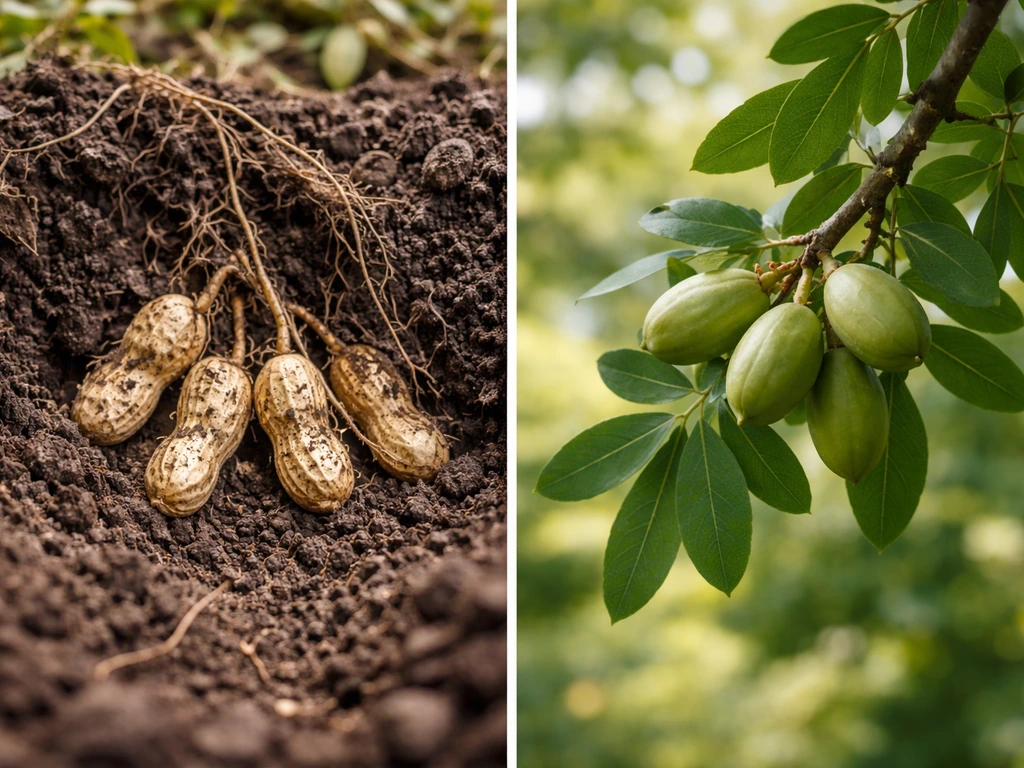
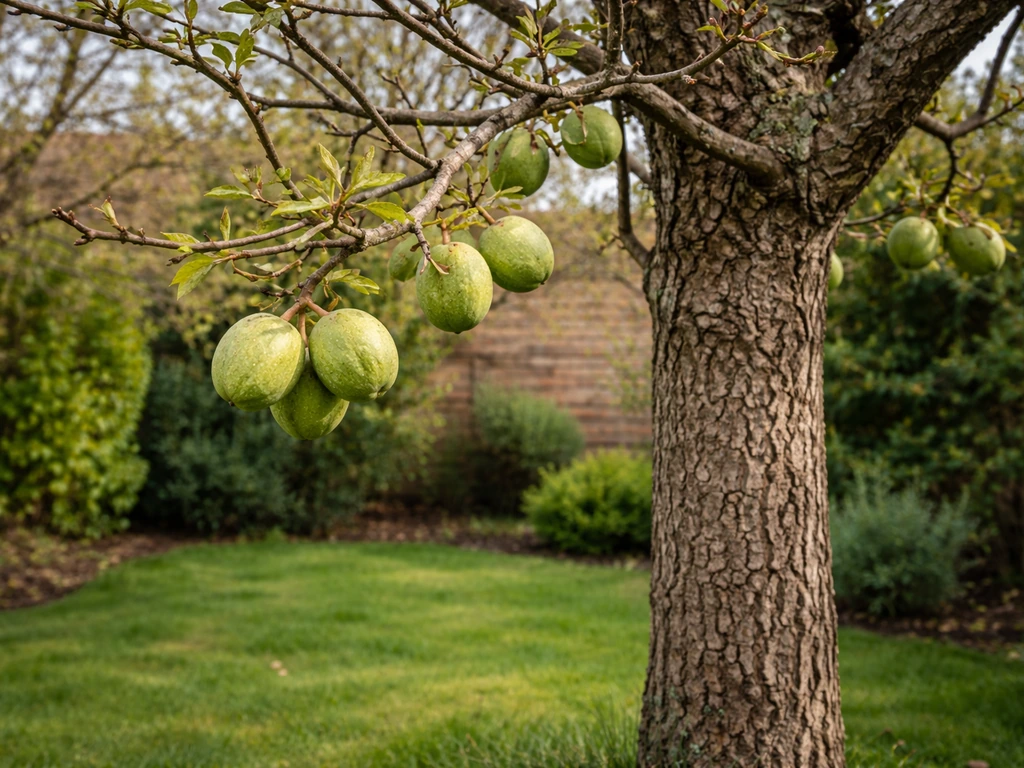
The word "nut" gets thrown around loosely, and that's a big part of why this question is so tricky. Botanically, a true nut is a hard-shelled, dry fruit that doesn't split open when ripe and contains a single seed. By that strict definition, hazelnuts qualify. Acorns qualify. Chestnuts mostly qualify. Meanwhile, what most people call nuts in the kitchen, like almonds, cashews, walnuts, and pistachios, are technically drupes or seeds from pods. Peanuts, famously, aren't nuts at all in any sense: they're legumes that mature underground, which you can read more about in our article on what nuts grow in the ground.
The confusion around bush nuts usually comes from one of three places. First, some true nut trees are small enough at maturity that they blur the line between a tree and a large shrub. Second, hazelnuts in particular are so commonly grown as multi-stem clumps that many people never realize they're looking at what can technically be a tree species. Third, wild berry bushes and shrubs sometimes produce hard seeds inside their fruits that people mistake for nuts.
When you're trying to sort this out in your backyard or on a foraging walk, focus on the structure of the seed itself: does it have a hard, woody shell protecting a single edible seed? That's your best field indicator that you're dealing with an actual nut.
Bushy nut plants to know
Hazelnut and filbert: the main event
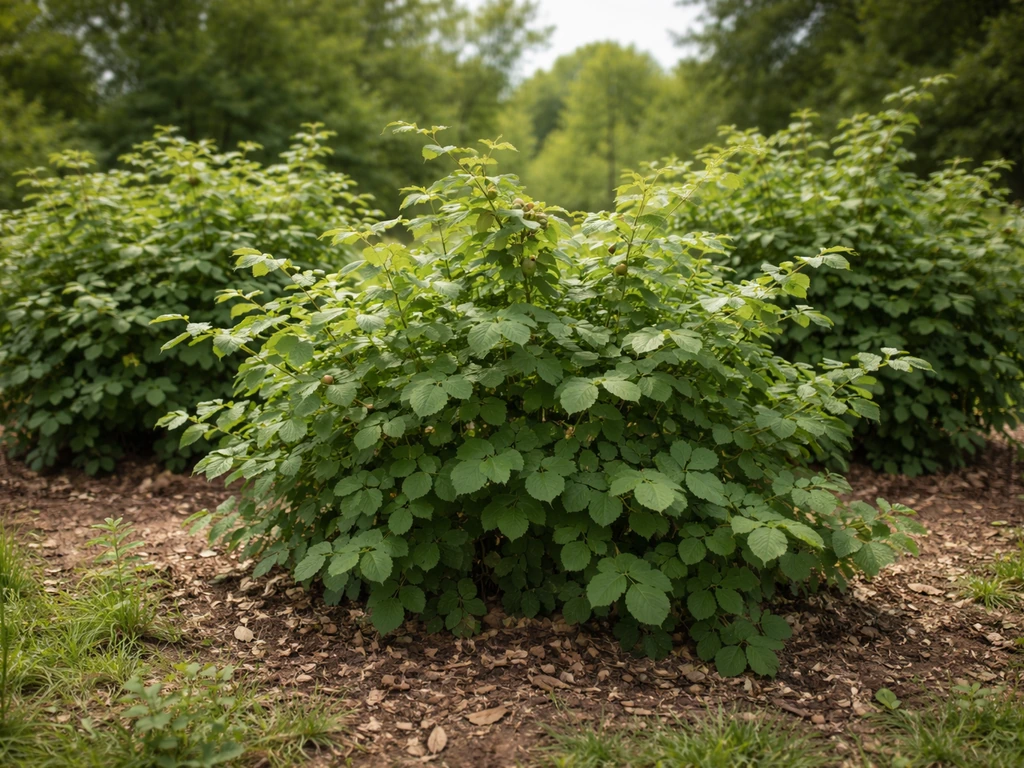
Hazelnuts are the real answer to this question. The genus Corylus includes several species that are naturally shrubby, most commonly European hazelnut (Corylus avellana), American hazelnut (Corylus americana), and beaked hazelnut (Corylus cornuta). The filbert you buy in the grocery store is typically Corylus avellana or a hybrid. A related species, Corylus maxima (sometimes called the giant filbert or long-husk hazel), produces nuts enclosed in longer, more tubular husks that extend well past the nut itself, which is one way to tell it apart from common hazel forms. All of these grow naturally as multi-stem shrubs and produce true nuts enclosed in a papery or leafy husk.
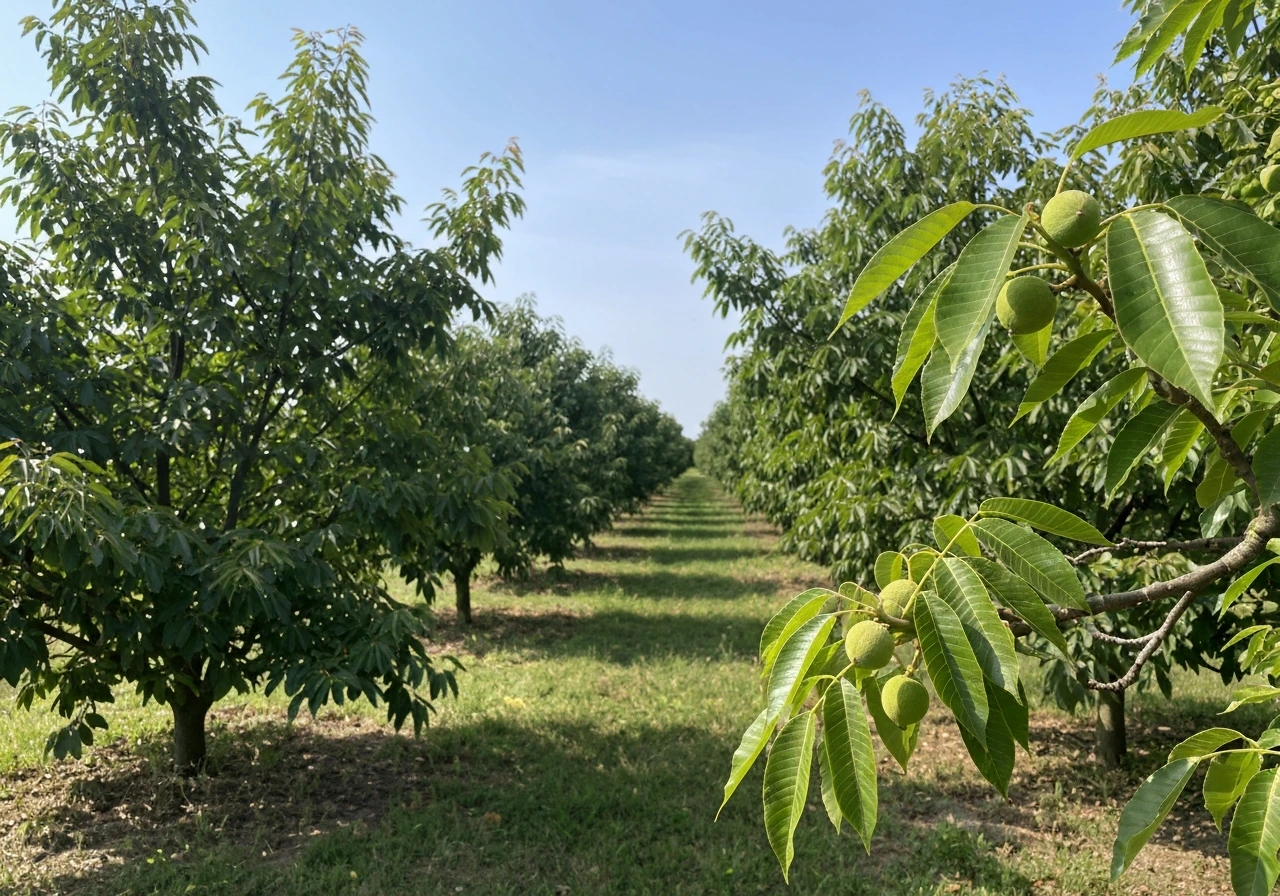
The Morton Arboretum describes European hazelnut as producing edible nuts (marketed as filberts) enclosed in a frilly husk, with nuts typically maturing from September through October. Utah State University Extension notes that hazelnut nuts grow inside a husk and usually drop to the ground upon ripening, which is a practical detail to remember at harvest time: you may not need to pick these at all. Outside of the hazelnut genus, the pickings get slim fast when you're looking for true nut-producing shrubs. Some gardeners point to what nuts grow on trees as a longer list, which is accurate, because the overwhelming majority of commercial and edible nut species are genuine trees, not shrubs.
Other shrubby plants sometimes confused for nut bushes
Elderberries, chokeberries, and native viburnums all produce small hard seeds inside soft fruits, but those seeds are not edible nuts. Staghorn sumac has clusters of hard seeds but is inedible in the nut sense. In warmer climates, some people grow jojoba (Simmondsia chinensis), a desert shrub whose seed produces a liquid wax sometimes called jojoba "nut," though it isn't edible for humans in the culinary sense. The pine nuts you eat come from pine trees, not shrubs.
If you're in the Southeast or Florida specifically and wondering whether any bushy nut plants thrive there, our piece on what nuts grow in Florida covers the regional picture in more depth. The honest answer for most of the country: hazelnut is your shrub nut plant.
How to identify the right plant from leaves, flowers, and nut shape
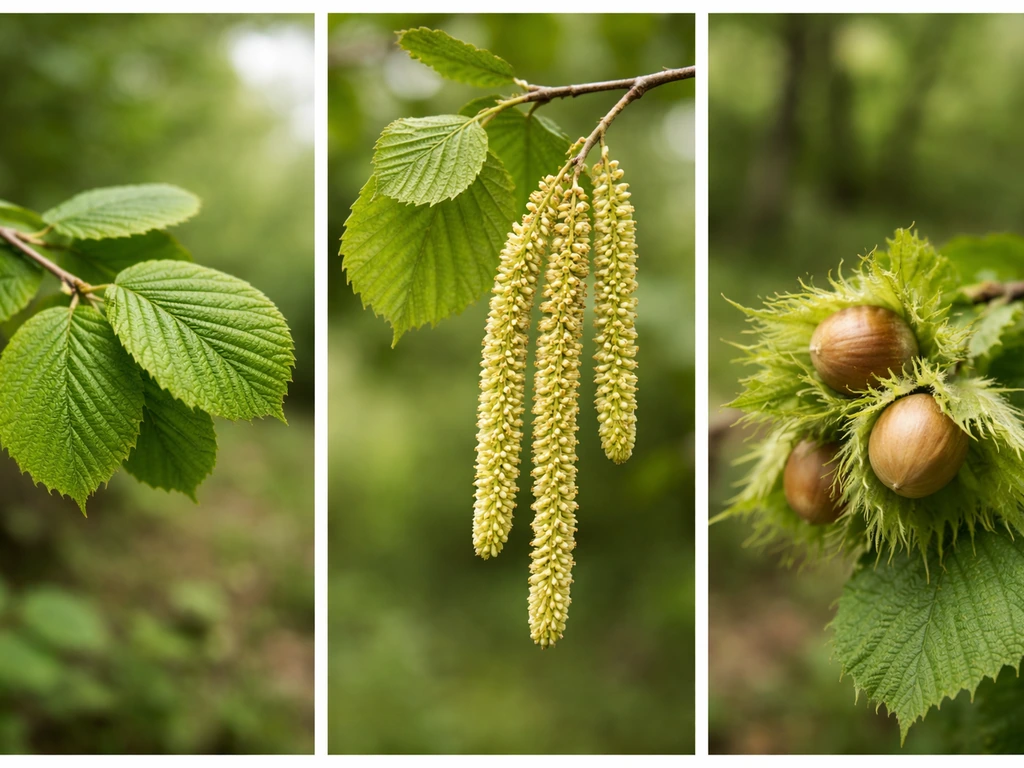
If you're standing in front of a shrubby plant that you suspect might be producing nuts, here's what to look for to confirm it's a hazelnut or related Corylus species.
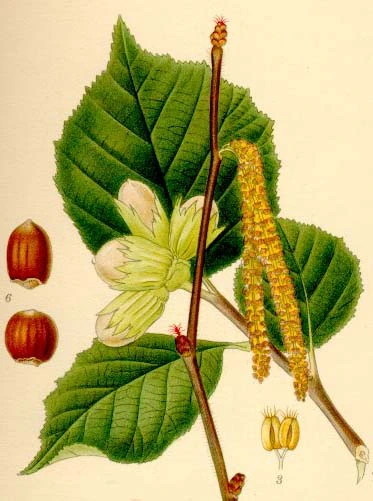
- Leaves: Hazelnuts have broadly oval to rounded leaves with a heart-shaped base, doubly serrated (toothed) edges, and a slightly rough texture. They're typically 3 to 5 inches long. The fall color is yellow to orange-red.
- Male flowers (catkins): In late winter to early spring, long, dangling yellowish-brown catkins appear before the leaves. These are the male flowers and are hard to miss, often showing up as early as February in mild climates.
- Female flowers: Much smaller and easy to overlook. They look like tiny red or pink thread-like structures poking out of a bud tip. This is where the nuts will develop.
- Husks: The developing nuts are wrapped in a leafy or papery husk (called an involucre). In common hazel, the husk is about the same length as the nut. In Corylus maxima (filbert), the husk is longer and more tube-like, enclosing the nut completely.
- Nut shape: Round to slightly oblong, hard-shelled, and typically 0.5 to 1 inch in diameter depending on species and variety. The shell is smooth and pale brown at maturity.
- Stem structure: Look for multiple stems emerging from the base rather than a single trunk. Wild or unmanaged hazelnuts often form a dense, suckering thicket over time.
The combination of dangling catkins in late winter, distinctive doubly-toothed leaves, and husked nuts in late summer to fall is essentially a definitive ID for Corylus in most of North America. No other common shrub in temperate gardens produces all three of those features together.
Where they grow: climate and region fit
Hazelnut is genuinely adaptable, which is one reason it's worth knowing. Different species cover a wide range of climates, so there's likely a Corylus species that fits your region.
| Species | USDA Zones | Best Regions | Notes |
|---|
| European hazelnut (Corylus avellana) | 4–8 | Pacific Northwest, Midwest, Northeast | Commercial filbert production centered in Oregon's Willamette Valley; widely grown in Europe |
| American hazelnut (Corylus americana) | 4–9 | Eastern US, Upper Midwest | More disease-resistant than European; smaller nuts; excellent for wildlife |
| Beaked hazelnut (Corylus cornuta) | 4–7 | Northern US, Canada | Native to forests; more shade-tolerant than other species |
| Filbert / Giant hazel (Corylus maxima) | 5–8 | Mild temperate regions | Larger nuts with distinctive long husks; less commonly grown in North America |
The Pacific Northwest, particularly Oregon's Willamette Valley, is the commercial heart of hazelnut production in the United States, but that doesn't mean you're limited to growing hazelnuts there. University of Wisconsin-Madison Extension has documented successful hazelnut production in the Upper Midwest using selections of European hazelnut (Corylus avellana) adapted to colder winters.
A University of Wisconsin Extension hazelnut establishment fact sheet also discusses establishment considerations for Upper Midwest plantings, including European (Corylus avellana) and American hazelnut (Corylus americana) [successful hazelnut production in the Upper Midwest using European hazelnut adapted to colder winters](https://cropsandsoils. extension. wisc. edu/files/2023/07/factsheetseries2establishmentfinaljan_22.
pdf). American hazelnut is native across much of the eastern half of the continent and will tolerate conditions that European varieties struggle with. The key climate issue for hazelnuts is a quirk in their biology: they flower very early in the year, so late spring frosts after catkins and female flowers have emerged can wipe out a crop. If you're in a region with unpredictable late frosts, American hazelnut or cold-hardy hybrids are the safer bet.
If you're curious whether the same concerns apply to other nut species you might be considering, can you grow nuts in your specific situation is a good question to dig into more broadly.
How to grow bush nut plants
Light and soil
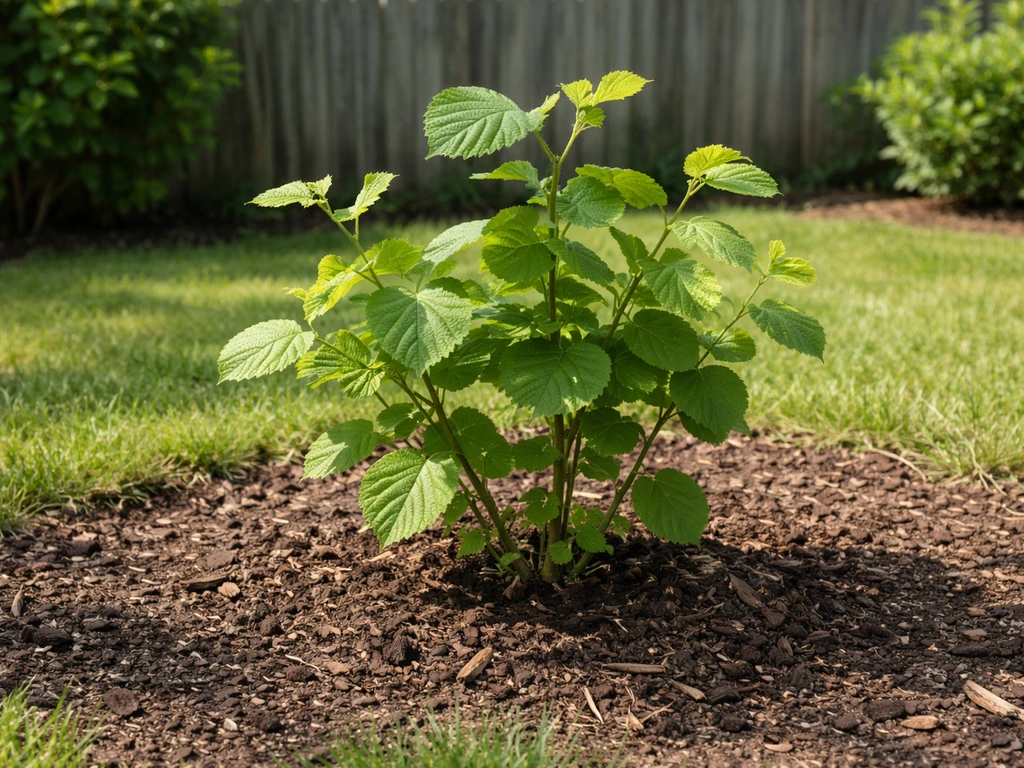
Hazelnuts prefer full sun to produce good nut crops, though they'll survive in partial shade. In shade, expect thinner nut set and a more open, leggy growth habit. Soil-wise, they're reasonably flexible: well-drained loam or sandy loam is ideal, with a pH in the 6.0 to 7.0 range. They don't like wet feet, so avoid low spots that pool water after rain. Compacted clay soils are problematic for the same drainage reason. If your site is marginal, amending with organic matter and ensuring good drainage will take you further than any fertilizer program.
Spacing
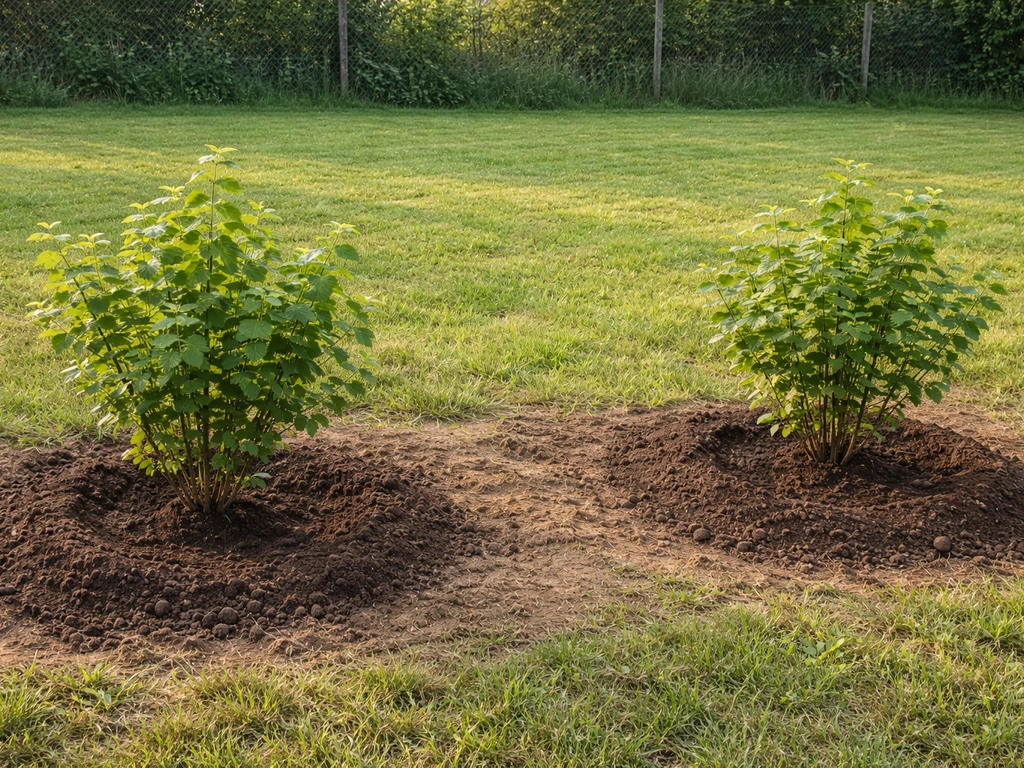
For home plantings, space hazelnut shrubs 8 to 15 feet apart depending on the variety. European hazelnut and its hybrids can reach 12 to 15 feet tall and wide if left unpruned. If you want to keep them manageable as shrubs, regular removal of suckers and light annual pruning keeps the size in check. American hazelnut tends to spread by suckering into a colony if not controlled, which can be useful for a windbreak or wildlife planting but annoying in a garden setting.
Pollination: the part most growers overlook
This is where hazelnut growing gets specific and where a lot of first-time growers go wrong. Hazelnuts are self-incompatible, meaning a single plant almost never successfully pollinates itself. Oregon State University Extension research on hazelnut pollination explains that male catkins release pollen in late winter, which must reach the receptive female flowers on a different compatible plant to set nuts.
This means you need at least two different hazelnut varieties (or a mix of species) planted within reasonable proximity, typically within 65 feet of each other for good pollination. Commercial orchards in Oregon use specific pollenizer varieties interplanted throughout the planting. For a home grower, the practical solution is simple: plant at least two plants, ideally of different named varieties or species. One European hazelnut and one American hazelnut will cross-pollinate reliably.
Timing: when to plant and when to expect nuts
Plant bare-root hazelnuts in late winter to early spring before they break dormancy, or plant container-grown plants in spring or fall. Don't expect a significant nut crop in the first two to three years; hazelnuts are not instant producers. Most well-established plants start yielding meaningfully in years three to five, with full production taking closer to six to eight years. That timeline is important to set expectations upfront. This is a medium-term investment, not a quick payoff.
Harvest and use: when to pick and what to expect year to year
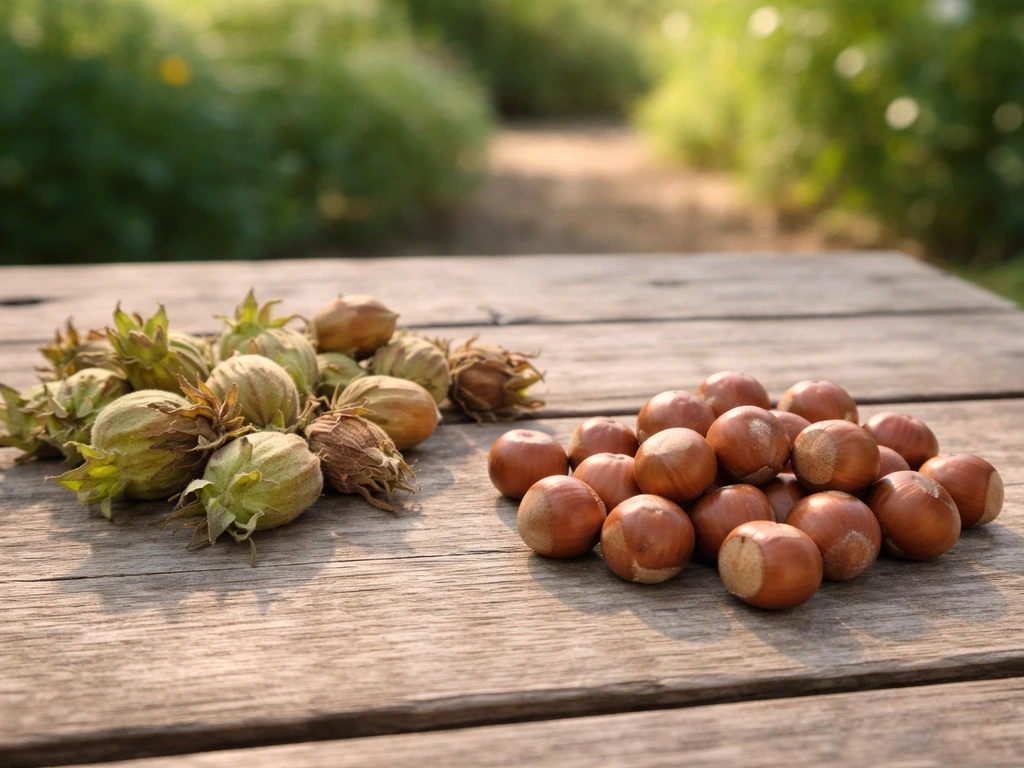
Hazelnuts mature from late August through October depending on your region and variety. The classic sign that nuts are ready is that they begin dropping from the plant on their own, still inside their husks. Utah State University Extension confirms this: the nuts typically drop to the ground upon ripening, so daily or every-other-day collection from the ground is more practical than hand-picking from the branches. Don't wait too long once they start dropping, because squirrels, jays, and other wildlife will find them faster than you might expect.
Once you've collected the nuts, remove the husks and check for any that feel hollow or lightweight, signs of insect damage or failed development. Then dry them promptly. Utah State University Extension recommends drying harvested hazelnuts at 95 to 105 degrees Fahrenheit. A food dehydrator set to low works well for small batches. Properly dried hazelnuts store in a cool, dry place for several months in-shell, or several weeks shelled at room temperature. In the refrigerator or freezer, shelled hazelnuts keep much longer.
Year-to-year production in hazelnuts is variable. A late frost hitting the open female flowers in February or March can eliminate the entire crop for that season with no recourse. Some years are heavy producers; others are nearly nothing. This is normal and not a sign your plants are failing. Over time, as you observe the flowering pattern in your specific location, you'll get a sense of how late-frost-prone your site is and can make adjustments like site selection or variety choice for future plantings. Managing expectations here is half the battle: hazelnuts on bushes are genuinely rewarding to grow, but they reward patience and attention more than any particular technique.