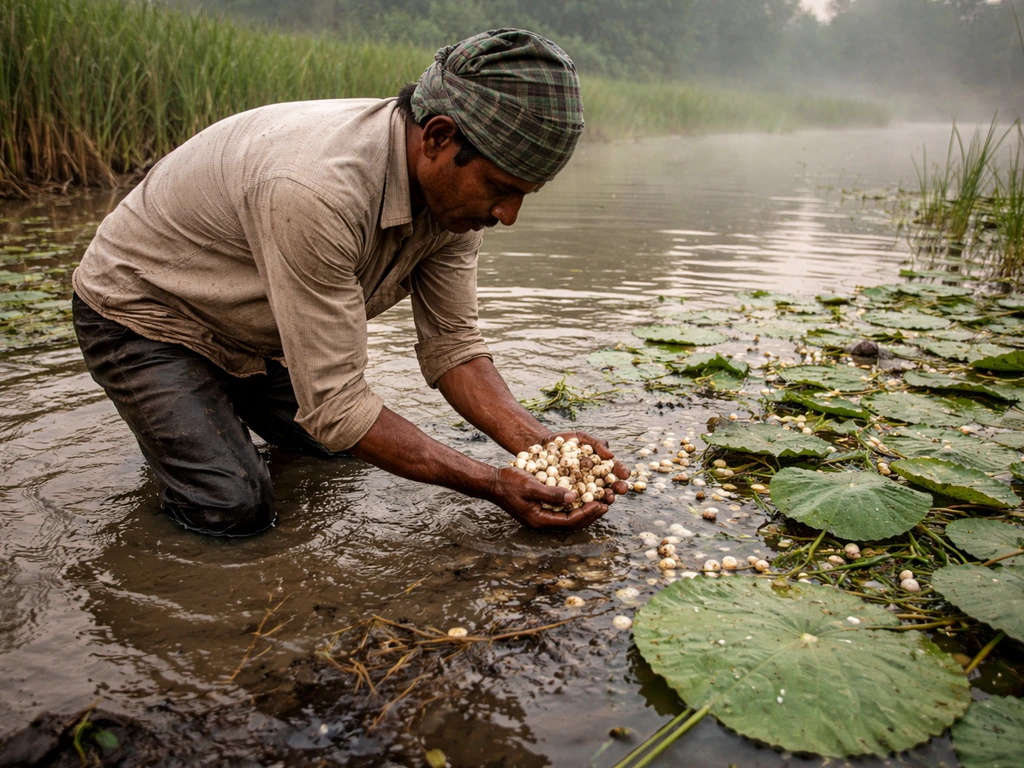
Fox nuts grow naturally in the shallow, still, and slow-moving freshwater wetlands of South and East Asia, with the Gangetic plains of India and Bihar in particular being the global heartland of cultivation. The plant behind the name is Euryale ferox, an aquatic herb in the water lily family (Nymphaeaceae), and it needs warm temperatures, high humidity, standing water, and a long frost-free growing season to thrive. If you're trying to grow it outside that native range, it's possible in USDA zones 9 to 12 with the right setup, but it takes patience and a commitment to replicating wetland conditions.
Where Does Fox Nut Grow and How to Grow It
Marcus Hendricks
27 Apr 2026
What exactly is a fox nut? Sorting out the name confusion
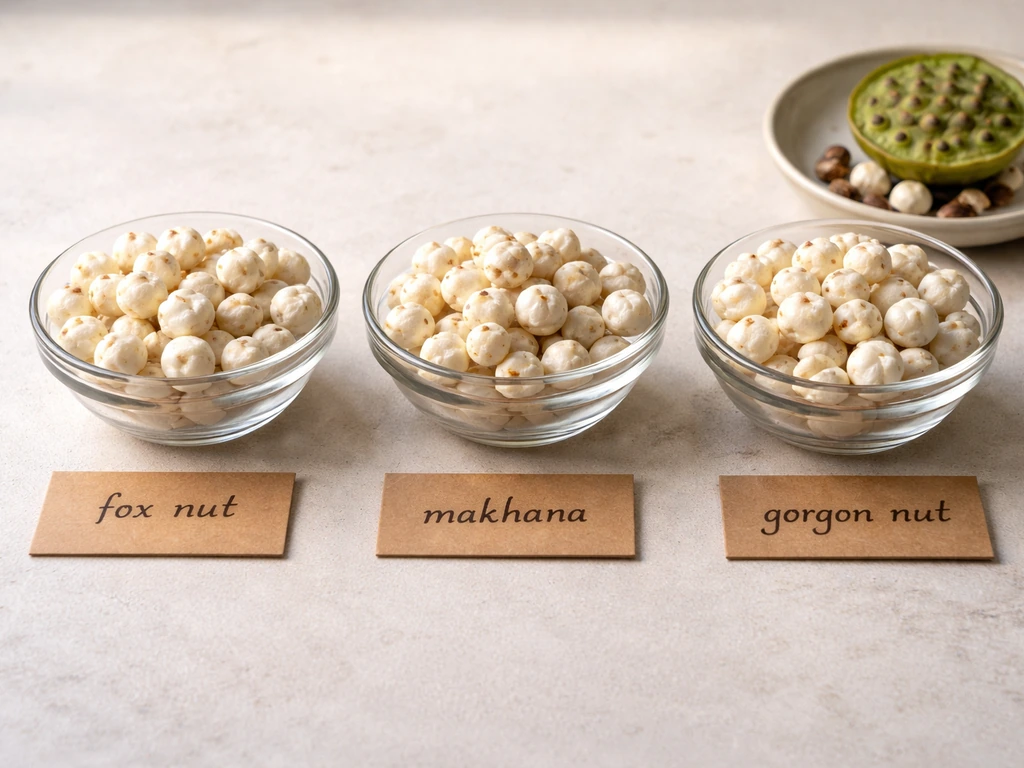
"Fox nut" is a common English name that most food markets, exporters, and nutrition labels use for Euryale ferox. You'll also see it sold under the names makhana (Hindi), gorgon nut, and prickly water lily. In Manipur it's called thangjing, in Assam nikori, and in Japan it goes by Onibas or Onibasu. The Codex Alimentarius formally lists all of these as names for the same species, so wherever you see the term in a food or agricultural context, it's almost certainly referring to Euryale ferox.
Euryale ferox is the only species in its genus, which makes it monotypic. Botanically it sits in the Nymphaeaceae family alongside water lilies and lotus, and like those plants it's entirely aquatic. The "nut" people eat is actually the popped, dried seed from inside a spiny berry that forms underwater. Do monkey nuts grow underground? The closer you look, the more you'll see they're not true nuts and the edible part comes from underwater seeds. Calling it a nut is a food-industry convention rather than a botanical one, similar to how peanuts aren't true nuts. This is worth keeping in mind when you're looking for cultivation guides, because searching for it as a "nut tree" will send you in the wrong direction entirely.
Where fox nuts actually come from: the native range
Euryale ferox is native to eastern and southern Asia, and its native range stretches across a wide arc from northern India through Bangladesh, Myanmar, China, Korea, and Japan. In India, blank" rel="noopener noreferrer">the Mithila region of Bihar has been the center of both wild populations and organized cultivation for centuries. The plant naturally colonizes ponds, lakes, oxbow lakes, and wetland margins where water depth sits between about 30 cm and 1.5 meters. Outside of cultivation, you'll find wild populations in the floodplains and wetlands of the lower Gangetic basin, where seasonal flooding creates exactly the kind of warm, nutrient-rich standing water Euryale ferox prefers.
Commercial production today is heavily concentrated in India, particularly Bihar, Madhya Pradesh, and Manipur. China has its own cultivation zones in Hunan and Jiangxi provinces. Japan has small populations but no significant commercial cultivation. The fact that the plant has always grown in wetland systems rather than dry land means that wherever it shows up outside its native range, growers are working to replicate those wetland conditions artificially.
Climate and geography: what conditions does the fox nut need?
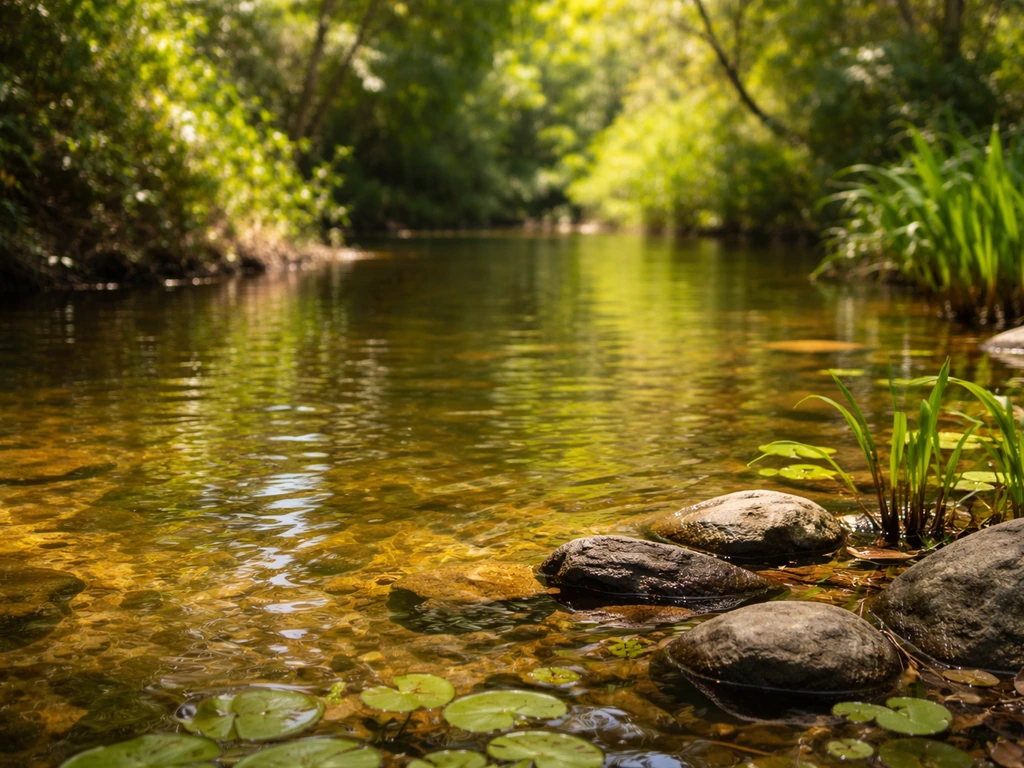
Euryale ferox is a warm-season aquatic plant with a strong preference for humid subtropical and tropical conditions. Here's what that looks like in practical terms:
- Temperature: It grows best between 25°C and 35°C (77°F to 95°F). It cannot tolerate frost at any growth stage. Water temperatures below about 15°C (59°F) stall germination, and a hard freeze kills the plant outright.
- Rainfall and humidity: Natural populations receive 1,000 to 1,800 mm of annual rainfall, concentrated in a monsoon season. The plant needs high ambient humidity; arid or semi-arid climates without supplemental water management are unsuitable.
- Seasonality: In its native range, planting happens as water temperatures warm in late spring (typically April to May), and harvest occurs in late summer through autumn (August to October). The full growing cycle from germination to seed harvest is around 5 to 6 months.
- Frost-free period: A minimum of 5 to 6 consecutive frost-free months is non-negotiable for completing a full growth cycle.
Geographically, think of the climate band occupied by the Gangetic plains, lowland Bangladesh, and subtropical China as the sweet spot. This is a humid subtropical to tropical zone with hot, wet summers and mild winters. The plant does not thrive in Mediterranean climates (too dry in summer), continental climates with harsh winters, or cool maritime climates. Unlike most nut-producing species, elevation is actually a limiting factor: Euryale ferox stays at low elevations where water is warm and plentiful.
Soil, water depth, and sunlight: the three non-negotiables
Water conditions
This is an aquatic plant, so water management is the most critical factor. Euryale ferox grows in still or very slow-moving freshwater with a depth of 30 cm to 150 cm (roughly 1 to 5 feet). The water needs to be warm (ideally 25°C to 32°C at the surface), relatively nutrient-rich, and free from strong currents. In Bihar, traditional cultivation uses ponds and seasonal water bodies that are managed specifically for makhana production. If you're trying to grow it in a container or backyard pond in a non-native region, water volume matters: the plant produces very large leaves (often 60 to 120 cm across), so cramped containers will limit growth and seed production significantly.
Soil and substrate
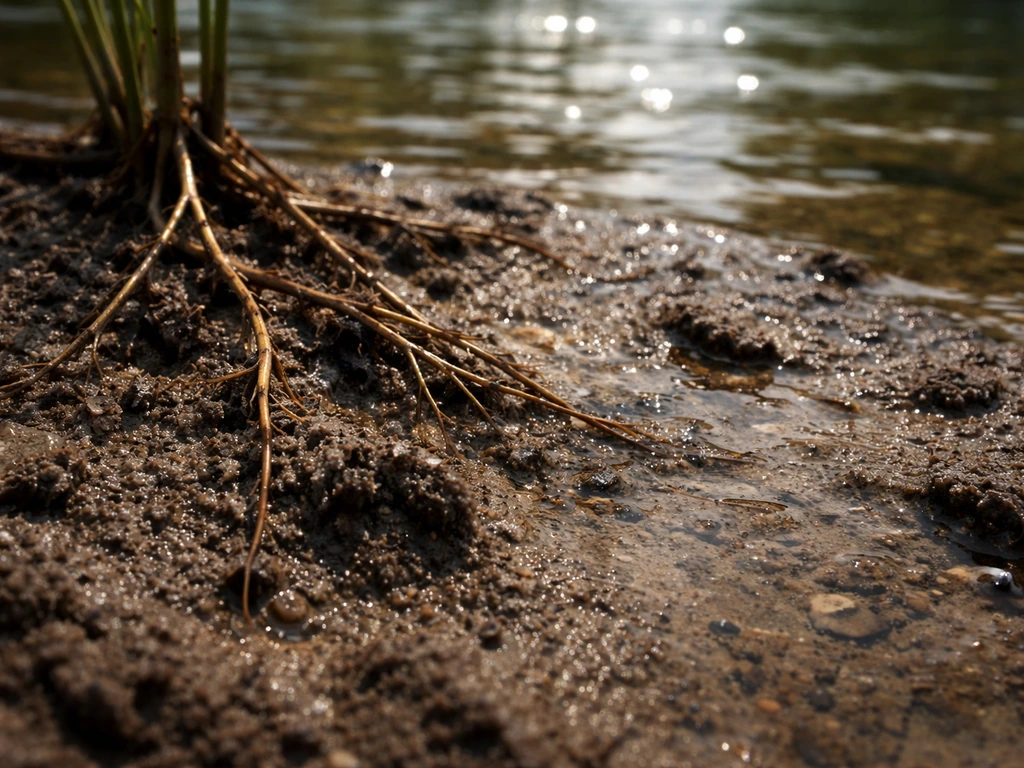
The roots anchor into silty, muddy sediment at the bottom of ponds or wetlands. A loamy, clay-rich mud substrate with good organic matter content is ideal. Sandy substrates don't hold roots well. In traditional cultivation systems in the lower Gangetic wetlands, the existing pond sediment is often enriched with organic matter before planting. If you're setting up a pond or container, use a heavy aquatic planting mix or pond clay rather than standard potting soil, which will float and disperse. Soil carbon content in these wetland systems tends to be high, which both feeds the plant and reflects the kind of rich, anaerobic conditions it's adapted to.
Sunlight
Euryale ferox is a full-sun plant. It needs at least 6 to 8 hours of direct sunlight per day to photosynthesize effectively and produce seeds. The leaves are enormous and designed to capture maximum light at the water surface. Partial shade will reduce growth and essentially eliminate fruiting. This means that if you're situating a pond or water feature for fox nut cultivation, you need to position it away from trees, buildings, or anything that creates significant shade during the growing season.
How fox nuts actually grow: from seed to harvest
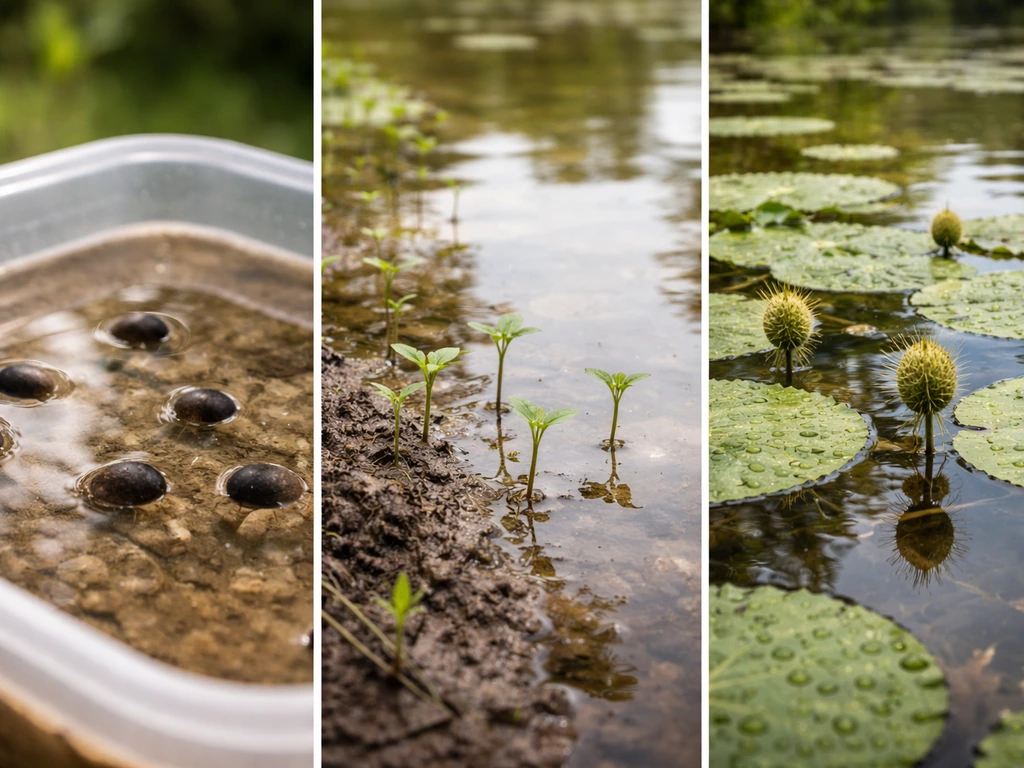
Understanding the growth cycle helps you plan timing correctly and diagnose problems when they appear.
- Germination: Seeds are sown directly into the pond sediment or started in shallow, warm water trays. Germination requires water temperatures above 20°C (68°F) and typically takes 2 to 4 weeks. The seeds are dense and sink, which is intentional: they germinate from the bottom and send stems up toward the surface.
- Juvenile leaf stage: The first leaves that emerge are small, oval, and submerged or floating near the surface. These juvenile leaves look nothing like the adult plant and are thin and smooth rather than spiny. This stage lasts 4 to 8 weeks.
- Adult floating leaf stage: As water warms and the plant establishes its root system, it produces the characteristic large, round, spiny floating leaves (Victoria-like in appearance). These leaves can reach 60 to 130 cm in diameter. The upper surface is green and wrinkled, the underside is purple-red and covered with veins. The plant expands by producing successive new leaves from a central growing point.
- Flowering: Small purple flowers appear just above the water surface from mid to late summer. Individual flowers open for a day or two. Pollination can occur naturally via insects or self-pollination, and each successful flower will develop into a fruiting body.
- Fruit and seed development: After pollination, the flower submerges and the fruit develops underwater over 6 to 8 weeks. The mature fruit is a spiny, spongy berry roughly the size of a golf ball, containing 8 to 15 seeds each surrounded by a hard seed coat. This is where the edible "fox nut" comes from.
- Harvest: In traditional systems, harvesters wade into the ponds and collect the submerged fruits by hand, wearing gloves to handle the spiny exterior. Seeds are separated, dried, and then heat-processed (roasted or popped) to create the light, crunchy makhana snack sold commercially. Harvest typically occurs between August and October in South Asian growing regions.
The entire process from seed to harvestable seed takes roughly 5 to 6 months under good conditions. The plant is an annual in temperate regions (killed by frost each winter) but can behave as a perennial in continuously warm tropical climates where water temperatures never drop low enough to trigger dormancy.
Can you grow fox nuts in your region?
Let's be honest about this: Euryale ferox is not a plant you can grow in most of the continental United States, northern Europe, or Canada outdoors year-round. If you're wondering whether does nutmeg grow in connecticut, the short answer is that outdoor year-round growing is very difficult without a controlled, warm water setup grow fox nuts in your region. If you live in Connecticut, you can still try growing fox nuts, but it requires carefully replicating warm, shallow wetland water conditions grow fox nuts in your region. But there's a workable range for those who want to try, and a few workarounds for those in cooler climates.
| Climate / Zone | Outdoor Viability | What to Expect |
|---|---|---|
| Tropical and subtropical (USDA zones 10-12, e.g., South Florida, Hawaii, lowland tropics) | Best chance for full outdoor growth | Can attempt year-round or near year-round cultivation; consistent warmth supports complete seed development |
| Warm temperate (USDA zones 8b-9, e.g., Gulf Coast, Southern California, Mediterranean climates) | Possible as a seasonal plant with care | Plant after last frost when water warms; harvest before first frost; Mediterranean dryness requires managed water; fruiting is possible but not guaranteed |
| Temperate (USDA zones 6-8, e.g., Mid-Atlantic, Pacific Northwest, Central Europe) | Challenging; marginal without intervention | Short warm season may not allow full seed development; can be grown for foliage as a pond ornamental; seed harvest unlikely most years |
| Cool temperate and continental (USDA zones 1-5) | Not viable outdoors | Frost kills the plant before seeds can mature; indoor heated pond or greenhouse required |
If you're in zones 6 to 8 and want to experiment, the most practical approach is to start seeds indoors in a heated water container in early spring, then transfer seedlings to an outdoor pond once water temperatures consistently exceed 20°C. This buys you an extra 4 to 6 weeks of warm growing time. Sourcing seeds is a separate challenge: Euryale ferox seeds are not commonly sold through mainstream garden suppliers in North America or Europe. Look for specialist aquatic plant nurseries, Asian food import stores selling fresh (not popped) makhana seeds, or online suppliers specializing in rare aquatic plants. Note that seeds sold for eating (the popped makhana) are heat-processed and will not germinate. You need raw, viable seeds.
It's worth noting that other "nuts" associated with unconventional growing environments present similar sourcing and climate challenges. Tiger nuts, for example, are another edible with a specific wetland preference and their own distinct growing range. Tiger nuts, on the other hand, are grown in different warm, often semi-aquatic conditions and have their own native growing range. The challenges of matching plant to climate are universal in this space.
Common problems and how to fix them
Seeds not germinating
This is the most common frustration for first-time growers outside the native range. The most likely causes are water that's too cold (below 20°C), seeds that were heat-processed and are no longer viable, seeds stored too long and dried out, or seeds planted too deep in sediment. Fix it by ensuring water temperature is consistently above 22°C before sowing, sourcing seeds directly from a specialist supplier who confirms viability, and sowing seeds at a depth of just 2 to 5 cm in the substrate. Fresh seeds (within one season of harvest) have dramatically better germination rates than stored seed.
Plant growing leaves but not flowering or fruiting
If you're seeing good vegetative growth but no flowers by midsummer, the problem is usually one of three things: insufficient sunlight, water that's cooled below the optimal range, or a growing season that started too late. Euryale ferox needs that full 5 to 6 month warm window to reach reproductive maturity. If you started late, there's not much you can do mid-season except note it for next year and start earlier. For recurring partial-shade issues, consider repositioning the pond or removing overhanging branches.
Aphids and water insects damaging leaves
The large leaves attract aphids, water lily beetles, and various leaf-mining insects. In an aquatic system, chemical pesticides are off the table if you have fish or want to maintain water quality. The practical solutions are hand-removal, encouraging natural predators like dragonflies and frogs, and using a strong jet of water to knock aphids off leaves early in an infestation. Seriously damaged leaves will yellow and die back, but the plant will generally produce new leaves as long as the root system is healthy.
Fungal rot at the base of leaves or stems
This appears in conditions with poor water circulation, very high organic load, or water temperatures that swing widely. Keep water quality stable, remove decaying plant matter promptly, and avoid overcrowding. If you're growing in a container pond, partial water changes every 2 to 3 weeks during the growing season help prevent the anaerobic stagnation that encourages rot.
Slow growth in general
If the plant just seems sluggish, the most likely culprit is temperature, not nutrients. Euryale ferox is genuinely heat-loving. Growth that looks alarming in a 22°C pond will accelerate noticeably when water hits 28°C to 30°C. In cooler climates, using dark-colored containers absorbs more solar heat, and positioning the pond to maximize afternoon sun can raise water temperatures by several degrees, which makes a real difference to growth rate.
Growing fox nuts outside of South or East Asia takes effort and realistic expectations. But if you can provide warm water, full sun, rich sediment, and a long frost-free season, Euryale ferox is a genuinely fascinating plant to cultivate. The biology is well understood, the constraints are clear, and once you see a 120 cm spiny leaf floating in your pond, you'll understand why this plant has been cultivated for centuries.
FAQ
When I harvest fox nuts, am I collecting fruit, seeds, or something else? (Is it like a tree nut?)
Euryale ferox is not a nut tree, the edible “fox nut” is a seed that forms inside a spiny underwater berry. That berry is produced after flowering, then the seeds are harvested, dried, and (for makhana) popped later.
What water temperature is “too cold” for fox nut germination and growth?
Fox nuts typically fail outside the native range because of the temperature threshold. A practical rule is to sow only after the water surface stays above about 20°C, and to aim for 25°C to 32°C during the main growth window. Cooler water also delays flowering even if leaves look healthy.
Can I grow fox nuts in a small backyard pond or bucket?
Yes, but only if you can keep the water warm and still for months. In containers, volume matters because the plant makes very large leaves (roughly 60 to 120 cm across), and small containers swing in temperature and become nutrient-imbalanced fast, which reduces seed set.
Why won’t my fox nut seeds sprout, even when I planted them correctly?
Sow raw, viable seeds only. Seeds sold for eating as popped makhana are heat-processed and will not germinate. Also, very old or poorly stored seeds often dry out internally and lose viability.
What setup mistakes most commonly cause fox nuts to grow leaves but not produce seeds?
For setup, prioritize full-sun positioning and calm water. Shade is a common reason for “lots of leaves, no fruit,” and strong currents can uproot seedlings or prevent roots from establishing in the sediment. If you use filtration or pumps, use them gently or rely on the natural stillness of the pond.
Is deeper water better for fox nuts, or is there an ideal depth range?
Depth matters, but warm surface water matters more. Staying roughly within 30 cm to 150 cm helps, yet in cooler climates you still need to maintain warm water, so using a warmer microclimate (dark container, maximizing afternoon sun) can be more important than pushing for very deep water.
What should I use as the bottom substrate, and can I use regular potting mix?
Thick, organic-rich muddy sediment is the goal because roots anchor into silty, clay-rich mud. Avoid standard potting soil in open containers because it tends to float, disperse, and not hold roots or nutrients reliably in an aquatic environment.
Why do my fox nut plants look like they are rotting or turning yellow, and what can I do quickly?
Overcrowding and heavy decay are major drivers of rot and sluggish growth. Remove dying leaves promptly, keep the water relatively clean, and in containers do small partial water changes every 2 to 3 weeks during active growth to reduce anaerobic stagnation.
My fox nut plant looks pale or sluggish, but the mud seems rich. What’s the most likely cause?
If the plant is “stalled,” temperature is the first thing to check before nutrients. Growth that seems slow at around 22°C often accelerates when water reaches about 28°C to 30°C, so measure water temperature at the surface where leaves are.
If I live in a cooler zone, what’s the best way to time planting so I still get seed?
In cold regions, you can extend the warm window by starting indoors in early spring with a heated water container, then transferring once outdoor water consistently exceeds about 20°C. This timing strategy is usually more reliable than trying to grow outdoors year-round where frost is expected.
My fox nut plants didn’t flower by midsummer. Does that mean they failed?
Often it is just delayed maturity. Fox nuts need roughly 5 to 6 months from seed to harvest under good conditions, so starting too late, losing heat early, or losing sunlight can push flowering past midsummer. If you start earlier next year and keep full sun, you usually fix it.
How do I manage aphids and leaf-eating insects on fox nuts without harming pond water quality?
Pests are common because the large floating leaves are attractive to aphids and other insects. In aquatic systems, avoid chemical pesticides, and instead use early hand removal, knocking aphids off with a strong water jet, and encouraging natural predators like frogs and dragonflies.