Georgia is genuinely one of the better states for growing nut trees. If you are in the northeast, the best nut trees depend heavily on local winters and USDA zone, but several of the same species can still work with the right selection what nut trees grow in the northeast. Pecans are the obvious headliner and produce reliably across most of the state. Black walnut grows native here and thrives with minimal fuss.
What Nut Trees Grow in Georgia Best Options for Home Yards
Marcus Hendricks
23 Apr 2026
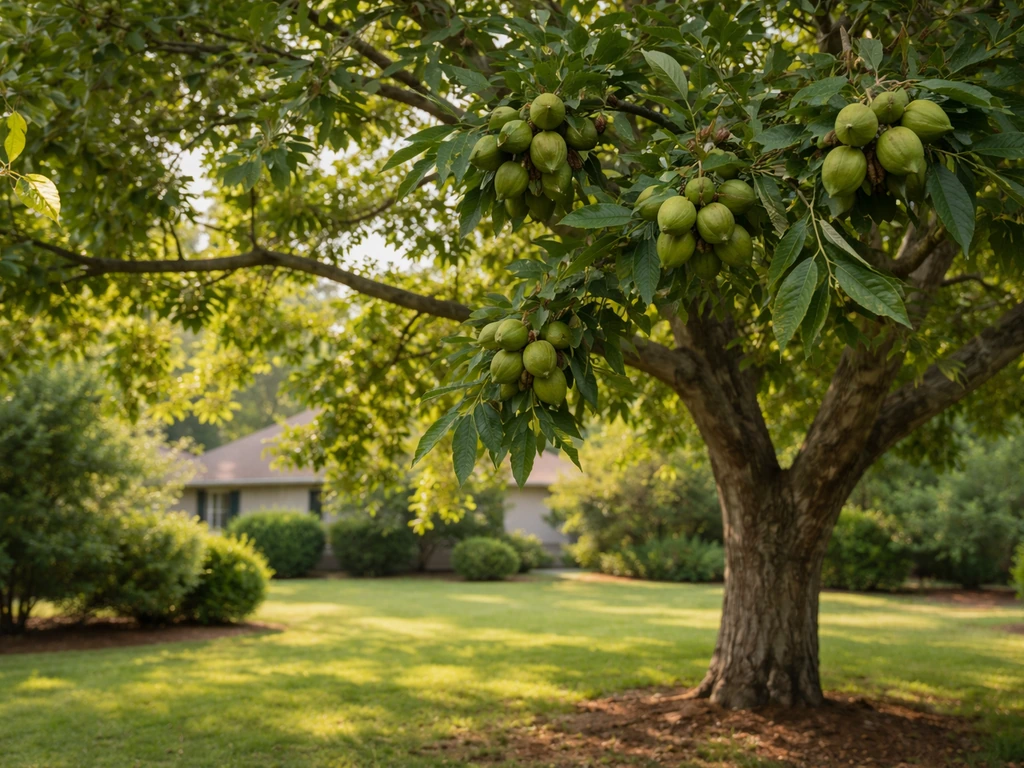
Chinese chestnuts do well in north and central Georgia. Hazelnuts are an underused option with real promise. Hickory is a long game but viable. The catch is that Georgia spans USDA zones 6b (Blue Ridge Mountains) up to 8b along the coast, so a tree that thrives in Valdosta may struggle in Dahlonega, and picking the right species for your specific region matters as much as picking the right species at all.
Top nut trees that do well across Georgia
These are the trees with the best track record across the widest range of Georgia conditions. Not every one works everywhere in the state, but together they cover all but the coldest mountain corners.
| Tree | Best Georgia Region | Time to First Nuts | Biggest Strength | Biggest Challenge |
|---|---|---|---|---|
| Pecan | Coastal Plain, Piedmont | 5–10 years (grafted) | High yields, commercially proven | Scab disease, spacing needs |
| Black Walnut | Statewide | 4–7 years | Native, low maintenance | Juglone toxicity to neighbors, hull staining |
| Chinese Chestnut | North and Central GA | 3–5 years | Blight resistant, faster producer | Needs two trees, weevil pressure |
| Hazelnut/Filbert | North and Central GA | 2–4 years | Fastest producer, compact | Eastern filbert blight risk |
| Hickory | Statewide (native) | 10–15+ years | Extremely long-lived, wildlife value | Very slow to bear |
| American Chestnut (hybrid) | North GA mountains and Piedmont | 5–8 years | Restoration value, improved blight resistance | Blight still a factor, limited supply |
English walnut (Juglans regia) is worth a brief mention: it can grow in north Georgia but struggles with late spring frosts that damage flower buds, and Georgia's humid summers push disease pressure high enough that most growers end up disappointed. It is not a top pick here. Stick to black walnut if you want walnut flavor in Georgia.
Matching trees to where you actually live in Georgia
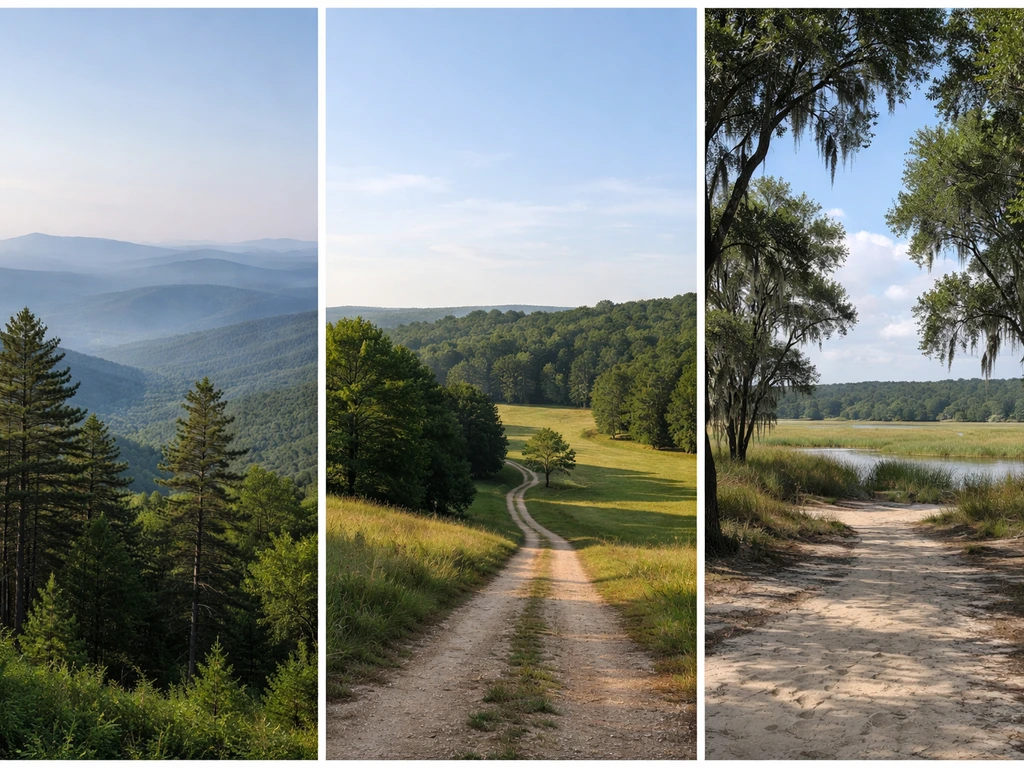
Georgia has three broadly different growing environments for nut trees, and where you sit in the state should drive your species shortlist before anything else.
North Georgia (mountains and upper Piedmont, zones 6b–7b)
This is the coldest part of the state, with Blue Ridge Mountain areas hitting zone 6b (minimum temps around -5°F, and historically as low as -17°F in Floyd County during extreme events). Pecans are not recommended here by UGA Extension because cold winters and shorter growing seasons limit their ability to fully ripen nuts. What does work well: Chinese chestnut, black walnut, hybrid American chestnut, and hazelnuts.
If you are wondering which nut trees grow in Colorado, the best choices depend heavily on your elevation and winter chill. These species either evolved in or tolerate colder, hillier terrain. Cold air drainage matters a lot in this region. Cold air settles into low spots and protected hollows, so plant on a slope or elevated site rather than a frost pocket at the bottom of a valley.
Central Georgia and Piedmont (zones 7b–8a)
This is the sweet spot for diversity. Pecans can perform in the Piedmont, though they do better in the Coastal Plain. Black walnut is excellent here. Chinese chestnuts thrive, especially on well-drained, slightly acidic soils. Hazelnuts are viable. Hickory grows naturally across this zone and is worth planting if you have a long time horizon. The Piedmont has enough chill hours (typically well above 500 hours below 45°F) to satisfy all the major nut species and enough warm growing season for good nut fill.
South Georgia and Coastal Plain (zones 8a–8b)
Pecan is king here. This is Georgia's commercial pecan belt, and the warm, long growing season suits the tree perfectly. UGA explicitly recommends pecans for the Coastal Plain. The tradeoff is that chill hours drop significantly in the southernmost counties, which rules out high-chill nut species.
Chinese chestnut becomes marginal south of Macon. Hazelnut varieties need careful selection for low-chill types. UGA notes that some low-chill varieties bloom as early as late February or early March in south Georgia, which creates frost-risk exposure for the flowers. The other major south Georgia challenge is humidity.
Late July through August brings heavy rainfall and sustained wet conditions that drive pecan scab and can cause nut rot and inhibit nut opening, making cultivar selection and disease management non-negotiable.
What each nut tree actually needs to grow in Georgia
Pecan
Pecans want deep, well-drained soils with good organic matter and a long growing season. They are full-sun trees that need at least 8 hours of direct light. Spacing is a genuine long-term commitment: UGA Extension recommends no closer than 35x35 feet, and a 40x40-foot grid is more practical for most home settings. Crowded pecans get more disease pressure and produce less.
Pollination is a critical biology point: pecan flowers show dichogamy, meaning the male catkins and female flowers on the same tree are not receptive at the same time.
You need at least two trees of different cultivar types (Type I and Type II) for reliable pollination and nut set. A Reddit discussion on pecan pollination timing explains that Type I (protandrous) and Type II (protogynous) cultivars must both be present because their flowering times can otherwise miss each other Type I and Type II.
For water, newly planted pecans need consistent moisture, irrigating every other day in dry periods during establishment. Once established, they handle Georgia summers reasonably well but benefit from supplemental irrigation during nut fill in midsummer.
Black Walnut
Black walnut is native to Georgia and among the most naturally adapted nut trees you can plant statewide. It wants full sun and deep, well-drained soil. UGA emphasizes that deep soil is a key component: shallow or rocky sites produce weaker trees with reduced nut output. Give it plenty of room, at least 30 feet from structures and other trees.
The critical thing to know about black walnut is juglone. The roots release a compound (technically prejudglone, which converts to juglone on contact with soil) that inhibits or kills sensitive nearby plants, including tomatoes, peppers, blueberries, and many others.
Plan your landscape around this before planting. Black walnut is largely self-fertile but produces better nut crops with a second tree nearby. It does not need a spray program the way pecans do, which makes it the lowest-maintenance of Georgia's major nut trees.
Chinese Chestnut
Chinese chestnut (Castanea mollissima) is the practical chestnut choice for Georgia because it carries natural resistance to chestnut blight, the fungus that wiped out American chestnut across the Southeast including Georgia in the early 1900s. It prefers slightly acidic, well-drained loam and full sun. It will not tolerate waterlogged roots. Plant at least two trees for cross-pollination since chestnuts are not reliably self-fertile. Spacing around 20 to 30 feet apart works for most home situations. Chinese chestnut stays compact compared to pecan, typically 40 to 60 feet at maturity, and its canopy is attractive enough to double as a shade tree.
Hazelnut/Filbert
American hazelnut (Corylus americana) and hybrid hazelnuts are the fastest nut producers on this list and the most compact, making them excellent for smaller properties. They grow as large shrubs or small trees, typically 8 to 15 feet. Full sun to part shade works, and they are tolerant of a wider range of soil types than most nut trees, though good drainage still matters. Like chestnuts, hazelnuts need cross-pollination, so plant at least two different varieties. The main disease risk in Georgia is eastern filbert blight, a fungal disease that can kill stems progressively. Select varieties with documented blight resistance when sourcing plants.
Hickory
Several hickory species are native to Georgia, including shagbark hickory (Carya ovata) and mockernut hickory (Carya tomentosa). They grow on a wide range of soils and are completely cold-hardy statewide. They produce excellent-quality nuts with a rich, buttery flavor. The honest downside: hickory has a very long juvenile period and an extensive taproot that makes transplanting difficult. Planting from nut directly is often more reliable than transplanting. If you have the patience and the space, hickory is a legacy tree worth planting.
Hybrid American Chestnut
The American Chestnut Foundation has been developing hybrid trees with improved blight resistance by backcrossing American chestnut with Chinese chestnut. These hybrids are not fully blight-immune, but they show meaningfully improved resistance compared to straight American chestnut. Importantly, chestnut blight kills the aboveground portion of the tree but typically does not affect the root system, so trees often resprout. For north Georgia growers who want to participate in restoration efforts, planting hybrid material from the ACF is a reasonable and meaningful choice. Wild-type American chestnut seed is also available through ACF membership for planting, but expect blight to be a real factor in management.
How long until you actually get nuts
Realistic timelines matter because nut trees are not a quick payoff, and the variance between species is large. Here is what to actually expect:
- Hazelnut: 2 to 4 years from planting to first meaningful nut crop. This is the fastest option on the list.
- Chinese chestnut: 3 to 5 years for grafted or named-variety trees. Seedlings take longer and produce more variable nut quality.
- Black walnut: 4 to 7 years from transplanted seedlings to first nuts, sometimes faster on very good sites.
- Pecan (grafted): 5 to 10 years for a meaningful crop. Seedling pecans may take longer and produce inconsistent nut quality because seedlings are genetically unique and do not replicate the parent tree.
- Hickory: 10 to 15 years at minimum, often longer. Do not plant hickory expecting production in the near term.
- Hybrid American chestnut: 5 to 8 years depending on site and growth rate.
Yield varies enormously by site quality, weather, pest pressure, and management. A pecan in the Coastal Plain on good deep soil with irrigation and scab management can produce 50 to 100+ pounds of in-shell nuts per year once mature. A neglected, scab-ridden pecan in a marginal site might produce almost nothing. Chestnut yields are lower per tree but more consistent in terms of quality. Black walnut yields in home settings are often more wildlife windfall than human harvest, which is a realistic expectation to set.
The real problems you will face in Georgia
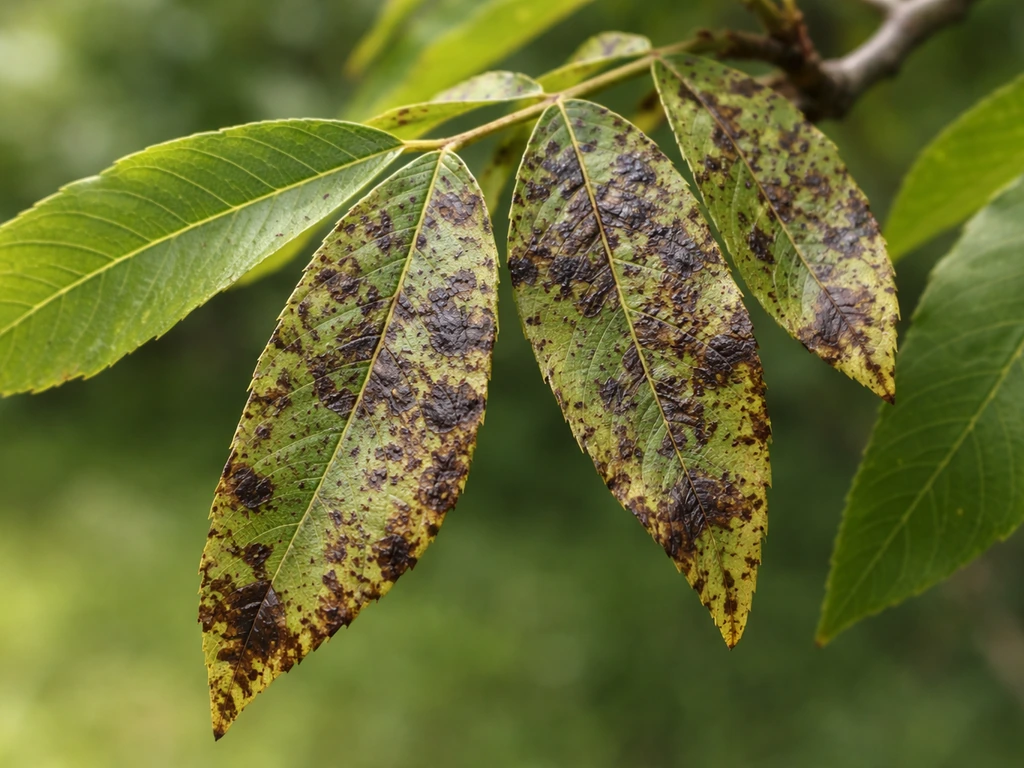
Pecan scab: the biggest disease threat
UGA Extension is direct about this: pecan scab is by far the most serious challenge for pecan growers in Georgia. It is a fungal disease that infects leaves, twigs, and nut shucks. Georgia's warm, wet summers are ideal for scab spread, and infected plant tissue overwinters on the tree and on the ground, creating a reservoir for the following season. Scab causes small or poorly formed nuts, early nut drop, and shelling problems. For home growers, the most practical defense is choosing scab-resistant cultivars when you plant. If you are already growing a susceptible variety, UGA highly recommends an appropriate fungicide program at the correct rate and coverage. Do not skip this if you want nuts.
Insects that target nuts directly
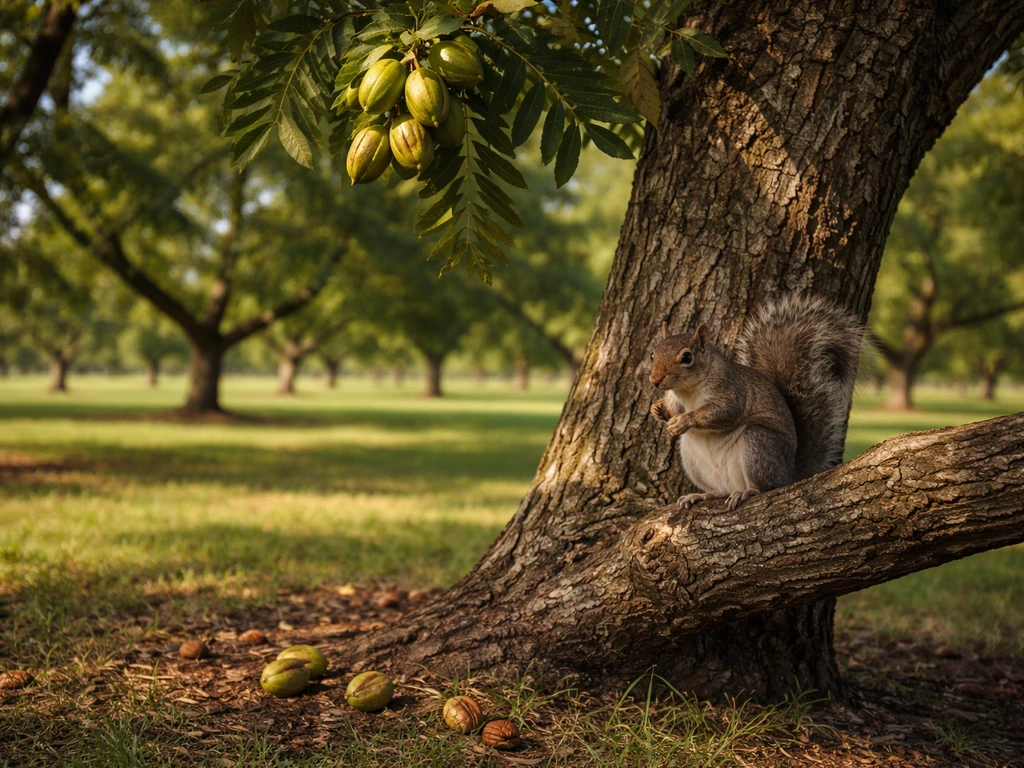
Pecan nut casebearer and hickory shuckworm are the two most damaging insect pests for nut set and nut quality in Georgia pecans. Casebearer larvae tunnel into developing nuts, causing early drop. Interestingly, UGA notes that in years with excessive nut set, early casebearer loss can act as natural thinning, but you cannot rely on that as a management strategy. Shuckworm damage occurs later in the season and results in dark, poorly filled nuts. UGA tracks casebearer activity across Georgia using pheromone traps in commercial orchards, and timing treatments to trap data gives you much better results than calendar spraying. Nut curculio also attacks both pecan and hickory.
Wildlife nut loss
Squirrels are the main culprit, and the numbers are sobering. Research cited by UF/IFAS estimates that a single squirrel can consume 50 pounds of nuts per year. Trees near woodlands or adjacent to other trees that allow squirrel access are especially vulnerable. Crows, blue jays, and deer also take their share. The most effective response for home growers is harvesting immediately when nuts start to fall. UGA emphasizes that timely harvest is essential to prevent losses from predation and deterioration alike. For chestnuts, the window between burr opening and squirrel removal can be very short, sometimes a matter of days.
Chestnut blight and other fungal diseases
American chestnut is essentially not a viable managed crop tree in Georgia without blight-resistant genetics. Chinese chestnut largely sidesteps this problem with natural resistance. Chestnut weevils can damage the nuts themselves and are worth monitoring at harvest. For black walnut, anthracnose and fusarium canker are the main disease concerns, though neither typically kills established trees. Walnut caterpillars can defoliate branches in bad years but rarely cause long-term damage.
Humidity, nut rot, and timing issues
Georgia's late-summer humidity creates conditions for nut rot and can physically inhibit nut opening, particularly in pecans during August and September. This is a systemic challenge driven by climate, not something you can manage away entirely. Choosing cultivars that open husks cleanly and ripen before the worst humidity window helps. Good air circulation from proper spacing reduces disease pressure across all species.
Site prep checklist and what to do today
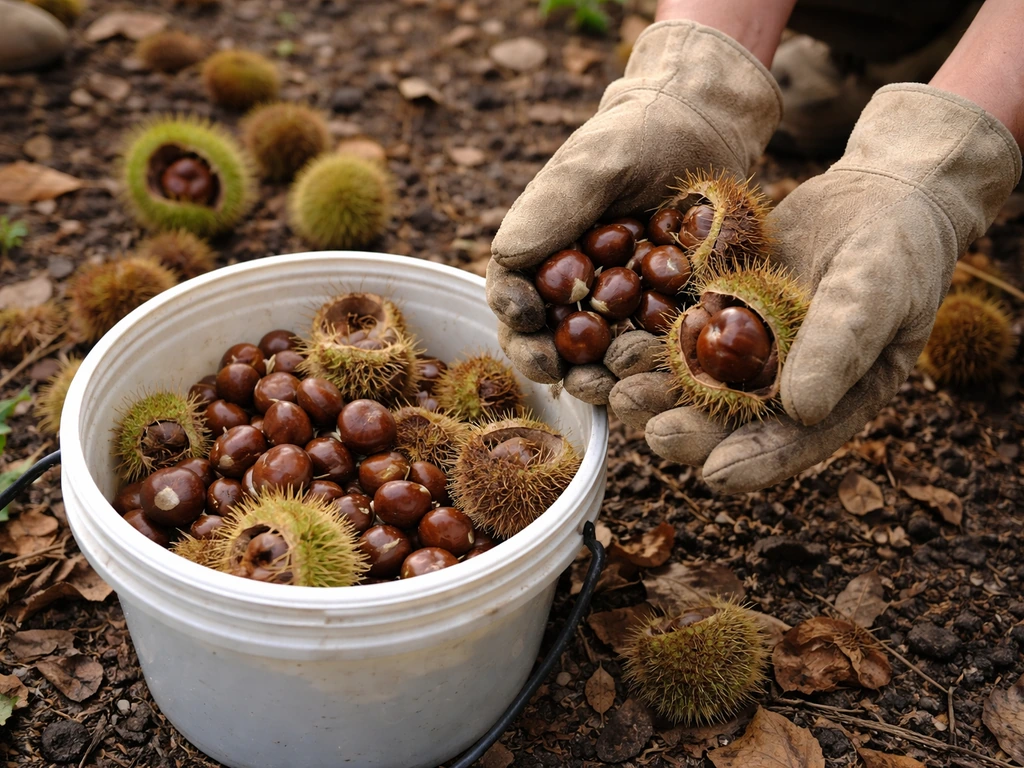
If you are ready to get started, here is the practical sequence. Do not skip the soil test step; it is the single most useful piece of information you can have before spending money on trees.
- Get a soil test through UGA Extension (your county extension office can help). You need to know pH, drainage characteristics, and nutrient levels before choosing a species.
- Map your cold air drainage. Walk your property after a clear, still night in winter and notice where frost settles longest. Avoid those spots for nut trees, especially pecans and chestnuts.
- Identify your USDA zone using the 2023 USDA Plant Hardiness Zone Map for Georgia. North Georgia mountains are zone 6b to 7a; central Piedmont is 7b to 8a; south Georgia is 8a to 8b.
- Match species to your zone and region using the table at the top of this article. If you are in north Georgia, start with chestnut, hazelnut, or black walnut. If you are in central or south Georgia, add pecan to that list.
- Choose grafted or named varieties rather than seedlings for pecan, chestnut, and hazelnut. Seedlings are cheaper but produce unpredictable nut quality, and in pecans they are genetically unique so you cannot guarantee what you get.
- Plan for two trees of any species that needs cross-pollination: pecan (Type I and Type II cultivars), chestnut, and hazelnut all need company.
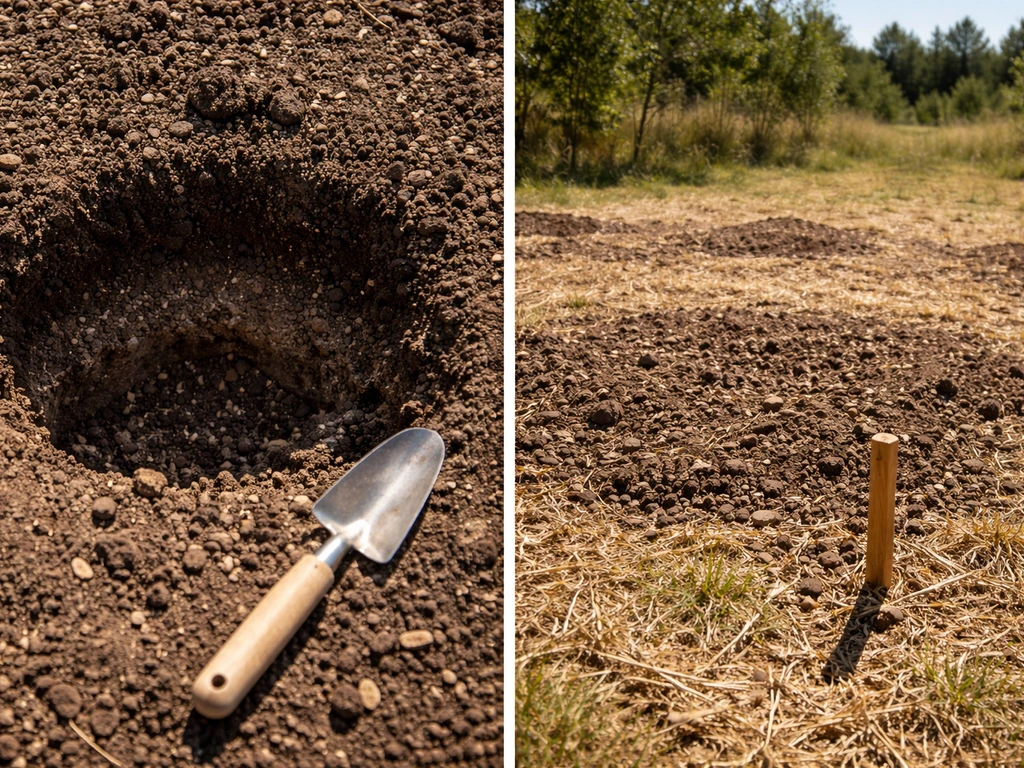
- Prepare the planting site. Clear competing vegetation in a 4-foot radius. Till or loosen the soil to at least 18 inches if it is compacted. Adjust pH if needed: most nut trees want 6.0 to 6.5, though black walnut tolerates a slightly higher range.
- Plant in late winter to early spring (December through February in south Georgia, February through March in north Georgia) while trees are dormant.
- Water newly planted trees immediately and maintain consistent moisture during the first growing season. For pecans especially, every-other-day irrigation during dry spells is the UGA-recommended approach in early establishment.
- Mulch the root zone with 3 to 4 inches of wood chip mulch, keeping mulch a few inches away from the trunk.
- Set up a wildlife deterrent plan before nuts form: harvesting promptly when nuts start dropping is the single most effective tool you have.
Choosing the right varieties and managing harvest
Picking the right cultivar matters as much as picking the right species
For pecans, cultivar selection in Georgia should center on two criteria: scab resistance and pollination type. Scab-susceptible cultivars in Georgia's humid climate require intensive fungicide programs to produce quality nuts. For home growers without commercial spray equipment, a scab-resistant cultivar can be the difference between a productive tree and a tree that drops small, shriveled nuts every year. UGA's pecan variety guide (Circular C898) frames all cultivar decisions around these two factors, and it is worth downloading before you buy. For each orchard or home planting, you need at least one Type I (protandrous) and one Type II (protogynous) cultivar so that male and female flower timing overlaps between trees.
Chestnuts: Chinese vs hybrid American
For most Georgia growers, Chinese chestnut is the practical choice: it is commercially available, blight resistant, and produces reliably in zones 7 and 8. If you are in north Georgia and interested in restoration of the native American chestnut, hybrid material from the American Chestnut Foundation is worth pursuing. These trees combine improved blight resistance with American chestnut characteristics, though full blight immunity has not yet been achieved. The ACF offers both wild-type American chestnut seeds and improved hybrid seeds to members, which is currently the main pathway to getting this material.
Harvest timing and what to do with the nuts
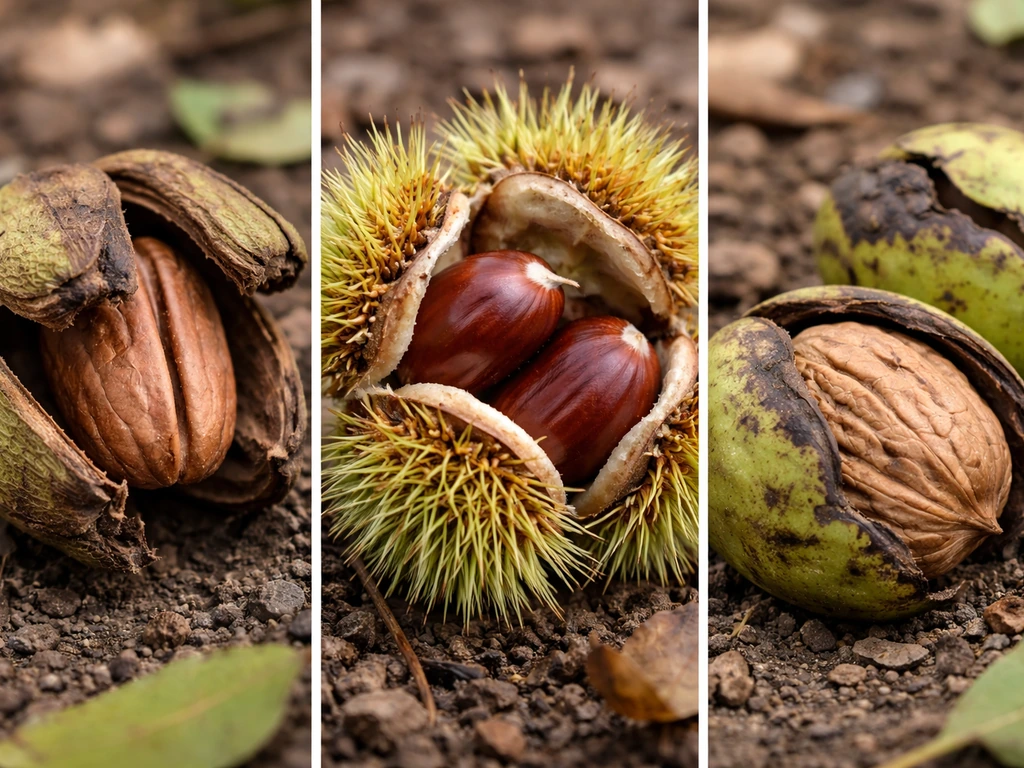
Most nut trees signal harvest readiness naturally: pecan husks split and open, chestnut burrs crack open and drop to the ground, walnut hulls turn from green to yellow-black. The rule is simple: harvest as fast as you can once nuts start falling. For pecans, nuts left on wet ground deteriorate quickly and invite mold. For chestnuts, the window before squirrel removal is genuinely short, sometimes 48 to 72 hours on a productive tree in a squirrel-heavy yard.
Pick daily once the burrs start opening. For black walnut, wearing gloves is non-negotiable: the hulls stain skin and clothing with a dark brown dye that is nearly impossible to remove. Hulling promptly and drying in a single layer in a well-ventilated area prevents mold and preserves nut quality.
Best picks by goal
If your goal is the easiest path to harvested nuts with the least management overhead, hazelnut is your best bet. It produces in 2 to 4 years, stays small enough to manage without equipment, and does not require a spray program to produce. If you want the best potential yield per tree and are willing to manage disease, pecan in central or south Georgia is the answer.
For a low-maintenance, native tree with real landscape value, black walnut statewide is the strongest choice, just plan your surrounding plantings around its juglone zone. For something in between, compact and relatively fast with good culinary quality, Chinese chestnut in north and central Georgia is the pick. Georgia growers in neighboring Tennessee face similar decisions, and many of the same species apply across that border. Maryland’s best nut tree choices also depend heavily on your USDA growing zone and whether you are in a colder inland area or the warmer coast neighboring Tennessee.
If you are specifically asking what nut trees grow in Tennessee, start by focusing on pecans, black walnut, and Chinese chestnuts, then narrow it by your local USDA zone and chill hours many of the same species apply across that border. When you narrow it by your local USDA zone, you can use the same approach to find what nut trees grow in zone 6.
If you want, you can use the same zone-based approach to narrow down what nut trees grow in Colorado. You can use the same zone and chill-hour approach to figure out what nut trees grow in Maryland. In this guide, you can use your USDA zone 6 location plus chill-hour needs to narrow down which nut trees actually grow well nut trees grow in zone 6.
FAQ
What nut trees are most reliable for a first-time grower in Georgia?
If you want the highest odds with the least ongoing work, start with black walnut or Chinese chestnut (north to central Georgia). Hazelnut is also a strong “beginner” option if you want nuts sooner and a smaller plant. Pecan can be very productive, but it generally demands cultivar selection plus consistent scab management and pest timing to avoid disappointment.
Can I grow only one nut tree and still get nuts in Georgia?
For most of the species discussed, no. Pecan needs two trees of different pollination types (Type I and Type II). Chinese chestnut and hazelnuts also require cross-pollination, so plan at least two compatible plants. Black walnut is often more self-fertile than pecan, but yields improve when you add a second tree nearby.
Which nut trees handle Georgia’s wet, humid summers best?
In the humid Coastal Plain, pecans perform best when you use scab-resistant cultivars, because disease pressure and nut-shuck issues rise sharply in summer. Chinese chestnut can work well if the site drains well and stays out of waterlogged conditions, since soggy roots are a problem. For any species, spacing and air flow help reduce leaf and nut diseases.
What soil test results should I look for before buying trees?
Prioritize pH and drainage. Chinese chestnut generally does better with slightly acidic, well-drained soil, so a low pH and evidence of slow drainage are both useful to know before planting. For pecan, deep, well-drained soil with good organic matter is critical, so a soil profile that stays wet or compacts easily is a red flag. For black walnut, depth matters as much as pH, because shallow or rocky soil can limit long-term nut production.
How do I choose between pecan and black walnut if I want “low maintenance” nuts?
Choose pecan if you can commit to cultivar selection and scab prevention, plus some disease and pest management during summer. Choose black walnut if you want a plant that usually does not require the same spray effort to produce nuts, but you must plan around juglone toxicity to nearby sensitive plants. Black walnut can also yield fewer “human-harvest” nuts depending on wildlife pressure.
Is it worth planting American chestnut in Georgia, or will blight wipe it out?
American chestnut seed without blight-resistant genetics is generally not a viable managed crop tree in Georgia. If you want American chestnut characteristics, consider hybrid material with improved blight resistance from a breeding program. Even then, expect ongoing monitoring, and recognize it is not the same as full blight immunity.
Do pecans and other nuts need full sun in Georgia?
Yes, most do best with full sun. Pecans specifically want at least about 8 hours of direct light. For hazelnuts and some chestnut setups, part shade can work, but reduced sun can lower flowering and nut fill. When choosing a spot, avoid areas shaded by mature trees or buildings.
What’s the biggest mistake people make when planting pecans in Georgia?
Planting a scab-susceptible cultivar without a plan. In Georgia’s warm, wet summers, pecan scab can reduce nut size, cause early nut drop, and make harvest disappointing. If you do not want to run a fungicide program, scab resistance is the most important starting point. Also avoid crowded spacing, since poor airflow increases disease pressure.
How far apart should I plant nut trees for best results?
Use spacing that supports airflow and long-term root development, not just how big the tree looks now. The article notes pecans at about a 40 by 40 foot practical grid, hazelnuts and chestnuts with shorter spacing (often around 20 to 30 feet), and black walnut needing substantial room (roughly 30 feet from structures and other trees). If you are unsure, plan the layout assuming full maturity, because you generally cannot “fix” poor spacing later.
What should I do about squirrels and harvesting timing in Georgia?
Have a harvesting plan before the first nuts fall. Georgia’s nut predation can be intense, and delaying harvest can mean both direct loss to squirrels and faster mold or deterioration on the ground. For chestnuts, the usable window can be short, so check frequently once burrs begin opening and plan to remove nuts quickly.
Can I plant black walnut near my vegetable garden or fruit bushes?
Be cautious. Black walnut releases juglone from roots and can suppress sensitive plants such as many nightshades and certain berries. If you want a mixed landscape, map where roots will extend over time and keep susceptible plants farther away. It is not just a trunk-distance issue, it is a zone-of-effect planning issue.
When should I expect my first nuts, and how long until peak production?
Timelines differ a lot by species. Hazelnuts may start producing within about 2 to 4 years, Chinese chestnuts typically have a faster path than many large-tree nuts, and pecans and hickory generally take longer to reach reliable maturity. Even with good conditions, nut output ramp-up depends on site quality, weather, and whether you have correct pollination partners.