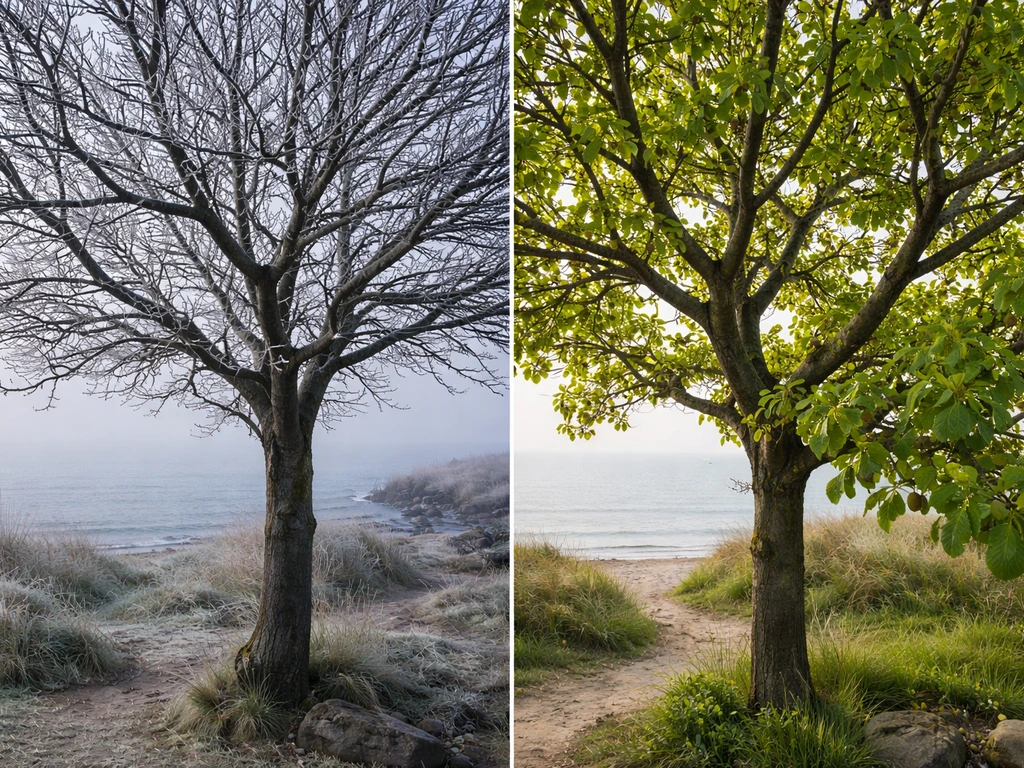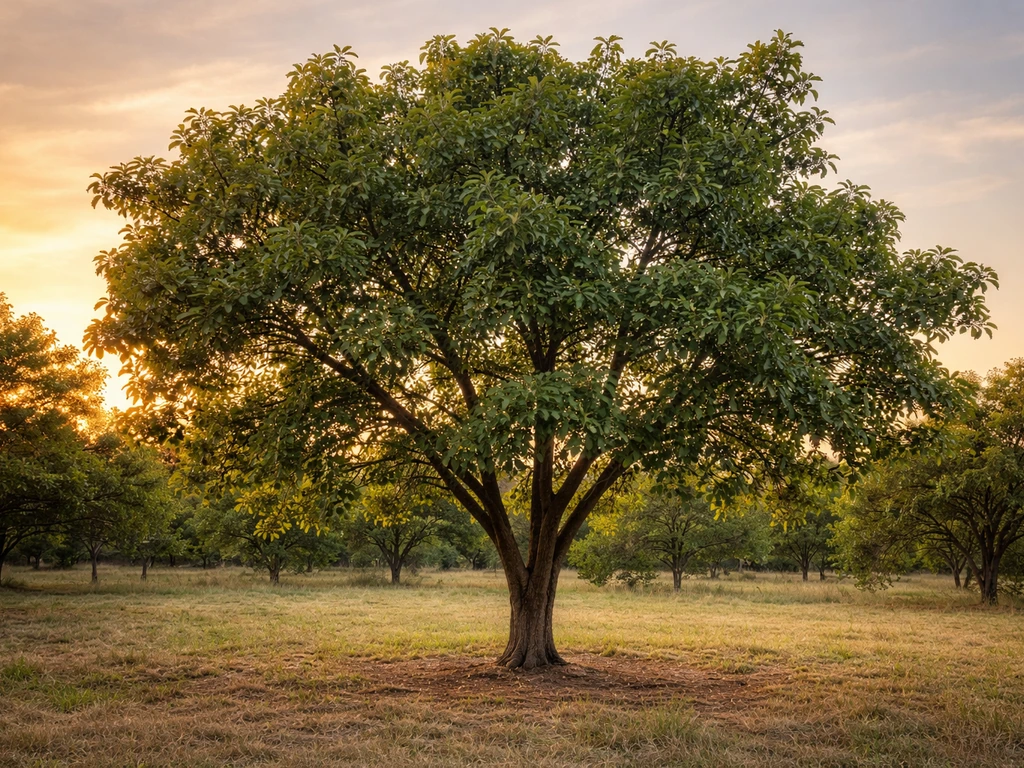
A healthy, mature walnut tree will produce walnuts most years, but not necessarily every single year without fail. Whether yours does depends on its age, how well pollination lines up, whether late frosts hit at the wrong moment, and how much stress the tree is carrying. Get those factors right and you can expect a reliable annual crop. Get one of them wrong and you can have a perfectly healthy tree that produces almost nothing one season.
Do Walnut Trees Grow Walnuts Every Year? Reasons and Fixes
Marcus Hendricks
26 Apr 2026
How walnut trees actually produce nuts
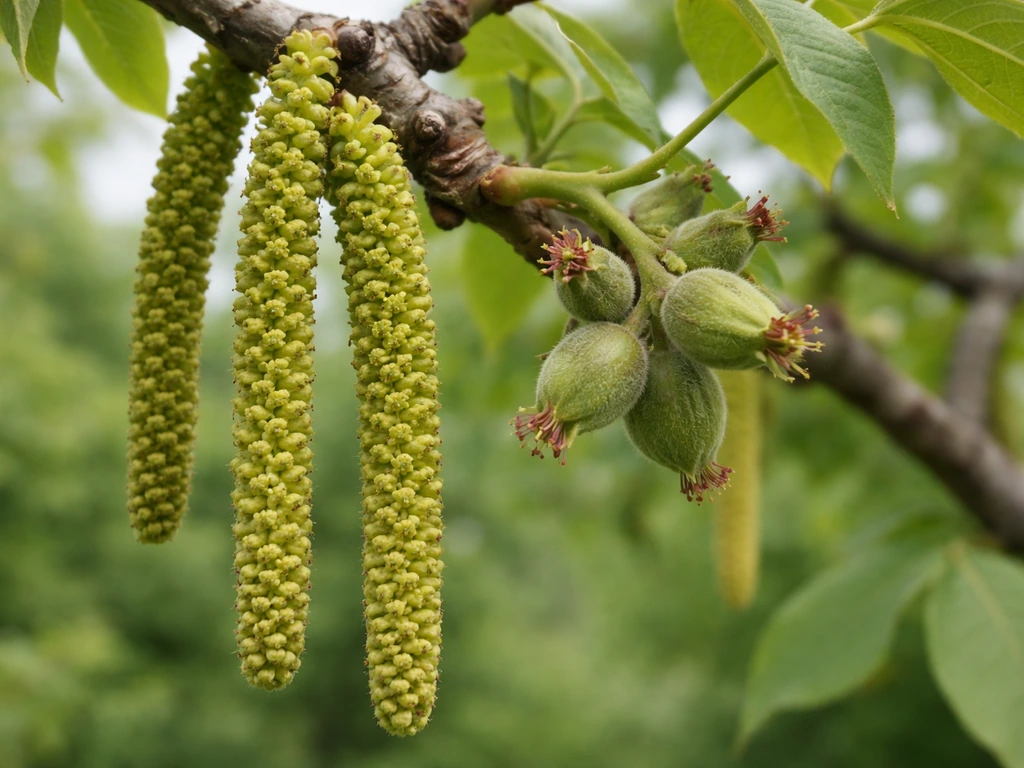
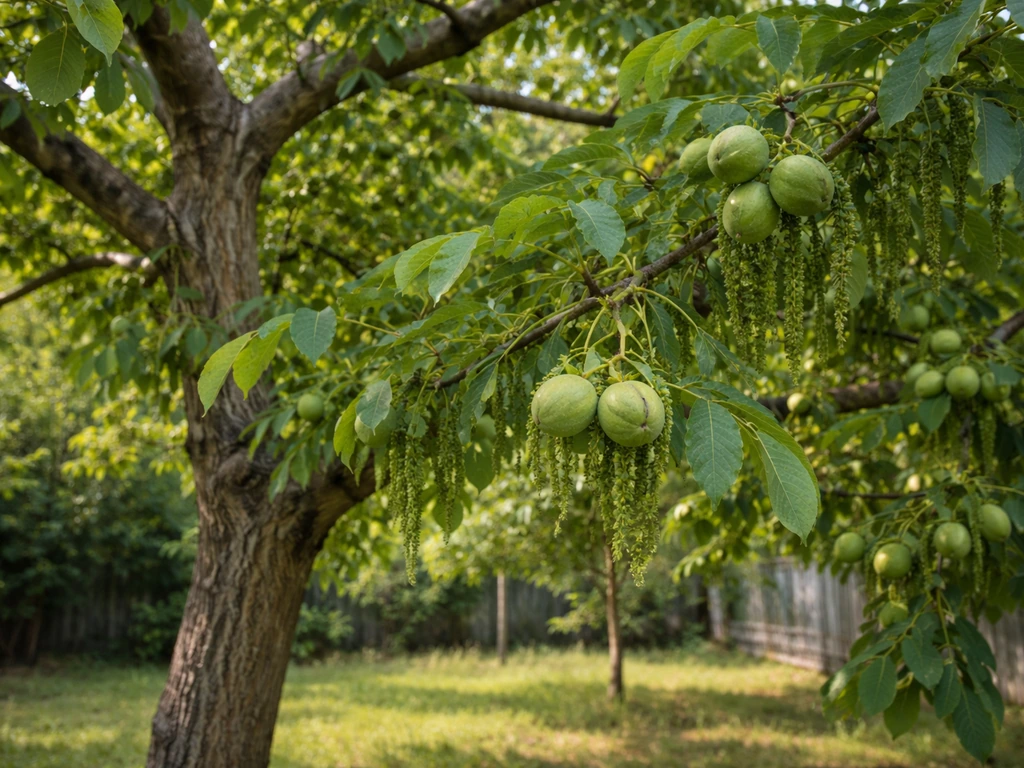
Walnut trees are monoecious, meaning each tree carries both male and female flowers, but in separate structures. The male flowers are those long, drooping, caterpillar-like catkins you see in spring. They grow on nodes from the previous year's outer branches and shed pollen over a relatively short window. The female flowers are small, stubby terminal spikes that appear on the current season's new shoots. Fertilization has to happen while the female flower is receptive, which typically lasts several days to about a week depending on species and conditions.
After successful pollination, the nut begins developing inside a green husk. The husk grows to roughly full size by late summer, then the shell inside hardens (lignifies) and the kernel fills out before the whole thing drops or is harvested in fall. That entire cycle from bud break to harvest plays out each year, but it only produces nuts if every step from pollination onward goes correctly.
Do walnuts come back every year? What actually drives year-to-year variation
In ideal conditions, yes, a mature walnut tree bears every year. But walnuts have a real tendency toward alternate bearing, sometimes called biennial bearing, where a heavy crop year is followed by a lighter or almost non-existent one. This happens because producing a large nut crop drains the tree's reserves of carbohydrates and nutrients. The following year, the tree has less energy available to support full flower and nut development, so the crop is smaller. The cycle can self-reinforce if the tree never fully recovers between seasons.
Alternate bearing can even happen at the level of individual fruiting spurs on the tree. One spur bears heavily one year and rests the next, while neighboring spurs may be on the opposite schedule. The result is a tree that looks productive overall but has uneven output from year to year. Managing crop load, water, and nutrition can reduce how extreme these swings are, but some degree of year-to-year variation is simply part of growing walnuts.
When the tree is just too young
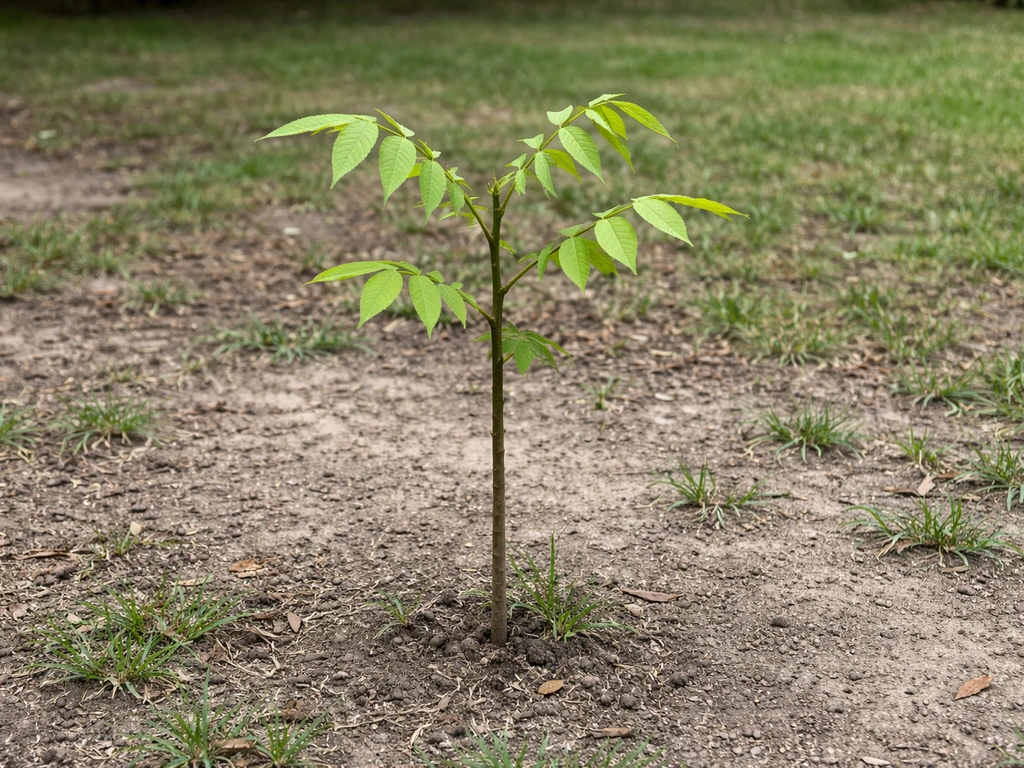
If your walnut tree hasn't produced anything yet and you planted it recently, there's a good chance the tree just isn't old enough. Black walnuts grown from seed can take 4 to 7 years before they start bearing, and even then, early crops are light. Grafted English (Persian) walnut cultivars tend to be faster, with something like 4 to 8 years as a realistic benchmark before meaningful production begins. Some cultivars hit the lower end of that range; others reliably take longer. Since walnuts grow on trees, your results depend heavily on whether the tree is mature and successfully pollinated does walnuts grow on trees. Seedling-grown trees are the slowest of all.
While you're waiting for the tree to mature, it's building up root mass, trunk diameter, and the branch structure that eventually becomes bearing wood. Pushing a young tree too hard with heavy fertilization can actually delay fruiting by encouraging vegetative growth instead of reproductive development. Patience is the main thing here. A tree that's 3 years in the ground and showing no nuts is almost certainly not broken; it's just young.
The pollination timing problem (and why it's trickier than it looks)
Here's where a lot of growers get caught off guard. Even though a walnut tree has both male and female flowers, the two don't open at the same time. This is called dichogamy, and it's essentially the tree's built-in mechanism to avoid self-pollination and encourage genetic mixing via cross-pollination. In practice, it means the catkins are often done shedding pollen before the female flowers on the same tree are fully receptive, or the other way around.
Walnut cultivars fall into two groups based on which flower opens first. Protandrous types shed pollen before their female flowers are receptive. Protogynous types have the female flowers receptive first, before pollen is released. A tree that's heavily protandrous paired with another tree that's also protandrous means the pollen timing is coming from the same direction, and overlap with receptive female flowers on either tree may be poor. Research on Juglans species shows clearly that limited overlap between pollen shedding and female receptivity is directly associated with low nut set, even when both trees are flowering.
For English walnuts, the practical fix is planting at least one protandrous and one protogynous cultivar near each other so there's always some pollen in the air when female flowers are receptive on the neighboring tree. For optimum fruit set and yield in English/Persian walnut (Juglans regia), interplanting protandrous and protogynous cultivars is emphasized to ensure adequate pollination blank" rel="noopener noreferrer">planting at least one protandrous and one protogynous cultivar near each other. Virginia Tech extension guidance specifically recommends a pollinizer cultivar as standard practice for home orchard walnuts. A few cultivars are described as more self-pollinating (blank" rel="noopener noreferrer">Hansen and Colby are examples), but even these benefit from a cross-pollinator.
Pollen shedding from catkins in some Juglans species lasts only one to two days, while female receptivity may last six to nine days. That short male window means a single stretch of cold or wet weather during catkin opening can kill the whole pollination event for that year.
Frost, heat, and climate stress: the overlooked reasons for no nuts
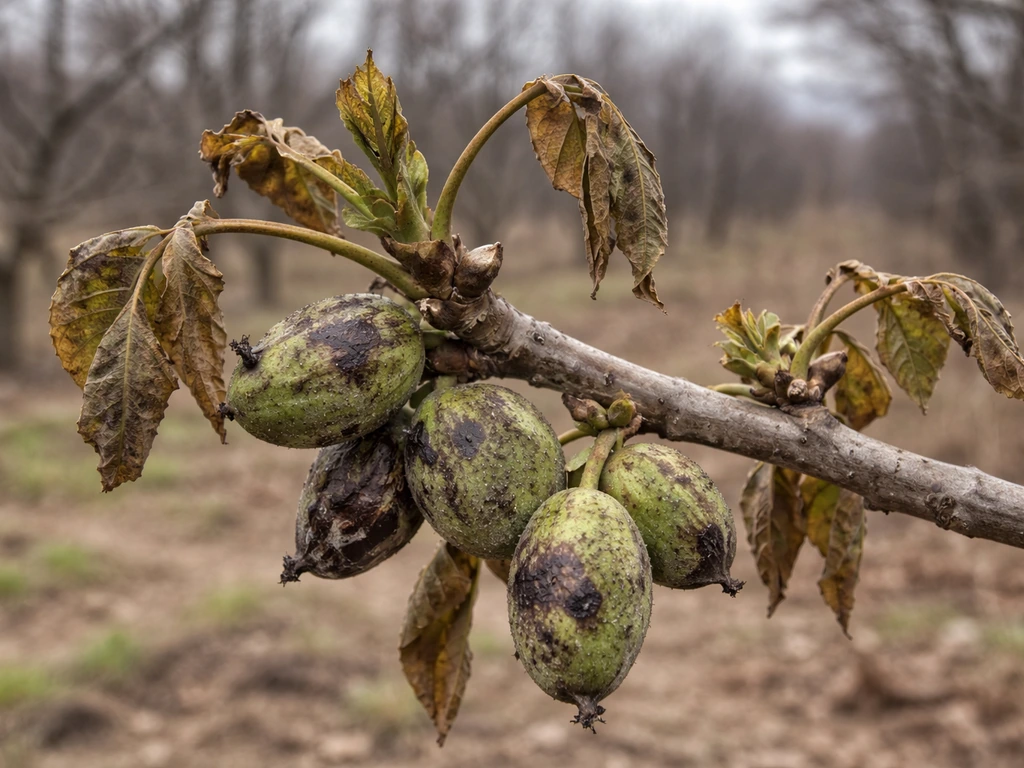
Late spring frosts are one of the most common single-season reasons a walnut tree skips a crop. Walnuts break dormancy relatively late compared to many fruit trees, but they're still vulnerable to frost once buds open and new shoot growth has started. A frost event that hits when catkins are extending or female flowers are just opening can wipe out that season's entire pollination window. The buds themselves may survive and push on, but if fertilization didn't happen, there are no nuts.
Winter cold damage is a separate issue. An early hard freeze in autumn before the tree has fully hardened off, or an unusually severe winter low, can kill terminal buds and lateral bearing wood. In the following spring, buds may be slow to break or may not break at all. Young trees are especially vulnerable to this kind of injury. The damage isn't always obvious from the outside; you may see a tree leafing out normally in May but producing almost no catkins or female flowers because the buds that would have carried them were killed off in February.
On the other end of the climate spectrum, heat stress during the growing season reduces flowering and fruit set. Combined drought and heat stress are particularly damaging to Persian walnuts, affecting both the current year's crop and the tree's capacity to set flower buds for the following year. Water stress during May and June, when shoots are actively growing and nuts are sizing up, is especially harmful. Research from walnut-producing regions shows that sustained water stress during this window (stem water potential below roughly -8 bars) can reduce the amount of bearing wood produced for next year's crop while also shrinking the current nuts.
Chilling requirements also matter in a way many home growers underestimate. English walnut cultivars vary significantly in how many winter chill hours they need to break dormancy cleanly. A high-chill cultivar planted in a mild-winter region may get insufficient cold, leading to erratic or delayed bud break, poor catkin development, and unreliable fruit set. This is one reason the same variety can perform well in one region and inconsistently in another, and it's directly tied to the growing zone questions that affect all walnut species. If you're in a warmer climate, choosing a low-chill cultivar specifically selected for your conditions makes a real difference in annual bearing reliability. If you are wondering does walnuts grow in texas, the same winter chill, frost risk, and heat stress factors that affect year-to-year bearing reliability still apply.
Quick troubleshooting checklist you can do today
If your walnut tree isn't producing and you want to figure out why, here's a practical sequence to work through right now.
- Check the tree's age. If it's under 5 years from planting (or under 7 for a seedling-grown black walnut), low or no production is normal. Stop troubleshooting and just wait.
- Look for last year's bearing wood. Catkins on black walnut form on outer nodes of the previous year's growth. Minimal new growth last season means minimal catkin sites this year.
- Inspect the catkins and female flowers right now. Are catkins forming and extending? Are you seeing small terminal flower spikes on new shoot tips? If neither is present during what should be flowering time, look for bud damage.
- Check for cold damage. Cut a few bud-bearing twigs and bring them indoors for a week or two. If flower buds fail to develop, they were likely winter-killed. Fresh green inside the bud is healthy; brown or mushy means dead tissue.
- Assess your pollination setup. Do you have more than one walnut tree? Do you know if they're protandrous or protogynous types? If you have a single isolated tree or two trees with the same flowering type, poor nut set may simply be a pollination problem.
- Check water stress history. Was last May through June unusually dry? Did you irrigate consistently? Drought stress during early-season shoot growth directly reduces this year's nut size and next year's bearing wood.
- Look for bacterial blight. Black, water-soaked spots on new shoots, catkins, or small developing nuts in early spring are signs of Xanthomonas walnut blight. Blight during flowering can cause widespread nut loss even when the tree otherwise looks fine. Blight is worse in wet springs.
- Review your fertilization and soil. Boron deficiency shows as necrotic patches between leaf veins and can affect nut development. An overly rich nitrogen program can push vegetative growth at the expense of fruit production.
- Consider canopy light. Dense or crowded canopies reduce light penetration to interior bearing wood. If the tree has been left unpruned for years or is planted too close to others, light competition may be suppressing productive wood.
How to get more consistent annual harvests
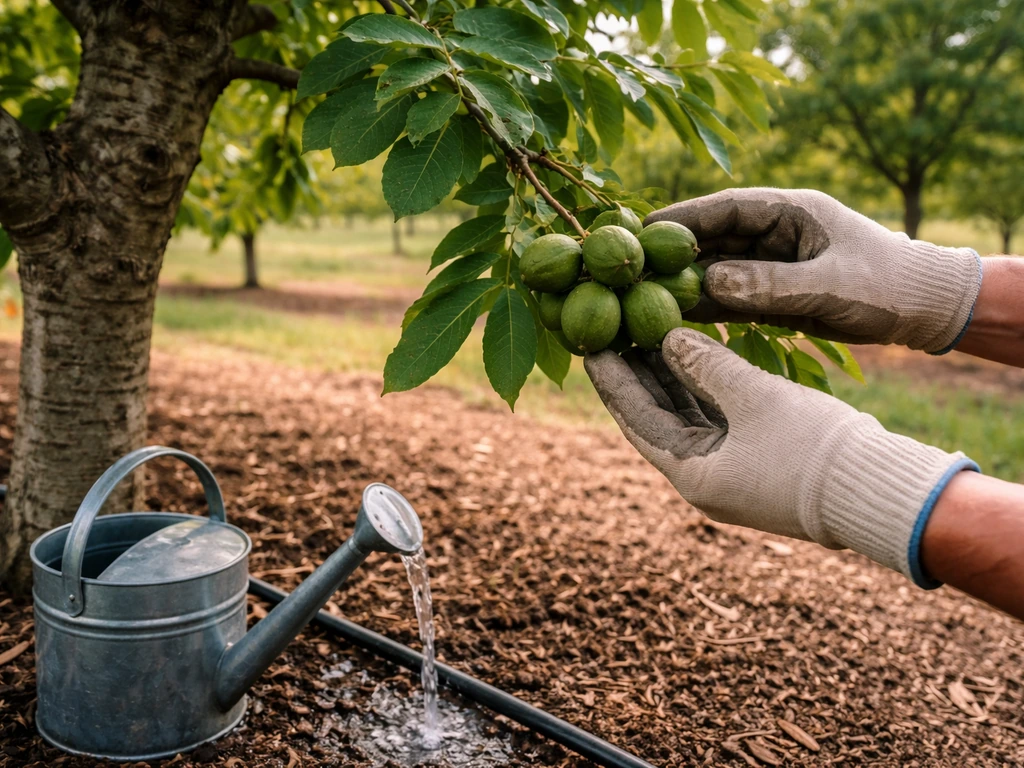
Consistent walnut production comes down to removing the variables that cause trees to skip years. The single most impactful thing you can do for an English walnut is pair it with a cultivar of the opposite dichogamy type. Matching a protandrous variety with a protogynous one ensures that pollen is present when female flowers on either tree are open. Space them within 50 to 100 feet of each other for reliable wind pollination.
Water management during May and June is non-negotiable if you want a full crop. Keep soil moisture consistent through the entire shoot-growth and nut-sizing window. Drip irrigation or deep, infrequent watering prevents the stress spikes that damage both the current crop and the following year's bearing wood. In dry regions, this one practice probably does more for annual yield reliability than anything else.
Moderate the alternate bearing cycle by thinning heavy crops. When a tree sets an exceptionally large crop, you can remove some of the young developing nuts in early summer to reduce the energy drain on the tree. It feels counterintuitive, but thinning a bumper crop tends to result in a better-sized harvest that year and a stronger crop the following year. This is standard practice in commercial walnut orchards for exactly this reason.
Canopy management matters more than most home growers realize. Walnut bears on new wood, so a tree with dense interior branches and limited light penetration gradually loses productive bearing surface. Light pruning to open the canopy, done in late winter before bud break, encourages new shoot growth throughout the tree rather than just at the outer edges. Don't prune heavily all at once, because that stimulates a lot of vegetative regrowth and can set back fruiting for a season.
Site selection matters if you're still in the planning stage. Planting on a slight slope or elevated position reduces the risk of cold air pooling around the tree during late spring frosts, which is when newly opened flowers are most vulnerable. Avoid low-lying frost pockets, especially in zones where late frosts are common. For colder climates, choosing a cultivar with documented cold hardiness for your zone gives you a meaningful buffer against the winter kill events that silently remove a season's worth of bearing wood.
Stay on top of bacterial blight, especially in years with wet springs. Protective copper-based sprays timed at bud swell and early shoot emergence, before rain events, are the standard management approach. Blight that gets into catkins and young nuts during the pollination window can eliminate most of a crop even on a tree that otherwise looks perfectly healthy.
A word on species differences
Black walnuts and English (Persian) walnuts don't behave identically, and it's worth keeping that in mind when you're reading general advice. Black walnut (Juglans nigra) is a forest tree with wide genetic variability in flowering phenology, cold resistance, and bearing patterns. Two black walnut trees growing near each other can have quite different catkin timing, which is actually useful because it increases the odds of some pollen overlap. English walnut (Juglans regia) is the main commercial species and has been selected into cultivars with more predictable traits, but it's more sensitive to frost and chilling requirements than black walnut in most cases. Butternut and other Juglans species have their own timing quirks.
Regional climate plays an enormous role in all of this, and what works in California's Central Valley doesn't automatically translate to the Midwest, the Pacific Northwest, or the UK. In Ireland, whether walnut trees can thrive depends on winter chill, frost risk, and the specific cultivar you choose winter chill, spring frost timing, and summer heat. The same cultivar can bear reliably in one zone and erratically in another depending on winter chilling, spring frost timing, and summer heat. Understanding which species and cultivar suits your specific climate is arguably the foundation of getting reliable annual crops. In the UK, you can still grow walnuts, but choosing the right cultivars for your local climate and frost risk is crucial can walnuts grow in the uk. In general, where can walnut trees grow is about matching the species and cultivar to your local climate, especially winter chill, frost risk, and summer heat. That geographic dimension is worth exploring carefully before you plant, and even afterward if you're troubleshooting an underperforming tree. Where do walnut trees grow in India depends largely on your local winter chill, frost risk, and summer heat where can walnut trees grow.
| Factor | Impact on Annual Bearing | What to Do |
|---|---|---|
| Tree age (under 5–7 years) | No or very light crops are normal | Wait; avoid heavy fertilization that delays fruiting |
| Dichogamy / pollination timing mismatch | Can eliminate nut set entirely even with flowering | Plant one protandrous and one protogynous cultivar together |
| Late spring frost at flowering | Wipes out the pollination window for that season | Site on elevated ground; choose later-blooming cultivars in frost-prone areas |
| Winter cold damage to buds | Kills bearing wood; shows as poor catkin production in spring | Select cold-hardy cultivars; cut and inspect buds after hard winters |
| Drought / heat stress (May–June) | Reduces current crop size and following year's bearing wood | Consistent irrigation through shoot growth and nut sizing |
| Alternate bearing cycle | Heavy year followed by light year due to resource depletion | Thin heavy crops in early summer to moderate the cycle |
| Insufficient chilling hours | Poor bud break, erratic flowering | Match cultivar chilling requirement to your winter climate |
| Bacterial blight in wet springs | Destroys catkins and young nuts at flowering | Protective copper sprays at bud swell and early shoot growth |
| Poor canopy light | Interior bearing wood declines over time | Light annual pruning to maintain open canopy structure |
FAQ
If my walnut tree is healthy but it only fruits every other year, is that normal alternate bearing or a problem?
Alternate bearing is common, especially on mature trees and on individual fruiting spurs. It’s more likely “normal” if the tree still has lots of catkins each spring and produces some nuts in the off years. If you get no or very few female flowers, or the catkins are also minimal, look first for late frost damage, winter bud kill, water stress during May to June, or inadequate pollination overlap.
Do do walnut trees grow walnuts every year if I only have one tree?
Usually not reliably. Even though the tree has both male and female flowers, dichogamy often causes the pollen release window and female receptivity to miss each other. If you want annual results, plant at least one additional cultivar matched by opposite timing (protandrous with protogynous) and keep them within about 50 to 100 feet for wind pollination.
Will hand pollination guarantee walnuts every year?
Hand pollination can increase nut set in some situations, but it doesn’t fix the most common causes of skipped crops like late frost, damaged bearing wood from winter cold, or the tree simply lacking enough bearing reserves after a heavy crop. If you try it, you must apply pollen during the brief catkin shedding period and target receptive female spikes, and you still need the tree to have healthy flowering wood.
How can I tell whether my walnut skipped nuts because of pollination timing versus frost damage?
Check what survived. If you see catkins shedding pollen but few to no female spikes, timing or bud/flower damage is likely. If both catkins and female flowers appear, but nut set is almost zero, late frost during the receptive window or mismatched pollen timing between trees is a prime suspect. If the tree looks leafed-out normally in spring but produces unusually few catkins and female flowers, that points more to winter bud kill.
My tree drops the green husks early. Does that mean it will produce nuts next year?
Early loss often means the pollination and fertilization phase failed or the young nuts were disrupted by stress, commonly heat and water stress during active shoot growth and nut sizing. Whether next year improves depends on whether the tree can recover its carbohydrates and bearing-wood formation, so focus on consistent irrigation in May and June and avoid heavy pruning late in the cycle.
Does thinning walnuts help with annual bearing, and how much should I thin?
Thinning can moderate alternate bearing by reducing the energy drain from an oversized crop. Start thinning only after nuts are small and well set, typically in early summer, and remove some developing nuts per cluster to reduce total crop load. The goal is to prevent “bigger than the tree can support” rather than remove so much that the tree switches back into excessive vegetative growth.
Can I speed up fruiting if I fertilize heavily when my walnut is young?
Often, no. Heavy nitrogen or aggressive feeding on a young tree can encourage vegetative growth, which delays the shift into reproductive development. The more reliable approach is steady, appropriate nutrition based on your soil and leaf growth, then patience until bearing wood forms and the tree reaches cultivar maturity.
If one cultivar has good nut set but another nearby doesn’t, could the timing still be the issue?
Yes. Two trees can both be “English walnuts,” but differ in how protandrous or protogynous they are, and in how weather stretches the timing. Even if you choose opposite types, mismatch due to local cold or warm springs can reduce overlap. In that case, selecting a documented pollinizer cultivar for your region and verifying that both trees flower in the same weeks can help more than changing spacing or general care.
What’s the most common reason a walnut tree has no nuts even though it produces catkins?
The female flowers may be damaged or too few, or pollination overlap may have been missed due to dichogamy timing or a short weather event during catkin shedding. Late spring frost is also a frequent single-season cause, especially when it hits when female flowers are just opening.
How much spacing matters for pollination between walnut cultivars?
For wind-pollinated walnuts, closer is better. A practical target is roughly 50 to 100 feet between a main tree and a pollinizer cultivar so pollen can travel during the limited male shedding window. Larger distances can work in breezy sites, but they increase the odds that weather and timing will reduce pollen overlap.
Do walnuts grow every year in warm climates, or is it still possible to have skipped seasons?
Skipped seasons are still possible, even in generally warm areas, because summer heat and drought can reduce both current fruit set and the tree’s ability to form flower buds for the next year. If you see consistent off years during hot or dry springs, prioritize irrigation during May and June, and consider cultivars selected for lower chilling needs and local heat patterns.
Do do walnut trees grow walnuts every year if I plant on a slope instead of low ground?
A slope or elevated site can improve odds because it reduces cold air pooling around the tree during late spring frosts. That doesn’t eliminate risk, but it helps protect the brief pollination window and newly opened growth. If you’re troubleshooting, also make sure the cultivar matches your chill and frost timing, since site alone cannot fix insufficient winter chill or extreme heat stress.