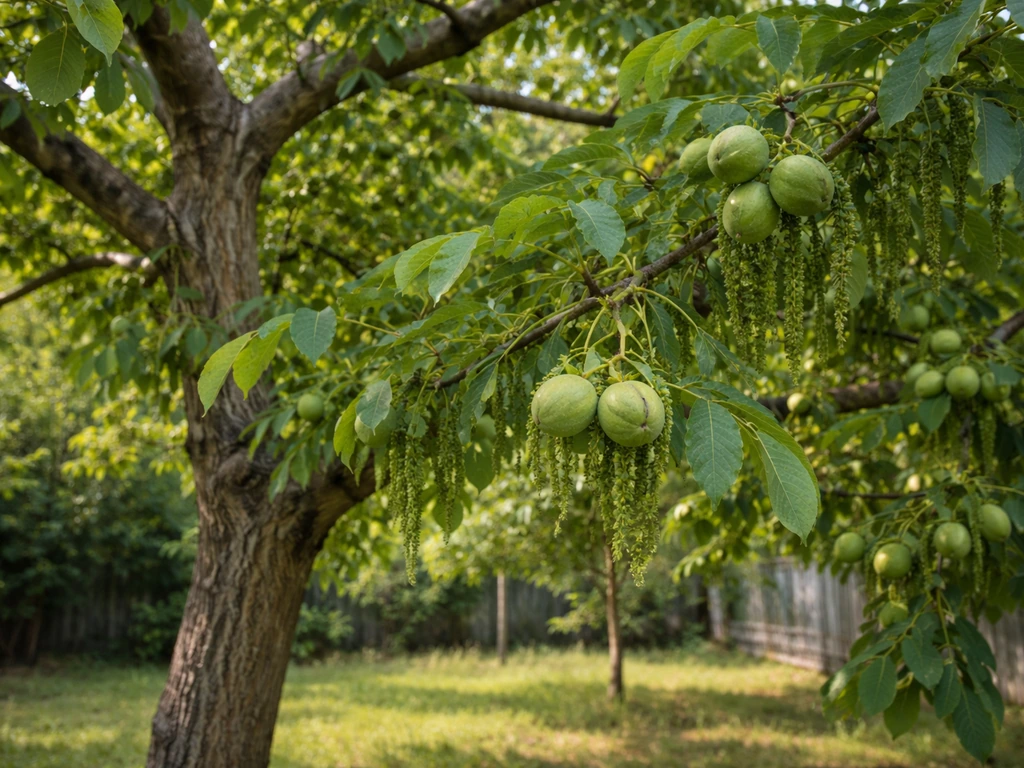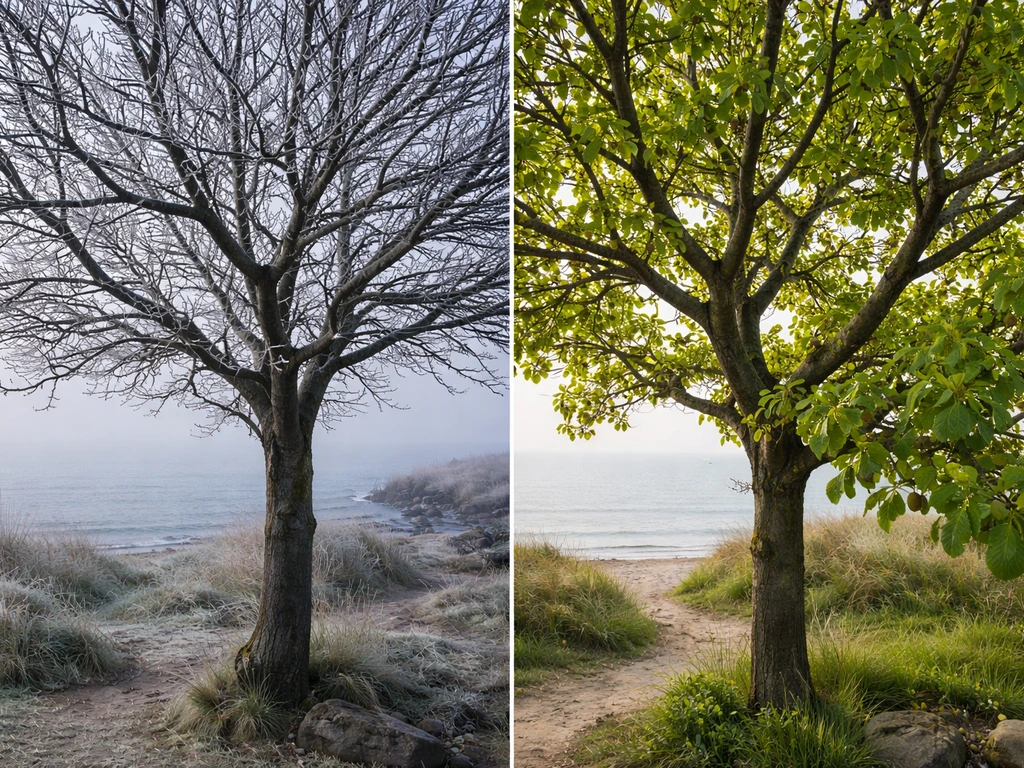
Yes, walnuts can grow in the UK, and Juglans regia (the common or English walnut) will survive in most parts of the country. The honest caveat is that actually harvesting a reliable nut crop is a different matter. South of the Midlands, on a well-chosen sheltered site, you have a genuinely good chance of picking walnuts every few years, and sometimes most years. North of the Midlands, spring frosts regularly take out the flowers before the nuts can set, so most growers there end up with a handsome tree that rarely fruits. That distinction between 'growing a walnut tree' and 'producing walnuts' is the most important thing to understand before you plant.
Can Walnuts Grow in the UK? How to Plant and Grow Successfully
Marcus Hendricks
2 May 2026
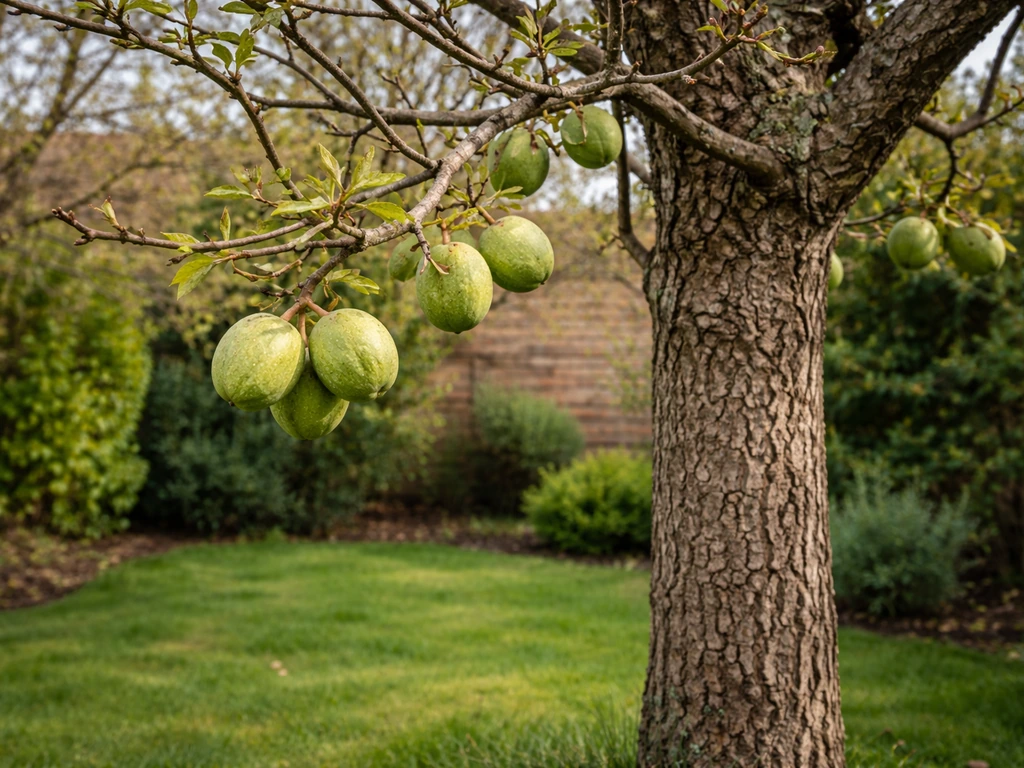
What the UK climate actually means for walnut trees
Walnut trees are hardy enough to handle UK winters without much trouble. Juglans regia tolerates temperatures well below freezing when it is fully dormant, so winter cold is rarely the problem. The real enemy is spring frost. The RHS notes that walnuts (Juglans regia) are fully hardy, but fruit set may be reduced by [spring frost](https://www.
rhs. org. uk/nuts/walnuts). Once the buds start breaking and the flowers emerge, even a light frost can wipe out an entire season's potential crop.
Because the UK's last frosts often land in late April or even May, and because walnut trees come into growth relatively early, the timing is tight. The further north you are, the higher the risk, and the more exposed your site, the worse it gets.
This is why the RHS notes that nut crops are 'unreliable north of the Midlands' and why both the RHS and BBC Gardeners' World specifically flag southern England as the most suitable zone for consistent fruiting.
One thing worth understanding clearly: cold hardiness and spring frost resistance are not the same thing. A cultivar can be perfectly happy surviving a -15°C winter and still lose every flower to a -1°C frost in late April. That distinction, highlighted by specialist growers, explains why some people plant 'hardy' walnut varieties and still never get nuts. The biology is simple: dormant wood is tough, but newly emerged flowers and young foliage are extremely vulnerable. Choosing the right site is at least as important as choosing the right cultivar.
Site and soil conditions walnut trees need in the UK
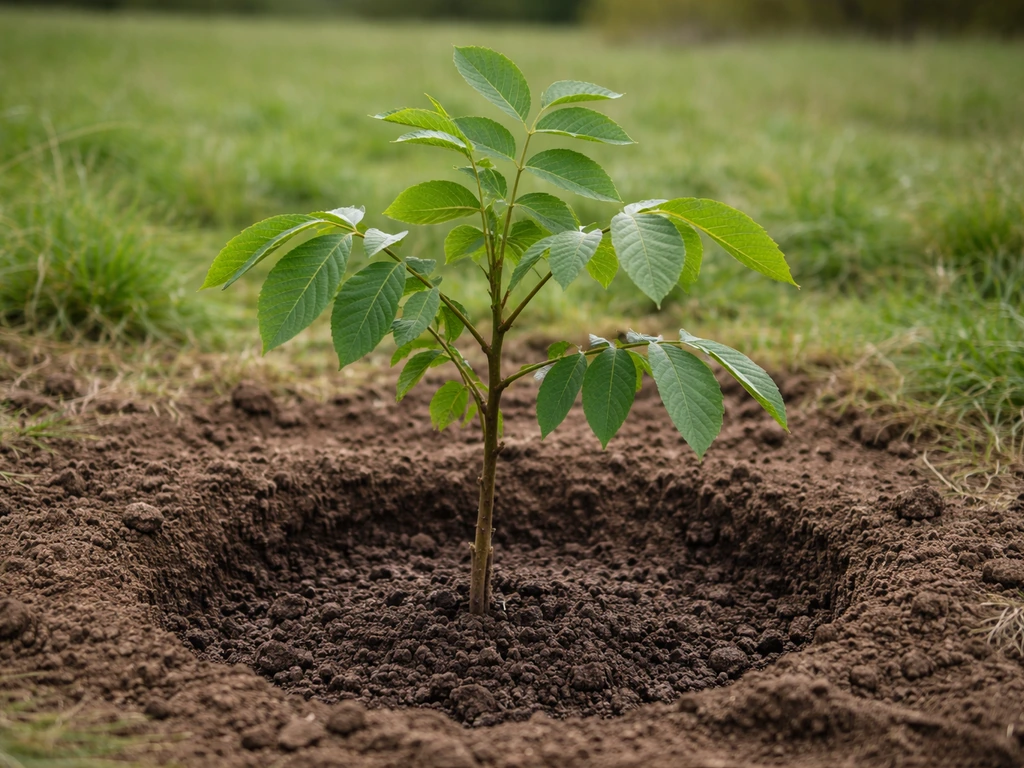
Walnuts are not fussy trees in the long run, but getting the site right at the start makes an enormous difference. Here is what to look for and what to avoid.
What a good site looks like
- Sheltered from prevailing winds: strong winds damage young foliage and flowers, and a windbreak or natural shelter from buildings, hedges, or woodland edge helps significantly
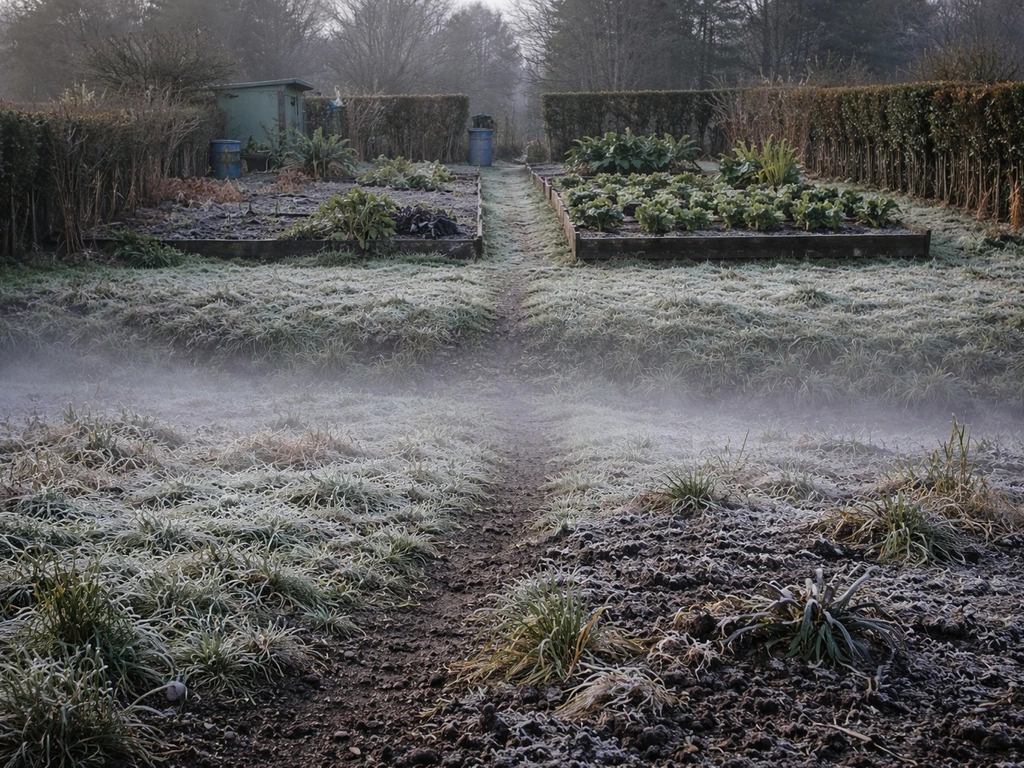
- Not in a frost pocket: cold air sinks and pools in hollows and low-lying ground; a mid-slope or raised position drains cold air away from the tree overnight
- Full sun: walnuts need as much sunlight as possible to ripen the nuts and harden the wood before winter; south or southwest-facing aspects are ideal
- Deep, well-drained soil: walnuts dislike waterlogging and shallow, compacted ground; they prefer deep loam or clay-loam with a pH around 6.5 to 7.5
- Plenty of space: a mature Juglans regia can reach 15 to 25 metres in height and spread; do not underestimate how large this tree gets or plant it close to buildings, drains, or other trees
What to avoid
- Exposed, windy gardens: wind damage is cumulative and significantly reduces fruiting
- Frost pockets and low-lying ground: this is the single biggest cause of crop failure in the UK
- Waterlogged or compacted soils: walnut roots cannot tolerate sitting in water
- Dense shade: partial shade reduces growth rate and seriously limits fruiting
- Proximity to vegetable beds: walnuts produce juglone, a chemical that inhibits the growth of many plants, including potatoes, tomatoes, and apples, within a radius of several metres
Best walnut species and cultivars for UK growing
Juglans regia is the standard choice for the UK, and it is the species worth focusing on for nut production. Within that species, cultivar selection matters because named cultivars have been selected for traits like late leafing (which helps them dodge spring frosts), compact size, or reliable cropping. Black walnut (Juglans nigra) will also grow in the UK and is actually hardier, but its nuts have a much thicker shell, a very different flavour, and it is harder to extract the kernel, so most gardeners growing for food stick with Juglans regia.
| Cultivar / Species | Key advantage for UK | Nut crop reliability | Notes |
|---|---|---|---|
| Juglans regia 'Broadview' | Late into leaf, so avoids many late frosts | Good in southern UK | RHS-recommended; self-fertile but better with a pollination partner; compact enough for most gardens |
| Juglans regia 'Buccaneer' | Also late-leafing; reliable fruiter | Good in southern UK | Often paired with Broadview; crops well in sheltered midland sites too |
| Juglans regia 'Lara' | French cultivar selected for productivity | Moderate in UK | Needs a warm, sheltered site to perform; not ideal in northern UK |
| Juglans regia (seedling/species) | Widely available; lower cost | Variable and often poor | No guarantees on frost timing or crop quality; avoid for serious nut production |
| Juglans nigra (Black walnut) | Very cold-hardy; ornamental value | Not practical for eating | Difficult to shell; mainly grown as a specimen tree |
If you only remember one cultivar name, make it 'Broadview.' It is the most widely recommended named walnut for UK gardens specifically because of its late leafing habit. A tree that pushes out its new growth a week or two later than average can miss the last frost entirely, and that timing difference is often the gap between a good harvest and none at all.
How to grow walnuts in the UK: step by step
Step 1: Decide between seed and a nursery tree
You can grow a walnut from seed (a fresh walnut stratified over winter and sown in spring), but this is only worth doing if you have time to wait and no preference over what you end up with. Seedling walnuts are genetically variable, and you have no idea whether the resulting tree will have good spring frost timing, a productive cropping habit, or quality nuts. For anyone serious about getting a nut crop, buying a named grafted cultivar from a reputable nursery is the right call. Grafted trees also tend to fruit several years earlier than seedlings.
Step 2: Source your tree
Order from a specialist fruit tree or nut tree nursery rather than a garden centre if you can. You want a clearly labelled grafted tree on a named rootstock, ideally two to three years old. Bare-root trees are available from late autumn to early spring and are generally cheaper and easier to establish than container-grown stock. If you are buying in May 2026, you are right at the tail end of bare-root season, so check whether nurseries still have stock or order container-grown for planting this season.
Step 3: Prepare the site
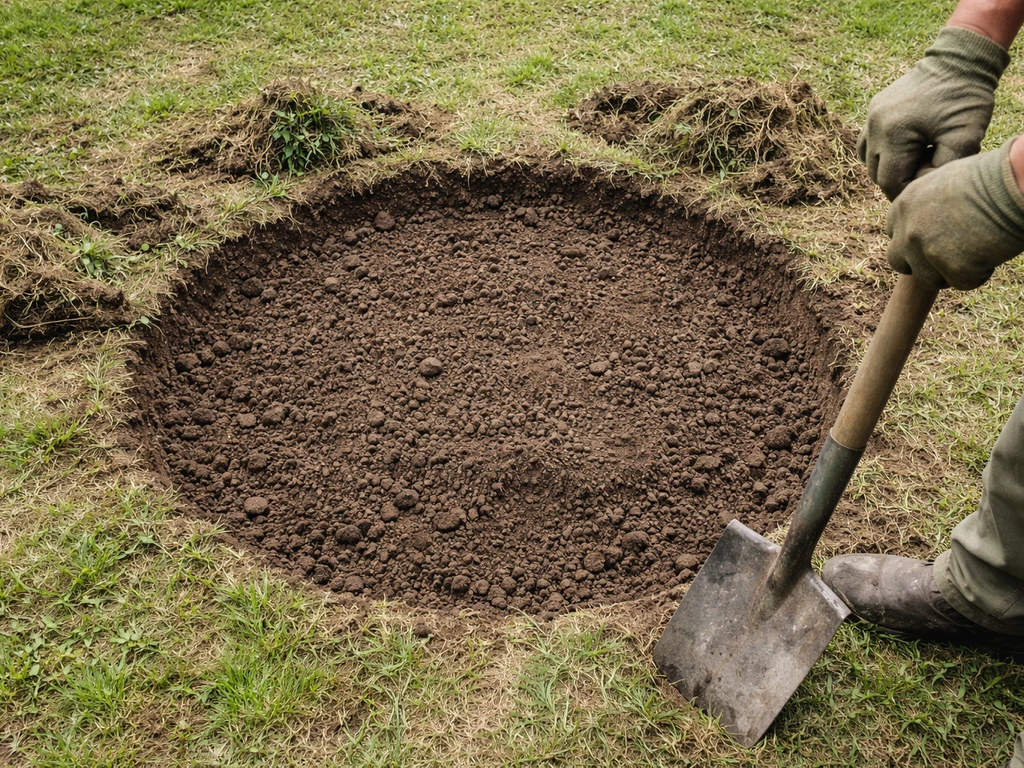
Clear the planting area of grass and weeds in a circle at least one metre in diameter. If the soil is compacted, loosen it to at least 60 cm depth with a fork or spade. Walnuts do not need rich soil and excessive fertiliser actually encourages soft, leafy growth at the expense of fruit. If your soil is acidic (below pH 6), add garden lime and dig it in well before planting. Good drainage is non-negotiable: if water sits on the surface for more than an hour or two after heavy rain, you need to improve drainage or choose a different spot.
Step 4: Planting timing and method
The best time to plant bare-root walnut trees in the UK is between November and March, when the tree is fully dormant. Container-grown trees can go in at any time of year, but avoid planting in a summer drought without being committed to regular watering. Dig a hole at least twice the width of the root ball and to the same depth. Position the tree so the graft union sits above soil level (usually visible as a slight kink low on the stem). Backfill with the removed soil, firm it in gently with your heel, and water thoroughly even if it has been raining.
Step 5: Staking and spacing
Stake young walnut trees with a short stake (about 60 cm above ground) at an angle, and use a proper tree tie with a spacer to avoid bark damage. Short staking encourages the tree to develop a strong trunk by allowing some movement in the wind. Leave at least 8 to 10 metres between a walnut and other trees or structures, ideally more: these are big trees that will eventually need considerable space in every direction.
Step 6: Mulching after planting
Apply a 10 cm layer of bark chip or wood chip mulch in a circle around the base of the tree, keeping it clear of the trunk itself by about 10 cm. Mulch suppresses competing grass and weeds (which are the biggest limiting factor for young tree establishment), retains soil moisture, and moderates soil temperature. Maintain this mulch circle for the first three to five years.
Where walnuts grow well in the UK by region
The UK is not a uniform growing environment, and where you are in the country has a significant bearing on what you can realistically expect from a walnut tree.
| Region | Tree survival | Nut crop likelihood | Key challenges |
|---|---|---|---|
| Southeast England (Kent, Sussex, Surrey, London) | Excellent | Good to very good on a suitable site | Drought stress in summer; urban heat can help |
| Southwest England (Devon, Cornwall, Somerset) | Excellent | Good; mild winters but late frosts can occur | Atlantic exposure and wind; choose sheltered inland sites |
| East Anglia (Norfolk, Suffolk, Essex) | Very good | Moderate to good | Spring frosts common inland; relatively dry summers suit walnut |
| Midlands (West and East) | Good | Unreliable; possible in sheltered south-facing spots | RHS notes fruiting becomes unreliable north of this zone |
| Wales | Good for trees | Poor to moderate; highly site-dependent | Higher rainfall and wind exposure; sheltered valley sites best |
| Northern England (Yorkshire, Lancashire, Cumbria) | Reasonable | Poor; frosts regularly take the crop | Late spring frosts are the primary problem |
| Scotland | Possible in sheltered lowland sites | Very unlikely to crop consistently | Too many frost events during flowering; mainly ornamental value |
| Northern Ireland | Reasonable | Poor; similar to northern England | Atlantic exposure and cool summers limit ripening |
If you are in the north of England or Scotland, that does not mean you cannot have a walnut tree. It means you should go in with realistic expectations: a magnificent specimen tree that will occasionally surprise you with a small crop, rather than a reliable annual harvest. Because of spring frost risk and other factors, walnut trees do not reliably produce a crop every single year in the UK, even when conditions are good.
The situation in Ireland is comparable, following a similar pattern of tree survival without consistent fruiting. For those curious about how walnut growing differs in warmer parts of the world, the contrast with regions where walnuts are grown commercially makes the UK's spring frost problem sharper in relief. In Texas, the biggest factor is usually timing around heat and the risk of spring frost, rather than winter cold alone.
If you are wondering where do walnut trees grow in India specifically, the best areas are those with a winter chill and dry enough periods during flowering.
Caring for your walnut tree as it grows
Watering in the first few years
Newly planted walnut trees need consistent moisture during their first two to three summers. In a dry spell, water deeply once or twice a week rather than little and often: deep watering encourages roots to go down, which makes the tree more drought-tolerant long term. Once established (usually after three to four years), walnut trees are reasonably drought-tolerant in most UK conditions and rarely need supplemental watering except in prolonged hot, dry summers.
Pruning
Walnuts bleed sap heavily if pruned at the wrong time. Prune only in midsummer (July is ideal in the UK) or in late autumn when the tree is fully dormant and sap pressure is low. Never prune in late winter or early spring: the tree will lose significant sap from cuts, which weakens it and can allow disease entry. In the early years, focus on developing a clear single leader and removing any crossing or rubbing branches. Once the tree is established, it needs very little pruning.
Feeding
In most UK soils, established walnut trees do not need feeding. Over-feeding with nitrogen produces lush, soft growth that is more susceptible to frost damage and less likely to fruit. If the tree is growing in genuinely poor, thin soil, a balanced slow-release fertiliser applied in early spring is fine. Otherwise, let the mulch do the work.
Managing grass and competition
Grass is one of the most underestimated threats to young walnut trees. Grass roots compete intensely for water and nutrients in the critical root zone, and research consistently shows that trees grown with a clear weed-free circle around them establish and grow significantly faster. Keep that one-metre-radius mulch circle weed-free for at least the first five years.
Pollination, harvest timing, and problems to watch for
How walnut pollination works
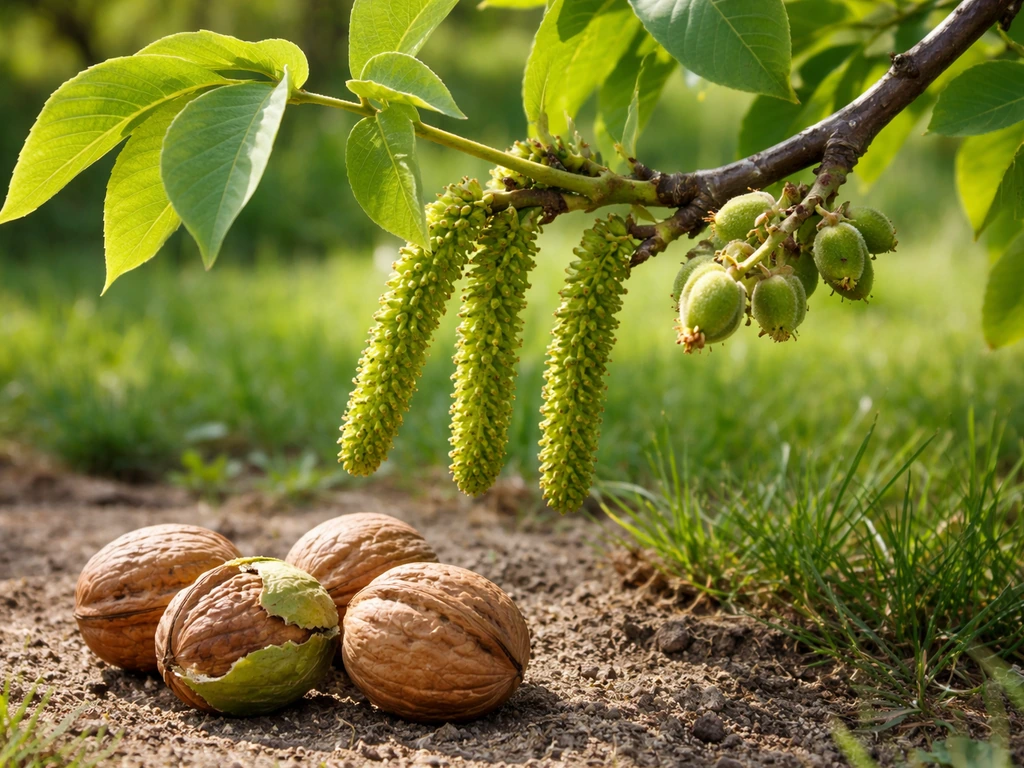
Walnuts are wind-pollinated and most Juglans regia trees are monoecious (they carry both male and female flowers on the same tree). However, the male catkins and female flowers do not always open at the same time on a single tree (a condition called dichogamy), which reduces self-pollination. The practical upshot: plant at least two cultivars in proximity where possible, or choose self-fertile cultivars. 'Broadview' is often described as reasonably self-fertile, but most growers find it crops better with a pollination partner. If you only have room for one tree, 'Broadview' is still your best single-tree option.
When to expect walnuts and how to harvest them
Patience is essential. Even a well-sited grafted cultivar typically takes four to seven years to produce its first meaningful crop, and ten years or more to crop heavily. Seedling trees can take much longer. In the UK, walnut harvest typically falls between late September and November, depending on the cultivar and the season.
The nuts are ready when the green outer husk begins to split and pull away from the hard shell. You can pick them slightly before this point for pickling (picked in July when the nut is still entirely green inside), or leave them until the husks are splitting naturally for fresh eating or storing. Dry harvested nuts in a single layer in a well-ventilated space for a few weeks before storing.
Common problems in UK walnut growing
- Spring frost damage: the most common cause of crop failure; flowers turn black and drop, leaving no nuts that season; no practical fix beyond site selection and choosing late-leafing cultivars
- Walnut leaf blotch (Ophiognomonia leptostyla): a fungal disease causing brown blotches on leaves, common in wet UK summers; rarely fatal to the tree but can cause early leaf drop; remove and dispose of affected leaves
- Walnut blight (Xanthomonas arboricola pv. juglandis): bacterial disease causing blackened, sunken spots on leaves, catkins, and nuts; again most common in wet years; no reliable cure but good air circulation helps
- Slow establishment: entirely normal in the first two to three years; walnuts invest heavily in root development before putting on significant top growth
- No fruit after many years: most often caused by a frost-prone site, a seedling tree, or lack of a suitable pollination partner; assess all three before giving up
- Juglone toxicity affecting nearby plants: not a problem for the walnut itself but worth knowing if you find nearby plants are mysteriously failing to thrive
A realistic checklist before you plant
- Confirm your location: are you in southern England or the Midlands? If so, a fruiting crop is a realistic goal. Further north, manage expectations accordingly.
- Assess your site for frost risk: is it a low-lying frost pocket, or an open mid-slope with air drainage? Avoid the former.
- Check for shelter from prevailing winds: a natural windbreak or adjacent structure to the southwest or west is a significant advantage.
- Choose a named grafted cultivar, ideally 'Broadview' or 'Buccaneer', rather than a seedling tree.
- Plan for two trees if you have the space: even with a self-fertile cultivar, a pollination partner improves yields.
- Confirm the planting position is at least 10 metres from buildings, drains, hedges, and edible crops.
- Prepare the soil: improve drainage if needed, correct pH if below 6, and clear a one-metre weed-free circle.
- Plan your watering regime for the first three summers, especially if planting in spring or early summer.
- Set realistic expectations on timing: you are planting a tree that may fruit modestly in five to seven years and heavily in fifteen to twenty.
The bottom line is this: walnuts absolutely can grow in the UK, and with the right cultivar on the right site, you will eventually harvest nuts. Yes, walnut trees are the source of the nuts harvest nuts. The tree will outlive you and become one of the most impressive things in the garden.
The key is going in with honest expectations about timelines, choosing a site that avoids frost pockets and wind exposure, and picking a proven cultivar rather than hoping a seedling will work out. For location-specific long-term climate normals, including monthly air frost days for UK 1991, 2020, the Met Office provides a detailed dataset for each location [frost risk and long-term climate normals by location](https://www. metoffice. gov.
uk/research/climate/maps-and-data/location-specific-long-term-averages/gbukbmeyr). Do those three things and you are giving yourself a genuinely good shot at one of the most rewarding nut trees you can grow in a UK garden.
FAQ
Can walnuts grow in the UK if I’m in a frost-prone area like a valley or bottom of a slope?
You can, but avoid frost pockets. Low spots, damp hollows, and sheltered corners where cold air settles are much more likely to kill flowers, even if your general region is “warm enough.” If you cannot change location, the next best step is choosing the latest-leafing cultivar you can (for example Broadview) and ensuring excellent drainage so the ground does not stay cold and wet during spring.
How do I choose between bare-root and container-grown walnut trees in the UK?
Bare-root is usually easier to handle and often cheaper if you plant within the dormancy window (roughly November to March). Container-grown is more flexible for timing, but watch for root circling in the pot and plant it promptly to avoid stress. Either way, confirm you are buying a named grafted cultivar on a clearly labelled rootstock, not an unnamed seedling.
Do I need more than one walnut tree for pollination in the UK?
Not always, but it often helps. Walnuts are wind-pollinated, and the male and female flowering phases on the same tree may not overlap perfectly. In practice, many growers get better nut set with at least two different cultivars nearby, or with a cultivar known to be reasonably self-fertile. If you only have one tree, Broadview is the best single-tree option, but plan for weaker or less consistent cropping than you would get with a partner tree.
Will a “hardy” walnut variety still fail to fruit because of spring frost?
Yes. Winter hardiness (surviving cold dormancy) and spring frost resistance (protecting flowers when they emerge) are different traits. A cultivar may tolerate very low temperatures yet still lose its crop if buds or flowers open early and get hit in late April or May.
How much sun and wind exposure does a walnut tree need for the best chance of nuts?
Aim for full sun and avoid exposed, gusty spots. While walnuts are hardy, wind and exposure increase stress and can worsen the spring frost risk by affecting microclimates and delaying establishment. If your garden is windy, prioritise a sheltered planting position that still receives strong light, rather than a completely enclosed corner with stagnant cold air.
What’s the best way to water young walnut trees in the UK, and how can I tell if I’m overdoing it?
In years one to three, water deeply during dry spells, typically once or twice a week, so the soil soaks down rather than staying wet at the surface. Signs you are overdoing it include persistently soggy ground, slow growth, and issues with yellowing that do not match normal seasonal patterns. Good drainage is essential, if water sits for hours after rain, change the site rather than trying to “manage” it with extra watering.
How long will it take before my walnut tree produces a serious crop?
Expect a long wait. A grafted named cultivar commonly takes four to seven years for a meaningful first crop and often longer for heavy cropping. Seedlings are more variable and can take much longer to reach consistent production, even when they look healthy.
When should I prune a walnut tree in the UK, and what should I avoid?
Prune only in mid-summer (July is ideal) or in late autumn when dormancy is underway. Avoid late winter and early spring, because walnut “bleeds” heavily after cuts and that can weaken the tree and open the door to problems. In early years, keep pruning minimal and focused on form, remove only crossing or rubbing branches and aim for a clear leader.
Do walnut trees need feeding or fertiliser in UK gardens?
Usually no, especially if you maintain a mulch layer. High nitrogen feeds leafy growth, which can increase frost vulnerability and reduce fruiting. If your soil is poor, use a balanced slow-release fertiliser in early spring, but treat this as a targeted correction, not a routine yearly boost.
How do I improve my chances of getting nuts when I live in the north of England or Scotland?
Manage expectations and stack the odds: choose a late-leafing cultivar, plant in the warmest, most sheltered frost-avoiding spot you can, and ensure the tree is healthy and well established by keeping the root zone weed-free. Even with good care, cropping may be sporadic, so your goal is occasional nuts plus a strong tree, not guaranteed annual harvests.
What does “dormant” mean for planting timing, and how strict do I need to be with dates?
For bare-root trees, dormancy means the tree is not actively growing and has reduced sap activity. It’s best to plant between late autumn and early spring, but weather matters too, avoid planting when the soil is frozen solid or waterlogged and focus on getting roots settled before growth resumes.
When are walnuts ready to harvest, and how do I know if I should pick early or wait?
Harvest timing is based on the husk splitting away from the hard shell. Pick slightly earlier if you want green nuts for pickling, if you wait until natural husk splitting you will generally be aiming for fresh eating or proper storage. After harvest, dry nuts in a single layer in a well-ventilated space for a few weeks before storing to reduce mould risk.