Yes, you can grow a cashew tree from a cashew, but only if you're starting with the right kind of cashew. The salted, roasted nuts from a grocery store bag won't germinate. What you need is a raw, unroasted, unprocessed cashew still in its outer shell, ideally fresh from a cashew apple or sourced from a specialty tropical seed supplier. If you have that, you have a genuinely plantable seed, and the process is straightforward once you understand what the plant actually needs.
Can You Grow a Cashew Tree from a Cashew? Step-by-Step
Marcus Hendricks
11 May 2026
What 'cashew' you can actually plant
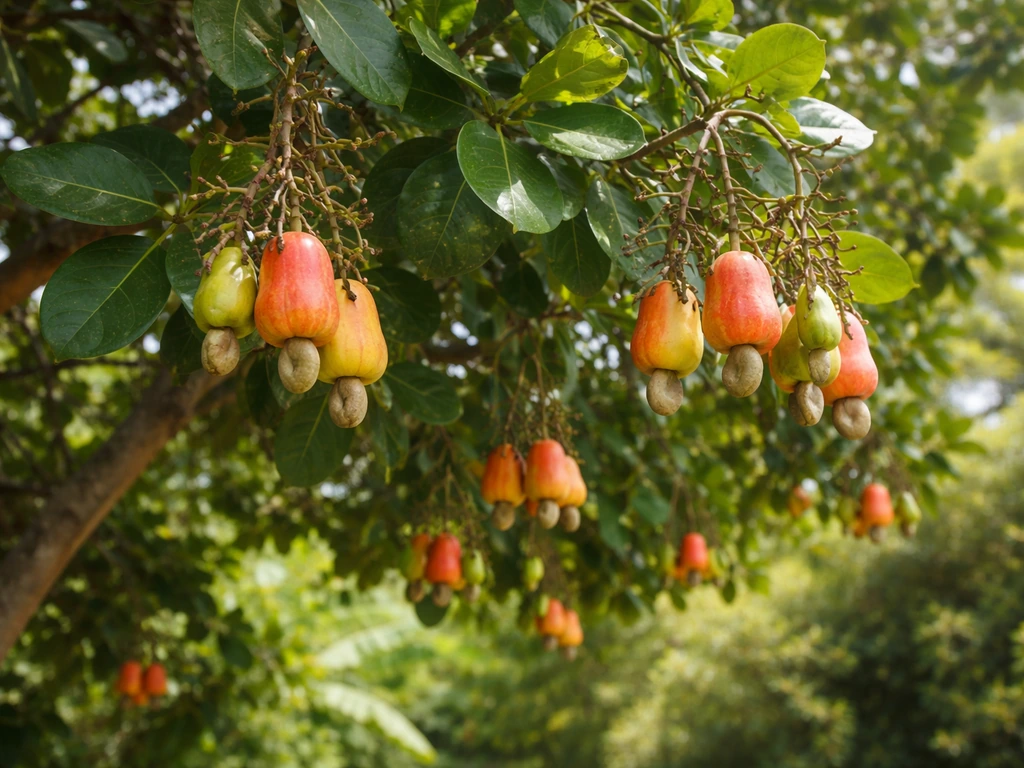
The confusion here comes from a quirk of cashew biology. What we call a cashew nut is technically the true seed of Anacardium occidentale. It grows attached to the outside bottom of a fleshy, pear-shaped structure called the cashew apple (also called the pseudo-fruit or pedicel). The cashew apple is the swollen stem, not the actual fruit. The true fruit is that kidney-shaped nut hanging beneath it, and inside that hard, caustic outer shell is the seed you want to plant. Wikipedia notes that the cashew seed is surrounded by a double-shell containing the skin-irritant phenolic resin anacardic acid and related CNSL chemicals double-shell that contains a potent skin-irritant phenolic resin (anacardic acid / related CNSL chemicals).
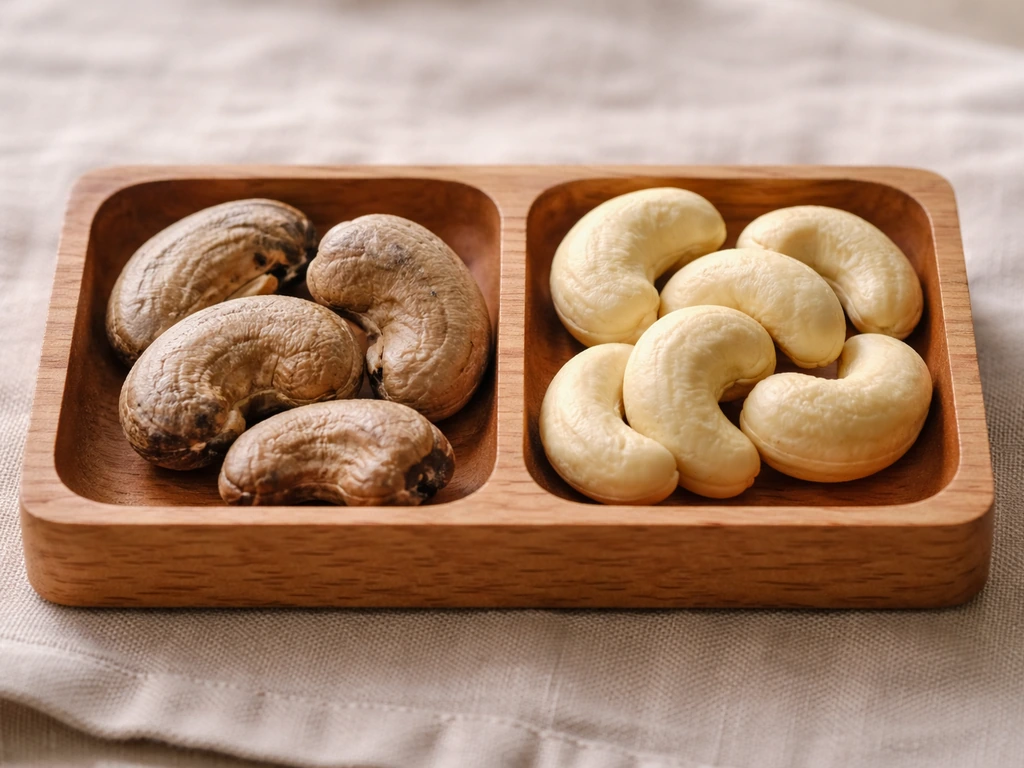
For planting purposes, you have two very different options in front of you. The cashews sold in stores have been heat-treated to neutralize the caustic shell oil (CNSL, cashew nut shell liquid, which can cause skin reactions similar to poison ivy). That heat process, whether roasting or steam treatment, destroys the seed's viability entirely. Even raw cashews sold in health food stores are almost always steam-processed for safety, which typically kills germination potential. So unless you know specifically and confidently that your cashew has never been heated, it almost certainly won't sprout.
What you actually need is a cashew still inside its hard outer shell, not the beige kernel you eat. Viable planting seed looks like a grayish-brown, roughly kidney-shaped pod about an inch long. It's the whole nut before any shelling or processing has happened. These come directly from freshly harvested cashew fruits or from tropical seed suppliers who handle them specifically for propagation.
Viability: can your cashew germinate today?
Germination rates in cashew vary dramatically depending on how the seed was handled after harvest. Research has shown emergence rates ranging from 0% to over 91% across different seed sources and storage conditions, and studies on packaging methods have demonstrated that properly stored seed can achieve germination rates above 93% with seedling survival near 99%. That gap between 0% and 91% tells you something important: seed handling is almost everything.
Before you do anything else, honestly assess what you're working with. Ask yourself these questions about the cashew in your hand:
- Is it still in its hard outer shell, not a bare kernel?
- Was it ever heated, roasted, or steam-treated at any point?
- Was it harvested or acquired within the last few months?
- Has it been stored cool and dry, not left in heat or humidity for extended periods?
- Did it come from a tropical seed supplier, a fresh cashew apple, or a reliable agricultural source?
If you answered yes to all of those, your seed has a real chance. If any of those answers is no or uncertain, your germination odds drop significantly, and you're better off sourcing fresh seed before investing weeks of effort. Fresh seed sown quickly after harvest performs best. The older and more poorly stored the seed, the lower your chances.
How to prepare cashew seed for germination
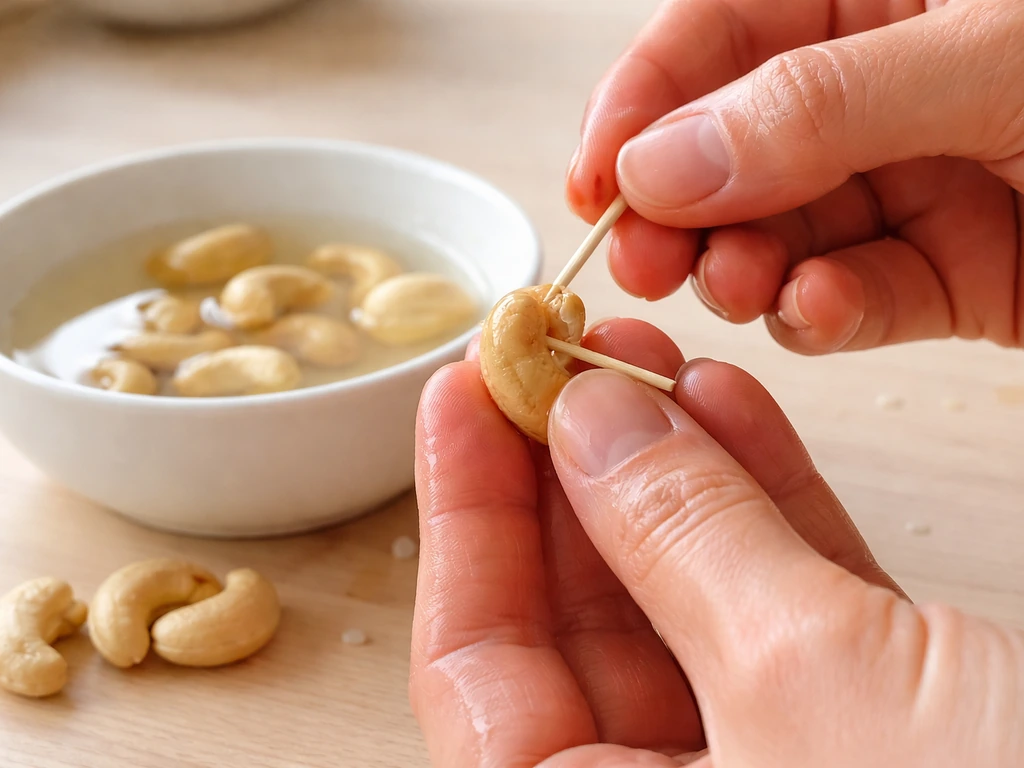
Preparation matters and it's a bit more involved than dropping a seed in soil. Traditional nursery guidance calls for separating the nut from any remnant of the fleshy pedicel if it's still attached, removing the outer seed coat by hand, and allowing the nuts to dry briefly before sowing. This sounds fussy, but it reduces rot risk during the critical first week.
A word about the shell oil: if you're handling whole, unprocessed cashew nuts in shell, wear gloves. CNSL is a skin irritant for many people, and cracking or cutting the shell without protection can cause a rash. You don't need elaborate safety equipment, just standard nitrile or rubber gloves.
- Soak the whole nut (still in shell) in water for 24 hours. This softens the shell slightly and improves moisture uptake.
- Wearing gloves, carefully crack or nick the hard outer shell just enough to expose the seed inside without damaging the seed itself. You can use a small hammer or the edge of a knife. This scarification step speeds up germination significantly.
- If there's any attached fibrous or fleshy material from the cashew apple, remove it completely. It will rot and can introduce fungal issues.
- Let the prepared seed air dry for a few hours before planting. You want the surface dry but the interior hydrated.
- Plant the same day or within 24 hours. Don't store prepared seed.
Germination and early care
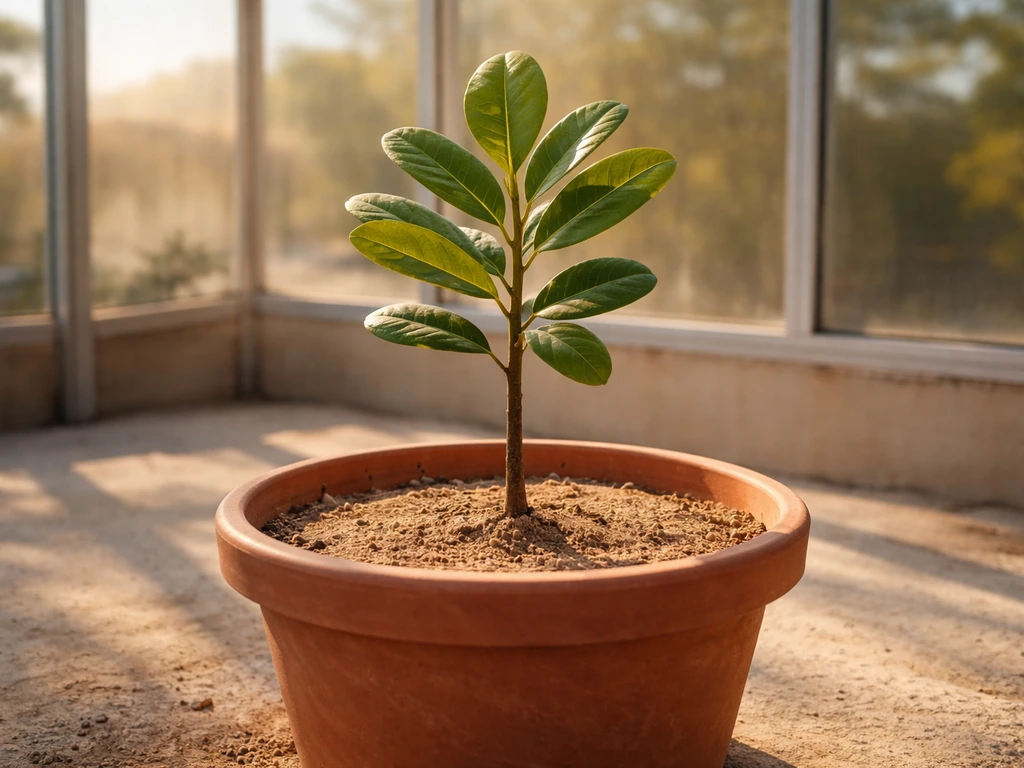
Cashew germinates best in warm, humid conditions that mimic its native tropical environment. Under good nursery conditions, you can expect germination in roughly one to two weeks. Don't panic if it takes a bit longer at home, but if you see nothing by week three, the seed probably wasn't viable.
Soil and containers
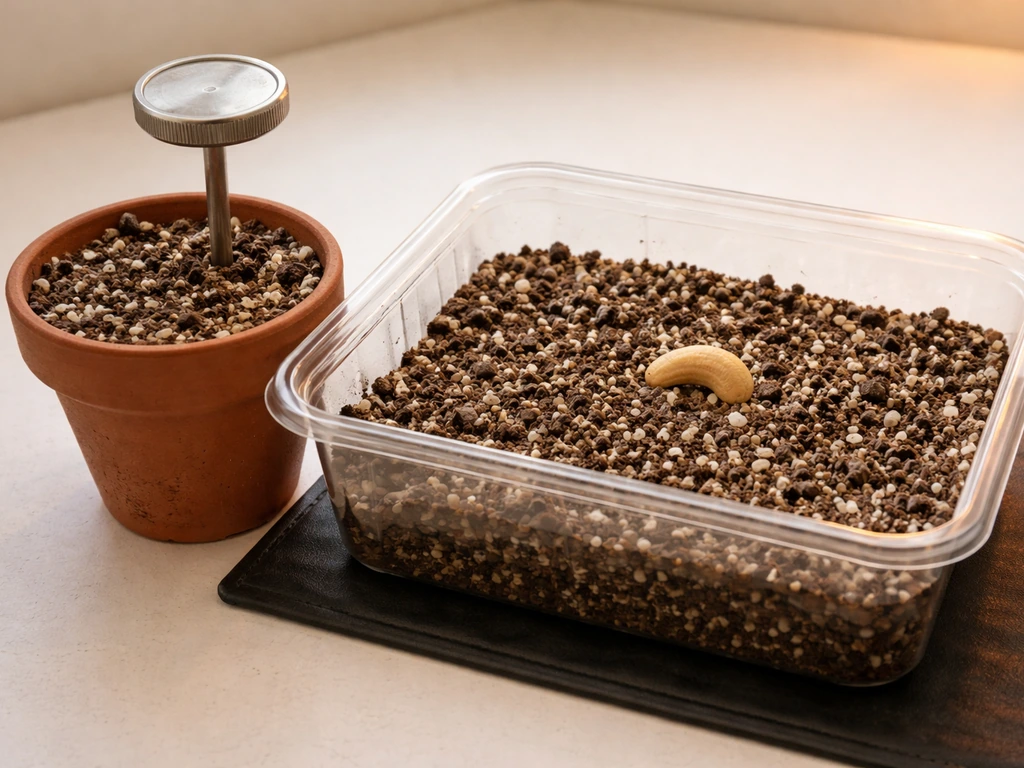
Use a well-draining potting mix. Cashews are notably sensitive to waterlogged soil and will rot quickly in heavy, compacted media. A mix of coarse sand, perlite, and a basic potting compost in roughly equal parts works well. Avoid mixes with a lot of peat or those that retain moisture for extended periods. A 6 to 8 inch deep pot is fine for germination, but you'll be transplanting before long, so don't over-invest in a large container at this stage.
Temperature
Warmth is non-negotiable. Cashews need soil temperatures of at least 70°F (21°C) and ideally 80 to 95°F (27 to 35°C) for good germination. In most homes this means a warm windowsill, a heat mat set to low, or a spot near a heating vent. A cold windowsill in spring won't cut it unless you're in a genuinely warm climate. If your indoor temperature drops below 65°F overnight, use a seedling heat mat under the pot.
Light and watering
During germination, direct bright light isn't critical yet, but once the seedling emerges, it needs as much light as you can give it. A south-facing window is the minimum indoors; a supplemental grow light is better in lower-light homes. For watering, keep the soil consistently moist but never wet. Water when the top inch of soil dries out, and make sure the pot has drainage holes. Cashews sitting in standing water will die quickly.
Pot vs. ground: where your cashew tree actually lives long-term
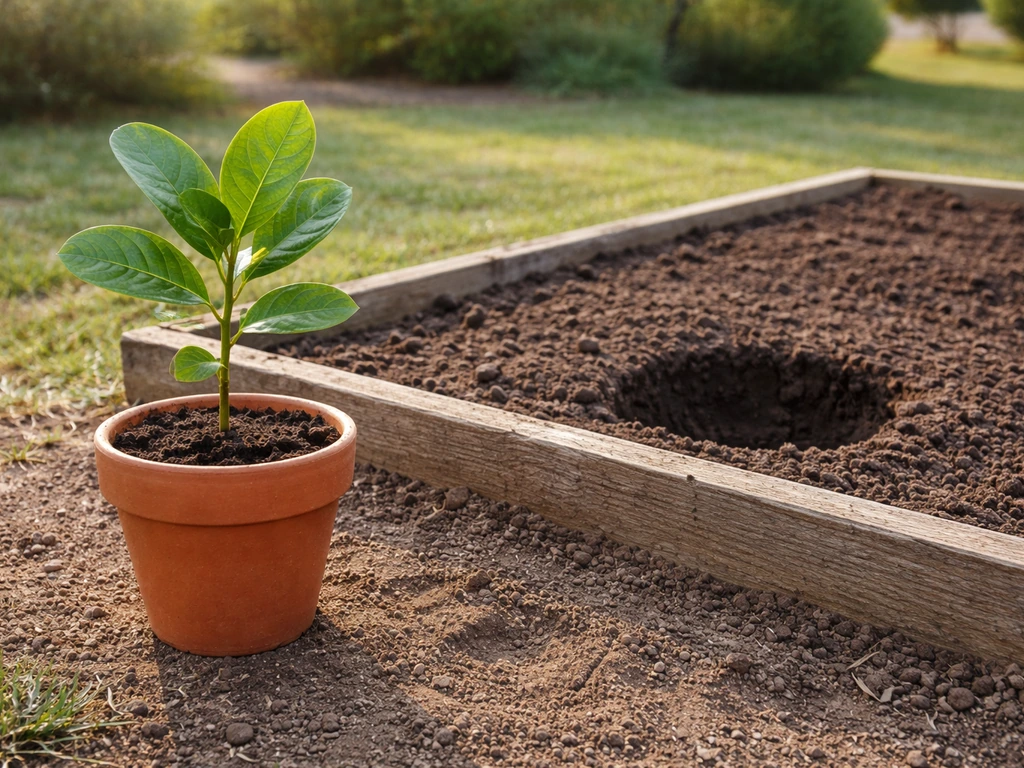
This decision depends almost entirely on your climate, and it's worth thinking about early because the answer affects how you manage the plant from day one. Cashew trees are frost-tender tropicals. Desert Tropicals notes that cashew trees are frost-tender in practice, with foliage damage at about 32°F (0°C) and serious damage around 25°F (-4°C) [frost-tender tropicals](https://www. desert-tropicals.
com/Plants/Anacardiaceae/Anacardiumoccidentale. html). In practice, that means growing cashew nuts in the UK will usually require keeping the plant in a warm, frost-free container indoors or in a greenhouse frost-tender tropicals. They're killed by frost and struggle anywhere temperatures regularly dip below 50°F (10°C).
If you're in a warm, frost-free climate, planting in the ground is the goal. If you're not, you're growing a container tree indefinitely, which is entirely possible but shapes everything about space, pot size, and fruiting expectations.
Container growing
Cashews in containers can grow and even fruit, but they stay smaller than ground-planted trees and need progressively larger pots as they mature. Start in a 6 to 8 inch pot for germination, move to a 3 to 5 gallon pot once the seedling is 6 to 8 inches tall (usually a few months in), and eventually into a 15 to 25 gallon container for a mature tree you intend to keep indoors or on a patio. The biggest challenge is managing overwintering: bring the plant inside before any chance of frost and give it maximum light through the cold months.
Transplanting to the ground
If you're in a suitable climate, transplant your cashew seedling to its permanent outdoor location when it's 12 to 18 inches tall and all frost risk has passed. Cashews develop a taproot fairly quickly, so the longer you wait, the more transplant shock you risk. Choose a spot with full sun and well-draining soil. Cashews tolerate poor, sandy soils better than rich, heavy ones. Give them space: a mature cashew tree can reach 30 to 40 feet in ideal conditions outdoors, though managed trees are often kept much smaller.
Where cashew trees actually thrive
Cashews are native to northeastern Brazil and are commercially grown throughout the tropical belt: India, Vietnam, West Africa, and parts of Southeast Asia. For outdoor cultivation in the US, you're looking at USDA hardiness zones 10b through 12, where frost is rare to nonexistent. If you’re wondering can you grow cashews in Ohio, the key issue is that Ohio’s temperatures fall well below the zones cashews reliably tolerate outdoors USDA hardiness zones 10b through 12.
If you’re wondering where can you grow cashews outdoors, it largely comes down to your climate zone and frost risk. That realistically means southern Florida, Hawaii, and parts of coastal southern California with microclimates that rarely freeze. If you're aiming to answer can you grow cashews in florida, focus on warm, frost-free conditions and a dry season, since that's what cashews need to thrive.
If you're wondering about growing cashews in Michigan, your climate is far outside the zones where outdoor fruiting is realistic southern Florida, Hawaii, and parts of coastal southern California. South Texas near the coast is marginal. Anywhere cooler than that, outdoor planting is a gamble at best and a loss at worst. In Texas, that tropical preference for warmth and a long frost-free window is what really determines whether cashews can be grown outdoors.
Beyond frost tolerance, cashews need a pronounced dry season to flower and fruit well. Areas with year-round rain or high humidity during flowering often see poor nut set. This is one reason commercial cashew production is so geographically concentrated. If you're gardening in Florida, southern Texas, or another warm region and wondering about your specific conditions, the climate nuances for each area (humidity patterns, frost risk, dry season length) matter a great deal for whether you'll ever see cashews on your tree.
For everyone in cooler climates, from the UK to Ohio to Michigan to Canada, outdoor cashew growing simply isn't viable without a heated greenhouse. Container growing indoors can keep the tree alive and even produce occasional flowers, but consistent fruiting under those conditions is rare. That's the honest assessment, and it's worth knowing before you get attached to the idea.
What to expect: timeline from seed to cashews
Here's the realistic picture. Cashew trees grown from seed typically begin bearing fruit around 3 to 4 years after planting under good conditions. That's not a guarantee of a heavy harvest at year three, it's the beginning of the possibility of fruit. Full production usually comes later, around year 5 to 8. Container-grown trees in suboptimal light and temperatures will take longer, and some never fruit meaningfully.
| Stage | Typical Timeline | Key Variable |
|---|---|---|
| Germination | 1–2 weeks after sowing | Seed viability and soil temperature |
| Seedling establishment | 2–4 months | Light, warmth, watering consistency |
| Ready to transplant outdoors | 4–6 months (12–18 inches tall) | Climate suitability for outdoor planting |
| First flowering (seed-grown) | 2–3 years | Climate, root space, dry season availability |
| First meaningful nut production | 3–4 years minimum | All of the above, plus cultivar and care |
| Full production | 5–8 years | Outdoor tropical conditions essentially required |
One more thing worth knowing: cashew trees grown from seed have more genetic variability than clonally propagated trees. Commercial growers use grafted trees for consistency and earlier fruiting. If you're serious about production rather than the experience of growing one, a grafted tree from a tropical nursery will outperform a seed-grown tree. But if you want to grow from seed because you have one in your hand, go for it. It's a genuinely interesting plant to grow, even as a foliage tree.
Today's checklist and what to do if it won't sprout
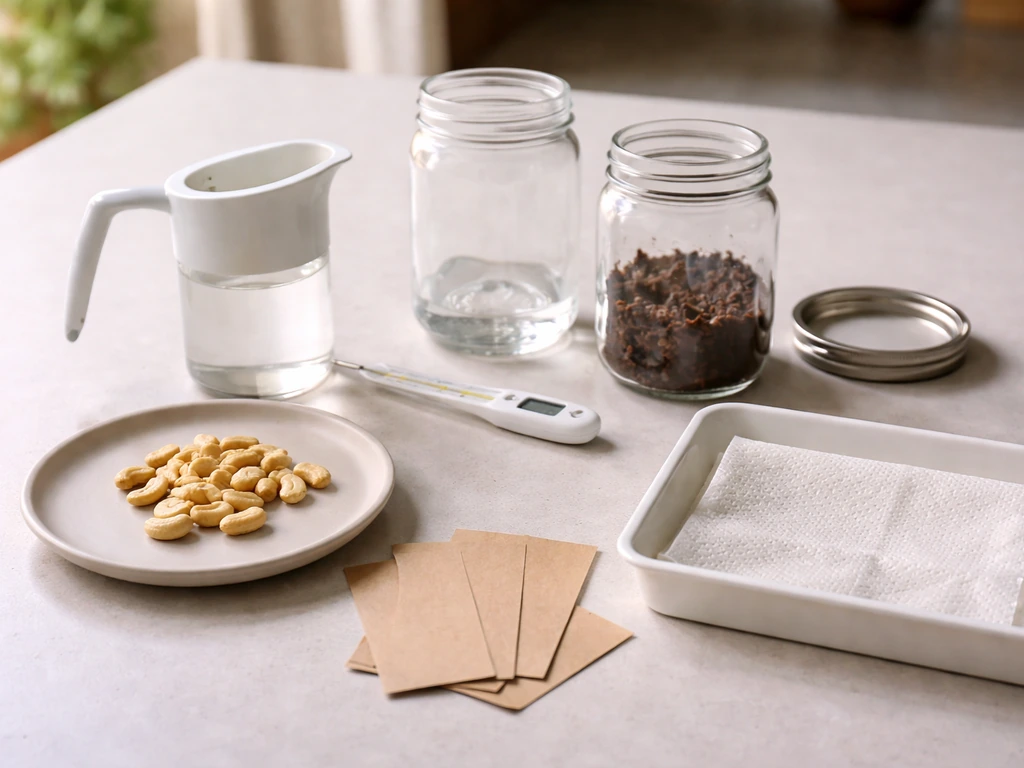
Here's your action plan for right now. Work through this in order before you plant anything.
- Check your seed: Is it in the hard outer shell? If it's a bare, beige kernel, it won't germinate. Stop here and source viable seed.
- Confirm no heat treatment: If you're not certain it was never roasted or steamed, assume it won't germinate and get a fresh seed.
- Source viable seed if needed: Look for tropical seed suppliers, ECHO International (a nonprofit that distributes tropical seed), or local tropical plant groups if you're in a warm zone.
- Soak your whole (shelled) seed for 24 hours in room-temperature water.
- Wearing gloves, gently crack or score the outer shell without damaging the seed inside.
- Plant in a well-draining mix (equal parts sand, perlite, and potting compost) in a pot with drainage holes.
- Place in the warmest spot available, ideally 80–95°F soil temperature. Use a heat mat if needed.
- Water to keep soil moist but not wet. Check daily.
- Expect germination in 1–2 weeks. If nothing happens by week three, the seed likely wasn't viable.
- Decide now whether you're in a climate where outdoor planting is eventually possible (zones 10b–12), or whether you're committing to a container plant long-term.
If your cashew won't sprout
If you've done everything right and still see no germination by week three, the seed was almost certainly dead before you started. It happens, especially with commercially sourced nuts. Don't adjust your technique assuming the seed is fine; the more likely explanation is that the seed isn't viable. Get a fresh, properly sourced seed and try again. A second attempt with a genuinely fresh seed from a reliable source will tell you quickly whether your setup (warmth, moisture, soil) is right. Most germination failures trace back to the seed, not the grower.
FAQ
Can I plant the cashew kernel I bought and expect it to sprout?
Yes, but only if you are propagating from the whole, unprocessed nut (the grayish-brown shell pod), not the edible kernel. If you want the easiest “start,” crack only the hard shell if you are sure it has never been heated, then remove the outer seed coat and plant the seed promptly in warm, well-draining mix. If it was already cracked and dried out, germination often drops quickly.
Should I soak a cashew before planting to improve germination?
If the seed is still intact and unheated, soaking is optional. Soak time should be short, 6 to 12 hours, using room-temperature or slightly warm water, then plant immediately. Long soaks increase the chance of rot, especially in dense potting mixes or cool temperatures.
How do I know if I'm watering too much or too little during germination?
You should treat the first weeks as a moisture-control period, not a “keep it soaked” period. Water when the top inch is dry, and always empty the saucer. If the mix stays soggy, the seed often fails silently (no sprout, then discoloration), which looks like “non-viable seed” even when it might have been fine.
Can I use a humidity dome or plastic bag to help cashew seeds sprout?
Yes, but warm and ventilated beats humid and stagnant. A clear plastic bag or mini cloche can help, yet you should remove it briefly each day to refresh airflow. If you see condensation continuously and the pot never dries at the surface, pull back on humidity and improve drainage.
When should I increase light after the seedling comes up?
Cashews should only be shifted to brighter light after emergence. At first, bright shade or gentle indirect light is safer, then increase intensity over a week or two. A sudden move from low light to harsh sun can scorch tender seedlings, especially indoors near a hot window.
Is it safe to remove the outer seed coat, and how careful do I need to be?
If you remove the outer seed coat and separate the nut from any remaining pedicel, do not scrape so aggressively that you damage the seed itself. Minor flaking is usually fine, but gouges can create entry points for rot. After handling, sow promptly and keep the mix warm and lightly moist.
What should I do if my cashew seed swells but never sprouts?
Cashew germination is often uneven even with viable seeds. If you see swelling but no sprout, give it time up to week three, then check for softness and a healthy, firm seed inside the soil. If it becomes mushy or develops a sour smell, discard and restart rather than continuing to water.
When is the best time to transplant, especially since cashews form a taproot?
The root can start quickly, so delays can reduce transplant success. Once seedlings reach about 12 to 18 inches tall and all frost risk is gone (outdoors) or when you are ready to up-pot, transplant carefully without breaking the root. Avoid lifting by the stem, and water in thoroughly afterward.
How can I tell whether a cashew was heated or steam-processed?
A simple rule is, if you are uncertain whether the nut was heated, assume it will not germinate. Look for labels that explicitly state “raw” or “for planting/propagation,” and avoid anything described as roasted, steamed, blanched, “ready to eat,” or “cooked.” Grocery health-food cashews may still be steam-treated for safety.
My cashew didn't sprout by week three, what is the most likely fix?
If germination fails, your best next step is to treat seed quality as the likely cause, not your technique. Get a fresh nut sourced specifically for propagation, then keep your soil at the recommended warm range, use a draining mix, and keep moisture consistent. A second attempt with truly fresh seed usually clarifies whether you have a viability problem or an environment problem within days.
My indoor seedling looks stretched, is that normal and what should I do?
Yes. Seedlings can go leggy if light is inadequate indoors, especially in winter or near north-facing windows. Use a grow light to keep the plant compact, and rotate the pot regularly so the stem doesn't lean. This also helps you avoid transplant shock later because you will have a stronger, more even seedling.