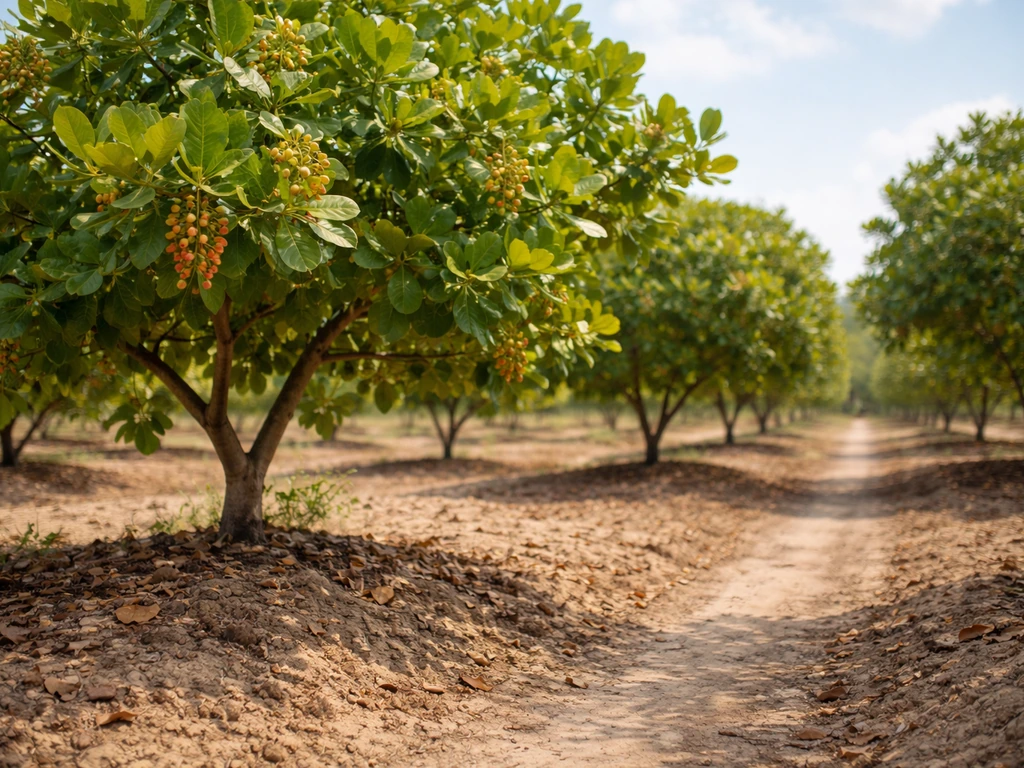
Cashew trees grow best in well-drained, sandy to loamy soils with a pH between 5.6 and 7.3. They are actually more forgiving than most fruit trees when it comes to soil fertility, but they will not tolerate waterlogged roots, heavy clay, or high salinity. Get the drainage right and keep the pH in that range, and cashews will establish even in relatively poor soils. Get it wrong, especially the drainage, and the tree will struggle or die regardless of what else you do.
Cashew Nuts Grow in Which Soil? Ideal Soil and pH Guide
Marcus Hendricks
15 May 2026
Cashew soil needs in plain language
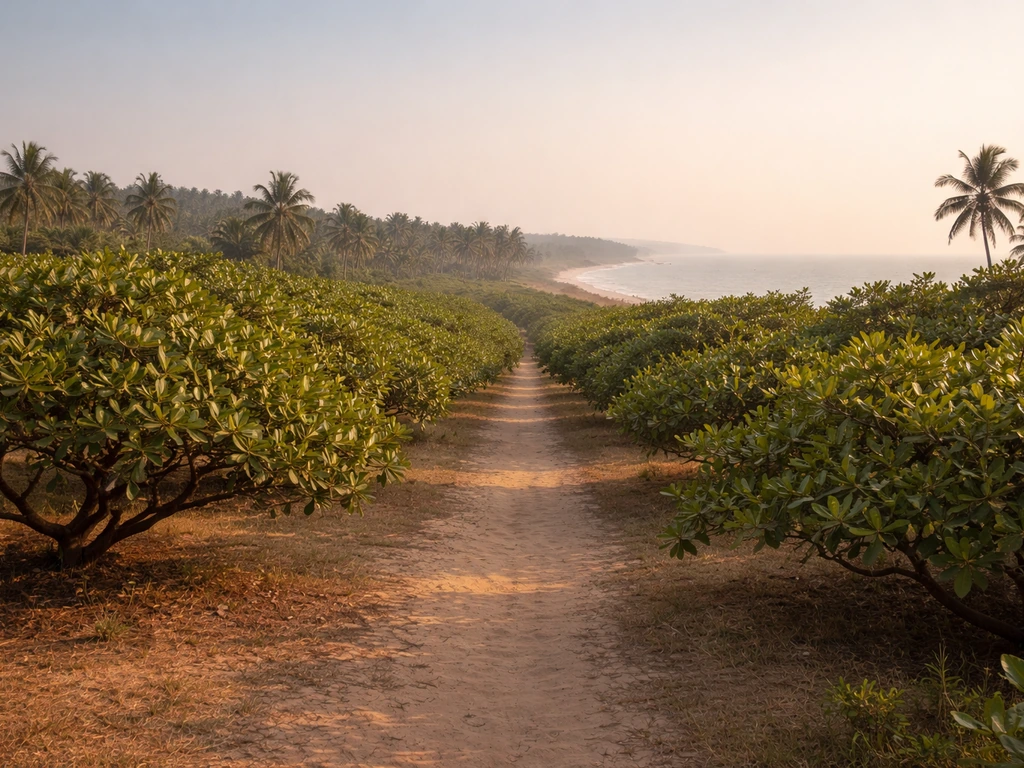
Cashews are native to tropical coastal Brazil and naturally grow in sandy, low-fertility soils. Cashew fruit grows on cashew trees, which are commonly found in tropical and subtropical regions where the climate and soils match the tree’s drainage and pH needs where does it grow. That background tells you a lot. These trees evolved to handle soil that many other crops would find difficult, including nutrient-poor, slightly acidic ground with inconsistent rainfall. What they never evolved to handle is standing water around their roots. Prolonged waterlogging is one of the fastest ways to kill a cashew, and it explains why the first thing to evaluate about any planting site is drainage, not fertility.
At a practical level, the ideal cashew soil profile looks like this: a sandy loam or fine sandy surface layer, a loamy subsoil with fewer than 20% coarse fragments, a total soil depth of more than 90 cm, and a water table that stays at least 1.5 meters below the surface even during the rainy season. Soil salinity needs to stay below 1 mmhos/cm. These are not aspirational targets, they are the thresholds that separate a site that will work from one that will not.
Best soil texture and drainage for cashew trees
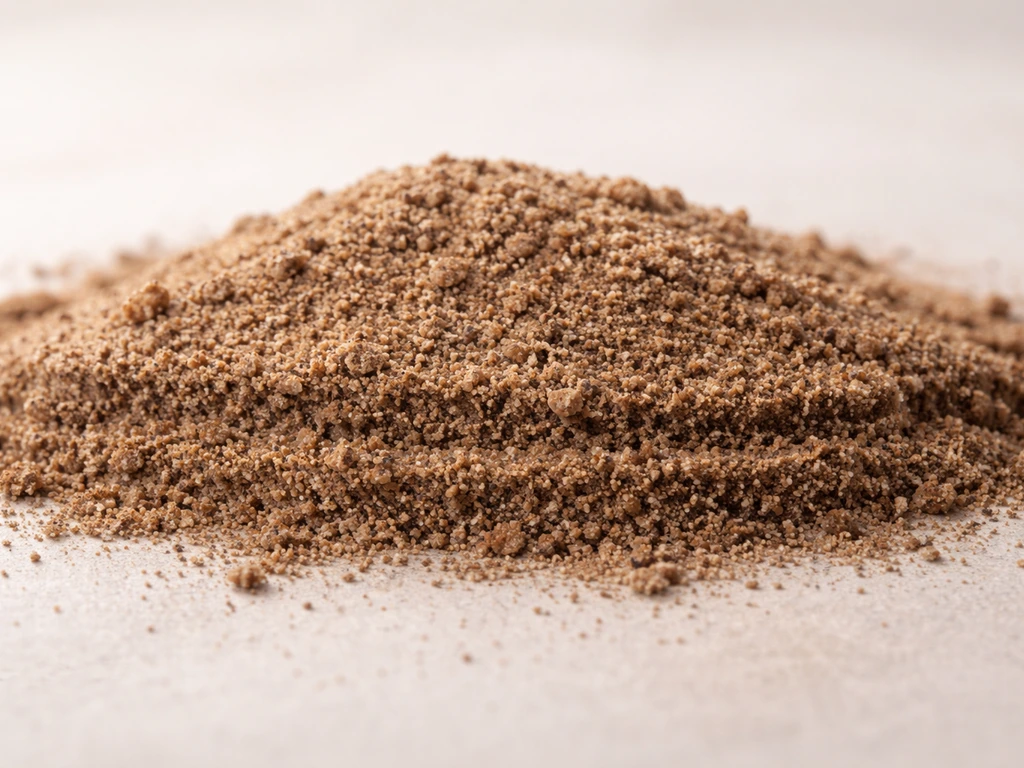
Texture is where cashew is most specific. The recommended surface texture runs from fine sand through sandy loam to silt loam. The subsoil should fall in the fine loamy to coarse loamy range, again with coarse fragments kept under 20%. That combination gives you what cashew roots actually need: enough physical structure to anchor the tree and hold some moisture, but enough pore space to move water through quickly. Heavy clay soils fail on the second count. They drain slowly, hold water in the root zone far too long, and compact easily, reducing the oxygen cashew roots depend on.
On drainage specifically, COMCASHEW's land suitability criteria are unusually precise. The water table should sit 2 to 6 meters below the surface during the dry season and 1.5 to 4 meters during the rainy season. Any impermeable layer in the subsoil needs to be deeper than 5 meters. These numbers reflect the cashew tree's deep root system and its sensitivity to root-zone saturation. UC IPM research confirms the mechanism: when soil oxygen is depleted by excess moisture, even short periods of root-zone flooding can cause lasting damage. A site with a high or perched water table is a serious problem, not a minor inconvenience.
Ideal soil pH and nutrient/fertility expectations
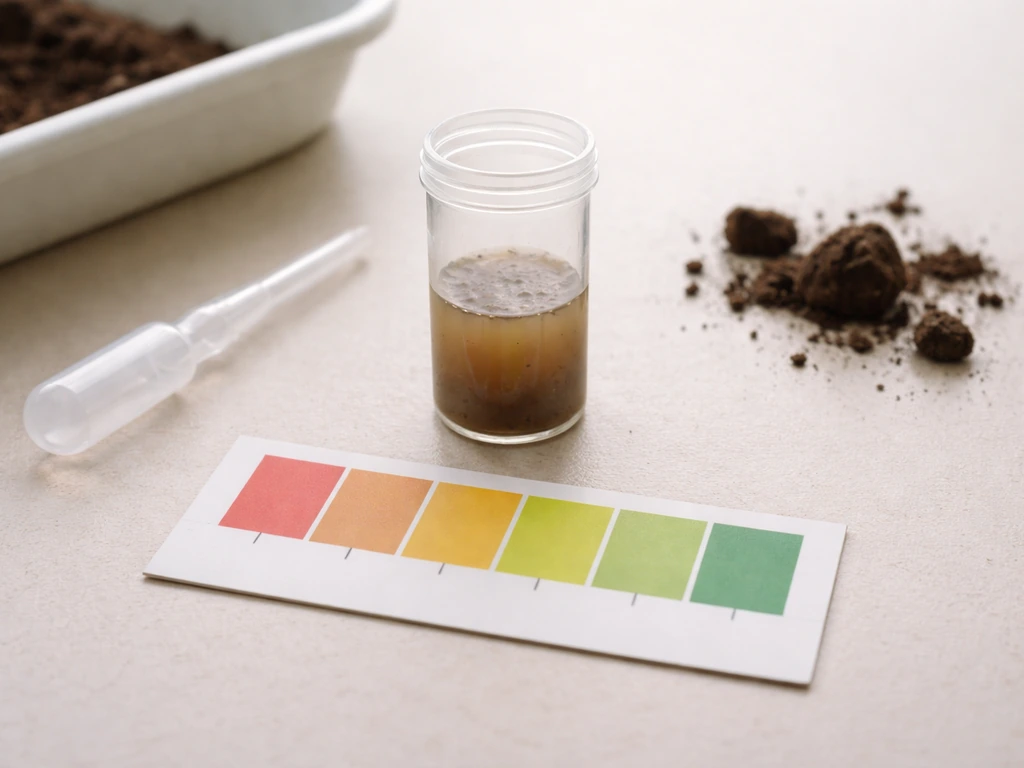
The pH sweet spot for cashew is 5.6 to 7.3. That is a fairly wide range, which is one reason cashews can succeed in so many tropical and subtropical growing regions worldwide, from India's laterite soils to Australia's sandy coastal zones. Slightly acidic to neutral soils are ideal. At pH values above 7.3, nutrient availability starts to shift in ways that work against the tree, and at pH values approaching 8.5 or higher, water penetration into the soil itself can be compromised, which circles back to the drainage problem. High soil pH can also reduce water penetration into the soil, which limits drainage and can contribute to crop decline blank" rel="noopener noreferrer">water penetration into the soil itself can be compromised.
Cashews are not heavy feeders, especially when young and establishing. That said, once trees reach bearing age, FAO guidance for Indian production recommends around 500 g of nitrogen, 125 g of P2O5, and 125 g of K2O per tree per year, applied in staged fractions rather than all at once. This is not a demand you need to front-load into the soil at planting. Instead, treat baseline fertility as something to build gradually. The priority at establishment is getting texture, drainage, and pH right. Fertilizer can be dialed in once the tree is growing.
Common soil problems that block cashew growth
Most cashew failures trace back to one of four soil problems. Understanding what each one actually does to the tree makes it easier to diagnose what is going wrong and decide whether it can be fixed.
- Waterlogging and poor drainage: This is the most common and most damaging problem. Saturated soil depletes root-zone oxygen, which cashew roots cannot tolerate for long. A high water table or slow-draining hardpan layer underneath otherwise acceptable surface soil is enough to cause decline even if everything else looks right.
- Heavy clay content: Clay soils drain slowly, compact under foot traffic and rain, and restrict root penetration. Cashew's deep root system needs to push down through at least 90 cm of workable soil, and clay blocks that.
- High salinity: Soil electrical conductivity above 1 mmhos/cm is flagged as unsuitable for cashew establishment. Research on precocious cashew varieties places salt stress thresholds for irrigation water as low as 1.48 dS/m, so even moderately saline conditions can limit growth, particularly in early establishment.
- pH outside the 5.6 to 7.3 range: Soils below pH 5.6 can have elevated aluminum and manganese levels that are toxic to roots. Soils above 7.3 start to lock up phosphorus and micronutrients. Very alkaline soils (above 8.5) can also reduce water infiltration rates, which compounds drainage problems.
- Shallow soil or impermeable substratum: Cashew needs more than 90 cm of usable soil depth and an impermeable layer no shallower than 5 meters. Rocky or hardpan subsoils prevent the deep rooting that makes cashew both drought-tolerant and stable.
How to test your soil (pH and drainage) before planting
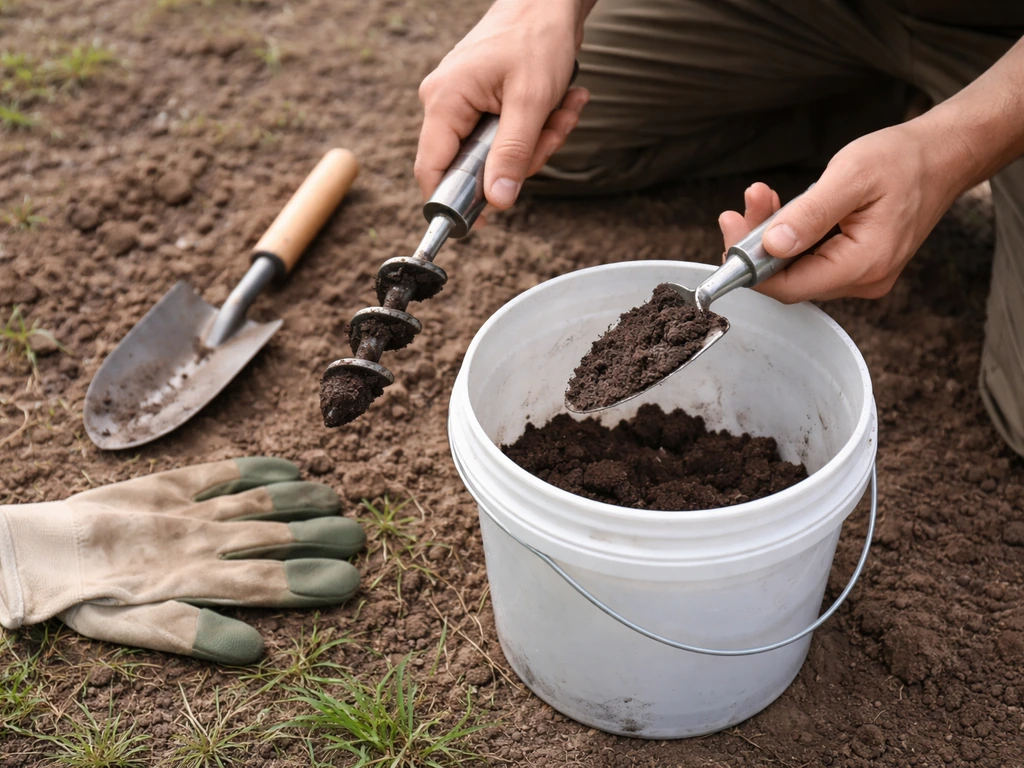
Do not guess. Testing takes an hour and saves years of frustration. Here is what to do before you plant a single cashew tree.
Testing soil pH
For pH, collect a composite sample from the top 8 inches (about 20 cm) of your planting area, following University of Delaware extension guidance. Take small plugs from at least 6 to 8 spots across the planting zone and mix them together in a clean bucket. Send the composite sample to a local cooperative extension soil lab or use a calibrated electronic pH meter. Basic pH test kits from garden centers are acceptable for a rough read, but a lab test gives you the buffer pH value as well, which tells you how much lime or sulfur you would actually need to shift the pH, not just where it currently sits. Target: 5.6 to 7.3.
Testing drainage
For drainage, dig a hole about 30 cm wide and 30 to 45 cm deep. Fill it with water and let it drain completely. Fill it again and time how long it takes to drain. Well-draining soil empties in 1 to 3 hours. If the hole still holds water after 6 to 8 hours, you have a drainage problem that needs to be addressed before cashews go in. Also dig down to 90 cm in a separate test hole and note the soil texture and color as you go. Blue-gray mottling in the subsoil indicates regular waterlogging, even if the surface looks dry. Check the same hole after a heavy rain to see how high water rises.
Checking salinity
If you are in a coastal region or an area with a history of salt intrusion, it is worth testing electrical conductivity (EC) as part of your soil lab submission. Keep it below 1 mmhos/cm. If your irrigation water is the concern, EC below 1.48 dS/m is the safer target based on current research.
Soil amendments and bed setup for cashews (what to add and what to avoid)
If your soil is close to the ideal profile but needs some adjustment, there is a practical order of operations. Start with what matters most.
Improving drainage and texture
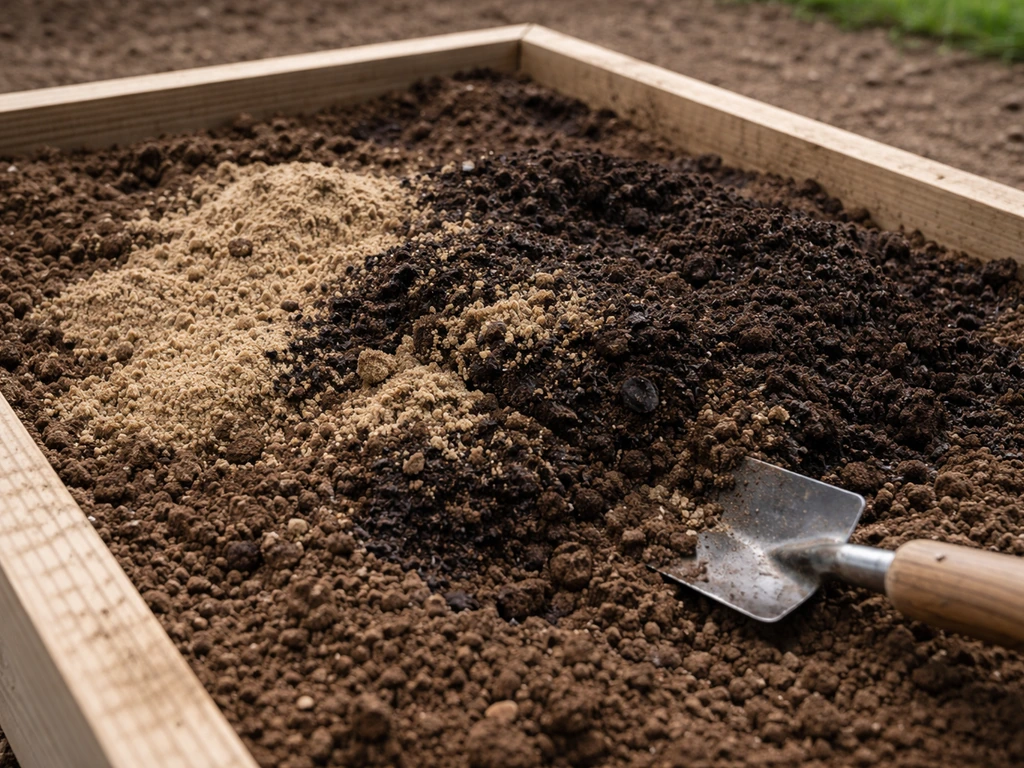
If your surface soil is heavier than sandy loam, work in coarse sand and compost to open up the structure. Aim for a final organic matter content of at least 2%, with 5% being a better target for long-term root health, based on University of Maryland Extension guidelines. Compost improves both drainage in clay soils and moisture retention in pure sand, which is why it is the most versatile amendment you can add. Do not add fine sand alone to clay, because that combination can actually produce a cement-like texture. Coarse grit or aged compost mixed thoroughly is the right approach.
Where native soil is genuinely problematic, a raised bed is a real option for younger or smaller-scale cashew plantings. Oregon State University Extension describes raised beds as mounded or framed soil that gives you direct control over the growing medium. Build the bed at least 30 to 45 cm high with a sandy loam mix and incorporate compost throughout. This sidesteps poor drainage in the native soil to a degree, though the water table underneath still needs to not be too shallow.
Adjusting pH
If your pH is below 5.6, you will need to apply lime. Use agricultural lime (calcium carbonate) and choose a product with a range of particle sizes, since finer particles raise pH faster while coarser particles provide longer-lasting buffering, as noted by LSU AgCenter and Ohio State Extension. The exact rate depends on your buffer pH from the lab test, so do not apply lime without that number. A lab recommendation beats any rule-of-thumb quantity.
If pH is above 7.3, elemental sulfur is the standard amendment to bring it down. Work it into the soil well ahead of planting since soil bacteria need time to convert sulfur to sulfuric acid, and that process takes weeks to months depending on temperature and moisture. Again, apply based on a lab recommendation, not guesswork.
What not to add
Avoid anything that will slow drainage further. Heavy applications of peat or fine clay-based amendments are counterproductive in soils that are already marginal on drainage. Avoid over-liming, which can push pH above 7.3 and lock out nutrients. If salinity is already borderline, steer clear of fertilizers or amendments with high salt indexes, particularly potassium chloride or certain synthetic nitrogen sources, at least until the tree is well established.
When to choose a different site instead of trying to amend
Honest answer: some sites are not worth trying to fix for cashews. Soil amendment can close a small gap, but it cannot overcome fundamental site problems. Knowing when to walk away saves time, money, and a lot of dead trees.
| Problem | Amendable? | Recommended action |
|---|---|---|
| pH 5.0 to 5.5 (slightly below range) | Yes | Apply lime based on buffer pH lab result before planting |
| pH 7.4 to 7.8 (slightly above range) | Yes, with effort | Apply elemental sulfur; retest after 2 to 3 months |
| pH above 8.0 | Difficult to impractical | Choose a different site; persistent alkalinity is hard to correct at scale |
| Surface soil heavy loam with good subsoil | Yes | Incorporate coarse sand and compost into the top 30 to 45 cm |
| True clay soil throughout the profile | Marginal | Raised beds may help at small scale; large-scale planting not advisable |
| High water table (less than 1.5 m in rainy season) | No | Do not plant cashews here; drainage infrastructure rarely solves deep water-table issues cost-effectively |
| Impermeable hardpan above 5 m depth | Sometimes | Subsoiling or ripping may help if the pan is thin; thick hardpan requires site change |
| Soil salinity above 1 mmhos/cm | Only if source is controllable | Leach with good-quality water and test repeatedly; coastal salt intrusion usually means find another site |
| Soil depth less than 90 cm to bedrock | No | Cashew needs deep rooting; shallow soil over rock is a no-go |
The clearest signal to find a new site is a persistent high water table or a heavy, poorly drained soil you cannot physically modify at planting depth. No amount of surface compost fixes saturated subsoil, and cashew roots will eventually reach it. If your site passes the drainage test and falls within or close to the pH range, amendment is absolutely worth it. If you are wondering where shea nuts grow, climate and well-drained conditions matter just as much as soil details where do shea nuts grow. Soap nuts are harvested from shrubs and trees, but whether you can grow them depends heavily on local climate and soil conditions similar to where they naturally thrive where do soap nuts grow. If it fails on water table depth or has true clay throughout a 90 cm profile, your effort is better spent identifying a better location.
It is also worth noting that where cashews grow geographically matters alongside soil type. Cashew cultivation is concentrated in tropical and subtropical regions with distinct dry seasons, including major producing areas in India, Brazil, Vietnam, and parts of East Africa. Those regions share something beyond warm temperatures: they typically have the well-drained, lateritic or sandy soils that cashew prefers. If you are wondering where cashews grow in Australia, focus on regions with warm conditions and well-drained soils like those lateritic or sandy areas described here cashew trees in a suitable climate. If your region's native soils are mostly heavy or saline, that is not a coincidence, and it is worth factoring into your decision about whether to invest in amendment or site change.
FAQ
Can cashew nuts grow in clay soil if I add compost or sand?
Compost alone will not solve the core issue of oxygen movement. If the clay or dense subsoil persists through about 90 cm, the tree can still hit waterlogged or low-oxygen conditions later. If you can improve drainage only at the surface, cashews may struggle even if they start well. Use the 90 cm texture check and the percolation hole timing to decide, not just the top few inches.
What should I do if the pH is slightly outside 5.6 to 7.3?
If the lab result is just a little off, pH adjustment may be worthwhile because cashew tolerates a broader range than many crops. The key is buffer pH, it determines how much lime or sulfur is actually needed. Avoid applying lime or sulfur based on garden kit numbers alone, lab buffer pH prevents overcorrection that can shift nutrient availability.
How reliable is the “pH test kit from a garden center” for cashews?
It can help you screen quickly, but it often cannot estimate the buffer pH, so it may not show whether you need a small or large treatment. For cashews, use a lab test when you plan amendments, especially lime or sulfur, because wrong doses can push pH beyond 7.3 or fail to raise or lower it enough.
Is it safer to plant cashews on higher ground if my low area drains slowly?
Usually yes, select the spot where the water table stays deeper during the rainy season. Even if a high spot improves drainage, also check for perched water after heavy rain and for mottling in the subsoil. Cashews can still fail if an impermeable layer forces water to sit above it.
Does cashew tolerate short waterlogging, like a day or two after heavy rain?
Cashew is sensitive to root-zone oxygen loss, and even short flooding can cause lasting damage if it repeatedly happens or if the soil stays saturated longer than expected. Your practical check is the drainage test timing and how the site behaves after heavy rain, not how it looks after a normal week.
What is the difference between salinity from irrigation water and salinity from soil?
Soil salinity can build over time from the local geology and limited leaching. Irrigation water salinity can add salts each season. If you suspect coastal salt intrusion, test soil electrical conductivity, if irrigation is the concern test irrigation EC too, then decide whether you need blending, improved drainage for leaching, or a different water source.
Can I reduce the risk by using a raised bed if my site has a shallow water table?
A raised bed helps with surface drainage and soil texture, but it does not change the underlying water table. If the water table is too shallow at planting depth or the subsoil remains saturated, roots can still reach it. Raise beds are most useful when the main limitation is native surface structure, not a consistently shallow or perched groundwater layer.
How do I know if my site has a hardpan or impermeable layer that will block cashew roots?
Look beyond surface drainage by doing the deeper assessment and observing soil color changes. Impermeable layers can force water to perch above them, you may see mottling and slow re-drainage even when the top looks dry. The article’s guidance on checking drainage after heavy rain and noting subsoil texture helps identify this.
Should I fertilize at planting to compensate for poorer soil?
Avoid relying on fertilizer to “fix” drainage and pH. Cashews establish best when the root zone stays aerated and pH is in range, fertilizer cannot prevent oxygen depletion in waterlogged conditions. If you need to amend fertility, do it after the tree is actively growing and conditions for root health are met.
Do cashews need a lot of organic matter, or can I keep it low?
Organic matter is not just nutrition, it supports structure and moisture balance. Aim for at least about 2% organic matter, with higher levels often improving long-term root health. However, if you are already marginal on drainage, use compost and coarse, well-mixed amendments rather than fine peat-like materials that can reduce aeration.
How do I decide whether to amend the site or choose a new one?
Use a threshold-based decision. If the drainage test shows slow emptying after 6 to 8 hours, if mottling indicates recurring subsoil waterlogging, or if the 90 cm profile is truly heavy and hard to drain, changing sites is often more cost-effective than repeated amendments. If drainage passes and pH is close, targeted corrections are usually worth doing.