Cashew trees (Anacardium occidentale) are native to the coastal tropics of northeastern Brazil and southeastern Venezuela, and today they grow commercially across a wide belt of tropical countries stretching from West Africa to South and Southeast Asia. If you are trying to figure out whether a cashew tree can grow where you live, the short answer is: only if you have a frost-free climate, warm temperatures year-round, and well-drained soil. Everything else is detail, but the detail matters, so let's work through it.
Cashew Fruit Where Does It Grow and How to Check Your Climate
Marcus Hendricks
12 Apr 2026
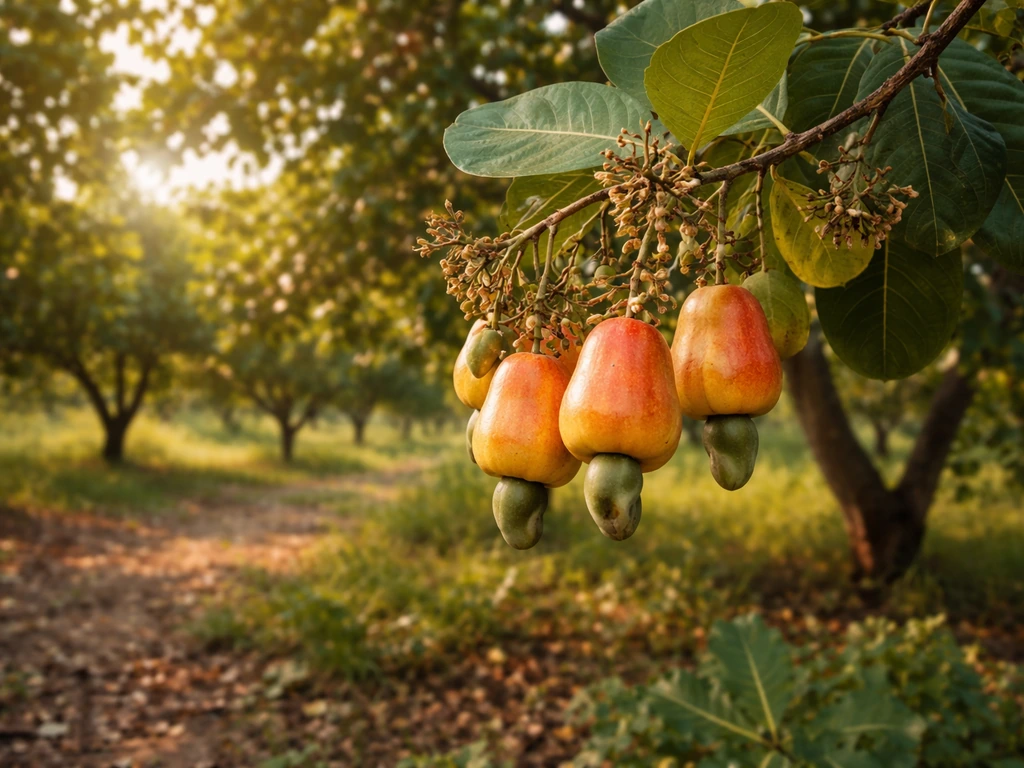
Where cashew trees originally come from
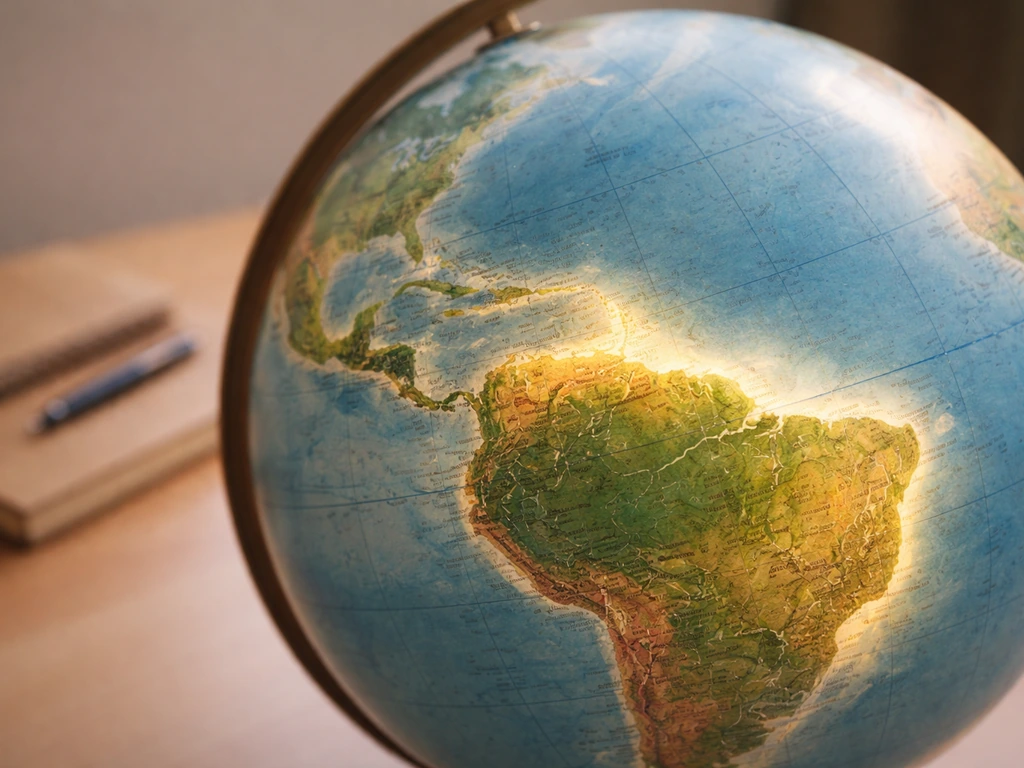
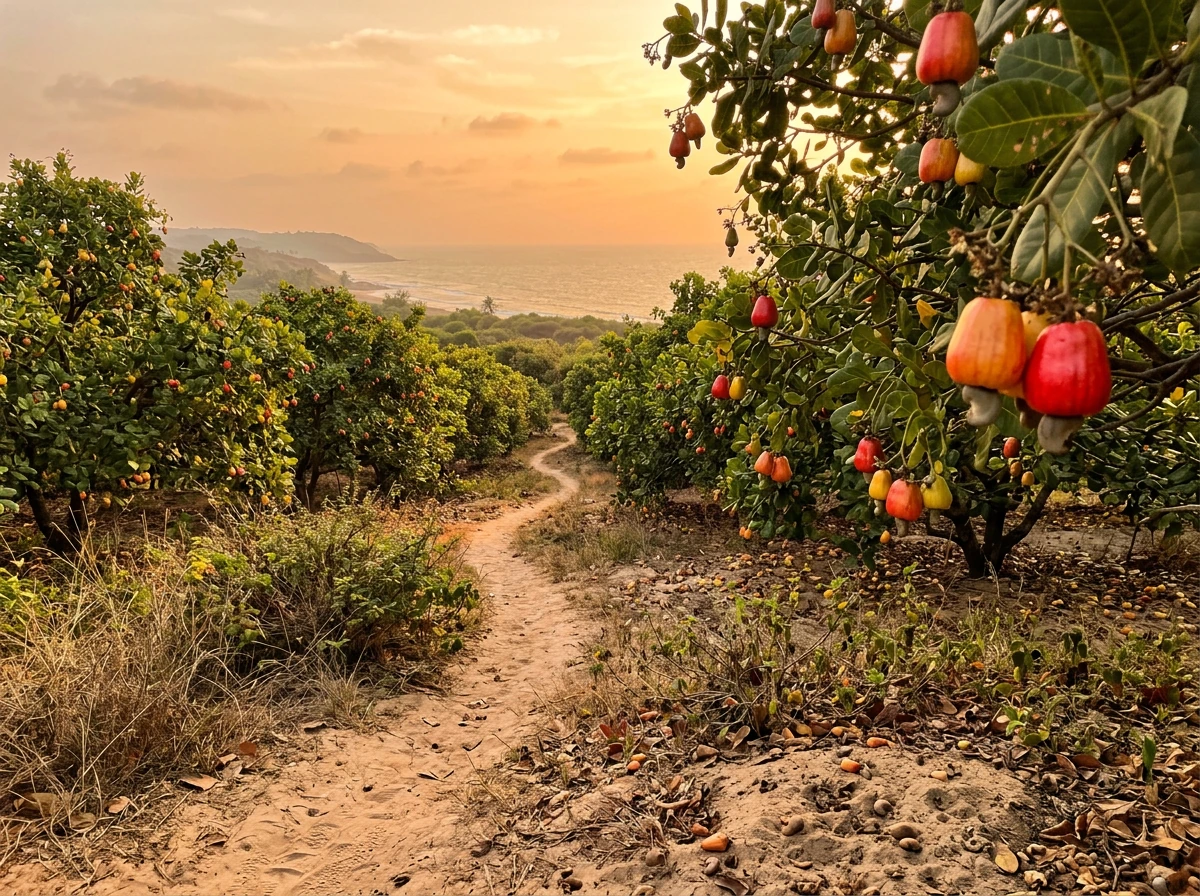
The cashew's native range runs from the Caribbean island of Trinidad through northeastern Brazil, with the strongest evidence pointing to the coastal strip of northern and north-eastern Brazil as the true center of origin. In their wild habitat, cashew trees grow in what Brazilians call restinga, a scrubby coastal vegetation that sits on sandy dunes right along the Atlantic shore, exposed to onshore winds and salt spray. That origin story tells you a lot about what the tree is built for: thin, poor soils, intense sun, occasional drought, and zero frost tolerance. It did not evolve on rich jungle floor or anywhere near a freezing winter.
Portuguese traders picked cashew up in the 1500s and spread it around the tropical world, which is why it now feels like it has always been part of the landscape in places like India, Mozambique, and Vietnam. Portuguese traders picked up cashew in the 1500s and spread it through the tropical world, helping explain its long-standing presence in places like India, Mozambique, and Vietnam blank" rel="noopener noreferrer">Portuguese traders picked cashew up in the 1500s. But it is an import everywhere outside the Americas. For a deeper look at the full geographic picture of where cashew nuts grow across both their native and introduced ranges, the biology and the trade routes are genuinely intertwined.
Where cashew trees grow today
Today the major cashew-producing countries are spread across three continents, all sharing one thing: a tropical or near-tropical climate. The current top producers based on international agricultural data include Côte d'Ivoire, India, Vietnam, the Philippines, Tanzania, Benin, Indonesia, Brazil, Burkina Faso, Mozambique, Guinea-Bissau, and Ghana. West Africa has become the dominant producing region in recent decades, but India has the longest continuous cultivation history outside the Americas.
India in particular is a case study in how well cashew adapts to a specific monsoon-driven tropical climate. The tree thrives in states like Goa, Kerala, Karnataka, Maharashtra, and Odisha, where a clearly defined wet and dry season drives the flowering and fruiting cycle. If you want to understand the regional specifics, the coastal belt of the subcontinent is a good model: where cashew trees grow in India explains how those monsoon patterns and soil types interact with the crop in practice.
Australia grows cashew on a smaller scale but is a useful reference because the published agronomic data from Queensland's Department of Primary Industries is detailed and practical. The northern parts of Queensland and the Northern Territory fall within the right climate band. If you are in or near Australia and wondering whether cashew is feasible locally, the article on where cashews grow in Australia breaks down the specific regions and conditions.
The climate requirements that unite all these growing regions are consistent. Cashew tolerates rainfall anywhere from 500 mm to 4,000 mm per year, which makes it one of the more adaptable tropical trees in terms of moisture. What it cannot tolerate at all is frost. The FAO is unambiguous on this: cold and frost are the hard limits for cashew cultivation, and the Queensland agronomic guidance adds a concrete threshold, mean monthly minimum temperatures should not fall below 10°C (50°F). Below that, expect damage or death, especially in young trees.
How the cashew fruit actually forms, and why it matters for growers
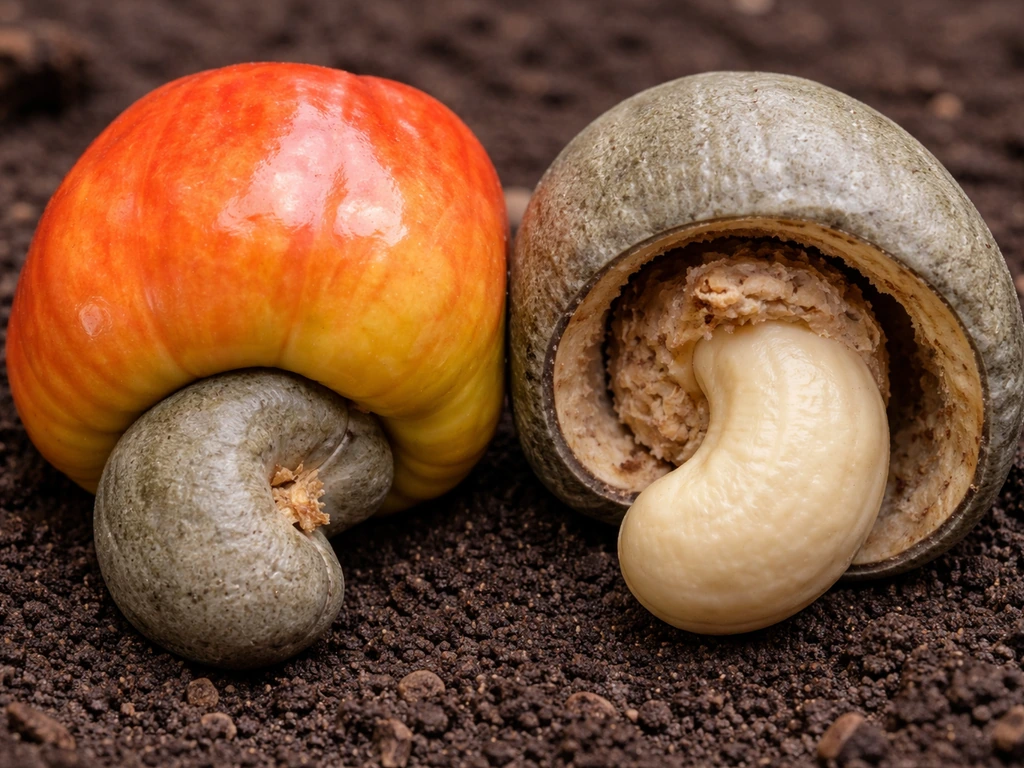
Here is the part that confuses almost everyone: when people say "cashew fruit," they might mean two completely different things, and understanding which is which is important if you are trying to grow the plant and harvest something edible.
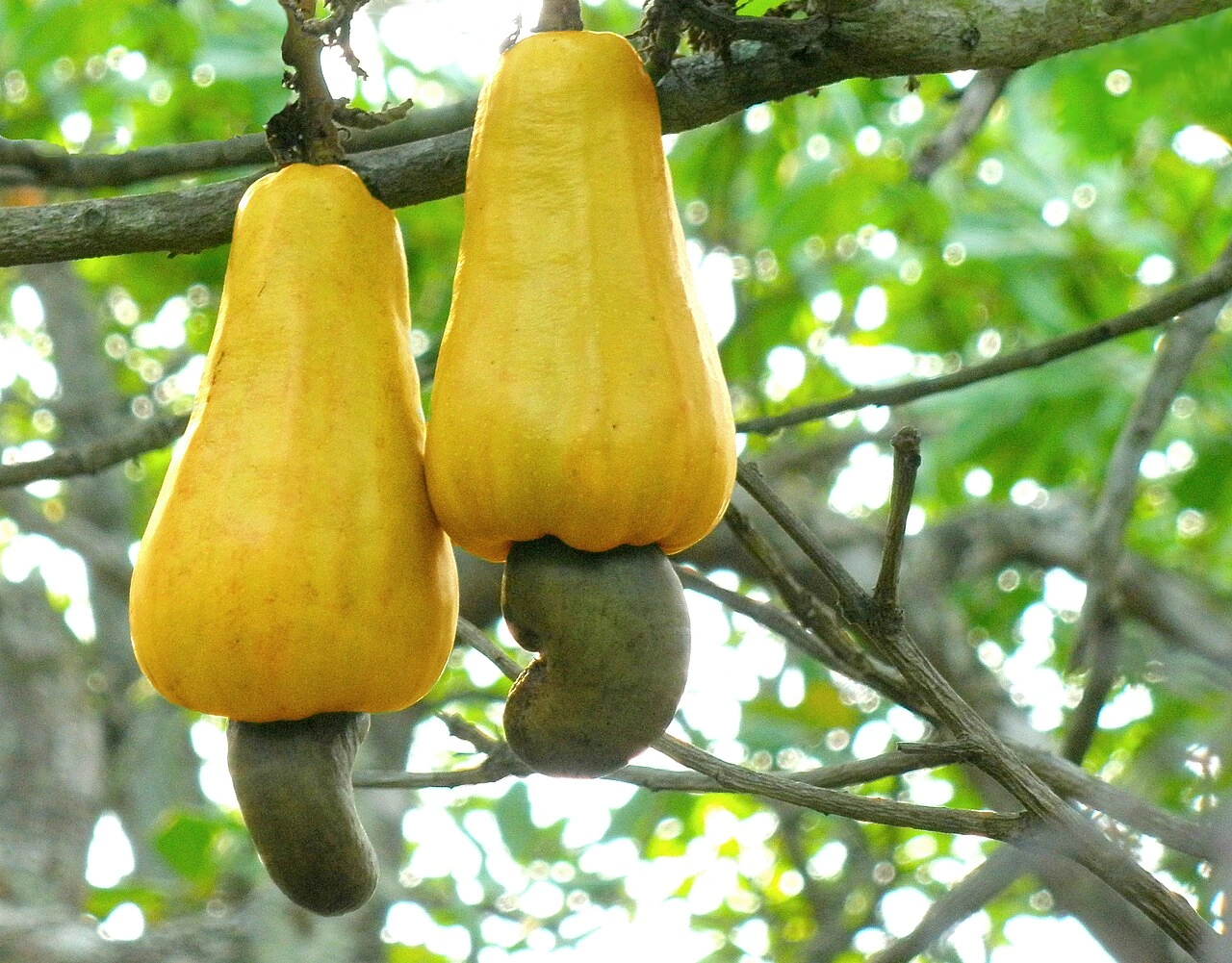
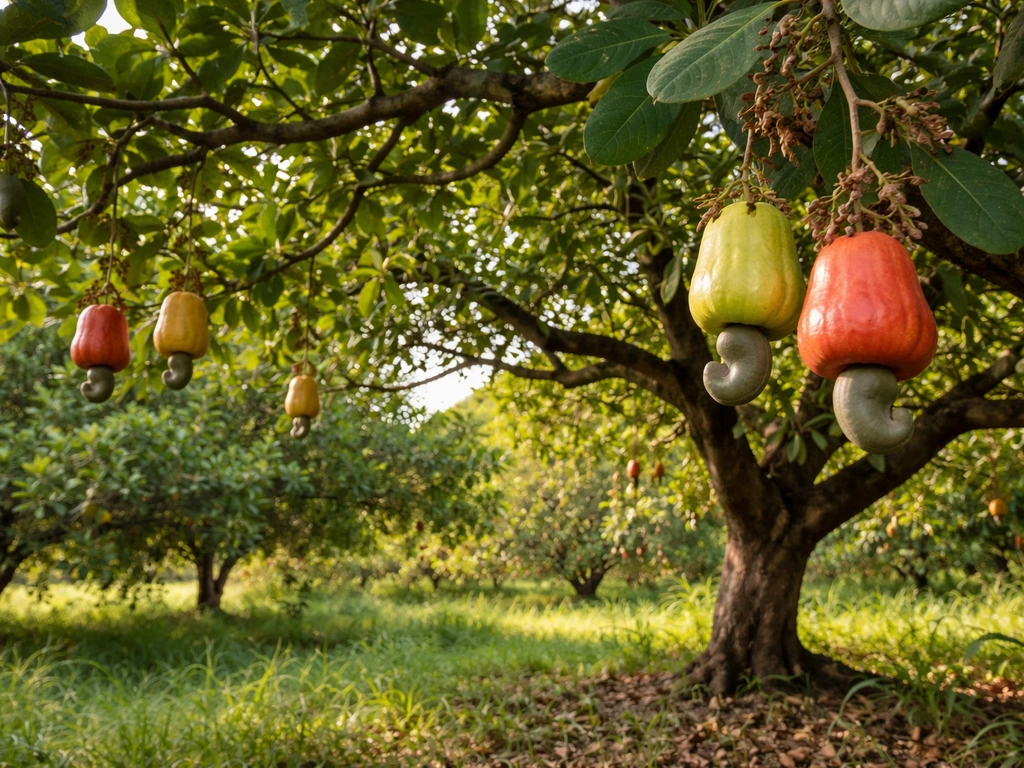
The cashew tree produces a structure that botanists call a pseudofruit, also known as the cashew apple. This is the large, soft, pear-shaped, red or yellow thing that looks like a fruit, juicy, fragrant, and edible. But it is not a true fruit in the botanical sense. It is formed from the swollen pedicel (the stalk), not from the flower's ovary. FAO describes it as a false fruit consisting of a swollen peduncle with a seed attached. The seed is the kidney-shaped, gray-shelled structure that hangs from the bottom of the apple, and that seed, once processed, is what we call the cashew nut. The true botanical fruit is the hard shell encasing that seed.
So to be precise: the cashew apple is a pseudofruit (sometimes called a hypocarpium), the hard shell at the bottom is the true botanical fruit, and the edible white kernel inside that shell is the seed. In everyday growing and cooking conversations, "cashew fruit" almost always refers to the cashew apple. The "cashew nut" is the seed. Both come from the same tree, and you can only get one if the tree successfully grows and fruits, which requires the same climate conditions regardless of which part you want.
The reason this matters practically: the cashew apple is highly perishable and rarely exported, so most people outside the tropics have never seen or tasted it. If you grow a cashew tree where the climate supports it, you will get both the apple and the nut together from every fruit. The apple is actually produced in far greater volume by weight than the nut, and in many producing countries it is juiced, fermented, or eaten fresh. People often wonder whether cashew grows on trees and are surprised to learn that both the soft apple and the hard-shelled nut come from the same tree structure, it is one of the more unusual fruiting arrangements in the plant world.
What you actually need to grow a cashew tree
Cashew is not a beginner-friendly tropical crop. It is more forgiving than some tree crops in terms of soil and rainfall, but it is completely unforgiving about cold. Here is what the site requirements look like in practice:
Temperature and climate
You need a frost-free environment, full stop. UF/IFAS research confirms that cashew trees will not tolerate even short exposures to freezing temperatures. Young trees are particularly vulnerable. The minimum mean monthly temperature threshold is 10°C (50°F), and for real production you want average temperatures between 24°C and 28°C (75°F to 82°F). A defined dry season of several months is actually helpful for triggering flowering, cashew trees that get consistent moisture year-round without a dry break can struggle to fruit reliably.
Soil requirements
Remember those coastal Brazilian sand dunes? Cashew likes well-drained, light-textured, deep soils. It absolutely cannot handle waterlogged or swampy ground, poor drainage is one of the most common reasons established trees fail. UF/IFAS recommends deep, well-drained sandy soils with a pH of 4.5 to 6.5. Queensland DPI gives a slightly broader preferred pH band of 5.5 to 7.5, while ComCashew training materials cite 5.6 to 7.3 as suitable. On limestone-based soils with higher pH, trees commonly develop deficiencies of iron, zinc, and manganese. For comprehensive guidance on which soils cashew nuts grow best in, the pH and drainage requirements are more critical than soil fertility, cashew handles poor nutrient levels better than it handles wet feet or alkaline conditions.
If you are on a site with a high water table, you can sometimes work around it by planting on raised mounds, which is a technique used by Florida growers to manage the shallow water tables common in south Florida's sandy lowlands.
Planting zones
In the USDA Plant Hardiness Zone system, cashew falls into zones 10 through 12. Zone 10 has average annual extreme minimum temperatures around -1°C to 4°C (30°F to 40°F), which is borderline for cashew, young trees will likely be damaged in a bad winter even in zone 10. Zones 11 and 12 are genuinely frost-free and represent the practical sweet spot. In the United States, this limits cashew to extreme south Florida (Miami-Dade and Monroe counties), Hawaii, and Puerto Rico. If you want to know the specific U.S. limitations in detail, the article on where cashew trees grow in the U.S. covers those geographic constraints.
Common misconceptions about cashew fruit vs cashew nut
The biggest misconception is that the cashew nut is the fruit. It is not. The nut is the seed of the true botanical fruit (the hard shell structure), which is itself attached to the end of a pseudofruit (the cashew apple). Most people who have only encountered the nut at a grocery store are several steps removed from the actual plant biology, so this confusion is understandable. But if you are trying to grow cashew, you need to know that the "fruit" you eat and the "nut" you roast are both produced by the same tree, you are not choosing one or the other.
Another common misconception: that cashew is a nut in the same botanical category as almonds or walnuts. It is not. Cashew is a seed enclosed in a caustic-shell true fruit that is botanically more similar to a drupe. The cashew apple is a bonus structure that evolved to attract animals to disperse the seed. In many tropical countries, locals eat the apple fresh and discard the nut, or ferment the apple juice into a mild alcohol, while export markets have historically focused almost entirely on the nut. Both are nutritious and both are edible; they just require different handling.
It is also worth flagging that cashew is part of the Anacardiaceae family, which includes mangoes and poison ivy. The shell of the cashew true-fruit contains urushiol-related compounds (CNSL, cashew nut shell liquid) that can cause skin reactions similar to poison ivy. This is why raw cashews are never sold in their shell commercially, all processing involves roasting or steaming to neutralize those compounds before the kernel is handled or eaten. If you grow cashew at home and try to extract the nut yourself, wear gloves.
Can your location actually support a cashew tree?
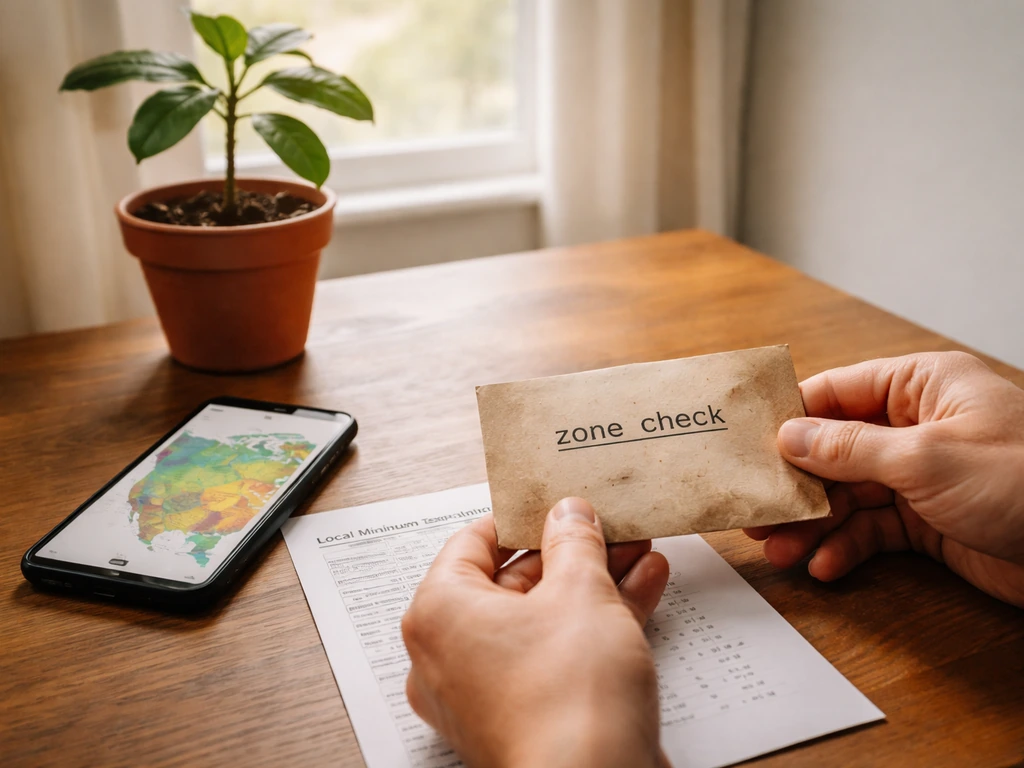
Here is how I would walk through this assessment for any reader trying to figure out feasibility before investing in a tree.
- Check your USDA hardiness zone first. The official USDA Plant Hardiness Zone Map is based on average annual extreme minimum winter temperatures and is the standard first screen for frost-sensitive crops. If you are in zone 9 or below, cashew is not a realistic outdoor option in the ground. If you are in zone 10, you are borderline — a protected microclimate might work, but you are gambling on frost-free winters every year. Zones 11 and 12 are your target.
- Look at your actual winter low temperatures over the past 10 years, not just the zone. Zones are averages; a single cold snap below 0°C can kill or severely damage a young cashew tree. If your area has had freezes in the last decade, factor that in.
- Assess your dry season. Cashew benefits from a dry period of 3 to 4 months that triggers flowering. If you live in a region with consistent rainfall year-round and no dry break, fruit set can be poor even if the temperature is right.
- Check your soil drainage. Dig down 60 cm (about 2 feet) and see if you hit water or dense clay. Cashew roots need to go deep — 1 to 2 meters — into freely draining soil. If you hit a water table or impermeable layer, you will need to raise the planting site or reconsider.
- Confirm your soil pH. Aim for 5.5 to 6.5 if you want reliable growth without micronutrient management. If you are on alkaline soil (limestone areas, concrete-adjacent sites), you will fight iron chlorosis constantly.
- Think about space. Cashew trees grow large — typically 8 to 14 meters tall with an equally wide canopy. This is not a container-garden crop for most people. Dwarf varieties exist and are used commercially in some regions, but even those need significant space and full sun.
If you are outside the tropics and subtropics but still want to experiment, a large container kept in a warm greenhouse or sunroom can work for a small tree. You will rarely get fruit production, but it is possible to keep a tree alive as a novelty. That said, be honest with yourself about the goal: a cashew tree grown in a cold climate will likely never produce either a cashew apple or a harvestable nut.
How cashew compares to other tropical nut crops for site selection
If cashew does not fit your climate, it helps to know where it sits on the spectrum relative to other tropical and subtropical nut crops.
| Crop | Minimum Zone (USDA) | Frost Tolerance | Soil Preference | Dry Season Needed? |
|---|---|---|---|---|
| Cashew (Anacardium occidentale) | 10–12 | None — even brief frost is damaging | Well-drained sandy, pH 4.5–7.5 | Yes, benefits from 3–4 month dry period |
| Macadamia (Macadamia integrifolia) | 9–11 | Light frost tolerated briefly | Well-drained, slightly acidic | No strict requirement |
| Pecan (Carya illinoinensis) | 6–9 | Cold-hardy, requires some winter chill | Deep, well-drained loam | No |
| Pistachio (Pistacia vera) | 7–11 | Cold-hardy, needs winter chill hours | Well-drained, alkaline OK | Yes, dry summers preferred |
| Shea (Vitellaria paradoxa) | 10–12 | None — strictly tropical | Sandy savanna soils | Yes, defined dry season |
Shea is worth mentioning here because it shares some climate overlap with cashew and is sometimes grown in similar West African agroforestry systems. If you are in a tropical savanna climate and wondering about alternatives, the article on where shea nuts grow gives you a useful comparison point for that region. Similarly, if you are exploring other trees with interesting nut structures and want to understand how different species occupy different ecological niches, the article on where soap nuts grow covers another tropical/subtropical tree with a very different but equally distinctive biology.
Your practical next steps
If you have read through all of this and believe your location might be viable, here is what to do next. Start by using the USDA Plant Hardiness Zone Map to confirm your official zone, it is the fastest way to run a first screen on whether winter temperatures are in the ballpark. If you are in zone 10 or above in the U.S., or in an equivalent tropical or subtropical zone elsewhere, the next step is to contact your local agricultural extension service or tropical fruit growers' association. They will know whether cashew has been successfully grown in your specific county or district, which dwarf or commercial varieties perform best locally, and what pest and disease pressures to expect.
If you are clearly outside the viable zone, zone 9 or below in the U.S., or in a temperate or continental climate, the honest advice is to redirect that energy toward a nut crop actually suited to your winters. Pecans, hazelnuts, chestnuts, or almonds (depending on your specific zone and chill hours) will give you far better returns for the effort. Cashew is a rewarding tree to grow in the right climate, but it is not a crop you can brute-force past its cold limits.
FAQ
Can I grow cashew in a place that gets occasional frost, even if my average winter temperature looks warm?
Cashew is extremely frost sensitive. Even short freezing exposures can kill or heavily damage trees, especially young ones. If your forecast shows any frost risk in winter, assume it is not reliably feasible outdoors, and container or greenhouse growing would only help for survival, not dependable fruiting.
What is the difference between “cashew apple” and “cashew fruit,” and which one would I actually harvest at home?
Most people mean the cashew apple, a pseudofruit formed from the swollen stalk, which is perishable and typically eaten or fermented soon after harvest. The edible nut is the kernel inside the hard shell attached to the bottom of that structure, so you get both only if the tree fruits in the right climate.
How can I tell if my soil drains well enough for cashew before planting?
Do a simple drainage test by digging a hole, filling it with water, and timing how fast it empties. Cashew fails most often from waterlogged roots, so aim for consistently rapid drainage and avoid sites with a high water table unless you plant on raised mounds or berms.
If my pH is outside the recommended range, can I still grow cashew by adding fertilizer or lime?
Fertilizer helps less than drainage and avoiding alkaline stress. On higher pH limestone soils, cashew often develops micronutrient deficiencies, so instead of heavy liming, focus on soil testing and micronutrient correction guidance from a local extension service, because the underlying chemistry can limit growth.
Does cashew need a dry season to fruit, or will year-round rain work?
A defined dry break helps trigger flowering and more consistent fruiting. If your climate is wet all year, the tree may leaf out but fruiting can become unreliable, so plan on mimicking a seasonal dry period only if you can manage irrigation carefully.
Will a container-grown cashew produce cashew apples or cashews?
Container trees can sometimes be kept alive indoors or in a greenhouse at warm temperatures, but fruiting is uncommon. If you do get flowers, you still need the right temperature pattern and a strong seasonal rhythm plus pollination and adequate tree maturity.
Do I need multiple cashew trees for pollination and good yields?
Cashew is generally managed as an orchard crop where pollination conditions support production, but home growers often underperform when the tree is isolated from other blooming cashew or suitable pollinators. If you are planting outdoors, ask your local extension service whether cross-pollination or nearby compatible varieties matter in your region.
What temperatures should I use to decide if my area is “close enough,” and how strict is that 10°C minimum?
Use mean monthly minimums rather than occasional daytime highs. If mean monthly minimums drop near or below 10°C (50°F), expect damage risk, and a bad winter can wipe out young trees. For productive growth, warmer averages around the mid to high 20s Celsius are typically needed.
If I’m in USDA zone 10, can I still plant cashew outdoors with protection?
Zone 10 is borderline. Young trees are vulnerable to winter lows, and protective measures may not reliably prevent root and crown damage during cold snaps. If you live there, treat cashew as a high-risk experiment and consider a structure-based approach (greenhouse or very robust frost protection) rather than relying on outdoor survival.
Is it safe to handle cashew shells or try to process nuts at home?
The shell contains irritating oil compounds related to urushiol, which can cause dermatitis in sensitive people. Commercially, shells are never sold for direct handling, and home extraction should be approached with caution, using gloves and avoiding skin contact, eye exposure, and poor ventilation.
Why do cashew trees sometimes grow well but produce no “cashew apples” or nuts?
The most common reasons are frost or cold stress, insufficient warm season length, poor drainage that stresses roots, and lack of a dry period to trigger flowering. Nutrient issues can occur, but they usually matter less than temperature and water management for getting consistent fruiting.