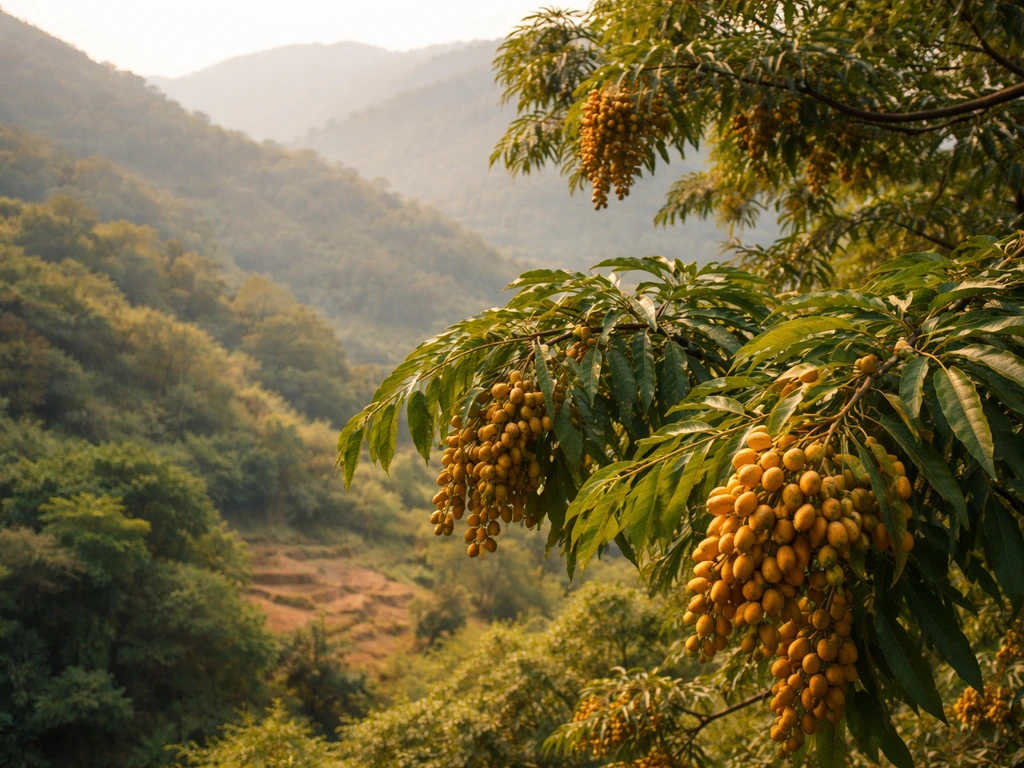
Shea nuts grow on the shea tree (Vitellaria paradoxa), which is native to a roughly 6,000 km belt of West and Central African savanna stretching from Senegal in the west to Uganda and Ethiopia in the east. That belt is about 500 km wide, running through the semi-arid parkland zone just south of the Sahara. If you are looking for shea nuts, that is where they come from. The tree does not grow naturally anywhere else, and despite 54-plus years of attempts, it has not been successfully established outside Africa.
Where Do Shea Nuts Grow Naturally and Why It Matters
Marcus Hendricks
21 Apr 2026
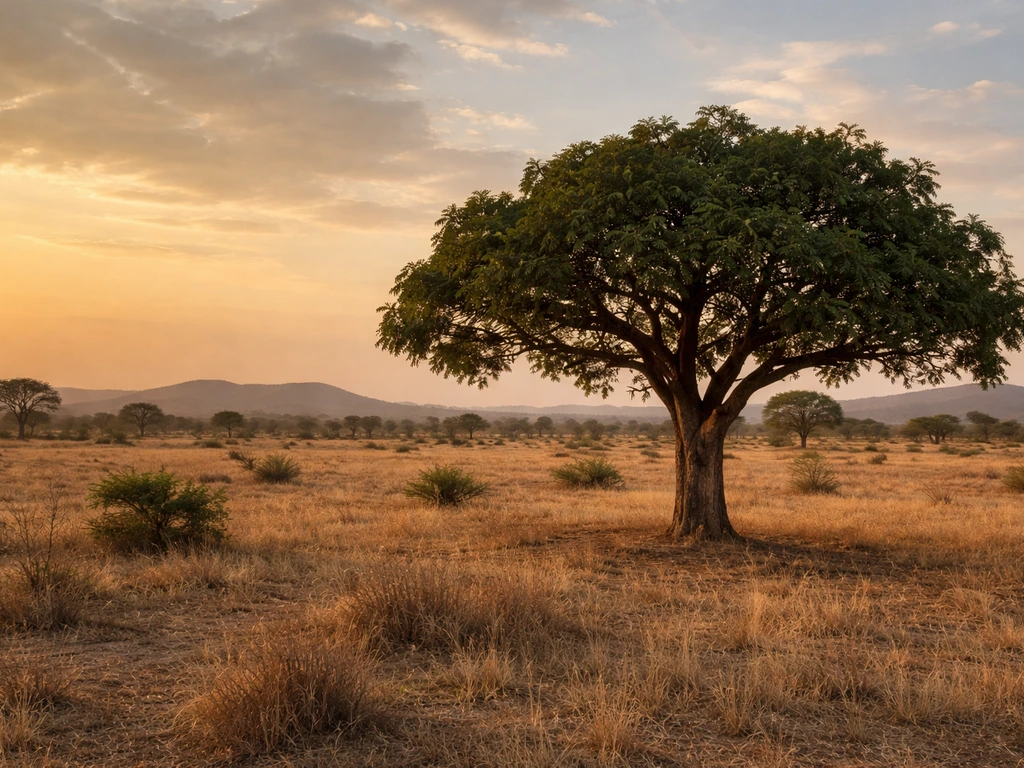
What the shea tree actually is and how nuts become butter
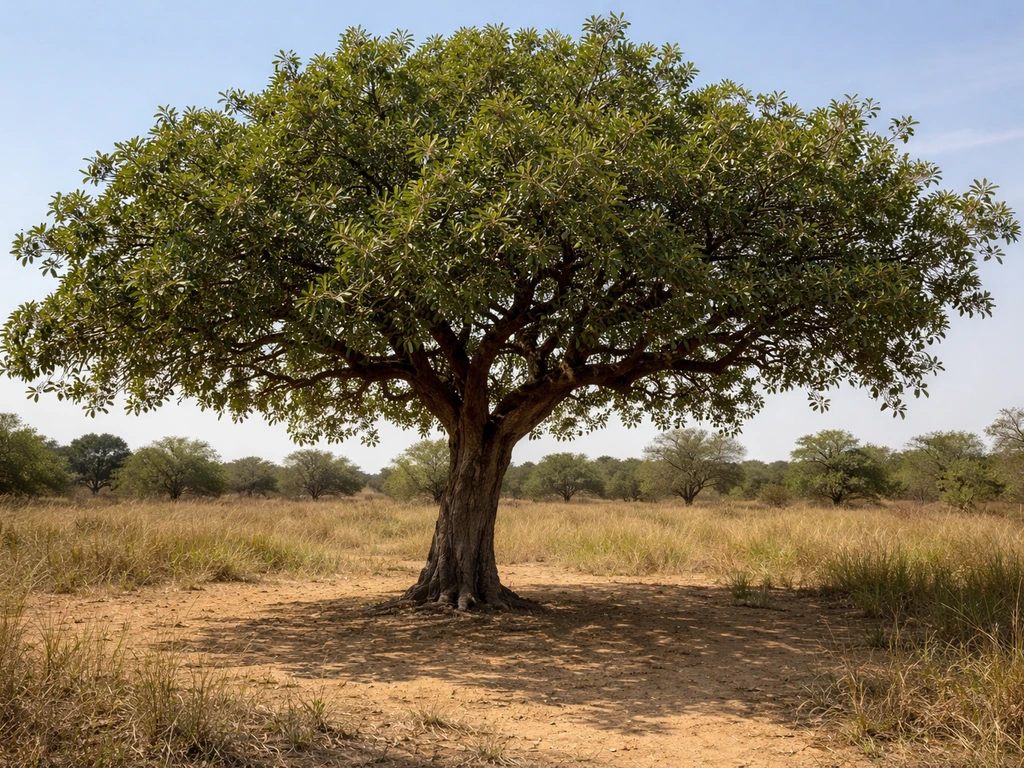
The shea tree is a slow-growing, long-lived species that reaches roughly 15 to 20 metres tall. It is not a nut tree in the same structural sense as a walnut or cashew tree. Instead, it produces a fleshy fruit, and inside that fruit is a seed, commonly called the shea nut or shea kernel. That kernel contains 40 to 57 percent fat by weight, depending on the subspecies and region. When the kernel is extracted, dried, cracked, roasted, and pressed, that fat becomes what we call shea butter.
There are two main subspecies. Vitellaria paradoxa subsp. paradoxa is the West African type, and its fat is a solid butter at room temperature, which is why it dominates the cosmetics and food industries. Vitellaria paradoxa subsp. nilotica is the East African type found mainly in Uganda and South Sudan, and it produces a softer, more liquid oil. Both come from the same species, but the end product behaves differently, which matters if you are trying to understand what 'shea butter' actually refers to on a product label.
The tree is also described as a parkland species, meaning it does not grow in closed-canopy forest. It naturally forms open, park-like stands across agricultural savannas, often maintained deliberately by farming communities over centuries. It is light-demanding, thrives in open conditions, and is deeply integrated into West African agroforestry systems. This is an important distinction from many other nut trees: shea is not domesticated in the conventional sense, but it is far from wild.
The exact geography: countries and climate zone
The shea belt passes through Senegal, Gambia, Guinea-Bissau, Guinea, Mali, Burkina Faso, Côte d'Ivoire, Ghana, Togo, Benin, Nigeria, Niger, Cameroon, Central African Republic, South Sudan, Uganda, and into parts of Ethiopia. Burkina Faso and Ghana are the two biggest production countries for shea butter exports, but the natural range is much wider than trade statistics suggest.
The climate type across this belt is tropical savanna or Sudano-Sahelian, characterized by a single rainy season and a long dry season. Annual rainfall sits between roughly 500 and 1,400 mm, with the core commercial-quality range closer to 600 to 1,000 mm. PROTA (via Pl@ntUse) reports that subsp. paradoxa occurs where mean annual rainfall is about 600, 1,400 mm, with a dry season lasting roughly 5, 8 months the core commercial-quality range closer to 600 to 1,000 mm. There is a marked dry season lasting 6 to 8 months. Mean annual temperatures across the range are 24 to 32°C. Altitude is generally low, from about 100 to 1,200 metres above sea level.
One of the most distinctive things about shea phenology is that the tree fruits during the dry season, not the wet one. The tree drops its leaves as the dry season sets in, flowers while leafless, and fruits begin forming before the rains return. This is the opposite of what many people expect, and it is directly tied to the tree's adaptation to its native climate. The harvest window aligns with the transition from dry to wet season, roughly April to June in most of the West African belt.
Climate and soil requirements in plain numbers
If you want to understand whether shea could grow somewhere outside its native belt, you need to look at specific climate thresholds rather than general descriptions. Here are the key figures to check against any location you are evaluating.
| Growing Factor | Shea Tree Requirement |
|---|---|
| Mean annual temperature | 24–32°C |
| Absolute minimum temperature | Not below ~21°C |
| Annual rainfall | 600–1,400 mm (core: 600–1,000 mm) |
| Dry season length | 5–8 months |
| Soil pH | ~6.5–7.0 (neutral to slightly acidic) |
| Altitude | ~100–1,200 m above sea level |
| Light requirement | Full sun / open canopy (light-demanding) |
| Drainage | Well-drained savanna soils; not waterlogged |
The minimum temperature figure is the one that eliminates most candidate regions outside the tropics immediately. A minimum of 21°C means the tree cannot tolerate cool nights, light frost, or even mild temperate winters. It is not a borderline subtropical species that can be pushed with microclimates. The tree genuinely needs warm nights year-round.
Soil type matters less than drainage and pH. Shea trees grow in various soil textures across their native range, from sandy to loamy profiles, but they do not tolerate waterlogged or compacted soils. Cashew nuts have different soil needs, so the soil type you choose depends on where the cashew trees naturally grow cashew nuts grow in which soil. A neutral to slightly acidic pH around 6.5 to 7.0 supports best nutrient availability. The parkland soils across the Sahel are often lateritic or sandy-loam, and the tree is adapted to relatively low-fertility soils, which is one reason it has not been aggressively replaced by more demanding crops in its native range.
Where you can and cannot realistically grow shea
Outside of the African savanna belt described above, the honest answer is: almost nowhere successfully. After more than 54 years of documented attempts to establish Vitellaria paradoxa outside Africa, including trials in China, there are no confirmed successful plantations. The climate mismatch is the primary barrier, specifically the combination of warm minimum temperatures, a genuine long dry season, and the specific seasonal rhythm the tree needs to flower and fruit correctly.
Here is a practical regional breakdown based on the climate requirements:
| Region | Feasibility | Main Limiting Factor |
|---|---|---|
| West/Central African savanna belt | Native range — fully suitable | None (this is where it belongs) |
| East Africa (Uganda, S. Sudan, Ethiopia) | Suitable for nilotica subspecies | Different subspecies, softer oil character |
| South Asia (India, Sri Lanka lowlands) | Marginal to unlikely | Rainfall seasonality mismatch, limited dry season data |
| Southeast Asia / humid tropics | Not suitable | Too wet year-round; no dry season |
| Southern USA / Mediterranean | Not suitable | Winter temperatures too low; frost risk |
| Australia (northern tropical zones) | Theoretically marginal | No confirmed establishment; climate trials absent |
| South America (savanna/cerrado zones) | Theoretical only | No confirmed trials; ecological unknowns |
| Temperate Europe / North America | Not suitable | Far too cold; completely outside range |
If you are in a location that experiences any frost, temperatures that regularly drop below 21°C at night, or rainfall that is either continuous throughout the year or below about 500 mm annually without irrigation, shea is not a realistic candidate. That rules out almost the entire temperate world and most humid tropical zones too, because the dry season is as important to the tree as the rain.
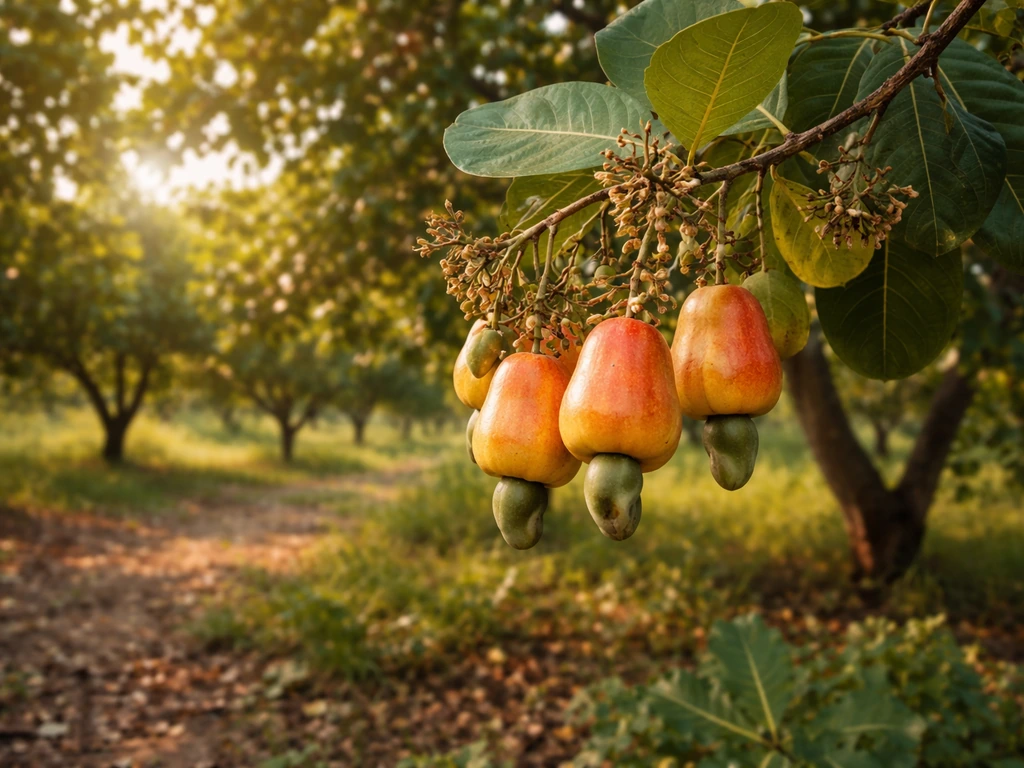
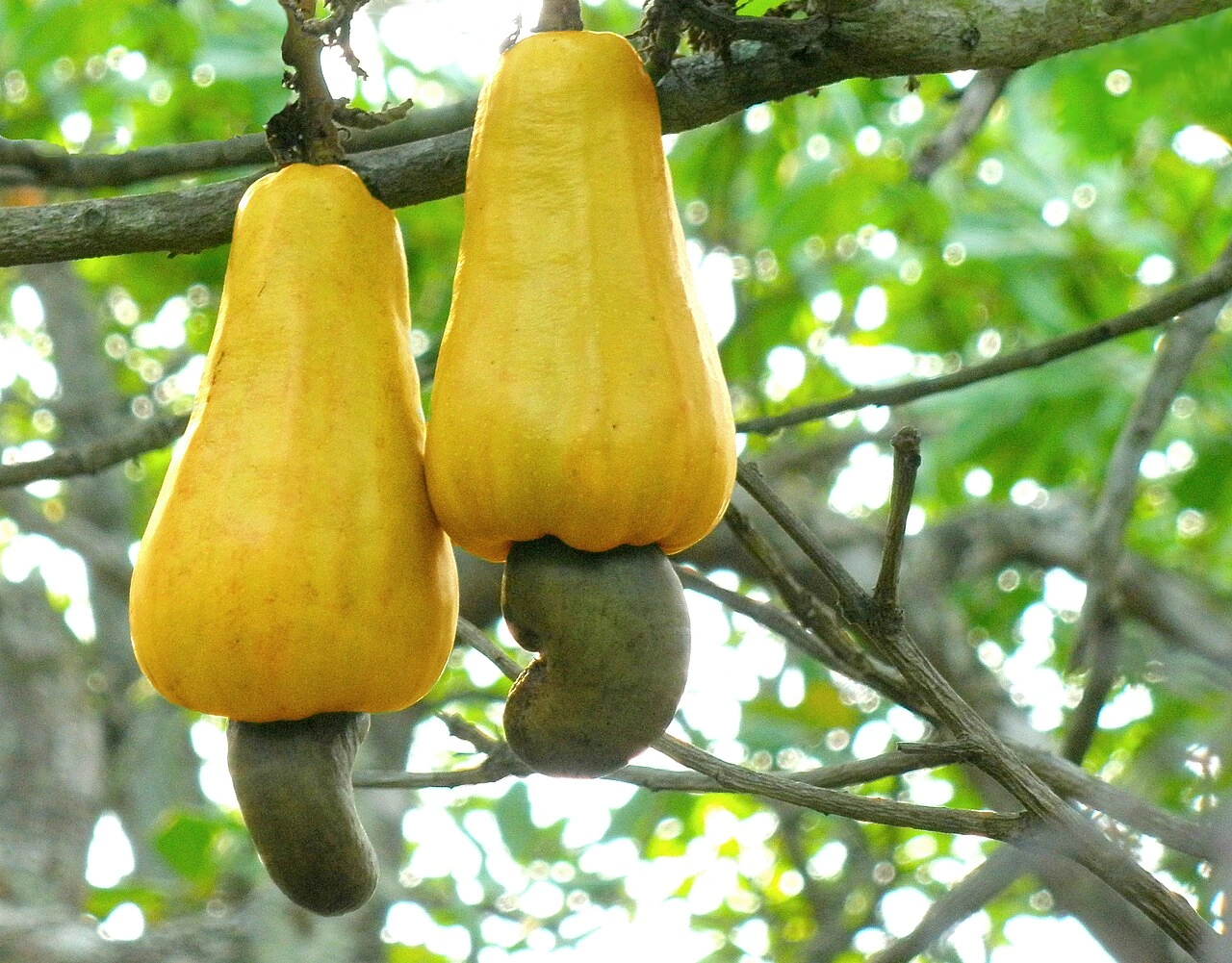
One comparison worth making here: cashew trees (Anacardium occidentale) are also tropical nut trees adapted to a pronounced dry season, and they share some climate overlap with the lower-rainfall end of the shea belt. If you are also wondering where cashew nuts grow, cashew is native to tropical regions and has been grown widely in warm climates with a pronounced dry season where does cashew nuts grow. If you are comparing other oil-rich nuts, cashews also come from trees, and you may be wondering does cashew grow on trees as a direct alternative to shea. For cashew trees in India, the main growing areas are tied to warm tropical conditions and a pronounced dry season, rather than the higher-rainfall coastal belts where cashew trees naturally grow in India. For cashew fruit, the key question is where the tree grows naturally and what climate it needs cashew fruit where does it grow. Cashew trees grow in tropical climates and are usually found in regions with a pronounced dry season. Cashew trees grow in many warm, tropical regions, especially where there is a pronounced dry season. But cashew has been far more successfully transplanted outside its native range, including into Asia and Australia, because it tolerates slightly cooler minimums and is genuinely more flexible. You may be wondering where cashews grow in Australia, and the answer depends on the warm tropical conditions they require into Asia and Australia. Shea is considerably more climate-specific.
If you are actually trying to grow shea: what to expect
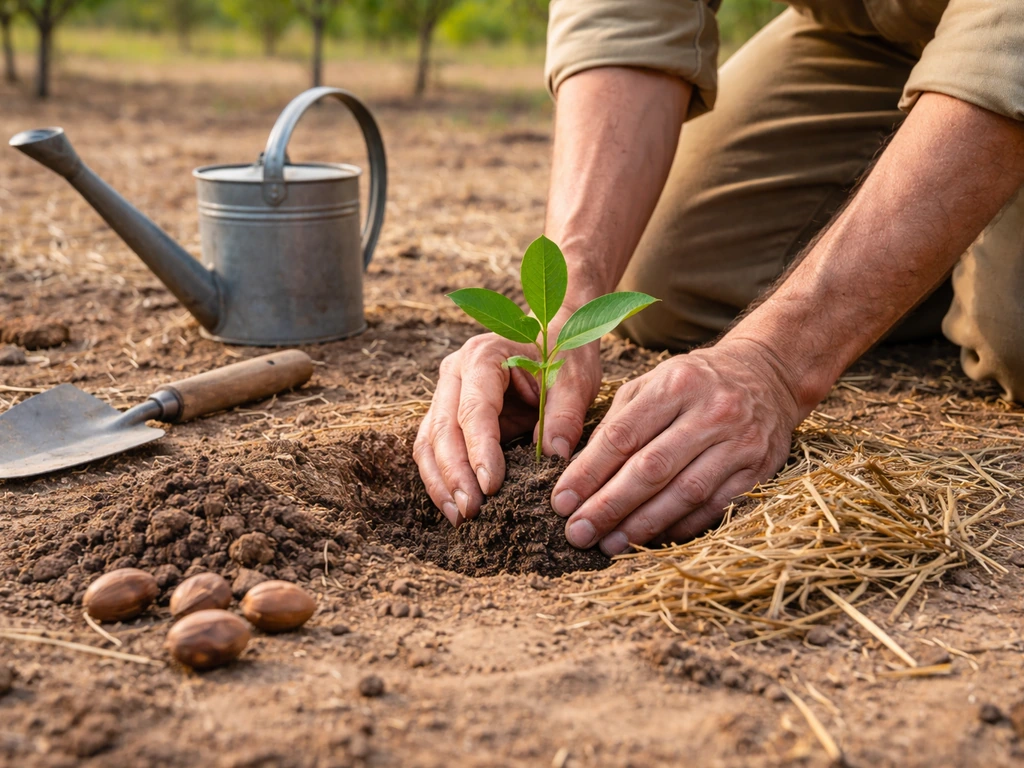
If you are in or near the shea belt and want to grow trees for nut production, here is what you are actually signing up for. This is not a quick project. Traditionally, seed-grown shea trees take 10 to 15 years to begin bearing fruit, with peak productivity not arriving until the tree is several decades old. Some sources report juvenile periods as long as 25 years for seed-grown trees in unfavorable sites. That timeline has shifted somewhat with grafting technology: grafted trees can begin producing fruit in as little as 3 to 5 years, which is a significant improvement.
- Source grafted seedlings rather than seed if nut production is your goal. Grafted material from programs in Ghana and Burkina Faso is the most practical way to cut the juvenile period from 10 to 25 years down to 3 to 5 years.
- Time your planting for the beginning of the rainy season in your area. In the West African belt, this typically means planting in May or June after the first rains have softened the ground.
- Choose an open, sunny site with good drainage. Do not plant into low-lying areas that collect water during the rains. Shea does not handle waterlogged roots.
- Plant at generous spacing. Recommended distances are roughly 9 to 10 metres between trees in each direction, consistent with parkland spacing rather than dense orchard systems.
- If grafting yourself, the best window for grafting is April to June according to documented guidelines from parkland management programs.
- Protect young trees from livestock and fire for the first several years. In savanna landscapes, browsing animals and seasonal fires are the two biggest killers of young shea.
- Do not expect fruit in the first few years even with grafted stock. Set realistic expectations: year 3 to 5 for first fruit on grafted trees, with meaningful yield building over subsequent years.
- Plan for pollination. Shea requires insect pollination, and having diverse local bee populations or even managed hives nearby improves fruit set considerably. This is not an optional consideration.
One thing that trips people up with shea is the expectation that a tropical tree must want wet conditions. The opposite is true here. The dry season is not just something shea tolerates; it is part of what triggers flowering. If you irrigate through what should be the dry season, you can disrupt the phenological cycle and reduce or eliminate fruit set. Match the tree's seasonal pattern, not your instinct to keep it watered.
Figuring out your local feasibility today
If you want to know right now whether your location is suitable for shea, here is a practical sequence to follow. You do not need expensive tools or consultants for the first pass.
- Look up your location's mean annual temperature and average monthly minimum temperatures. If any month averages below 21°C at night, stop here. Shea will not survive regular exposure to those temperatures.
- Check your annual rainfall total and how it is distributed across the year. You need 600 to 1,400 mm with a genuine dry season of 5 to 8 months. If your rainfall is distributed fairly evenly across all 12 months, the seasonal pattern is wrong even if the total looks right.
- Check your dry season length. Count the months where monthly rainfall drops below about 50 mm. For shea, you want roughly 5 to 8 such months in a row. This is the climate signature of the savanna belt.
- Use climate classification maps (freely available from sources like the Köppen-Geiger classification database) to check whether your location falls under Aw (tropical savanna) or BSh (hot semi-arid/Sahel) climate types. These are the zones that match shea's native habitat.
- If you are in a tropical zone and initial checks look promising, dig into local agroforestry databases or contact the nearest ICRAF/CIFOR regional office to ask whether any trials have been conducted in your country.
If you go through that checklist and your location does not fit, do not try to force it. The evidence from 54 years of trials outside Africa is clear: the tree has not established successfully anywhere outside its native continent. The honest next step for someone outside the shea belt is to focus on sourcing high-quality shea butter through fair-trade or direct-trade channels rather than cultivation, or to look at genuinely suitable local alternatives for oil or butter-type nut trees.
What to grow instead if shea will not work in your climate
If you are drawn to shea because you want a local source of a high-fat, oil-rich nut, there are alternatives worth knowing about depending on your climate. Allanblackia, another African tree, produces a butter-like fat with similar end-use properties to shea and is better suited to humid tropical conditions where shea would fail. For drier tropical regions, moringa and certain palm species can supply edible fat. If your interest is specifically in nut-oil production in a seasonally dry tropical environment, it is worth exploring which species have actually been successfully established in your region rather than trying to force a climate-specific African savanna tree into a context it was not adapted for.
The broader point is that shea is genuinely one of the most climate-specific nut trees in commercial use. It is not like a walnut or almond that has been successfully spread across multiple continents. Its requirements are precise, its juvenile period is long, and its connection to a very specific West African savanna ecology runs deep. Understanding that is the most useful thing to take away from researching where shea nuts grow.
FAQ
If I’m not in Africa, what’s the closest region where shea nuts can realistically grow?
For most outsiders, the “closest” practical option is not a specific country, but any location that matches the shea tree’s warm minimum temperature and a truly long dry season, typically 6 to 8 months. If nights drop below about 21°C regularly, or if rainfall is spread through the year, you should assume plantation success is unlikely, even if daytime temperatures feel similar.
Do shea trees grow in tropical rainforests or in places with lots of rainfall?
No. Shea is a parkland species that evolved for open savanna conditions and a pronounced dry season. High, year-round rainfall often prevents the dry-season flowering and fruiting rhythm, so even if the tree survives, yields typically collapse.
What exactly is meant by “shea nut,” is it a true nut?
The kernel is the “shea nut” in everyday language, but botanically it is the seed inside a fleshy fruit. You only get shea butter after extracting the kernel fat, then drying, cracking, roasting, and pressing, so the seed stage matters more than the fruit stage for production.
Why does harvesting happen in the dry season, and can I change it with irrigation?
Shea buds and fruiting are tied to the seasonal rhythm, the tree flowers while leafless and fruits begin before rains return. Irrigating through what should be the dry period can disrupt that cycle and reduce fruit set, so timing water to mimic the natural dry season is critical if you attempt cultivation.
How long does it take to get nut production from seed-grown vs grafted trees?
Seed-grown trees commonly start bearing fruit after about 10 to 15 years, with peak productivity arriving much later, sometimes beyond what people expect in difficult sites. Grafted trees can reduce the wait to around 3 to 5 years, which matters if you are evaluating economic viability.
Can I grow shea in a small home garden or container?
It is possible only as an experiment, not a practical production setup, because shea is slow-growing and depends on a very specific seasonal cycle. The tree also needs good drainage and enough space to develop long-term, so containers usually become a limiting factor long before fruiting.
What soil problem kills shea first, and does soil texture matter a lot?
Soil texture (sand vs loam) is less important than drainage. The biggest killers are waterlogged conditions and compaction, which restrict root function. A near-neutral pH around 6.5 to 7.0 supports nutrient availability, but avoiding standing water is usually the first priority.
If rainfall is low but there is no distinct dry season, can irrigation create the dry period shea needs?
In theory you can simulate seasonality, but it is not just “less water.” Shea needs a long, reliable dry window that aligns with flowering and fruit development. If you cannot reliably impose a multi-month dry period, expect poor fruiting even if total annual rainfall looks similar.
Which shea type should I look for, West African vs East African, and how does it affect the product?
The two main subspecies produce different fat behaviors at room temperature. West African types tend to yield a solid butter, while East African types tend to yield a softer, more liquid oil, so choosing the right planting material matters if you are trying to match how a label’s “shea butter” product performs.
If shea doesn’t grow where I live, what’s a better alternative for a similar fat or butter-like ingredient?
Consider region-matched substitutes rather than forcing shea. For more humid tropical conditions where shea fails, Allanblackia can be a closer end-use match. In drier tropics, look at species like moringa or certain palms that are already established in comparable climates and can supply edible fats or oil-rich products.