Yes, acorns do grow in Australia, but only on oak trees (genus Quercus), which are not native to the continent. In general, the question of what trees grow acorns comes down to where oak trees are established in your area. They exist here as introduced and cultivated species, and whether you'll actually find acorns depends almost entirely on where in Australia you are, which oak species is growing there, and how old that tree is. In the cooler, more temperate parts of the country, including Victoria, the ACT, Tasmania, parts of South Australia, and the tablelands of New South Wales, established oaks produce acorns reliably. In the tropics and most of inland Australia, it simply doesn't happen.
Do Acorns Grow in Australia? Species, Regions, and How to Get Them
Marcus Hendricks
12 May 2026
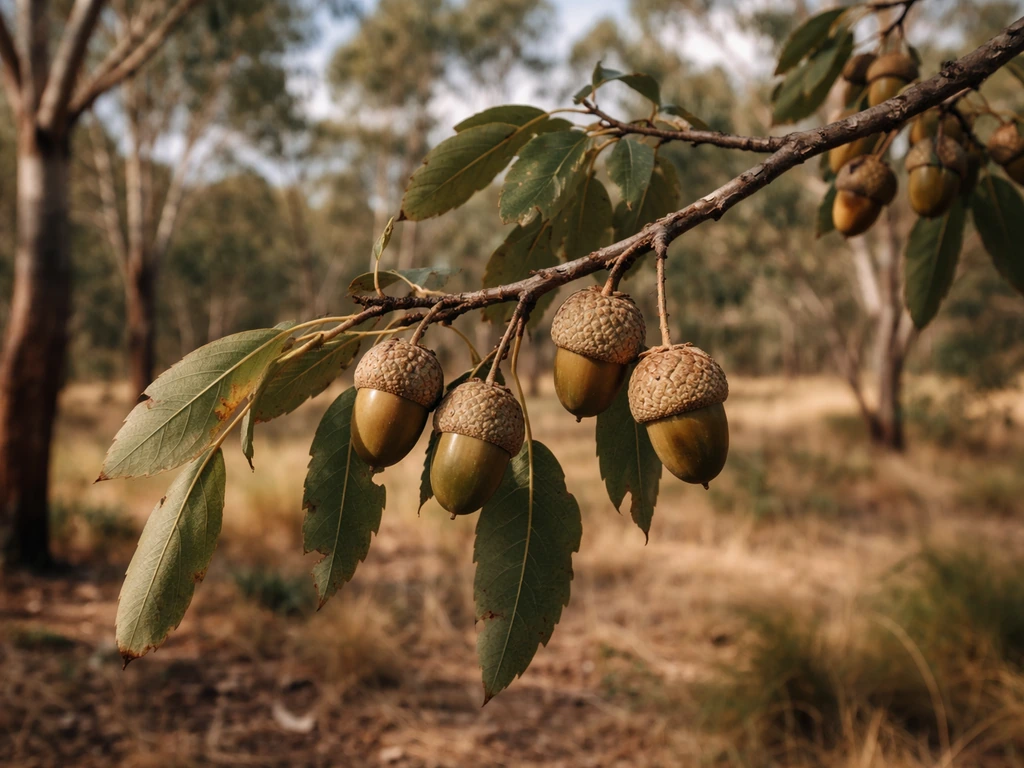
What an acorn actually is (and what 'growing acorns' means)
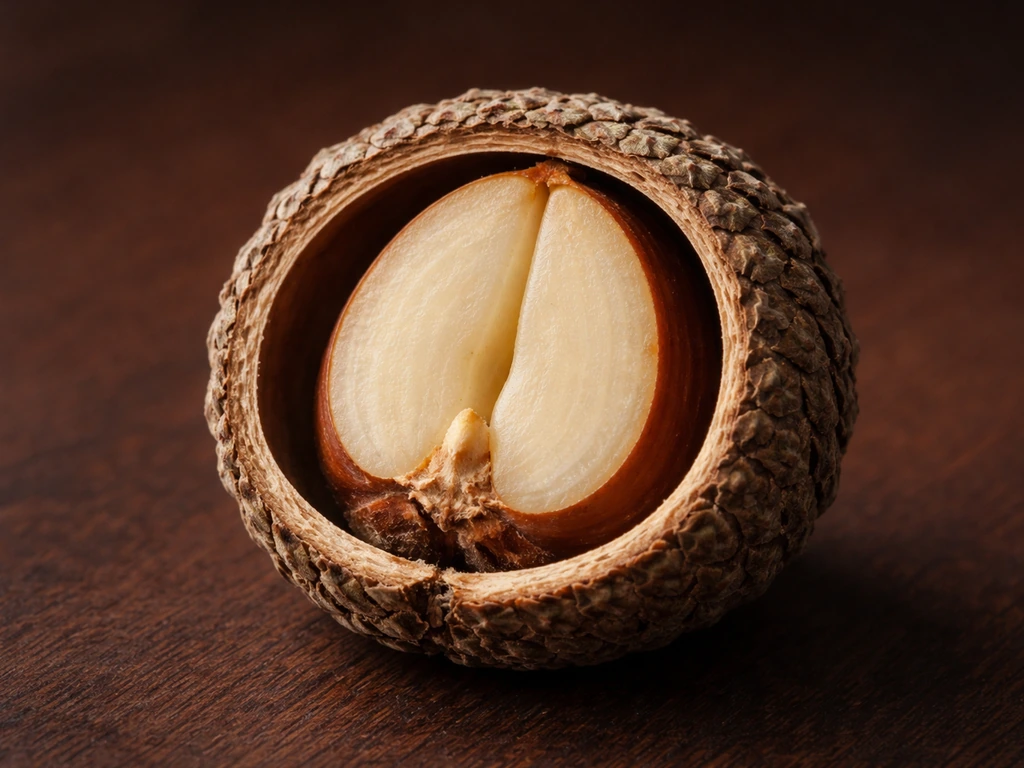
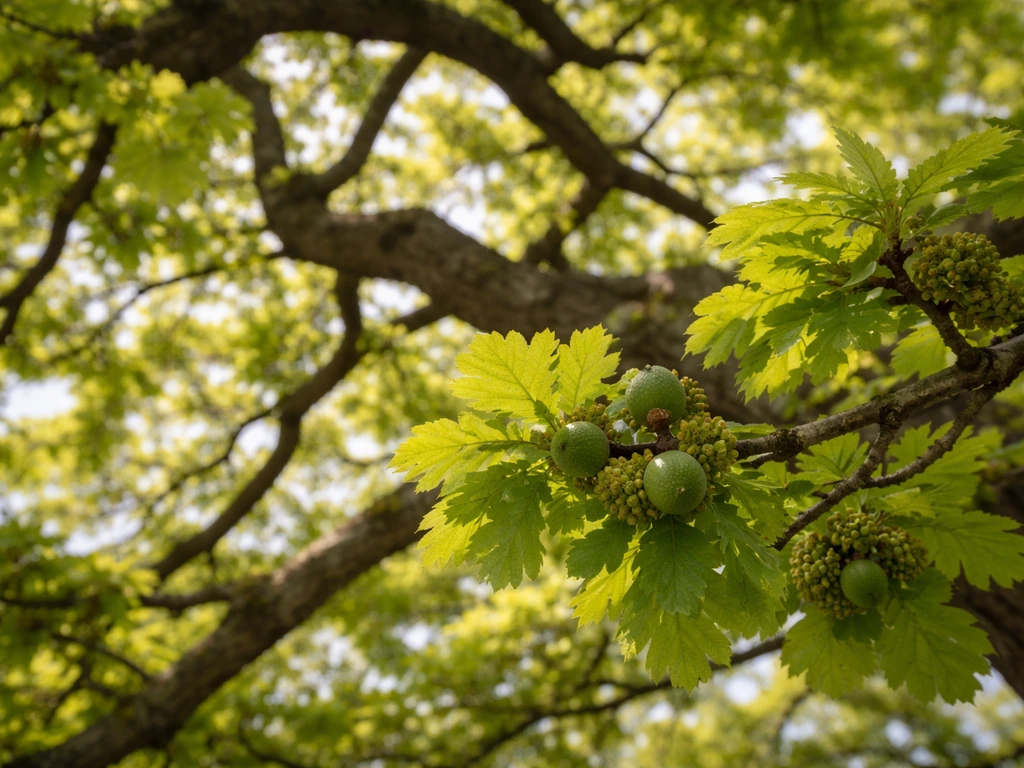
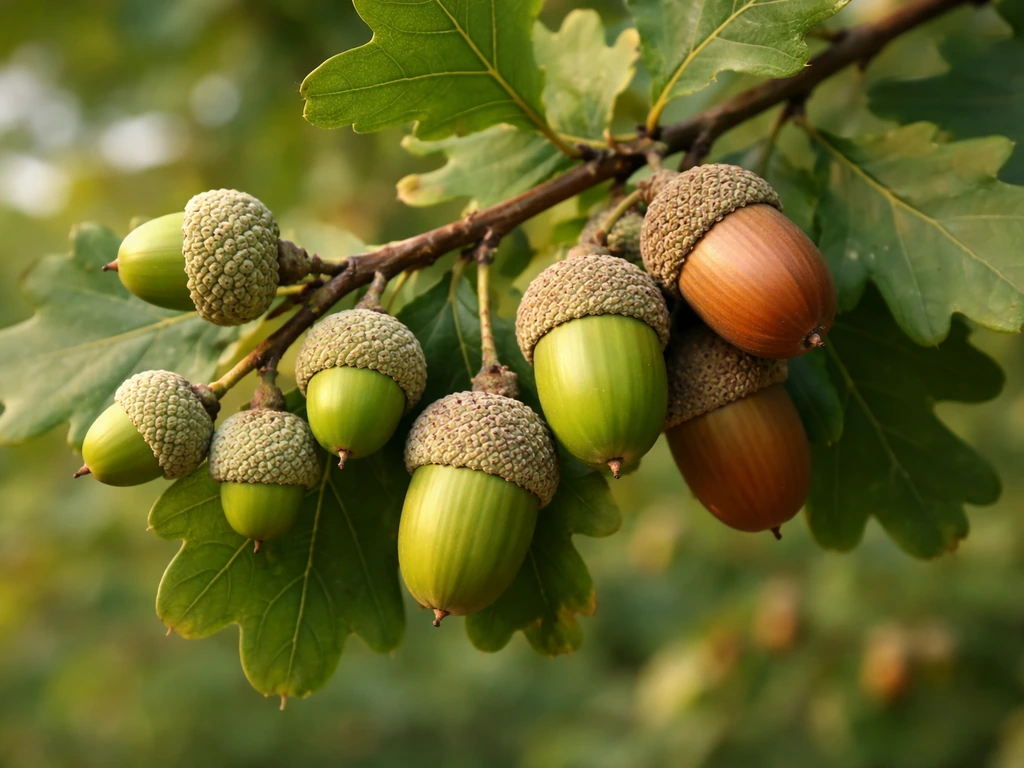
An acorn is a nut: specifically, a single seed enclosed in a hard shell and partially or fully cupped by a woody, scaly structure called the cupule. That cupule is one of the defining features of the oak genus. The nut itself develops from the pistillate (female) flower on the oak tree, after that flower has been fertilized by pollen from staminate (male) catkins. So when people ask whether acorns 'grow' in Australia, they're really asking whether there are oak trees here that successfully flower, get pollinated, and carry a nut through to full maturity.
That process takes longer than most people expect. Depending on the species, acorns can take anywhere from about 5 months to 18 months or more from fertilization to the point where they fall from the tree. Species in the white oak group (which includes English oak, Quercus robur) typically mature their acorns within a single growing season, around 120 to 180 days after pollination. Species in the red oak group run a two-year cycle, carrying developing acorns through one full winter before they finish maturing the following year. This matters for planning and timing in Australian conditions.
Do acorns grow in Australia? A region-by-region reality check
The honest answer varies a lot by region. Australia spans tropical, subtropical, arid, semi-arid, and temperate climate zones, and oak trees have very different responses to each of them. Here's a practical breakdown of what to expect where you are.
| Region | Oak suitability | Acorn production realistic? | Notes |
|---|---|---|---|
| Victoria (Melbourne, central highlands) | High | Yes, reliably | Temperate climate suits English oak and holm oak well; Royal Botanic Gardens Melbourne and other living collections maintain producing Quercus specimens |
| ACT (Canberra region) | High | Yes, reliably | National Arboretum Canberra's Forest 82 (English oak) is a documented example; cold winters support good flower set |
| Tasmania | High | Yes, reliably | Many parks and properties carry established English oaks; the Tasmanian Arboretum documents widespread oak planting across the state |
| South Australia (Adelaide Hills, temperate zones) | Moderate to high | Yes, with right species | Botanic Gardens of South Australia documents Quercus robur producing and germinating acorns; lower rainfall areas need irrigation |
| NSW Southern Tablelands and High Country | Moderate to high | Yes in elevated areas | Cooler elevations suit English oak; coastal lowlands and western slopes are marginal |
| NSW coastal lowlands and Sydney basin | Low to moderate | Occasionally, unreliable | Winters too mild for consistent flowering in many deciduous oaks; holm oak (Quercus ilex) more likely to perform |
| Southeast Queensland (Darling Downs, Granite Belt) | Low to moderate | Marginal; holm oak only | Too warm and humid for English oak to perform well; some evergreen Mediterranean oaks may persist but cropping is inconsistent |
| Perth and coastal WA | Low | Unlikely for most species | Dry, hot summers and mild winters are poorly matched to most oaks; Mediterranean oaks (Quercus ilex) occasionally planted but acorn production is unreliable |
| Tropical Queensland, NT, and most of inland Australia | Very low to none | No | Insufficient cold, wrong rainfall pattern; oaks generally don't establish or fruit meaningfully in these climates |
The practical takeaway: if you're in Victoria, the ACT, Tasmania, or the elevated parts of New South Wales and South Australia, there are oaks near you that are probably producing acorns every autumn. If you're in a subtropical or tropical area, you're looking at a much harder road, and most oak species simply won't cooperate.
Which oak species in Australia actually produce acorns
Australia has no native oaks. Every acorn-bearing oak here is either an introduced ornamental, a specimen in a botanic garden collection, or a tree planted in a park or private garden decades ago. That said, some species are now very well established and produce acorns consistently in the right climates.
English oak (Quercus robur)
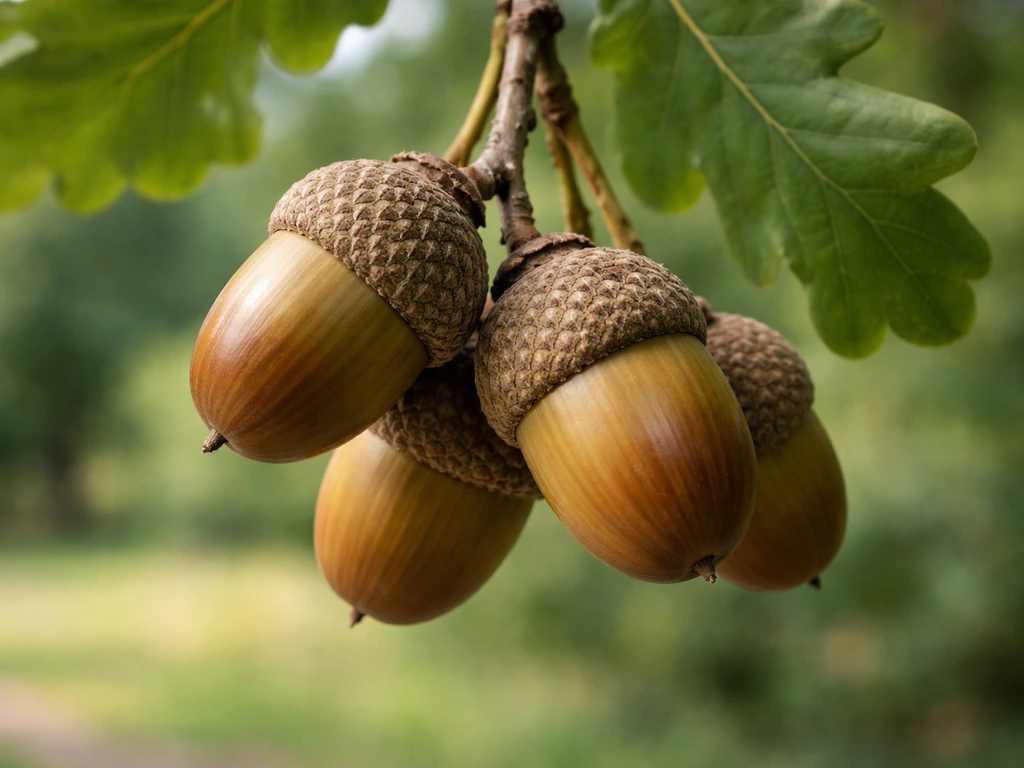
This is the species you're most likely to encounter in a temperate Australian city park or country garden. English oak is a white-oak-group species, meaning its acorns ripen in a single growing season. Flowering happens in spring, and acorns mature and fall in autumn (think March to May in the southern hemisphere). The Botanic Gardens of South Australia explicitly documents Q. robur producing acorns that germinate readily. The National Arboretum Canberra has an entire forest plot (Forest 82) dedicated to it. If you're in a temperate zone and you see a large, broad deciduous oak with lobed leaves, there's a good chance it's Q. robur, and it may well be dropping acorns in autumn.
Holm oak (Quercus ilex)
Holm oak is the other major acorn-producing species established in Australia. It's evergreen, tough, drought-tolerant, and Mediterranean in origin, which means it handles hot, dry summers better than English oak. According to Australian ornamental trade documentation, Q. ilex has been grown here since 1806 and is known to produce large quantities of acorns. Its acorns also ripen within a single summer season. If you're in coastal South Australia, parts of WA, or any region with a Mediterranean-type climate, holm oak is a far better choice for acorn production than English oak.
Other species in Australian collections
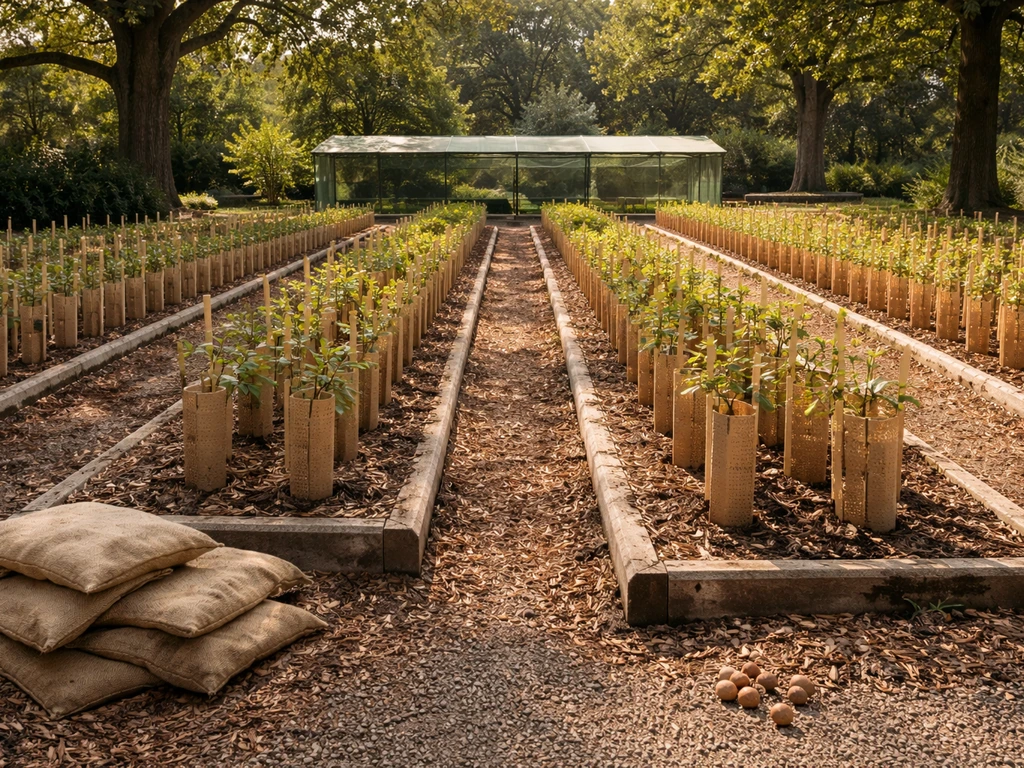
Royal Botanic Gardens Victoria maintains a living Quercus collection specifically because acorns lose viability so quickly they can't be stored in conventional seed banks. This living collection approach means a range of species are kept actively fruiting in Melbourne. You may also encounter cork oak (Quercus suber), pin oak (Quercus palustris), and various hybrid oaks in Australian arboreta and botanic gardens, some of which produce acorns where climate allows. For practical growing purposes, though, English oak and holm oak are your most accessible and reliable starting points.
When acorns actually appear: timing and tree age
Even in a perfect climate, you won't see acorns from a young tree. Oak trees need to reach a certain level of maturity before they produce any viable seed. For many species, the earliest flowering starts around 8 years of age, but meaningful acorn production often doesn't kick in until the tree is 15 to 20 years old.
To answer when do oak trees grow acorns in Australia, it helps to understand species-specific timelines and how long the tree needs to mature first. In well-managed cultivation with good soil and conditions, some trees have produced viable acorns within 7 years of planting, but that's at the optimistic end. The realistic expectation if you're planting an oak sapling today is that you'll be waiting at least a decade for your first acorn crop, possibly longer.
In terms of seasonal timing in the southern hemisphere, English oak follows this rough pattern: catkins emerge in spring (September to October), pollination occurs, and acorns develop through summer and ripen in autumn (March to May), dropping from the tree as they mature. Holm oak has a similar single-season timeline but with slightly different phenology suited to its Mediterranean origins. This is worth knowing if you're planning to collect acorns from trees near you: the window is autumn, and fresh acorns sitting under a tree in April are what you're after. In other words, when do acorns grow in Australia depends on the species and the timing of flowering and ripening.
How to grow oaks for acorn production in Australia
Getting an oak to produce acorns isn't complicated in principle, but a few key decisions early on will make or break your results. Here's what actually matters.
Choose the right species for your climate
This is the single most important decision. English oak (Q. robur) is your best bet in temperate Victoria, Tasmania, ACT, and cool elevated areas elsewhere. Holm oak (Q. ilex) is a better fit for Mediterranean-climate zones like Adelaide's coastal areas, parts of Perth, and drier inland spots in SA. Don't try to grow English oak in subtropical Queensland and expect acorns: the mild winters won't provide enough cold for proper dormancy-breaking and flower set.
Sun, soil, and site
- Full sun: oaks need at least 6 to 8 hours of direct sunlight daily to flower and fruit well. A shaded or part-shaded tree will grow but won't set acorns reliably.
- Well-drained soil: oaks dislike waterlogged conditions. A site with good drainage is non-negotiable. Heavy clay that sits wet in winter will stress the tree and reduce or eliminate fruiting.
- Soil pH: oaks can be sensitive to high pH (alkalinity). Get a soil test before planting, especially if you're in an area with limestone-derived or heavily alkaline soils. Most oaks prefer a slightly acid to neutral pH.
- Space: large oak trees need room. English oak in particular can reach 20 to 30 metres at maturity, so choose your site with the long term in mind.
- Pollination: because acorns require cross-pollination from nearby catkins, having more than one oak (ideally of the same or closely related species) in the general area improves acorn set significantly. A solitary oak in an otherwise oak-free suburb may flower but produce fewer or no acorns.
Ongoing care to encourage acorn production
Once established, oaks are relatively low-maintenance, but the trees that produce the most acorns are healthy, vigorous, and well-sized. Acorn yield tends to increase as the tree's trunk diameter grows, up to a point. Keep the tree well-watered through its first several years while it establishes. Avoid heavy pruning during spring when flowers are developing. Mulch the root zone to retain moisture and suppress weeds, but keep mulch away from the trunk. Don't over-fertilise with nitrogen: it promotes leaf growth at the expense of fruiting.
Collecting, storing, and germinating acorns in Australia
If you've found an oak tree that's producing, here's how to make the most of it. The most important thing to understand about acorns is that they go off quickly. Unlike many seeds that can be dried and stored for years, acorns lose their ability to germinate within weeks to months of falling, which is why Royal Botanic Gardens Victoria relies on living collections rather than seed banks. Work with fresh material and move quickly.
Collecting
Collect acorns in autumn as soon as they begin dropping naturally. To learn the practical steps, see the guide on collecting, storing, and germinating acorns collect acorns in autumn as soon as they begin dropping naturally. Don't pick them green from the tree: wait for them to fall or give a branch a gentle shake and collect what comes down readily. Sound, ripe acorns will be a golden-brown colour and the cap (cupule) will detach cleanly. Discard any that float in water (a quick float test in a bucket identifies dead or hollow seeds), any with holes (signs of weevil damage), or any that look soft, mouldy, or discoloured.
Storing short-term
If you're not planting immediately, store acorns in a sealed plastic bag with slightly damp (not wet) peat moss or sawdust in the fridge at around 4 to 5 degrees Celsius. This mimics the cool, moist conditions of a natural winter and also provides the cold stratification that many oak species need to break dormancy. Depending on species, stratification requirements range from about 30 to 60 days for many oaks. Check the bag weekly and remove any that show signs of mould, which can spread and ruin the batch. High humidity that keeps acorns viable also creates conditions that favour fungal decay, so balance is important.
Germinating
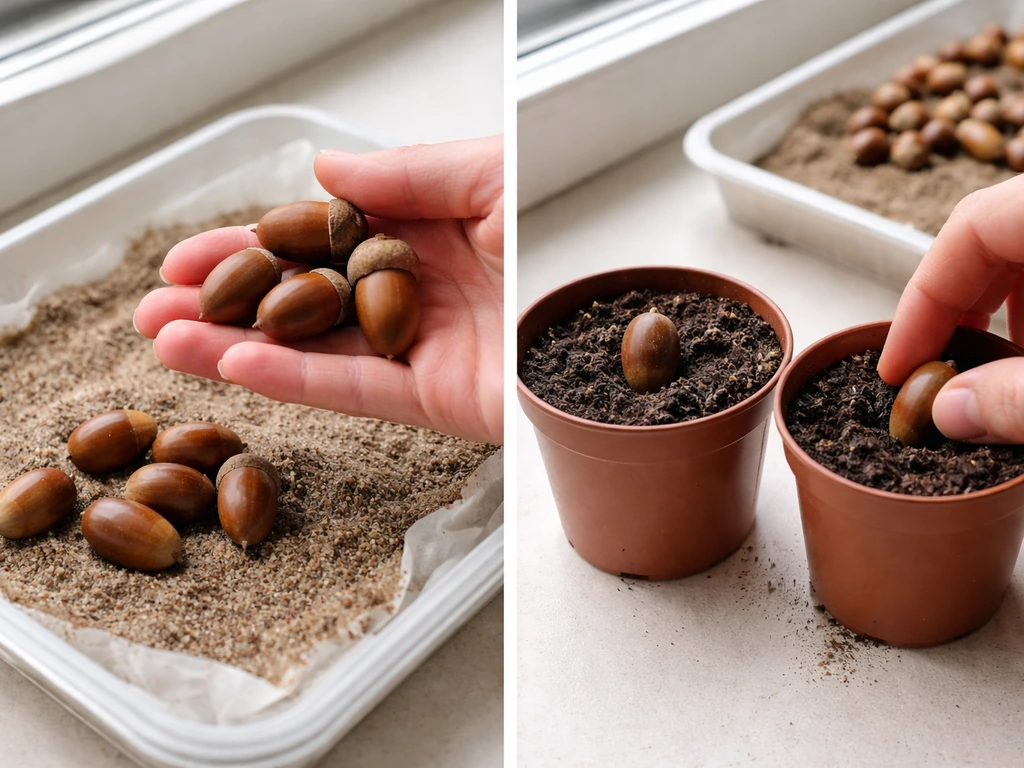
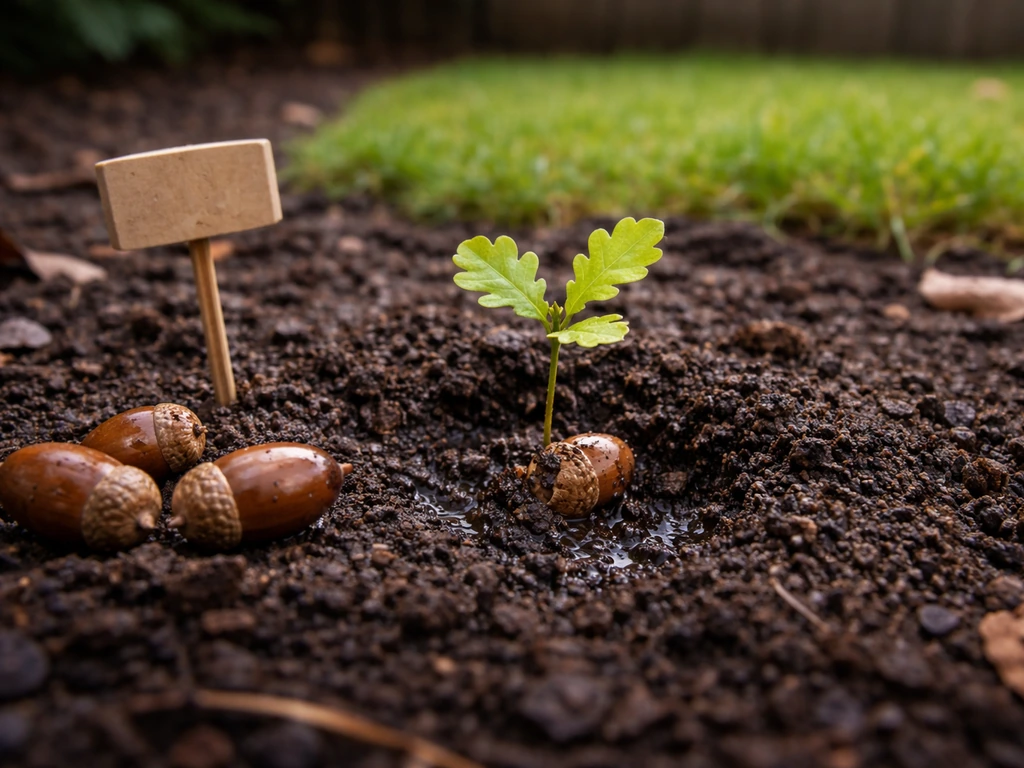
- After stratification (or immediately for species like English oak, which has minimal dormancy requirements), plant acorns about 2 to 3 cm deep in a free-draining potting mix or directly into prepared garden soil.
- Lay the acorn on its side or point it slightly downward: the radicle (root) emerges from the pointed end.
- Keep the soil consistently moist but not waterlogged. Germination can take anywhere from 2 to 8 weeks depending on species and temperature.
- Protect from possums, rodents, and birds, which will eat germinating acorns enthusiastically.
- Once the seedling has a few leaves, begin hardening it off before moving it outdoors permanently.
- Expect slow growth in the first year as the taproot establishes. Don't be fooled by minimal top growth: the tree is investing underground first.
Realistic limitations to know before you start
There are several things that commonly prevent acorn production in Australian conditions, and it's worth being honest about all of them before you commit time and space to an oak tree.
Wrong climate or wrong species
This is the biggest one. An English oak in subtropical Brisbane will grow for a while but is unlikely to reliably flower and set acorns because the winters aren't cold enough to trigger the necessary dormancy and subsequent flower development. Similarly, a red-oak-group species that needs two years to mature its acorns may struggle to complete that cycle in Australian conditions without proper cold periods. Matching species to climate is non-negotiable.
Insufficient pollination
Oaks are wind-pollinated and need pollen from compatible nearby trees to set acorns. A solitary oak in a suburb where no other oaks exist nearby may produce catkins but set very few or no acorns. This is a genuine constraint in areas where oak planting is sparse. If you're serious about acorn production, consider planting more than one tree or identify whether there are established oaks within a few hundred metres of your planting site.
Tree age and timeline
If you're planting from an acorn or a young sapling today, you need to be prepared for a long wait. Most oaks won't produce their first significant acorn crop for 15 to 20 years. Even under optimistic managed conditions, 7 years is about the earliest you'd expect any acorns. This is not a short-term project.
Annual variability
Even mature, healthy oaks in ideal locations don't produce the same quantity of acorns every year. Acorn crops vary considerably from year to year due to weather during pollination, late frosts, seasonal moisture, and individual tree condition. A great acorn year may be followed by a very poor one. This is normal oak biology, not a sign something is wrong with your tree.
Pests and diseases
Acorn weevils (Curculio species) are a real problem. Their grubs tunnel inside developing acorns and feed on the seed, leaving you with hollow or rotten nuts by the time they fall. The float test when collecting helps identify weevil-damaged acorns: those with grubs inside will often float. Fungal decay is the other main threat, especially in cool, wet conditions during storage. Keeping stored acorns cool and checking them regularly for mould gives you the best chance of salvaging a useful portion of your harvest. There are no chemical treatments that make practical sense for home-scale acorn collection: prevention through prompt collection and careful storage is your main tool.
The bottom line on growing oaks for acorns in Australia: it's genuinely possible in the temperate south, and the trees are already there in many parks and gardens. The challenges are species selection, long timelines, and the speed at which fresh acorns need to be handled.
If you're in a temperate zone and you want to get practical about this, start by identifying the mature oaks near you this autumn, check under them in March and April, and use that fresh seed as your starting point. That means the number of acorns that successfully turn into oak trees depends on factors like species maturity, climate, pollination, and whether you handle fresh acorns quickly. From there, the growing guide above gives you a clear path forward.
FAQ
If I see an oak in Australia, will it definitely drop acorns every year?
Not reliably. In Australia, acorns depend on compatible oak species flowering and completing dormancy, then ripening through the correct season. If your area is too warm, you may see catkins but few viable nuts, or a poor crop that never matures.
What month should I collect acorns in my yard in Australia?
For fresh collection, the practical target is autumn as soon as acorns start falling and come off cleanly from the cupule. If you pick them green while still attached, they often won’t survive storage or germinate well.
Can I use the same ripening timeline for any oak species I find in Australia?
Yes, but you need to recognize the oak species. White-oak-group oaks (like English oak) tend to mature acorns in one season, while red-oak-group species follow a longer cycle, so “when they’re ripe” can differ. The safest approach is to use the local timing when acorns are actually dropping from established trees.
How close do other oak trees need to be for acorns to form?
You can increase the odds, but proximity matters for wind-pollination. If there are no other oaks within a few hundred metres (or they are the wrong flowering time or species), you may get catkins with very limited acorn set.
What happens if I collect acorns after they have been on the ground for a while?
Pick up any you find quickly and store cold, but expect a high failure rate if you leave acorns outdoors for days or weeks. Acorns lose viability fast, so “late collection” can look like a germination problem even when storage and stratification are correct.
Is the float test enough to ensure the acorns will germinate?
A float test is useful, but it is not perfect. Some damaged seeds can still sink, and some sound-looking acorns may fail later from internal weevil or early mould, so still inspect and discard soft, discoloured, or hole-marked nuts.
Can I store acorns at room temperature and plant them later?
Often you should not. Most acorns can only be stored for a short time unless handled with fresh, moist-cool stratification. Seeding “later” from old acorns usually fails because viability drops before winter cold exposure can help.
Why won’t my acorns sprout even after stratifying in the fridge?
If the species requires longer dormancy (many red-oak-group types), you may need to wait through more than one winter before results show. Germination can also be irregular if stratification was too dry, too warm, or if mould reduced seed quality.
What’s the most common mistake when choosing an oak for acorn production in Australia?
Usually not. Holm oak and English oak are both common choices, but they differ in climate fit. If you plant English oak in a subtropical zone, the tree may survive yet fail to produce viable acorns due to insufficient winter chilling, and swapping species later is often the real fix.