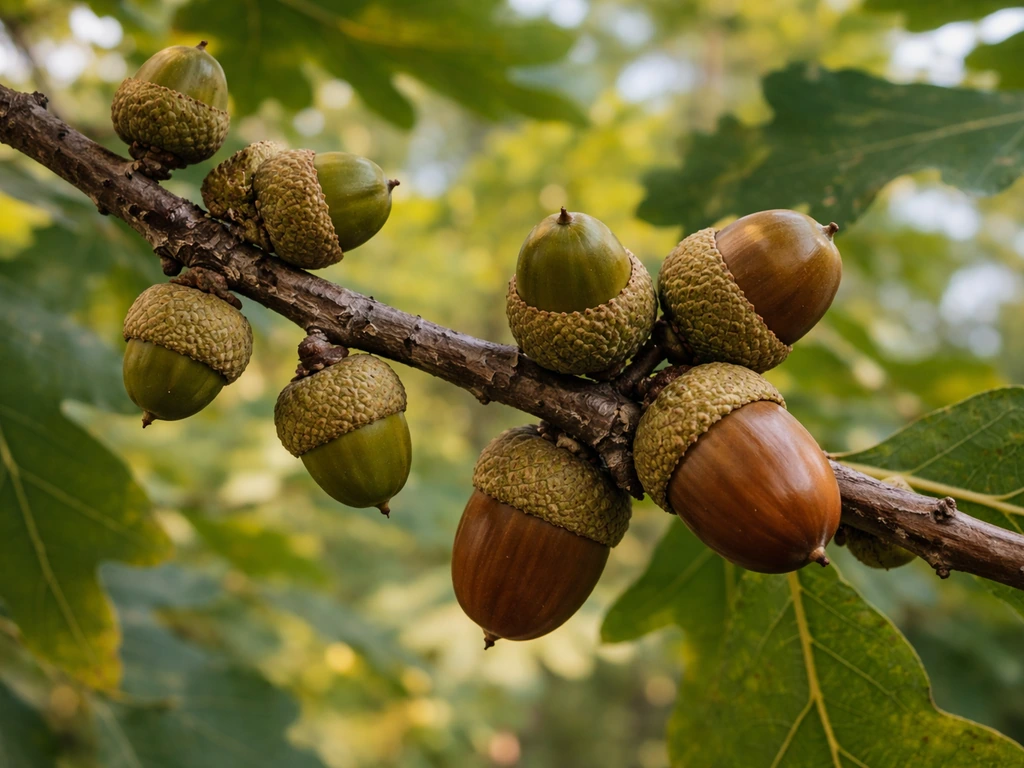
Out of 100 acorns that fall from a healthy oak, you can realistically expect somewhere between 1 and 5 to survive long enough to become what most people would call a tree. In a well-managed planting with good site prep, selected acorns, and predator protection, that number can climb to 20 or even 40 out of 100. In the wild, with no intervention and a hungry squirrel population nearby, it can fall to fewer than 1 in 100. There is no single number because the answer depends entirely on what happens at each stage of the process.
How Many Acorns Grow Into Trees: Realistic Survival Odds
Marcus Hendricks
26 May 2026
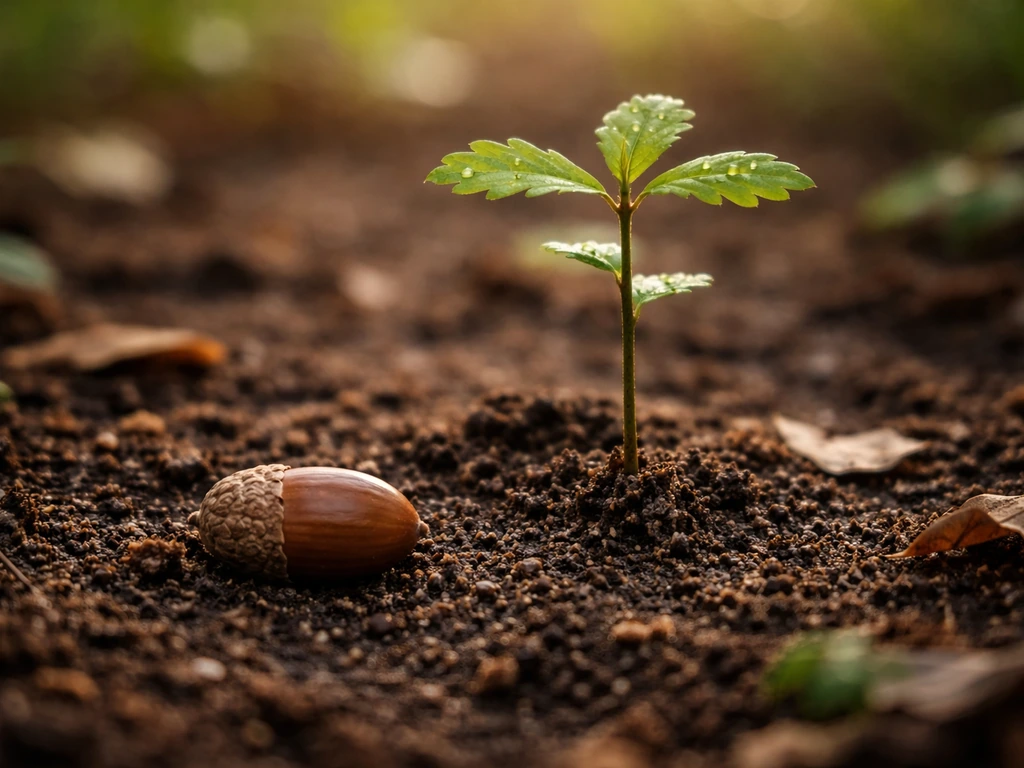
The realistic survival range, from acorn to established tree
It helps to think about acorn survival in two separate stages rather than one: the germination stage and the establishment stage. Both have their own set of losses, and those losses multiply together.
At the germination stage, research into Mediterranean oak species found that 41 to 54 percent of sown acorns were successfully established as seedlings by the end of a two-year experiment, with success varying by when acorns were sown and how much predation occurred. That is actually an optimistic figure, because it reflects reasonably handled acorns with some level of management attention.
In the wild, pre-dispersal predation alone (weevils and other insects attacking the acorn while it is still on the tree) can destroy 27 to 96 percent of the crop before the acorn ever reaches the ground. In especially bad years for northern red oak, crop damage from insects and disease can run virtually 100 percent. That means the viable pool shrinks dramatically before germination even begins.
From there, first-year seedling survival data from USFS field studies shows a wide range. Under certain managed and favorable conditions, first-year survival of planted oak seedlings has averaged around 96 percent. But in real forest conditions with competition, browsing, drought, and root stress, multi-year survival curves drop off substantially. A trial of southern red oak in Arkansas produced only 2 percent established seedlings under poor conditions, even when germination technically occurred. Across studies, the pattern is clear: germination is not establishment, and establishment is not a tree.
Put it together and a rough working estimate looks like this:
| Stage | Wild / No Intervention | Managed Planting |
|---|---|---|
| Acorns surviving pre-dispersal predation | 4–74% of crop (varies widely) | 90–100% (selected, inspected acorns) |
| Viable acorns germinating | 10–50% | 40–80% |
| Germinants surviving year 1 | 20–60% | 60–96% |
| Seedlings surviving to year 3–5 | 5–20% | 30–60% |
| Rough final: acorns becoming established trees | Under 1–5% | 10–40% |
These ranges are wide on purpose. Collapsing them to a single number would be misleading. The variables covered in the sections below are what actually move that needle.
What actually determines success: acorn quality, viability, and storage
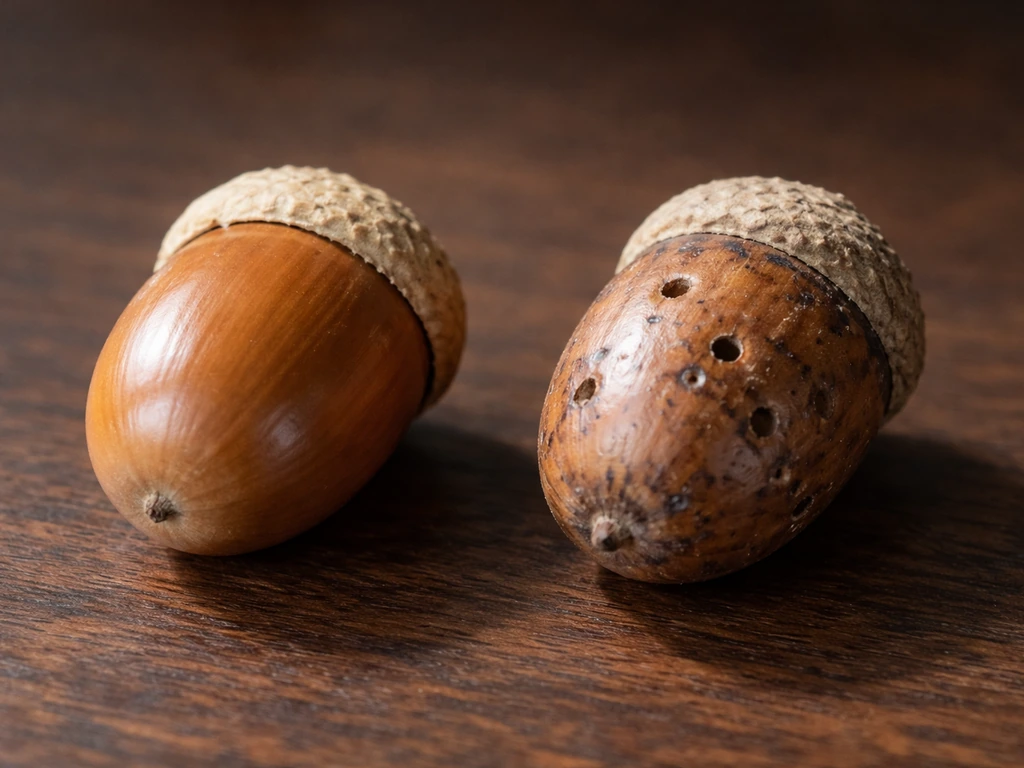
Acorn quality is the first filter, and it is one you have real control over. A visibly plump, undamaged acorn with its cap recently detached is your starting point. Float-testing (discarding acorns that float) is a common recommendation, but it is not foolproof. For serious growing, excised embryo testing or germination testing through a seed lab gives you much better certainty about what percentage of your seed lot is actually viable before you invest months of effort.
Moisture content is surprisingly critical and easy to get wrong. Research on Quercus robur and related species shows that losing just 10 percent of an acorn's moisture content causes nearly 40 percent less germination. Acorns are recalcitrant seeds, meaning they cannot be dried and stored the way you would store tomato seeds or beans. They need to stay moist from harvest through planting. If you collect them in fall and let them sit in a dry garage for two weeks, a large portion of your batch is already compromised. Store them in slightly damp sand, peat, or sawdust in a sealed bag in the refrigerator if you are not planting immediately.
Insect damage is another major quality filter. Acorn weevils bore into the seed and lay eggs; the larvae consume the endosperm from the inside. Weevil entry points also let fungi and bacteria colonize the tissue, compounding the damage. In some northern red oak stands, weevil losses alone have been recorded at up to 96 percent of the crop. Visual inspection helps, but some weeviled acorns look intact on the outside. Cutting open a sample from your batch to check the interior is worth doing before stratification.
Germination timing and the early growth bottleneck
Oak germination does not happen on demand. Most North American oaks require a cold stratification period to break dormancy, and the length of that period depends on the species group. These timelines are also the reason people often ask when acorns grow into seedlings in your area. White oaks (including bur oak) typically need 30 to 60 days of cold, moist stratification.
Red oaks (including northern red, pin oak, and southern red oak) generally need 30 to 45 days. Some species with deeper dormancy, like Quercus pagoda, can require much longer cold treatment, and research shows that at 16 weeks of stratification about 20 percent germinate, with the remaining seeds hitting 97 percent cumulative germination very quickly once temperatures rise. The takeaway is that proper cold treatment does not just improve germination rates, it also makes the timing more predictable and uniform.
Temperature during emergence matters too. Studies on Quercus robur show that shoots emerge in about 4 to 5 weeks at optimal temperatures of 15 to 20°C (59 to 68°F), but take roughly 10 weeks at 10°C (50°F). Too cold and germination is sluggish; too warm after an incomplete stratification and dormancy may not break properly at all. Timing your planting to align with natural soil warming in spring (for red oak group) or fall planting that mimics natural conditions (for white oak group, which germinates in fall) is not just a nicety, it is a biological requirement.
The early seedling itself is working against a clock. During the first weeks after germination, the seedling is drawing down its food reserves stored in the acorn. Research on white oak seedlings tracks this window as roughly the first nine weeks of development. If roots cannot access water and nutrients before those reserves run out, the seedling stalls and often dies. This is why soil preparation, moisture, and planting depth all matter so much in that first growing season.
The biggest threats to seedling survival
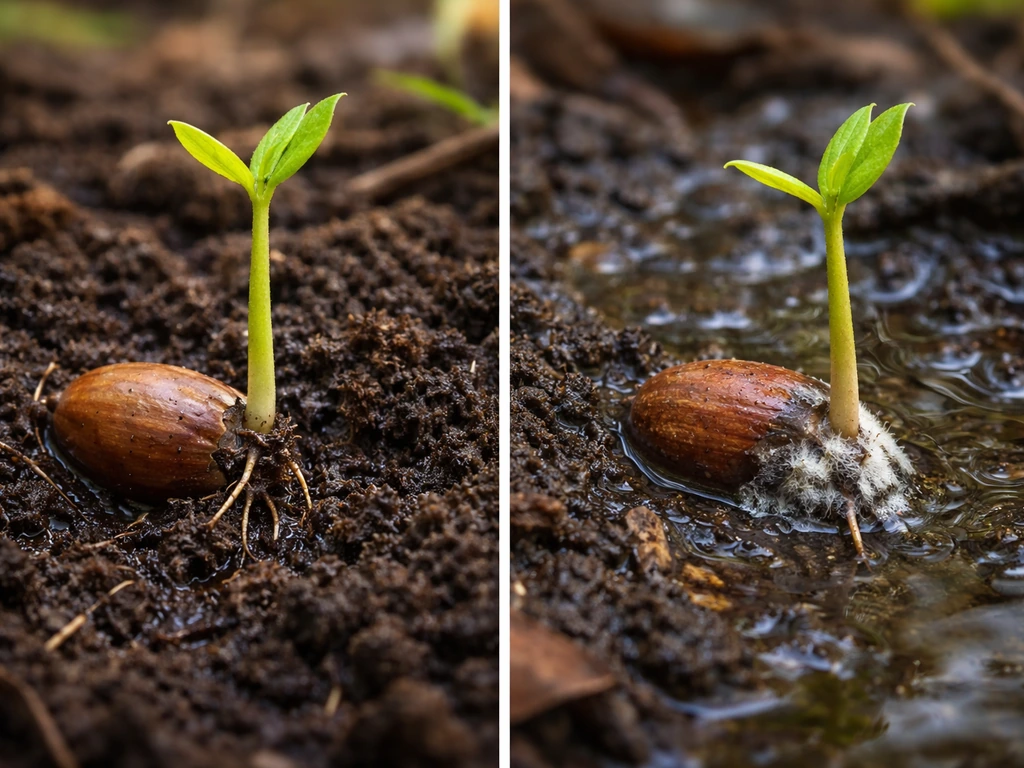
Even after a healthy germination, the losses do not stop. The first few years of a seedling's life concentrate most of the mortality risk, and several threats act at the same time.
Predators: rodents, deer, and insects
Squirrels, chipmunks, and mice are the most common immediate threat to newly sown acorns. Rodents can find and excavate acorns quickly, even buried ones. Hardware cloth pinned over sowing sites or hardware cloth cylinders around individual seedlings are among the most effective physical deterrents. Deer and elk browsing hammers seedlings once they emerge above ground, often clipping growth back repeatedly until the root system is exhausted. Tree shelters or wire cages address browsing. Voles work at ground level and can girdle stem bases through winter. Weed cloth and mulch around the base reduce vole habitat and also suppress competing grass that would otherwise shade and outcompete a young seedling.
Rot, fungal disease, and waterlogging
Fungal pathogens attack acorns in storage and in the soil. Weevil entry wounds, as mentioned, accelerate this. Waterlogged soils create anaerobic conditions that kill roots and encourage rot organisms. Most oak species want well-drained soil, though bottomland species like swamp white oak and overcup oak tolerate periodic flooding better than upland species do. If you are planting in a low area that holds water for days after rain, your seedling mortality will be high regardless of how good your acorn quality was.
Drought and soil conditions
The flip side of waterlogging is dry spells during the critical first-year rooting period. A seedling with a 2-inch taproot cannot chase moisture deep enough to survive a dry July. Matching planting time so that seedlings establish root mass before summer drought stress hits is one of the best things you can do. Soil structure matters too: compacted clay or sand with no organic matter both reduce establishment odds. Oaks generally prefer a loamy, slightly acidic to neutral pH, well-drained but moisture-retentive soil.
Competition and canopy light
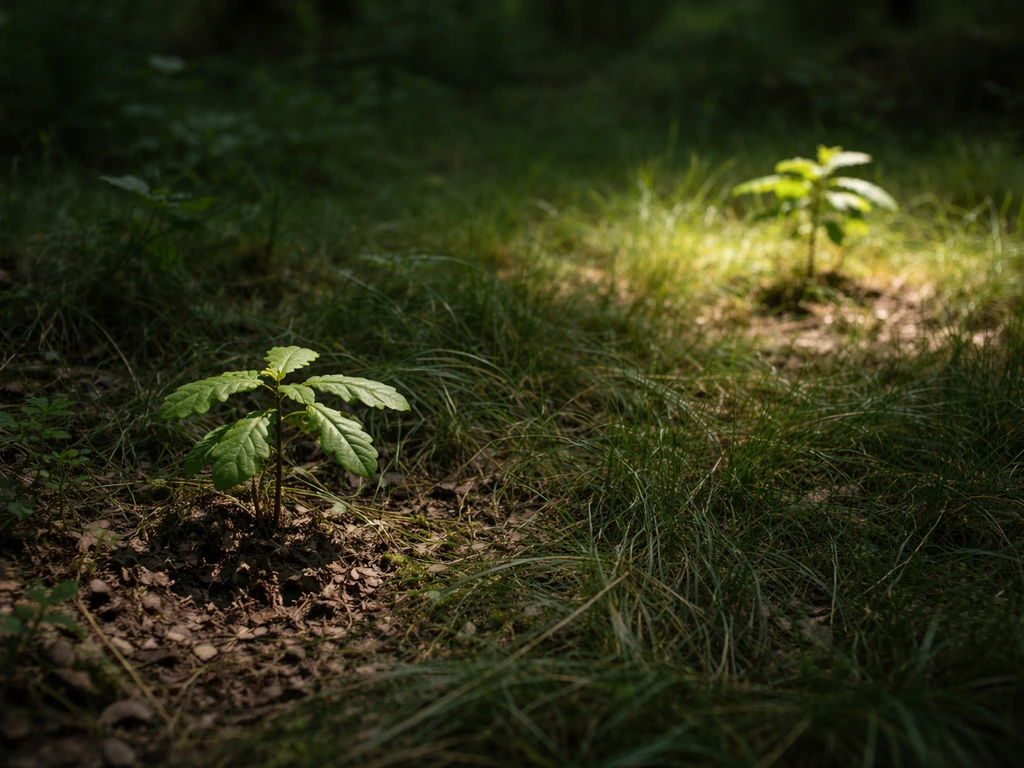
Oak seedlings are moderately shade-tolerant as very young plants but need increasing light as they grow. In dense grass or heavy shrub competition, the seedling often loses, even if it germinates successfully. USFS research on oak regeneration in shelterwood harvests highlights how overstory competition affects multi-year survival and growth, and how "dominance probability" (the likelihood a seedling grows to a competitively viable size) is heavily influenced by how much canopy is removed and when. For a garden or planting context, this translates to: keep the area around your young oak free of heavy competition for at least the first three to five years.
How species, climate, and region change the odds
Not all acorns are equal, and not all oaks face the same obstacles. Species from the white oak group (including white oak, bur oak, and swamp white oak) germinate in fall without deep dormancy requirements and can begin root development before winter. That head start often translates to better early establishment in temperate climates. Red oak group species (including northern red oak, pin oak, and scarlet oak) germinate in spring after winter dormancy, giving them a longer window for predators and moisture loss to degrade the seed over winter.
Geography matters a lot for which species are feasible. In the Pacific Northwest, native oaks like Quercus garryana face a specific challenge: summer drought is the dominant stress, and seedlings established without summer irrigation often die in their first season. In the southeastern US, bottomland species like Quercus pagoda (cherrybark oak) and Quercus falcata (southern red oak) can face entirely different bottlenecks, including periodic flooding, intense summer humidity, and a different pest complex. A species that thrives in Arkansas is not automatically the right choice for planting in New England or California.
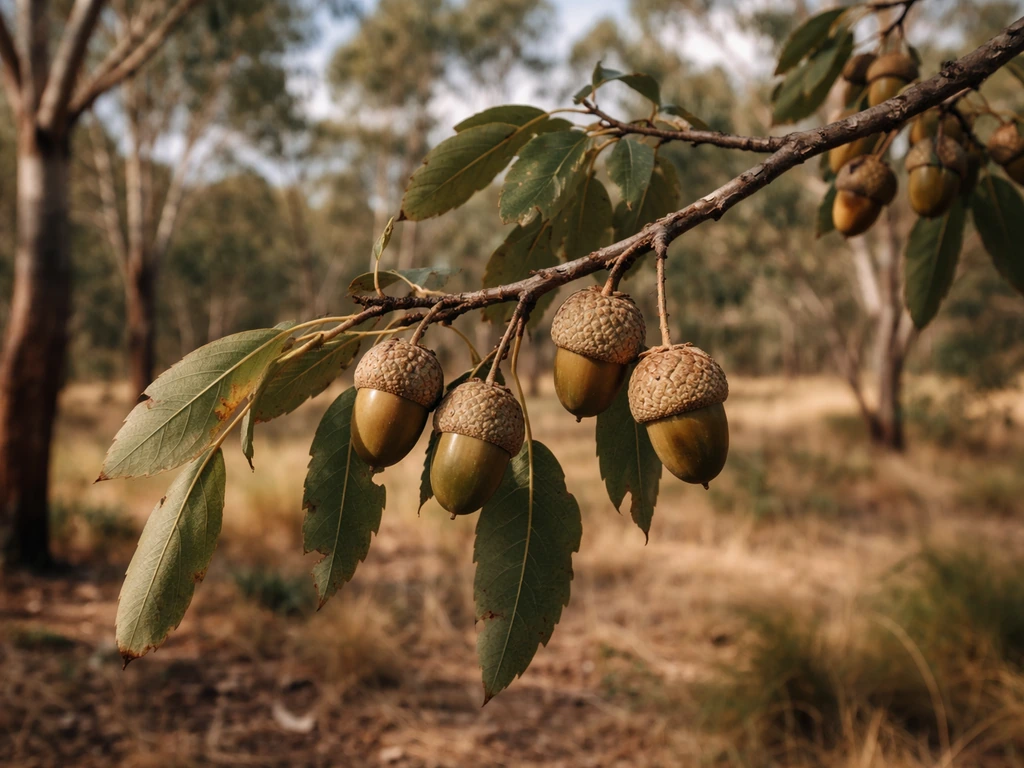
For growers in Australia, the native flora presents no suitable acorn-producing alternatives, so growing oaks from acorns there means importing acorns and working against a climate that may not match the species requirements. The article covering how to grow oak trees from acorns in Australia, as well as whether acorns grow in Australia at all, addresses those regional specifics in more depth.
If you are growing oaks in Australia, you still need to consider whether local conditions match the species and whether you are importing suitable acorns do acorns grow in Australia. If you want the full step-by-step process, you can learn more about how do acorns grow from acorn to established tree. For anyone planting in eastern North America, northern red oak and white oak are the most researched and support the most practical guidance on germination, survival, and establishment.
UNH Extension’s Northern Red Oak Regeneration review is available as a primary educational resource with extension-style guidance for oak regeneration biology in New England [northern red oak and white oak are the most researched and support the most practical guidance on germination, survival, and establishment. ](https://www. extension. unh.
edu/sites/default/files/migratedunmanagedfiles/Resource000409_Rep431. pdf).
Climate zone is also a direct filter on species suitability. Bur oak is one of the most cold-hardy and drought-tolerant oak species, extending naturally into USDA Hardiness Zones 3 through 8. Willow oak and water oak are more restricted to the warmer zones of the South (Zones 6 through 9). Matching your target species to your zone and local precipitation pattern is a prerequisite before you worry about any other variable.
How to improve your odds right now: a practical planting guide
Step 1: Select and inspect your acorns
Collect acorns from the ground immediately after natural drop, or harvest directly from the tree. Choose acorns that are plump, have no exit holes (weevil damage), and have caps that detach cleanly. Cut open a sample of five to ten acorns to check the interior: the cotyledons should be white to cream and firm, not brown, mushy, or tunneled. Discard any with visible damage, mold, or dark interiors. Run a float test as a rough screen but do not rely on it exclusively.
Step 2: Keep acorns moist and cold until planting
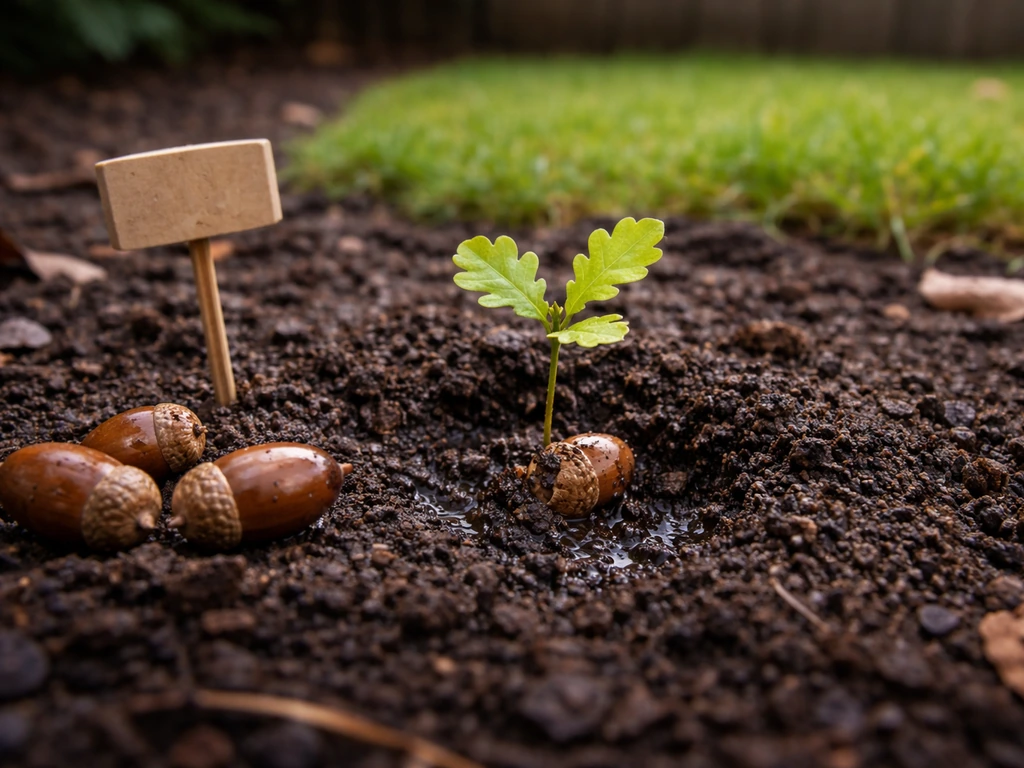
Layer your selected acorns in barely damp (not wet) sand, peat moss, or sawdust in a sealed plastic bag or container. Store in the refrigerator at 34 to 41°F (1 to 5°C). Check monthly and remove any that develop mold. White oak group acorns may begin germinating within 4 to 8 weeks in the refrigerator and can be planted as soon as the radicle (root tip) emerges. Red oak group acorns need the full cold-stratification period (30 to 45 days minimum) and should be planted in early spring.
Step 3: Prepare the site before you plant
Choose a location with full sun to partial shade, good drainage, and loamy soil. If planting in turf, remove a 2-foot-diameter circle of grass and loosen the soil 12 inches deep. Scarifying or disturbing the surface of compacted or heavily thatched ground helps acorns contact mineral soil, which research on natural regeneration confirms improves germination rates. Avoid low spots that pool water after rain.
Step 4: Sow at the right depth and spacing
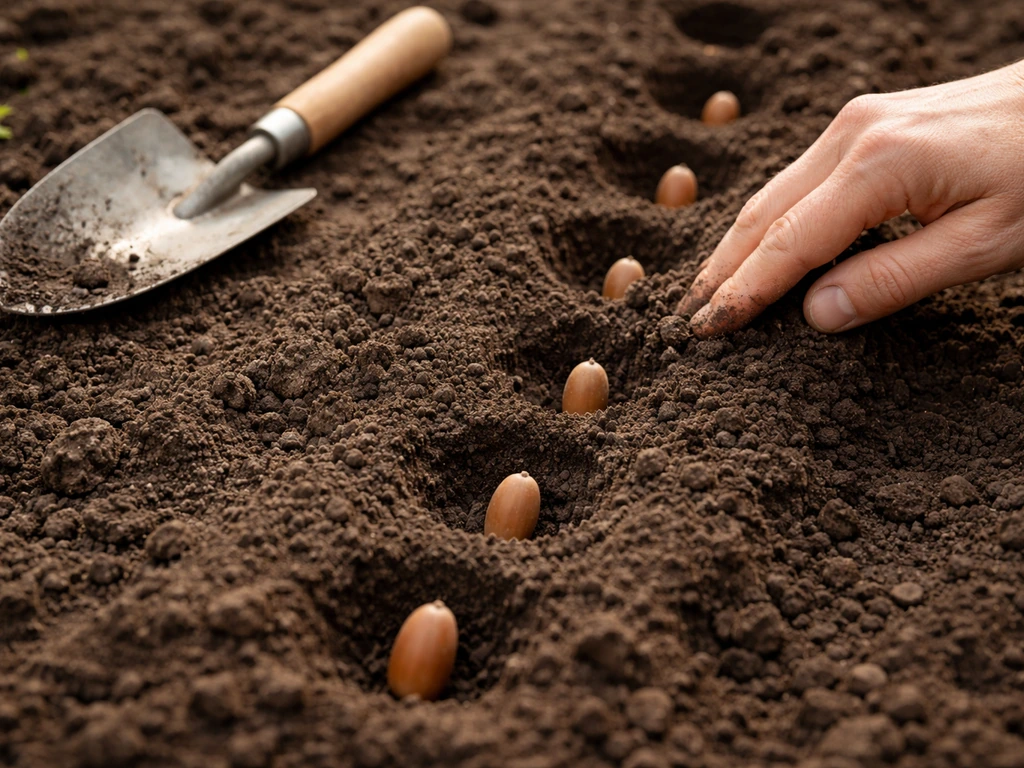
Plant acorns at roughly 1 to 1.5 inches deep, pointed end down or on their side. Deeper planting (up to 2 inches) can protect against some rodent digging but should not exceed 2 to 3 inches or emergence becomes unreliable. If direct-sowing multiple acorns, space them at least 8 to 10 feet apart to reduce competition later, or sow in clusters of 3 to 5 and thin to the strongest seedling at the end of year one. Acorn size does not appear to significantly affect predation odds, so do not spend extra effort sorting by size.
Step 5: Protect against predators from day one
Pin a piece of hardware cloth (1/4-inch mesh) flat over each planting spot immediately after sowing. Once seedlings emerge and reach 6 to 8 inches tall, install a wire cage or commercial tree shelter to protect against deer browse and vole damage. Weed cloth or a 3-inch layer of wood-chip mulch around the base suppresses competing vegetation and reduces vole habitat. Remove shelter tubes after 3 to 4 years, or once the stem is thick enough that browsing is no longer a growth-stopping threat.
Step 6: Water through the first summer
If your region experiences dry summers, plan to water newly planted acorns and first-year seedlings every 1 to 2 weeks during dry spells. The goal is not wet soil but consistently moist soil at root depth. Once a seedling survives its second summer with a well-developed root system, it is largely self-sufficient in most temperate climates.
How long until you actually have a tree
This is the part where honest expectations matter most. An oak seedling that survives its first year will typically be 4 to 12 inches tall, depending on species and conditions. Different oak species grow acorns that mature on different schedules, so the best results depend on which oak you’re growing. By year three it might reach 1 to 3 feet.
By year five, a well-sited, protected oak with good soil can be 4 to 8 feet tall depending on the species, but it still looks more like a large shrub than a mature tree. Northern red oak is one of the faster-growing native species and can reach around 3 feet in height for nursery-grown 1-0 stock under managed conditions, though field-grown seedlings from acorn vary widely.
To reach the size most people picture when they say "tree" (a 15 to 20-foot tall plant with a visible trunk and crown), expect to wait 10 to 20 years from an acorn start. If you are wondering when do oak trees grow acorns, it depends on the species and local climate, but many oaks start producing acorns in maturity. Faster-growing species like northern red oak or willow oak in good soil can approach this in 10 to 12 years with care. Slower-growing species like bur oak or white oak in marginal sites can take 20 years or longer. There is no shortcut in the biology.
The good news is that most of the real risk concentrates in the first 3 years. If your seedling makes it to year 3 with a strong root system and no repeated browse damage, its odds of eventually becoming a tree shift dramatically in your favor. Year 1 and year 2 are where management attention pays off most. After that, an oak mostly needs time.
FAQ
If I see acorns sprouting, does that mean they will grow into trees?
Not necessarily. If an acorn germinates but the seedling dies during its first growing season, it counts toward germination but not toward “becoming a tree.” Look for root establishment and new growth after the first summer, because that is when reserve depletion and drought stress decide the outcome.
When should I plant acorns so I do not waste my seed lot?
Yes, but timing matters. Planting that is too early can expose acorns to rodents and cold wet soil, while planting too late can shorten the rooting window before summer drought. For red oak group acorns, plan for full cold treatment before spring sowing, then align sowing with spring soil warming in your area.
How do I use interior inspection without turning the whole batch into scrap?
Cut it open only for a small sample, then use the sample result to adjust the rest of your plan. If the interior is brown, mushy, or clearly tunneled, discard that portion. Cutting open every acorn is labor-heavy and can reduce handling quality, so take 5 to 10 as the article suggests and then treat the batch as a mixed lot.
Is a float test enough to know how many acorns will sprout?
No. Float tests can miss viable acorns if they are partially dried, and they can also pass acorns that are externally intact but infected inside. For higher certainty, do a lab germination test or excised embryo test when you are committing a lot of time to a planting.
What storage mistakes most commonly reduce how many acorns turn into trees?
In many cases, yes. If you store acorns too dry or too long without the right moisture conditions, you can lose viability before you ever plant. A practical approach is to store in slightly damp media at refrigerator temperature, check monthly for mold, and aim to plant within the expected viable storage window for your species.
Can I treat all acorns the same for cold stratification?
Avoid “mixing up” white oak and red oak cold needs. White oak group acorns often start germinating in the refrigerator and can be planted when the radicle emerges, while red oak group acorns generally require the full 30 to 45 day stratification before spring planting.
What happens if my fridge stratification period is shorter than recommended?
Yes, because a warm spell after an incomplete cold period can cause improper dormancy break. If you cannot guarantee stable stratification, use a controlled schedule, and do not skip the full cold window for red oak group acorns.
How deep should I plant acorns to maximize emergence into seedlings?
Yes. Planting too deep can reduce emergence reliability, especially in heavier or compacted soils where shoots struggle to reach the surface. A good rule is about 1 to 1.5 inches for most sites, with caution not to exceed roughly 2 to 3 inches.
Does it help to plant fewer, larger acorns or to space them farther apart?
For most home plantings, the bottleneck becomes competition and grazing rather than acorn size. Spacing and thinning to reduce dense crowding matters, and clusters can work if you thin aggressively by the end of year one to keep the strongest seedling from being shaded out.
What protection should I prioritize in the first two years?
Yes, especially once rodents or deer pressure is high. Physical barriers like hardware cloth over sowing spots and cages once seedlings reach height limits browsing and stem damage. If you skip protection for year one and year two, you can lose seedlings that would otherwise have reached the “strong root system” stage.
How can I tell whether my site’s drainage will ruin my odds?
Waterlogged soil can be as damaging as drought, because it encourages rot and root failure. Before planting, check drainage and avoid low areas that stay wet for days after rain, since that can collapse survival regardless of acorn quality.
Should I water acorns after planting if rainfall looks okay on the calendar?
Yes, late summer irrigation can be decisive in drought-prone regions. If your area has dry summers, plan supplemental watering during the first year or two, targeting moist soil at root depth rather than frequent surface wetting.
Is scarifying or removing turf enough by itself?
It can help, but it is not the entire answer. Disturbing compacted or thatchy ground to expose mineral soil improves germination and contact, but you still need moisture consistency and predator protection after sowing.
What signs tell me my seedlings are on track to become trees?
Measure success by survival, not height alone. A seedling that looks alive but has not continued growth after stresses (spring establishment and first-summer drought) is at higher risk than one that shows steady new leaves and height through the second summer.
Why does the article say most risk concentrates in the first 3 years?
Year 3 is a major risk turning point because repeated browse and shallow root failure drop off once the root system is established. After a seedling survives its second summer and keeps growing, it is much more likely to persist toward the multi-year “time” phase.