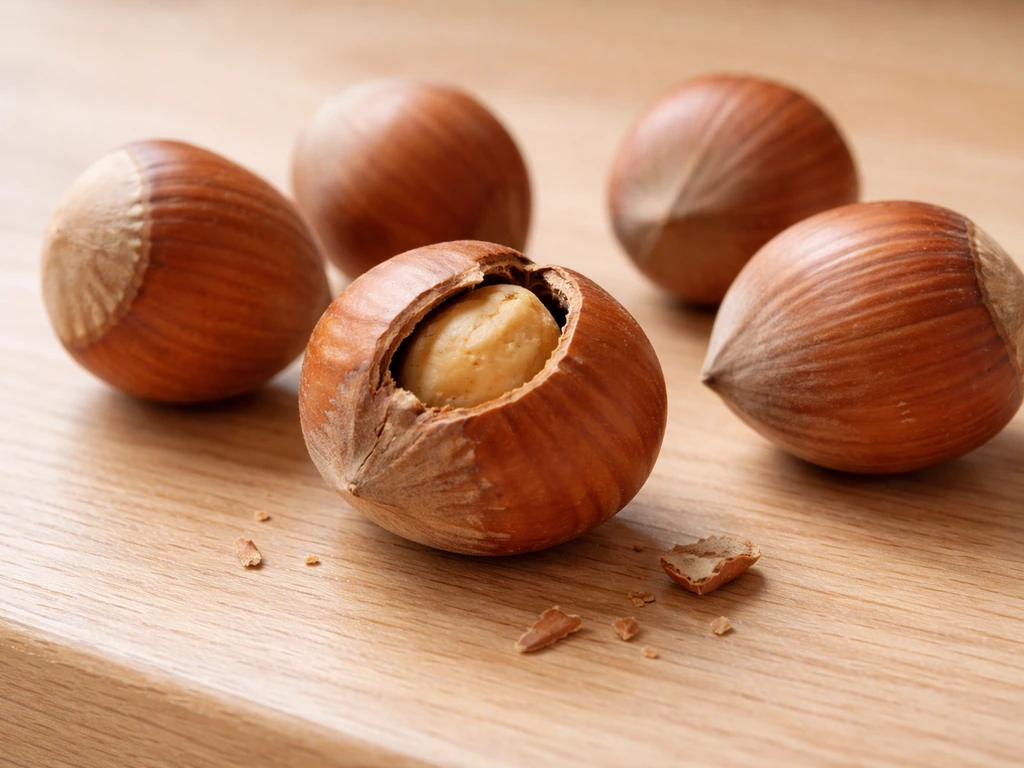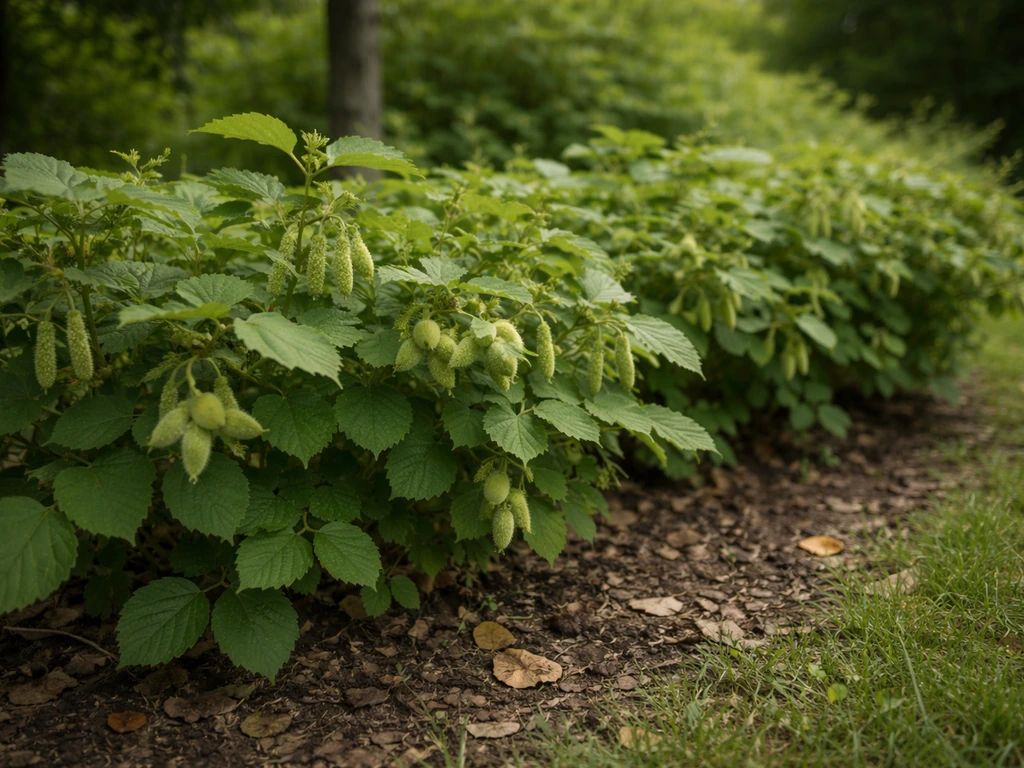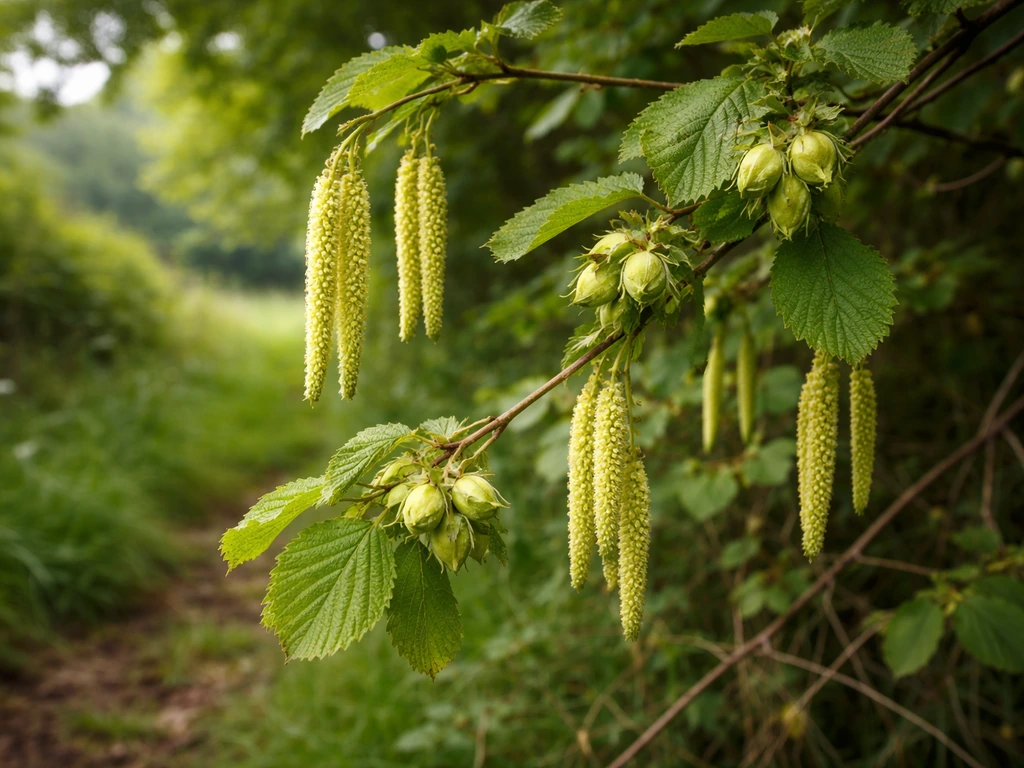
Yes, hazelnuts grow in Ontario, and they can produce a genuine nut crop if you match the right variety to the right site. If you’re also wondering what nuts grow in Canada beyond hazelnuts, it helps to look at regional hardiness and native nut trees. Ontario's climate is workable for hazelnuts across most of the province, particularly in Hardiness Zones 5 and warmer, which covers a wide swath from the Niagara Peninsula through southwestern Ontario and into parts of eastern Ontario near the St. Lawrence. The bigger question isn't whether hazelnuts can grow here, it's which species or cultivar actually suits your corner of the province, because that decision makes or breaks the harvest. Many people wonder do hazelnuts grow in Ireland, but the answer depends on your local climate and frost timing.
Do Hazelnuts Grow in Ontario? Conditions and Varieties
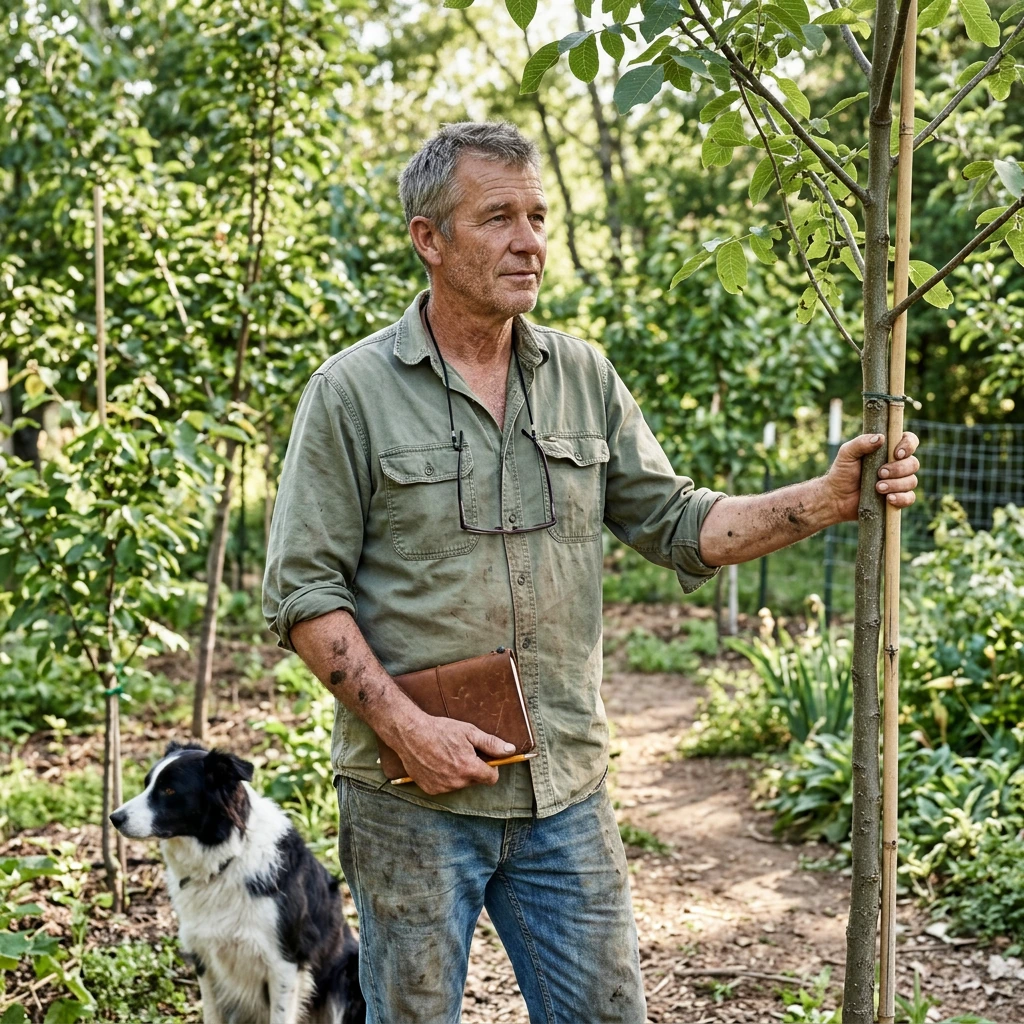
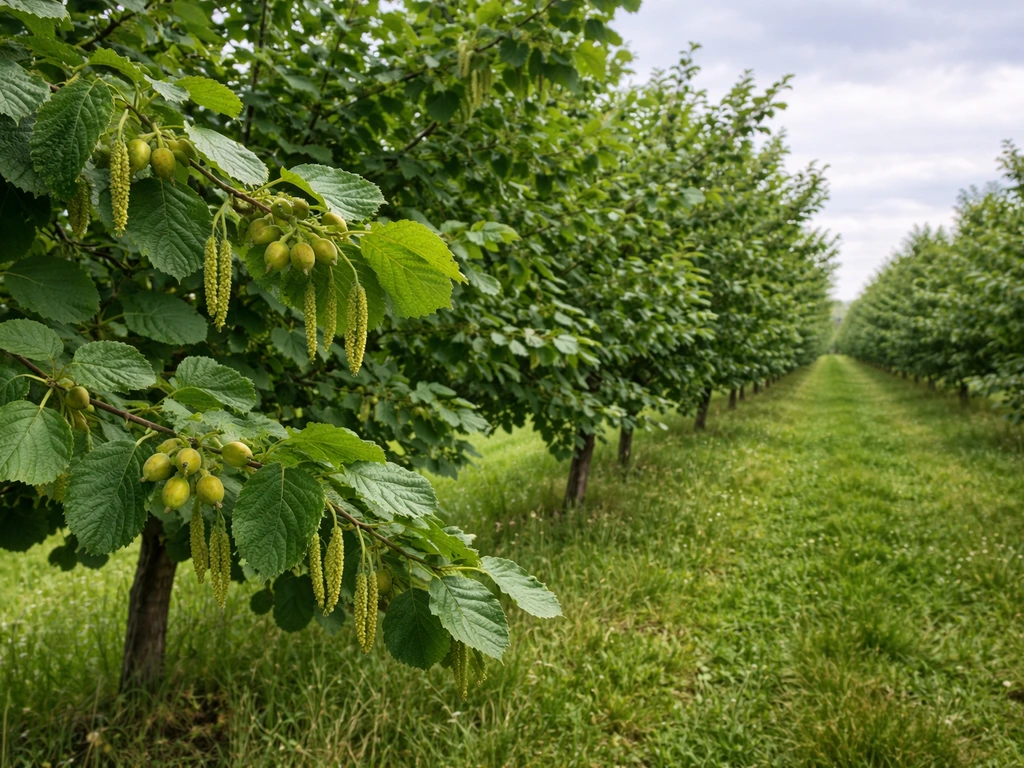
Where hazelnuts grow across Canada
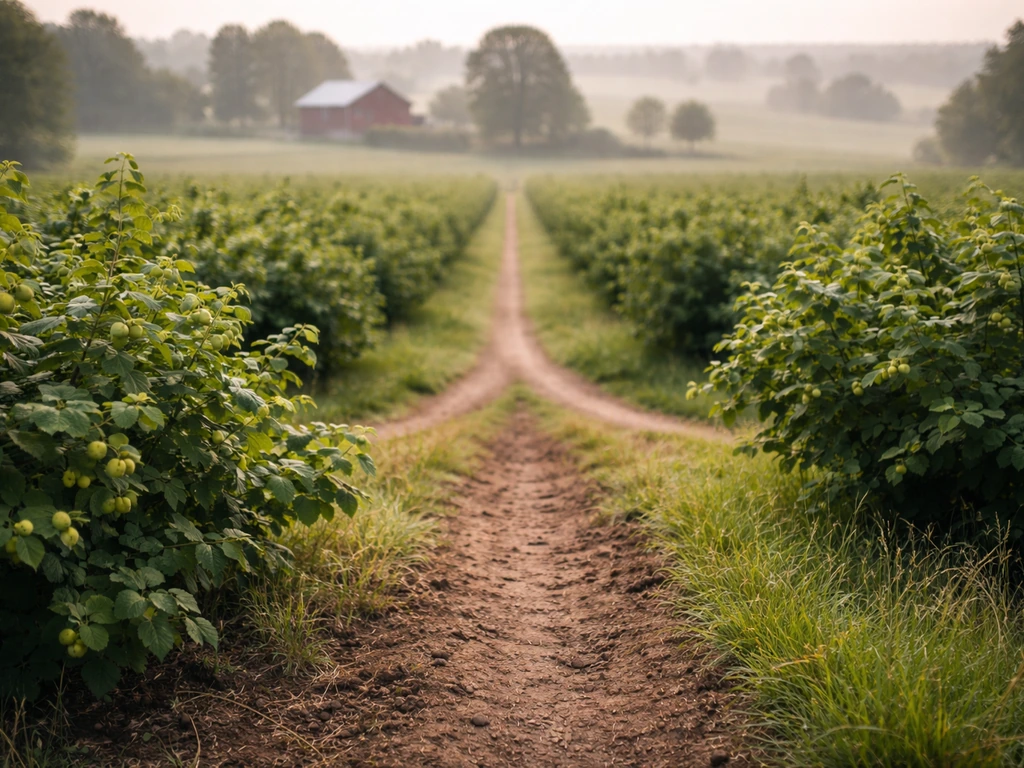
Hazelnuts are more widely adapted across Canada than most people expect. British Columbia's Lower Mainland and Vancouver Island have been growing commercial European hazelnuts (Corylus avellana) for decades, helped by a mild, maritime climate similar to the Pacific Northwest of the United States. Ontario sits further east on the spectrum: colder winters, more variable spring frosts, and less oceanic influence. Quebec, Manitoba, and the Prairie provinces push conditions beyond what European hazelnuts tolerate without serious winter injury, so growers there rely on native beaked hazelnut (Corylus cornuta) or very cold-hardy hybrid breeding lines. Ontario occupies a middle ground, not as easy as coastal BC, but not as limiting as the Prairies, which makes variety selection the central decision for any Ontario grower.
Canada's hazelnut industry, such as it is, concentrates in BC and Ontario. Ontario is actually the more interesting case for growers east of the Rockies, because the province spans multiple hardiness zones and includes areas with genuinely orchard-quality conditions. If you're also curious about how Canadian hazelnut growing compares to other regions, the growing conditions share some parallels with parts of Michigan just across the border, and with the UK's hazelnut culture, though Ontario winters are considerably harsher than either.
What Ontario's climate actually means for hazelnuts
OMAFRA pegs hazelnut production in Ontario at a minimum Hardiness Zone 5, and they use a practical benchmark that makes a lot of sense: if an area can support apple orchards or tender fruit production, it can support hazelnut production. That test immediately points you toward the classic Ontario fruit belt, Niagara, Norfolk County, the north shore of Lake Erie, and portions of the Lake Ontario shoreline. These areas benefit from lake-effect moderation that blunts the worst of winter cold and delays spring frosts long enough to protect sensitive flower structures.
The frost sensitivity point is worth taking seriously. Hazelnut trees bloom very early in the season, often in late winter, and it's the male catkins (the pollen-bearing structures) that are most vulnerable. A hard frost after catkin elongation can kill the pollen before it ever reaches the female flowers, and that means no nut set for that year even if the tree itself survives winter perfectly. In colder or more frost-prone parts of Ontario, Zone 4 areas in northern or higher-elevation regions, this is a recurring risk, not a rare one. Hybrid cultivars developed specifically for cold hardiness handle this better than straight European hazelnut species.
Soil and sun requirements
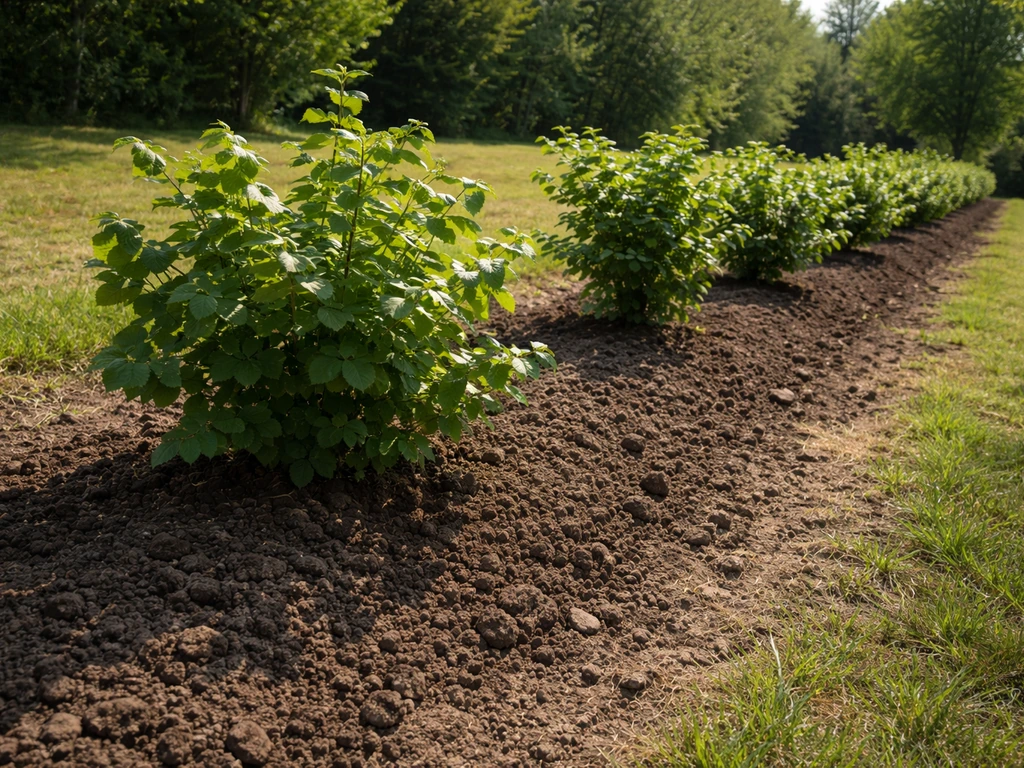
Hazelnuts are not particularly fussy about soil, but they do have a clear preference. OMAFRA's production profile calls for well-drained, deep, fertile loam to sandy loam soils with a pH between 6 and 7. Poorly drained or compacted soils are a real problem because hazelnut roots don't tolerate waterlogging. If your site has a drainage issue, fix it before planting, standing water after spring snowmelt is one of the faster ways to stress or kill a young hazelnut. Full sun is non-negotiable for commercial-scale nut production, though the plants will survive in partial shade; they just won't set a meaningful crop.
Which hazelnut species and cultivars actually work in Ontario
There are three realistic options for Ontario growers, and the right one depends almost entirely on your hardiness zone and how much winter cold you're dealing with.
| Type | Cold Hardiness | Best Ontario Zones | Nut Quality | Notes |
|---|---|---|---|---|
| European hazelnut (Corylus avellana) | Zone 5–6 | Niagara, Lake Erie north shore, parts of Lake Ontario shoreline | Excellent, large nuts | Higher commercial yield potential but more winter injury risk |
| American hazelnut (Corylus americana) | Zone 3–4 | Province-wide including colder regions | Smaller nuts, thinner shells | Native to Ontario; very cold-hardy but lower productivity |
| Cold-hardy hybrid cultivars | Zone 4–5 | Most of Ontario including marginal areas | Good, approaching European size | Best all-around choice for zone 4–5 Ontario growers |
For most Ontario growers outside the mildest fruit-belt areas, cold-hardy hybrid cultivars are the practical recommendation. These are crosses between European and American species (sometimes with other Corylus species involved), bred specifically to combine the nut quality of European hazelnut with the cold tolerance of North American natives. Cultivars like Gamma and Yamhill appear in Ontario-specific planting guides as main crop varieties, paired with both early and late pollinizers to cover the unpredictable Ontario bloom window. OMAFRA's own guidance notes that cold tolerance is variety-specific, which is their way of saying don't just order 'hazelnut trees' from a nursery without knowing exactly what you're getting.
Pollination, timing, and realistic yield expectations
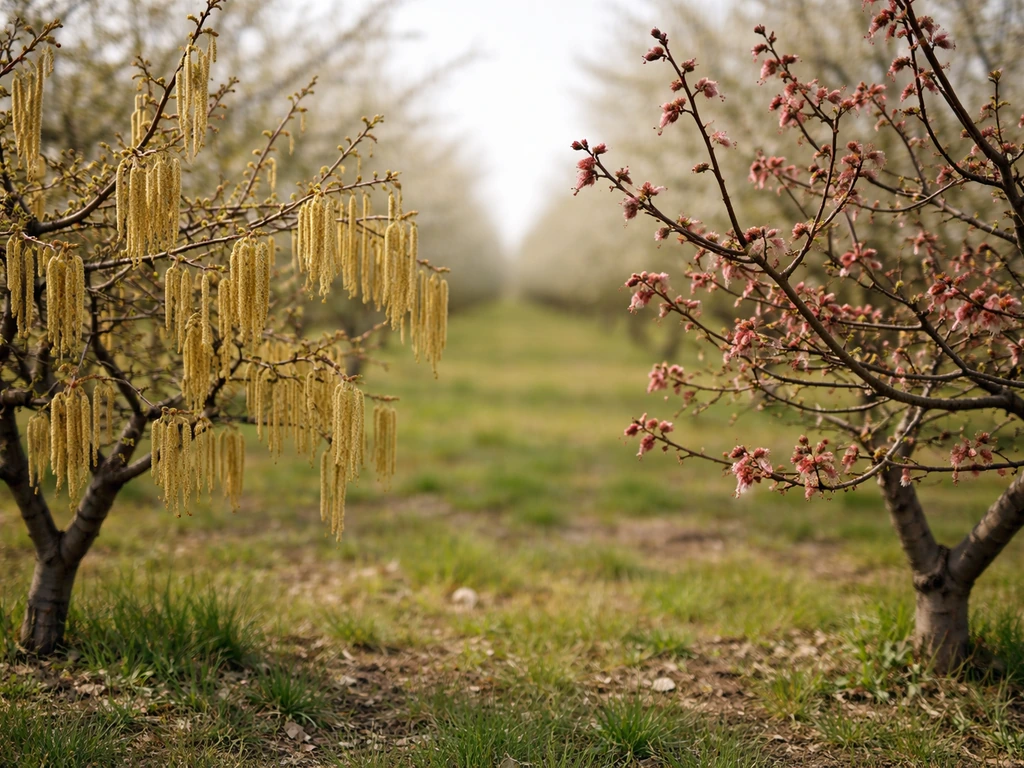
Hazelnuts are wind-pollinated and self-incompatible, meaning a single tree will not produce a good nut crop on its own. You need at least two genetically distinct varieties, and ideally a mix that covers the full bloom period, since hazelnut bloom timing varies by cultivar and weather. Ontario-specific planting guides recommend pairing mid-to-late season main cultivars with both early and late pollinizers so that pollen is available regardless of when the female flowers are receptive in a given year. For orchard plantings, spacing recommendations run 18 by 15 feet or 18 by 18 feet (roughly 5.5 by 4.5 m or 5.5 by 5.5 m) depending on cultivar and site. OMAFRA's orchard design guidance uses in-row spacing of 3 to 4 metres and between-row spacing of 5 to 7 metres.
Don't expect a crop for the first several years. Hazelnuts typically begin producing around year four or five, with yields building gradually as the trees establish. A ten-year-old tree in a well-managed Ontario planting can average around 11.5 pounds of nuts, that's per tree, and that figure comes from Ontario-based production data. At the orchard scale, Ontario economic modeling uses a yield assumption of approximately 2,500 pounds per acre for established production. That number assumes good site selection, proper pollination setup, and competent management. It's achievable, but it takes time and attention to get there.
The timeline matters for planning. If you plant hazelnuts this season, budget for a five to seven year runway before you're harvesting meaningful quantities. Factor in that early years require weed control, training, and patience. The trees are not difficult to keep alive, but coaxing them into consistent production takes a real commitment to site preparation and variety matching upfront.
Where in Ontario to focus your efforts
If you're in Zone 5 or warmer, think Niagara Peninsula, Haldimand-Norfolk, the Lake Erie shoreline, greater Hamilton area, and parts of eastern Ontario near the St. Lawrence, you have genuinely good conditions for hazelnut production, including the possibility of growing higher-quality European cultivars or their close hybrids. These are the areas where Ontario's most productive hazelnut operations are or could be concentrated.
Zone 4 growers in central Ontario, the Ottawa Valley, or areas north of the Oak Ridges Moraine can still grow hazelnuts successfully with the right cold-hardy hybrids, but site selection becomes more important. Look for south or southeast-facing slopes that warm early and drain well, avoid frost pockets at the bottom of hills where cold air pools on still nights, and stick strictly to the coldest-hardy cultivars available. You'll have more years with frost damage to catkins, and your yield expectations should be adjusted accordingly.
Zone 3 in Ontario, the far north and exposed upland areas, is genuinely marginal for nut production. Native American hazelnut (Corylus americana) will grow there, but commercial nut yields are unreliable. Think of it more as a wildlife planting or a hedge than a nut-producing orchard.
If your site isn't quite right: alternatives and next steps
If you're in a colder or wetter part of Ontario and hazelnut seems risky, it's worth knowing your alternatives before committing to a planting. Native beaked hazelnut (Corylus cornuta) is extremely cold-hardy and grows wild across much of Canada, including Ontario, but its nuts are small and enclosed in a bristly husk that makes them fiddly to harvest in quantity. Black walnut is another option for Ontario growers who want a native nut tree and have the space and patience for a very long establishment period. Butternuts are native and cold-hardy but face disease pressure from butternut canker across Ontario.
For growers who are set on hazelnuts but worried about their specific site, the most useful next step is to determine your exact hardiness zone using Agriculture Canada's plant hardiness zone map, then match that zone to the coldest-rated cultivars available from Ontario or Canadian sources. Avoid purchasing based on catalogue photos or generic 'hazelnut' descriptions, insist on knowing the variety name and its documented cold tolerance. Then assess your soil drainage (dig a test hole after rain and see how long water sits), confirm you have a full-sun location, and plan for at least two genetically different cultivars before you order anything.
Hazelnuts are genuinely worth trying in most of Ontario south of the Canadian Shield. If you are also wondering what nuts grow in Ireland, the conditions and nut varieties there are different, so it helps to start with what climate and local species you can support. If you are wondering, will store-bought hazelnuts grow in Ontario, the same zone and cultivar choices apply, so seedlings may not reliably match for nut quality or hardiness will store bought hazelnuts grow. If you're wondering whether do hazelnuts grow in Michigan, the answer depends on whether your area matches the cold-tolerance needs of the specific cultivar you choose. They're not a low-effort crop, and the first few years will test your patience, but the combination of a native-friendly growth habit, manageable size, good nut quality from modern hybrid cultivars, and a real market for Ontario-grown hazelnuts makes them one of the more interesting specialty crops available to Ontario growers right now. Get the variety and site selection right, plan for pollination from the start, and you have a realistic path to a productive planting.
FAQ
Will store-bought hazelnuts (the ones you eat) grow into productive trees in Ontario?
Most hazelnuts sold as “seedlings” or unknown stock will not reliably match the nut quality or hardiness you want. In Ontario, that matters because winter injury and early bloom frost are both variety-specific. If you want a dependable crop, buy named cultivars (with a documented cold tolerance and bloom timing) or nursery material that specifies the cultivar name and pollinizer pairing.
Can I plant just one hazelnut tree and still get nuts in Ontario?
You usually need at least two different cultivars to get a worthwhile nut set, even if a tree flowers heavily. Pair a main cultivar with pollinizers that flower in the right window (early, mid, and late combinations are often used). If you only plant one cultivar, you may get some nuts, but yields tend to be low and inconsistent.
Do hazelnuts need full sun in Ontario, or will they grow in my yard with some shade?
Yes, you can still grow hazelnuts in partial shade, but the harvest target changes. The trees may survive, yet full nut production generally requires full sun, because bloom and nut filling are limited when light levels drop. For orchard-style production, plan for unshaded rows and control overhead competition as the canopy develops.
How do I know if my soil drainage is good enough to grow hazelnuts in Ontario?
If water sits in a test hole for more than about a day after a typical soaking rain or snowmelt, treat the site as poorly drained. Hazelnuts can struggle or die in waterlogged conditions, especially when young. Raised rows or drainage improvements can help, but if you cannot reliably fix drainage, choose a different location.
What should I do in Ontario if I keep losing flowers to late frosts?
If your area is prone to late-winter or early-spring frosts, focus on cultivar cold tolerance and also pick a site that reduces frost pooling. Avoid low spots where cold air settles, and consider a south or southeast-facing slope with good airflow. Even with the right cultivar, frost after male catkins extend can prevent nut set in a given year.
When should I expect my Ontario hazelnut trees to start producing?
Hazelnuts typically start producing around years four to five, but a “full” crop takes longer. For planning, assume slow ramp-up in the first years, then gradual improvement as the trees establish, canopy fills, and pollination becomes consistent. Don’t expect meaningful yields immediately after planting.
My hazelnuts flower but I get almost no nuts, what’s likely wrong?
If trees flower but you get very few nuts, common causes include insufficient pollinizers, mismatched bloom times, and frost damage to pollen-bearing catkins. Check that you have at least two genetically distinct cultivars and that the pollinizer blooms overlap your main cultivar. Also remember that a hard frost can ruin pollen even if the tree survives.
How much spacing should I use for hazelnuts in Ontario, and does it matter for yield?
In Ontario, plant spacing affects airflow, disease pressure, and management. Using wider spacing can reduce canopy crowding, while tighter spacing can speed canopy closure but may increase the need for pruning and more vigilant disease control. Follow cultivar and site-specific spacing guidance, then adjust based on whether your site is windy, fertile, and how aggressively the trees grow.
What changes if I live in Zone 4 or Zone 3 in Ontario?
Ontario’s winter risk and spring frost risk both increase as you go north or into colder microclimates. If you are near the edge (around Zone 4 or colder), stick to the coldest-rated hybrids available locally and be more conservative about expectations. For Zone 3, yields are often too unreliable for an orchard goal, though wildlife or hedgerow plantings are still possible.
What’s the best practical checklist before I order hazelnut trees for my Ontario site?
You can reduce early-year failures by doing drainage checks, preparing a weed-free planting area, and confirming pollination plans before you order. A practical approach is to map your intended cultivars, then buy pollinizers at the same time so bloom windows line up. Also plan for at least several seasons of maintenance before you measure success by nut yield.